SUBSCRIBE TO OUR FREE NEWSLETTER
Daily news & progressive opinion—funded by the people, not the corporations—delivered straight to your inbox.
5
#000000
#FFFFFF
To donate by check, phone, or other method, see our More Ways to Give page.
Daily news & progressive opinion—funded by the people, not the corporations—delivered straight to your inbox.
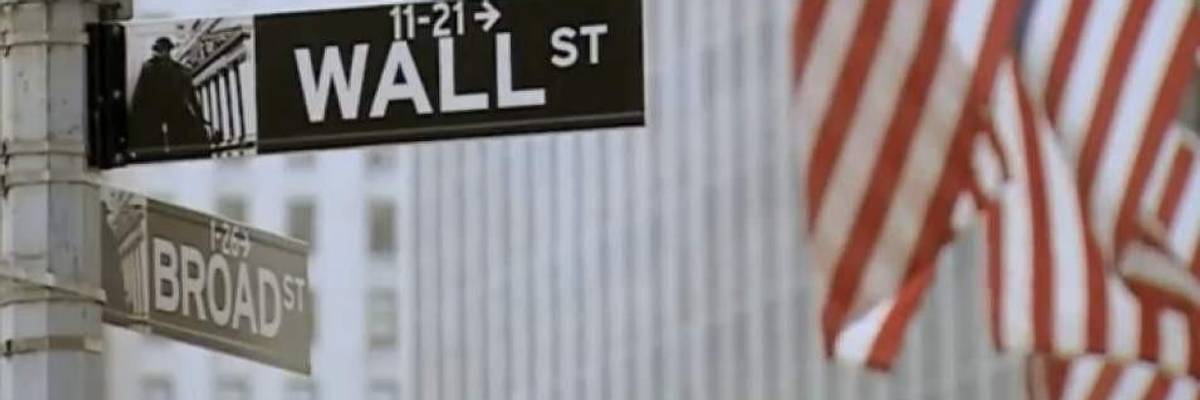
"There are two great centers of power in this nation: Washington DC and Wall Street," writes Connon. "Both are capable of changing the world, and both, should they choose to do so, are capable of bringing to heel the fossil fuel corporations that are the single greatest contributors of greenhouse gas emissions and the single greatest opponents of climate progress. If Washington falls to Trump, climate activists will need to turn to Wall Street." (Photo: Phillipp/cc/flickr)
If Trump remains in power for another four years (either by winning the election or by staging a coup as is now a clear possibility), it will be a disaster for the entire progressive agenda. Voting rights will be further assailed, white supremacists will be further emboldened, and the chances of a humane response to the deadliest pandemic in a century will be lost to history. It would also be devastating to our fight to ensure a livable planet.
It is widely accepted that to have a decent shot at keeping global warming below the Paris Agreement target of 1.5degC (the level of warming beyond which the recent fires and floods will begin to look like a picnic in the park) we need to halve our emissions within the next decade. Another term with a President Trump would mean that for nearly half of those crucial years the most powerful person in the world would be a man who claims the climate crisis is a Chinese hoax.
The urgency of the crisis should be all the encouragement we need to spend the next thirty-five days doing all we can to help ensure Trump loses in a landslide--which, incidentally, you can do with the help of the Sunrise Movement, 350.org or the Sierra Club to name just a few. However, even if the worst happens and Trump takes office for another four years, it is vital that we are prepared to keep up the climate fight.
"If the worst happens and Trump takes office for another four years, it is vital that we are prepared to keep up the climate fight." There are two great centers of power in this nation: Washington DC and Wall Street. Both are capable of changing the world, and both, should they choose to do so, are capable of bringing to heel the fossil fuel corporations that are the single greatest contributors of greenhouse gas emissions and the single greatest opponents of climate progress. If Washington falls to Trump, climate activists will need to turn to Wall Street.
As Bill McKibben has reminded us, fossil fuel companies depend upon Wall Street's support. Consider that JPMorgan Chase has loaned $268 billion to fossil fuel companies since the Paris Agreement was signed in 2015. To put that into context, $268 billion is greater than the annual GDP of one hundred and forty-two countries. It's greater than the market value of Shell, BP and Chevron combined. In other words, $268 billion is a lot of money. Indeed, it is so much money that were Chase and their ilk to withhold it, the fossil fuel industry would start to struggle to finance its new coal mines and oil pipelines.
It's a similar story with insurance, without which no fossil fuel project could move forward. We recently learned that Liberty Mutual is insuring construction of the Keystone XL pipeline--a pipeline that the climate movement and tribal nations have been fighting for over a decade. In response, the Chairmen of sixteen tribal nations wrote to Liberty Mutual CEO, David Long, to demand that the company immediately end its relationship with the Keystone XL pipeline project, and meet with Indigenous leaders to discuss Liberty Mutual's involvement in the whole tar sands sector. The next day sixty major businesses called on insurance companies to cease doing business with the fossil fuel industry.
Of course, nobody thinks that Wall Street is going to stop doing business with the fossil fuel industry because it's the right thing to do. Only a committed mass movement of people stands a chance of forcing them to act within the timeframe that physics demands. That's why it's a good thing that the climate movement has increasingly been catching on to the simple fact that if we stop the flow of money (and insurance), we stop the flow of oil.
"As the movement to hold Wall Street accountable for its role in the climate crisis grows, it's worth keeping in mind that Wall Street's own analyses are increasingly matching those of the climate scientists." Since the beginning of the year, over 130 organizations, including some of the largest environmental groups in the country, have joined the Stop the Money Pipeline coalition, a major campaign to hold the financial backers of the climate crisis accountable. This Friday, thousands of people will join Indigenous frontline leaders for an online rally calling on banks, insurance companies, and asset managers to stop doing business with tar sands companies. There will be demonstrations at both company headquarters and on the frontlines of pipeline fights, connecting the dots between the decisions made on Wall Street and the damage they inflict on people, especially Indigenous nations and communities of color.
As the movement to hold Wall Street accountable for its role in the climate crisis grows, it's worth keeping in mind that Wall Street's own analyses are increasingly matching those of the climate scientists.
In January, Larry Fink, CEO of BlackRock, the world's largest asset manager, wrote that the climate crisis would fundamentally reshape the world of finance. In February, a report by economists at JPMorgan Chase went further, warning that the climate crisis is a threat to the survival of the human race. And just last month, a major report by President Trump's financial regulator concluded that climate change poses dire and immediate threats to the stability of the financial system.
This might help explain why the financial sector has started to move. Last week, Morgan Stanley, one of the world's largest lenders to the fossil fuel industry, became the first major US bank to commit to achieving a "net-zero" emissions business by 2050. In May, close to half of JPMorgan Chase's shareholders voted in favor of the bank creating a plan to align its business model with the Paris Agreement. All told, over one hundred globally significant banks and insurance companies have announced commitments to stop doing business with coal companies.
Of course, Wall Street isn't moving anywhere close to fast enough and none of this is to suggest that a Trump win would be anything but an unmitigated disaster for our planet, as well as our shared humanity. But, whatever the outcome of the election, we would do well to remember that Washington DC is not the only center of power with the ability to help calm the fires of the climate crisis.
Dear Common Dreams reader, It’s been nearly 30 years since I co-founded Common Dreams with my late wife, Lina Newhouser. We had the radical notion that journalism should serve the public good, not corporate profits. It was clear to us from the outset what it would take to build such a project. No paid advertisements. No corporate sponsors. No millionaire publisher telling us what to think or do. Many people said we wouldn't last a year, but we proved those doubters wrong. Together with a tremendous team of journalists and dedicated staff, we built an independent media outlet free from the constraints of profits and corporate control. Our mission has always been simple: To inform. To inspire. To ignite change for the common good. Building Common Dreams was not easy. Our survival was never guaranteed. When you take on the most powerful forces—Wall Street greed, fossil fuel industry destruction, Big Tech lobbyists, and uber-rich oligarchs who have spent billions upon billions rigging the economy and democracy in their favor—the only bulwark you have is supporters who believe in your work. But here’s the urgent message from me today. It's never been this bad out there. And it's never been this hard to keep us going. At the very moment Common Dreams is most needed, the threats we face are intensifying. We need your support now more than ever. We don't accept corporate advertising and never will. We don't have a paywall because we don't think people should be blocked from critical news based on their ability to pay. Everything we do is funded by the donations of readers like you. When everyone does the little they can afford, we are strong. But if that support retreats or dries up, so do we. Will you donate now to make sure Common Dreams not only survives but thrives? —Craig Brown, Co-founder |
If Trump remains in power for another four years (either by winning the election or by staging a coup as is now a clear possibility), it will be a disaster for the entire progressive agenda. Voting rights will be further assailed, white supremacists will be further emboldened, and the chances of a humane response to the deadliest pandemic in a century will be lost to history. It would also be devastating to our fight to ensure a livable planet.
It is widely accepted that to have a decent shot at keeping global warming below the Paris Agreement target of 1.5degC (the level of warming beyond which the recent fires and floods will begin to look like a picnic in the park) we need to halve our emissions within the next decade. Another term with a President Trump would mean that for nearly half of those crucial years the most powerful person in the world would be a man who claims the climate crisis is a Chinese hoax.
The urgency of the crisis should be all the encouragement we need to spend the next thirty-five days doing all we can to help ensure Trump loses in a landslide--which, incidentally, you can do with the help of the Sunrise Movement, 350.org or the Sierra Club to name just a few. However, even if the worst happens and Trump takes office for another four years, it is vital that we are prepared to keep up the climate fight.
"If the worst happens and Trump takes office for another four years, it is vital that we are prepared to keep up the climate fight." There are two great centers of power in this nation: Washington DC and Wall Street. Both are capable of changing the world, and both, should they choose to do so, are capable of bringing to heel the fossil fuel corporations that are the single greatest contributors of greenhouse gas emissions and the single greatest opponents of climate progress. If Washington falls to Trump, climate activists will need to turn to Wall Street.
As Bill McKibben has reminded us, fossil fuel companies depend upon Wall Street's support. Consider that JPMorgan Chase has loaned $268 billion to fossil fuel companies since the Paris Agreement was signed in 2015. To put that into context, $268 billion is greater than the annual GDP of one hundred and forty-two countries. It's greater than the market value of Shell, BP and Chevron combined. In other words, $268 billion is a lot of money. Indeed, it is so much money that were Chase and their ilk to withhold it, the fossil fuel industry would start to struggle to finance its new coal mines and oil pipelines.
It's a similar story with insurance, without which no fossil fuel project could move forward. We recently learned that Liberty Mutual is insuring construction of the Keystone XL pipeline--a pipeline that the climate movement and tribal nations have been fighting for over a decade. In response, the Chairmen of sixteen tribal nations wrote to Liberty Mutual CEO, David Long, to demand that the company immediately end its relationship with the Keystone XL pipeline project, and meet with Indigenous leaders to discuss Liberty Mutual's involvement in the whole tar sands sector. The next day sixty major businesses called on insurance companies to cease doing business with the fossil fuel industry.
Of course, nobody thinks that Wall Street is going to stop doing business with the fossil fuel industry because it's the right thing to do. Only a committed mass movement of people stands a chance of forcing them to act within the timeframe that physics demands. That's why it's a good thing that the climate movement has increasingly been catching on to the simple fact that if we stop the flow of money (and insurance), we stop the flow of oil.
"As the movement to hold Wall Street accountable for its role in the climate crisis grows, it's worth keeping in mind that Wall Street's own analyses are increasingly matching those of the climate scientists." Since the beginning of the year, over 130 organizations, including some of the largest environmental groups in the country, have joined the Stop the Money Pipeline coalition, a major campaign to hold the financial backers of the climate crisis accountable. This Friday, thousands of people will join Indigenous frontline leaders for an online rally calling on banks, insurance companies, and asset managers to stop doing business with tar sands companies. There will be demonstrations at both company headquarters and on the frontlines of pipeline fights, connecting the dots between the decisions made on Wall Street and the damage they inflict on people, especially Indigenous nations and communities of color.
As the movement to hold Wall Street accountable for its role in the climate crisis grows, it's worth keeping in mind that Wall Street's own analyses are increasingly matching those of the climate scientists.
In January, Larry Fink, CEO of BlackRock, the world's largest asset manager, wrote that the climate crisis would fundamentally reshape the world of finance. In February, a report by economists at JPMorgan Chase went further, warning that the climate crisis is a threat to the survival of the human race. And just last month, a major report by President Trump's financial regulator concluded that climate change poses dire and immediate threats to the stability of the financial system.
This might help explain why the financial sector has started to move. Last week, Morgan Stanley, one of the world's largest lenders to the fossil fuel industry, became the first major US bank to commit to achieving a "net-zero" emissions business by 2050. In May, close to half of JPMorgan Chase's shareholders voted in favor of the bank creating a plan to align its business model with the Paris Agreement. All told, over one hundred globally significant banks and insurance companies have announced commitments to stop doing business with coal companies.
Of course, Wall Street isn't moving anywhere close to fast enough and none of this is to suggest that a Trump win would be anything but an unmitigated disaster for our planet, as well as our shared humanity. But, whatever the outcome of the election, we would do well to remember that Washington DC is not the only center of power with the ability to help calm the fires of the climate crisis.
If Trump remains in power for another four years (either by winning the election or by staging a coup as is now a clear possibility), it will be a disaster for the entire progressive agenda. Voting rights will be further assailed, white supremacists will be further emboldened, and the chances of a humane response to the deadliest pandemic in a century will be lost to history. It would also be devastating to our fight to ensure a livable planet.
It is widely accepted that to have a decent shot at keeping global warming below the Paris Agreement target of 1.5degC (the level of warming beyond which the recent fires and floods will begin to look like a picnic in the park) we need to halve our emissions within the next decade. Another term with a President Trump would mean that for nearly half of those crucial years the most powerful person in the world would be a man who claims the climate crisis is a Chinese hoax.
The urgency of the crisis should be all the encouragement we need to spend the next thirty-five days doing all we can to help ensure Trump loses in a landslide--which, incidentally, you can do with the help of the Sunrise Movement, 350.org or the Sierra Club to name just a few. However, even if the worst happens and Trump takes office for another four years, it is vital that we are prepared to keep up the climate fight.
"If the worst happens and Trump takes office for another four years, it is vital that we are prepared to keep up the climate fight." There are two great centers of power in this nation: Washington DC and Wall Street. Both are capable of changing the world, and both, should they choose to do so, are capable of bringing to heel the fossil fuel corporations that are the single greatest contributors of greenhouse gas emissions and the single greatest opponents of climate progress. If Washington falls to Trump, climate activists will need to turn to Wall Street.
As Bill McKibben has reminded us, fossil fuel companies depend upon Wall Street's support. Consider that JPMorgan Chase has loaned $268 billion to fossil fuel companies since the Paris Agreement was signed in 2015. To put that into context, $268 billion is greater than the annual GDP of one hundred and forty-two countries. It's greater than the market value of Shell, BP and Chevron combined. In other words, $268 billion is a lot of money. Indeed, it is so much money that were Chase and their ilk to withhold it, the fossil fuel industry would start to struggle to finance its new coal mines and oil pipelines.
It's a similar story with insurance, without which no fossil fuel project could move forward. We recently learned that Liberty Mutual is insuring construction of the Keystone XL pipeline--a pipeline that the climate movement and tribal nations have been fighting for over a decade. In response, the Chairmen of sixteen tribal nations wrote to Liberty Mutual CEO, David Long, to demand that the company immediately end its relationship with the Keystone XL pipeline project, and meet with Indigenous leaders to discuss Liberty Mutual's involvement in the whole tar sands sector. The next day sixty major businesses called on insurance companies to cease doing business with the fossil fuel industry.
Of course, nobody thinks that Wall Street is going to stop doing business with the fossil fuel industry because it's the right thing to do. Only a committed mass movement of people stands a chance of forcing them to act within the timeframe that physics demands. That's why it's a good thing that the climate movement has increasingly been catching on to the simple fact that if we stop the flow of money (and insurance), we stop the flow of oil.
"As the movement to hold Wall Street accountable for its role in the climate crisis grows, it's worth keeping in mind that Wall Street's own analyses are increasingly matching those of the climate scientists." Since the beginning of the year, over 130 organizations, including some of the largest environmental groups in the country, have joined the Stop the Money Pipeline coalition, a major campaign to hold the financial backers of the climate crisis accountable. This Friday, thousands of people will join Indigenous frontline leaders for an online rally calling on banks, insurance companies, and asset managers to stop doing business with tar sands companies. There will be demonstrations at both company headquarters and on the frontlines of pipeline fights, connecting the dots between the decisions made on Wall Street and the damage they inflict on people, especially Indigenous nations and communities of color.
As the movement to hold Wall Street accountable for its role in the climate crisis grows, it's worth keeping in mind that Wall Street's own analyses are increasingly matching those of the climate scientists.
In January, Larry Fink, CEO of BlackRock, the world's largest asset manager, wrote that the climate crisis would fundamentally reshape the world of finance. In February, a report by economists at JPMorgan Chase went further, warning that the climate crisis is a threat to the survival of the human race. And just last month, a major report by President Trump's financial regulator concluded that climate change poses dire and immediate threats to the stability of the financial system.
This might help explain why the financial sector has started to move. Last week, Morgan Stanley, one of the world's largest lenders to the fossil fuel industry, became the first major US bank to commit to achieving a "net-zero" emissions business by 2050. In May, close to half of JPMorgan Chase's shareholders voted in favor of the bank creating a plan to align its business model with the Paris Agreement. All told, over one hundred globally significant banks and insurance companies have announced commitments to stop doing business with coal companies.
Of course, Wall Street isn't moving anywhere close to fast enough and none of this is to suggest that a Trump win would be anything but an unmitigated disaster for our planet, as well as our shared humanity. But, whatever the outcome of the election, we would do well to remember that Washington DC is not the only center of power with the ability to help calm the fires of the climate crisis.