SUBSCRIBE TO OUR FREE NEWSLETTER
Daily news & progressive opinion—funded by the people, not the corporations—delivered straight to your inbox.
5
#000000
#FFFFFF
To donate by check, phone, or other method, see our More Ways to Give page.


Daily news & progressive opinion—funded by the people, not the corporations—delivered straight to your inbox.

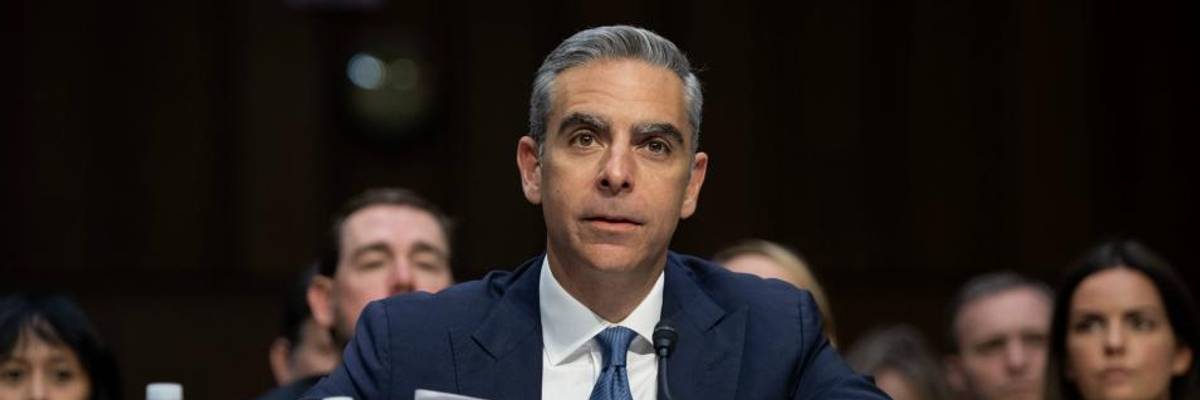
David Marcus, Head of Calibra at Facebook, testifies about Facebook's proposed digital currency called Libra, during a Senate Banking, House and Urban Affairs Committee hearing on Capitol Hill in Washington, DC, July 16, 2019. (Photo: Saul Loeb/AFP/Getty Images)
Editor's note: On Wednesday July 17, 2019, Robert Weissman, president of Public Citizen, was among those who testified before the U.S. House Financial Services Committee against Facebook's Libra proposal. Read a statement from Public Citizen and Weissman's full testimony to the committee here.
"Trust us."
That's the gist of what Facebook's David Marcus repeatedly told lawmakers this week when defending Facebook's proposal to start a new privatized global currency called Libra.
As U.S. Sen. Sherrod Brown (D-Ohio) noted, Facebook "moved fast and broke our political discourse, they broke journalism, they helped incite a genocide, and they're undermining our democracy. Now Facebook is asking people to trust them with their hard-earned paychecks."
It would be foolish to trust Facebook about anything. It would be equally foolish to trust any giant corporation with the mission of creating a private global currency.
Maintaining a monopoly over establishing the currency and making new coins is a defining feature of national sovereignty. Facebook wants to abrogate that right to itself--and do so on a worldwide scale.
You don't have to think too hard to see how horrible an idea this is. The combination of detailed transactional data involving hundreds of millions of people with Facebook's already expansive data on billions of users' likes, personal preferences and intimate thoughts threatens to create a corporate surveillance leviathan with no precedent outside the realm of science fiction. The new currency would enable it to glean even more information about its users, so it can engage in even more troubling advertising targeting and manipulation of consumers.
Marcus repeatedly told lawmakers that the hand-picked group of megacorporations tapped to run the Libra system would be willing to be subject to regulation. But Facebook incorporated the Libra Association--the corporate group that will manage the new currency--in Switzerland. And there's no amount of regulation that can solve the most serious problems with this proposal.
So many aspects of Facebook's plan are dangerous that it's hard to list them all. But here are a few more:
The Libra ecosystem would be a welcoming home for hucksters and scamsters who could escape consumer protection regulation. With an international platform using an international currency, it will be exceedingly difficult for regulators to crack down on bad actors who do business in the new Facebook currency. What happens when a lender in, say, Ukraine--perhaps failing to disclose where it is from--illegally tricks people into borrowing from them and then imposes improper fees, charges and super high interest rates? How is a U.S. regulator going to do anything about that? Even more, what chance does a regulator in, say, Kenya have of preventing such abuses?
There are serious questions that don't involve traditional scams, too. For example, will Facebook and its corporate partners be able to gain information enabling them to price discriminate against users? How might that exacerbate racial inequalities?
The Libra system would enable Facebook to pull consumers into a closed Facebook ecosystem that will disadvantage competitors and consumers. It's easy enough to imagine Facebook and its partners disfavoring competitors, including by excluding them, offering discounts to Libra partners, or punishing those using alternative private currencies. If Facebook's plans get to scale, then exclusion of competitors would be utterly devastating.
Facebook says it's creating a new subsidiary that will hold user's financial data and not share it with other parts of Facebook. But it would be beyond naive to credit those promises. The company has violated its own privacy policy over and over and over again, just agreeing to pay a $5 billion fine, 200 times larger than any previous privacy fine. Even worse, the pledges that Facebook makes now are voluntary, nonbinding and subject to change or simply being ignored.
This week's hearings made this glaringly obvious: Facebook's proposal is reckless, ill-conceived and a disaster in the making. Lawmakers and regulators should shut down Libra right now.

Dear Common Dreams reader, It’s been nearly 30 years since I co-founded Common Dreams with my late wife, Lina Newhouser. We had the radical notion that journalism should serve the public good, not corporate profits. It was clear to us from the outset what it would take to build such a project. No paid advertisements. No corporate sponsors. No millionaire publisher telling us what to think or do. Many people said we wouldn't last a year, but we proved those doubters wrong. Together with a tremendous team of journalists and dedicated staff, we built an independent media outlet free from the constraints of profits and corporate control. Our mission has always been simple: To inform. To inspire. To ignite change for the common good. Building Common Dreams was not easy. Our survival was never guaranteed. When you take on the most powerful forces—Wall Street greed, fossil fuel industry destruction, Big Tech lobbyists, and uber-rich oligarchs who have spent billions upon billions rigging the economy and democracy in their favor—the only bulwark you have is supporters who believe in your work. But here’s the urgent message from me today. It's never been this bad out there. And it's never been this hard to keep us going. At the very moment Common Dreams is most needed, the threats we face are intensifying. We need your support now more than ever. We don't accept corporate advertising and never will. We don't have a paywall because we don't think people should be blocked from critical news based on their ability to pay. Everything we do is funded by the donations of readers like you. When everyone does the little they can afford, we are strong. But if that support retreats or dries up, so do we. Will you donate now to make sure Common Dreams not only survives but thrives? —Craig Brown, Co-founder |
Editor's note: On Wednesday July 17, 2019, Robert Weissman, president of Public Citizen, was among those who testified before the U.S. House Financial Services Committee against Facebook's Libra proposal. Read a statement from Public Citizen and Weissman's full testimony to the committee here.
"Trust us."
That's the gist of what Facebook's David Marcus repeatedly told lawmakers this week when defending Facebook's proposal to start a new privatized global currency called Libra.
As U.S. Sen. Sherrod Brown (D-Ohio) noted, Facebook "moved fast and broke our political discourse, they broke journalism, they helped incite a genocide, and they're undermining our democracy. Now Facebook is asking people to trust them with their hard-earned paychecks."
It would be foolish to trust Facebook about anything. It would be equally foolish to trust any giant corporation with the mission of creating a private global currency.
Maintaining a monopoly over establishing the currency and making new coins is a defining feature of national sovereignty. Facebook wants to abrogate that right to itself--and do so on a worldwide scale.
You don't have to think too hard to see how horrible an idea this is. The combination of detailed transactional data involving hundreds of millions of people with Facebook's already expansive data on billions of users' likes, personal preferences and intimate thoughts threatens to create a corporate surveillance leviathan with no precedent outside the realm of science fiction. The new currency would enable it to glean even more information about its users, so it can engage in even more troubling advertising targeting and manipulation of consumers.
Marcus repeatedly told lawmakers that the hand-picked group of megacorporations tapped to run the Libra system would be willing to be subject to regulation. But Facebook incorporated the Libra Association--the corporate group that will manage the new currency--in Switzerland. And there's no amount of regulation that can solve the most serious problems with this proposal.
So many aspects of Facebook's plan are dangerous that it's hard to list them all. But here are a few more:
The Libra ecosystem would be a welcoming home for hucksters and scamsters who could escape consumer protection regulation. With an international platform using an international currency, it will be exceedingly difficult for regulators to crack down on bad actors who do business in the new Facebook currency. What happens when a lender in, say, Ukraine--perhaps failing to disclose where it is from--illegally tricks people into borrowing from them and then imposes improper fees, charges and super high interest rates? How is a U.S. regulator going to do anything about that? Even more, what chance does a regulator in, say, Kenya have of preventing such abuses?
There are serious questions that don't involve traditional scams, too. For example, will Facebook and its corporate partners be able to gain information enabling them to price discriminate against users? How might that exacerbate racial inequalities?
The Libra system would enable Facebook to pull consumers into a closed Facebook ecosystem that will disadvantage competitors and consumers. It's easy enough to imagine Facebook and its partners disfavoring competitors, including by excluding them, offering discounts to Libra partners, or punishing those using alternative private currencies. If Facebook's plans get to scale, then exclusion of competitors would be utterly devastating.
Facebook says it's creating a new subsidiary that will hold user's financial data and not share it with other parts of Facebook. But it would be beyond naive to credit those promises. The company has violated its own privacy policy over and over and over again, just agreeing to pay a $5 billion fine, 200 times larger than any previous privacy fine. Even worse, the pledges that Facebook makes now are voluntary, nonbinding and subject to change or simply being ignored.
This week's hearings made this glaringly obvious: Facebook's proposal is reckless, ill-conceived and a disaster in the making. Lawmakers and regulators should shut down Libra right now.

Editor's note: On Wednesday July 17, 2019, Robert Weissman, president of Public Citizen, was among those who testified before the U.S. House Financial Services Committee against Facebook's Libra proposal. Read a statement from Public Citizen and Weissman's full testimony to the committee here.
"Trust us."
That's the gist of what Facebook's David Marcus repeatedly told lawmakers this week when defending Facebook's proposal to start a new privatized global currency called Libra.
As U.S. Sen. Sherrod Brown (D-Ohio) noted, Facebook "moved fast and broke our political discourse, they broke journalism, they helped incite a genocide, and they're undermining our democracy. Now Facebook is asking people to trust them with their hard-earned paychecks."
It would be foolish to trust Facebook about anything. It would be equally foolish to trust any giant corporation with the mission of creating a private global currency.
Maintaining a monopoly over establishing the currency and making new coins is a defining feature of national sovereignty. Facebook wants to abrogate that right to itself--and do so on a worldwide scale.
You don't have to think too hard to see how horrible an idea this is. The combination of detailed transactional data involving hundreds of millions of people with Facebook's already expansive data on billions of users' likes, personal preferences and intimate thoughts threatens to create a corporate surveillance leviathan with no precedent outside the realm of science fiction. The new currency would enable it to glean even more information about its users, so it can engage in even more troubling advertising targeting and manipulation of consumers.
Marcus repeatedly told lawmakers that the hand-picked group of megacorporations tapped to run the Libra system would be willing to be subject to regulation. But Facebook incorporated the Libra Association--the corporate group that will manage the new currency--in Switzerland. And there's no amount of regulation that can solve the most serious problems with this proposal.
So many aspects of Facebook's plan are dangerous that it's hard to list them all. But here are a few more:
The Libra ecosystem would be a welcoming home for hucksters and scamsters who could escape consumer protection regulation. With an international platform using an international currency, it will be exceedingly difficult for regulators to crack down on bad actors who do business in the new Facebook currency. What happens when a lender in, say, Ukraine--perhaps failing to disclose where it is from--illegally tricks people into borrowing from them and then imposes improper fees, charges and super high interest rates? How is a U.S. regulator going to do anything about that? Even more, what chance does a regulator in, say, Kenya have of preventing such abuses?
There are serious questions that don't involve traditional scams, too. For example, will Facebook and its corporate partners be able to gain information enabling them to price discriminate against users? How might that exacerbate racial inequalities?
The Libra system would enable Facebook to pull consumers into a closed Facebook ecosystem that will disadvantage competitors and consumers. It's easy enough to imagine Facebook and its partners disfavoring competitors, including by excluding them, offering discounts to Libra partners, or punishing those using alternative private currencies. If Facebook's plans get to scale, then exclusion of competitors would be utterly devastating.
Facebook says it's creating a new subsidiary that will hold user's financial data and not share it with other parts of Facebook. But it would be beyond naive to credit those promises. The company has violated its own privacy policy over and over and over again, just agreeing to pay a $5 billion fine, 200 times larger than any previous privacy fine. Even worse, the pledges that Facebook makes now are voluntary, nonbinding and subject to change or simply being ignored.
This week's hearings made this glaringly obvious: Facebook's proposal is reckless, ill-conceived and a disaster in the making. Lawmakers and regulators should shut down Libra right now.