

SUBSCRIBE TO OUR FREE NEWSLETTER
Daily news & progressive opinion—funded by the people, not the corporations—delivered straight to your inbox.
5
#000000
#FFFFFF
To donate by check, phone, or other method, see our More Ways to Give page.
Daily news & progressive opinion—funded by the people, not the corporations—delivered straight to your inbox.
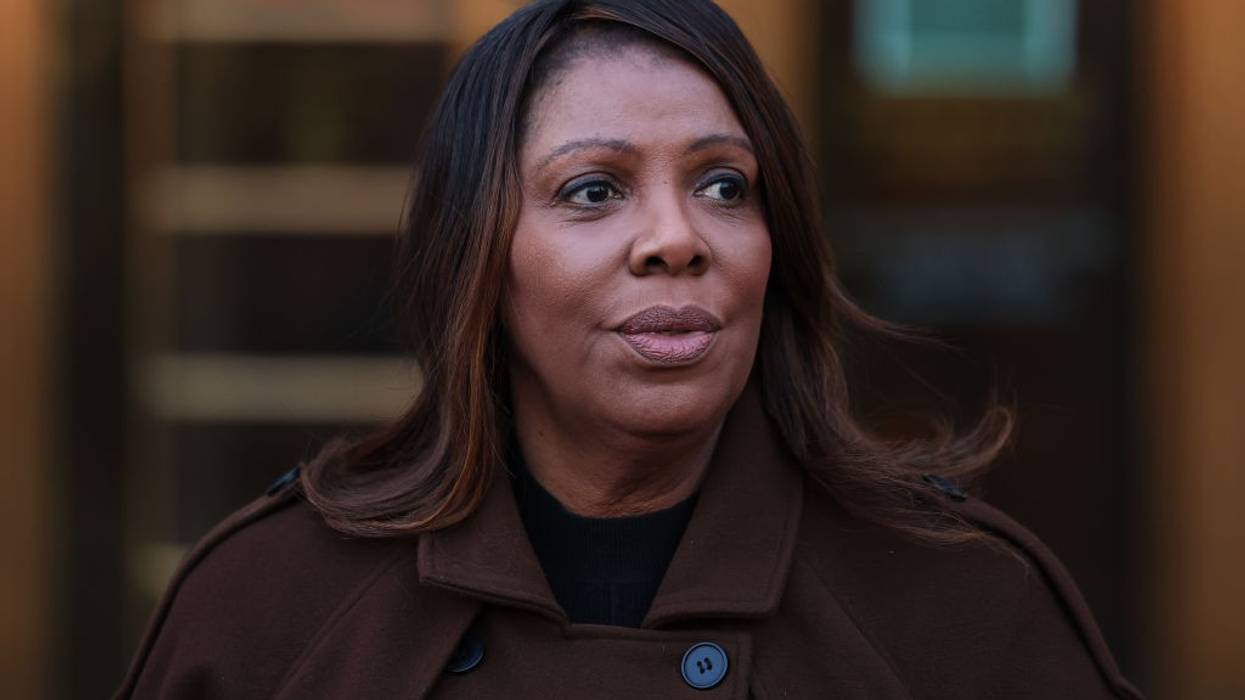
"Attorney General James took on Trump's fraud... and won," said New York City mayoral candidate Zohran Mamdani. "So it's little wonder that Trump's politicized DOJ is now coming after her."
A lawyer representing New York's top law enforcement official, Attorney General Letitia James, said Friday that the news of the Trump administration's investigation into James and her successful legal cases against President Donald Trump amounted to "the most blatant and desperate example" of the president's "political retribution campaign."
In recent days, The Washington Post reported Friday, the U.S. Department of Justice (DOJ) issued a subpoena to James as part of an investigation into whether the attorney general, a longtime adversary of Trump, violated the president's civil rights when she successfully sued him and his real estate business for fraud.
A second subpoena was related to James' litigation against the National Rifle Association, in which a New York jury found last year that former NRA CEO Wayne LaPierre and other executives had engaged in rampant corruption.
The civil rights statute that the Trump administration is reportedly using to investigate James' case against the president is typically used in cases related to law enforcement officers discriminating against or mistreating people based on race, religion, sex, or ethnicity. According to The New York Times, the DOJ is arguing that James used her law enforcement authority to deprive Trump of his rights.
James filed a civil fraud case against Trump and the Trump Organization in 2022 and won a $450 million judgment against the president in penalties plus interest. The interest the president owes has grown to half a billion dollars as he has refused to pay and has appealed the ruling.
New York Supreme Court Justice Arthur Engeron said that Trump and his company's executives were "incapable of admitting the error of their ways" regarding the "blatantly false financial data" they used to misrepresent of the value of their properties, which allowed them to get better loan and insurance rates.
The Democratic candidate in the New York City mayoral race, state Rep. Zohran Mamdani (D-36), expressed little surprise that Trump was apparently retaliating against the attorney general who won against him in court.
"Attorney General James took on Trump's fraud and the NRA's rampant corruption—and won both cases," said Mamdani. "So it's little wonder that Trump's politicized DOJ is now coming after her. The people of New York stand with their lawyer and champion."
The subpoenas were issued months after the DOJ appeared to try another tactic to punish James when it opened a criminal investigation into alleged mortgage fraud, accusing the attorney general of lying on loan documents for a home that she purchased in Virginia and saying the home would be her primary residence. James' attorneys have said the error was an honest mistake.
Dana Nessel, the Democratic attorney general of Michigan, came to James' defense on Friday and condemned "the depths to which Trump and his cronies will go to exact vengeance upon anyone who has dared to hold him accountable."
But the subpoenas, said Nessel, are not just a concern for James.
"Americans should know and understand how deeply compromised our federal law enforcement agencies are," she said. "If this can happen to AG James, it can happen to anyone."
Geoff Burgan, a spokesperson for James, agreed that "any weaponization of the justice system should disturb every American."
"We stand strongly behind our successful litigation against the Trump Organization and the National Rifle Association, and we will continue to stand up for New Yorkers' rights," said Burgan.
Abbe Lowell, the attorney general's lawyer, said that "weaponizing the Department of Justice to try to punish an elected official for doing her job is an attack on the rule of law and a dangerous escalation by this administration."
"If prosecutors carry out this improper tactic and are genuinely interested in the truth," said Lowell, "we are ready and waiting with facts and the law."
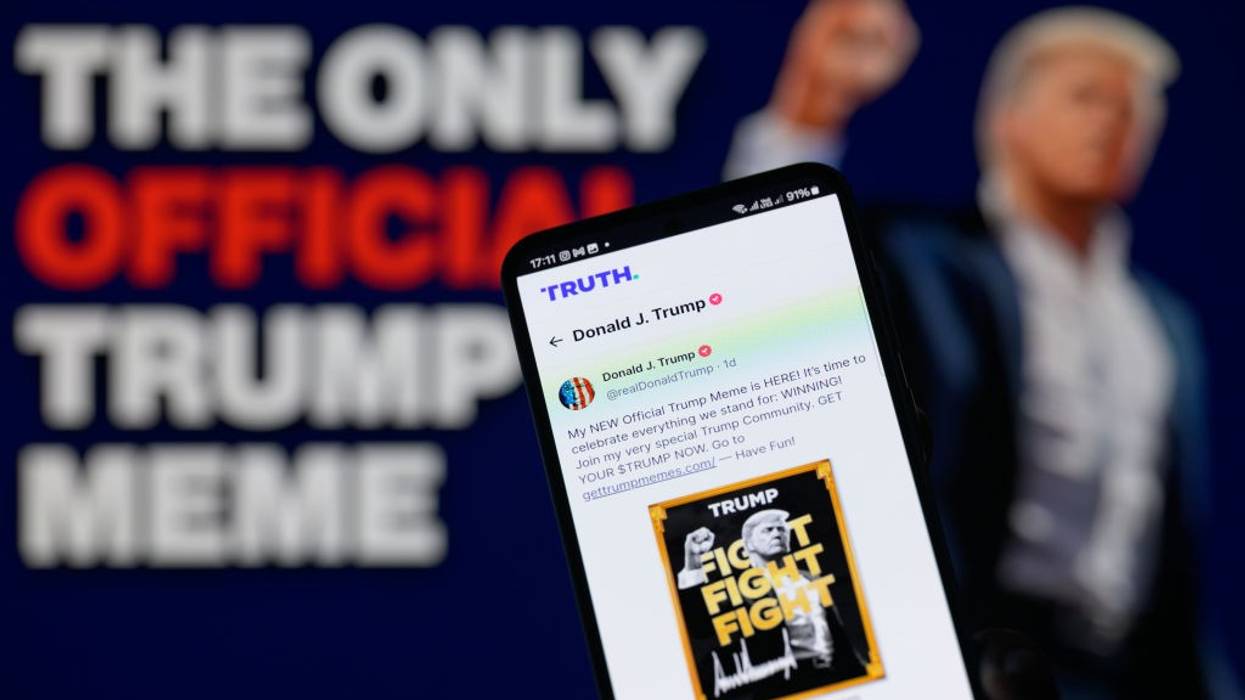
"Trump and his cronies get rich while the little guy gets fucked," said one critic.
Reuters reported Monday that the entities behind U.S. President Donald Trump's cryptocurrency token "generated between $86 million and $100 million in trading fees" from the mid-January launch to the end of the month, sparking a fresh flood of criticism and accusations of grift.
Trump announced the $TRUMP meme coin on the Friday night of the first-ever Crypto Ball in Washington, D.C., ahead of his Monday inauguration. Its market value swiftly soared that weekend, but has since dropped dramatically. Reuters had Chainalysis, Merkle Science, and a third blockchain analytics firm whose founder requested that it not be identified review the blockchain, a public ledger that shows transactions involving the coin.
Merkle Science estimated that three crypto wallets earned $86 million in trading fees from January 17 to January 30, while Chainalysis put it at about $94 million for the same period. The third firm found that by January 29, it was roughly $100 million.
According to Reuters:
One of the entities behind the crypto coin is a company owned by Trump, called CIC Digital. The official website for $TRUMP says CIC Digital will "receive trading revenue derived from trading activities" of the meme coin. Reuters could not determine what portion of the fees so far, if any, had accrued to Trump personally, nor the ownership of the other entities behind the coin.
The creators of the meme coin receive a share of the trading fees from Meteora, a little-known crypto exchange where the $TRUMP coins were first sold, the blockchain analyses showed.
At least 50 of the largest investors in the coin have made profits in excess of $10 million each on the $Trump coin, according to Chainalysis. At the same time, some 200,000 crypto wallets, most with small holdings, lost money on $Trump on the exchange, it said.
Responding to the reporting on the social media platform Bluesky, an account called Trumpflation Tracker declared that "Trump and his cronies get rich while the little guy gets fucked, same story different year."
Software engineer Jonathan McHugh similarly said, "His entire life is one giant grift, most often of people who can least afford it."
Rodrigo Fernandez, a senior researcher at the Amsterdam-based Center for Research on Multinational Corporations (SOMO), said that "the conflict of interest if obvious—but he managed to flood the zone to such an extend that this detail will go unnoticed."
The White House did not address Reuters' questions about the trading fees; instead, it sent a fact sheet about Trump's executive order on digital financial technology. The news agency noted that the president "has pledged to put his assets in a trust managed by his children on entering the White House" and his son Eric Trump did respond on behalf of the Trump Organization.
Eric Trump told Reuters that he is proud of what "we continue to accomplish in crypto. $TRUMP is currently the hottest digital meme on Earth." Echoing his previous comments on the coin, the president's son added that "we are just getting started."
Late last month, former U.S. Treasury Secretary Robert Reich wrote about the $TRUMP coin—as well as the first lady's $MELANIA coin that soon followed—and tied both to the president's related executive order "protecting and promoting" the crypto industry.
"In effect, Trump is writing the rules for a business venture from which he and his family are personally profiting. It could earn them hundreds of billions of dollars," he stressed. "The real significance of such blatant profiteering off the highest office in the land is what it reveals—not just about Trump but about the entire oligarchic enterprise he fronts for. It is likely to contribute to a vast wave of public alarm and disgust."
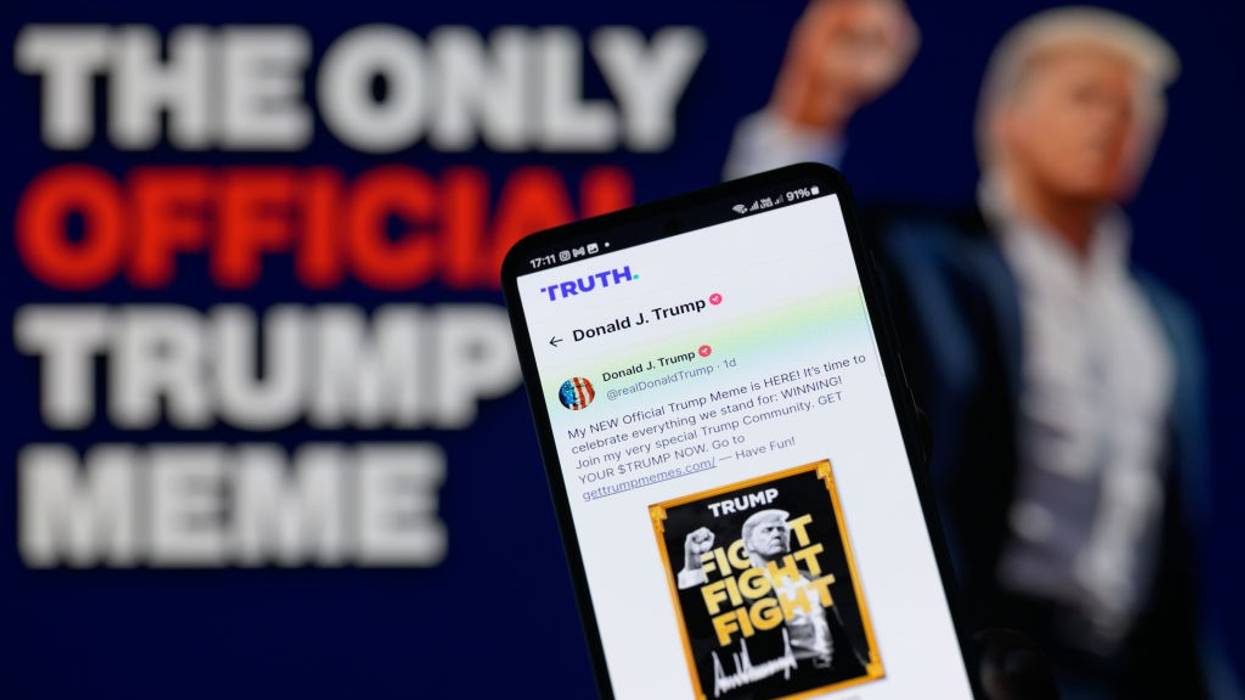
"We now have a president-elect who, the weekend before inauguration, is launching new businesses along with promises to deregulate... those sectors in a way to just blatantly profit off his own presidency."
U.S. President-elect Donald Trump faced a flood of criticism throughout the weekend for launching a cryptocurrency token as the world prepared for his Monday inauguration and policies expected to benefit the industry that helped Republicans take control of the White House and Congress.
"It is literally cashing in on the presidency—creating a financial instrument so people can transfer money to the president's family in connection with his office," Campaign Legal Center executive director Adav Noti told The New York Times. "It is beyond unprecedented."
Jordan Libowitz, vice president for communications at Citizens for Responsibility and Ethics in Washington, also contrasted Trump's move with behaviors of past presidents, telling Politico, "It is absolutely wild."
"After decades of seeing presidents-elect spend the time leading up to inauguration separating themselves from their finances to show that they don't have any conflicts of interest, we now have a president-elect who, the weekend before inauguration, is launching new businesses along with promises to deregulate... those sectors in a way to just blatantly profit off his own presidency," said Libowitz.
The president-elected announced the $TRUMP meme coin, hosted on the Solana blockchain, via his Truth social media platform and X—owned by Elon Musk, his ally and the richest person on the planet—on Friday, declaring that "it's time to celebrate everything we stand for: WINNING!"
He linked to a website that explains "there are 200 million $TRUMP available on day one and will grow to a total of 1 billion $TRUMP over three years." It also states that "Trump Memes are intended to function as an expression of support for, and engagement with, the ideals and beliefs embodied by the symbol '$TRUMP' and the associated artwork, and are not intended to be, or to be the subject of, an investment opportunity, investment contract, or security of any type."
Forbes reported that "the remaining 80% of tokens that have yet to be publicly released are owned by the Trump Organization affiliate CIC Digital LLC and Fight Fight Fight LLC, a company formed in Delaware on January 7, according to state filings, and both companies will receive an undisclosed amount of revenue derived from trading activity."
The president-elect's son Eric Trump, who helps run Trump Organization, told the Times that "this is just the beginning."
"I am extremely proud of what we continue to accomplish in crypto," he said in a statement. "$TRUMP is currently the hottest digital meme on Earth."
In an article simply headlined, "Donald Trump, crypto billionaire," Axios noted that by Sunday morning, "Trump's crypto holdings were worth as much as $58 billion on paper, enough—with his other assets—to make him one of the world's 25 richest people."
Responding to Axios' report, Wa'el Alzayat, who served as a Middle East policy expert at the U.S. Department of State for a decade, said that "when I was in government I couldn't accept a lunch over $20. Now anyone can give our next president millions."
Predicting that "this is going to end VERY badly for everyone except Donald Trump and his cronies," journalist Jeff St. John said that "it is a scandal and an outrage."
The meme coin announcement came as "the elite of the crypto world" gathered in Washington, D.C. for the first-ever Crypto Ball.
The president-elect did not attend the event, but House Speaker Mike Johnson (R-La.) and the nominees for commerce and treasury secretary, Howard Lutnick and Scott Bessent, were there. Reporting on the gala, Reuters pointed out that the Trump "courted crypto campaign cash with promises to be a 'crypto president,' and is expected next week to issue executive orders aimed at reducing crypto regulatory roadblocks and promoting widespread adoption of digital assets."
Trump is no stranger to ethics scandals. As Mother Jones detailed:
The meme coin is just the latest in a bizarre line of grifty, super-weird takes on "merch." Last February, Trump showed off gold "Never Surrender High-Tops" for $399 at Sneaker Con, which had Fox News applauding his appeal to Black voters. In March, he began endorsing the $59.99 "God Bless the USA Bible," which includes the Constitution, the Bill of Rights, and handwritten lyrics to the chorus of Lee Greenwood's "God Bless the USA." (Trump's inaugural committee has confirmed that he will not be using one of these Bibles to swear the presidential oath of office on Monday.) In August, Trump released a new round of his "baseball card" NFTs.
S.V. Dáte, a senior White House correspondent at HuffPost, highlighted Sunday that during the Republican's first term, "Trump's D.C. hotel was a convenient way for foreign and domestic lobbyists to put cash directly into his pocket."
"This crypto thing is next level. Anyone on the planet can put money directly into his pocket. Huge," Dáte added. "The efficiency here is a thing of beauty. With a hotel, you have all the costs of owning the property as well as paying cleaning staff, front desk staff, and so on. This selling of fake money is almost pure profit."
The Trump Organization sold the D.C. hotel in 2022, but The Wall Street Journal reported earlier this month that his "real estate company is in talks to reclaim" the property.
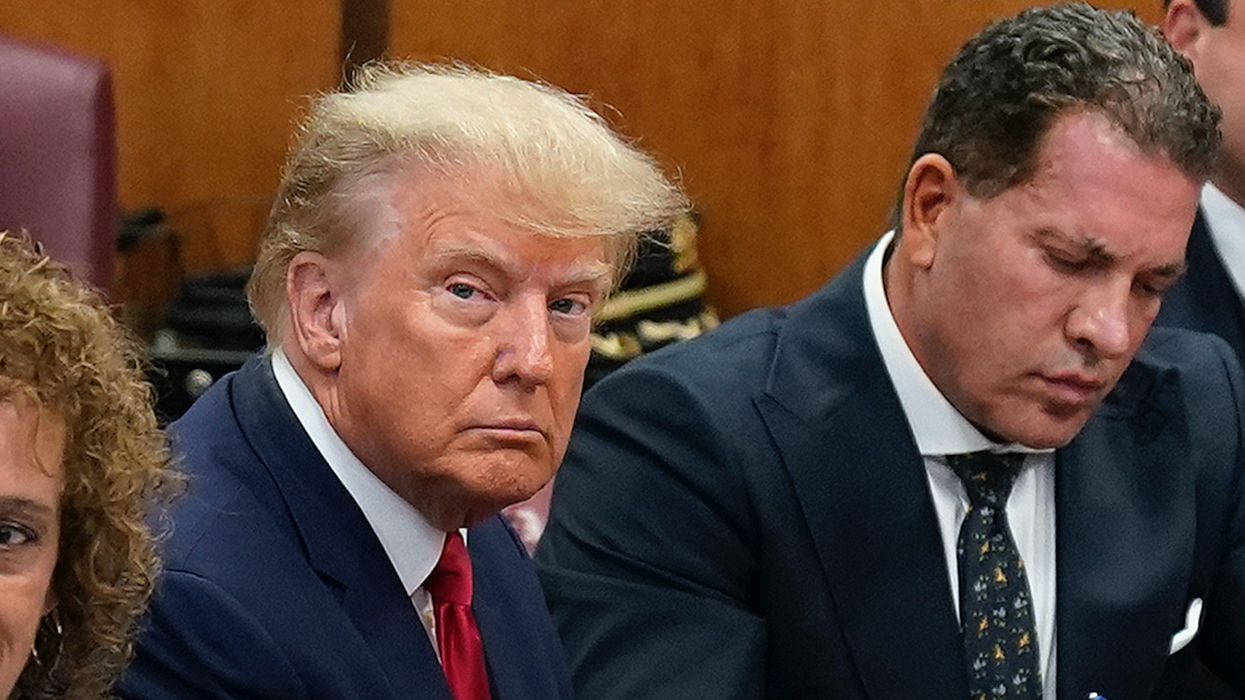
"They sure let him twist in the wind until the last moment," said one legal expert.
As the deadline arrived Monday for Donald Trump to pay a $454 million bond following a New York judge's ruling that the former Republican president and his company committed fraud, an appeals court in the state ruled that Trump would be permitted to post a vastly reduced amount.
The appeals court panel said the presumptive 2024 GOP presidential nominee could pay $175 million after the former president indicated he was unable to pay the full amount, having sought the bond from more than two dozen surety companies.
New York Attorney General Letitia James indicated earlier this month that she could begin seizing Trump's assets as soon as Monday if he was unable to pay the $454 million judgment.
Trump was hit with the fine as the result of James' civil fraud case against the former president and his real estate company, the Trump Organization. Judge Arthur Engoron found Trump and the firm had committed "repeated and persistent fraud," including by falsifying financial statements by as much as $2.2 billion.
The former president is appealing the ruling and had looked for companies to guarantee the full amount of the bond in the event that he lost the appeal, but with much of his fortune tied up in his properties, he was unable to come up with the collateral demanded by the institutions.
Trump said Monday that he plans to "post either a bond, equivalent securities, or cash" within the 10 days granted by the appeals court in order to delay enforcement of the full fine.
Former U.S. Attorney Harry Litman, now a senior legal affairs columnist for the Los Angeles Times, said the "pro-business" appellate court's decision was not surprising and was "reasonable," considering that "a bond is designed to secure eventual payment, not to financially wreck the defendant."
"In a sense the decision reducing Trump's bond and giving him more time is consistent with the 'treat Trump like any other litigant' credo," said Litman, "but they sure let him twist in the wind until the last moment."
James' office responded to the appeals court's decision by focusing on the fact that the full judgment against Trump, his sons Eric Trump and Donald Trump Jr., and former executive Allen Weisselberg still stands.
"Donald Trump is still facing accountability for his staggering fraud," said a spokesperson for James. "The court has already found that he engaged in years of fraud to falsely inflate his net worth and unjustly enrich himself, his family, and his organization."
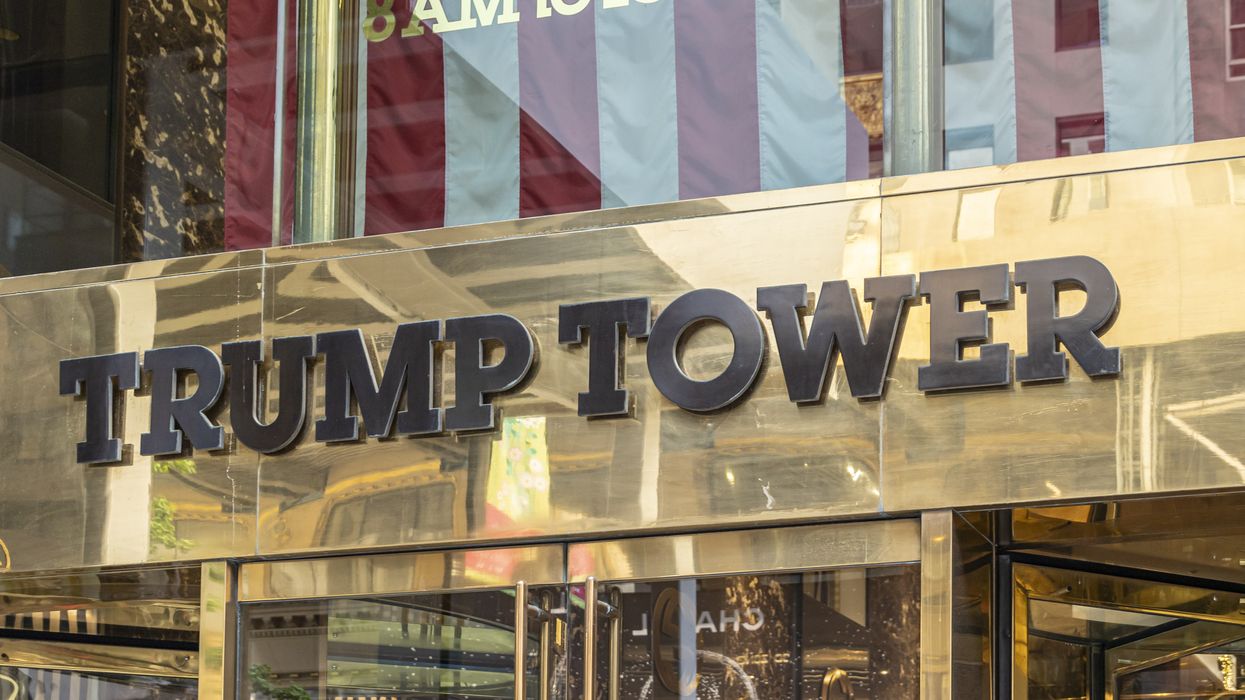
"Trump owes this money because he fraudulently misrepresented the value of his assets—and now (oops) apparently no one will accept those assets as collateral."
Less than a month after New York Attorney General Letitia James said she would be willing to seize former Republican President Donald Trump's assets if he is unable to pay the $464 million required by last month's judgment in his civil fraud case, Trump's lawyers disclosed in court filings Monday that he had failed to secure a bond for the amount.
In the nearly 5,000-page filing, lawyers for Trump said it has proven a "practical impossibility" for Trump to secure a bond from any financial institutions in the state, as "about 30 surety companies" have refused to accept assets including real estate as collateral and have demanded cash and other liquid assets instead.
To get the institutions to agree to cover that $464 million judgment if Trump loses his appeal and fails to pay the state, he would have to pledge more than $550 million as collateral—"a sum he simply does not have," reported The New York Times, despite his frequent boasting of his wealth and business prowess.
Trump himself was ordered to pay $454 million; the remainder was demanded from his sons, Donald Trump, Jr. and Eric Trump.
A Times analysis found earlier this month that Trump has only about $350 million in cash.
James has given Trump until March 25 to pay the judgment, which was announced last month as New York State Supreme Court Justice Arthur Engoron found the former president and his real estate empire, the Trump Organization, had committed "repeated and persistent fraud," including by falsifying financial statements by as much as $2.2 billion.
"It wouldn't surprise me if lenders are refusing real estate as collateral due to his lying about their value," said attorney Blake Allen.
The attorney general said last month that regardless of Trump's difficulty in securing the bond, her office is "prepared to make sure that the judgment is paid to New Yorkers" and suggested she would pursue asset seizure.
"I look at 40 Wall Street each and every day," James told ABC News, referring to one of Trump's buildings in New York's Financial District.
James hasn't publicly stated what other Trump assets she would potentially seize from the presumptive Republican presidential candidate.
On Monday, Trump asked an appeals court to issue a stay on the judgment, pausing enforcement while his appeal proceeds, or to accept just $100 million.
In addition to potentially levying and selling Trump's assets, Syracuse University law professor Gregory Germain told The Associated Press last month, James' office could "lien his real property, and garnish anyone who owes him money."
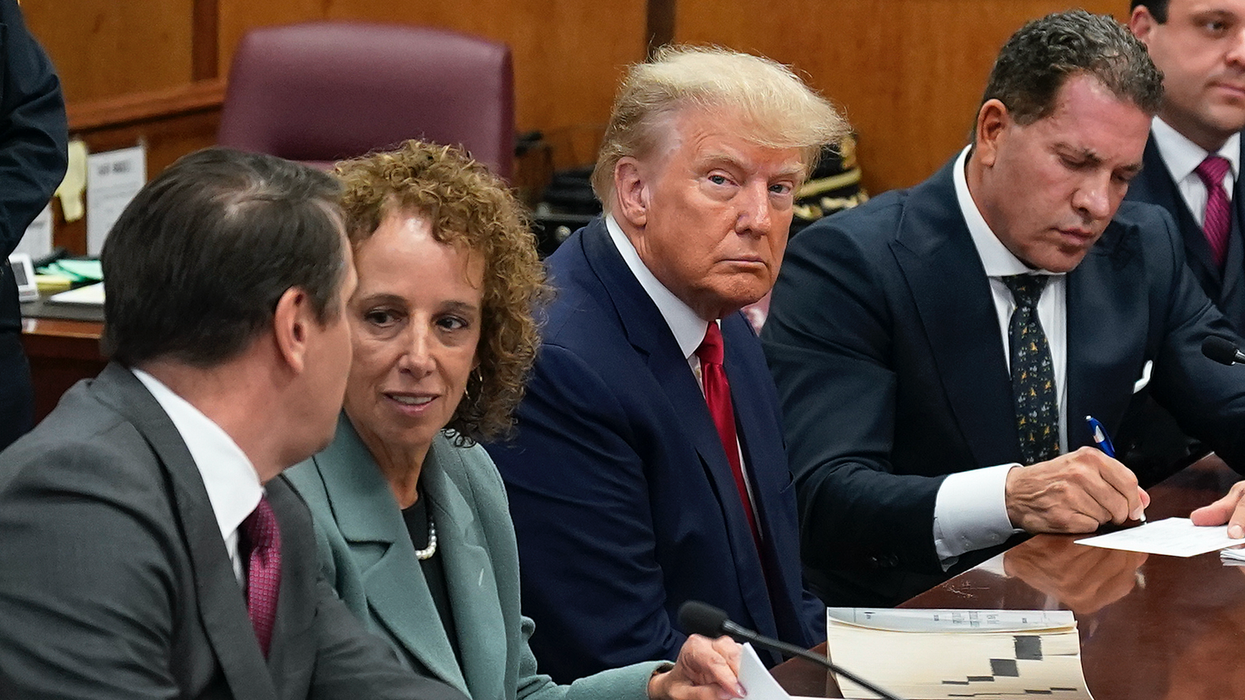
A New York judge wrote the ex-president and his organization showed a "complete lack of contrition and remorse," bordering on "pathological."
Noting that Donald Trump and his real estate company "are incapable of admitting the error of their ways," New York State Supreme Court Justice Arthur Engoron on Friday ordered Trump and his associates to pay $364 million in fines and barred the former U.S. president from "serving as an officer or director of any New York corporation or other legal entity in New York for a period of three years."
Trump and his company are responsible for $355 million; his adult sons, Donald Trump Jr. and Eric Trump, owe $4 million each; and longtime executive Allen Weisselberg was fined $1 million.
The judgment comes weeks after Trump was ordered to pay $83.3 million for defaming writer E. Jean Carroll. A jury also found last year that Trump was liable for sexually abusing her in 1996.
The former president and the Trump Organization, whose top executives include his sons, were accused by New York Attorney General Letitia James, a Democrat, of "repeated and persistent fraud," including falsifying financial statements by as much as $2.2 billion.
In his ruling, Engoron took issue with Trump's "refusal to admit error," and quoted 18th-century English poet Alexander Pope: "To err is human, to forgive is divine."
"Defendants are apparently of a different mind," wrote the judge. "Their complete lack of contrition and remorse borders on pathological."
Susanne Craig, an investigative journalist at The New York Times who has covered Trump's finances and legal cases, told MSNBC the ruling is a "massive, seismic decision today for" the president and his company.
"With Donald Trump, I always think the language he speaks is money and this is a lot of money," said Craig. "We don't really know how much cash he has on hand. At one point he said he had $400 million and there's documents that have been filed with the court that said he could have maybe had in that range at some point, we don't know."
"To even say it's a body blow may be an understatement," said Craig.
James called the ruling "a massive victory."
Trump will have to pay "over $450 million in disgorgement and interest," the attorney general noted.

A court-appointed monitor found that a $48 million loan Trump has long claimed he took out "never existed."
A finding by the court-appointed special monitor overseeing former U.S. President Donald Trump's fraud case in New York placed questions about a loan acquisition—and potential tax evasion—back into the spotlight over the weekend, with a tax attorney saying the Republican appeared to have fabricated the loan.
Former federal judge Barbara Jones wrote to Manhattan Supreme Court Justice Arthur Engoron Friday about her review of Trump's business dealings through the Trump Organization, the company at the center of New York Attorney General Letitia James' business fraud case against the former president, who is now running for the GOP's presidential nomination in the 2024 election.
Ahead of Engoron's verdict, which is expected this week, Jones included in a footnote her finding that a $48 million loan that Trump has for years claimed he owed to one of his companies never actually existed.
"When I inquired about this loan, I was informed that there are no loan agreements that memorialize the loan, but that it was a loan that was believed to be between Donald J. Trump, individually, and Chicago Unit Acquisition for $48 million," Jones wrote. "However, in recent discussions with the Trump Organization, it indicated that it has determined that this loan never existed."
The loan would therefore be removed from corporate financial statements and forms submitted to the Office of Government Ethics, said Jones.
But previous financial disclosures, including forms submitted to the government as recently as last October, indicated that Trump owed money to Chicago Unit Acquisition—suggesting the disclosures "were intentionally submitted with inaccuracies related to the debt equating to tens of millions of dollars," according to Business Insider.
"It would appear, assuming Judge Jones' letter is accurate, that this amounts to tax evasion," Martin Lobel, a tax lawyer, told The Daily Beast.
Business Insider noted that Mother Jones theorized about the "mystery loan" in 2019, reporting that Trump's debt was partially forgiven by a hedge fund he owed money to after he paid about half of it off.
Mother Jones suggested Trump may have "parked" his debt, referring to the practice used by "big-time borrowers" to avoid paying taxes on loans that "could be as high as 39%."
"They purchase the debt through a corporation, parking the loan within this entity to temporarily avoid realizing income," wrote Russ Choma at Mother Jones at the time, noting that the practice falls into a "legal gray area" but violates federal tax law if the borrower parks the debt indefinitely with no intention of repaying it.
In Trump's case, Choma hypothesized, "there may have been no loan to buy, no debt to park; Trump might have invented a loan—and then parked it."
The letter sent to Engoron on Friday suggests that "Jones has apparently confirmed what Mother Jones theorized," said Roger Sollenberger of The Daily Beast.
"While the reasons behind claiming this fake loan are still unknown, at the very least he misled the government for years about his finances," Jordan Libowitz, communications director at Citizens for Responsibility and Ethics in Washington, told The Daily Beast. "It appears that Trump knowingly and intentionally broke the law."
Lobel noted that Jones' letter points to the kind of conduct that the Republican Party aims to stop the Internal Revenue Service (IRS) from penalizing wealthy tax evaders. Earlier this month, the GOP secured concessions from Democratic leaders for a budget deal that would include an acceleration of funding cuts to the IRS.
"This explains why the Republicans have been so intent on cutting the IRS's budget," Lobel told The Daily Beast, "because they don't want it to be able to audit transactions like this."

"I want to be very clear—we don't think that is enough," said New York District Attorney Alvin Bragg.
A New York Supreme Court judge on Friday ordered the Trump Organization, former President Donald Trump's real estate empire to pay the maximum criminal penalty for charges including tax fraud.
The fine of $1.6 million is financially insignificant to the multibillion-dollar company, but New York District Attorney Alvin Bragg noted that the Trump Organization's felony conviction "was consequential."
It was "the first time ever for criminal conviction of former President Trump's companies, and indeed I would go so far as to say the first time ever for any former president certainly in my lifetime," Bragg told reporters in New York Friday.
"Our laws in this state need to change in order to capture this type of decade-plus systemic, egregious fraud."
He added that state lawmakers should pass stricter penalties for corporate fraud.
"I want to be very clear—we don't think that is enough," Bragg said. "Our laws in this state need to change in order to capture this type of decade-plus systemic, egregious fraud."
A jury in Manhattan found the Trump Organization guilty last month of 17 counts including conspiracy, criminal tax fraud, and falsifying business records.
The company's lawyers had requested a smaller financial penalty and had claimed Allen Weisselberg, an executive who pleaded guilty to numerous tax crimes and was sentenced to five months in prison earlier this week, was responsible for the company's fraudulent activity.
The Manhattan district attorney's office rejected that claim, with prosecutor Joshua Steinglass arguing that the Trump Organization carried out "a multi-dimensional scheme to defraud the tax authorities."
Bragg suggested Friday that more charges, potentially against the former Republican president, could follow.
The sentences handed down this week close "this important chapter of our ongoing investigation into the former president and his businesses," said Bragg. "We now move on to the next chapter."