

SUBSCRIBE TO OUR FREE NEWSLETTER
Daily news & progressive opinion—funded by the people, not the corporations—delivered straight to your inbox.
5
#000000
#FFFFFF
To donate by check, phone, or other method, see our More Ways to Give page.
Daily news & progressive opinion—funded by the people, not the corporations—delivered straight to your inbox.

"After ICE raids in Minnesota when immigration enforcement officers shot and killed two people, Alex Pretti and Renee Good, DHS repeatedly gave false statements about self-defense in an attempt to justify the murders, eroding community trust."
The Texas Civil Rights Project demanded an independent investigation after US Immigration and Customs Enforcement fatally shot a Mexican immigrant in Houston on Tuesday morning.
The US Department of Homeland Security (DHS), which includes the agency, said on social media that just before 7:00 am CT, "ICE law enforcement attempted to conduct a vehicle stop as part of a targeted enforcement operation to arrest an illegal alien. The driver of the vehicle, Lorenzo Salgado Araujo—an illegal alien from Mexico—attempted to evade arrest."
"From information we are receiving, he rammed an ICE law enforcement vehicle, refused to follow multiple verbal commands, and weaponized his vehicle in an attempt to run over an ICE law enforcement officer, resulting in our officer firing his weapon in self-defense," DHS said. "The driver was struck, and emergency services were immediately contacted. The driver was transported to the hospital, where he passed away from his injuries," the department added.
The Houston Fire Department said that Araujo suffered a gunshot wound to his stomach area and CPR was performed while he was transported to Ben Taub Hospital, where he was declared dead , according to a local NBC affiliate. The Federal Bureau of Investigation is now leading the probe.
"We condemn this violent use of force and hold deep concern for the victim and his family," Texas Civil Rights Project (TCRP) president Rochelle Garza said in a statement. "Immigration enforcement should never lead to violence in our neighborhoods or harm our community members. This raises urgent questions about how enforcement operations are being conducted, what safeguards exist to prevent harm, and how to ensure accountability when people are killed."
"After ICE raids in Minnesota when immigration enforcement officers shot and killed two people, Alex Pretti and Renee Good, DHS repeatedly gave false statements about self-defense in an attempt to justify the murders, eroding community trust," she highlighted. "And in March 2026, only through a public information request did we learn of Ruben Ray Martinez, a 23-year-old US citizen that was killed by ICE in South Padre Island, Texas."
Garza added that "we demand full transparency, an independent investigation into the shooting and any use of racial profiling that led to it, and accountability for the use of deadly force. Our neighborhoods are not battlegrounds. TCRP will continue seeking justice and standing alongside all of our neighbors across Texas."
The shooting—far from the first by the agency during President Donald Trump's mass detention and deportation campaign—occurred in the district of Democratic Congresswoman Sylvia Garcia, who similarly said that "ICE has released an initial account, but the facts must be independently and thoroughly investigated, including the circumstances that led to the use of deadly force."
"All available footage, communications, and other evidence should be preserved and reviewed as part of a full and impartial investigation," Garcia continued. "The victim's family, my constituents, and the entire community deserve a complete and transparent accounting of what happened."
Alejandra Salinas, a member of the Houston City Council, called the shooting "deeply concerning" and said that "the use of deadly force demands full scrutiny and transparency."
"I am calling for a thorough and impartial investigation into the circumstances surrounding the shooting, including the prompt release of all available video and investigative findings," Salinas said. "The public deserves a timely account of what happened, clear answers, and accountability. My office has reached out to the appropriate city departments to determine what additional information is available and whether any city personnel or resources were involved in the incident."
Another homicide by Trump's secret police. Keep in mind they are training always to claim that they were struck by another car. So far this claims have proven uniformly false. An ICE agent shot and killed a Mexican citizen in Houston Tuesday morning after he allegedly drove into an ICE vehicle, an
[image or embed]
— Scott Horton (@robertscotthorton.bsky.social) July 7, 2026 at 5:08 PM
Jason Chavez, who represents Minneapolis' 9th Ward on the City Council, said on social media: "Rest in peace, Lorenzo Salgado Araujo, a Mexican resident murdered by ICE in Houston, Texas this morning. Unfortunately, the federal government is using the same talking points they used against Renee Good in this case. It's disgusting."
"Lorenzo deserves answers and justice. Renee still deserves answers and justice. Every family torn apart by this agency deserves justice," Chavez declared. "Abolish ICE!!!"
The deadly ICE encounter in Texas came less than a week after a federal agent fired at a vehicle in Harrisburg, Pennsylvania after unsuccessfully trying to arrest the driver, identified by the agency as Clemente Lara-Hernandez of Mexico.
In Pennsylvania, ICE similarly said the driver had "weaponized his car and rammed an ICE law enforcement vehicle," then "dangerously drove on the wrong direction on a one-way street."
Meahwhile, Justin Douglas, one of the commissioners in Dauphin County, which includes Harrisburg, called for a "thorough, independent, and transparent investigation," noting that ICE actions caught on camera appeared to run afoul of the US Department of Justice's policy for using deadly force.
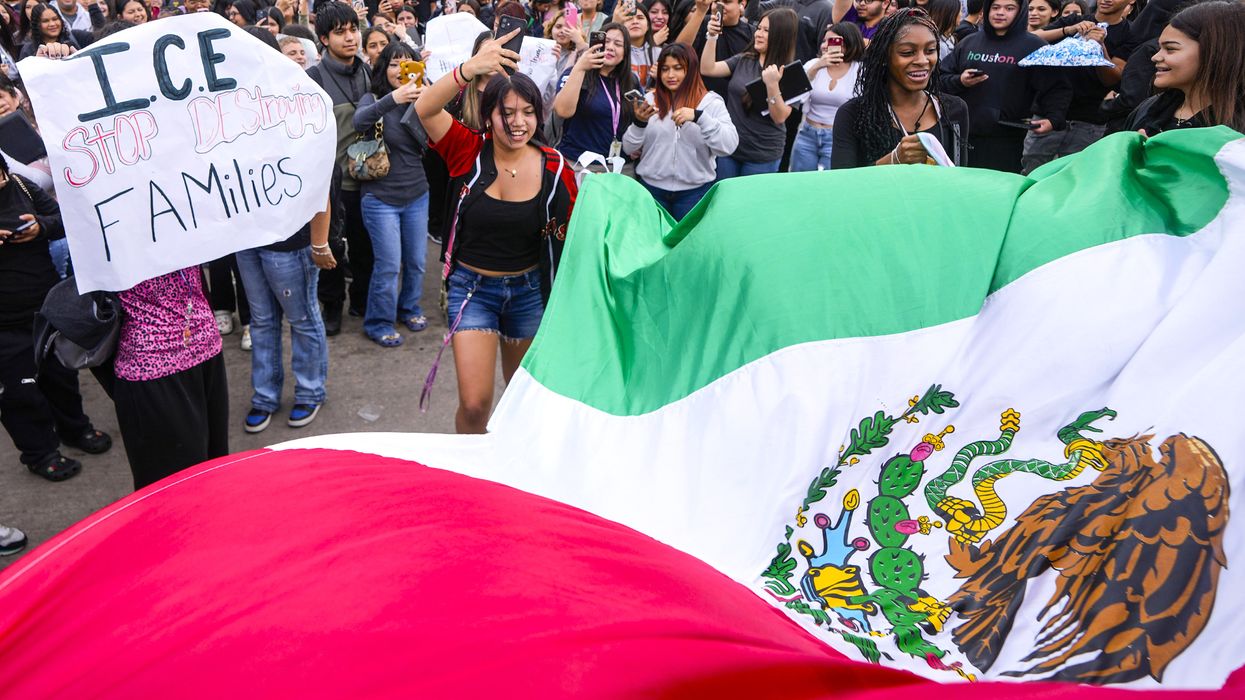
"Trump and Greg Abbott are taking law enforcement who should be focused on keeping people safe and are using them to deport citizens. It's wrong, it’s disturbing, and it hurts public safety."
In recent weeks, immigration agents acting on the Trump administration's orders have alarmed rights advocates by deporting multiple U.S. citizen children and entrapping a person marked for deportation by asking him to attend an official immigration-related appointment—and this week, advocacy groups said Thursday, a family in Texas was subjected to both actions once again.
The Texas Civil Rights Project (TCRP), the Immigrant Legal Resource Center, and Grassroots Leadership said they were not able to confirm the whereabouts of three children aged 9, 5, and 4—the youngest two of whom are U.S. citizens born and raised in Austin, Texas—after they were deported to Mexico with their mother, Denisse Parra Vargas.
Parra Vargas and her partner, Omar Gallardo Rodríguez, were stopped on April 30 by the Texas Department of Public Safety in Austin, when authorities saw they were driving a truck with expired license plates. DPS contacted Immigration and Customs Enforcement (ICE) when it found the couple did not have legal status in the United States, and Gallardo Rodríguez was deported days later.
Authorities gave Parra Vargas an ankle monitor to wear and told to visit an Intensive Supervision Appearance Program (ISAP) office to check in with ICE agents.
"ICE has no authority to detain or deport U.S. citizens regardless of the status of their parents."
According to the advocacy groups, ICE told her if she attended all her ISAP appointments she would be eligible for a work permit. Parra Vargas was also told to attend a hearing for Gallardo Rodríguez at an ICE facility on May 6.
"But her partner had no hearing and instead she and her minor children were detained, including two U.S. citizen children," said the groups.
The family was taken to a facility in Laredo before being deported and sent to the border city of Reynosa, Mexico, where they were at a shelter as of Wednesday.
Daniel Hatoum, an attorney with TCRP, told the Austin American-Statesman that in cases like that of Parra Vargas and her children, "they basically tell the family: 'Either take them with you or we're going to separate them quickly from you.' They then claim that's not really a deportation because they were given the option of going. But it certainly is in a colloquial sense."
The advocacy groups said that while ICE may claim it gave Parra Vargas the "choice" to leave her young children in the U.S., the agency "did not allow for communication with nearby family members who were willing to keep the children and instead detained them for 24 hours in secretive locations before deporting the U.S. citizen children to Mexico."
"ICE was informed by the family and legal advocates that the children were U.S. citizens and ICE knowingly deported them anyway in violation of their own policies and laws," said the groups. "ICE has no authority to detain or deport U.S. citizens regardless of the status of their parents."
The organizations said they were not able to communicate with Parra Vargas when she was in detention in order to provide her with legal counsel.
The family's deportation comes weeks after an ICE field office in New Orleans deported three American children—aged 2, 4, and 7—including one who has a rare cancer.
The Department of Homeland Security claimed in a statement to the American-Statesman that "the narrative that DHS is deporting American children is false and irresponsible reporting."
But U.S. Rep. Greg Casar (D-Texas) said the facts show that "two children with U.S. citizenship—born and raised in Austin—were just detained and deported to Mexico."
Two children with US citizenship — born and raised in Austin — were just detained and deported to Mexico. Trump and Greg Abbott are taking law enforcement who should be focused on keeping people safe and are using them to deport citizens. It’s wrong, it’s disturbing, and it hurts public safety.
[image or embed]
— Congressman Greg Casar (@repcasar.bsky.social) May 9, 2025 at 10:52 AM
Sulma Franco, who works with Grassroots Leadership, told the American-Statesman that the parents "were people who were doing all that they could to provide for their families, responsibly, without trouble."
Carlos Enrique González Echeverría at the Mexican Consulate in Austin told the newspaper that Parra Vargas had a deportation order from 2019, when she didn't appear at an immigration court hearing. She was denied asylum in 2016 when she applied at the U.S.-Mexico border after traveling to the U.S. to escape her abusive former partner.
TCRP, which is representing the family, said Thursday that "there are no confirmed details about the whereabouts or welfare of her children" following their deportation to Mexico.
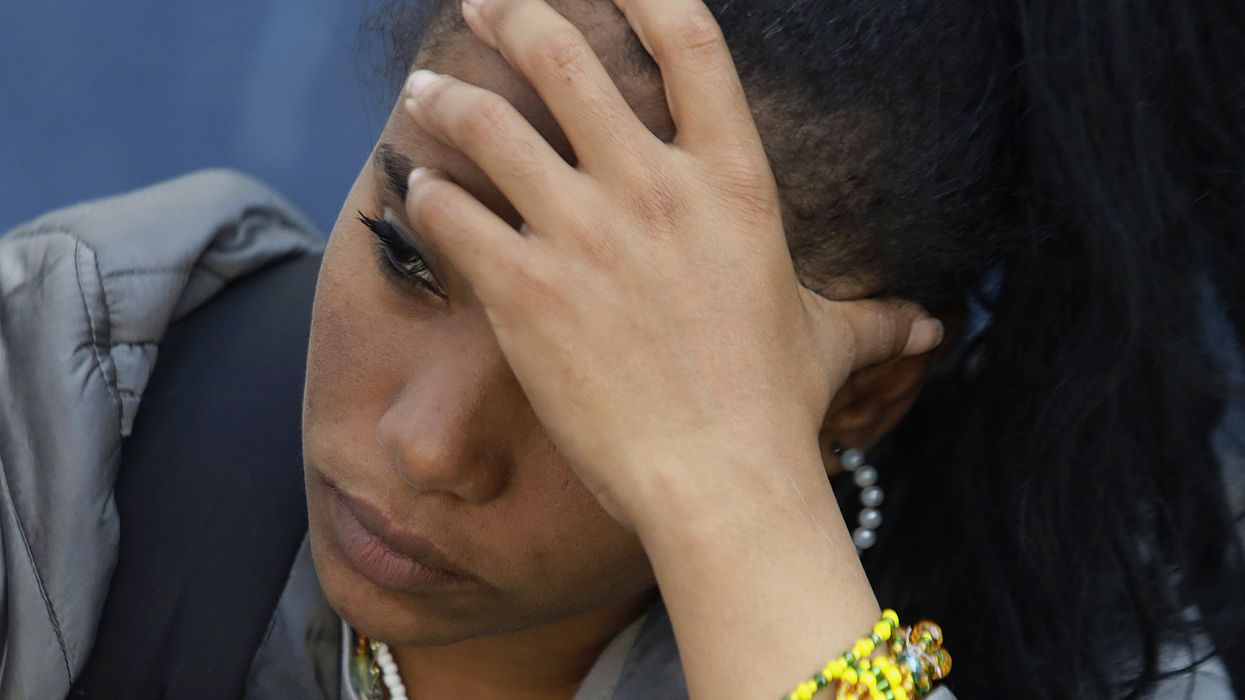
"The immigration laws do not give the president autocratic power to override Congress and brazenly violate U.S. treaty obligations related to the protection of refugees," said one advocate.
Accusing U.S. President Donald Trump of using "racist conspiracy theories" and lies about refugees to block people from exercising their right to seek asylum in the United States, several advocacy groups filed a federal lawsuit on Monday to block the Republican president's recent proclamation aimed at shutting down the asylum process at the southern border.
Disregarding the fact that the right to seek asylum has been part of U.S. law for more than four decades, the president quickly said after taking office last month that he was suspending the asylum process at the U.S.-Mexico border until the "invasion at the southern border has ceased."
The move left "no avenue open for people to seek asylum, even if they present themselves at a port of entry," said the groups, including the Texas Civil Rights Project, the National Immigrant Justice Center, and the ACLU.
Migrants who had traveled across Central America and Mexico in hopes of seeking asylum found soon after Trump's inauguration that their appointments with U.S. Customs and Border Protection had been canceled, leading to scenes of desperation at the border.
"This is the latest flagrantly illegal attempt by the executive branch to end humanitarian protection at the U.S.-Mexico border," said Richard Caldarone, senior litigation attorney at the National Immigrant Justice Center. "The immigration laws do not give the president autocratic power to override Congress and brazenly violate U.S. treaty obligations related to the protection of refugees. This latest attempt to do so will make thousands of people vulnerable to persecution, torture, and death, and we will not stop fighting until all those who require protection have the opportunity guaranteed by U.S. law to seek asylum in this country."
"Just as he did in his first term, the president is attempting to rewrite our laws by executive fiat and impose an illegal policy of mass expulsions."
Melissa Crow, director of litigation at the Center for Gender & Refugee Studies, warned that Trump cannot use the "lie" of an invasion by "families, children, and adults seeking safety" at the border to circumvent U.S. laws.
"Just as he did in his first term, the president is attempting to rewrite our laws by executive fiat and impose an illegal policy of mass expulsions," said Crow.
The asylum proclamation is just one of the anti-immigration actions Trump has taken in his first weeks in office. He declared an end to birthright citizenship—and was quickly challenged in court by rights groups and Democratic state attorneys general, with a judge ruling that the order was "blatantly unconstitutional"—and has directed Immigration and Customs Enforcement to round up thousands of undocumented immigrants, roughly half of whom didn't have a criminal record.
"Once again, the Trump administration wants to eliminate the ability of families to seek safety in our country in the form of asylum, a legal pathway," said Jennifer Babaie, director of advocacy and legal services of Las Americas Immigrant Advocacy Center. "Regardless of any person's individual beliefs on immigration, any government attempt to blatantly violate our laws is a serious issue impacting all communities across the country. Spreading falsehoods about an 'invasion' at our border only fuels fear, aiming to dismantle the entire asylum process and weaponize our immigration laws."
Rochelle Garza, president of the Texas Civil Rights Project, said the suspension of asylum was "extreme, unjust, and a disservice to families seeking safety at our southern border."
"Denying migrants and displaced individuals from the opportunity to find safety undermines our nation's values and creates additional strain on our already burdened border communities," said Garza. "Our lawsuit underscores the unlawful nature of this policy and emphasizes the need to protect asylum seekers' rights. The U.S. should lead by example in implementing fair immigration practices and treating the most vulnerable with dignity."
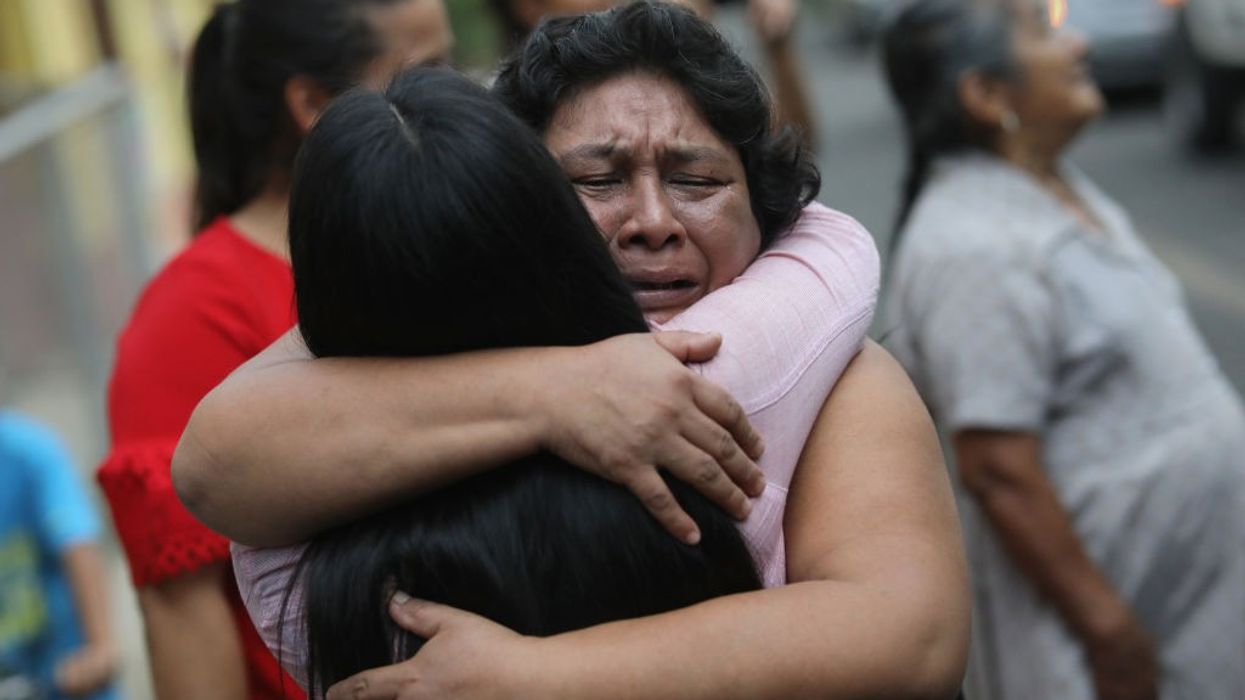
Up to 1,360 children who were separated from their parents under the Trump administration have not been reunited six years later, according to the new report from a trio of human rights groups.
A report published Monday by a coalition of human rights groups estimates that as many as 1,360 children who were separated from their parents under the first Trump administration's "zero tolerance" policy have yet to be reunited, causing immense suffering for families ensnared in the punitive effort to deter border crossings.
The 135-page report was produced by Human Rights Watch (HRW), the Texas Civil Rights Project (TCRP), and the Lowenstein International Human Rights Clinic at Yale Law School, and it comes as immigrant rights advocates brace for President-elect Donald Trump's return to power alongside officials who helped develop and implement the large-scale family separations.
"Forcible separation of children from their families inflicted harms that were severe and foreseeable," states the report, which examines public and internal government documents, materials from legal proceedings, and the findings of government investigations and features interviews with parents and children who were forcibly separated by the Trump administration.
"Once parents realized they would not be immediately reunited with their children, they were distraught," the report continues. "Some children sobbed uncontrollably. Many felt abandoned. Nearly all were bewildered, not least because immigration officials would not tell them where their parents were or gave responses that proved to be lies."
The groups estimate that the first Trump administration separated more than 4,600 children from their families during its four years in power, and nearly 30% of the children are unaccounted for and "may remain separated from their parents."
"A government should never target children to send a message to parents."
While family separations predated Trump's first term and have continued under President Joe Biden, experts argue the Trump administration's policy was uniquely expansive and cruel. The groups behind the new report said the Trump administration's family separation efforts "constituted enforced disappearance and may have constituted torture."
"We need to take away children," Jeff Sessions, then Trump's attorney general, reportedly said during a May 2018 call with five federal prosecutors, the report observes, citing handwritten notes from one of the prosecutors.
Michael Garcia Bochenek, senior children's rights counsel at HRW and an author of the new report, said in a statement Monday that "it's chilling to see, in document after document, the calculated cruelty that went into the forcible family separation policy."
"A government should never target children to send a message to parents," Bochenek added.
The separations traumatized both parents and children, according to the report.
"Migrant children who have been forcibly separated from their parents demonstrate greater emotional and behavioral difficulties than children who have never been separated," the report notes. "Parents repeatedly told Al Otro Lado, a legal services organization based in Tijuana, that forced separation from their children was 'the worst thing they had ever experienced' and reported 'continued disturbances in sleep, nightmares, loss of appetite, loss of interest, fear for the future, constant worry, hopelessness, and loss of the ability to concentrate.'"
"In May 2018," the report adds, "a man killed himself after [U.S. Customs and Border Protection] agents forcibly separated him from his children."
HRW, TCRP, and the Lowenstein International Human Rights Clinic called on Congress and the Biden administration to "put in place comprehensive measures to remedy the wrongs these families suffered" and urged the U.S. Department of Homeland Security—soon to be led by far-right South Dakota Gov. Kristi Noem—to "adopt standards that presumptively keep families together, separating them only when in a child's best interest."
Trump campaigned during the 2024 election on a pledge to launch the "largest domestic deportation operation in American history," and he said during an interview aired last week that "we don't have to separate families."
"We'll send the whole family, very humanely, back to the country where they came," Trump said, suggesting he'll also deport children who are U.S. citizens.
When pressed on whether he intends to revive the "zero tolerance" policy, Trump said, "We need deterrence."
"When somebody comes here illegally, they're going out. It's very simple," he added. "Now if they come here illegally but their family is here legally, then the family has a choice. The person that came in illegally can go out, or they can all go out together."
The ACLU, which has represented separated families in court, has pledged to take swift legal action if the incoming Trump administration brings back "zero tolerance."
"I am hopeful that the Trump administration recognized the outpouring from the American public and the worldwide revulsion to ripping little children away from their parents and will not try to separate families again," ACLU attorney Lee Gelernt told TIME magazine last month. "But if it does we will be back in court immediately."
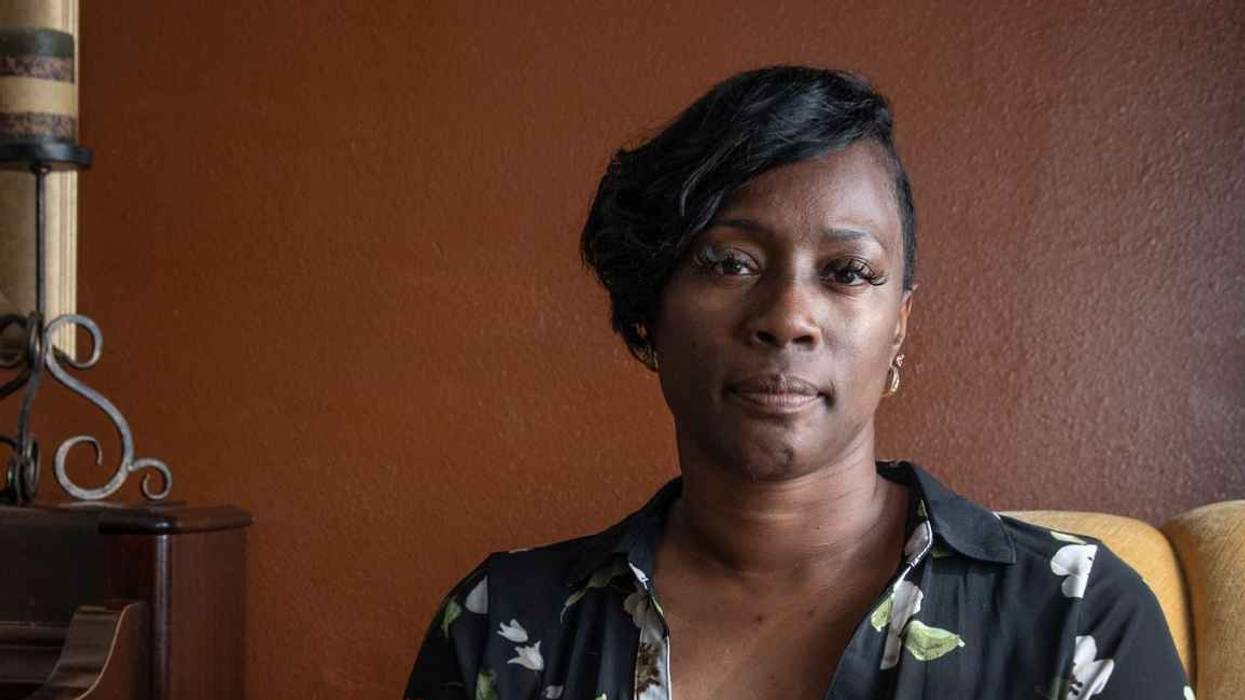
"I was thrown into this fight for voting rights and will keep swinging to ensure no one else has to face what I've endured for over six years," Mason said following her acquittal.
Crystal Mason, the Texas woman sentenced in 2018 to five years in prison for casting an illegal ballot in the 2016 election, was cleared Thursday by a state appeals court, which found no evidence that she knew she was ineligible to vote.
The 2nd Court of Appeals in Fort Worth formally acquitted Mason, a grandmother and mother of three who was on supervised release for felony tax fraud when she filled out a provisional ballot that was never counted in the 2016 presidential election. Her prosecution was based on an affidavit she signed before voting that required her to swear that she had "completed all my punishment including any term of incarceration, parole, supervision, period of probation, or I have been pardoned."
Mason's parole supervisor testified at her trial that no one from the office informed her that she was ineligible to vote.
"Crystal Mason was unfairly targeted because of bad faith actors in this state who are determined to use every tool at their disposal to attempt to intimidate voters, especially Black and Brown voters."
The court's ruling states that prosecutors' primary evidence "was that Mason read the words on the affidavit, but even if she had read them, they are not sufficient—even in the context of the rest of the evidence in this case—to prove beyond a reasonable doubt that she actually knew that being on supervised release after having served her entire federal sentence of incarceration made her ineligible to vote by casting a provisional ballot when she did so."
Mason contended that she did not carefully read the affidavit and that she would never have risked her freedom by knowingly casting an illegal ballot.
"I am overjoyed to see my faith rewarded today," Mason said Thursday in a statement published by the ACLU. "I was thrown into this fight for voting rights and will keep swinging to ensure no one else has to face what I've endured for over six years, a political ploy where minority voting rights are under attack."
"I've cried and prayed every night for over six years straight that I would remain a free Black woman," Mason added. "I thank everyone whose dedication and support carried me through this time and look forward to celebrating this moment with my family and friends."
Christina Beeler, voting rights attorney at the Texas Civil Rights Project, said that "this ruling gives us hope not just for Ms. Mason, but for the broader fight for voting rights in Texas."
"Crystal Mason was unfairly targeted because of bad faith actors in this state who are determined to use every tool at their disposal to attempt to intimidate voters, especially Black and Brown voters, but that approach will not work here in Texas," she continued.
"We are proud to have assisted in securing Ms. Mason's freedom, and we are proud of Ms. Mason—instead of intimidating Ms. Mason through her unlawful prosecution, the state has empowered Ms. Mason to continue fighting for voting rights alongside other advocates," Beeler added.
Sophia Lin Lakin, director of the ACLU's Voting Rights Project, said: "Crystal Mason has bravely fought this grave injustice for years now. No one should be forced to endure what she has, and Crystal's victory today is an inspiration and cause for celebration."
Mason's case attracted international attention and widespread condemnation, with voting rights defenders comparing her conviction and sentencing to white offenders who received more lenient punishments.
For example, Russ Casey, a justice of the peace in the same county where Mason was convicted, admitted to submitting fake signatures on documents required to secure a spot on a primary ballot. Initially sentenced to two years behind bars, Casey had his punishment reduced to five years' probation. He also resigned from his job.
On Wednesday, a Georgia judge ruled that Brian Pritchard—a vice-chair of the state Republican Party, right-wing talk show host, and prominent 2020 election denier—voted illegally nine times from 2008-10 while he was on probation for felony check forging. Pritchard will not serve any prison time; instead he was fined $5,000 and will receive a public reprimand from the State Election Board.

"Allowing this law to be implemented as the case makes its way through the legal process needlessly puts people's lives at risk," said one campaigner. "We remain committed to the fight to permanently overturn S.B. 4."
Update:
The 5th Circuit Court of Appeals on Tuesday night issued a decision that put the Texas law back on hold, blocking once again enactment of legislation that would allow local and state law enforcement to detain or deport migrants believed to have crossed the border illegally.
Earlier:
Rights advocates on Tuesday blasted the conservative majority of the U.S. Supreme Court for allowing Texas to enforce Senate Bill 4, a contested law empowering local and state authorities to arrest and deport undocumented immigrants.
"Today's decision is disappointing and threatens the integrity of our nation's immigration laws and bedrock principles of due process," said Anand Balakrishnan, senior staff attorney at the ACLU's Immigrants' Rights Project. "But it is only preliminary and turned on the specific posture of the case. We'll continue to fight against S.B. 4 until it is struck down once and for all."
After Republican Texas Gov. Greg Abbott signed the bill in December, the national and state ACLU joined Texas Civil Rights Project (TCRP) in filing a lawsuit on behalf of American Gateways, Las Americas Immigrant Advocacy Center, and El Paso County. The U.S. Department of Justice has also argued that "it is flatly inconsistent with federal law in all its applications, and it is therefore preempted on its face."
U.S. District Judge David Ezra last month issued a preliminary injunction blocking the law from taking effect while it is challenged on constitutional grounds. The 5th Circuit Court of Appeals issued an administrative stay, which the justices left in place on Tuesday.
In a concurring opinion that Law Dork's Chris Geidner called "embarrassingly absurd," Justice Amy Coney Barrett—joined by fellow right-winger Brett Kavanaugh—highlighted that this was just a stay decision and they weren't yet weighing in on the merits.
The high court's three liberal members—Justices Elena Kagan, Ketanji Brown Jackson, and Sonia Sotomayor rejected—dissented. Kagan briefly explained why she would not have allowed S.B. 4 to take effect while Sotomayor, joined by Jackon, penned a lengthier dissent warning that the majority decision "invites further chaos and crisis in immigration enforcement."
Those behind the ongoing legal battle against S.B. 4 issued similar warnings on Tuesday. Adriana Piñon, legal director at the ACLU of Texas, declared that "the implementation of this unconstitutional and extreme anti-immigrant law will likely be disastrous for both Texans and our legal system."
Tami Goodlette, director of TCRP's Beyond Borders Program, said that "allowing this law to be implemented as the case makes its way through the legal process needlessly puts people's lives at risk. Everyone, no matter if you have called Texas home for decades or just got here yesterday, deserves to feel safe and have the basic right of due process."
"We remain committed to the fight to permanently overturn S.B. 4 to show the nation that no state has the power to overtake federal immigration authority," she pledged.
The law's other challengers also expressed their disappointment and stressed that they remain determined to defeat S.B. 4.
"While today's Supreme Court decision is another setback for immigrants and refugees, we will continue to advocate for civil rights and dignity for people fleeing persecution," said American Gateways co-executive director Rebecca Lightsey. "We all recognize that our current immigration system is broken. It's past time to take a look at realistic solutions that will help not only those coming and seeking protection, but also the communities that are receiving them."
Jennifer Babaie, director of advocacy and legal services Las Americas Immigrant Advocacy Center, was also undeterred, saying that "make no mistake, this decision does not change our commitment to this fight."
"Everyone, regardless of race or immigration status, has the freedom to move and the freedom to thrive," Babaie added. "We will continue to use every tool at our disposal to ensure this anti-immigrant and unconstitutional law is struck down for good, and Texans are protected from its inherent discrimination."
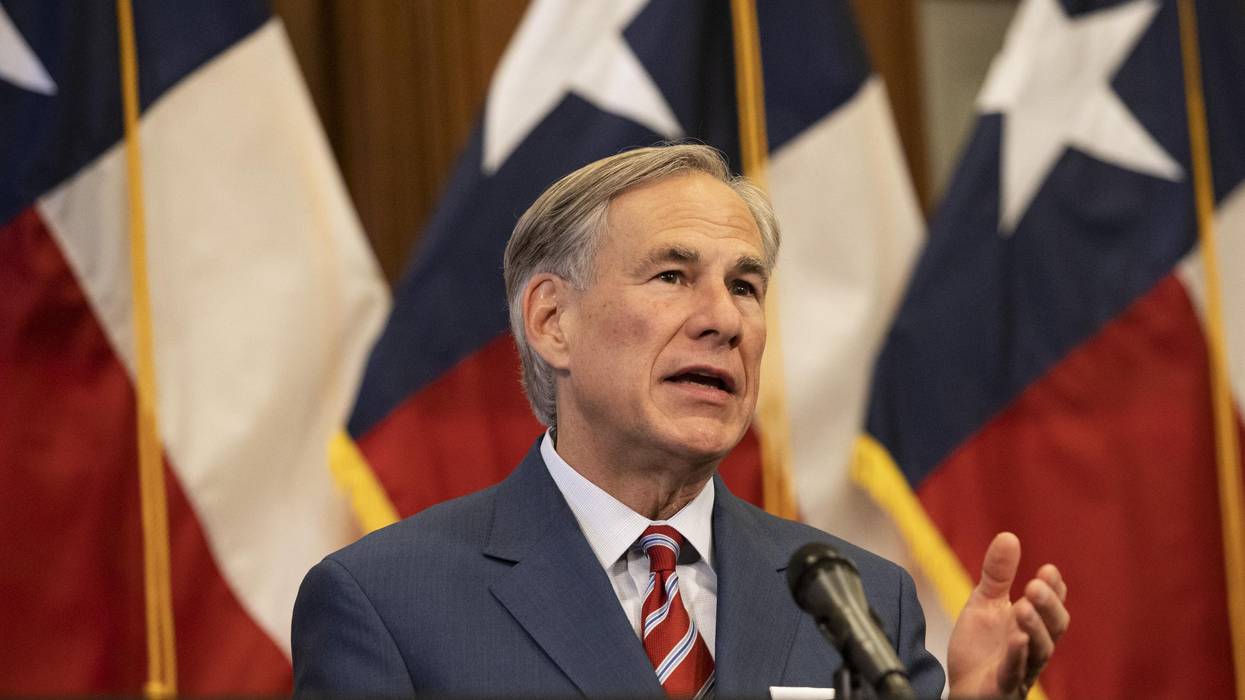
S.B. 4 "will have a devastating impact on people seeking safety at our borders and Texans throughout the state," said one advocate.
Vowing to stop Republican Texas Gov. Greg Abbott from enforcing an anti-immigration law that "overrides bedrock constitutional principles" and that has already prompted travel advisories for people planning to visit the Lone Star State, the ACLU led civil rights groups on Tuesday in suing to block Senate Bill 4.
The national group led the ACLU of Texas and the Texas Civil Rights Project (TCRP) in challenging the law a day after Abbott signed it, permitting local and state law enforcement officers to arrest and detain people who they suspect of being undocumented immigrants.
Under the law, which is set to go into effect in March unless courts block it, state judges would also be empowered to order a person's deportation even if they were eligible to seek asylum or other protections under federal law.
Texas judges, said the ACLU, "are not trained in immigration law and have no proper authority to enforce it"—just one of the ways in which S.B. 4 is unconstitutional, according to the groups.
"Texas," said the ACLU as it announced the lawsuit, "we'll see you in court."
Representing the Las Americas Immigrant Advocacy Center, American Gateways, and the County of El Paso, Texas, the legal groups argued in their complaint that S.B. 4 violates the supremacy clause of the U.S. Constitution, which establishes that federal laws—such as the right to seek asylum and the right to due process of law—take precedence over measures passed by states.
"We have sued to block Senate Bill 4 because it will have a devastating impact on people seeking safety at our borders and Texans throughout the state," said Rochelle Garza, president of the TCRP. "This law blatantly disregards people's right to due process and will allow Texas law enforcement to funnel family, friends, and loved ones into the deportation pipeline. S.B. 4 is unconstitutional—Texas does not have the power to implement its own immigration laws. We will not let this stand."
S.B. 4 has also led Mexican President Andres Manuel López Obrador to prepare a legal challenge through his country's foreign ministry, and several federal lawmakers from Texas and in the Congressional Hispanic Caucus to call on U.S. Attorney General Merrick Garland to block the law.
"S.B. 4 is dangerous for the people of Texas and interferes with the federal government's exclusive authority over immigration and foreign affairs," wrote the lawmakers, including U.S. Reps. Joaquin Castro (D-Texas), Nanette Diaz Barragán (D-Calif.), and Al Green (D-Texas). "S.B. 4 is an unlawful attempt to engage in federal immigration enforcement. This law will also interfere with federal efforts to create a safe, humane, and orderly system at the border."
The ACLU pointed out that the law could arbitrarily subject thousands of people of color to Texas' state prison system, "which is already rife with civil rights abuses."
In addition to being unconstitutional, said Anand Balakrishnan, senior staff attorney at the ACLU's Immigrants' Rights Project, S.B. 4 is "dangerously prone to error, and will disproportionately harm Black and Brown people regardless of their immigration status."
"We're using every tool at our disposal, including litigation, to stop this egregious law from going into effect," said Balakrishnan.