
SUBSCRIBE TO OUR FREE NEWSLETTER
Daily news & progressive opinion—funded by the people, not the corporations—delivered straight to your inbox.
5
#000000
#FFFFFF
To donate by check, phone, or other method, see our More Ways to Give page.


Daily news & progressive opinion—funded by the people, not the corporations—delivered straight to your inbox.
What drives the preference of landlords to call themselves “housing providers” is a desire to euphemize the landlord-tenant relationship and to obscure some of its basic and most important features.
Landlords want to be called “housing providers.” Industry organizations in California, Washington, Rhode Island, and elsewhere are proudly claiming the label. Equal to this craving to be called “housing providers,” it seems, is the wish among landlords to no longer be called landlords. The term is antiquated, they say, and has a negative stigma that doesn’t reflect reality. The industry is not particularly secretive about these desires or the reasons behind them, which have to do with image and narrative.
The dictionary definition of landlord is precise enough, however, and, in fact, couldn’t be plainer: “The owner of property (such as land, houses, or apartments) that is leased or rented to another,” according to Merriam-Webster.com. The definition identifies the essential feature of any residential landlord—that they engage in a financial transaction to lease living space. This seems straightforward enough and noncontroversial. The motivation of the industry is thus not related to any mismatch between our common understanding of the word and its most essential attribute.
Instead, what drives the preference of landlords to call themselves “housing providers” is a type of Orwellian doublespeak intended to euphemize the landlord-tenant relationship and to obscure some of its basic and most important features. What does the phrase obscure? For one, it elides the basic extractive nature of landlording, the fact that landlords expect, in fact, rely upon the relationship to be monetarily profitable to them. This is the critical fact of landlording, that it is done in the main to make a profit.
Granted there are some instances of landlords renting to family members or others without expectations of profit, but these exceptions are merely that—exceptions. The English language routinely makes distinctions between services rendered for a fee and those provided on other bases. The difference between “housing provider” and landlord is the difference between a date and a paid escort or sex worker, it is the difference between the volunteer and the mercenary, between a financial gift and an interest-bearing loan. The English language is not unique in containing words that make clear the monetary exchange and profit that define some relationships. We use these words because the information they contain is consequential.
If the landlord industry truly wants to do something to burnish its public image, it might consider publicly rejecting or sanctioning members of its community who hiked rents in Los Angeles County by 20% in the aftermath of the fires of January 2025.
This attempt to obscure the profit motive in landlording is all the more problematic because those who would call themselves “housing providers” in one breath, will, in the next, argue against rent stabilization, tenant protections, and other regulations on the basis that these policies make their business unprofitable, or less profitable than they would prefer. This is wanting it both ways—attempting to hide the profit motive while simultaneously insisting on it.
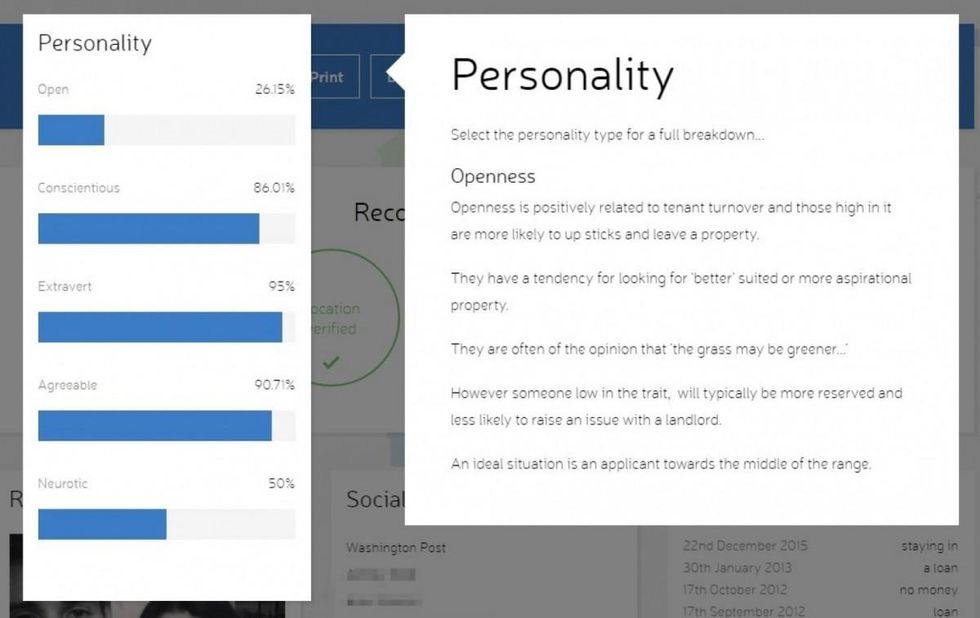
“Housing provider” is also meant to conceal the power dynamics of the landlord-tenant relationship, one in which landlords hold the privileges associated with property ownership, the ability to define the terms of acceptable behavior and limits of property use available to tenants, and the ultimate power of eviction. Moreover, at a time when corporate landlords are extending their reach into the market, and we see the spread of price-fixing algorithms to maximize rents and profit, AI-driven tenant screening algorithms to perform background checks, and greater concentration and market power at the industry scale, the insistence on the phrase “housing provider” is an obvious attempt at happy-faced distraction.
Just as important as the attempt to disguise profit motive and landlord power is the effort to dodge whatever negative connotations attach to the term landlord. “Housing provider” is meant to avoid images of rapaciousness and greed, or to conjure images of benevolence and even charity, or to do both. The use of the phrase is, in other words, an attempt, acknowledged by the industry, to control a narrative. As such it is a political act, an effort to persuade and to establish a particular understanding of who landlords are and what they do, all in the service of influencing public debate and public policy. This is not to argue that tenants don’t also try to influence the public narrative; of course they do. It is merely to note that this phrase, “housing provider,” is a calculated bid to construct meaning in a highly contested policy area and it needs to be recognized as such. Those who choose to adopt the phrase choose to adopt the narrative.
If the landlord industry truly wants to do something to burnish its public image, it might consider publicly rejecting or sanctioning members of its community who hiked rents in Los Angeles County by 20% in the aftermath of the fires of January 2025. It might help to police property owners who evicted tenants during the pandemic in violation of federal and local laws. It might take action to address sexual harassment of low-income women by landlords, or address any of a number of discriminatory or exploitative practices that haunt the industry. Those wishing to hide behind the “housing provider” label will argue that not all landlords are bad, which is of course true. They will say only a portion of landlords engage in the practices that give landlord its stigma. But, if the only response by the industry is to stop using the word landlord, it betrays a self-serving concern that does little to improve negative public perceptions and, in fact, largely confirms them.
We don’t call Exxon an “oil provider,” nor do we call GM an “automobile provider.” We don’t even call the corner mom-and-pop store a “grocery provider.” There is no reason to accept the kind of politically motivated doublespeak behind the rise of “housing provider.”
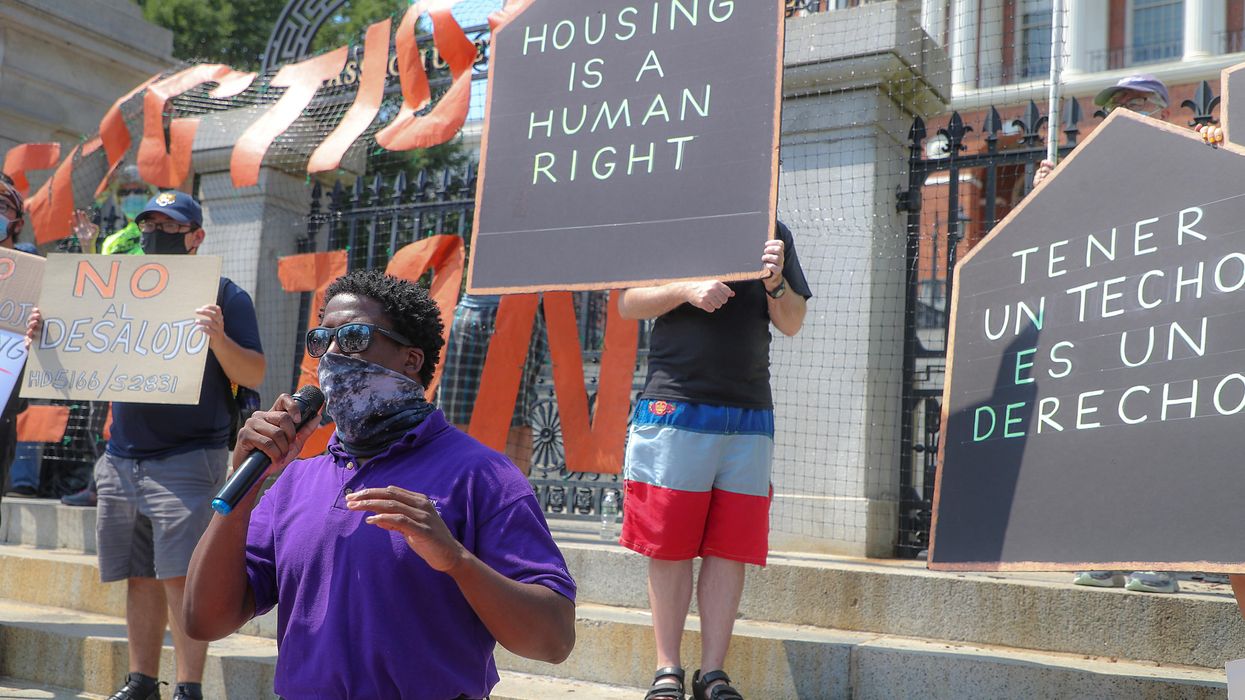
The real estate lobby is using its power to advance a flurry of anti-squatter bills to push back against tenant protections enacted in the early years of the Covid-19 pandemic. Lawmakers should not take the bait.
Alabama, Tennessee, and Florida’s new anti-squatter laws all went into effect in the last two months, the latest exhibit of the real estate industry’s influence in American politics. In this year alone, at least 10 states have considered legislation that revokes tenancy rights, making squatting—when someone moves into a vacant building or onto uninhabited land—a criminal matter instead of civil one.
While the fear-mongering around squatting started as a right-wing talking point, now anti-squatter bills have passed in several states with bipartisan support. Earlier this year, in New York, where Democrats dominate politics, Gov. Kathy Hochul and several state legislators took a victory lap after passing a budget bill that declared that squatters don’t have the same rights as tenants, and to support property owners statewide.
Some would assume that these legislative actions were taken in response to a threat of a mass takeover of homes in cities across the country. But in reality, as many experts have rightly pointed out, squatting is extremely rare. A threat does exist, which is why we’re seeing a rise in this legislation. It’s just not to property owners. It’s to the power of the real estate lobby.
The manufactured crisis around squatters is meant to distract from the fact that over half of Americans struggle to pay their rent or mortgage every month.
As outlined in a new report by the Private Equity Stakeholder Project and others, the real estate lobby is a sprawling, interconnected group of representatives from the top corporate apartment owners and managers in the country, who—by having members sit on each other’s boards—can tap into an enormous shared pool of resources that they’re using to destabilize communities across the country.
The lobby is using this power to advance a flurry of anti-squatter bills to push back against tenant protections enacted in the early years of the Covid-19 pandemic. This was a time when millions of people in the United States were kept in their homes thanks to policies like rental assistance expansion and foreclosure and eviction moratoria. For many of us, it was the first time we witnessed our country recognize the public health and economic value of keeping people in their homes. These protections made clear that regardless of race, class, or housing tenure, housing stability is the foundation for thriving communities.
Now, real estate industry groups, the second biggest lobbying spender in the U.S., are using anti-squatter legislation in a desperate attempt to undercut that progress. Capitalizing on America’s heightened anxiety about the housing crisis, they are scaring people into believing that tenant protections come at the expense of homeowners. Lawmakers should not take the bait.
At best, these bills are reactionary responses to a problem that doesn’t exist. At worst, they represent the worst of election season fear-mongering: anti-immigrant sentiment, dog-whistle racism, and calls for law and order. Look no further than the Florida attorney general’s celebration of legislation declaring that immigrants were taking over homes across the state, based on a viral TikTok. In reality, most states already have laws that address squatters adequately—it’s tenant protections that remain significantly weaker relative to property rights.
Advancing anti-squatter legislation is a slippery slope to eroding eviction protections passed during the last few years, and that’s exactly what the real estate lobby wants: They themselves refer to squatter legislation as “eviction policy.” Clearly, they are hoping to put legislators on a path to repealing hard-fought regulations to protect tenants by inferring a false equating of squatters (who live in vacant properties without legal agreements) and tenants (who legally inhabit homes with leases).The bills put any resident with tenant or ownership interest at risk of immediate displacement, often by a law enforcement agency, without the normal requirement of notice, proof, and judicial review before someone is removed from their home.
But their efforts to undo these gains won’t be easy, because the tide has turned in support of tenant protections as a way to address our housing crisis. In poll after poll, people in the United States say they want to see governments take action to alleviate the cost of housing. This has quickly become a front-burner issue for Americans and a top priority for them in the presidential election, only second to inflation. A recent survey of voters in battleground states found that 82% of renters believe that, if addressed, the cost of rent and housing would make their personal situation better.
The manufactured crisis around squatters is meant to distract from the fact that over half of Americans struggle to pay their rent or mortgage every month. And that a tenant-led movement to change this reality is building political power, winning local elections, and influencing federal policy.
Considering this, one can see why the real estate lobby, which amassed over $2.5 billion in revenue during the height of the pandemic, is grasping at straws to stay relevant to legislators. While it’s trying to ramp up efforts to unravel tenant protections, the lobby itself—the National Association of Realtors (NAR)—is unraveling. From Department of Justice investigations and anti-trust lawsuits to sexual harassment allegations, and a musical chairs of presidents and CEOs in the last two years, members are not happy. In October 2023, Redfin announced it would require many of its brokers to cancel their NAR memberships and stop paying dues. Reports of NAR running out of liability insurance coverage and rumors of real estate moguls starting alternative associations show cracks in a foundation that will be difficult to repair. No amount of fresh paint, even if it is in the form of throwing tenants under the bus, can fix such dysfunction. But they’ll try as long as they can.
As America increasingly becomes a nation of renters, lawmakers can’t lose sight of the bigger picture: We have a housing crisis, not a squatter crisis. Millions of people calling on leaders to alleviate their suffering cannot afford to be sold out with this distraction. Lawmakers should pass policies that we know advance housing stability, instead of doing the bidding of those attacking it.
"Tenant protections aren't just good policies—they're good politics," said one housing justice campaigner.
An analysis released Tuesday bolsters an argument that progressive lawmakers and organizers have been making with growing urgency in the lead-up to the critical November elections: Housing should be at the top of the Democratic Party's—and President Joe Biden's—agenda.
The research brief, authored by Russell Weaver of the Cornell University School of Industrial and Labor Relations (ILR) Buffalo Co-Lab, shows that tenants are a "large, untapped political base" that can be mobilized by candidates who offer bold solutions to the housing crisis and support the rights of renters against the predatory landlords squeezing them for profit.
While homeowners typically turn out to vote at a far higher rate than tenants, Weaver noted, the "owner-renter turnout gap is nearly cut in half when candidates run on renter-friendly platforms." Renters in New York state (NYS)—the focus of the new analysis—are more likely than homeowners to be registered as Democrats or members of the Working Families Party.
Analyzing the results of New York's statewide general election in 2022, Weaver found that NYS tenants "might have been relatively motivated to turn out for candidates who were vocal supporters or co-sponsors of the 2022 state-level Good Cause Eviction bill, which protects renters against rent hikes and evictions."
"In NYS Senate races that did not feature such a candidate, the average turnout rate among likely renters was roughly 29% (after adjusting for race-ethnicity and political party)," Weaver wrote. "In races that included Good Cause proponents, however, average renter turnout was more than five percentage points higher, at 34.1%—a statistically significant difference."
Weaver said in a statement that his analysis underscores that "candidates who campaign on housing affordability and tenant protections have the potential to significantly boost renter turnout, which could be decisive in tightly contested races."
"An organized tenant voting bloc could be the key to jump-starting a statewide housing policy agenda that works for all New Yorkers," said Weaver.
The findings could also have implications for national races as rent remains high across the country, leaving roughly half of U.S. tenants unable to afford their monthly payments as corporate landlords and billionaire investors gobble up rental properties and drive up costs. The Federal Reserve is also making the crisis worse by keeping interest rates elevated.
"This brief tells us what we already know: Renters are a powerful voting bloc that will determine the 2024 election," Katie Goldstein, a housing justice organizer at the Center for Popular Democracy (CPD), said of Weaver's analysis. "We can't leave these votes on the table."
"Tenant champions who run on these issues will be rewarded at the ballot box—and politicians who fail to do so will be voted out of office."
CPD, Right to the City Action, and HIT Strategies released survey data earlier this month showing that 87% of U.S. voters believe the "cost of rent and housing is a major or big problem in their state" and that 70% said they are "more likely to vote for someone who supports rent stabilization policies."
The new research brief and polling data strengthen the case for making housing a top priority for an incumbent president and Democratic lawmakers hoping to defeat their Republican opponents in November.
"Tenant protections aren't just good policies—they're good politics," said Esteban Girón, member of the Tenants PAC Board. "Candidates have the opportunity to win big by committing to keep rents affordable and protect tenants from displacement."
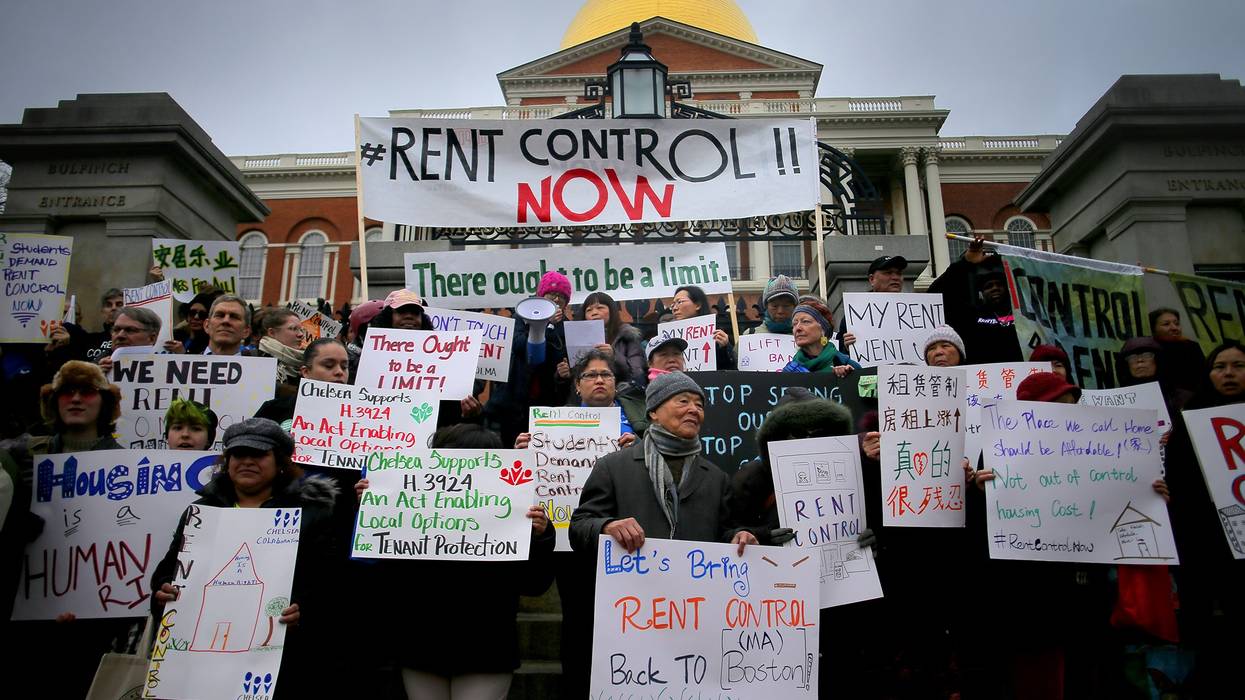
At a gathering in Los Angeles in early April, Sen. Bernie Sanders (I-Vt.) joined Reps. Pramila Jayapal (D-Wash.), Ro Khanna (D-Calif.) and other lawmakers at the national, state, and local levels in imploring Democrats to elevate bold housing policies and tenant protections such as federal rent control to the top of the party's agenda.
"This is the richest country on Earth. We're not a poor country," Sanders said at the event. "Can we build affordable housing that we need? Can we protect? And the answer is of course we can. But it will require a massive grassroots effort to transform our political system to do that."
Politico reported earlier this year that Biden has privately expressed "increasing concern" that housing costs are putting his reelection hopes in jeopardy.
"The White House is now pushing a range of bulked-up tax credits to incentivize existing homeowners to sell their starter homes, as well as expand rental assistance and extend help for lower-income buyers with their down payments," the outlet noted. "Yet all those ideas require legislation. And while the White House has publicly argued the crisis affects red states just as much as blue states, aides privately acknowledge any movement is a long shot in an election year. Indeed, Republicans have been quick to pan Biden's housing push."
Presumptive Republican nominee Donald Trump, meanwhile, has not released a housing agenda as he vies for another four years in the White House. During his first term as president, Trump repeatedly pursued steep cuts to federal housing programs and assailed affordable housing initiatives.
Brahvan Ranga, political director of For the Many, said Tuesday that it is "critical we elect legislators who will enact policies that expand tenants' rights, create and maintain affordable green social housing, and affirm housing as a guaranteed right."
"The housing crisis is front of mind for tenants as they head to the polls—both in Democratic primaries and general elections. As housing costs continue to rise and working families struggle to stay in their homes, corporate real estate and greedy landlords are raking in record profits," said Ranga. "Tenant champions who run on these issues will be rewarded at the ballot box—and politicians who fail to do so will be voted out of office."