

SUBSCRIBE TO OUR FREE NEWSLETTER
Daily news & progressive opinion—funded by the people, not the corporations—delivered straight to your inbox.
5
#000000
#FFFFFF
To donate by check, phone, or other method, see our More Ways to Give page.
Daily news & progressive opinion—funded by the people, not the corporations—delivered straight to your inbox.
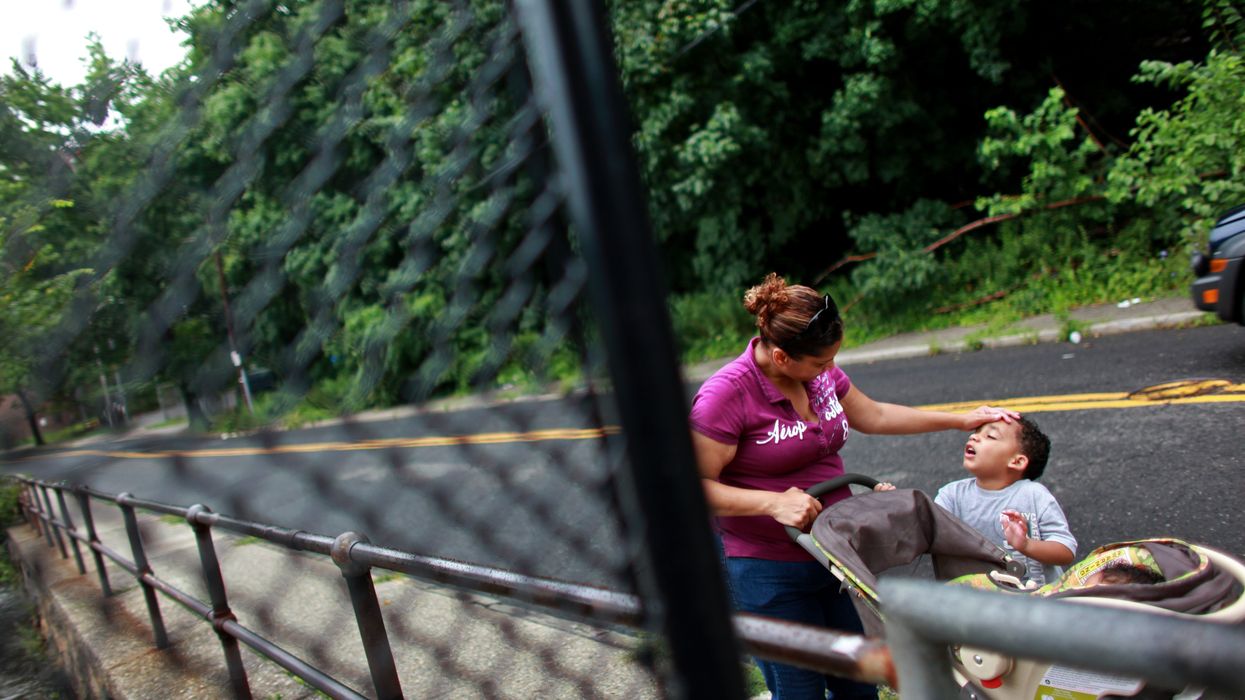
Children are bearing the brunt of upheaval in Washington; the destruction of Head Start will harm even more.
Children have rarely been a national priority in the United States. Lawmakers have historically chosen to set aside the needs of children, families, and educators, with Head Start being one of the few examples of meaningful investment in children’s futures. But amid recent cuts at the Department of Health and Human Services, including layoffs at the Administration for Children and Families (which funds Head Start), the future of this program is uncertain.
Effectively destroying an essential program like Head Start and dismantling the Department of Education (DOE) and other federal agencies is cruel, irresponsible, and short-sighted. Childcare costs more than ever, and Head Start and Early Head Start, which provide access to high-quality early learning programs for children from low-income backgrounds, are lifelines. Without Head Start, hundreds of thousands of children will go without safe places to learn and grow. Parents, especially women, depend on it and other forms of childcare to stay in the workforce. Unless care is available, many are forced to cut hours or leave their jobs altogether, hurting household incomes and overall economic growth.
“It’s going to affect a lot of families that are already struggling,” Early Head Start educator Sandra Dill, who runs a family childcare program in Connecticut, said recently.
State-based solutions will help chip away at the vast problems facing the early childhood education sector, but wiping away Head Start and Early Head Start will set us back for years—possibly generations—to come.
At the same time, childcare providers, including family childcare educators who run small businesses in licensed, home-based settings, are facing exorbitant and rising prices for basic supplies that they need to keep their programs running. Without much-needed funding from the federal government, many of these programs—already existing on razor-thin margins—will be at risk of shutting their doors and leaving families without care options, worsening an already dire childcare shortage.
Amid the layoffs of thousands of government employees including Head Start administrators, there will certainly be chaos and confusion in the coming weeks among programs and the families who rely on them, with a lack of understanding of how already approved funds will be distributed. This will likely be similar to what ensued amid the federal funding freeze in January, with some programs temporarily closing their doors, unable to access funding for weeks, and families going without care.
Since the pandemic, the home-based childcare educators in All Our Kin’s networks have seen a significant surge in toddlers struggling with language and learning delays. Heath and Human Services and the DOE provide critically important early intervention services, including for children aged 0 to 3. Without these programs, fewer children will have a strong start in life. More will go without healthy meals, and fewer will have opportunities for social-emotional development or be prepared to succeed in kindergarten and beyond, and will have fewer opportunities for social and emotional development. Actions to shrink these departments in the name of cost cutting could overburden states and ultimately lead to far greater societal and economic consequences.
We are encouraged by bipartisan progress at the state level. Connecticut Gov. Ned Lamont has proposed increased investments to help pay childcare providers competitive wages. In New York, there is a proposal from Gov. Kathy Hochul for additional funds to be set aside for family childcare providers to make renovations and repairs to their programs. And universal childcare has gained momentum in states like New York, Michigan, Oregon, Vermont, and New Mexico.
State-based solutions will help chip away at the vast problems facing the early childhood education sector, but wiping away Head Start and Early Head Start will set us back for years—possibly generations—to come.
Every child deserves a high-quality, affordable education, especially in the critical formative years of their lives. If we want a strong economy, we must save Head Start and protect the futures of the children and programs it supports.
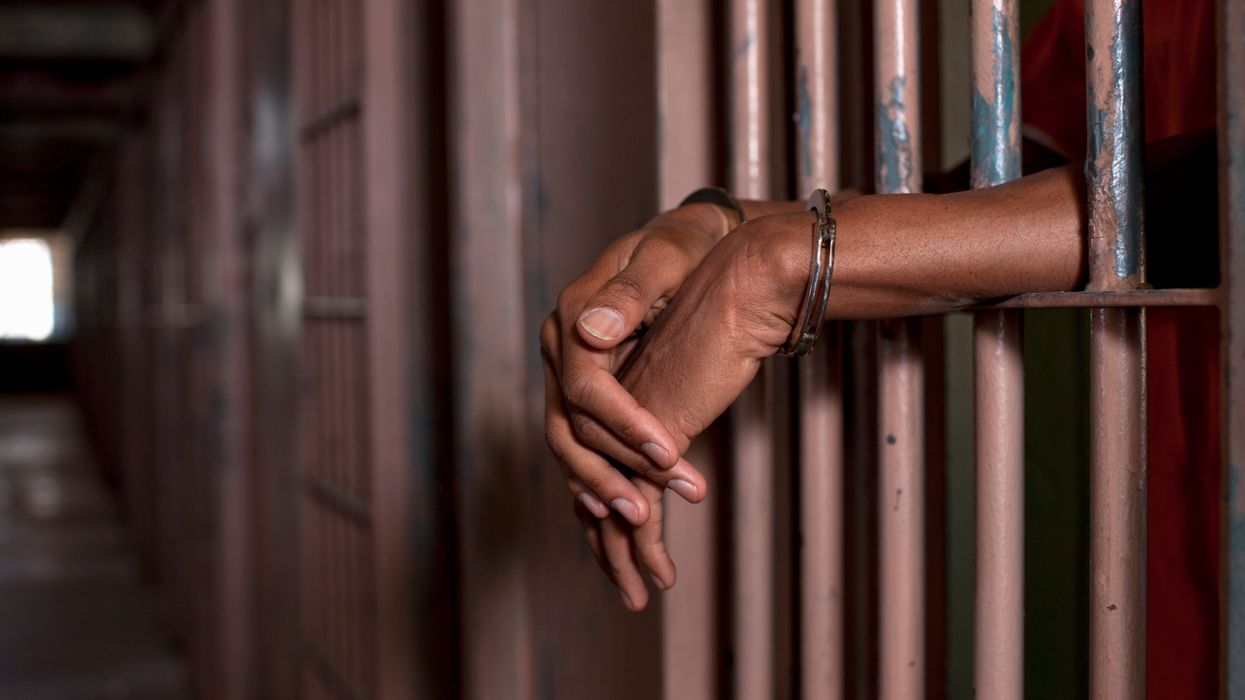
When we reduce people to their convictions, we fail to see their humanity, their potential, and the harm this judgment causes not just to them but to their families.
U.S. President Joe Biden’s recent clemency grants to 1,500 Americans sparked renewed discussions about second chances.
Yet for millions of parents—mothers and fathers—the shackles of their past legal convictions extend far beyond their time served. The collateral consequences of a criminal record don’t just haunt individuals. They ripple through families, shaping the lives of children who had no part in their parents’ mistakes.
As someone who has traversed the lasting consequences of a conviction, I know firsthand how society judges parents like me—not by the love and care we provide our children but by the labels of our past. But when we reduce people to their convictions, we fail to see their humanity, their potential, and the harm this judgment causes not just to them but to their families.
The collateral consequences of a criminal conviction aren’t just abstract statistics—they’re the missed field trips, the lost jobs, the countless times parents must tell their children, “I’m sorry, but I can’t.”
Around 77 million Americans, or one in three Americans, have criminal records, according to the National Conference of State Legislatures. Each year, more than 600,000 Americans are released from prison and reenter society. It is a transition rife with barriers of injustice, prejudice, racism, and inequality.
The United States has more than 44,000 laws and policies that restrict people with criminal convictions from accessing basic rights and opportunities. These rules create barriers to housing, employment, education, and even parenting. For mothers and fathers, the inability to rebuild their lives post-incarceration isn’t just a personal struggle—it’s a family crisis.
One of the most painful moments after my conviction was realizing I couldn’t chaperone my 13-year-old daughter’s eighth grade field trip because of my record. Telling her I wasn’t allowed to go broke something inside me.
For parents like me, these moments happen all the time—when we can’t volunteer at school, rent an apartment near better schools, or secure a job that provides stability. To our children, it feels like rejection.
One report estimates that the number of children with incarcerated parents ranges from 1.7 to 2.7 million. Research shows these children are more likely to face emotional, behavioral, and academic challenges. They’re often treated as if their parent’s conviction is their fault. This stigma perpetuates cycles of poverty and marginalization, making it harder for families to break free from systemic barriers.
Beyond the personal pain, the statistics paint a bleak picture. According to the Prison Policy Initiative, nearly 70% of formerly incarcerated individuals are unemployed or underemployed a year after release. For parents, this means struggling to provide even the basics for their children.
Women are particularly vulnerable, with many returning to find their housing options limited because public housing policies exclude people with records. Fathers, too, often face obstacles in reestablishing their parental rights or even being present in their children’s lives due to parole restrictions and ongoing stigma.
These systemic barriers serve as a constant reminder that, in the eyes of society, those with records are defined by their convictions. It’s as though the world has dog eared a page from their worst chapter, refusing to read further.
To be sure, accountability matters. Parents who commit harm must take responsibility for their actions. But accountability must not equate to a lifetime of condemnation. Punishing parents indefinitely only compounds harm, especially for the children who depend on them for stability and love.
Parents are more than their past mistakes, just as a book is more than its cover. Judging someone solely by their record robs them of the chance to write a better chapter. It also robs their children of the opportunity to see their parents as whole people—flawed but capable of change and love.
The collateral consequences of a criminal conviction aren’t just abstract statistics—they’re the missed field trips, the lost jobs, the countless times parents must tell their children, “I’m sorry, but I can’t.”
If we truly value redemption as a society, we must move beyond judging people solely by their convictions.
Every parent deserves the chance to show their children that they are more than their past. And every child deserves the opportunity to believe in second chances. Clemency relies on laws, policies, pardons, and humanity.
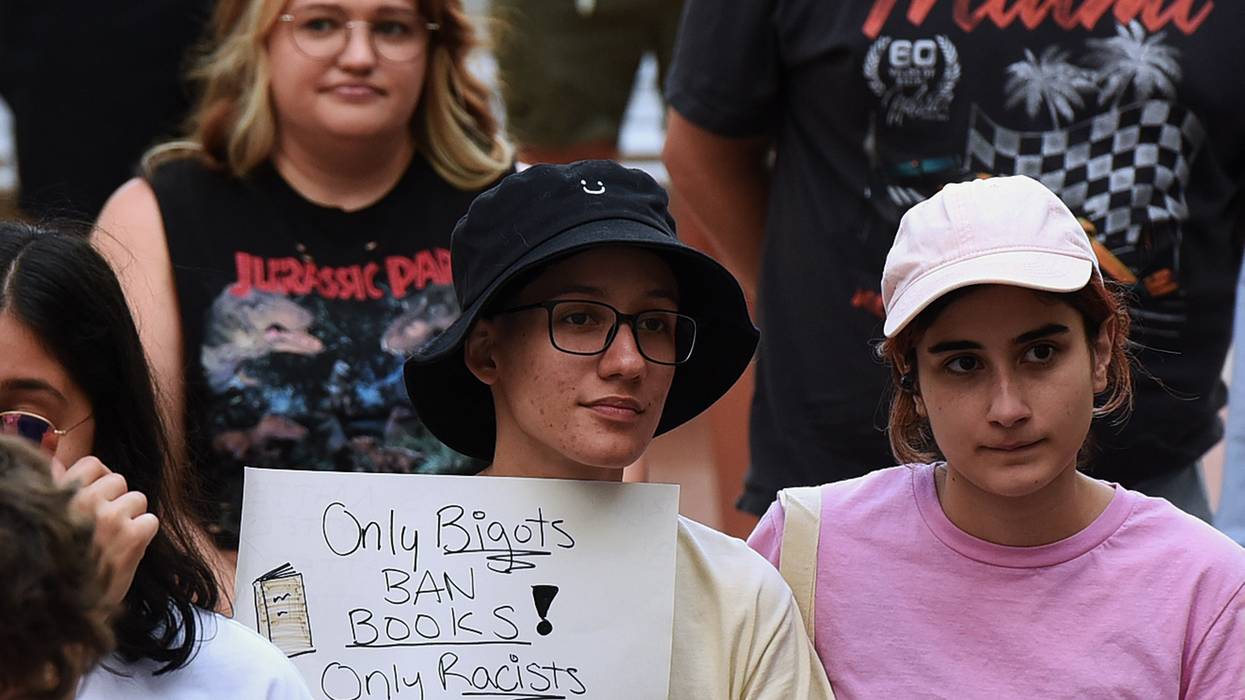
One of the plaintiffs said the Republican-authored law "is an attempt to steal important decisions away from parents."
Parents of students in Florida public schools sued the state's Board of Education on Thursday over a Republican-authored law allowing school district parents and residents to object to reading materials and force their removal from classrooms and libraries.
Three Florida parents joined the lawsuit, which was filed on their behalf by Democracy Forward, the ACLU of Florida, and the Southern Poverty Law Center.
The complaint argues that the law, signed by Republican Gov. Ron DeSantis last year, benefits only parents who "hold the state's favored viewpoint: agreement with removing books and other material from schools, and disagreement with (and therefore seeking review of) decisions to retain books and other material."
"Parents who seek to retain materials, a viewpoint disfavored by the state, are excluded from the state review process," the complaint states. "Because H.B. 1069 and its implementing regulations provide a benefit—access to the state review process and the corresponding opportunity to petition the state through an administrative system that can provide a remedy—differently depending on a parent's perspective, they violate the First Amendment's ban on viewpoint discrimination, and should be invalidated."
Stephana Ferrell, one of the parent plaintiffs, said in a statement Thursday that the law "is an attempt to steal important decisions away from parents and allows those with a strong desire to withhold critical information on a variety of age-relevant topics to decide what books our kids have access to."
Ferrell joined the lawsuit after her request to review a decision by her child's school district to remove a book was denied. H.B. 1069 "requires sex ed programs to teach that sex is determined by reproductive function at birth and is binary and unchangeable and to use only materials approved by the state Department of Education," the ACLU of Florida explains.
"The state of Florida should not be able to discriminate against the voices of parents they disagree with," Ferrell added. "I deserve an equal voice in my child's education as any other parent."
Under DeSantis' leadership, Florida has banned books more aggressively than any other U.S. state in recent years. According to PEN America's latest report, 3,135 book bans were recorded across 11 school districts in fall of 2023.
"In Collier County, Florida, one book about sexual violence, Ink Exchange by Melissa Marr, was removed under H.B. 1069," PEN noted. "The law makes it easier to pull a book that 'depicts or describes sexual conduct' from school shelves; because of the lack of clarity around how to implement the law, the book was banned despite the fact that the rape at the center of the narrative is never directly described."
Samantha Past, a staff attorney with the ACLU of Florida, said Thursday that the state "has become a national leader in book banning, garnering mass attention for the unprecedented number of books that have been removed from our public schools."
"A review process that is available only to parents with certain viewpoints violates the First Amendment," said Past. "Denying parents an appropriate avenue to challenge censorship is undemocratic, and stifling viewpoints the state disagrees with is unlawful. Ultimately, these actions perpetuate the statewide attack on members of the Black, Brown, and LGBTQ+ communities in an attempt to erase them from our history books."
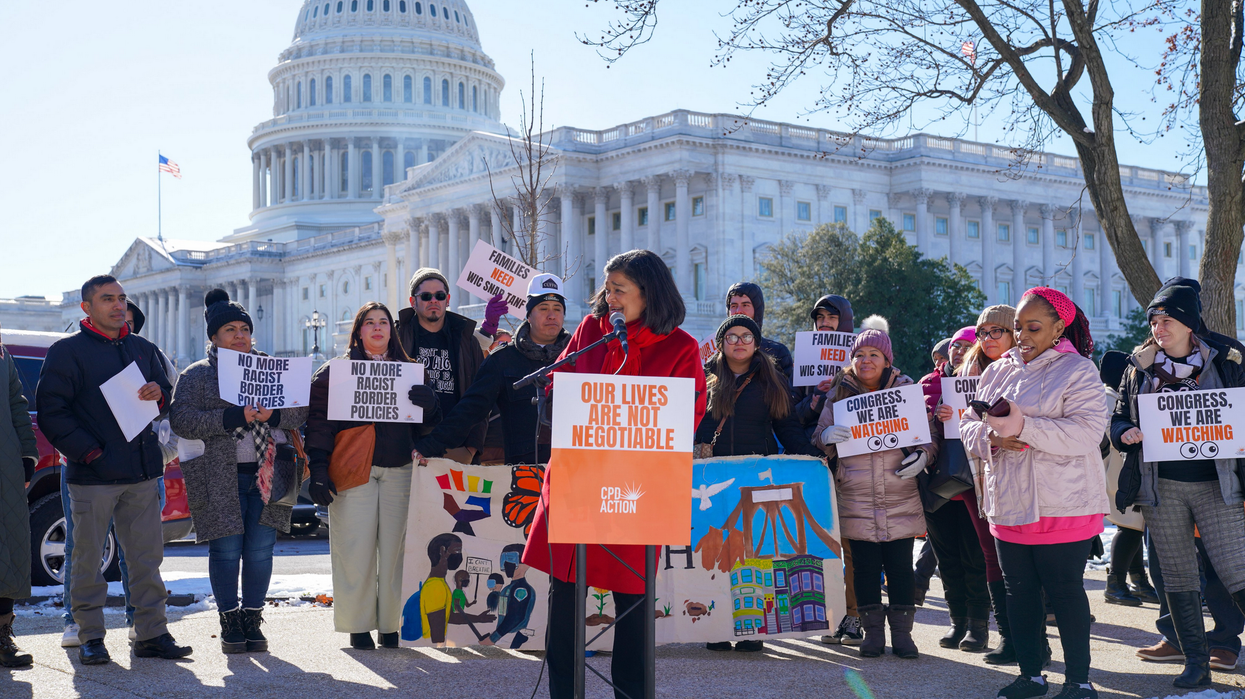
"Republicans are refusing to fully fund the programs families desperately need, and now 2 million new parents, babies, and children could pay the price," warned one advocate.
As U.S. lawmakers finalize this year's government funding bills amid yet another shutdown threat, progressive advocates on Wednesday warned that Congress must act immediately to ensure the uninterrupted flow of food aid from a key program on which millions of children and their parents depend.
Advocates including U.S. Congressional Progressive Caucus Chair Pramila Jayapal (D-Wash.) and Rep. Cori Bush (D-Mo.) rallied outside the U.S. Capitol in Washington, D.C. Wednesday to implore lawmakers to pass a clean budget without cuts to programs like the Special Supplemental Nutrition Program for Women, Infants, and Children (WIC), Temporary Assistance for Needy Families (TANF), and Supplemental Nutritional Assistance Program (SNAP).
"Programs like WIC, TANF, and SNAP are essential tools for ending poverty and hunger. But instead of helping Democrats expand these programs and deliver for working families, Republicans are constantly working to CUT them in favor of tax breaks for the wealthy," Jayapal said on social media. "It's shameful."
Rep. Lori Trahan (D-Mass.)
warned that "Republicans are forcing us to the brink of a shutdown for the third time in four months," and that "shutdowns don't affect the donor class, but they're devastating for service members who need their paychecks, moms who need WIC to feed their kids, and families trying to heat their homes."
The group ParentsTogether Action specifically warned of threats to WIC, which "ensures access to fresh and healthy food and formula, breastfeeding support, and healthcare referrals for pregnant and postpartum parents and their kids up to age 5."
The group stressed:
It is critical that [congressional lawmakers] meet President [Joe] Biden's emergency request to fully fund WIC, and honor a long-standing commitment to ensure WIC is able to serve every low-income family who seeks assistance. If they fail to do so by January 19, the program will face a roughly $1 billion shortfall in 2024, which would require states to reduce WIC participation. Up to 2 million eligible young children and pregnant and postpartum adults with low incomes could be turned away by September, resulting in wait lists for the first time in decades.
According to the U.S. Department of Agriculture (USDA)—which runs WIC via the Food and Nutrition Service—the program served approximately 6.3 million parents and children each month during fiscal year 2022, including nearly 40% of all infants in the United States. More than half of all U.S. newborns are eligible for WIC benefits.
A 2023 ParentsTogether Action survey revealed that:
As Stacie Sanchez Hare, director of No Kid Hungry Texas, argued Wednesday in an an opinion piece in The San Antonio Express News, the threat to WIC "comes at the worst possible time," as "the latest USDA report on food insecurity in the United States showed more than 13 million children are living with hunger—a 44% increase in a single year."
That's roughly 1 in 5 children in the U.S., with Black, Latino, rural, and single-parent households disproportionately affected.
"Republicans are refusing to fully fund the programs families desperately need, and now 2 million new parents, babies, and children could pay the price," said ParentsTogether Action executive director Ailen Arreaza. "If Congress doesn't act immediately, new parents struggling to buy food and formula for their families will be turned away."
"Congress cannot abandon pregnant people, new parents, and newborn babies and allow them to go hungry," Arreaza added. "They must fully fund WIC without delay."
Last year saw the ignominious end of a yearslong trend of declining hunger in the U.S., an improvement due largely to federal policies like the expanded child tax credit and universal school meals. The expiration—or Republican blockage—of pandemic-era food programs fueled a resurgence of hunger across the nation.
"With rising food costs and increased program participation—and with data showing that funding WIC bolsters our local economy—it is more critical than ever that we also strengthen WIC to provide vital nutrition, formula, and breastfeeding support for pregnant women, postpartum moms, infants, and toddlers in our communities," wrote Holladay, Utah resident Miriam Belgique in a Wednesday letter to The Salt Lake Tribune.

"This report sheds light on the perceptions of parents regarding public libraries and the current issues they face," said John Chrastka, EveryLibrary Institute executive director.
As the right-wing book-banning movement justifies its crusade against U.S. libraries and classrooms with claims of "parental rights," survey data released Wednesday shows that 74% of parents agree or somewhat agree that book bans for public libraries infringe on their right to make decisions for their children.
"This report sheds light on the perceptions of parents regarding public libraries and the current issues they face," said EveryLibrary Institute executive director John Chrastka, whose think tank and professional network partnered with the website Book Riot for a survey conducted this month, as the 2023-24 academic year got underway.
"Together with Book Riot, we are dedicated to empowering libraries to provide exceptional services that meet the unique needs of parents," Chrastka continued. "The results of this survey can be used to improve library services and address parents' concerns, ultimately leading to better experiences at the library for parents and their children."
"Our ultimate goal is to foster an open dialogue around these issues and to support libraries and their users in navigating this challenging landscape."
EveryLibrary Institute and Book Riot aimed to "gather insights from parents and guardians about their opinions on book bans; their trust in libraries and their understanding of librarians' book selection process; and their opinions on sensitive subjects in children's books, such as sex, LGBTQ+ characters and themes, race, and social justice issues."
The organizations found that 92% of respondents feel their children are safe at the library, 67% believe that "banning books is a waste of time," and 58% think librarians should be primarily responsible for what is available at a public library—even though 53% do not know how librarians decide what works should be in a collection.
Additionally, 87% of respondents agree or somewhat agree that "characters in books should be diverse and reflect multiple communities," 82% support teens having access to content on "controversial subjects and themes," 67% believe libraries should carry children's books that discuss topics such as racism and sex, and nearly 61% think collections should include kids' titles with LGBTQ+ characters and stories.
Respondents also want a role in decision-making: 95% believe parents should be involved in helping their children decide what to read; 90% agree or somewhat agree that they should make decisions about what their child reads; and 53% think parent groups should be involved in collection development choices.
Two-thirds of respondents said "no" when asked if their child has ever been uncomfortable with a book they checked out, and about the same share said "no" when asked if a book their child checked out made them, the parent, uncomfortable.
"By gathering insights from parents, we hope to generate a body of informative and thought-provoking material that sheds light on the complex issues surrounding book bans and censorship," said Book Riot's Kelly Jensen. "Our ultimate goal is to foster an open dialogue around these issues and to support libraries and their users in navigating this challenging landscape."
The findings follow a pair of reports from last week that highlighted right-wing efforts to ban books in libraries and schools.
As of August 31, the American Library Association's Office for Intellectual Freedom documented 695 attempts this year to remove a total of 1,915 titles from public and school libraries—an increase from last year, which broke the overall record for book challenges since data collecting began over two decades ago.
During the 2022-23 academic year, PEN America recorded a 33% increase in book bans at K-12 public schools from 2021-22. The group tracked 3,362 instances, which cut off student access to 1,557 unique titles. Over 40% of bans occurred in Florida, where public education is under attack from Republican Gov. Ron DeSantis, a 2024 presidential candidate.
"Those who are bent on the suppression of stories and ideas are turning our schools into battlegrounds, compounding post-pandemic learning loss, driving teachers out of the classroom, and denying the joy of reading to our kids," said PEN America CEO Suzanne Nossel. "By depriving a rising generation of the freedom to read, these bans are eating away at the foundations of our democracy."
Dear Rosie,
Two days ago you turned ten. Where does the time go?
I vividly remember the feeling of looking at you for the first time the night you were born, on the eve of Father's Day. I sang you a song (Danny Boy) that I'd sung many times into your mommy's belly. You stopped crying and gazed into my eyes with a look of recognition. Like the Grinch, my heart grew three times that day, and nothing has been the same since!
I always tell you how much I love you - more than all the stars, all the grains of sand, all the drops of water in the ocean, to infinity. But words can never quite capture the feeling. Elizabeth Stone said that "making the decision to have a child is momentous. It is to decide forever to have your heart go walking around outside your body." That's how it is.
When I see other dads and moms with their kids, I know that they are feeling something similar. From San Francisco to Syria, Indianapolis to Iraq, the love that we parents have for our kids is universal. I've imagined from your first moments about how the collective power of love in the hearts of parents (and grandparents) everywhere could be harnessed to change the world. If we the parents demanded decisions be made with the best interests of all kids in mind, there could be no war, or children dying needlessly of preventable diseases, or inaction on the biggest problem of all -- climate change. Parents united against global warming and global warring.
And yet, when I look around in these last days of your single digit years, I see awful spasms of violence - a mad man with a gun mowing down dozens of uncles, aunts, sons, daughters in Orlando, while bombs are dropped on hospitals tending to injured children in Syria. And I see temperatures and oceans rising, ice sheets melting at an alarming rate, droughts intensifying, wildfires raging, while the presidential candidate Donald Trump says it's all a hoax invented by the Chinese (he really said that, look it up).
Reading the news, a dad could sink into despair. But that would betray the pact I made with myself when we decided to have a child--to stay hopeful that a better world is possible and that I'd do what I could to help bring such a world about. A world that is, in the words of Carl Sagan, "worthy of our children." Your birth, and the birth of each baby, is a vote for hope and determination regardless of appearances in the moment.
That's why I work with Climate Parents, a group of parents and grandparents around the country, taking action to help prevent catastrophic climate change so that we leave you and all kids everywhere a livable planet. And in doing that work every day, I see signs of hope emerging in so many places - the solar panels and wind turbines sprouting up like daffodils in springtime, the coal-fired power plants shutting down, the students suing governments for stronger climate action, the school boards voting to teach students the truth about climate change, the countries of the world agreeing in Paris to keep temperatures from rising to unbearable levels.
We may or may not do enough. Things could go either way. But when you are reading this years from now, by the light of a solar-powered lamp, know that your dad, mom, and millions of others who burned brightly with love for our kids did what we could when we knew the stakes, as we watched our hearts running around--laughing, singing, playing and dreaming of the world to be.
Love forever,
Daddy
Somewhere in Chicago tonight, Mayor Rahm Emanuel may be sitting down to his favorite desert - warm pecan pie with vanilla ice cream.
In Chicago tonight, Mayor Rahm Emanuel may be sitting down to his favorite desert - warm pecan pie with vanilla ice cream.
Across the city in the South Side neighborhood of Bronzeville, 11 parents, teachers and community members aren't eating so well. Their meal - a few sips of coconut water to keep their strength up.
These brave men and women are on the third day of a hunger strike to save their last open-enrollment public school.
If the Emanuel administration has its way, this mostly black community will have to choose between sending their children to a failing charter school or a failing public school run by a private company - all while the neighborhood's historic Walter H. Dyett High School is closed.
Nat King Cole, Dinah Washington, Red Fox and Bo Diddley are all alumni of Dyett.
Why close such a vibrant connection to the community's proud past?
The unelected Board of Education voted in 2012 to phase out the school because of low standardized test scores and dropping graduation rates.
It's the same excuse lawmakers used in 1988 to remove local control from Chicago residents throughout the city. Most Americans have the right to vote for the people who run their local public schools. But not in Chicago, Philadelphia, New Orleans, or many other places where dark-complected people live. The poorer the people and the darker their skin, the more likely the state will wipe away their right to self-government on the excuse that their neglected and underfunded schools are "failing."
Chicago, the third largest district in the country, is a prime example of this kind of disaster capitalism.
While schools in wealthier neighborhoods had all the amenities, Dyett students had no honors or AP classes and no art or music. Even physical education classes had to be taken online.
No wonder test scores were low! These children didn't have nearly the same resources as other richer, whiter kids.
Despite such unfair challenges, academics were actually improving prior to the board's decision to shutter the school.
In 2008, there was a 30% increase in students graduating. The improvement was so spectacular it was even recognized by then Mayor Richard Daley and Chicago Schools CEO Arne Duncan (soon to be U.S. Secretary of Education).
Likewise, in 2009, a community program helped decrease out-of-school suspensions by 40%.
However, by the time Emanuel took office, this wasn't enough for the city's Board of Education - all of whom are appointed by the mayor.
Emanuel has already shuttered 50 Chicago City Schools - 46 of which served mostly black students.
But not Dyett. At least, not yet.
The South Side community has been fighting to change the board's decision for years. About 7 months ago, it seemed to have some success.
Eleven community members chained themselves to a statue of George Washington outside Emanuel's office demanding the board reconsider. It did. But once the protesters removed themselves, the board decided to take bids on how to keep the school open.
Three plans were submitted - two to privatize and one to keep it an open-enrollment public school.
That last plan submitted by the community, itself, would transform the facility into the Dyett Global Leadership and Green Technology High School. This would be a district-run school for up to 600 students, mostly from the Bronzeville area.
The plans to charterize the school have strengths and weaknesses, but the biggest problem with both privatization schemes is they disconnect the new school from the community and its history.
If either charter school plan is enacted, Bronzeville children may or may not be able to attend it. They could apply, but the entire student body will be selected by lottery. So it's a roll of the dice whether they could go to their neighborhood school.
Community children not selected would be sent to Phillips Academy - a public school being run by a private management team. Phillips has a worse academic record than Dyett did in it's darkest days. In 2012, less than 1% of Phillips students passed the state math test and just 8% passed the reading test.
Student prospects aren't much better at a new charter school. Countless studies - even the Walton Family Foundation-funded CREDO study - have shown charter schools don't provide better educational outcomes than traditional public schools. In many instances, they do much worse. And students uprooted from community schools rarely improve academically. However, Emanuel and other policymakers like him continue to push for the creation of more charters despite any track record of success or justification beyond increasing the corporate profits of the companies running them.
The best solution seems to be the plan created by and for the Bronzeville community to keep a public school in place. But when a public hearing was abruptly canceled this month, they suspected the worst - the board was trying to sidestep a democratic vote.
That's when community members started the hunger strike.
Protesters vow not to eat unless there is an emergency meeting on Dyett and a final vote taken.
The activists say they're starting to feel tired and a bit light headed but severe hunger has not set in yet. They are getting daily checkups from a nurse to ensure they're healthy enough to continue.
Meanwhile, where is the national media?
The Rev. Jesse Jackson visited the hunger strikers Tuesday and vowed to join them in their quest for justice.
But even this hasn't brought national attention.
How typical! While black schools are closed and black communities gutted, White America yawns and the band plays on.
But some of us are committed to the idea that black lives matter.
Black schools matter.
Black communities matter.
Are you?
If you would like to help, you can call Mayor Rahm Emanuel at (312) 744-3307 and Alderman Will Burns at (773) 536-8103 and ask them to support the Dyett Global Leadership and Green Technology High School.
You can also tweet in solidarity to the hunger strikers using the hashtags #SaveDyett, #WeAreDyett and #FightForDyett. Finally, you're invited to email the protesters at info@reclaimourschools.org and let them know you stand with them and would like updates on their progress.