SUBSCRIBE TO OUR FREE NEWSLETTER
Daily news & progressive opinion—funded by the people, not the corporations—delivered straight to your inbox.
5
#000000
#FFFFFF
To donate by check, phone, or other method, see our More Ways to Give page.


Daily news & progressive opinion—funded by the people, not the corporations—delivered straight to your inbox.

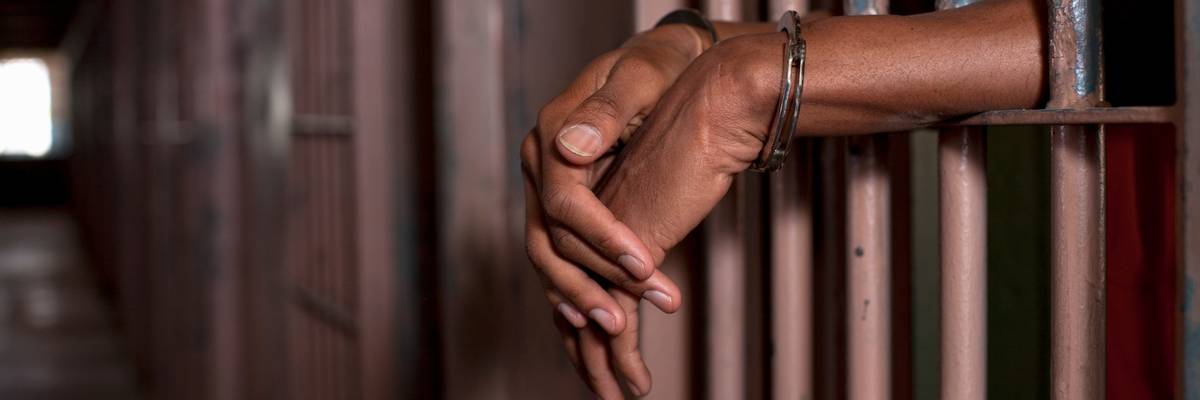
A handcuffed prisoner languishes in a prison cell.
When we reduce people to their convictions, we fail to see their humanity, their potential, and the harm this judgment causes not just to them but to their families.
U.S. President Joe Biden’s recent clemency grants to 1,500 Americans sparked renewed discussions about second chances.
Yet for millions of parents—mothers and fathers—the shackles of their past legal convictions extend far beyond their time served. The collateral consequences of a criminal record don’t just haunt individuals. They ripple through families, shaping the lives of children who had no part in their parents’ mistakes.
As someone who has traversed the lasting consequences of a conviction, I know firsthand how society judges parents like me—not by the love and care we provide our children but by the labels of our past. But when we reduce people to their convictions, we fail to see their humanity, their potential, and the harm this judgment causes not just to them but to their families.
The collateral consequences of a criminal conviction aren’t just abstract statistics—they’re the missed field trips, the lost jobs, the countless times parents must tell their children, “I’m sorry, but I can’t.”
Around 77 million Americans, or one in three Americans, have criminal records, according to the National Conference of State Legislatures. Each year, more than 600,000 Americans are released from prison and reenter society. It is a transition rife with barriers of injustice, prejudice, racism, and inequality.
The United States has more than 44,000 laws and policies that restrict people with criminal convictions from accessing basic rights and opportunities. These rules create barriers to housing, employment, education, and even parenting. For mothers and fathers, the inability to rebuild their lives post-incarceration isn’t just a personal struggle—it’s a family crisis.
One of the most painful moments after my conviction was realizing I couldn’t chaperone my 13-year-old daughter’s eighth grade field trip because of my record. Telling her I wasn’t allowed to go broke something inside me.
For parents like me, these moments happen all the time—when we can’t volunteer at school, rent an apartment near better schools, or secure a job that provides stability. To our children, it feels like rejection.
One report estimates that the number of children with incarcerated parents ranges from 1.7 to 2.7 million. Research shows these children are more likely to face emotional, behavioral, and academic challenges. They’re often treated as if their parent’s conviction is their fault. This stigma perpetuates cycles of poverty and marginalization, making it harder for families to break free from systemic barriers.
Beyond the personal pain, the statistics paint a bleak picture. According to the Prison Policy Initiative, nearly 70% of formerly incarcerated individuals are unemployed or underemployed a year after release. For parents, this means struggling to provide even the basics for their children.
Women are particularly vulnerable, with many returning to find their housing options limited because public housing policies exclude people with records. Fathers, too, often face obstacles in reestablishing their parental rights or even being present in their children’s lives due to parole restrictions and ongoing stigma.
These systemic barriers serve as a constant reminder that, in the eyes of society, those with records are defined by their convictions. It’s as though the world has dog eared a page from their worst chapter, refusing to read further.
To be sure, accountability matters. Parents who commit harm must take responsibility for their actions. But accountability must not equate to a lifetime of condemnation. Punishing parents indefinitely only compounds harm, especially for the children who depend on them for stability and love.
Parents are more than their past mistakes, just as a book is more than its cover. Judging someone solely by their record robs them of the chance to write a better chapter. It also robs their children of the opportunity to see their parents as whole people—flawed but capable of change and love.
The collateral consequences of a criminal conviction aren’t just abstract statistics—they’re the missed field trips, the lost jobs, the countless times parents must tell their children, “I’m sorry, but I can’t.”
If we truly value redemption as a society, we must move beyond judging people solely by their convictions.
Every parent deserves the chance to show their children that they are more than their past. And every child deserves the opportunity to believe in second chances. Clemency relies on laws, policies, pardons, and humanity.

Dear Common Dreams reader, It’s been nearly 30 years since I co-founded Common Dreams with my late wife, Lina Newhouser. We had the radical notion that journalism should serve the public good, not corporate profits. It was clear to us from the outset what it would take to build such a project. No paid advertisements. No corporate sponsors. No millionaire publisher telling us what to think or do. Many people said we wouldn't last a year, but we proved those doubters wrong. Together with a tremendous team of journalists and dedicated staff, we built an independent media outlet free from the constraints of profits and corporate control. Our mission has always been simple: To inform. To inspire. To ignite change for the common good. Building Common Dreams was not easy. Our survival was never guaranteed. When you take on the most powerful forces—Wall Street greed, fossil fuel industry destruction, Big Tech lobbyists, and uber-rich oligarchs who have spent billions upon billions rigging the economy and democracy in their favor—the only bulwark you have is supporters who believe in your work. But here’s the urgent message from me today. It's never been this bad out there. And it's never been this hard to keep us going. At the very moment Common Dreams is most needed, the threats we face are intensifying. We need your support now more than ever. We don't accept corporate advertising and never will. We don't have a paywall because we don't think people should be blocked from critical news based on their ability to pay. Everything we do is funded by the donations of readers like you. When everyone does the little they can afford, we are strong. But if that support retreats or dries up, so do we. Will you donate now to make sure Common Dreams not only survives but thrives? —Craig Brown, Co-founder |
U.S. President Joe Biden’s recent clemency grants to 1,500 Americans sparked renewed discussions about second chances.
Yet for millions of parents—mothers and fathers—the shackles of their past legal convictions extend far beyond their time served. The collateral consequences of a criminal record don’t just haunt individuals. They ripple through families, shaping the lives of children who had no part in their parents’ mistakes.
As someone who has traversed the lasting consequences of a conviction, I know firsthand how society judges parents like me—not by the love and care we provide our children but by the labels of our past. But when we reduce people to their convictions, we fail to see their humanity, their potential, and the harm this judgment causes not just to them but to their families.
The collateral consequences of a criminal conviction aren’t just abstract statistics—they’re the missed field trips, the lost jobs, the countless times parents must tell their children, “I’m sorry, but I can’t.”
Around 77 million Americans, or one in three Americans, have criminal records, according to the National Conference of State Legislatures. Each year, more than 600,000 Americans are released from prison and reenter society. It is a transition rife with barriers of injustice, prejudice, racism, and inequality.
The United States has more than 44,000 laws and policies that restrict people with criminal convictions from accessing basic rights and opportunities. These rules create barriers to housing, employment, education, and even parenting. For mothers and fathers, the inability to rebuild their lives post-incarceration isn’t just a personal struggle—it’s a family crisis.
One of the most painful moments after my conviction was realizing I couldn’t chaperone my 13-year-old daughter’s eighth grade field trip because of my record. Telling her I wasn’t allowed to go broke something inside me.
For parents like me, these moments happen all the time—when we can’t volunteer at school, rent an apartment near better schools, or secure a job that provides stability. To our children, it feels like rejection.
One report estimates that the number of children with incarcerated parents ranges from 1.7 to 2.7 million. Research shows these children are more likely to face emotional, behavioral, and academic challenges. They’re often treated as if their parent’s conviction is their fault. This stigma perpetuates cycles of poverty and marginalization, making it harder for families to break free from systemic barriers.
Beyond the personal pain, the statistics paint a bleak picture. According to the Prison Policy Initiative, nearly 70% of formerly incarcerated individuals are unemployed or underemployed a year after release. For parents, this means struggling to provide even the basics for their children.
Women are particularly vulnerable, with many returning to find their housing options limited because public housing policies exclude people with records. Fathers, too, often face obstacles in reestablishing their parental rights or even being present in their children’s lives due to parole restrictions and ongoing stigma.
These systemic barriers serve as a constant reminder that, in the eyes of society, those with records are defined by their convictions. It’s as though the world has dog eared a page from their worst chapter, refusing to read further.
To be sure, accountability matters. Parents who commit harm must take responsibility for their actions. But accountability must not equate to a lifetime of condemnation. Punishing parents indefinitely only compounds harm, especially for the children who depend on them for stability and love.
Parents are more than their past mistakes, just as a book is more than its cover. Judging someone solely by their record robs them of the chance to write a better chapter. It also robs their children of the opportunity to see their parents as whole people—flawed but capable of change and love.
The collateral consequences of a criminal conviction aren’t just abstract statistics—they’re the missed field trips, the lost jobs, the countless times parents must tell their children, “I’m sorry, but I can’t.”
If we truly value redemption as a society, we must move beyond judging people solely by their convictions.
Every parent deserves the chance to show their children that they are more than their past. And every child deserves the opportunity to believe in second chances. Clemency relies on laws, policies, pardons, and humanity.
U.S. President Joe Biden’s recent clemency grants to 1,500 Americans sparked renewed discussions about second chances.
Yet for millions of parents—mothers and fathers—the shackles of their past legal convictions extend far beyond their time served. The collateral consequences of a criminal record don’t just haunt individuals. They ripple through families, shaping the lives of children who had no part in their parents’ mistakes.
As someone who has traversed the lasting consequences of a conviction, I know firsthand how society judges parents like me—not by the love and care we provide our children but by the labels of our past. But when we reduce people to their convictions, we fail to see their humanity, their potential, and the harm this judgment causes not just to them but to their families.
The collateral consequences of a criminal conviction aren’t just abstract statistics—they’re the missed field trips, the lost jobs, the countless times parents must tell their children, “I’m sorry, but I can’t.”
Around 77 million Americans, or one in three Americans, have criminal records, according to the National Conference of State Legislatures. Each year, more than 600,000 Americans are released from prison and reenter society. It is a transition rife with barriers of injustice, prejudice, racism, and inequality.
The United States has more than 44,000 laws and policies that restrict people with criminal convictions from accessing basic rights and opportunities. These rules create barriers to housing, employment, education, and even parenting. For mothers and fathers, the inability to rebuild their lives post-incarceration isn’t just a personal struggle—it’s a family crisis.
One of the most painful moments after my conviction was realizing I couldn’t chaperone my 13-year-old daughter’s eighth grade field trip because of my record. Telling her I wasn’t allowed to go broke something inside me.
For parents like me, these moments happen all the time—when we can’t volunteer at school, rent an apartment near better schools, or secure a job that provides stability. To our children, it feels like rejection.
One report estimates that the number of children with incarcerated parents ranges from 1.7 to 2.7 million. Research shows these children are more likely to face emotional, behavioral, and academic challenges. They’re often treated as if their parent’s conviction is their fault. This stigma perpetuates cycles of poverty and marginalization, making it harder for families to break free from systemic barriers.
Beyond the personal pain, the statistics paint a bleak picture. According to the Prison Policy Initiative, nearly 70% of formerly incarcerated individuals are unemployed or underemployed a year after release. For parents, this means struggling to provide even the basics for their children.
Women are particularly vulnerable, with many returning to find their housing options limited because public housing policies exclude people with records. Fathers, too, often face obstacles in reestablishing their parental rights or even being present in their children’s lives due to parole restrictions and ongoing stigma.
These systemic barriers serve as a constant reminder that, in the eyes of society, those with records are defined by their convictions. It’s as though the world has dog eared a page from their worst chapter, refusing to read further.
To be sure, accountability matters. Parents who commit harm must take responsibility for their actions. But accountability must not equate to a lifetime of condemnation. Punishing parents indefinitely only compounds harm, especially for the children who depend on them for stability and love.
Parents are more than their past mistakes, just as a book is more than its cover. Judging someone solely by their record robs them of the chance to write a better chapter. It also robs their children of the opportunity to see their parents as whole people—flawed but capable of change and love.
The collateral consequences of a criminal conviction aren’t just abstract statistics—they’re the missed field trips, the lost jobs, the countless times parents must tell their children, “I’m sorry, but I can’t.”
If we truly value redemption as a society, we must move beyond judging people solely by their convictions.
Every parent deserves the chance to show their children that they are more than their past. And every child deserves the opportunity to believe in second chances. Clemency relies on laws, policies, pardons, and humanity.