

SUBSCRIBE TO OUR FREE NEWSLETTER
Daily news & progressive opinion—funded by the people, not the corporations—delivered straight to your inbox.
5
#000000
#FFFFFF
To donate by check, phone, or other method, see our More Ways to Give page.
Daily news & progressive opinion—funded by the people, not the corporations—delivered straight to your inbox.
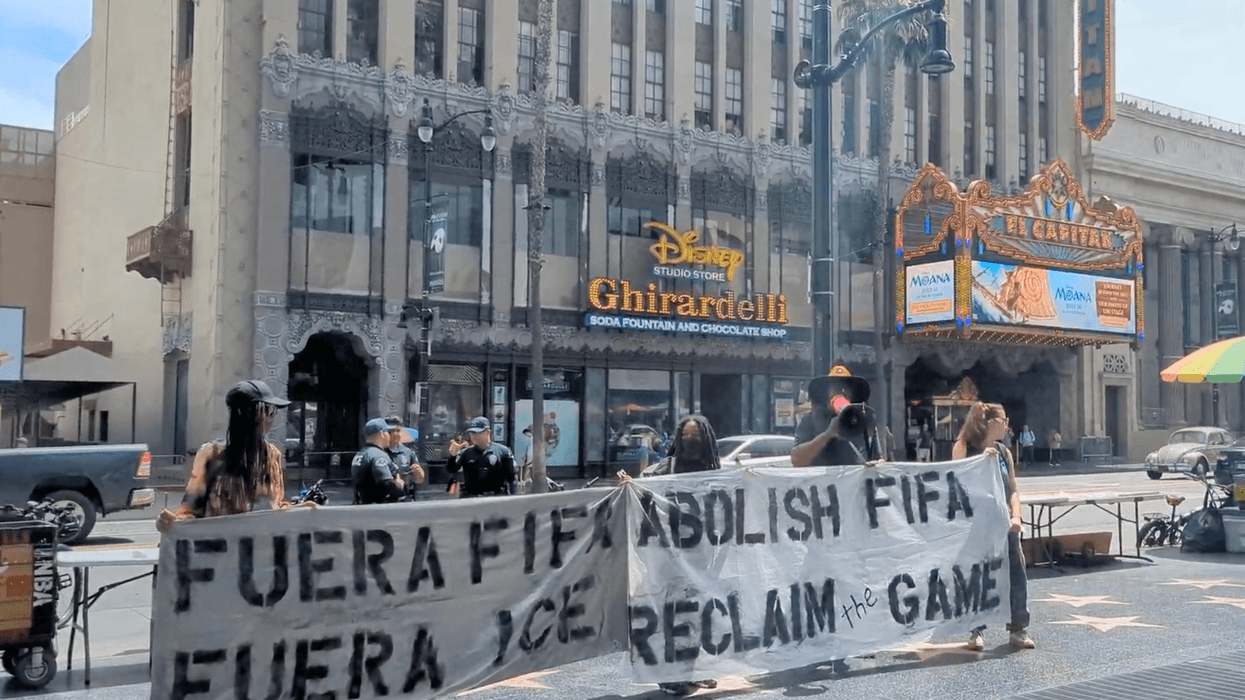
The city’s FIFA World Cup experience raises questions about the costs and benefits of hosting.
The FIFA World Cup is over, but with the 2027 Super Bowl and 2028 Olympics on the horizon, Los Angeles’ mega-event spree is just beginning. Paul Krekorian, a former LA City councilmember and now head of the mayor’s Office of Major Events, has declared the World Cup a triumph for the city.
“Even some of the naysayers about the ’28 [Olympic] games,” he told The New York Times, “will have to look at the unmitigated success of the World Cup here in Los Angeles and say, 'OK, now I understand what you’ve been talking about, when you talk about the benefit of major events. Now I get how this is beneficial to Angelenos.'”
As one of those so-called “naysayers,” I disagree. LA’s World Cup experience reinforces concerns about the city’s ongoing efforts to bring one sports mega event after another to the region. Hosting major events always gobbles up public resources that could otherwise be directed toward pressing needs, while host cities under pressure to sparkle on camera often violate residents’ rights.
The people paid to organize these big events, like Krekorian, love to repeat myths about mega-event benefits while pooh-poohing questions about the costs. But saying, "No" to more mega events is saying, "Yes’ to a city that puts residents ahead of corporate sponsors. It’s saying, "Yes" to a city that puts long-term planning ahead of last-minute scrambling.
The host committee’s human rights listicle fails to acknowledge that mega events’ own massive security apparatuses often threaten residents’ rights and safety.
Bidding to host one major sports event after another is the explicit goal of the LA Sports and Entertainment Commission (LASEC), a little-known but influential organization that acts as the local host committee for both the FIFA World Cup and the Super Bowl.
As LA’s World Cup host committee, LASEC has refused to publish the host city contract with FIFA. That means Angelenos do not know who exactly is paying—and how much they’re paying—for the significant additional city and county-run security, transportation, and sanitation services that come with hosting. Refusing to disclose that information is shady business. What is LASEC hiding? (Probably at least the fact that taxpayers are footing a large bill.) If LASEC leaders show such little regard for basic transparency, why should residents allow them to continue shaping the region’s commitments?
Because World Cup hosts have a record of violating human rights as they prepare for and host the mega event, each 2026 host committee was supposed to develop a plan to proactively protect human rights. LA’s long-overdue “plan” turned out to be a list of existing laws and hotlines. Several local advocacy groups have concluded that human rights were an afterthought for LASEC.
The host committee’s human rights listicle fails to acknowledge that mega events’ own massive security apparatuses often threaten residents’ rights and safety. On the day of the first game in the US, for example, snipers in military fatigues sat on rooftops about a mile from the temporarily renamed “Los Angeles Stadium,” pointing rifles down in the direction of Black and Latino kids playing soccer at a street festival. Over LA’s eight game days, the area around the stadium was teeming with local, state, and federal police. Some prevented local residents from accessing their own homes; some hassled and ticketed street vendors; and others monitored the area’s extensive (and expanding) AI-powered surveillance systems, technology that has been denounced by privacy and human rights organizations. Before and during the World Cup, federal agents conducted multiple raids on a LA city park, one where homelessness and drug use are visible. The raids allegedly targeted drug trafficking networks but have had the effects of displacing vulnerable individuals and disrupting essential harm reduction services. It seems likely these spectacular policing operations were timed with the park’s World Cup watch parties in mind.
The militarization of relatively small urban areas for the World Cup offers us just a taste of the much larger, more invasive operations Angelenos can expect to see with the 2028 Olympics, as police forces try to “secure” more of the region. Unfortunately, like LASEC, LA28 is showing little appetite to take human rights seriously. Its own months-late “human rights strategy” suggests unsheltered Angelenos will be displaced from event areas, a recipe for trampling on human rights. The strategy does not mention Immigration and Customs Enforcement once, even though ICE will be a core part of Olympic security operations. While there were few reports of ICE around the Los Angeles Stadium for the World Cup, ICE arrests surged across LA and the nation while we consumed the beautiful game. ICE’s efforts will be more concentrated on LA for the Olympics.
Krekorian talks up the benefits of hosting major events. The meager “legacy” projects promoted by LA’s World Cup Host Committee—26 community grants, two volunteer days, and one soccer clinic—reflects a paradigm shift from past World Cup and Olympic host cities that promised large-scale urban transformation as legacy projects. While it’s good that LA leaders aren’t overpromising at the same scale and public expense, we’re now left with a new question: Without marquee legacy investments, what justifies the financial and social costs of hosting?
LASEC argues that mega events bring lasting economic benefits, but these claims have been consistently debunked by economists. The assertion that events generate a long-term tourism boost? There’s little evidence of that for already popular destinations like LA. The promise of a short-term bump in tourist spending? Mega events attract sports-loving tourists but actually deter other potential visitors. So while attendees spend a lot of money at stadiums and multinational hotels, other cultural attractions and businesses struggle during big events. Just ask the Louvre about the Paris 2024 Olympics. During this World Cup, much like for the 2022 Super Bowl, the owners and staff of several local businesses near the Los Angeles Stadium told me game days were bad for business, as their regular customers stayed away to avoid chaotic traffic.
Beyond one-off grants and volunteer days, LA’s World Cup “legacy” boils down to intangibles, like the moments of collective effervescence and the sense of witnessing history. These intangibles are why I love watching the World Cup. But they do not justify the costs of hosting.
LASEC is unwilling to be transparent with the public and uninterested in grappling seriously with human rights concerns. This World Cup has not demonstrated that mega events generate substantive benefits that warrant the immense expenditure of city and county resources. LA must put a stop to LASEC’s plans to continue diverting public resources to one mega event after another.
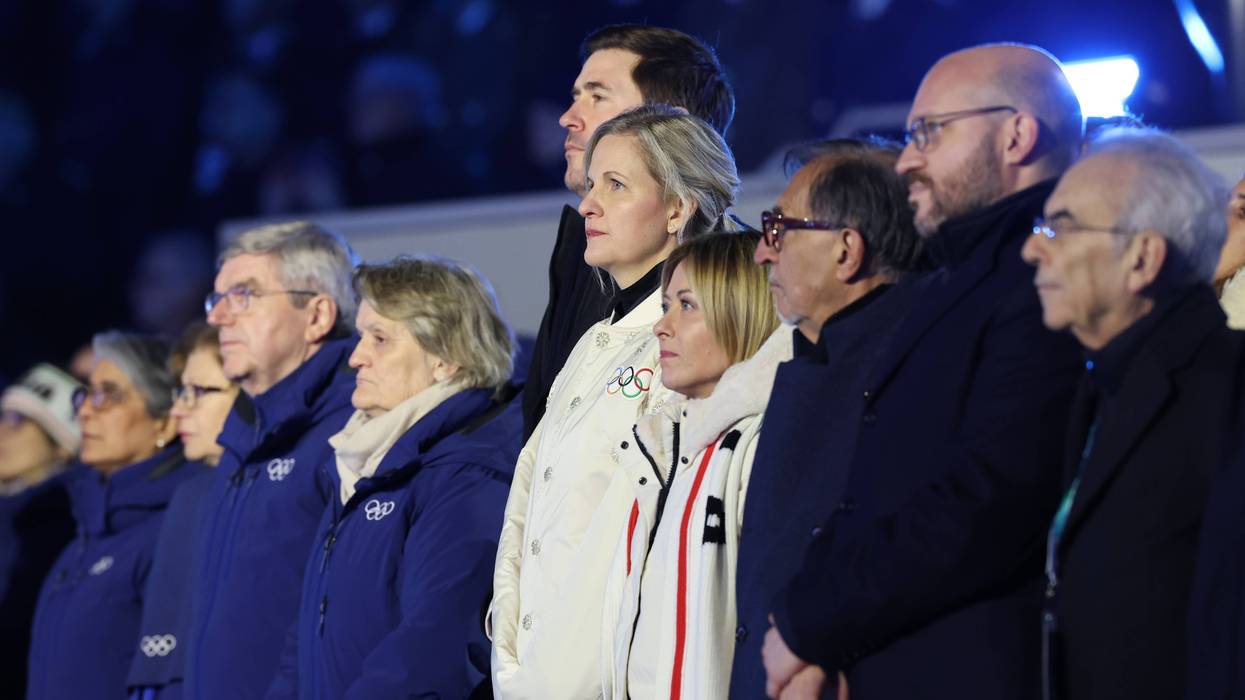
The genetic testing put forward by the committee "fuels suspicion, invites public scrutiny, and puts already vulnerable athletes at risk," said one advocate.
A new policy unveiled Thursday by the International Olympic Committee was presented as a ban on transgender athletes from participating in women's sports—but considering just one transgender woman has participated in the international games since they have been eligible to, critics said the new rules would likely have a greater impact on cisgender women with natural variations in hormones, who have already faced degrading treatment and exclusion in the sports community for years.
IOC president Kirsty Coventry, who campaigned to lead the organization with calls to "protect" women's sports in the Olympics, said that starting with the 2028 Summer Games in Los Angeles, athletes will be required to take a one-time genetics test with the screening using a cheek swab, blood test, or saliva sample.
"Eligibility for any female category event at the Olympic Games or any other IOC event, including individual and team sports, is now limited to biological females," said Coventry, adding that the new policy “is based on science and has been led by medical experts."
The IOC worked with experts to determine how to approach the issue of transgender women in sports, which in recent years has become the subject of talking points for the Republican Party in the US and other right-wing leaders. President Donald Trump signed an executive order last year barring transgender women from competing on women's college sports teams.
The committee conducted a review not just of transgender athletes but of those who have differences in sexual development (DSD), such as being intersex, and compete in women's sports. The review has not been publicly released, but the IOC said it found athletes born with male sexual markers had physical advantages even if they were receiving treatment to reduce testosterone.
The IOC had previously allowed transgender athletes to participate in the Olympic Games if they were reducing their testosterone levels. In 2021, a weight lifter from New Zealand, Laurel Hubbard, became the first transgender women to compete at the Olympics after transitioning.
Boxers including Lin Yu-Ting of Taiwan and Imane Khelif of Algeria have been subject to scrutiny and genetic testing regarding their sex; Lin was recently cleared to participate in World Boxing events in the female category. Both competed in the 2024 Olympics in Paris and won gold medals.
Khelif has said she naturally has the SRY gene that the IOC's screening would test for, and that she has naturally high levels of testosterone.
Under the IOC ruling, athletes who do not have the typical female XX sex chromosomes and have DSD will also be banned from competing. People with DSD are not always aware of their status.
South African runner Caster Semenya, who has a rare genetic trait giving her elevated levels of testosterone, was subjected to genetic testing after her fellow competitors complained about her appearance when she won a gold medal in a world championship in 2009.
Genetic screening for Olympic athletes "is not progress—it is walking backward," she told The New York Times. "This is just exclusion with a new name.”
Payoshni Mitra, executive director of the advocacy group Humans of Sport, told the Times that the new policy simply "polices women’s bodies."
“It fuels suspicion, invites public scrutiny, and puts already vulnerable athletes at risk," she said.
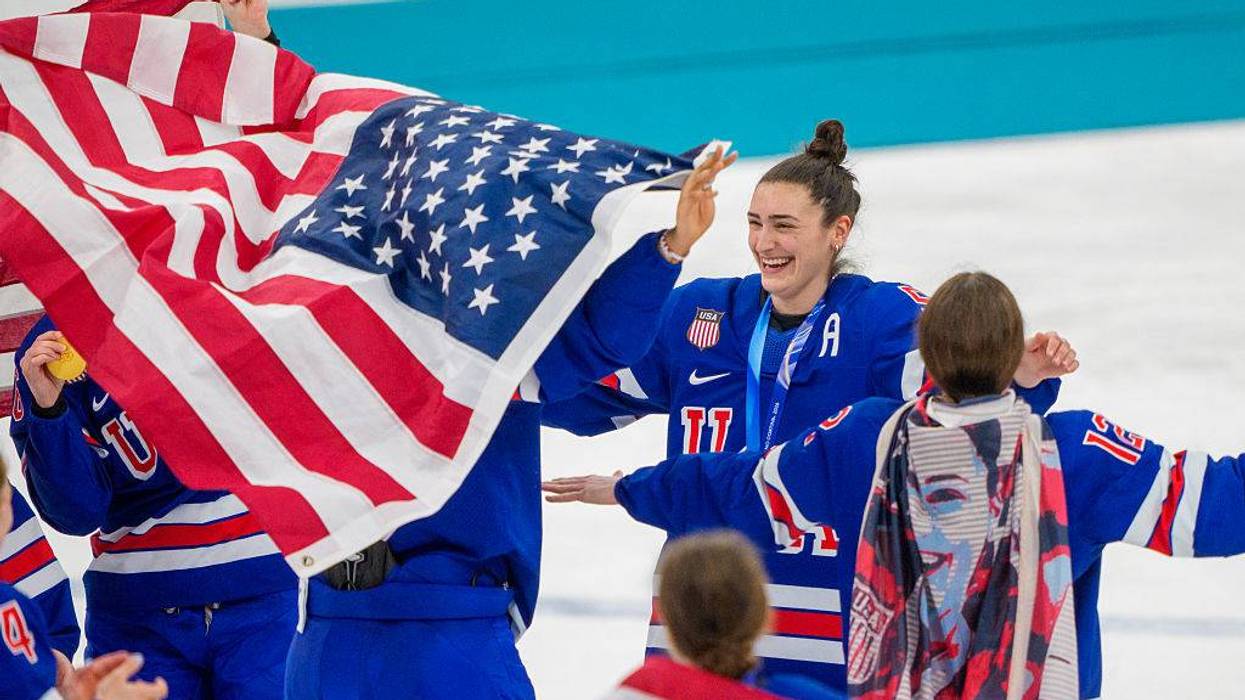
"Another win for the US women’s hockey team," said California Gov. Gavin Newsom.
The gold medal-winning US women's Olympic hockey team has declined an invitation from President Donald Trump to attend the State of the Union address in Washington, DC on Tuesday.
In a statement given to NBC News, a spokesperson for USA Hockey said that while the team was "sincerely grateful for the invitation extended to our gold medal-winning US Women’s Hockey Team and deeply appreciate the recognition of their extraordinary achievement," its members could not attend "due to the timing and previously scheduled academic and professional commitments."
The team's decision to decline an invitation to the State of the Union came one day after Trump was heard telling the US men's hockey team, which also won the gold medal at the 2026 Winter Olympics in Milan, Italy, that he would be forced to invite the women's team to the White House or risk being impeached.
"I must tell you, we’re going to have to bring the women’s team, you do know that?" Trump told the players on Sunday.
This resulted in the men's team breaking out in laughter.
The women's team's decision to not attend Trump's speech drew quick praise from Democratic California Gov. Gavin Newsom, who is widely expected to seek the presidency in 2028.
"Another win for the US women’s hockey team," he wrote in a social media post.
Activist Charlotte Clymer argued that Trump's ridicule of the women's team showed just how little his attacks on transgender women athletes had anything to do with a sincere appreciation for or desire to "protect" women's sports.
"Weird how Trump has spent the past several years falsely claiming trans youth are an existential threat to women’s sports," she remarked, "and then mocks the US women’s hockey team after they won gold because he thinks it’ll play well with the guys during a locker room celebration."
She also urged the men's hockey team to decline Trump's invitation in solidarity with their fellow gold medal-winners.
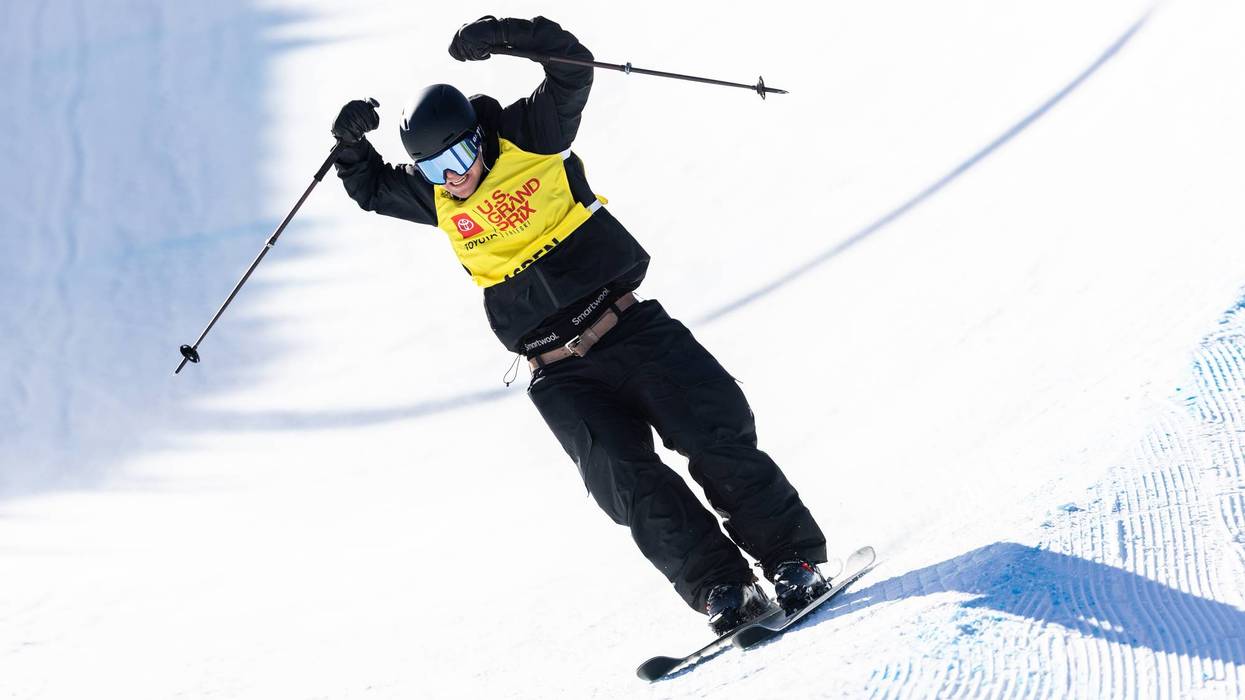
When Trump attacked one of their own for speaking his mind, Olympians stood up in support of their colleague.
US President Donald Trump has a long history of trashing athletes. So when he aimed his viciousness at US Olympians participating at the 2026 Milano Cortina Winter Olympics, perhaps it should not have been a surprise. The response from US athletes has been fierce and firm: They will not be intimidated by the petulant president.
When a journalist asked US freestyle skier Hunter Hess what it was like to represent the US in this particular political moment, Hess replied: “It’s a little hard. There’s obviously a lot going on that I’m not the biggest fan of, and I think a lot of people aren’t. Just because I’m wearing the flag doesn’t mean I represent everything that’s going on in the US.” The Olympian added that he had “mixed feelings” about representing the US.
In response, Trump hopped on Truth Social to attack the athlete, mangling the US skier’s actual words along the way. “U.S. Olympic Skier, Hunter Hess, a real Loser, says he doesn’t represent his country in the current Winter Olympics,” Trump punched out with his chubby little posting thumbs. “If that’s the case, he shouldn’t have tried out for the Team, and it’s too bad he’s on it. Very hard to root for someone like this.”
Not only did Trump misrepresent what Hess conveyed, but he cued his MAGA ghouls and powerful supporters that it was time to unleash their vitriol. Right-wing boxer wannabe Jake Paul posted: “Wow pls shut the fuck up. From all true Americans. If you don’t want to represent this country go live somewhere else.” US Sen. Rick Scott (R-Fla.) piled on, “Any person who goes to the Olympics to represent the United States and then says they don’t want to represent the United States should be immediately stripped of their Olympic uniform.”
The IOC just can’t seem to grasp the obvious reality that their thin veneer of institutional "neutrality" tends to benefit the already powerful at the expense of courageous upstarts.
To say this does not exactly embrace the goodwill that the Olympics are supposed to stand for is to make an enormous understatement. Trump wouldn’t recognize the Olympic spirit if it came up and kissed him on the cankle.
Meanwhile, Olympians have stood up in support of Hess and other athletes who are willing to embrace the political complexity of the moment. Chloe Kim, the superstar snowboarder from the United States, said, “It’s important in moments like these for us to unite and kind of stand up for one another with what’s going on.” She added, “I’m really proud to represent the United States. The US has given my family so much opportunity, but I also think we are allowed to voice our opinions on what’s going on.”
Eileen Gu, the two-time gold-medal-winning freestyle skier who herself experienced scorn and abuse when she decided to represent China, rather than the United States, at the 2022 Winter Olympics, said: “I’m sorry that the headline that is eclipsing the Olympics has to be something so unrelated to the spirit of the Games. It really runs contrary to everything the Olympics should be.”
After winning a silver medal in cross-country skiing, Ben Ogden said, “I choose to believe that I live in a country where people can express their opinions without backlash.” He added: “Certainly not... without backlash from the president. And that was really disappointing to see, but I hope it doesn’t continue like that.” Fellow US cross-country skier Zak Ketterson also pushed back: “I think it’s pretty childish to come at somebody for exercising their free speech, right, and considering that side of the political spectrum always champions free speech, it’s a little, I think, surprising to see them so triggered.”
US curler Rich Ruohonen, who is also an attorney from Minnesota, leaned on the law, noting, “We have a constitution, and it allows us freedom of speech.” He added: “What’s happening in Minnesota is wrong. There’s no shades of grey. It’s clear.” This follows fellow Minnesotan Kelly Pannek, a member of the US women’s hockey team, who said she drew inspiration from activists in her home state: “I think people have been asking a lot of us what it’s like to represent our state and our country. I think what I’m most proud to represent is the tens of thousands of people that show up on some of the coldest days of the year to stand [at protests] and fight for what they believe in.”
Meanwhile, the International Olympic Committee has remained conspicuously quiet. Rather than standing up for Olympic athletes and their free speech rights, the self-proclaimed “supreme authority” of the games has sat silent.
When asked about Trump’s behavior at a Milan Cortina 2026 press conference, IOC spokesman Mark Adams said, “I am not going to add to the discourse because I don’t think it’s very helpful to heat up any discourse like that.” So much for the IOC’s slogan “putting athletes first.” According to the IOC’s most recently available tax documents, Mr. Adams makes $528,615 in reportable compensation (and another $100,838 in additional compensation from the IOC and related organizations), but apparently that isn’t enough to inspire him to do his job right.
Perhaps the IOC is too busy clamping down on Ukrainian skeleton athlete Vladyslav Heraskevych for wearing a helmet commemorating athletes from his country who were killed in the war with Russia. Or maybe they are still admiring their handiwork from when they forced the Haitian delegation at the Milano Cortina Olympics to remove the Haitian revolutionary Toussaint Louverture—the former slave who led a revolution that created the world’s first Black republic in Haiti in 1804—from their uniforms, arguing that Louverture’s image violated Olympic rules barring political symbolism.
The IOC just can’t seem to grasp the obvious reality that their thin veneer of institutional "neutrality" tends to benefit the already powerful at the expense of courageous upstarts. In sitting silent in the face of Trump’s attacks on athletes, the IOC is facilitating the slide toward authoritarianism. With the Los Angeles 2028 Olympics on the horizon, it’s time for the IOC to wake up from its bumbling slumber.
Trump’s attacks on star US athletes is part of a larger pattern. After all, this was the grump who attacked Megan Rapinoe during the 2019 World Cup, tweeting, “Megan should never disrespect our Country, the White House, or our Flag, especially since so much has been done for her & the team.” Six years later, Trump is at it again. Rapinoe refused to back down. May these athletes continue to show the collective courage to do the same, to stand up to power.
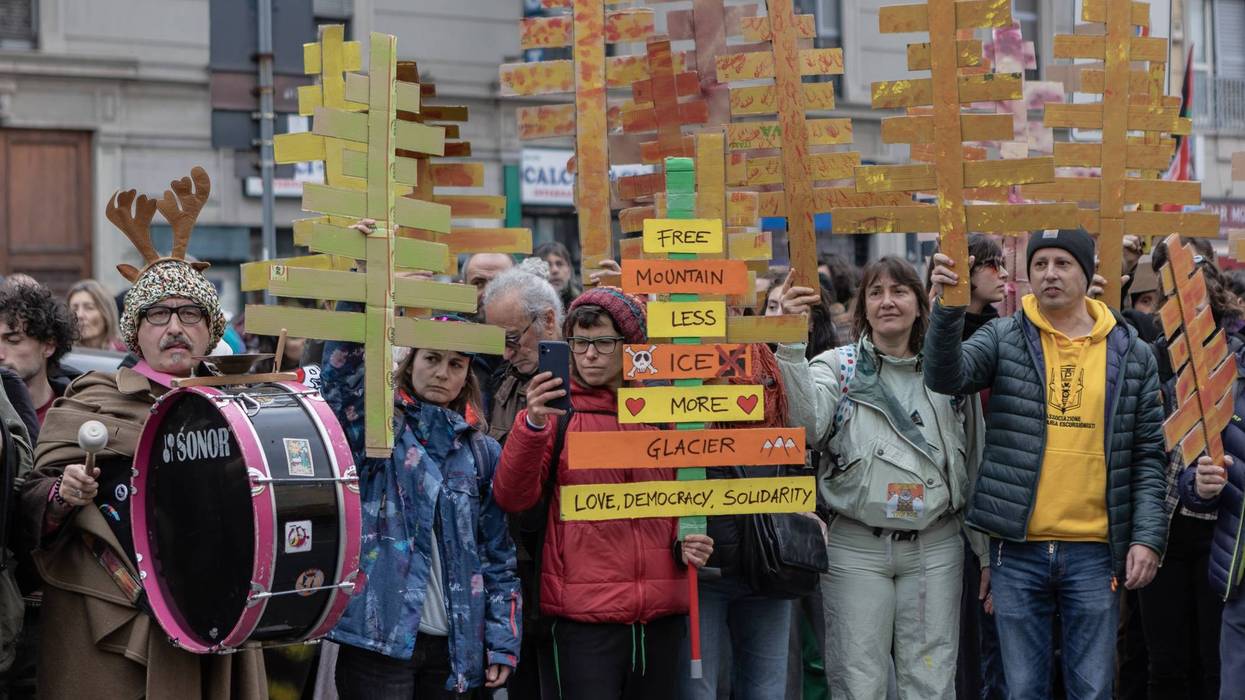
"I’m here because these Olympics are unsustainable—economically, socially, and environmentally," said one elderly protester.
Around 10,000 demonstrators rallied in Milan Saturday to protest the economic, social, and environmental impacts of the Milano-Cortina Winter Olympics, the presence of US Immigration and Customs Enforcement agents at the games, genocidal Israel's participation, and other issues.
The union and activist network Comitato Insostenibili Olimpiadi, or Unsustainable Olympics Committee, organized the demonstration, which it called "a popular gathering of social opposition, bringing together grassroots and community sports organizations, civic and environmental movements, territorial committees and student collectives."
The coalition said it is "fighting for the right to housing and for militant trade unions, movements that have stood alongside the Palestinian people, and the Global Sumud Flotilla," the seaborne campaign to break Israel's blockade of Gaza.
Protesters also decried Decree Law 1660, which empowers police to preemptively detain people for up to 12 hours if they believe they may act disruptively, as well as "state racism against migrants and racialized people, and transfeminist anger against social and institutional patriarchy."
At the vanguard of the protest march were about 50 people carrying cardboard trees representing larches they said were cut down to construct the new bobsleigh track in Cortina d'Ampezzo. They held a banner reading, "Century-old trees, survivors of two wars, sacrificed for 90 seconds of competition on a bobsleigh track costing €124 million."
Stefano Nutini, a 71-year-old protester, told Reuters that "I’m here because these Olympics are unsustainable—economically, socially, and environmentally."
"These Olympic Games are against nature and against people." Thousands of people marched through Milan to protest housing costs and urban affordability on the first day of the Milano Cortina Winter Olympics. pic.twitter.com/iPcpXwuvQN
— USA TODAY (@USATODAY) February 7, 2026
One healthcare worker at the protest told Euronews: "It's public money that has been spent on a display window. It may be interesting to have these showcase events, but at a time when there is not enough money for essential things, it makes no sense to spend it in this way."
Another demonstrator said that the Olympics "have not brought any wealth to the city of Milan and Lombardy."
"They have taken money away from social welfare, public schools, and healthcare," he added. "This money has literally been burned, and not a single lira will go to Italian citizens, particularly those in Lombardy, so these are bogus Olympics."
Other demonstrators held signs reading "ICE Out" to protest US Immigration and Customs Enforcement's presence in Italy to provide security support for American athletes and officials. The agency is at the center of the Trump administration's deadly crackdown on unauthorized immigrants and their defenders in the US. On Friday, hundreds of protesters also rallied against ICE in Milan.
The protests took place as US Vice President JD Vance was in Milan as head of his country's Olympic delegation. Vance was loudly booed at Friday's opening ceremony in San Siro stadium.
While Saturday's demonstration was mostly peaceful, a small breakaway group reportedly threw firecrackers and other objects at police, who responded with brutal force, firing a water cannon, deploying chemical agents, and beating protesters with batons. A young woman suffered a head injury and a young man's arm was broken, according to il Manifesto, which reported six arrests.
Further afield, railway infrastructure was reportedly sabotaged around Bologna in Emilia-Romagna and Pesaro in coastal Marche.
Italian Prime Minister Giorgia Meloni—whose right-wing government was a common subject of protesters' ire—condemned the demonstration and voiced "solidarity... with the police, the city of Milan, and all those who will see their work undermined by these gangs of criminals."
More anti-Olympics protests were set to take place in Milan on Sunday.
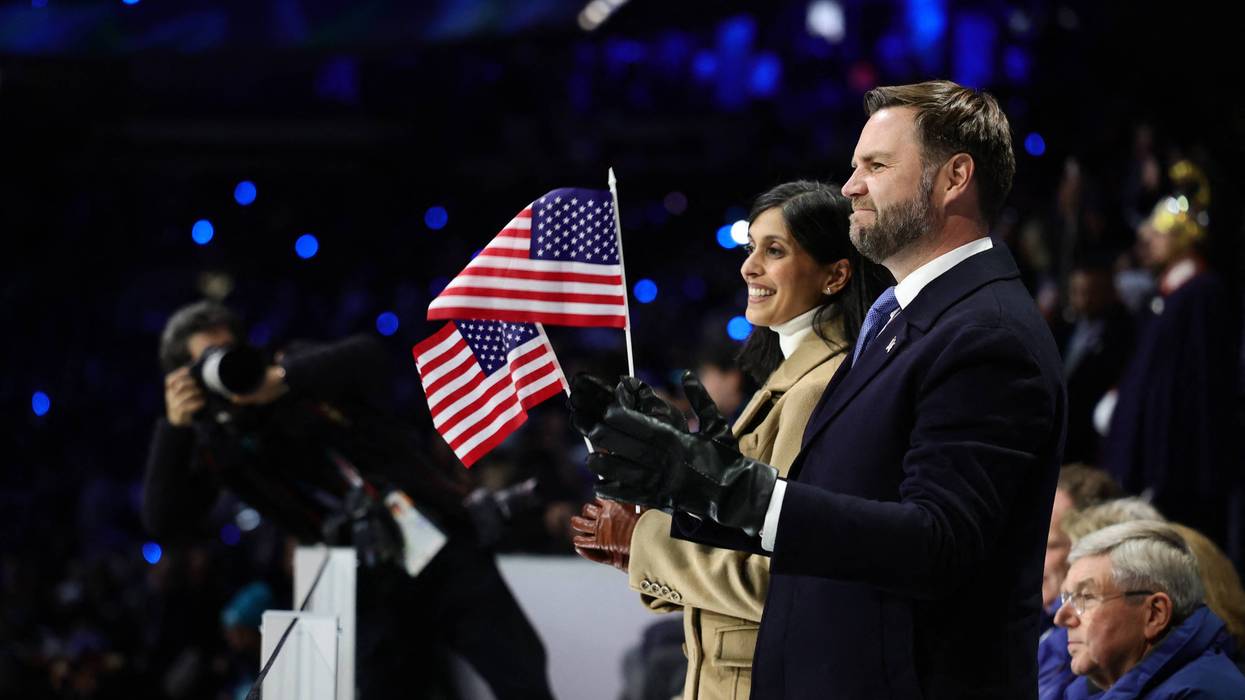
The vice president attended the opening ceremony in Milan, where people also protested the presence of US Immigration and Customs Enforcement agents at the Winter Olympics.
US Vice President JD Vance was booed at the opening ceremony of the Olympic Games in Italy on Friday, but at least one widely shared video of it was swiftly scrubbed from X, the social media platform controlled by former Trump administration adviser Elon Musk.
Acyn Torabi, or @Acyn, "is an industrialized viral-video machine," the Washington Post explained last year, "grabbing the most eye-catching moments from press conferences and TV news panels, packaging them within seconds into quick highlights, and pushing them to his million followers across X and Bluesky dozens of times a day."
In this case, Torabi, who's now senior digital editor at MeidasTouch, reshared a video of the vice president and his wife, Usha Vance, being booed that was initially posted by filmmaker Mick Gzowski.
However, the video was shortly taken down and replaced with the text, "This media has been disabled in response to a report by the copyright owner."
Noting the development, Torabi, said: "No one should have a copyright on Vance being booed. It belongs to the world."
As of press time, the footage is still circulating online thanks to other X accounts and across other platforms—including a video shared on Bluesky by MeidasTouch editor in chief Ron Filipkowski.
JD Vance loudly booed at the Winter Olympics today.
[image or embed]
— Ron Filipkowski (@ronfilipkowski.bsky.social) February 6, 2026 at 4:25 PM
The Vances' unfriendly welcome came after a Friday protest in the streets of Milan over the presence of US Immigration and Customs Enforcement agents at the Winter Olympics, with some participants waving "FCK ICE" signs.
The Trump administration has said the ICE agents—whose agency is under fire for its treatment of people across the United States as part of the president's mass deportation agenda—are helping to provide security for the vice president and other US delegation members, including Secretary of State Marco Rubio.
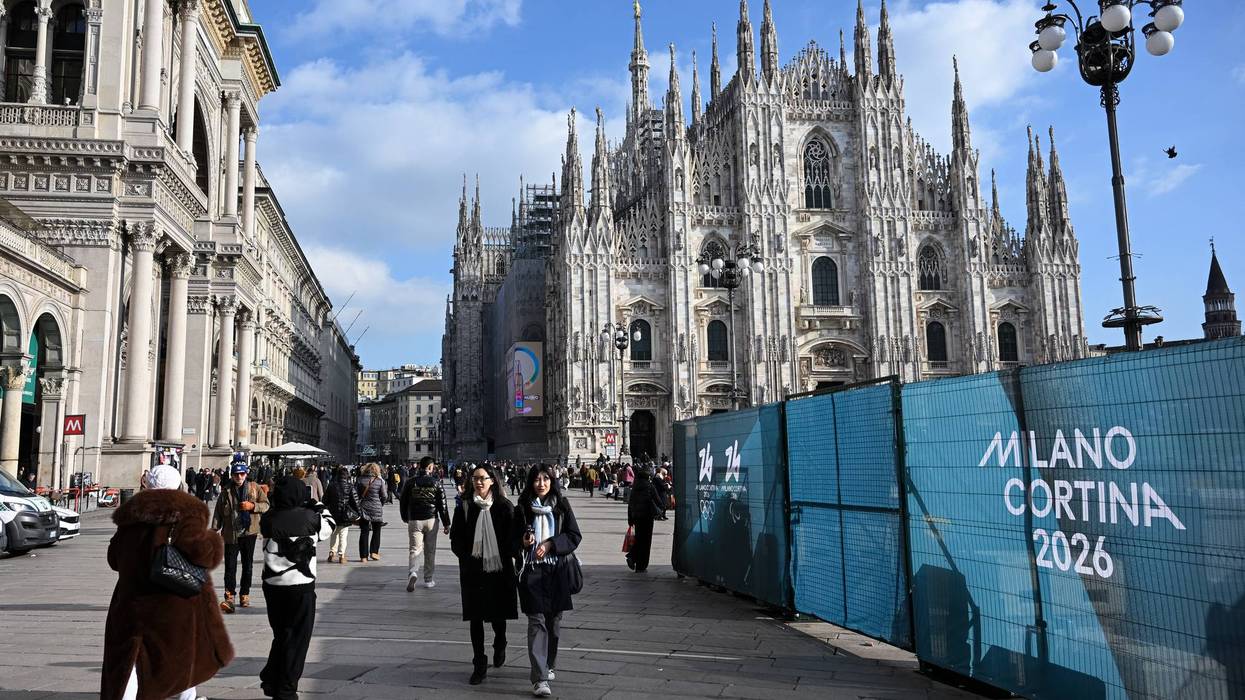
“Can’t we just say no to Trump for once?" asked Mayor Giuseppe Sala.
The mayor of Milan, which is set to host the 2026 Winter Olympics starting February 6, was not convinced Tuesday by assurances that US immigration officials fulfilling security duties at the games will only be providing protections for top US officials.
US Immigration and Customs Enforcement (ICE) agents, said Giuseppe Sala, "are not welcome in Milan, there’s no doubt about it."
Sala's comments came after the US Embassy in Rome confirmed an official statement from ICE saying that federal officers are scheduled to provide "diplomatic security" during the Milan Cortina games—days after US immigration agents fatally shot Alex Pretti, the third US citizen killed by employees of the Department of Homeland Security in less than four weeks.
ICE has also garnered international outrage with its detention of people without criminal records even as President Donald Trump's administration continues to claim it is working to deport the "worst of the worst violent criminals," and particularly its abduction of young children including 5-year-old Liam Ramos, 7-year-old Diana Crespo, and 2-year-old Chloe Renata Tipan Villacis.
Two Italian journalists were also threatened by ICE agents on Sunday while they were reporting on immigration enforcement in Minneapolis, with the officers telling them, "This is your only warning, if you keep following us, we will break your window and we will pull you out of the vehicle.” Filming and observing ICE agents, as long as one is not interfering with their operations, is a protected right under the US Constitution.
ICE told Al Jazeera that "obviously, ICE does not conduct immigration enforcement operations in foreign countries,” but Sala suggested that it was not entirely obvious that officers with the agency would not perpetrate violence at the Olympics.
Officers with ICE, he told RTL 102.5 radio, "don’t guarantee they’re aligned with our democratic security management methods."
“This is a militia that kills,” he added. “Can’t we just say no to Trump for once?"
ICE told Agence France-Presse that ICE's Homeland Security Investigations (HSI) department will be "supporting the US Department of State’s Diplomatic Security Service and host nation to vet and mitigate risks from transnational criminal organisations."
“All security operations remain under Italian authority," said the agency.
If mitigating risks is the goal, said Alessandro Zan, a member of European Party representing Italy's Democratic Party, "it's paradoxical to entrust it to those who are the first to commit crimes, operating with violence, and killing innocents in cold blood."
"In Italy, we don't want those who trample human rights and act outside any democratic control," said Zan. "It's unacceptable to think that an agency of this kind could have a role, whatever it may be, in our country."
HSI typically investigates "the illegal movement of people, goods, money, contraband, weapons, and sensitive technology into, out of, and through the United States," according to its website.
The Associated Press reported that HSI is among the federal agencies that have helped provide security for US officials at previous Olympic games.
In Milan, the US delegation attending the February 6 opening ceremony will be led by Vice President JD Vance, along with Second Lady Usha Vance and Secretary of State Marco Rubio.
Sala told RTL that the city "can take care of their security ourselves. We don’t need ICE.”
Renew Europe, a centrist group within European Parliament, added that it is "not acceptable" for ICE officers to be welcomed in Milan as the agency carries out a violent immigration crackdown across the US.
The Green and Left Alliance (AVS) and Azione, two Italian opposition parties that counter the right-wing government, have started petitions calling on officials to bar any agents with ICE from involvement with security operations at the Milan Cortina games.
La Repubblica reported that the Italian government considered blocking ICE from attending the games as part of the security detail, but declined to do so.
Prime Minister Giorgia Meloni, said Zan, "should clearly state what is happening and provide guarantees that Trump’s political police will not set foot in our country."
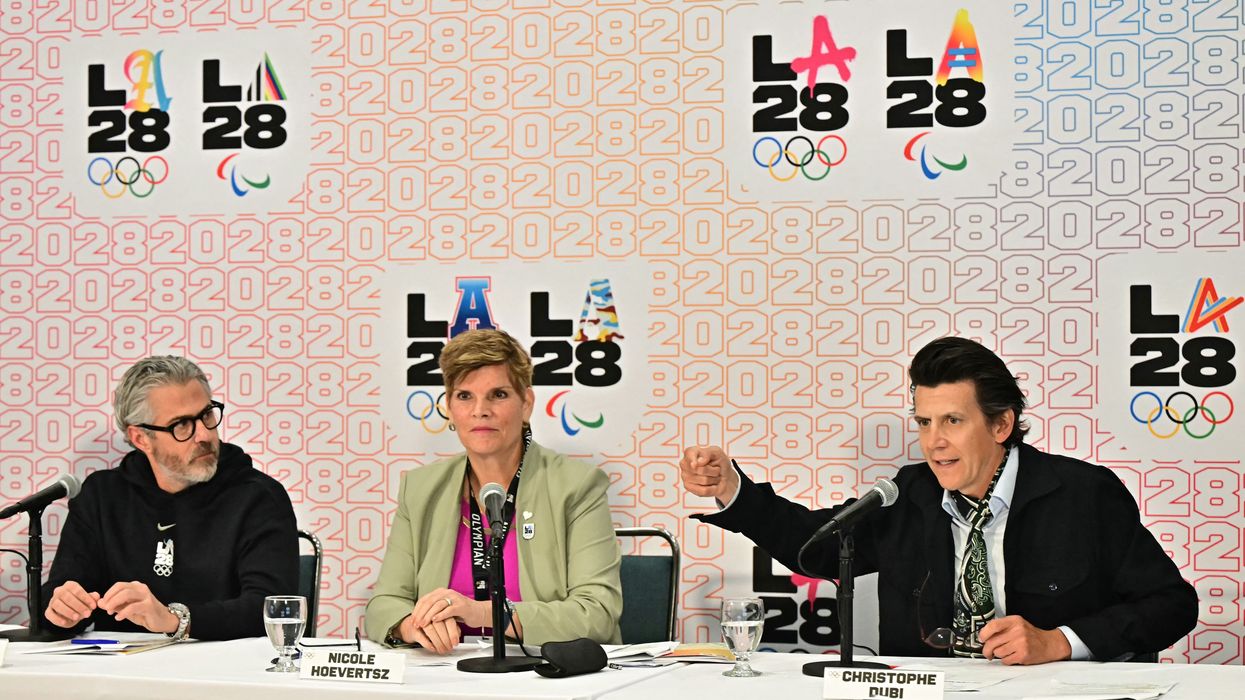
A new poll from the anti-Olympics coalition NOlympicsLA finds that public support for the Los Angeles 2028 Olympics has soured significantly over time.
When the International Olympic Committee announced in September 2017 that Los Angeles would host the 2028 Summer Olympics, then-Mayor Eric Garcetti predicted, “The Olympics will spur a bold vision for our city.” Eight years later, enthusiasm in the City of Angels has dwindled considerably.
Current Mayor Karen Bass is under increasing pressure from locals who are concerned that LA, which is already experiencing a budget crisis, will be stiffed with a hefty Olympic bill. Under U.S. President Donald Trump, Immigration and Customs Enforcement, or ICE, is wreaking havoc on the city’s immigrant population, with masked agents in military-style garb snatching Angelenos off the streets—often violently—and cramming them into vans and ultimately into detention facilities with inhumane conditions.
Amid the mayhem, a new poll from the anti-Olympics coalition NOlympicsLA finds that public support for the Los Angeles 2028 Olympics has soured significantly over time. A firm majority of respondents—some 54%—asserted a preference for spending public resources on wildfire recovery rather than the Olympics. Less than a quarter of respondents (24%) supported funding the Olympics over those still reeling from the wildfires that swept through LA in January 2025, ravaging places like the historically Black foothill community of Altadena.
The poll also found a notable age gap, with millennials and Gen Z overwhelmingly spurning the LA28 Games. A mere 22% of those polled between the ages of 18 and 29 were supportive of LA28 whereas in the 45-to-60 age bracket 53% supported the Games. The NOlympics LA survey also uncovered a gender gap: Women were more likely than men to oppose or be neutral toward hosting the LA 2028 Games (40% to 23% of men) and keener to prioritize wildfire recovery over Olympic preparations (61% to 49% for men).
The Olympics have a long and ignominious tradition of short-circuiting democracy, but it’s not too late for Los Angeles to make amends.
The Olympics tend to be popular in the abstract, but as the reality of hosting the Olympics draws closer—with overspending, gentrification, displacement, police intensification, greenwashing, and corruption coming into sharper focus—public support tends to shrink.
For instance, a few months ahead of the Paris 2024 summer Olympics, a poll found that 44% of Parisians thought the 2024 Olympics were a “bad idea.” Then, a couple weeks before the Paris 2024 Olympics kicked off, another poll discovered that the French were less than thrilled at the prospect. More than 65% of the population was either indifferent (36%), concerned (24%), or angry (5%) about hosting the Olympics.
At the Tokyo 2020 Summer Games, staged a year later in 2021 amid the coronavirus pandemic, a whopping 83% stated that the games should be either postponed again or scrapped altogether. When the public ramped up pressure on Japan’s Prime Minister Yoshihide Suga to take action, he was forced to admit that the host-city contract handed the power to cancel or postpone solely to the International Olympic Committee. The IOC ignored public opinion and rammed ahead, resulting in a dramatic uptick of Covid-19 rates in Tokyo during and after the games, while more than 800 people tested positive for Covid-19 inside the so-called “Olympic bubble.”
To say the Olympics has a democracy problem is to make an understatement. Where democratic practice flourishes, the Olympics tend to struggle to gain popular traction. Between 2013 and 2018 alone, more than a dozen cities rejected their Olympic bids, after either losing a public referendum, facing the mere prospect of a public vote, or succumbing to political pressure against the games.
This is precisely why the International Olympic Committee opted in September 2017 for the hail-Mary move of announcing two host cities at once, selecting Paris to stage the 2024 Summer Games and Los Angeles to host in 2028. The two cities were originally bidding for the 2024 Olympics, but after conspicupus bid withdrawals from Boston, Budapest, Hamburg, and Rome, the IOC made the unusual dual declaration. Neither Paris nor Los Angeles carried out a public referendum where voters could weigh in on whether or not to host the complicated and expensive sports mega-event.
The NOlympicsLA poll asked Angelenos their thoughts on the possibility of a democratic referendum on the games. Their results were bracing. They found that “only 54% would vote to support LA28 if there were a referendum tomorrow.”
Turns out, a referendum might be on the horizon. In Los Angeles, Unite Here Local 11, the union that represents hotel and restaurant workers, has filed paperwork to create a ballot measure that would provide LA voters a chance to weigh in on whether to develop or expand “event centers” like sports venues, convention facilities, or hotels. The union not only zeroed in on permanent facilities, but also temporary structures like ones being proposed for the 2028 Olympics. As the Los Angeles Times reported, this “could force at least five Olympic venues to go before voters for approval,” including the LA Convention Center, the John C. Argue Swim Stadium, and the Sepulveda Basin Recreation Area, which is slated to host Olympic events like 3-on-3 basketball and skateboarding in the San Fernando Valley.
Jonny Coleman, an organizer with NOlympicsLA, pointed out to Common Dreams that “this polling took place before the budget crisis and before the ICE incursion.” He added, “We believe our message has reached many more Angelenos since this poll was conducted, and we are confident more and more Angelenos will reject LA28 and the World Cup on the basis of the ICE collaboration alone.” He also noted that organizers with LA28 have “not made a single public comment since June 6 about the violence taking place against working class Angelenos and how that will continue to be weaponized.”
The Olympics have a long and ignominious tradition of short-circuiting democracy, but it’s not too late for Los Angeles to make amends. While it’s true that neither the word “democracy” nor “democratic” appear in the host-city contract between the IOC and LA, Angelenos could force a democratic vote on key issues. NOlympicsLA’s new poll shows that there is a fresh interest in asking big questions about the 2028 LA Games.
Comedian John Mulaney recently joked that “making LA host the Olympics… would be like if you had a friend, and she was having a nervous breakdown, and she had no money, and part of her house was on fire. And to cheer her up, you made her host the Olympics.”
Well, the joke may end up being on LA28 Olympic organizers who thought they could press ahead with status-quo thinking in a whipsaw world. A public referendum on the LA Olympics, set against the backdrop of an increasingly authoritarian country, might be just what the democracy doctor ordered.
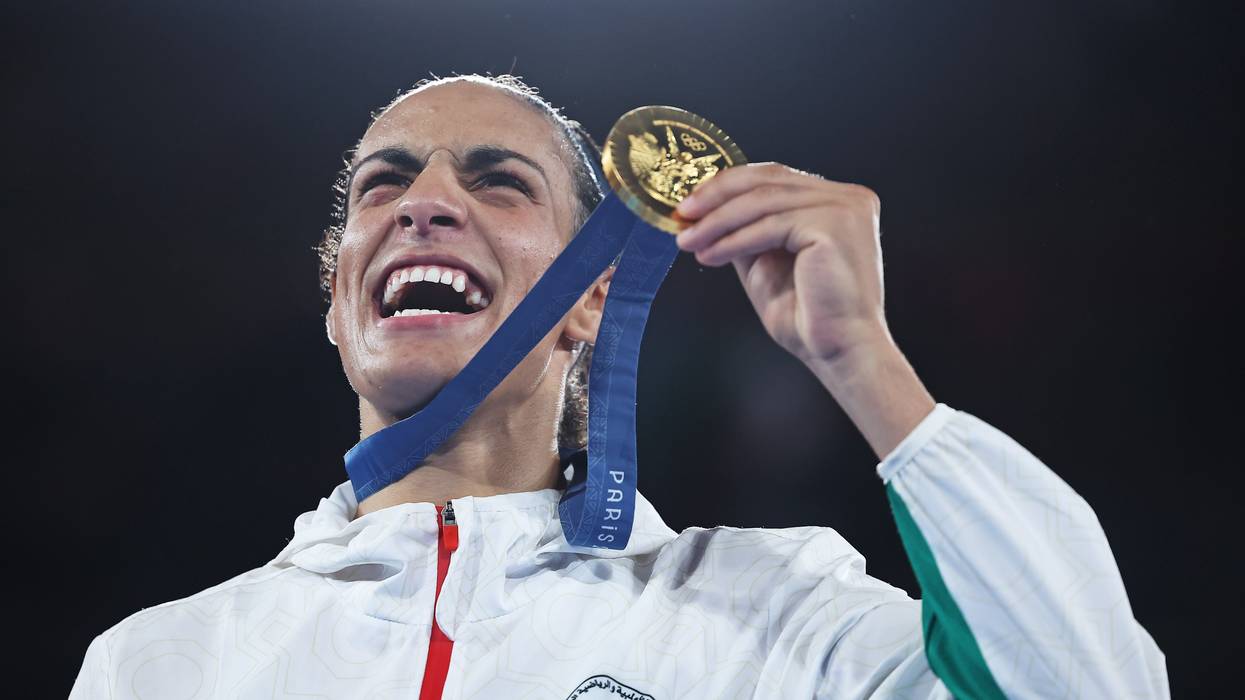
The attacks against Algerian boxer Imane Khelif show why cis women must join trans women in this fight against having our bodies and gender debated and defined.
As the 2024 Paris Olympics come to a close, it’s heartbreaking to see that instead of celebrating the unity these games are meant to inspire, we were forced to collectively watch the opposite—a deepening divide among us. The original values of Olympism were to “encourage effort,” “preserve human dignity,” and “develop harmony.” And it seems when presented with those opportunities, we failed on all three of those fronts as a society.
As a trans woman, I am deeply disturbed by the narrative that was allowed to surround Algerian boxer Imane Khelif, whose victory against Italian boxer Angela Carini in the women’s welterweight boxing tournament was overshadowed by baseless accusations and transphobic conspiracy theories. These attacks were given a national stage by conservative figures, who falsely claimed that Khelif is biologically male, feeding into the ugly rise of a conspiracy theory known as “transvestigations.”
These so-called “transvestigations” are a disturbing form of misogyny, and part of another category of transphobia known as transmisogyny, targeting women under the guise of protecting womanhood. Khelif is a cisgender woman, assigned female at birth, and identifies as a woman. Yet, her victory, that should have been internationally lauded, was met with a wave of online harassment and accusations.
When we allow fear and hatred to dictate who counts as a “real woman,” we undermine the very foundation of women’s rights.
This is the chilling reality of the world we live in: Anti-trans and transphobic narratives have seeped into the mainstream, reaching a global stage. Now, it’s not just trans women who are under attack by those with nothing better to do than police gender and spread disinformation, but cis women too—anyone whose womanhood doesn’t fit an impossible standard.
“Transvestigations” didn’t start with Khelif, and unfortunately, they won’t end with her. It’s a new label for an old problem—misogyny rebranded, now weaponized against both cis and trans women. It’s a way to attack women while pretending to defend them. It uses language that claims to protect women’s rights but only protects women who fit a certain mold. Many other Olympic athletes—especially women of color—have been subjected to having their gender analyzed because of their strength, abilities, and looks. And when birth certificates, health records, or hormonal testing aren’t enough to satiate this mob of “transvestigators,” they move the goalpost further, constantly redefining what it is to be a woman.
It concerns me to know that cis women are now being persecuted in the same way myself and my trans sisters have been since the beginning of time. As these persecutions intensify, the barometer and measure of “womanhood” will continue to be pushed and challenged. Are we going to start declaring that women with conditions like polycystic ovary syndrome, or women who undergo IVF, aren’t “real” women? Are we going to label women who choose not to have children as less of a woman? Are we going to question the gender of our mothers, sisters, and aunts who have undergone breast augmentation after cancer? Are we going to no longer consider our grandmothers who receive hormonal therapy during menopause to be women? Are we going to let these harmful, misogynistic, arbitrary definitions of womanhood continue to divide us? If you are a woman or care about women and girls, this should worry you as well.
Khelif won the gold, but at what cost? She defended herself in the ring but entered an even bigger battle having to defend her human dignity. She spoke out after her quarterfinal win, urging spectators to refrain from bullying athletes, highlighting the devastating impact such attacks have on mental health. She said, “It can destroy people, it can kill people’s thoughts, spirit, and mind. It can divide people. And because of that, I ask them to refrain from bullying.”
If this is the impact on a cis woman, imagine the daily mental toll on trans women who face this scrutiny not just in sports, but in every aspect of their lives. Transgender people are over four times more likely than cisgender people to experience violent victimization. Forty-three percent of transgender youth have been bullied on school property, compared with 18% of cisgender youth. And now, many human rights organizations are declaring an epidemic of violence against trans people in the United States because of the uptick in attacks, an explosion in violent and hateful rhetoric aimed at the LGBTQ+ community, and the onslaught of discriminatory legislation.
As a trans woman, I know all too well the pain of having my humanity debated, politicized, and threatened. But the harm doesn’t stop with trans women. When we allow these narratives to flourish, when we let public opinion dictate who is “woman enough,” we are all at risk. Consider the growing number of anti-trans bills in the U.S. that seek to police gender in ways that hurt everyone. In states like Idaho, Arizona, and Georgia, these laws are putting young girls at risk, subjecting them to invasive exams to “prove” their gender, such as genital exams, before they can compete in sports.
This is not protection—it’s abuse. It’s a violation of bodily autonomy, and it’s a betrayal of everything women have fought for. The sad truth is that these policies, framed as protecting women, do the exact opposite. They endanger all women and girls, creating an environment where no one is safe from scrutiny.
The reality is that transphobia and transmisogyny don’t just harm the trans community—they harm everyone. When we allow fear and hatred to dictate who counts as a “real woman,” we undermine the very foundation of women’s rights. We allow the patriarchy to pit us against each other. They are creating infighting against an imaginary enemy, saying trans women are the true threat to feminism, distracting us from uniting against the real forces that oppress us all.
Imane Khelif’s story is a powerful reminder of what’s at stake. But this is not just about her—it’s about all of us. It’s about the girls and women who will come after her, who will face the same scrutiny if we don’t stand up now and stand up together. Cis women must join us in this fight against having our bodies and gender debated and defined.
This fight isn’t just for trans women—it’s for all women. It’s for anyone who believes in the right to define our own identities, free from the fear of harassment, discrimination, and violence. I hope that out of this, we will see more allies, more voices speaking out against the dangerous rhetoric of “transvestigations.” I hope that cis women will join us on the frontlines and join us in declaring it is not up to the government or the public to define our womenness, or moreso, our humanness.
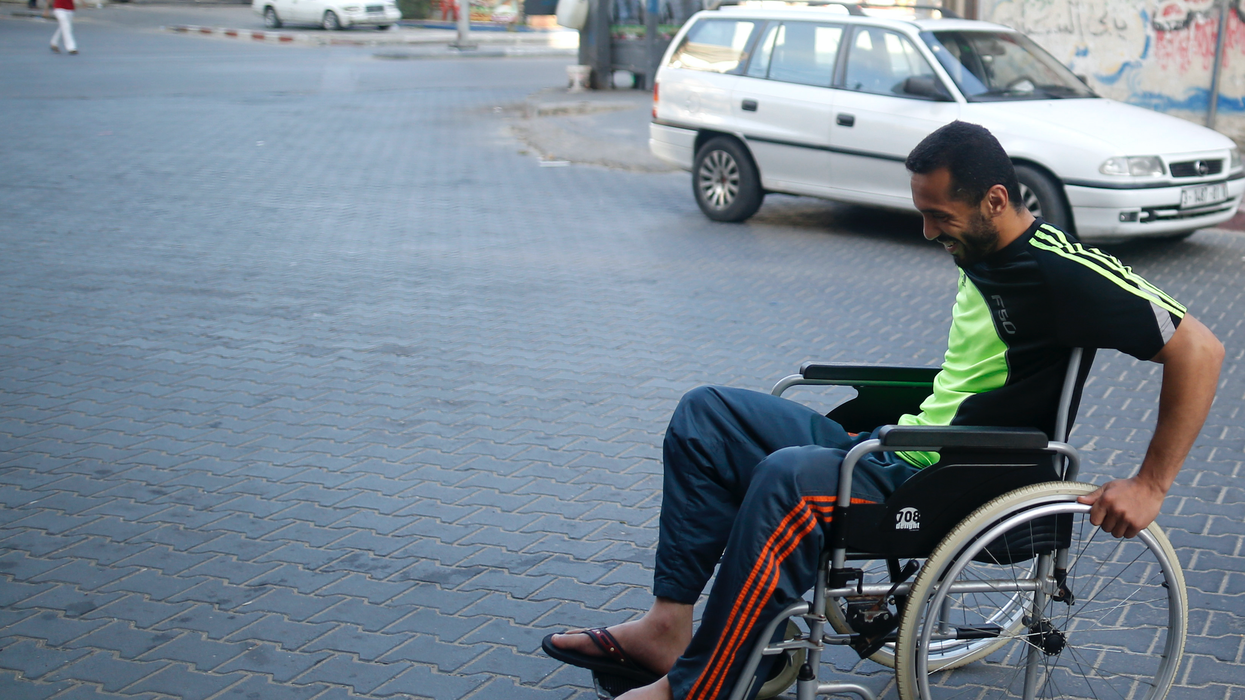
"I want to raise my country flag here in Paris and to show the people we are still here," said Fadi Deeb. "We're still alive—we have hopes, we have dreams, we have goals."
Following an Olympic Games that activists said was tainted by the participation Israeli athletes including a flag-bearer who signed bombs bound for Gaza, a shot putter who was disabled by an Israeli sniper and who lost at least 17 relatives to Israel's onslaught is set to be the sole Palestinian competitor at the upcoming Paralympics in Paris.
"I want to raise my country flag here in Paris and to show the people we are still here," 39-year-old Fadi Deeb said during a Monday interview with Democracy Now! ahead of the August 28 Paralympic Opening Ceremony. "We're still alive—we have hopes, we have dreams, we have goals."
"There is no safe place in Gaza... everyone is like a target for the killing machine."
Deeb, who is from Gaza City, was shot in the spine by an Israeli sniper in 2001 during the Second Intifada, or general Palestinian uprising.
"It's a very hard situation to... balance between my sport as an international player and one who is going to compete in the Paralympic Games, and... my family, all of my sisters, my brothers still in Gaza Strip," he explained.
"There is no safe place in Gaza... everyone is like a target for the killing machine," Deeb continued. "So, what is happening now... it's a genocide. It's not a war... I lost my brother on December 7, 2023 and two of my nephews... And for whole of my family members, I lost like more than, like, 17 persons. So, the situation is very hard."
The Palestinian death toll from Israel's 311-day bombardment, invasion, and siege of Gaza surged toward 40,000 on Monday, according to local and international officials, with at least an additional 103,000 people wounded or missing. Most of those killed have been women and children.
Almost all of Gaza's 2.3 million people have been forcibly displaced, while Israel's total blockade of the coastal enclave has forced the starvation of at least hundreds of thousands of Palestinians. Dozens of Gazans—almost all of them children—have died from malnutrition, dehydration, and lack of medical care.
Asked by Democracy Now! host Amy Goodman about the "amputation crisis" in Gaza—the charity Save the Children says an average of 10 children a day have lost one or more limbs during the war—Deeb said that it's "a very hard situation, because, as I told before, there's no difference... if you are children or women... everyone is a target."
According to the Palestine Olympic Committee and Palestine Football Association (PFA), at least 400 Palestinian athletes, including nearly 70 children, have been killed by Israeli forces since October as of July 26. Among the dead are Hany Al-Masry, a former player and general manager of the Palestinian Olympic soccer team.
Still, eight Palestinians managed to compete in the Paris Olympics, although they did not win any medals.
The International Olympic Committee has been accused of double standards for banning Russian athletes over their country's invasion of Ukraine but allowing Israeli athletes—including Israel Defense Forces veterans and an Olympic flag-bearer who recently signed bombs to be dropped on Gaza—to compete.
Last week, PFA president Jibril Rajub
called Israel's alleged deliberate targeting of Palestinian athletes a blatant violation of the Olympic Charter.
Despite all this, Deeb said he is hopeful.
"To be a player and to compete in this competition for the Paris 2024... gives me, like, too much responsibility to talk about my country, to show the people about Palestine," he said. "It's not just war. It's not just blood. There is life. There is hopes. There is goals. There is dreams."