
SUBSCRIBE TO OUR FREE NEWSLETTER
Daily news & progressive opinion—funded by the people, not the corporations—delivered straight to your inbox.
5
#000000
#FFFFFF
To donate by check, phone, or other method, see our More Ways to Give page.


Daily news & progressive opinion—funded by the people, not the corporations—delivered straight to your inbox.
Even right-wing Brazilian politicians are condemning Trump's actions as "an unacceptable attempt at foreign interference."
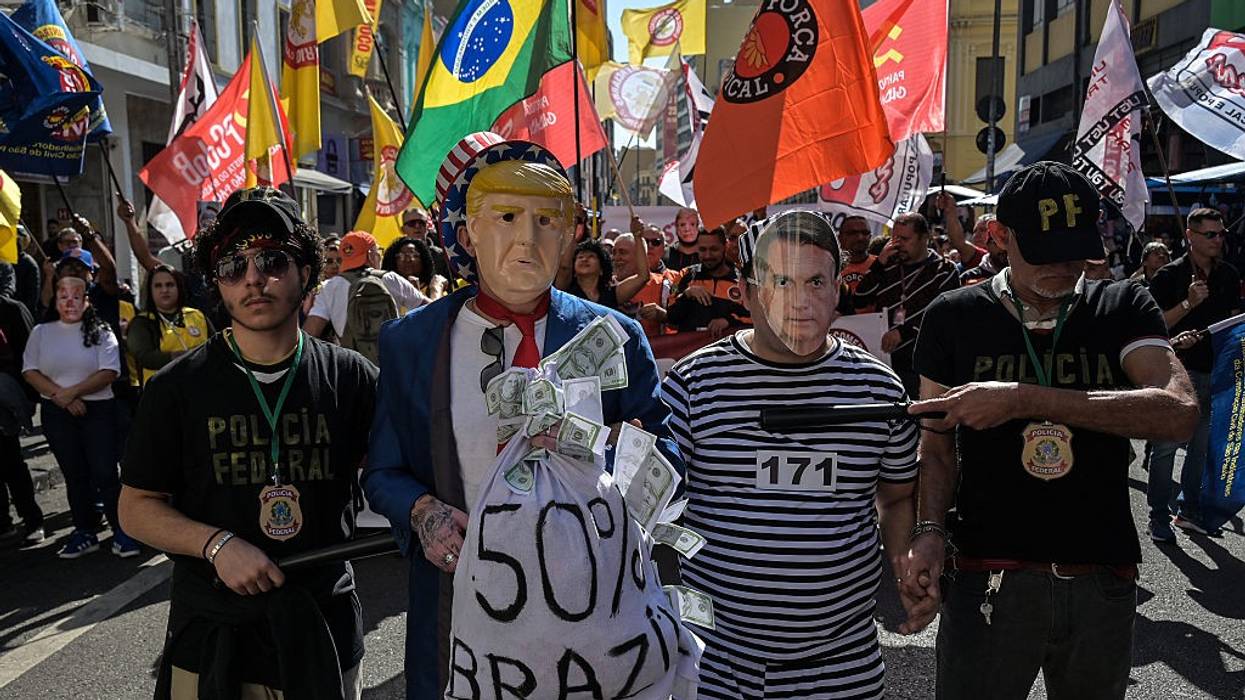
U.S. President Donald Trump is facing international condemnation for his decision to level sanctions against Brazilian Supreme Court Justice Alexandre de Moraes in a bid to punish him for overseeing the criminal trial of former Brazilian President Jair Bolsonaro, a longtime Trump ally.
The Guardian reported on Wednesday that Brazilian political leaders are not backing down in the face of Trump's economic warfare, which includes not only sanctions against Moraes but also 50% tariffs on several key Brazilian exports to the United States, including coffee and beef.
Chamber of Deputies member José Guimarães, a member of the left-wing Partido dos Trabalhadores, described Trump's actions as "a direct attack on Brazilian democracy and sovereignty" and vowed that "we will not accept foreign interference in... our justice system."
Left-wing politicians weren't the only ones to criticize the sanctions and tariffs, as right-wing Partido Novo founder João Amoêdo condemned them as "an unacceptable attempt at foreign interference in the Brazilian justice system." Eduardo Leite, the conservative governor of the state of Rio Grande do Sul, said he refused to accept "another country trying to interfere in our institutions" as Trump has done.
In justifying the sanctions and tariffs, the Trump White House said they were a measure to combat what it described as "the government of Brazil's politically motivated persecution, intimidation, harassment, censorship, and prosecution of former Brazilian president Jair Bolsonaro and thousands of his supporters."
Bolsonaro is currently on trial for undertaking an alleged coup plot to prevent the country's current president, Luiz Inacio Lula Da Silva, from taking power after his victory in Brazil's 2022 presidential election.
Eduardo Bolsonaro, the son of the former president, openly celebrated Trump's punitive measures against Brazil this week, which earned him a stiff rebuke from the editorial board of Folha de São Paulo, one of Brazil's largest daily newspapers. In their piece, the Folha editors labeled Eduardo Bolsonaro an "enemy of Brazil" and said he was behaving like "a buffoon at the feet of a foreign throne" with his open lobbying of the Trump administration to punish his own country.
Elsewhere in the world, the U.K.-based magazine The Economist leveled Trump for his Brazil sanctions, which it described as an "unprecedented" assault on the country's sovereignty. The magazine also outlined the considerable evidence that the former Brazilian president took part in a coup plot, including a plan written out by Bolsonaro deputy chief of staff Mario Fernandes to assassinate or kidnap Lula and Moraes before the end of Bolsonaro's lone presidential term.
U.S. government reform advocacy group Public Citizen was also quick to condemn Trump's actions, which it described as a "shameless power grab."
"Trump's order sets a horrifying precedent that literally any domestic judicial action or democratically enacted policy set by another country could somehow justify a U.S. national emergency and bestow the president with powers far beyond what the Constitution provides," said Melinda St. Louis, global trade watch director at Public Citizen.
St. Louis also predicted that the tariffs on Brazil would soon be tossed out by courts given their capricious justifications, although she said the reputation of the U.S. would suffer "lasting damage."
"True Brazlians... do not let yourselves be the dogs of an American president who shames the ideas of democracy," wrote the editors of a major Brazilian newspaper.
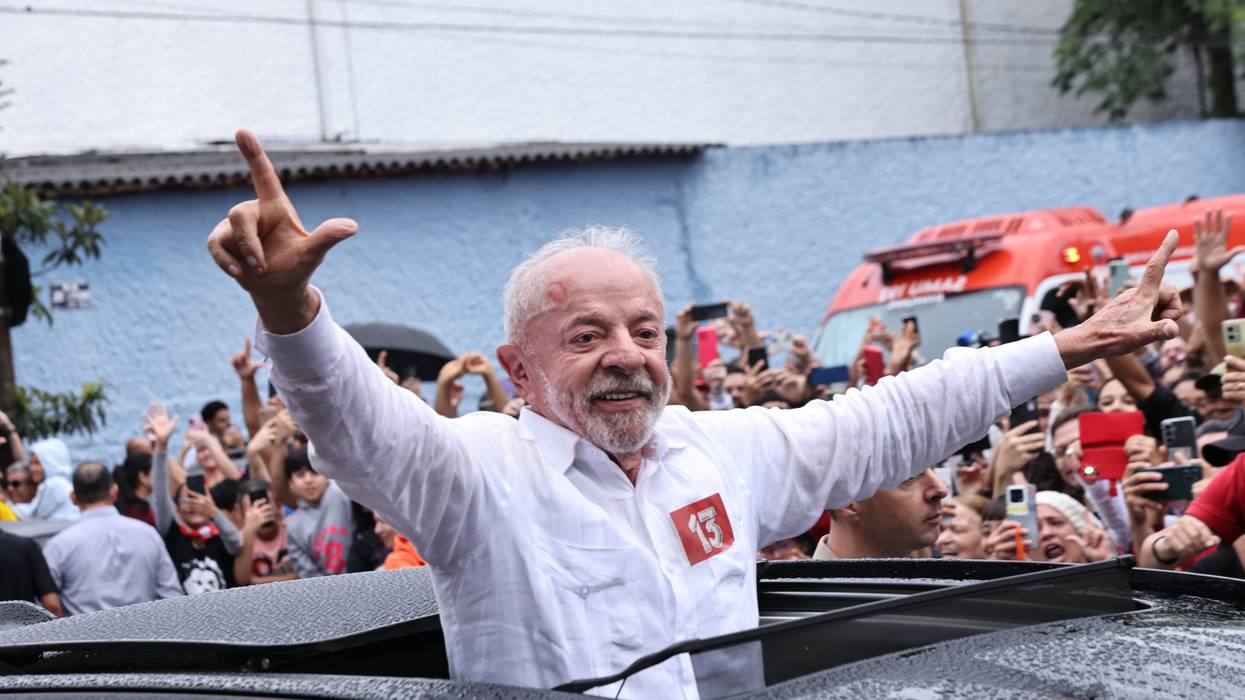
Brazilian President Luiz Inácio Lula da Silva may have gotten a political boost thanks to the intervention of U.S. President Donald Trump.
On Wednesday, Trump announced he was slapping all Brazilian imports with a 50% tariff to protest the criminal trial of former Brazilian President Jair Bolsonaro, a longtime Trump ally who was indicted on charges related to an alleged coup plot to illegally remain in power after he lost the 2022 general election.
However, it does not appear that Trump's intervention into Brazil's domestic politics is helping Bolsonaro in the court of public opinion and Brazilian publication Globo reports that Brazilians have been swarming the U.S. president's Instagram account and leaving messages telling him to "leave Brazil in peace" while insisting their country is "not a lawless land."
In an analysis piece published by the São Paulo-based Folha, journalist Igor Gielow declared that Bolsonaro was an "immediate loser" of Trump's decision, as in the past he has declared Trump to be his political idol and the two are generally seen as joined at the hip. What's more, Gielow argues that the Trump tariffs are most likely to hurt Brazil's agribusiness sector, which is where the core of Bolsonaro's political support lies.
Lorrena Rodrigues, a columnist at the more conservative newspaper Estadão, argued that Trump had given a "gift" to Lula by giving his party the opportunity to focus public attention away from domestic problems and "to exploit a patriotism that used to be the monopoly" of the country's right-wing opposition party.
Rodrigues also said that Trump's tariffs against Brazil had no economic justification given that the United States runs a trade surplus with the country, which makes it seem as though Trump "wants to interfere in the internal politics and the justice system of Brazil through international commerce," which is not something likely to be popular in the country.
A leading editorial published in Estadão delivered even harsher criticism of the American president, whom it likened to a member of the mafia.
"Trump is using the threat of import tariffs on Brazil to obligate the country to surrender to his absurd demands," wrote the editors, who further said that Trump "lied shamelessly in his letter to justify the drastic measure" he imposed on Brazil. The editorial concluded by imploring "true Brazilians" to "not let yourselves be the dogs of an American president who shames the ideas of democracy."
Globo also reports that members of the conservative opposition party held an emergency meeting to discuss how to respond politically to Trump's tariffs. One unnamed Senate leader who spoke with the publication described Trump's surprise announcement as "a shot in the foot."
"Who's going to be in favor of this?" the Senate leader wondered. "Who's going to go against their own country?"
Brazilians have for decades been suspicious of the United States' intentions toward their national sovereignty since the U.S. backed a military coup in 1964 that ousted its democratically elected left-wing government and replaced it with a dictatorship that lasted for more than two decades.
"We don't want an emperor, we are sovereign countries," said Brazilian President Luiz Inacio Lula da Silva.
Campaigners are urging the international community to stand firm against U.S. President Donald Trump as he ramps up trade tensions across the globe, both with traditional American geopolitical rivals and allies.
"Short-term, governments need to stand together to challenge this aggression," said Nick Dearden, director of the U.K.-based advocacy group Global Justice Now. "Long-term, they need to start working towards a fairer trade model, which stops prioritizing the interests of big corporations, and starts putting ordinary people, here and across the world, first."
Dearden's call came after The Independent reported on Tuesday that China is reacting angrily to Trump's threats to level additional tariffs against nations that align with the "BRICS" bloc of nations consisting of Brazil, Russia, India, China, and South Africa.
The Chinese government, through its People's Daily state-run newspaper, accused Trump of "bullying" and threatened retaliation against nations that entered into agreements with the U.S. at China's expense. China also insisted that "dialogue and cooperation are the only correct path" to resolving trade disputes.
On the other side of the ledger, Politico reports that U.S. allies Japan and South Korea feel deep frustration at Trump's latest tariff threats despite the fact that they have been engaging in what they say are good-faith efforts to secure new trade deals.
"To give adjectives to the reaction or response, it would be, number one, shock," a former Japanese official told Politico. "Number two, frustration. And number three, anger."
Another official of a foreign government that has been targeted by Trump similarly expressed exasperation with the president and told Politico, "We have no idea what the hell he's sending, who he's sending it to, or how he's sending it."
However, Trump's latest tariff maneuvers have also produced a sense of defiance both among some political leaders and among fair trade advocacy groups. Brazilian President Luiz Inacio Lula da Silva this week made the case that Trump's erratic and capricious trade demands are a good reason for other nations to develop trade partnerships independent of the United States.
"We don't want an emperor, we are sovereign countries," Lula said this week during a BRICS summit in Rio de Janeiro, as reported by NPR. "It's not right for a president of a country the size of the United States to threaten the world online."
Consumer advocacy organization Public Citizen issued a statement this week that made similar points to those made by Lula and cautioned nations against making concessions to Trump in trade talks, especially since many of his demands align with the interests of corporate America.
"During his April 2 'reciprocal tariffs' announcement, Trump waved around the annual National Trade Estimates report, which details the hit list of other countries' policies that large U.S. corporations don’t like," argued Public Citizen. "The Trump team has made clear that this is a blueprint for the 'non-tariff barriers' they seek to eliminate, even though many are public interest laws. The Trump team will continue to bully countries, like he did with Canada on its digital services tax. As the deadline approaches, additional countries may feel pressured to cave to these demands for corporate tax cuts, deregulation of Big Tech, and expanded monopolies for Big Pharma—either explicitly or in under-the-table agreements."
Public Citizen further warned that Trump has shown himself open to pure corruption in his dealings with other nations.
"Trump may continue to punt the deadlines for some countries, claiming progress toward deals—allowing him to continue to extract sweetheart deals for himself and his cronies," the organization wrote. "Potentially endless extensions give Trump more time to push his corporate deregulatory agenda, as well as to accept personal 'gifts' from countries looking to avoid tariffs, like luxury jets, rubber-stamped development projects, and purchases of his meme coin."
Global Justice Now's Dearden also warned nations against letting themselves getting taken advantage of by Trump.
"It's another week of bullying and bluster from Donald Trump, with the U.S. president threatening further economic warfare against a wide range of governments," he said. "Countries such as Bangladesh and Cambodia would be devastated by these tariffs. We simply don't know whether these newly-threatened tariffs will come to pass, but we do know that they are being used to bully governments into handing even more of their sovereignty to some of the biggest corporations in the world."
A monthslong standoff reached a critical juncture this week when a Brazilian judge moved close to ordering a shutdown of X in the country and froze the assets of another Elon Musk-owned business.
Brazilian President Luiz Inácio Lula da Silva criticized Elon Musk on Friday after the X owner defied a Brazilian Supreme Court order to name a legal representative, as tensions between the billionaire and the government escalated and the social media platform risked being taken offline in Latin America's largest economy.
Supreme Federal Court Justice Alexandre de Moraes late Wednesday gave the company 24 hours to name a legal representative in Brazil—a requirement to operate a business there—or have its operations shut down. X didn't comply, instead issuing the latest in a series of statements denouncing de Moraes. As of this writing, no shutdown of X in Brazil has occurred.
Another layer to the standoff was also revealed on Thursday: De Moraes on August 18 had quietly ordered the Brazilian bank accounts of Starlink, a Musk-owned satellite internet company, to be frozen, due to unpaid fines owed by X.
Lula, a left-leaning former unionist who retook the presidency early last year after leading the country from 2003 until 2011, defended the judge's position in a radio interview Friday morning, arguing that everyone, no matter how powerful, must follow Brazilian law.
"Just because the guy [Musk] has a lot of money doesn’t mean they can disrespect you," Lula said, according to a translation in The Guardian.
"Who does he think he is?" he added.
Tenho conta no Twitter há +de 10 anos. Sempre foi a melhor rede social.
Na Primavera Árabe no Egito, usei o Twitter pra enviar charges aos manifestantes.
Tenho história aqui.
Mas depois que o patife Musk o comprou, virou esgoto da extrema-direita.
Adeus Twitter. Vai fazer falta. pic.twitter.com/ao9Pbnu3wy
— Carlos Latuff (@LatuffCartoons) August 29, 2024
In April, De Moraes ordered X to deactivate more than 100 accounts of users whom he said were spreading disinformation. The accounts, which were not made public, are reportedly linked to the same far-right movement that stormed government buildings in Brasilia on January 8, 2023, in support of former president Jair Bolsonaro, who had just given up power days earlier. Bolsonaro, a far-right politician, spread lies of voter fraud and reportedly planned a coup after losing the 2022 election.
De Moraes led Brazil's effort to fight fake news ahead of the 2022 election and made the April ruling to try to combat disinformation ahead of municipal elections in October.
Musk refused to comply with the April order, arguing that it was illegal and an act of censorship targeted at the judge's political opponents. He has repeatedly called de Moraes a "dictator" and positioned himself as a defender of democracy. His defiance of de Moraes has drawn praise from U.S. Republicans and right-wingers in Brazil.
Musk calls himself a "free-speech absolutist" but critics have rejected that characterization. In a Common Dreams op-ed last year, Free Press senior director Tim Karr argued Musk was "absolutely an enemy of free speech" and accused him of "taking extraordinary efforts to silence any honest criticism and independent research that might negatively impact him or his businesses."
Earlier this month, X closed its active operations in Brazil, saying that de Moraes had threatened their legal representative with arrest. That led to the standoff this week in which de Moraes ordered the company to name a legal representative.
The social media platform has, as X planned when it withdrew its staff, remained available to Brazilian users. When or if it will be closed following the closure of the 24-hour window is unclear. The company said in a statement that it expects a shutdown "soon."
To shutter the website, de Moraes would have to issue an order to the national telecommunications regulator, which would in turn relay it to internet providers. Experts say that process could be completed quickly—perhaps in 12 hours—but many Brazilians would still be able to access X via virtual private networks, or VPNs.
Some legal experts have criticized de Moraes for freezing Starlink's bank accounts, which makes it impossible for the company to do business in Brazil. Starlink provides internet services in remote areas, including in the Amazon. Starlink is a subsidiary of SpaceX, which is 42% owned by Musk. Musk has emphasized that SpaceX is an entirely separate company from X, with different shareholders.
De Moraes' rationale for the asset freezing is that X hasn't paid its fines, which accrue daily and are reportedly now above $3.6 million in total.
Brazil has more than 20 million X users, sixth in the world, according to Statista.
The words of Brazil's president, a potential mediator in Venezuela, signal that leftist leaders may be withdrawing support for Maduro.
Brazilian President Luiz Inácio Lula da Silva, a potential mediator in the ongoing electoral dispute in Venezuela, spoke harshly on Friday about the government of President Nicolas Maduro, calling it a "very unpleasant regime" with an "authoritarian slant"—perhaps the first time he has been so publicly critical of his fellow leftist.
Venezuala has been in turmoil since its presidential election on July 28, pitting Maduro against opposition candidate Edmundo González Urrutia, came to a disputed result. The electoral council controlled by Maduro's government announced that he'd won reelection with 51.95% of the vote, but provided no evidence. However, the opposition also claimed victory, and did have some evidence: copies of vote tallies from more than 83% of precincts.
The international response has been broadly anti-Maduro, whose government has been widely accused of human rights violations and is often characterized as autocratic. Many countries—even Chile, led by a left-leaning government—declared fraud on the part of the Venezuelan government, and some, such as the United States, recognized González as the winner. Only a handful of small Latin American countries did so for Maduro.
Lula hasn't take sides in the electoral dispute but, like other international actors, called for Maduro to release the full tallies. Lula and Colombia President Gustavo Petro, another leftist, have indicated they could be intermediaries between the two Venezuelan sides. The U.S. came out in support of the Brazil- and Colombia-led dialogue. But Lula's role as interlocutor didn't stop him from making the critical remarks on Friday.
"I think Venezuela is living under a very unpleasant regime," Lula said on Rádio Gaúcha.
The Brazilian president said that Maduro was not a dictator but had authoritarian leanings:
"It's different to a dictatorship—it is a government with an authoritarian slant but it isn't a dictatorship the likes of which we know so many in this world."
Brazilian president, Lula da Silva, condemns “very unpleasant regime” Maduro regime in Venezuela
He says it has “authoritarian slant” & refuses to accept that Maduro won the election. Lula demands publication of suppressed local election tallies. YES!
https://t.co/YLWuddKhcL
— Peter Tatchell (@PeterTatchell) August 16, 2024
Lula and Petro had earlier this week suggested that Venezuela might redo the election—and U.S. President Joe Biden appeared to support the idea, though the administration later walked back the comment—but both Maduro and the opposition dismissed the idea.
Maduro's government has cracked down on dissent since the election, arresting more than 2,000 people, in what experts have called an unprecedented level of repression, The New York Times reported Saturday. Maduro is "bent on punishing those he considers disloyal," according to the Times.
A panel of four U.N. experts who were in Venezuela during the election issued an interim report last week that found that "the announcement of an election outcome without the publication of its details or the release of tabulated results to candidates has no precedent in contemporary democratic elections."
The Center for Economic and Policy Research (CEPR), a left-leaning, U.S.-based think tank, released a report on Tuesday arguing that the Brazil and Columbia-led mediation was the best way forward, and that more U.S. sanctions would only deepen the political crisis in Venezuela.
The report says that sanctions "have taken the lives of tens of thousands of Venezuelans and fueled the migration of millions more," and argues that failed U.S. policies and U.S.-supported coup attempts in 2002 and 2019, per CEPR's characterization, contributed to the current crisis in Venezuela.
Maduro has held power since 2013, when his predecessor and former boss, the socialist Hugo Chávez, died after ruling the country for 13 years. Chávez, buoyed by fossil fuel reserves, helped lift the standard of living for working-class Venezuelans, but the country has faced a combination of political and economic challenges in the past decade, and Maduro appears to have lost working-class support.
"The Israeli government continues to sabotage the peace process and the cease-fire in the Middle East," said the Brazilian president after a deadly weekend of bombings.
Brazilian President Luiz Inácio Lula da Silva condemned the Israeli government on Sunday after bombings across the Gaza Strip killed more than 140 people and wounded hundreds more, adding to the gruesome death toll and worsening the enclave's humanitarian emergency as cease-fire talks continue.
Lula specifically decried Israel's Saturday attack on al-Mawasi, an overcrowded town on Gaza's southern coast to which Israeli forces previously ordered Palestinians to flee. Israel claimed to be targeting Hamas' military chief in the attack; Hamas said Sunday that the commander was not harmed in the strikes, which killed around 90 people—including children.
The New York Times reported that one of the Israeli strikes "exploded directly in front of two vehicles clearly marked as belonging to Gaza Civil Defense, an emergency services agency, spraying them with shrapnel and apparently killing and injuring first responders."
Lula said Sunday that "the Israeli government continues to sabotage the peace process and the cease-fire [negotiations] in the Middle East" with its relentless bombing campaign in the Gaza Strip, which has been utterly decimated by Israel's assault—a military campaign fueled by billions of dollars of weaponry from the United States, Germany, and other major countries.
"It is appalling that they continue to collectively punish the Palestinian people," Brazil's president said. "There have already been tens of thousands of deaths in consecutive attacks since last year, many of them in delimited humanitarian zones that should be protected."
"We, the political leaders of the democratic world, cannot remain silent in the face of this endless massacre," he added. "The cease-fire and peace in the region need to be priorities on the international agenda. All our efforts must be focused on securing the release of the Israeli hostages and ending the attacks on the Gaza Strip."
Brazil under Lula's leadership has backed the South Africa-led genocide case against Israel at the International Court of Justice and been a vocal supporter of a permanent cease-fire and an end to Israel's decadeslong occupation of Palestinian territory.
"I saw toddlers who are double amputees, children paralyzed and unable to receive treatment, and others separated from their parents."
Israel's weekend onslaught in Gaza came as "Hamas and Israel appear closer to some form of a Gaza cease-fire deal than at any time since the brief truce last November," as Drop Site's Jeremy Scahill put it late last week.
"Hamas is considering an approach that would not immediately require a commitment to a permanent cease-fire and complete withdrawal of Israeli forces from Gaza as a precondition to move forward in phased negotiations," Scahill reported. "This would mark a significant concession by Hamas, which has long insisted any agreement must include defined steps that end Israel's war. Instead, Hamas officials said, they would consider entering an initial six-week phase that would include a conditional cease-fire and an exchange of Israeli civilian and female soldiers held in Gaza in return for the release of hundreds of Palestinians."
The Associated Press reported Sunday that Hamas—which led the deadly October 7 attack on Israel—intends to keep participating in cease-fire talks in the face of incessant Israeli airstrikes, though a spokesperson for the group said there is "no doubt that the horrific massacres will impact any efforts in the negotiations."
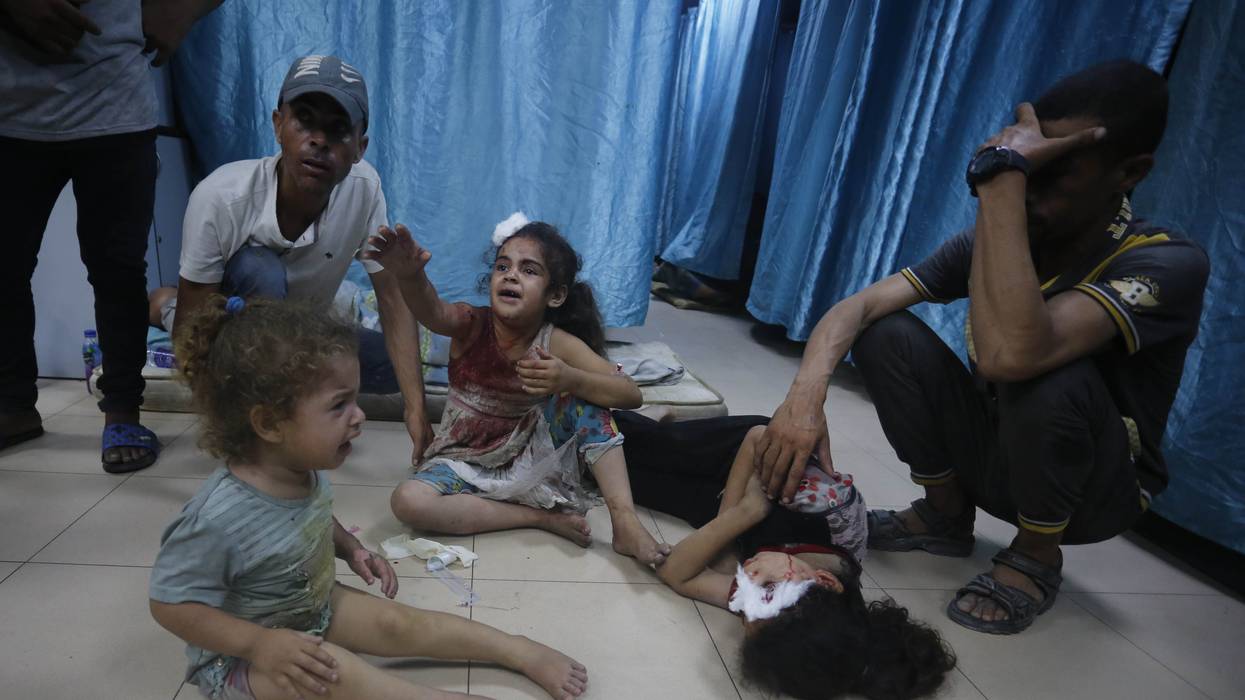
Scott Anderson, the United Nations' deputy humanitarian coordinator, described the appalling scene he witnessed over the weekend at Nasser Hospital, the overwhelmed medical facility in southern Gaza where many wounded Palestinians were taken following Israel's Saturday attack on al-Mawasi.
"With not enough beds, hygiene equipment, sheeting, or scrubs, many patients were treated on the ground without disinfectants," said Anderson. "Ventilation systems were switched off due to a lack of electricity and fuel, and the air was filled with the smell of blood. I saw toddlers who are double amputees, children paralyzed and unable to receive treatment, and others separated from their parents. I also saw mothers and fathers who were unsure if their children were alive. Parents told me in despair that they had moved into the 'so-called humanitarian zone' in the hope that their children would be safe there."
"Impediments to humanitarian operations prevent us from supporting people anywhere near the scale necessary," Anderson continued. "Civilians must be protected at all times. We urgently need a cease-fire, the release of all remaining hostages, respite for the people of Gaza, and a meaningful opportunity for healing to begin."
"What the Israeli government is doing to the Palestinian people is not war," said the President of Brazil. "It's not soldiers who are dying, but women and children who are dying inside the hospitals."
Just days after Brazil's President Luiz Inácio Lula da Silva was announced to be 'person non grata' by the Israeli government for critical comments he made about its conduct in Gaza, the leftist leader known as Lula remained outspoken over the weekend as he condemned the military onslaught that has claimed nearly 30,000 lives, mostly innocent civilians, in just over four months.
"What the Israeli government is doing to the Palestinian people is not war, it is genocide,” Lula thundered in remarks Friday during an event in Rio de Janiero. "They are killing women and children. There are thousands of children dead and thousands missing. It's not soldiers who are dying, but women and children who are dying inside the hospitals."
He continued: "If this isn't genocide, I don't know what is."
In his remarks, Lula condemned the failure of the UN Security Council to intervene in a meaningful way to stop the carnage in Gaza. On Feb. 19, the United States once again used its veto power to reject a resolution calling for an immediate cease-fire.
The UNSC "represents nothing," he said. "It does not take any decisions, it does nothing for peace," he added, while decrying the amount of "hypocrisy in the world today" when it comes to political leadership.
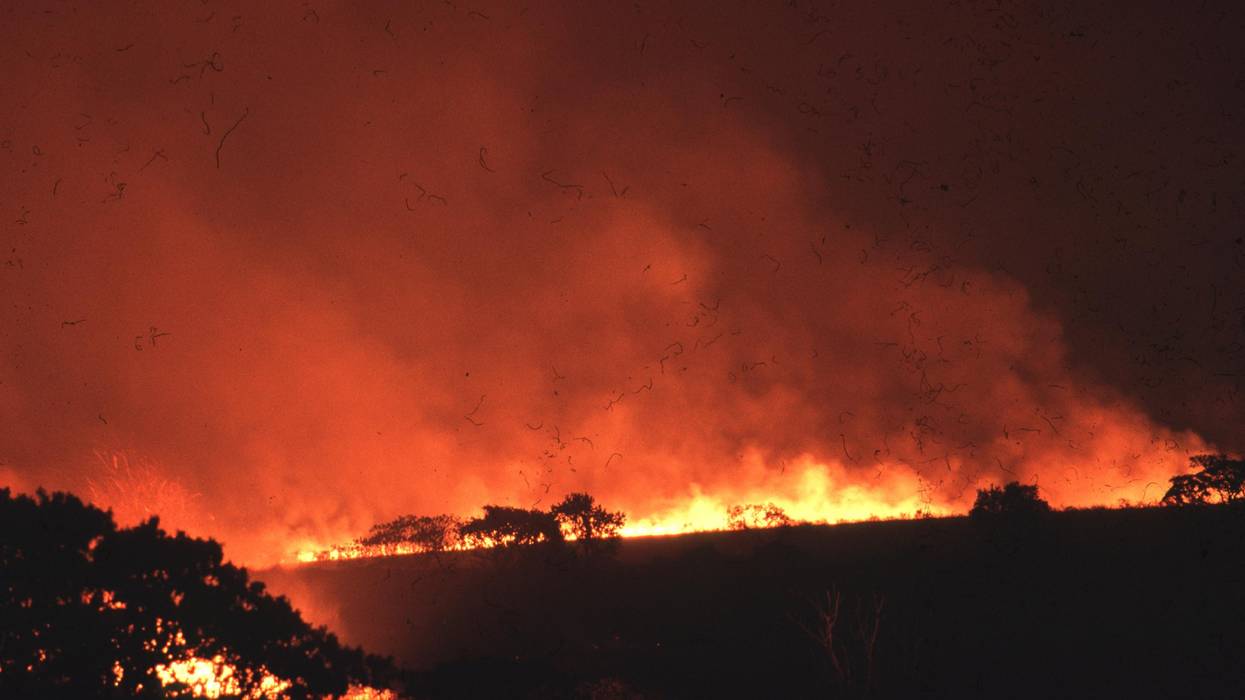
While Amazon deforestation fell nearly 50% in 2023, it rose by almost 43% in the unique and important grassland.
Deforestation in Brazil's vital Cerrado region jumped by 43% in 2023 compared to 2022, the highest level since deforestation measurements began in 2019.
The news, released by Brazil's National Institute for Space Research this month, came as deforestation in the more widely known Amazon rainforest fell by nearly 50% in 2023. President Luiz Inácio Lula da Silva has promised to end deforestation by 2030, but environmental campaigners say agriculture in the Cerrado could undermine that goal.
"Lula's sacrifice of the Cerrado to beef and soy production is a major stain on his environmental credentials, and needs to be reversed and rectified urgently," Mighty Earth senior director Alex Wijeratna told the Financial Times. "The Cerrado savanna is being massively overlooked in Brazil and by the global community."
Brazil's Cerrado is the most biodiverse grassland ecosystem in the world, hosting 5% of all plant and animal species, according to WWF. The roughly 200 mammal species that live there include giant anteaters and armadillos. It is also home to 860 species of birds, 1,200 species of fish, and 90 million species of insects. Almost half of its more than 11,000 species of plants only grow there and are important to the survival and culture of local communities.
Beyond providing biodiversity, the savanna is important for Brazil's water system. It provides the spring for six of the country's 12 most important hydrological regions. Globally, it, like the Amazon, is an important carbon sink. It is home to shorter trees with vast underground root systems that may keep as many as 118 tons of carbon per acre out of the atmosphere.
"If destruction of the Cerrado is not stopped, the global commitment to cap global warming at 1.5°C will become unattainable," WWF said.
"Unlike the Amazon where prevention can be done via law enforcement, in the Cerrado incentives have to be created for landowners to give up their right to deforest."
Despite its ecological importance, the Cerrado has not received the same global attention as the Amazon, and experts say this has hampered conservation efforts.
"Internationally, the Cerrado is not very well known. If it had a name like the Amazon, we would have more (public) policies that benefit the conservation of the biome," Ane Alencar, science director at the Amazon Environmental Research Institute (APIM), told The Associated Press.
Alencar said the Cerrado is currently harder to protect because of the laws in place. In the Amazon, Lula's government had success by cracking down on illegal logging, ranching, and mining, the Financial Times explained.
But in the Cerrado, most deforestation occurs on private land, and a significant amount of it is currently legal, Alencar explained. While landowners in the Amazon may only clear 20% of the trees on their property, landowners in the Cerrado may clear 65% to 80%. The Amazon also has more protected nature reserves and Indigenous territories.
"In many cases, the suppression of native vegetation is allowed by the forest code. So, unlike the Amazon where prevention can be done via law enforcement, in the Cerrado incentives have to be created for landowners to give up their right to deforest," APIM executive director André Guimarães told the Financial Times.
Deforestation in the Amazon soared to its highest level in 12 years under right-wing Brazilian President Jair Bolsonaro, according to BBC News. Bolsnaro favored extractive industries over conservation and Indigenous rights, while Lula has promised to safeguard the forest. In 2023, 5,153 square kilometers of forest were lost, compared to 10,278 square kilometers in 2022. Officials said it was the lowest deforestation rate in five years.
In the Cerrado, meanwhile, 7,852 square kilometers of vegetation were lost in 2023, AP reported.
"We saw some important victories on the environment in 2023. The significant reduction in deforestation in the Amazon was a highlight," Mariana Napolitano of WWF-Brasil told Agence France-Presse.
"But unfortunately we aren't seeing the same trend in the Cerrado... That is harming the biome and the extremely important ecosystem services it provides," Napolitano added. "And we saw the impact at the end of the year, with extremely high temperatures."
Brazilian President Luiz Inácio Lula da Silva offered to help forge a diplomatic solution, saying, "If there's one thing we don't want here in South America, it's war."
U.S. forces held joint military drills within Guyanese airspace on Thursday as a longstanding and intensifying territorial dispute between Venezuela and Guyana sparked fears of war in South America.
At the center of the dispute is Essequibo, an oil-rich region that Guyana has controlled for more than a century. Venezuela has claimed sovereignty over Essequibo for decades, and the two nations agreed in 1966 to resolve the controversy in a way that's "satisfactory" for both sides.
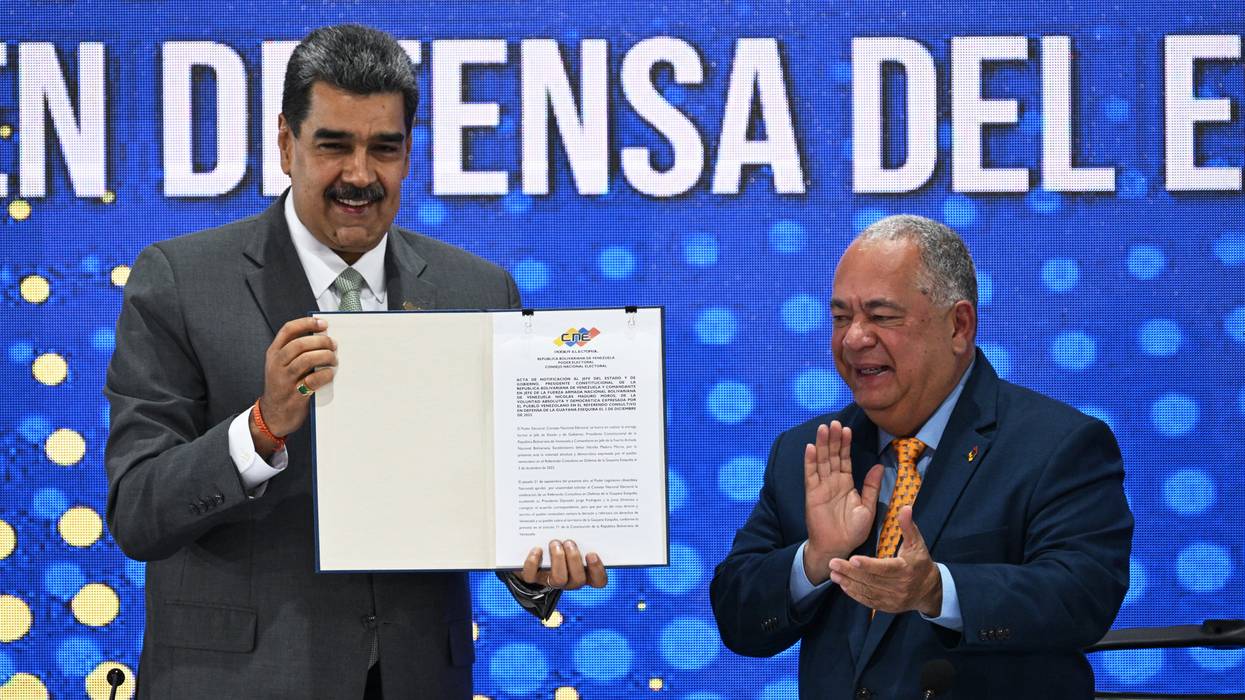
On Sunday, 95% of Venezuelan voters approved a referendum in support of declaring ownership over the disputed territory, and President Nicolás Maduro swiftly "ordered the state oil company to issue licenses for extracting crude in the region," AFP reported.
"The president also gave an ultimatum to oil companies working under concessions issued by Guyana to halt operations within three months," the outlet added.
Irfaan Ali, Guyana's president, called Maduro's moves a "direct threat" and said his country's military forces are on alert.
"Our first line of defense is diplomacy," Ali said in an interview with CBS News on Wednesday. "But we are also preparing for the worst-case scenario... We are preparing with our allies, with our friends, to ensure that we are in a position to defend what is ours."
The United Nations Security Council was scheduled to hold an emergency closed-door meeting on the dispute on Friday at Guyana's request.
"Washington does not have the appetite to deepen its conflict with Venezuela. But ExxonMobil does."
The primary target of Maduro's ultimatum to companies was ExxonMobil, a U.S.-based fossil fuel giant that has made major new oil discoveries in the disputed territory this year. Exxon announced its first oil discovery in Guyana in 2015, and the country's government gave the oil behemoth a green light to drill in disputed waters.
Citing an industry analyst, The Houston Chronicle reported earlier this week that "the roughly 380,000 barrels per day that Exxon produces in Guyana account for roughly 10% of its 4 million barrels per day globally."
"The company plans to expand its production there to more than 1 million barrels per day by the end of the decade," the Chronicle noted.
Escalating tensions over Essequibo have sparked warnings of a possible military conflict in the region. Brazilian President Luiz Inácio Lula da Silva said Thursday that "if there's one thing we don't want here in South America, it's war."
"We have been following the development of the Essequibo issue with growing concern," Lula said, expressing his nation's willingness to assist in negotiations for a diplomatic resolution. "We don't need conflict. We need to build peace."
Brazil shares a border with both Venezuela and Guyana. The BBC reported that Brazil deployed troops to its border with Venezuela following Sunday's referendum vote.
On the same day as Lula's remarks, American forces held joint military drills with Guyana that the U.S. Southern Command (SOUTHCOM) said were part of "routine engagement" aimed at enhancing the two nations' "security partnership."
"The U.S. will continue its commitment as Guyana’s trusted security partner and promoting regional cooperation and interoperability," SOUTHCOM added.
Vladimir Padrino Lopez, Venezuela's defense minister, called the drills an "unfortunate provocation" aimed at protecting the interests of ExxonMobil.
"We warn that we will not be diverted from our future actions for the recovery of the Essequibo," Lopez wrote on social media.
Historian Vijay Prashad argued earlier this week that "war does not seem to be on the horizon," given that the U.S. has recently "withdrawn part of its blockade on Venezuela's oil industry, allowing Chevron to restart several oil projects in the Orinoco Belt and in Lake Maracaibo."
"Washington does not have the appetite to deepen its conflict with Venezuela. But ExxonMobil does," Prashad wrote. "Neither the Venezuelan nor the Guyanese people will benefit from ExxonMobil's political intervention in the region. That is why so many Venezuelans who came to cast their vote on December 3 saw this less as a conflict between Venezuela and Guyana and more as a conflict between ExxonMobil and the people of these two South American countries."
They can see with fresh eyes the deeper democratic possibilities that many are seeking, an able government, a more responsive government.
When Americans think about Latin American politics the cliché images that may come to mind are of military coups, tanks rolling, and generals in sunglasses. If Americans hear news about current Latin American politics it usually will deal with democracies that have died or are under assault, as is the case in Venezuela, Nicaragua, and El Salvador. So informed, many Americans would find the idea that Latin America could teach the U.S. anything positive about democracy to be downright laughable.
But things have changed. Although there remain serious issues for Latin American democracies, it is nonetheless fair to say that most of Latin America is governed by emerging democracies these days.
Think of most democracies around the world as falling basically into one of two categories: old, tight, democracies and young, loose democracies.
Old democracies, especially like that in the United States, have institutions and rules that can make them hardy and more likely to endure, but this very resilience can function to make old democracies highly resistant to much-needed change.
Citizens of old democracies often confuse the elements of their own political system as the very essence and singular definition of democracy. In the U.S. that can mean concluding that a proper democracy must have a house and a senate, four-year presidential terms, a nine-member Supreme Court, along with all the other long-standing aspects of the American political system. To this view, any attempt to modify or update any of the time-honored institutions or customs would mean threating the very foundations of democracy itself.
The implication of this, however, is that old, tight democracies can become burdened with recalcitrant institutions and increasingly problematic political habits. Together these can render old, tight democracies incapable of reforming themselves, powerless to revitalize their democracy. Democracy can become buried under the rumble of centuries-old political deal-making, long-ago compromises of expediency that had only been intended to solve the impasses of those moments in time. In the U.S. this nearly always meant yielding to the demands of slave-holders, and after the Civil War, yielding to the demands of white southern racists seeking to keep Blacks disenfranchised, segregated, and threatened.
The resulting political system in old, tight democracies can become one that is permanently stuck, unable to carry out even the most basic political chores, such as passing a national budget. In this manner, old democracies can be slowly transformed into a democracy in name only, succeeding only in obstructing the democratic will of the majority of the electorate.
In the U.S. ossified institutions and practices–the electoral college; the filibuster rule in the senate; the allocation of senate seats favoring scant rural populations while grossly under-representing urban populations, especially people of color; the lifetime appointments to the Supreme Court without a mandatory retirement age–are not the very definition of democracy. Rather, they are the nation’s greatest hindrances to the realization of full democracy. Exasperated citizens look at this situation and may just opt out, the act of voting seen as at best, a waste of time, at worst, a tacit endorsement of a deeply dysfunctional and undemocratic political system.
But young loose democracies, like those found across Latin America, nearly all dating from the 1980s, are not so encumbered. No weight of long-established traditions stands in the way of change. Young, loose democracies are not nearly as hindered from making the changes that voters seek, steps to make their nation more democratic and governed more ably. These newer democracies are more fluid, the rules of governance more readily malleable. It is realistic in young, loose democracies to think of setting aside a constitution that is just not working and writing a new one, as happened in Ecuador in 2008 or in Bolivia in 2009. Significantly, the rules for approval of these new constitutions were established on the fly, just as they were in the case of the U.S. when it was once a young, loose democracy and was adopting its first and only constitution.
So it is today that these young democracies that can teach old democracies.
They can see with fresh eyes the deeper democratic possibilities that many are seeking, an able government, a more responsive government. What young, loose democracies can most remind us all is that democracy is perhaps our greatest human experiment, but one that must be continually recreated to reflect changing social realities, clearing away the wreckage from the past that can continually frustrate our current democratic aspirations.
Old tight democracies can come unglued in trying to meet the challenge of a novel and serious criminal challenge to the basic survival of democracy. Such a development seemed unthinkable in the U.S. until the coup attempt led by President Trump on January 6th after he lost the 2020 election. As he and others are now being called before the courts to face criminal trials for their actions, some supporters of the former president have seen these steps as illegitimate, the “weaponization of the criminal justice system,” the actions of a “banana republic.” This is a slur that most Latin Americans would have no trouble recognizing.
But Latin America’s democracies today actually provide examples of how to best meet the challenge of effectively holding former and current law-breaking leaders accountable. Former Brazilian president Jair Bolsonaro is now barred from running for office for seven years due to his gross misuse of his official powers, including, among many alleged crimes, fomenting insurrection.
Odebrecht, the giant multinational construction firm, in 2016 admitted in U.S. court to paying out millions in hefty bribes to lawmakers all over the Americas. Nearly all of the many current and former Latin American leaders who took Odebrecht bribes are now either in prison or will soon be. It is precisely because these young democracies are more flexible in their rules, less burdened by the weight of tradition in their democracies, that they able to handle with greater adaptability and success the political stress test that has come up all around the Americas, dealing with a law-breaking current or former leader.
In bringing criminal charges against law-breaking leaders, Latin America is at long last honoring the rule of law, the principle of equality before the courts without exception. Indeed, the presence of an ongoing criminal case of a current or recent political leader should not be seen as evidence of the undermining of democracy, but instead provides proof that a nation is taking necessary if difficult steps to help assure democracy.
In calling former president Trump to account the U.S. is becoming more like Latin America, moving into alignment with hopeful hemispheric political trends. This is a good thing. If the United States is no longer the best example of and inspiration for democracy in the hemisphere, it still could be. One important way to do this would be unafraid to bring an ex-leader to justice.
Latin American nations will think no worse of us for this. In fact, they are getting very good at doing this themselves. The U.S. should look to their example.