

SUBSCRIBE TO OUR FREE NEWSLETTER
Daily news & progressive opinion—funded by the people, not the corporations—delivered straight to your inbox.
5
#000000
#FFFFFF
To donate by check, phone, or other method, see our More Ways to Give page.
Daily news & progressive opinion—funded by the people, not the corporations—delivered straight to your inbox.

“We won tonight, but this is also something so much bigger than this moment," said Kiros, a 29-year-old democratic socialist.
Melat Kiros, a 29-year-old democratic socialist and first-time candidate, defeated 15-term incumbent Rep. Diana DeGette on Tuesday in Colorado's 1st Congressional District primary, the latest signal that progressive momentum and backlash against the Democratic establishment are spreading nationwide.
"We won tonight, but this is also something so much bigger than this moment," Kiros, who was fired from the law firm Sidley Austin in 2023 for speaking out in support of Palestinian rights demonstrators, told backers late Tuesday after The Associated Press called the race in her favor. "We believe that fundamental change can, and will, happen if we fight for it—if we organize, if we show no fear in standing up for what’s right. That is the message that Denver has sent to both parties, to Donald Trump, and to the entire country."
Kiros' upset win came a week after a series of progressive victories in New York congressional primaries, which sparked backlash from the party's corporate wing. Days after the New York contests, more than a dozen centrist Democrats signed an open letter declaring that "we are capitalist, not socialist," a clear rebuke of insurgent progressives.
Justice Democrats, a national progressive group that backed Kiros, said it is having its "most successful cycle to date, winning six Democratic primaries and proceeding to the top two in two California primaries." The organization recruited Darializa Avila Chevalier, who upset five-term incumbent Rep. Adriano Espaillat in New York's 13th Congressional District last week.
"Melat and our candidates continue winning this cycle because Democratic voters are finally getting leaders acting on their demands to bring the fight to the corporations raising our prices, the war lobbies profiting off endless war and genocide, and the immigration gestapo terrorizing our communities," Alexandra Rojas, Justice Democrats' executive director, said in a statement Tuesday.
Kiros—whose platform includes Medicare for All, universal childcare, and abolishing Immigration and Customs Enforcement—prevailed despite a last-minute torrent of super PAC spending in support of DeGette. Drop Site reported that "super PACs funded by AIPAC and major big tech donors have poured roughly $2 million behind Rep. Diana DeGette on the eve of her contentious primary."
"Across the country, voters are rejecting corporate politics and electing candidates willing to take on billionaire influence, confront the climate crisis, fight for working people, and speak with moral clarity on the defining issues of the moment," said the youth-led Sunrise Movement following Kiros' win.
Kiros will be the heavy favorite to win the general election in November, when she will face Republican Christy Peterson.
Progressives also celebrated Colorado Attorney General Phil Weiser's Democratic gubernatorial primary win over US Sen. Michael Bennet, whose campaign received nearly $3 million in support from billionaire former New York City Mayor Michael Bloomberg.
“This movement is what democracy looks like,” Weiser told supporters late Tuesday. “You all sent a very clear message: The future of Colorado will not be decided by out-of-state billionaires, by corporations or special interests. Colorado’s future belongs to all of us."
"If the Democratic Party wants to beat Republicans and win back a majority in November, they need to listen to their voters and usher in a new generation of fighters."
Progressive candidates have swept to victory against establishment opponents in Democratic primary races across the US, including on Tuesday, as voters turn out in support of working-class champions who have spurned corporate money and vowed to pursue transformative change at the national, state, and local levels.
The Working Families Party (WFP) celebrated a five-for-five sweep for the US House candidates it backed in California primaries, as Mai Vang, Connie Chan, Aisha Wahab, Randy Villegas, and Angela Gonzales-Torres each advanced to the November general election. As Common Dreams reported, Villegas—who is running to unseat incumbent Rep. David Valadao (R-Calif.)—advanced despite the Democratic Congressional Campaign Committee's intervention in support of his opponent Jasmeet Bains, a corporate Democrat.
WFP noted that the wins in California followed upset victories by Chris Rabb in Pennsylvania's 3rd Congressional District and Analilia Mejia in New Jersey's 11th District.
“Voters are seeing through the bullshit and voting for candidates who aren’t in the pocket of billionaires and corporate interests,” Ravi Mangla, WFP's national press secretary, said in a statement. “In New Jersey, Pennsylvania, and now California, WFP candidates have defied the odds and won shock victories over do-nothing corporate Democrats. We're electing a new generation of leaders who won't put up with being pushed around by billionaire elites."
WFP, along with US Sen. Bernie Sanders (I-Vt.) and other progressives, also backed Graham Platner in Maine, where he won a landslide victory over Democratic Gov. Janet Mills on Tuesday.
Politico reported that other Sanders-backed candidates in US congressional races "include Adam Hamawy and Analilia Mejia in New Jersey, Sam Forstag in Montana, Brian Poindexter in Ohio, and Bob Brooks in a key Pennsylvania swing district."
"The senator’s support has been instrumental in powering unknown candidates to major wins this cycle, a demonstration of just how much political influence the 84-year-old progressive leader still commands," Politico noted.
.@grahamformaine has won his primary election for Senate in Maine.
The choice in Maine is clear. Graham has built one of the most exciting grassroots movements in the country by bringing together working people around a bold vision. pic.twitter.com/PsD3qBZx3p
— Working Families Party 🐺 (@WorkingFamilies) June 10, 2026
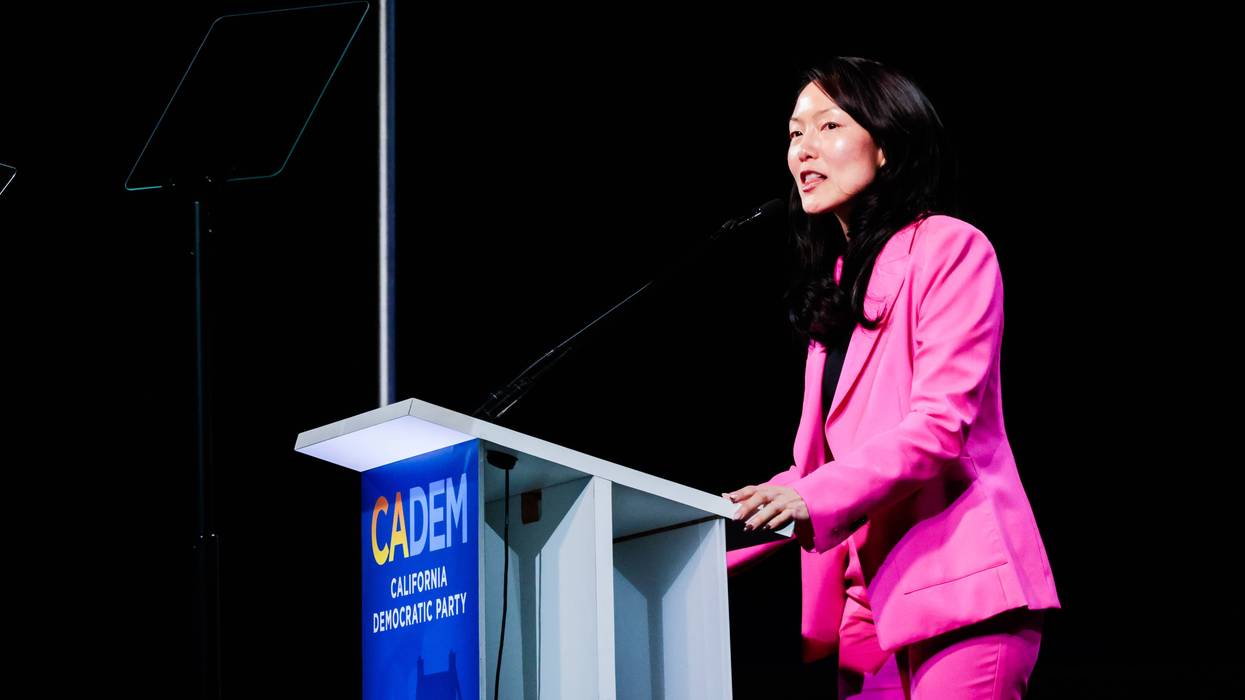
Justice Democrats, the grassroots group working to replace corporate Democrats with progressives across the country, is celebrating primary wins by Jane Kim, who is running to serve as California's insurance commissioner, and Mai Vang, who is vying to represent California's 7th Congressional District in the US House.
As of this writing, Vang has received more votes in the jungle primary than incumbent Rep. Doris Matsui (D-Calif.).
“Sacramento is ready to move on from the corporate dynasty that has represented it for 50 years and elect a true working class champion to fight for their families in Washington,” said Alexandra Rojas, the executive director of Justice Democrats. “Mai represents the Sacramento being left behind by Doris Matsui and the promise of representation that fights the corporations raising our prices and ICE contractors enabling our communities to be terrorized—instead of cashing their checks."
"If the Democratic Party wants to beat Republicans and win back a majority in November," Rojas added, "they need to listen to their voters and usher in a new generation of fighters like Mai, to excite our base and lead this party forward."
We must be willing to say out loud that the Democratic Party as currently led is a huge part of the problem. The people running it have failed. They have names. Saying so isn’t radical. It’s honest.
I’ve been hearing from a lot of candidates and campaigns lately. This one is for them.
In 2015, I sold my food trucks to volunteer for Bernie Sanders. That turned into co-founding Brand New Congress and Justice Democrats, then helping elect Alexandria Ocasio-Cortez to the US House of Representatives. I worked as her strategist and communications director for a few years after that. I’ve spent the better part of a decade pretty close to the center of the progressive movement. The following is what I learned.
Back in 2016, Hillary Clinton said Bernie Sanders’ policies were “fairy dust and rainbows.” The point wasn’t just that big things were hard. The point was that big things weren’t needed. The system was basically working. America was great. If you thought otherwise you weren’t serious, or you weren’t paying attention, or you were the kind of person who gets dismissed at Brookings as insufficiently realistic.
That was the consensus. Serious people. Credentialed people. New York Times columnists and think tank fellows and television regulars, all reading from the same hymnal. Don’t rock the boat. Take what the system offers. Be grateful.
That consensus didn’t protect us from Donald Trump. It elected him. Twice.
Because when someone came along and said the system is rigged and I’ll burn it down, 80 million people said, "Finally." They were wrong about the messenger. They were completely right about the problem. The “things are actually pretty good” position was the most destabilizing thing anyone could have said. That realism was actually radicalism. And we’re living in the results.
Progressive politics has the same capacity problem that the rest of the country does. We don’t have enough aligned people in power, and we can’t fix that one seat at a time any more than we can fix the housing crisis one subsidy at a time.
The market doesn’t work for the things people actually need to live. Not anymore. Maybe it once did. It doesn’t now and the evidence is everywhere.
We spend $6 trillion a year on healthcare. More than any country on earth, by a lot, and we rank last among wealthy nations in outcomes. Last. Tens of millions of people are one diagnosis away from financial ruin. Rural hospitals are closing. The market has had decades to fix this. It hasn’t fixed it. It has extracted wealth from it while delivering less.
Or consider the mRNA vaccines. The federal government funded the foundational research for 35 years. When COVID hit, the government paid Moderna and Pfizer billions more to finish the job and purchase the doses. Moderna and Pfizer then walked away with over $100 billion in combined revenue. The public got the bill twice, once as taxpayers funding the research, once as patients paying the prices, and the companies kept the patents.
The same pattern shows up in housing. We have been short on housing for decades. The market hasn’t built our way out of it. Cities that people actually want to live in are unaffordable. But so are the rural areas. I live in Lenoir City, Tennessee. Population about 11,000. Here a studio apartment runs you a thousand dollars a month.
And what did our nominee offer? Kamala Harris proposed a $25,000 grant for first-time home buyers. I understand the instinct. But the issue is supply. You pump $25,000 into a market that isn’t building enough homes then prices go up. The money flows straight through the buyer and into the seller or the landlord and the developer, and nothing new gets built. It’s the same story as healthcare. We keep pouring money into broken systems I assume because it seems like a logical solution. But it only makes the problem worse.
Too many people think of American problems as spending problems. But if I walked into my local grocery store and wanted 15,000 pounds of beef, it wouldn’t matter how much money I had. You can’t buy what doesn’t exist. We don’t have enough housing. We don’t have enough doctors. We don’t have enough childcare slots. Pumping money into markets that aren’t producing those things doesn’t produce them. It inflates the price of whatever scraps are left. You fix a capacity problem by building and training, not injecting more cash.
We built our way out of the Depression not just by writing checks but by doing it ourselves. The government built water and irrigation infrastructure that turned the Central Valley into the food supply for half the country. It strung electrical wire to farms and small towns across the rural South and Midwest that private utilities had written off as unprofitable. We built the industrial capacity that became the Arsenal of Democracy. That was public investment. That was us deciding some things are too important to leave to the market.
We don’t believe that anymore. Or rather, our leaders don’t. Those few that do get stopped before they can do anything about it.
AOC won. She scared people badly enough that they spent millions trying to destroy her. She had the right diagnosis. She had the right policies. She had the courage. The things she ran on didn’t happen. Not because she wasn’t good enough. Because she walked in alone. A seat won in isolation gets absorbed. The machinery of this system is designed to absorb individual attacks.
Progressive politics has the same capacity problem that the rest of the country does. We don’t have enough aligned people in power, and we can’t fix that one seat at a time any more than we can fix the housing crisis one subsidy at a time.
Which brings me to where we are. An American president is suggesting on a Tuesday night that Iran should cease to exist. Not metaphorically. And the people who are supposed to be the opposition are writing letters. That is where we end up when the people in charge have no affirmative vision, no plan to build anything, and no team capable of fighting for it even if they did.
So when people ask me about candidates, I’m not asking whether they have the right positions. Most of the good ones do. I’m asking whether they understand what those positions are actually up against. Whether they’re ready to fight it.
I’m looking for bold, specific, public policy positions. Not values. Policies. Medicare for All. Public ownership of AI infrastructure. A housing program that builds and owns, not just subsidizes. Drug pricing reform that takes back the patents on publicly-funded research so the public owns what the public paid for. You would be amazed how many candidates won’t put this out publicly.
We must be willing to say out loud that the Democratic Party as currently led is the problem. The people running it have failed. They have names. Saying so isn’t radical. It’s honest.
An understanding that our institutions have been captured. The FEC. The FDA. The SEC. The DOJ. The Supreme Court. Not neutral referees. A coordinated fifty-year project to make progressive governance legally impossible. A candidate who won’t say that isn’t ready for what’s coming.
I’m looking for bold, specific, public policy positions. Not values. Policies.
A willingness to take risks inside the party. Not fighting Republicans on television, which costs nothing. Backing primary challengers against Democratic incumbents who are blocking the agenda. Making it more dangerous to oppose you than to support you. Almost nobody will do this.
All of those are necessary. None of them are enough.
A commitment to building a team before they win. Not after. Campaigning alongside candidates in other states and districts. Endorsing across geographies. Treating their race as part of something bigger than their district. This has never been done at scale on our side. It’s the thing that would change everything.
People resist this one the most, so let me explain why it matters.
A candidate’s victory, whether it’s a House seat or a Senate seat, can only accomplish things within the framework of how big and powerful their team is, how aligned that team is, and whether they built it before they walked into the building. It has to happen before, not after, for two reasons. First, because building it before is what proves you’re willing to put skin in the game and take real risks. Anyone can talk about solidarity after they’ve won. Doing it before, when it costs you something, is what makes it mean anything. Second, because you cannot change who’s sitting at the table from inside the table. You have to build the power to change it from outside. That means committing to each other before any of you have a seat, when the only thing binding you together is the mission itself.
And it matters to voters. Candidates running on these ideas as individuals are just putting policies on a page. They’re giving speeches. When they show up with a team, when they’ve committed to each other before they’ve won anything, they’re showing voters they understand what’s standing in their way and they have a plan for taking it head on.
Nobody is coming to do this for us. It takes a team. People who said all of this out loud before they won.
Underneath all of it, public ownership as the mechanism. Not regulation. Not subsidy. Ownership. We did it before. We can do it again. When a technology has the power to transform society, it’s unwise to leave it in the hands of a tiny group of self-absorbed billionaires whose only goal is to maximize profit, who consistently show contempt for the rights and interests of their fellow Americans, and who aren’t accountable to anyone, especially with a federal government this weak. We don’t let private companies build nuclear weapons. We don’t let them decide when or how to use them. We don’t let them raise armies. We understand some things are too powerful to leave in private hands. AI is one of those things. It’s built off of thousands of years of human data and thought. It’s built off of major public investment. It’s built by us. It should be working for us. The only thing that’s got a single chance of ensuring that is if we own it. Just like Alaska gets dividends from its oil reserves, the American people should be getting dividends from their data and their investments.
Nobody is coming to do this for us. It takes a team. People who said all of this out loud before they won. Who committed to each other before they walked into Washington. Who understand that their victory only matters if the person running three states over wins too.
That team is what I’m building with A Fight Worth Having. Not candidates with good vibes. Candidates who’ve passed this filter. Who know what they’re up against. Who are ready to fight the right people, including the ones in their own party.
If you’ve been reading this and asking what do we do, this is what we do.
Go to AFightWorthHaving.com
“We need a strong, unflinching opposition party that is united against the president’s personal paramilitary force," said Justice Democrats.
Even as opposition to US Immigration and Customs Enforcement reaches a fever pitch among voters and within the Democratic caucus amid report after report of abject lawlessness by the agency, House Minority Leader Hakeem Jeffries is refusing to whip the votes that would be necessary to stop the funding bill from passing as it heads to a vote on Thursday.
Democratic negotiators on the House Appropriations Committee have pushed their colleagues to accept a "compromise" bill that keeps agency funding flat while supposedly adding new "guardrails" on the agency's actions.
However, as David Dayen explained on Wednesday for the American Prospect, the bill "falls short of imposing true accountability on ICE in the wake of the murder of Renee Good in Minneapolis."
It “flat-funds” ICE at current levels for the fiscal year, although in real terms it’s an increase to the budget, because the previous year included a one-time “anomaly” of additional spending. It restricts spending on detention that could theoretically lower capacity to 41,500 beds from a proposed 50,000. And there are some limitations on what DHS can shift from other agencies into ICE. But because the bill includes no penalties or enforcing mechanisms to ensure that its funding directives are actually adhered to, these funding boundaries are not terribly meaningful.
Democratic lawmakers forced other “guardrails” into the bill, like funding for oversight of detention facilities and mandatory body cameras for ICE agents. And additional training is mandated for agents who interact with the public. But other measures, like blocking the detention and deportation of U.S. citizens or borrowing enforcement personnel from other agencies, weren’t added to the bill. And the funding, once again, is not guaranteed, given that the Trump administration has routinely withheld or shifted around funding without pushback from Congress.
Rep. Rosa DeLauro (D-Conn.), the ranking Democrat on the House Appropriations Committee, who served as the chief negotiator for the bill, has struggled to defend it in the face of reports that ICE is abducting young children, harassing and detaining US citizens, and has been directed to break into homes without a warrant in violation of the Fourth Amendment as a matter of policy.
“It is complicated,” DeLauro admitted during a meeting of the House Rules Committee, “when you’re both trying to govern, and you’re trying to resist what may be infringements, to thread that needle and try to be able to move forward.”
However, heading into Thursday's vote, she has maintained that a government shutdown affecting other critical agencies would be more damaging.
“I understand that many of my Democratic colleagues may be dissatisfied with any bill that funds ICE,” she said. “I share their frustration with the out-of-control agency. I encourage my colleagues to review the bill and determine what is best for their constituents and communities.”
Sen. Chris Murphy (D-Conn.), who has been one of Congress' most outspoken opponents of the bill from the beginning, said that while he understands his colleagues' objections, he believes that "the political police force Trump is building at DHS—and their daily violation of the law—threatens to unwind our republic."
"It's not just Minnesota. DHS is ignoring the law everywhere," he wrote in a lengthy post on social media. "I'm just back from Texas, where DHS is thumbing their nose at the law, disappearing legal residents and kids. Why? Because there are no consequences, they think they will get a bipartisan vote to fund their illegality."
He said Democrats should be demanding more for their votes, including "stopping DHS from moving personnel—e.g. [Customs and Border Protection]—out of their budgeted missions; requiring warrants for arrests; restoring training and identification protocols." While he acknowledged that the party “had a hard job,” he said, “there are no meaningful new restraints in this bill.”
Rep. Jim Himes (D-Conn.) joined in, saying, "I will not facilitate the lawlessness of an agency that is murdering young mothers, threatening peaceful protestors with assault rifles, and kidnapping elderly Americans out of their homes."
Rep. Ro Khanna (D-Calif.), who said he was "leading the opposition" to the bill, explained in a video posted to social media that "the ICE budget under [former President Joe Biden] was $10 billion a year. Donald Trump's Big Ugly Bill increased it by $18 billion a year for the next four years. Today, they want to memorialize that and triple ICE's budget."
"No Democrat should vote yes on this bill," he continued. "Frankly, we need to tear down the ICE agency and have a new federal agency to enforce immigration law under the Justice Department."
Acknowledging that there is not yet sufficient support on Capitol Hill to outright abolish or defund the agency, the Congressional Progressive Caucus (CPC) has also called for blocking the funds and introduced its own legislation that would limit the use of force by agents.
According to the Guardian, the majority of the 213 Democratic members of the House are expected to vote against the funding bill. But for it to stand any chance of being blocked, total party unity would be necessary, and some of the 218 Republicans would either need to defect or fail to show up for the vote.
Jeffries has personally stated that he will vote against the bill, and according to two congressional sources who spoke to the Prospect, has "recommended" that other members vote against it. However, the party whip, Rep. Katherine Clark (D-Mass.) and her deputies have not been directed to bring the rest of the caucus into line with that position.
In a statement issued Thursday, Jeffries, Clark, and Democratic Caucus Chair Pete Aguilar (D-Calif.) again said they personally planned to vote no on the appropriations bill but gave no guidance to their colleagues.
A source tracking the legislation on Capitol Hill told the Prospect that many Democrats in swing districts are planning to vote for the legislation because "they’re terrified of being labeled anti-law enforcement" and "want this to go away so they can talk about the cost of living more. Problem is, it’s not going away.”
Their hesitation comes despite public outrage toward ICE reaching an all-time high, with more of the public now wanting to abolish the agency outright than to keep it, according to a poll conducted earlier this month by YouGov.
Murphy has contended that "the public wants us to make a real fight to stop Trump's abuse of power and to restore humanity and legality to ICE operations," adding, "I don't think a no vote would be out of step with the public. In fact, it's what they demand: accountability for what's happening."
New Republic editor Aaron Regunberg echoed this, encouraging Democrats to "pick the goddamn fight!"
"Americans don’t like what ICE is doing," he said. "This is clearly the kind of playing field in which a fight—which drives further attention towards ICE’s abuses—is advantageous.
In a statement to Common Dreams, the progressive political action committee Justice Democrats described Jeffries' refusal to push against the bill as "cowardice in the face of fascism."
"We need a strong, unflinching opposition party that is united against the president’s personal paramilitary force," the group said. "Instead, Jeffries is willing to let multiple Democrats vote with Republicans to pass this funding, funneling even more of our tax dollars into state-sponsored terrorism."
"They're not even hiding it anymore. A US-led regime change war abroad to line the pockets of Big Oil—where have we heard this one before?"
"Going to war for oil, the sequel."
That's how one film and television producer responded to a Monday clip of US Rep. María Salazar (R-Fla.) discussing President Donald Trump's potential military invasion of Venezuela on Fox Business.
Amid mounting alarm that Trump may take military action, Salazar said there were three reasons why "we need to go in" to the South American country. The first, she said, is that "Venezuela, for the American oil companies, will be a field day."
After journalist Aaron Rupar noted her remarks on social media, many critics weighed in, including Justice Democrats, which works to elect progressives to Congress.
"They're not even hiding it anymore. A US-led regime change war abroad to line the pockets of Big Oil—where have we heard this one before?" the group said, referring to the invasion of Iraq.
Fred Wellman, a US Army combat veteran and podcast host running as a Democrat in Missouri's 2nd Congressional District, replied on social media: "They are sending our troops to war for the oil companies and not even pretending to lie about it. These sick SOBs are going to get our kids killed and it's all a big joke."
Salazar also described Venezuela as a launching pad for enemies of the US and claimed the country's president, Nicolás Maduro, leads the alleged Cartel de los Soles, or the Cartel of the Suns—which the Trump administration on Monday designated as a foreign terrorist organization.
Venezuela's interior and justice minister, Diosdado Cabello, has long claimed the cartel doesn't exist, calling it an "invention." As the UK's BBC reported Monday:
Cabello, who is alleged to be one of the high-ranking members of the cartel, has accused US officials of using it as an excuse to target those they do not like.
"Whenever someone bothers them, they name them as the head of the Cartel de los Soles," he said in August.
Gustavo Petro, the left-wing president of Venezuela's neighbour, Colombia, has also denied the cartel's existence.
"It is the fictional excuse of the far right to bring down governments that do not obey them," he wrote on X in August.
The terrorist designation and Salazar's comments came as the Trump administration is under fire for blowing up boats it claims are running drugs off the coast of Venezuela, and after a CBS News/YouGov survey showed on Sunday that 70% of Americans—including 91% of Democrats and 42% of Republicans—are against the "US taking military action in Venezuela."
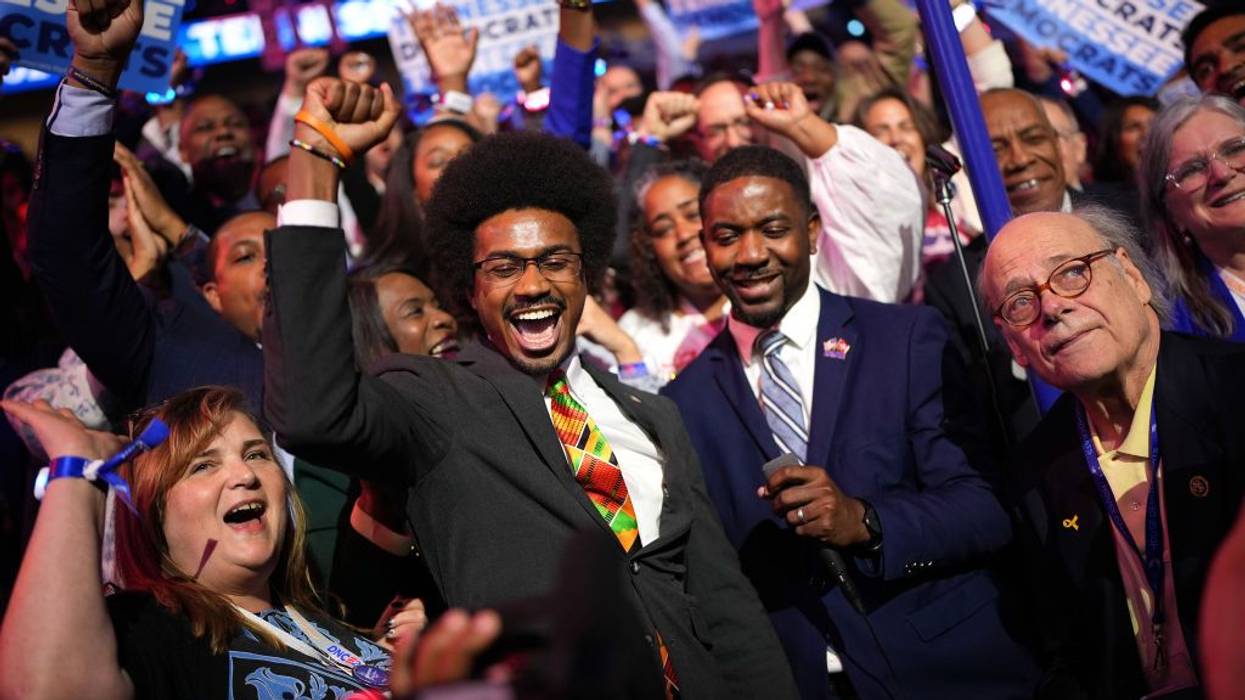
Tennessee state Rep. Justin J. Pearson, currently running to represent the 9th Congressional District in the US House of Representatives, was endorsed Wednesday by the national progressive group Justice Democrats, which said his history of fearless leadership is precisely what the country needs to combat the authoritarian push by Republicans, including President Donald Trump.
"Justice Democrats is so proud to endorse Justin J. Pearson to bring people-first leadership to Tennessee's only Democratic district," said the group's executive director, Alexandra Rojas, in a statement.
The candidate said he was "honored" to have the group's support, and its investment gives him "the opportunity to join the ranks of progressive, working-class champions" in Congress, pointing to Reps. Summer Lee (D-Pa.) and Ayanna Pressley (D-Mass.).
"We look forward to fighting alongside them in their visionary efforts to identify, nurture, and uplift bold, progressive, and courageous leaders to help our country overcome corporate greed, white supremacy, patriarchy, inequality, authoritarianism, and other attacks on democracy," he added.
"The communities and rising young leadership Justin represents in the 9th are on the frontlines of Donald Trump and Elon Musk's war on working families."
Pearson, who represents the 86th District in the Tennessee House of Representatives, which includes parts of Memphis, garnered national attention as one of the "Tennessee Three" in 2023, when the chamber's Republicans expelled him and Rep. Justin Jones (D-52) over their protest for stricter gun laws in the wake of the deadly Covenant School shooting in Nashville. Local officials quickly reinstated both men.
The 30-year-old's congressional campaign comes as Trump has sent National Guard troops to multiple US communities, and The Associated Press reports that they "could also be in Memphis by Friday." Pearson is among the local elected officials who have spoken out about sending soldiers to the city.
"The communities and rising young leadership Justin represents in the 9th are on the frontlines of Donald Trump and Elon Musk's war on working families," said Rojas. "They are showing the country, like so many other major cities under attack, what it means to truly come together to protect one another, not roll over, and fight back."
"This district does not have time to wait or keep going with the same status quo leadership that has governed for decades," she continued. "Tennessee voters need more than congressional letters and tweets—they need a congressperson that will fight with every tool at their disposal to deliver real, tangible change with solutions as big as the crises we face."
Justice Democrats shared a launch video on social media, arguing that "this moment calls for a true fighter like Justin."
"He is part of a wave of working-class, progressive candidates who are vital in the federal fight to take on Trump's authoritarianism, realign the Dem Party, excite our base, and turn out who we need to win up and down the ballot," said the group—which is also supporting Donavan McKinney's primary challenge to Rep. Shri Thanedar in Michigan's 13th District and Angela Gonzales-Torres in her race against Congressman Jimmy Gomez in California's 34th District.
In an interview published Wednesday, Pearson spoke with The Nation's Chris Lehmann about his Democratic primary challenge to 10-term incumbent Rep. Steve Cohen. According to the magazine's DC bureau chief, the Memphis native expressed gratitude for the congressman's service but emphasized his "working-class background against Cohen's status as a veteran Capitol Hill insider who recently purchased a condominium in Washington," and added that "he would diverge from Cohen's stalwart support for Israel in Congress."
Lehmann noted that "Justice Democrats, in the tradition of campaign advocacy groups, goes after Cohen more directly in its statement endorsing Pearson," calling out the 76-year-old incumbent for "cashing checks" from corporate political action committees while embracing "the model of the average absentee congressman."
"His lack of engaged and active representation has lowered expectations Memphians have for their congressperson," Justice Democrats said, "further eroding civil engagement and inspiring political cynicism in a working-class community already under attack on all sides."
In addition to Justice Democrats, Pearson is backed by Leaders We Deserve, a group led by former Democratic National Committee Vice Chair David Hogg, who said in a statement, "In this moment of crisis, I'm calling on Rep. Steve Cohen to pass the torch to Justin J. Pearson—a transformational leader who can inspire a new generation."
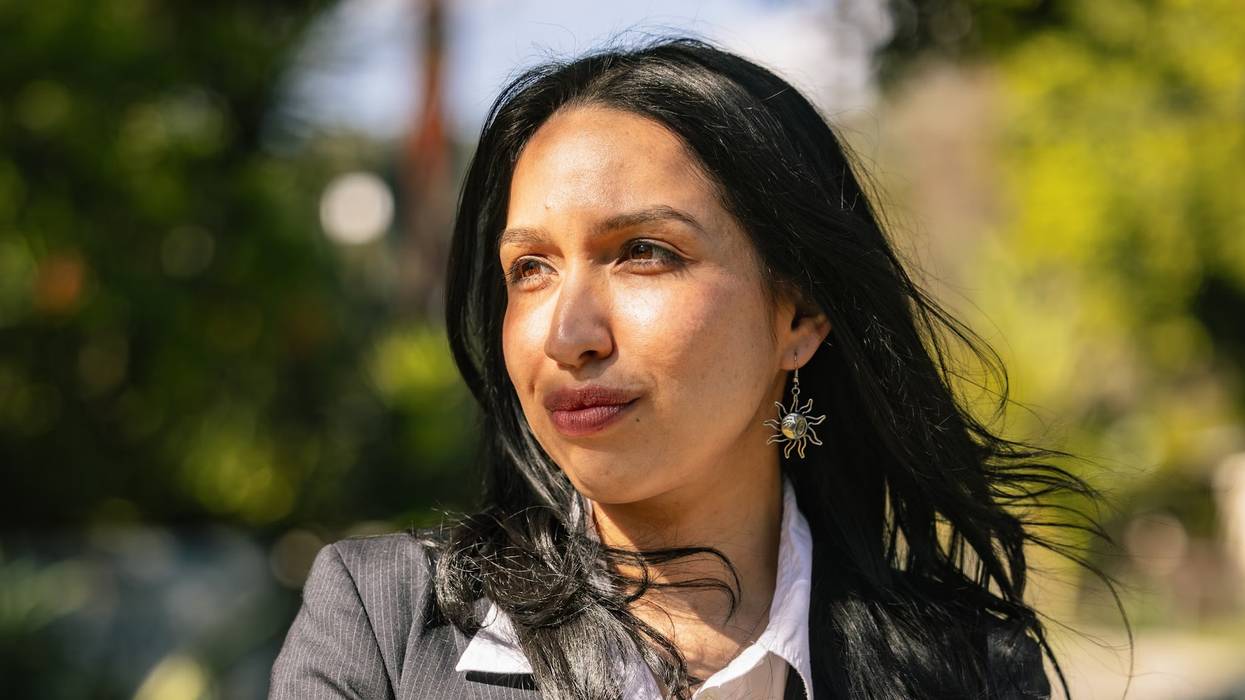
"This is about standing up to corruption, calling out a genocide when we see one, and building a Los Angeles that we can afford," said Angela Gonzales-Torres, the candidate endorsed by Justice Democrats.
The progressive political action committee Justice Democrats on Thursday threw its support behind Angela Gonzales-Torres, a primary challenger to incumbent Democratic Congressman Jimmy Gomez in California's deep blue 34th District.
"Angela is exactly what Los Angeles needs in Congress right now: a working-class champion with the moral courage to not only fight back against the Trump administration's cruelty with the urgency it demands but also take on the Democratic Party when the corporate establishment fails to fight for our communities," Justice Democrats executive director Alexandra Rojas said in a statement.
The support from Justice Democrats—known for helping to elect "Squad" members including Rep. Alexandria Ocasio-Cortez (D-NY)—comes as Republican President Donald Trump threatens to copy his militarized anti-immigrant attack on Los Angeles in other Democrat-led US cities.
"While Donald Trump is terrorizing our city, kidnapping our friends and neighbors, kicking us off our healthcare, why is our member of Congress funded by Trump's biggest donors and voting for his harmful agenda?" Gonzales-Torres asked in a Thursday video announcing the group's endorsement of her.
Gonzales-Torres launched her campaign in April. She's not the first primary challenger Gomez has faced. Since winning a 2017 special election, he has continuously bested his primary opponents, including David Kim in the past three cycles.
"In the 2024 race, Kim called for cutting off US military funding to Israel and drew fire from the American Israel Public Affairs Committee, or AIPAC, and its super PAC, United Democracy Project," The Intercept reported Thursday. "Kim also supported the Boycott, Divestment, and Sanctions movement and called for an international court to prosecute illegal Israeli settlements in the West Bank. Kim endorsed Gonzales-Torres, who previously volunteered for his campaign."
Gonzales-Torres told the Los Angeles Times that "I think that Angelenos want to see change. And what we are seeing is our current Congress member accepting $2.3 million from AIPAC, then failing to co-sponsor the only bill calling for a ceasefire."
"And what we are seeing is Jimmy Gomez taking, you know, $500,000 from crypto lobbies, then voting to further Trump's corrupt crypto agenda," Gonzales-Torres added. In the new video from Justice Democrats, she also highlighted Gomez's record of taking money from other corporate interests.
"We're doing things differently. I am not taking a dime from AIPAC or any corporate PAC money," Gonzales-Torres said. "This is about standing up to corruption, calling out a genocide when we see one, and building a Los Angeles that we can afford, not just the wealthy or well-connected."
She also recalled her experience growing up in Los Angeles, including the deportation of her father when she was just 15. With her dad back in Mexico, Gonzales-Torres' mother worked as a waitress to support their daughters, and they spent time living in shelters and their car, according to The American Prospect.
"Experiencing family separation, economic insecurity, housing instability, and all of the trauma that comes with it has only made me more committed to fighting for my community, and for all of the Angelenos for whom that is a daily struggle, like it was for my family," she told the Prospect. "Los Angeles deserves better, and I'm determined to get it for us."
While Justice Democrats is accustomed to facing off against AIPAC—which last year backed successful primary challenges to two Squad members, former Reps. Jamaal Bowman (D-NY) and Cori Bush (D-Mo.)—the progressives group's endorsement in this race is notable because of some of the incumbent's positions.
Gomez is "far from a hard-line pro-Israel voice in Congress" and "hardly a moderate: The Eagle Rock resident has more in common with the Justice Democrats slate than many of the members they have previously tried to unseat," the Times reported, noting his support for the Green New Deal and Medicare for All, his speech at Sen. Bernie Sanders' (I-Vt.) Fighting Oligarchy event in Los Angeles, and Ocasio-Cortez's 2024 endorsement of him.
Justice Democrats spokesperson Usamah Andrabi pointed to the congressman's campaign cash.
"Jimmy Gomez got to Washington and closed the door on his community behind him to embrace the same corporate PACs and right-wing lobbies that are raising costs for Angelenos and demanding their tax dollars fund genocide," Andrabi told The Intercept. "In a city that has become ground zero for Donald Trump's war on immigrant families, Angelenos deserve a leader whose donors will never dictate how hard they fight back."
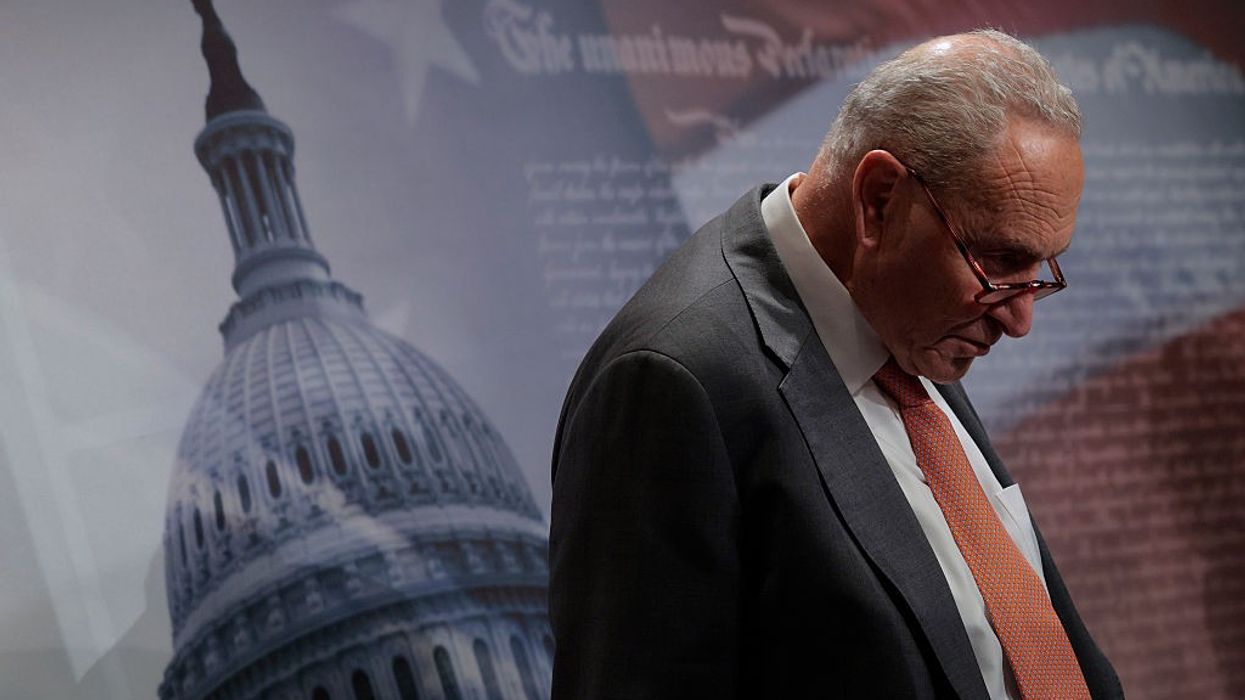
"Voters have made their feelings clear," said the leader of Justice Democrats. "The majority do not see themselves in this party and do not believe in its leaders or many of its representatives."
A top progressive leader has given her prescription for how the Democratic Party can begin to retake power from US President Donald Trump: Ousting "corporate-funded" candidates.
Justice Democrats executive director Alexandra Rojas wrote Thursday in The Guardian that, "If the Democratic Party wants to win back power in 2028," its members need to begin to redefine themselves in the 2026 midterms.
"Voters have made their feelings clear, a majority do not see themselves in this party and do not believe in its leaders or many of its representatives," Rojas said. "They need a new generation of leaders with fresh faces and bold ideas, unbought by corporate super [political action committees] and billionaire donors, to give them a new path and vision to believe in."
Despite Trump's increasing unpopularity, a Gallup poll from July 31 found that the Democratic Party still has record-low approval across the country.
Rojas called for "working-class, progressive primary challenges to the overwhelming number of corporate Democratic incumbents who have rightfully been dubbed as do-nothing electeds."
According to a Reuters/Ipsos poll conducted in June, nearly two-thirds of self-identified Democrats said they desired new leadership, with many believing that the party did not share top priorities, like universal healthcare, affordable childcare, and higher taxes on the rich.
Young voters were especially dissatisfied with the current state of the party and were much less likely to believe the party shared their priorities.
Democrats have made some moves to address their "gerontocracy" problem—switching out the moribund then-President Joe Biden with Vice President Kamala Harris in the 2024 presidential race and swapping out longtime House Speaker Rep. Nancy Pelosi (Calif.) for the younger Rep. Hakeem Jeffries (N.Y.).
But Rojas says a face-lift for the party is not enough. They also need fresh ideas.
"Voters are also not simply seeking to replace their aging corporate shill representatives with younger corporate shills," she said. "More of the same from a younger generation is still more of the same."
Outside of a "small handful of outspoken progressives," she said the party has often been too eager to kowtow to Trump and tow the line of billionaire donors.
"Too many Democratic groups, and even some that call themselves progressive, are encouraging candidates' silence in the face of lobbies like [the America-Israel Public Affairs Committee] (AIPAC) and crypto's multimillion-dollar threats," she said.
A Public Citizen report found that in 2024, Democratic candidates and aligned PACs received millions of dollars from crypto firms like Coinbase, Ripple, and Andreesen Horowitz.
According to OpenSecrets, 58% of the 212 Democrats elected to the House in 2024—135 of them—received money from AIPAC, with an average contribution of $117,334. In the Senate, 17 Democrats who won their elections received donations—$195,015 on average.
The two top Democrats in Congress—Jeffries and Senate Minority Leader Chuck Schumer (D-N.Y.)—both have long histories of support from AIPAC, and embraced crypto with open arms after the industry flooded the 2024 campaign with cash.
"Too often, we hear from candidates and members who claim they are with us on the policy, but can't speak out on it because AIPAC or crypto will spend against them," Rojas said. "Silence is cowardice, and cowardice inspires no one."
Rojas noted Rep. Summer Lee (D-Pa.), who was elected in 2022 despite an onslaught of attacks from AIPAC and who has since gone on to introduce legislation to ban super PACs from federal elections, as an example of this model's success.
"The path to more Democratic victories," Rojas said, "is not around, behind, and under these lobbies, but it's right through them, taking them head-on and ridding them from our politics once and for all."

"The president does not have the power to unilaterally declare war," asserted Rep. Summer Lee. "Congressional authorization isn't optional."
Numerous House progressives said Tuesday that they will support legislation that would force President Donald Trump to obtain congressional permission to wage war on Iran, a development that followed Monday's introduction of two Senate measures aimed at stopping Trump from dragging the United States into the widening Israel-Iran war.
Reps. Thomas Massie (R-Ky.) and Ro Khanna (D-Calif.) on Tuesday introduced legislation affirming the legal requirement under the War Powers Resolution of 1973—also known as the War Powers Act—for the president to notify lawmakers within 48 hours of committing troops to military action and limiting such action to 60 days, with a 30-day withdrawal period, unless Congress declares war or issues an authorization for the use of military force.
"The Constitution does not permit the executive branch to unilaterally commit an act of war against a sovereign nation that hasn't attacked the United States," Massie explained in a statement. "Congress has the sole power to declare war against Iran. The ongoing war between Israel and Iran is not our war. Even if it were, Congress must decide such matters according to our Constitution."
In a post on the social media site X, Massie thanked the resolution's co-sponsors, all of them Democrats: Don Beyer (Va.), Greg Casar (Texas), Alexandria Ocasio-Cortez (N.Y.), Lloyd Doggett (Texas), Jesús "Chuy" García (Ill.), Val Hoyle (Ore.), Pramila Jayapal (Wash.), Summer Lee (Pa.), Jim McGovern (Mass.), Ilhan Omar (Minn.), Ayanna Pressley (Mass.), Delia Ramirez (Ill.), Rashida Tlaib (Mich.), and Nydia Velazquez (N.Y.).
More lawmakers—possibly including Republicans—are expected to sign on to the measure.
"The president does not have the power to unilaterally declare war. Congressional authorization isn't optional," Lee said on social media. "When some profit both financially and politically from endless war, the rest of us pay the price. We can't let them lie us into another conflict that will cost innocent lives."
Tlaib asserted that "the American people aren't falling for it again. We were lied to about 'weapons of mass destruction' in Iraq that killed millions [and] forever changed lives."
The progressive political action committee Justice Democrats welcomed Massie's measure: "Here's an opportunity for bipartisanship that doesn't sell out the American people. Every member of Congress should oppose U.S. involvement, funding, weapons, or troops fighting another endless war in the Middle East."
The House proposal follows Monday's introduction of a war powers resolution by Sen. Tim Kaine (D-Va.) and bill by Sen. Bernie Sanders (I-Vt.) that would prevent the Trump administration from using federal funds for a military attack on Iran without congressional approval. It also echoes a 2020 resolution proposed in the then-Democrat-controlled House that would have banned Trump from waging war on Iran without lawmakers' approval.
Explaining her support for Massie's legislation, Omar said, "I support this resolution because the American people do not want another war."
Indeed, an Economist/YouGov poll published Tuesday revealed that only 16% of surveyed voters "think the U.S. should get involved in the conflict between Israel and Iran." Just 10% of respondents who voted for former Vice President Kamala Harris last year and 19% of 2024 Trump voters want the U.S. to wage war on Iran, as do 15% of self-described Democrats, 11% of Independents, and 23% of Republicans.
A separate survey commissioned by Demand Progress and conducted by the Bullfinch Group recently found that 53% of registered voters—including 58% of Democrats, 47% of Independents, and 56% of Republicans—want Trump to "obtain congressional authorization before striking targets in other countries."
"We applaud Rep. Massie and Sen. Kaine for introducing these resolutions to keep us out of yet another war in the Middle East," Demand Progress senior policy adviser Cavan Kharrazian said Tuesday. "It should be in the interest of Republicans and Democrats to uphold the Constitution and prevent Israel from dragging us into a disastrous war with Iran."
"The American people, including a clear majority of Republican voters, believe the president must obtain congressional authorization before initiating strikes against another country," Kharrazian added. "Congress must listen to them and reassert its constitutional war powers authority by passing these resolutions."
Israel claims it attacked Iran to stop it from obtaining nuclear weapons. However, successive U.S. intelligence assessments have concluded for decades—most recently in March—that Iran is not trying to build nukes. On Tuesday, Trump brushed off his own director of national intelligence's findings that Iran is not close to having a nuclear bomb.
As Trump ratcheted up his cryptic threats against Tehran amid ongoing Israeli attacks on Iran and Iranian counterstrikes, anti-war voices including the National Iranian American Council (NIAC) and the peace group CodePink urged restraint and negotiation to avert escalating the Mideast crisis.
NIAC, which is circulating a petition demanding Congress act to avert U.S. intervention, is planning to hold a Tuesday afternoon No War With Iran Action Hour co-hosted with Peace Action and Action Corps.
"Trump continues to renege on his own commitments to diplomacy and an end to wars by perpetuating [Israeli Prime Minister Benjamin] Netanyahu's war of aggression through his own vocal support and U.S. military equipment and personnel in the region," NIAC said Tuesday. "Israel's assaults on Tehran have killed upwards of 224 Iranians and hospitalized over 1,277 more."
"Happening at the same time, in just the last day alone, Israeli forces have also killed at least 51 Palestinians desperate for aid and food at a World Food Program site in southern Gaza," NIAC noted. "There is no telling how much more devastation for Iran, Israel, and the U.S. an expanded war on Iran would bring."
"President Trump must immediately halt military aid and support for the Israel war on Iran," the group added, "and if he will not, Congress must act within its constitutional authority to save millions of American, Iranian, Israeli, and Palestinian lives."
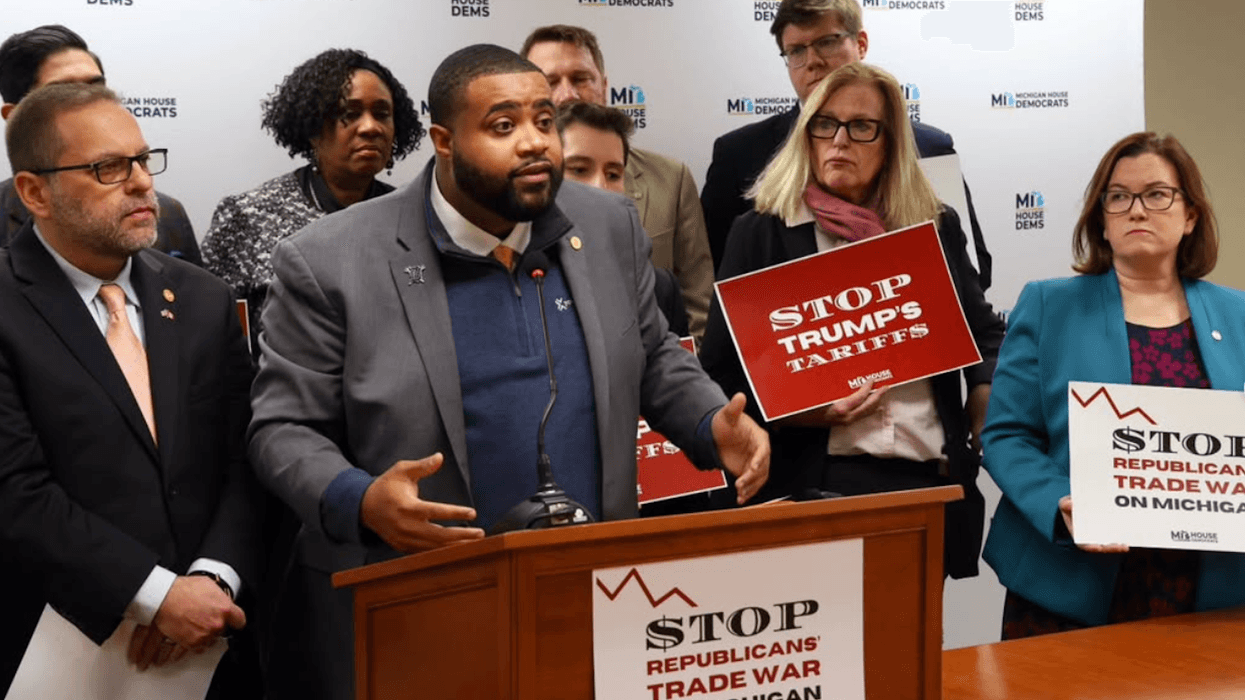
"I know when it comes to real representation, Michigan's 13th District deserves better," said Congresswoman Rashida Tlaib in support of state Rep. Donavan McKinney.
U.S. Rep. Rashida Tlaib drew praise from progressives Monday after endorsing a state lawmaker's Democratic primary challenge against an incumbent from a neighboring Michigan district.
Tlaib (D-Mich.) endorsed 32-year-old state Rep. Donavan McKinney (D-11), who last month announced he is seeking to oust pharmaceutical magnate-turned Congressman Shri Thanedar, who has represented Michigan's 13th Congressional District since 2023.
"Centering community not only means standing up to corporate donors and lobbyists but also means fighting to address community needs through robust community services and responsive representation," said Tlaib in a statement. "This type of leadership is missing for residents in the 13th and I know Donavan will bring it... I know when it comes to real representation, Michigan's 13th District deserves better."
Big news! Rep. Rashida Tlaib is endorsing @donavanmckinney.bsky.social’s campaign for Congress—the first Congressional endorsement of this race. Rashida knows that voters in her neighboring district need a leader who will fight back against billionaire corruption—not a Congressman in name only.
[image or embed]
— Justice Democrats (@justicedemocrats.com) May 12, 2025 at 7:08 AM
McKinney, who is also endorsed by the progressive group Justice Democrats and more than a dozen current and former Michigan state lawmakers and other officials, said Monday on social media that he is "honored to have" Tlaib's support and "can't wait to serve by her side" in Congress.
According to Justice Democrats, McKinney's "priorities are protecting our economic security, ensuring families have access to clean air and water, ensuring every child can receive a quality public education, bringing justice to the criminal legal system, pushing for a robust, quality public transit system, and expanding the rights of unions and workers."
"He has worked to lower costs and increase affordability for the people of his district, taken on corporate monopolies, and fought to get big money out of politics on the state-level and he's running for Congress to bring that fight to Washington," the group added.
Thanedar responded to Tlaib's endorsement in an interview with the Detroit Free Press in which he said that "my focus is, and will continue to be, fighting [President Donald] Trump, bringing federal dollars back to the district, and serving my constituents."
"I'm confident voters in the 13th will choose me again in 2026," he added.
One issue of contention between Tlaib and Thanedar is Israel's U.S.-backed assault on Gaza, which is the subject of an International Court of Justice (ICJ) genocide case and the impetus for International Criminal Court arrest warrants targeting fugitive Israeli Prime Minister Benjamin Netanyahu and former Defense Minister Yoav Gallant for alleged war crimes and crimes against humanity.
Tlaib—the only Palestinian American member of Congress—is a staunch advocate of a Gaza cease-fire and cutting off U.S. military aid to Israel.
Thanedar previously co-sponsored a resolution in Michigan's House of Representatives advocating an end to U.S. aid for Israel, which he described an an "apartheid state"—a position aligned with the ICJ and numerous international and Israeli human rights groups.
However, Thanedar subsequently quit the Democratic Socialists of America over what he said was DSA's failure to condemn the Hamas-led October 7, 2023 attack on Israel.
Blue Wave—a super political action committee linked to American Israel Public Affairs Committee, or AIPAC, spent $2.3 million on ads attacking Thanedar's 2024 primary opponent, Detroit City Councilmember Mary Waters, who drew praise from the area's sizable Palestinian and Arab American community for her opposition to Israel's Gaza onslaught.