

SUBSCRIBE TO OUR FREE NEWSLETTER
Daily news & progressive opinion—funded by the people, not the corporations—delivered straight to your inbox.
5
#000000
#FFFFFF
To donate by check, phone, or other method, see our More Ways to Give page.

Daily news & progressive opinion—funded by the people, not the corporations—delivered straight to your inbox.
The Biden administration on Thursday laid it right out in the open.
It's time to seriously discuss a 60-year problem we've had with treasonous and illegitimate Republican presidents.
When Trump 2016 campaign chairman Paul Manafort was passing secret polling information about swing states like Michigan, Wisconsin, and Pennsylvania to Konstantin Kilimnik, as is laid out in the Mueller Report, it was part of a very specific and successful effort on the part of Russian Intelligence to help put Trump in office.
This was the data they would have used to have troll accounts and ads target individuals in those states via social media, particularly Facebook, to both suppress the vote for Clinton and encourage voters to show up for Trump and other down-ticket Republicans.
This is not the first time a Republican candidate for president has committed treason to get into the White House. In fact, it's been the norm since 1968, and therefore it's time to seriously discuss a 60-year problem we've had with treasonous and illegitimate Republican presidents.
America must stop giving criminal Republican presidents a pass. Every GOP president since Dwight Eisenhower used treason or deception to come to office (or inherited office from one who did), and it needs to end. It's a truly astonishing and horrifying story.
It started in 1968, when President Lyndon Johnson was desperately trying to end the Vietnam War. It had turned into both a personal and political nightmare for him, and his vice president, Hubert Humphrey, was running for president in the election that year against a "reinvented" Richard Nixon.
Johnson spent most of late 1967 and early 1968 working back-channels to North and South Vietnam, and by the summer of 1968 had a tentative agreement from both for what promised to be a lasting peace deal they'd both sign that fall.
But Richard Nixon knew that if he could block that peace deal, it would kill Humphrey's chances of winning the 1968 election. So Nixon sent envoys from his campaign to talk to South Vietnamese leaders to encourage them not to attend upcoming peace talks in Paris.
Nixon promised South Vietnam's corrupt politicians that he'd give them a richer deal when he was president than LBJ could give them then.
The FBI had been wiretapping Nixon's people and told LBJ about his effort to prolong the Vietnam War. Thus, just three days before the 1968 election, Johnson phoned the Republican Senate leader, Everett Dirksen, (you can listen to the entire conversation here):
President Johnson: Some of our folks, including some of the old China lobby, are going to the Vietnamese embassy and saying please notify the [South Vietnamese] president that if he'll hold out 'til November 2nd they could get a better deal. Now, I'm reading their hand. I don't want to get this in the campaign. And they oughtn't to be doin' this, Everett. This is treason.
Sen. Dirksen: I know.
Those tapes were only released by the LBJ library in the past decade, and that's Richard Nixon who Lyndon Johnson was accusing of treason.
At that point, for President Johnson, it was no longer about getting Humphrey elected. By then Nixon's plan had already worked and Humphrey was being wiped out in the polls.
Instead, Johnson was desperately trying to salvage the peace talks to stop the death and carnage as soon as possible. He literally couldn't sleep.
In a phone call to Nixon himself just before the election, LBJ begged him to stop sabotaging the peace process, noting that he was almost certainly going to win the election and inherit the war anyway. Instead, Nixon publicly said LBJ's efforts were "in shambles."
But South Vietnam had taken Nixon's deal and boycotted the peace talks, the war continued, and Nixon won the White House thanks to it.
An additional 22,000 American soldiers, and over an additional million Vietnamese, died because of Nixon's 1968 treason, and he left it to Gerald Ford to end the war and evacuate the American soldiers.
Nixon was never held to account for it, and when the LBJ library released the tapes and documentation it was barely noticed by the American press.
Gerald Ford, who succeeded Nixon, was never elected to the White House (he was appointed to replace VP Spiro Agnew, after Agnew was indicted for decades of taking bribes), and thus would never have been president had it not been for Richard Nixon's treason. He pardoned Nixon.
Next up was Ronald Reagan.
During the Carter/Reagan election battle of 1980, then-President Carter had reached a deal with newly elected Iranian President Abdolhassan Bani-Sadr to release the 52 hostages held by students at the American Embassy in Tehran.
Bani-Sadr was a moderate and, as he explained in an editorial for The Christian Science Monitor, successfully ran for president on the popular position of releasing the hostages:
I openly opposed the hostage-taking throughout the election campaign. ...I won the election with over 76% of the vote. ...Other candidates also were openly against hostage-taking, and overall, 96% of votes in that election were given to candidates who were against it [hostage-taking].
Carter was confident that with Bani-Sadr's help, he could end the embarrassing hostage crisis that had been a thorn in his political side ever since it began in November of 1979.
But behind Carter's back, the Reagan campaign worked out a deal with the leader of Iran's radical faction--Supreme Leader Ayatollah Khomeini--to keep the hostages in captivity until after the 1980 presidential election. Khomeini needed spare parts for American weapons systems the Shah had purchased for Iran, and Reagan was happy to promise them.
This was the second act of treason by a Republican wanting to become president.
The Reagan campaign's secret negotiations with Khomeini--the so-called "October Surprise"-- sabotaged President Carter's and Iranian President Bani-Sadr's attempts to free the hostages. As President Bani-Sadr told The Christian Science Monitor in March of 2013:
"After arriving in France [in 1981], I told a BBC reporter that I had left Iran to expose the symbiotic relationship between Khomeinism and Reaganism.
"Ayatollah Khomeini and Ronald Reagan had organized a clandestine negotiation, later known as the 'October Surprise,' which prevented the attempts by myself and then-U.S. President Jimmy Carter to free the hostages before the 1980 U.S. presidential election took place. The fact that they were not released tipped the results of the election in favor of Reagan."
And Reagan's treason--just like Nixon's treason--worked perfectly.
The Iran hostage crisis continued and torpedoed Jimmy Carter's re-election hopes. And the same day Reagan took the oath of office--to the minute, as Reagan put his hand on the bible, by way of Iran's acknowledging the deal--the American hostages in Iran were released.
Keeping his side of the deal, Reagan began selling the Iranians weapons and spare parts in 1981, and continued until he was busted for it in 1986, producing the so-called "Iran-Contra" scandal.
But, like Nixon, Reagan was never held to account for the criminal and treasonous actions that brought him to office.
After Reagan--Bush senior was elected--but like Jerry Ford--Bush was really only president because he served as vice president under Reagan. And, of course, the naked racism of his Willie Horton ads helped keep him in office.
The criminal investigation into Iran-Contra came to a head with independent prosecutor Lawrence Walsh subpoenaing President George H.W. Bush after having already obtained convictions for Weinberger, Ollie North and others. Bush's attorney general, Bill Barr, suggested he pardon them all to kill the investigation, which Bush did. The screaming headline across the New York Times front page on December 25, 1992, said it all:
THE PARDONS; BUSH PARDONS 6 IN IRAN AFFAIR, ABORTING A WEINBERGER TRIAL; PROSECUTOR ASSAILS 'COVER-UP'
And if the October Surprise hadn't hoodwinked voters in 1980, you can bet Bush senior would never have been elected in 1988. That's four illegitimate Republican presidents.
Which brings us to George W. Bush, the man who was given the White House by five right-wing justices on the Supreme Court.
In the Bush v. Gore Supreme Court decision in 2000 that stopped the Florida recount--and thus handed George W. Bush the presidency--Justice Antonin Scalia wrote in his opinion:
The counting of votes... does in my view threaten irreparable harm to petitioner [George W. Bush], and to the country, by casting a cloud upon what he [Bush] claims to be the legitimacy of his election.
Apparently, denying the presidency to Al Gore, the guy who actually won the most votes in Florida, did not constitute "irreparable harm" to Scalia or the media.
And apparently it wasn't important that Scalia's son worked for a law firm that was defending George W. Bush before the high court (with no Scalia recusal).
Just like it wasn't important to mention that Justice Clarence Thomas's wife worked on the Bush transition team--before the Supreme Court shut down the count in Florida--and was busy accepting resumes from people who would serve in the Bush White House if her husband stopped the recount in Florida... which he did. (No Thomas recusal, either.)
More than a year after the election a consortium of newspapers including The Washington Post, The New York Times, and USA Today did their own recount of the vote in Florida--manually counting every vote in a process that took almost a year--and concluded that Al Gore did indeed win the presidency in 2000.
As the November 12th, 2001 article in The New York Times read:
If all the ballots had been reviewed under any of seven single standards and combined with the results of an examination of overvotes, Mr. Gore would have won.
That little bit of info was slipped into the seventeenth paragraph of the Times story so that it would attract as little attention as possible because the 9/11 attacks had happened just weeks earlier and journalists feared that burdening Americans with the plain truth that George W. Bush actually lost the election would further hurt a nation already in crisis.
To compound the crime, Bush could only have gotten as close to Gore in the election as he did because his brother, Florida Gov. Jeb Bush, had ordered his Secretary of State, Kathrine Harris, to purge at least 57,000 mostly-Black voters from the state's voter rolls just before the election.
So, for the third time in four decades, Republicans took the White House under illegitimate electoral circumstances. Even President Carter was shocked by the brazenness of that one. And Jeb Bush and the GOP were never held to account for that crime against democracy.*
Most recently, in 2016, Trump ally Kris Kobach and Republican secretaries of state across the nation used Interstate Crosscheck to purge millions of legitimate voters--most people of color--from the voting rolls just in time for the Clinton-Trump election.
Meanwhile, Russian oligarchs or the Russian state, and possibly pro-Trump groups or nations in the Middle East, are alleged to have funded a widespread program to flood social media with pro-Trump, anti-Clinton messages from accounts posing as Americans, as documented by Robert Mueller's investigation.
One can only wonder how much better off America would be if six Republican presidents hadn't stolen or inherited a stolen White House and used it to put right-wing cranks on the Supreme Court and other federal benches.
And on top of that, we learned today that Republican campaign data on the 2016 election, including which states needed a little help via phony influencers on Facebook and other social media, was not only given to Konstantin Kilimnik by Paul Manafort, but Kilimnik transferred it to Russian intelligence.
Donald Trump still lost the national vote by nearly three million votes, but came to power through an electoral college designed to keep slavery safe in colonial America.
One can only wonder how much better off America would be if six Republican presidents hadn't stolen or inherited a stolen White House and used it to put right-wing cranks on the Supreme Court and other federal benches.
Now, finally, there may be an opportunity for some accountability for another criminal Republican president.
The depth and breadth of Trump's involvement in the January 6th attempt to destroy our form of government and replace it with single-party strongman rule is becoming more and more obvious. As a result, the pressure is building to hold him and many of those in his administration to account.
America has ignored GOP crimes to seize and hold the White House long enough. It's time, at long last, to put this one in prison.
This piece initially appeared on The Hartmann Report.
In this political season in which refugees have become a political football, it is worthwhile remembering that baby Jesus is depicted by the Bible as being a political refugee not once but twice.
Officials at Customs and Border Protection, the DHS agency responsible for separating families under the May-June 2018 policy, estimated in May of that year that it would separate more than 26,000 children by September, according to the report from the DHS Office of Inspector General, released publicly on Wednesday. After mounting pressure, President Donald Trump signed an executive order ending the policy on June 20, 2018.
Previously, the administration has said in court that an estimated 2,800 children were separated as a result of zero tolerance. But the report released Wednesday said that the lack of technology to track which children had been separated meant the agency had to revise that estimate to 3,014.
In essence, Herod intended to tear Jesus out of the arms of Mother Mary. Admittedly he had more sinister plans for the boy than putting him in a foster home with strangers in a foreign country, but a stolen child is dead to its mother in any case.
Jesus as an infant is depicted as having been a refugee twice over. People in Egypt would have considered Joseph, Mary and Jesus to be refugees from the Levant.
The wise men or magi from the East and Jesus in the manger are staples of Christmas celebrations. (Matthew does not say there were three wise men, and early Syrian tradition held that there were 12 of them). Actually, however many there were, the wise men caused baby Jesus a very great deal of trouble.
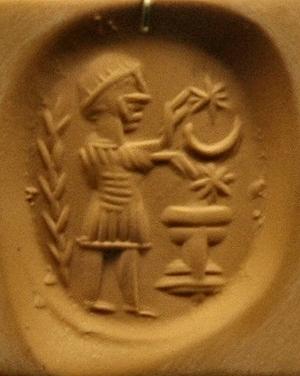
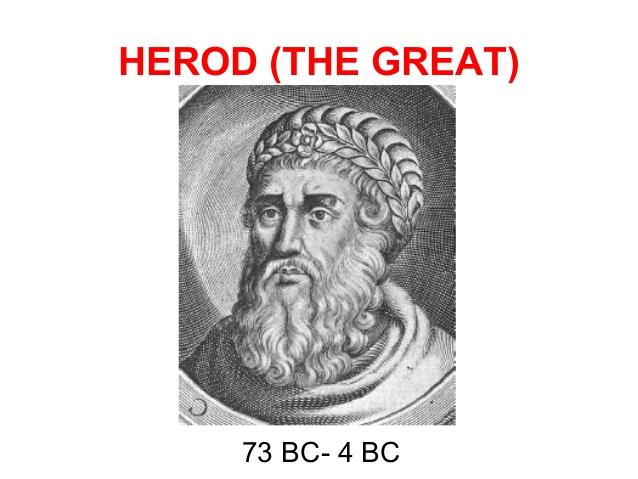
Magi were the priests of the Zoroastrian or Parsi religion of ancient Iran. Iranian religions like Zoroastrianism and Mithraism were present in the Near East. In fact, the Iranian Parthian Empire (250 BC-220 AD), stretching from Afghanistan to Mesopotamia, had taken the the Near East and greater Syria away from Rome briefly for a couple of years some 33 years before Jesus was born. In that couple of years, the Iranians deposed the Rome-appointed local governor, Herod the Great, who fled to Rome, and the Iranians installed the Hasmonean, Antigonus, son of Aristobulus II, as their governor.
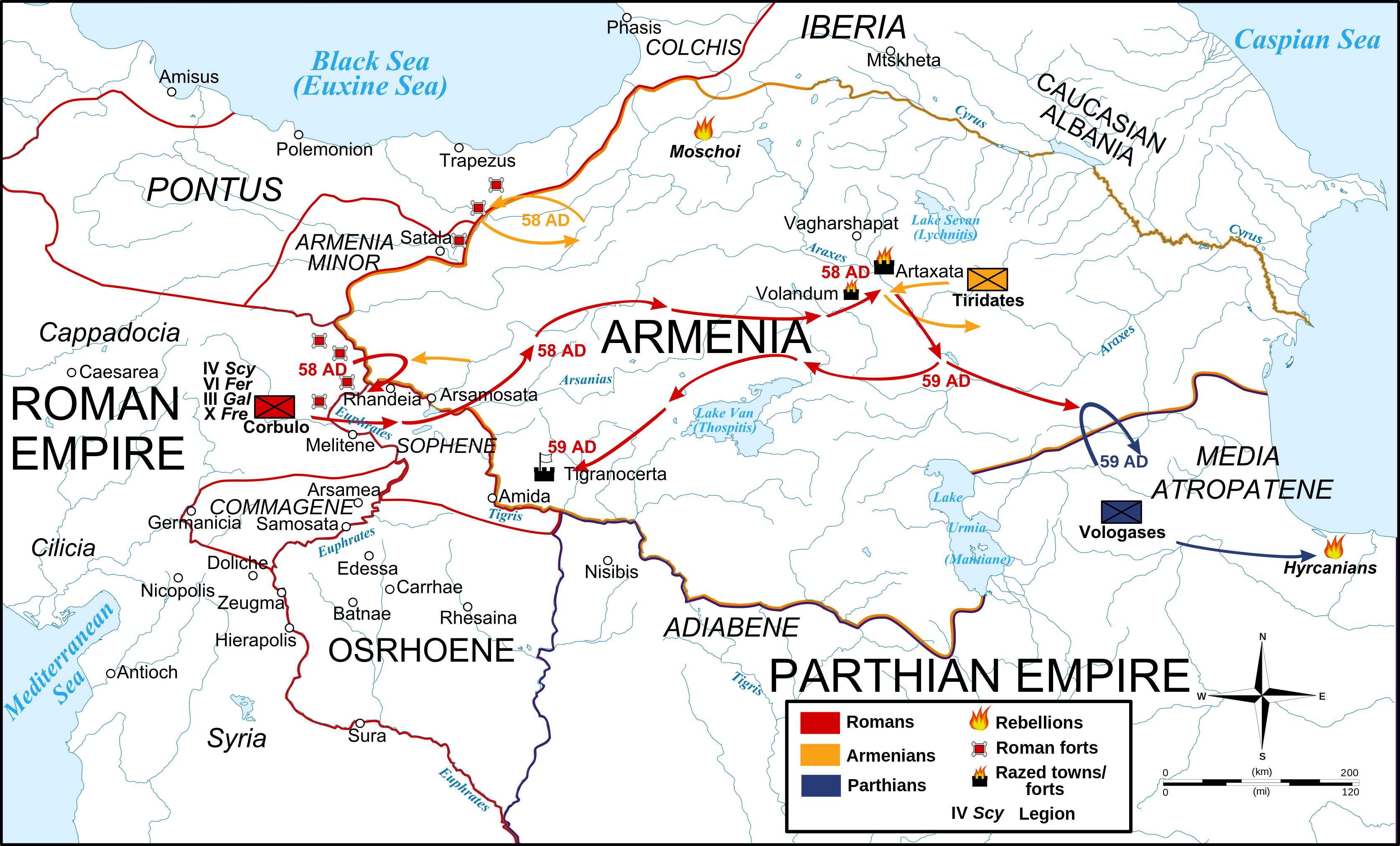
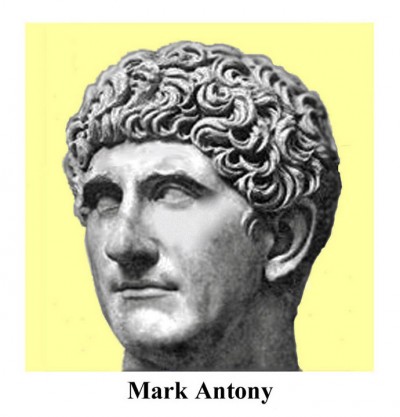
Herod intrigued with Mark Antony, who was planning a counter-offensive, and offered him a bribe, and talked up the Persian threat, so that the Roman senate appointed him king over the territory when Mark Antony took it back. Herod played the same Iran card with the Roman Senate that Binyamin Netanyahu now plays with the US Congress.
But once back in power, Herod also did diplomacy with the Iranians fearing that they might come back.
Iranian religious currents that stayed behind in Greater Syria carried a prophecy of the ancient Iranian prophet Zoroaster:
"You, my children, shall be the first honored by the manifestation of that divine person who is to appear in the world: a star shall go before you to conduct you to the place of his nativity; and when you shall find him, present to him your oblations and sacrifices; for he is indeed your lord and an everlasting king."
So Zoroaster predicted that following a star would lead his priests to a nativity scene, where they would find the world-savior, which they would have called Saoshyant.
Oh, no, Iranian religious leaders spreading their religious ideology in Syria! Alert the Republican National Committee!
The delegation of wise men from Iran appear to have met with Herod before they went off wandering around looking for the savior. Herod tried to keep good diplomatic relations with the neighboring Parthian Empire, still strong in what is now Iraq, explaining why he might have given the priests safe passage.
In any case, an Iranian invasion had deposed Herod once, and he would have been very nervous about Iranian priests spreading end-of-days talk about the rise of an everlasting king. You just have to read the Qumran scrolls to see that some Jewish sects would have been primed for this Iranian message. According to Matthew, their millenarianism got back to Herod.
He says that the magi were instructed in a dream not to go back for an audience with Herod after he had been angered by their prophecy, and so they departed directly "to their own country, by another way." I.e. they sneaked back to Iran, avoiding Herod's guards.
Herod, having heard the Zoroastrian prophecy that the Saoshyant or eternal monarch had just been born, took it literally and was afraid that on reaching adolescence an Iranian-inspired boy-king would dethrone him, just as the Parthian emperor had in 39 BC at the beginning of his career. So he announced he would kill all boy babies 2 years old or less.
Matthew says that an angel appeared to Joseph in a dream and warned him and his family to decamp.
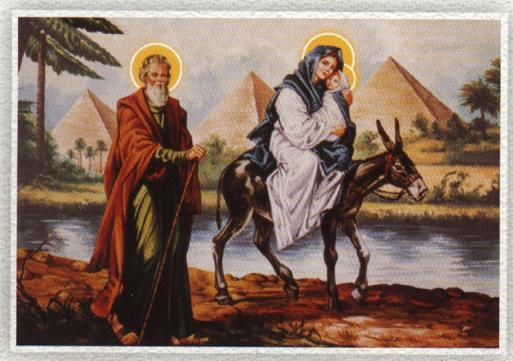
So the flight to Egypt of the holy family was the migration of Syrian refugees from a combination of religious and political persecution. A blanket killing of boy babies is what we would now call a war crime, and Jesus was directly targeted. Like little Aylan Kurdi, who washed up dead on a Turkish beach, he was forced by a violent regime out of his home, to seek refuge in another country. Unlike Aylan, baby Jesus survived the journey to Egypt.
The biggest Jewish community in Roman Egypt at that time was in Alexandria, and I have long felt that was where the holy family were likely given asylum. Jesus was probably born around 6 or 5 BC, so Egypt would have been governed by Gaius Turranius. Jews in Alexandria had been given their own quarter and originally had been made equal to Greeks by the Seleucids, but there were tensions between those two communities, and both had tensions with the native Egyptians.
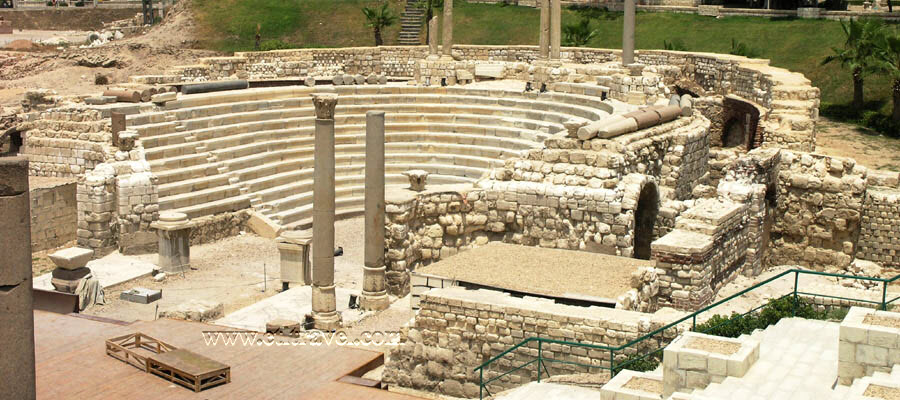
Greeks considered Jews to be "atheists" because they rejected the pantheon of gods. Just a little over thirty years before Jesus was born, the Alexandrian Jews had been demoted from being citizens of Alexandria to being just Egyptians. The best status was to be a Roman citizen (as Saul/ St. Paul was), but you couldn't become a Roman citizen without first being an Alexandrian citizen. The Romans thus abruptly took away from Jews the urban citizenship status they had had since the city was founded by Alexander the Great. In 38 BC there was a riot over these issues between the Greeks and the Jews.
(The US Congress has made Iranian-Americans, Iraqi-Americans and some other ethnicities with dual citizenship second-class citizens by insisting that these citizens of the USA get visas back to the US if they visit Iran or Iraq. Just because you think you are a citizen with full rights doesn't mean that you will remain that way. Franco took citizenship away from millions of Spanish leftists, and the Bolsheviks took citizenship away from millions of White Russians).
The holy family was probably refugees for just one or two years in Egypt. If they weren't in Alexandria, they would have been considered "Egyptians" by the Roman authorities, a low status. If they made it to Alexandria, they would have had more rights, but they likely suffered from not having the same religion as the Greek and Roman elite. The Egyptian polytheists, who still worshiped Horus and Anubis, wouldn't have appreciated foreign "atheists," either.
Joseph was a tekton (tekton), a builder or some say carpenter. If a builder he would have looked for day work, maybe working with stone. There would have been no work for a carpenter in Egypt at all. Egypt doesn't have trees suitable for woodworking, just palms. Wood has long been imported from Lebanon for the elite, which had cedars. (To this day I have seen Egyptian newlyweds given big wooden dresser drawers, an extremely expensive imported gift, meant to last a lifetime). So it is possible that the holy family was reduced to penury and living on handouts, far from the trees of the Levant that supplied wood for carpentry. They might have been hungry. As they fled through Sinai to Egypt, they would have been thirsty. If Joseph could get no work for a year or two, their clothes might have gotten threadbare or even fallen off their bodies. They may have had to beg.
In 4 BC, Herod the Great died.
Matthew says, "But when Herod died, behold, an angel of the Lord appeared in a dream to Joseph in Egypt, saying, "Rise, take the child and his mother, and go to the land of Israel, for those who sought the child's life are dead."
First, the holy family tried to go to Judah in the north, but Herod's son Archelaus was ruling there as a tyrant, so they had to flee Judah, too.
That was when the three of them went to Nazareth in the Galilee, which wasn't in the territory of Archelaus but in that of Herod Antipas. (This ruler later executed John the Baptist for denouncing his marriage to his niece as incestuous, so the holy family's hope they would be safe under him was misplaced).
So the toddler Jesus got to be a Nazarene because of having been a refugee twice, once from Herod the Great in Egypt, and once from Archelaus in Judah.
The toddler refugee would later say,
"31 "When the Son of Man comes in his glory, and all the angels with him, then he will sit on the throne of his glory. 32All the nations will be gathered before him, and he will separate people one from another as a shepherd separates the sheep from the goats, 33 and he will put the sheep at his right hand and the goats at the left. 34 Then the king will say to those at his right hand, 'Come, you that are blessed by my Father, inherit the kingdom prepared for you from the foundation of the world; 35 for I was hungry and you gave me food, I was thirsty and you gave me something to drink, I was a stranger and you welcomed me, 36 I was naked and you gave me clothing, I was sick and you took care of me, I was in prison and you visited me.' 37 Then the righteous will answer him, 'Lord, when was it that we saw you hungry and gave you food, or thirsty and gave you something to drink? 38 And when was it that we saw you a stranger and welcomed you, or naked and gave you clothing? 39 And when was it that we saw you sick or in prison and visited you?' 40 And the king will answer them, 'Truly I tell you, just as you did it to one of the least of these who are members of my family, you did it to me.' "
Maybe when they were refugees in Egypt, Mary, Joseph and baby Jesus were hungry and thirsty, or lacked proper clothing, having had to flee their homeland abruptly. Maybe Jesus grew up hearing those stories about the refugees.
There are politicians arguing that Syrian refugees should not be admitted to the United States, even though the US has taken in 750,000 refugees since 2001, and only a handful have gotten into security-related trouble.
Jeb Bush said that only Christian Syrian refugees should be let in.
These American, Christian politicians would not have admitted the holy family when they fled Herod the Great. They were Jews and that was before Christianity. So they were non-Christian Syrian refugees. Out of luck.
Here is the rest of what the Syrian refugee said in Matthew 25:
41 Then he will say to those at his left hand, 'You that are accursed, depart from me into the eternal fire prepared for the devil and his angels; 42 for I was hungry and you gave me no food, I was thirsty and you gave me nothing to drink, 43 I was a stranger and you did not welcome me, naked and you did not give me clothing, sick and in prison and you did not visit me.' 44 Then they also will answer, 'Lord, when was it that we saw you hungry or thirsty or a stranger or naked or sick or in prison, and did not take care of you?' 45 Then he will answer them, 'Truly I tell you, just as you did not do it to one of the least of these, you did not do it to me.' 46 And these will go away into eternal punishment, but the righteous into eternal life."
Maybe they should chisel it above the Capitol building.
Oxfam America Syria Donation Page.
Americans love to mock the British for choosing -- in the 21st century -- to live under a monarchy and honor the hereditary succession of a royal family. I enthusiastically participate in that derision. Few concepts are as antithetical to reason and democratic liberty as anointing families that are vested with an entitlement to wield power through dynasty and lineage.
The U.S. officially has no formal royal families, but clearly loves dynastic political power. As the U.S. becomes increasingly oligarchical -- all of its institutions, including its political ones, dominated by a tiny number of extremely rich families -- it is natural that all forms of hereditary power will flourish. There are still examples of people from backgrounds devoid of family wealth or influence attaining political power -- Barack Obama certainly qualifies -- but it's virtually impossible for them to succeed without the overwhelming support of those oligarchical circles.
Dynastic power is not a new phenomenon in the U.S., but this past week featured a particularly vivid illustration of how potent it is. The two U.S. presidents prior to President Obama -- Bill Clinton and George W. Bush -- made appearances on the campaign trail to urge Americans to elect their favorite candidate, which, in both cases, happens to be a close family member.
"There's no doubt in my mind Jeb Bush has the experience and the character to be a great president," said George W. Bush, himself the son of a former U.S. president, in South Carolina about his brother. At a rally in Tennessee, Bill Clinton pronounced his wife "the best change-maker I've ever known," and in a separate speech in Florida angrily denounced Democrats who support his wife's opponent by depicting them as the equivalent of the GOP's Tea Party.
Until Jeb Bush proved to be a remarkably inept candidate, it was long expected that the 2016 election would match the son of one former president and brother of another, against the wife of another former president. Further underscoring the dynastic dynamic was that their funding would come from the same sources, numerous powerful factions would have difficulty choosing which candidate would serve their agenda most faithfully, and, as is often true of aristocracies, the two extremely rich families have become very close friends.
Read the full article at The Intercept.
As a fan of the zombie genre, perhaps I should welcome the resurrection of George W Bush. The former president has been largely discreet and absent since his calamitous reign ended more than seven years ago: perhaps hoping that, if temporarily forgotten, we would all forget his misdeeds, and history would eventually look at his presidency more kindly. But as he takes to the stump in an effort to re-energise his brother's flagging presidential campaign, there is little doubt that Jeb Bush is a victim of the political polarisation his elder sibling helped unleash.
Not that it's as simple as to say we live in the world Dubya built. A US foreign policy that, all too often, engaged in disastrous wars and backed dictatorships and terror groups predates his reign: so does the stagnation of living standards for millions of Americans. US power - after its temporary post-Soviet boost - was already in relative decline. And faced with the ranting demagoguery of Donald Trump, a certain nostalgia for Bush's refutation of anti-Muslim bigotry is almost understandable.
But if history ever does one of those "Ah, was he really all that bad?" revisions, the answer has to be: "Yes, he was."
One reason Barack Obama hasn't always received the scrutiny he deserves - there would be justifiable howls of fury if the horror show that is the Libya war had taken place with Bush in the White House - is because of the sheer relief at Bush's departure. From the orange jumpsuits of Guantanamo Bay to the foreclosures of the subprime mortgage crisis, from piles of prisoners surrounded by sickly grinning soldiers at Abu Ghraib to the white phosphorus dropped over Fallujah, the world remains stalked by Bush's demons.
Bush proclaimed a "war on terror" in 2001 with the mission of eradicating terrorism: more than 14 years later, terrorist and fundamentalist extremist groups are more powerful than they have ever been. The incalculable reputational damage suffered by the United States because of his policies - Guantanamo has still not closed, the use of torture and the illegal invasion of Iraq - has not dissipated. He bequeathed his successor the most disastrous economic situation since the 1930s, and we still remain in the aftermath.
With US power severely weakened, and the living standards of Americans continuing to fall, no wonder there is such appetite for radical solutions: on the one hand, the optimistic vision of a socially just US offered by Bernie Sanders, on the other, the miserable, immigrant-blaming, Muslim-bashing politics of fear propagated by Trump. But the rise of both owes so much to the legacy of Bush, allowing Trump - a Republican candidate - to bash the former president with such abandon.
In some parts of Republican America Bush is remembered with affection. But few presidencies can claim such a disastrous legacy. We live with the misery he inflicted. Loyalty may be compel him to champion his brother. But if this is the beginning of an attempt to rehabilitate his pernicious reign, it must - and will - be resisted.
The loudest boos of the Republican presidential debate in South Carolina on Saturday night came as billionaire real estate mogul and media personality Donald Trump reminded the audience that President George W. Bush, in fact, did not "keep us safe" on 9/11 and that when talking about the 2003 invasion of Iraq it's important to remember that the central premise used by his administration was a lie.
"Obviously the war in Iraq was a big, fat mistake, all right?" said Trump. "George Bush made a mistake, we can make mistakes. But that one was a beauty."
The crowd didn't like that one.
But Trump continued. "They lied. They said there were weapons of mass destruction - there were none. And they knew there were none. There were no weapons of mass destruction."
And the boos got much louder. Watch:
Given that George W. Bush is his younger brother, Jeb was given a chance by the moderator to respond.
"I'm sick and tired of Barack Obama blaming my brother for all of the problems that he's had. And frankly, I could care less about the insults that Donald Trump gives to me." But, Bush continued, "I am sick and tired of him going after my family. My dad is the greatest man alive, in my mind. And while Donald Trump was building a reality TV show, my brother was building a security apparatus to keep us safe and I'm proud of what he did."
And then Trump interjected: "The World Trade Center came down during your brother's reign, remember that."
The boos from the conservative Republican crowd rose once more.
"That's not keeping us safe," Trump added.
And Bush continued, "He's had the gall to go after my mother.... My mom is the strongest woman I know--"
To which Trump said, "Maybe she should be running."
According to journalist and political commentator Glenn Greenwald, Trump's attack on Bush was remarkable:
Al-Jazeera's Mehdi Hassan, meanwhile, said the exchange was telling for those trying to understand just how factional and bizarre the contemporary Republican Party has become:
And while anti-war activists also said the Trump/Bush exchange was telling...
Executive editor at Gawker, John Cook, wondered aloud what will come of Trump's comments on the Iraq invasion, given her vote in favor of it, when they are inevitably presented to Democratic nominee Hillary Clinton:
And, of course, as columnist Jeb Lund argued at the Guardian in Sunday's edition, the whole night could be considered by any sane person as just the most bizarre political spectacle imaginable. Lund writes:
What the hell happened on Saturday night?
The umpteenth (or penultiumpteenth) Republican Debate was an ecstasy of noise in which everything was indistinguishable. We are long past you-can't-do-that-on-television. We are long past manufactured controversy. We are fully into clown slapfight.
You should be forgiven if you can remember almost nothing of this evening, or if you do but cannot make heads or tails of your own memories.
If Jack Donaghy were real, he'd brand Saturday's debate the Third Kind of Noise: the first two kinds of noise are meant to turn your brain off, and the third is uncategorizable by a rational mind.
And in the end concludes: "It's hard to tell which is sadder: that millions of people are stuck with these jerks; or that millions of people want to be. Even wrestling with the question for a few seconds makes you want to tune it all out - and, one assumes, plenty of voters already have."
The 2016 election is defying traditional political expectations. On the Democratic side the once inevitable frontrunner Hillary Clinton is fighting off a surging Bernie Sanders while Donald Trump has emerged as an unexpected and dangerous frontrunner for the Republicans. It appears that this is the year "anti-establishment" politics has become mainstream.
The 2016 election is defying traditional political expectations. On the Democratic side the once inevitable frontrunner Hillary Clinton is fighting off a surging Bernie Sanders while Donald Trump has emerged as an unexpected and dangerous frontrunner for the Republicans. It appears that this is the year "anti-establishment" politics has become mainstream. Indeed both Sanders and Trump are favorites to comfortably win the upcoming New Hampshire primary.
The media and electoral prognosticators are scrambling to make sense of this new political reality. Such fringe candidates are expected to fade, it is assumed, long before the first caucuses and primaries. Yet what is sending shockwaves through the status quo, however, goes beyond frontrunners being potentially unseated. It is that their challengers are espousing ideas--socialism and explicit xenophobia, respectively--that until recently were far outside the bounds of acceptable political debate.
It is tempting, therefore, to explain these developments as driven by a potent mixture of emotion and ideology. The dominant narrative that has emerged is that people are angry and turning to extreme beliefs. For the Right this means falling prey to Trump's anti-immigrant and anti-Muslim crusade. For the Left, it means embracing Sander's inspiring message of democratic socialism.
Based on this assumption, so-called moderates are renewing their efforts to paint these candidates and their ideas as either ideologically threatening or politically naive. Those within the Liberal establishment, in particular, have recently begun rallying around the cause of Hillary Clinton's pragmatism and reform agenda. As Paul Krugman ominously warned recently warned his readers: "Sorry, but there's nothing noble about seeing your values defeated because you preferred happy dreams to hard thinking about means and ends. Don't let idealism veer into destructive self-indulgence."
Not surprisingly, though, even mainstream politicians are being pulled in by this radical tide. Republicans are competing seemingly nightly to see who can be the most extreme Conservative - ranging from increasingly blatant Islamophobia to false claims against women health providers to the continued demonization of the LGTB community, to name only a few.
Clinton, meanwhile, has zigzagged sharply to the Left to try to tap into the energy of Sanders. She has positioned herself famously as a "progressive who likes to get things done" and been touting herself as the true change candidate. While her legislative record and evolving policy positions clearly belie this claim, she has even recently attempted to paint Sanders as more part of the political establishment than herself.
Yet these efforts miss a key element of this radical surge. It is not just or even primarily about ideology. Nor is it being fueled by unreasonable emotion. It is instead a matter of trust. Voters are increasingly mistrustful of mainstream candidates in a system that appears to be bought and sold by corporations at the expense of every day citizens.
These feelings were captured at the recent Democratic Iowa townhall forum where Hillary Clinton was asked directly by a member remarked "I don't see the same enthusiasm from younger people for you. In fact, what I have heard from quite a few people my age is that they think you are dishonest." Her answer that "I was on the frontline of change and politics since I was your age" was perhaps convincing in the moment but it only takes a quick internet search to reveal that her career is marked less by a consistent commitment to progressive causes and more to one of centrism and at times even down Conservatism.
Recent polls reinforce this public mistrust. As Professor Jerome Karabel has recently noted,
Beneath Secretary Clinton's problematic favorability ratings lies a deep reservoir of public mistrust. When prospective voters are asked whether or not she is "honest and trustworthy," their response is sobering; her rating on this dimension is a net negative 24 points, with 60 percent answering no and 36 percent answering yes. The contrast with Senator Sanders is striking in that it is precisely the opposite: anet positive of 24 percent, with 55 percent responding yes and 24 percent no.
Underpinning this distrust is a deeper issue - one that establishment candidates cannot easily escape or explain away. It is that the rhetoric of politicians matters considerably less than who is funding them. Their ideology, in this respect, is a smokescreen for the elite interests who are their real puppet masters.
For Clinton, these charges are especially damning. The public - especially the younger generation and lower income voters - has thus far remained skeptical about her claims that she will "take on" Wall Street given her close financial ties to the financial industry. Questions of whether she will release the transcript, for instance, of speeches she gave to Goldman Sachs persist and seem to be growing stronger. It would appear that for many voters, in the face of rising inequality and oligarchy - while the 1% is willing to pay top dollar to hear Clinton speak for the other 99% her talk is cheap when compared to her record.
It is exactly this reason why Sanders and Trump are so respectively popular. Sanders' is not accepting any corporate money and has a long track record of rejection corporate support in favor of fighting for progressive causes. Trump, by contrast, is almost entirely self-funding his campaign - giving him credibility (whether legitimate or not) as someone who is immune to the pull of special interests. Quoting one cable news commentator, "I think the difference here between Trump and Sanders is Trump can't be bought (he doesn't need 'em) and people love that. Bernie Sanders won't be bought. He won't be bought. He's been around for a long time, he has proven that."
This election is shaping up to be a referendum on the country's corrupt political system.
Sen. Elizabeth Warren articulated these feelings well in a recent Senate speech, declaring, "A new presidential election is upon us...Anyone who shrugs and claims that change is just too hard has crawled into bed with the billionaires who want to run this country like some private club."
The implications of this election, nonetheless, could be ideologically monumental. At stake is which political ideology can best mobilize and direct voter's anger linked to this profound feeling of democratic powerlessness. Bernie Sander's political revolution appears most poised to provide the country with a progressive alternative that more than simply expands the government would fundamentally reform it.
Present is the potential dawn of new politics where interest is as--if not more--important than stated ideology. For the average voter, a candidate's rhetoric increasingly pales in comparison to where they get their money. Only time will tell whether this will lead to a more accountable and less oligarchic democracy.
Seven contenders lined up in the main Republican debate Thursday night in Charleston, South Carolina. Donald Trump, still leading in national polls, may not have won the night, but he has surely dictated its terms.
The candidates were trumped-up, the vitriol hot, the rhetoric over the top. Occasional efforts to introduce common sense - usually by John Kasich and Jeb Bush from the far wings of the stage - were lost amid the tumult.
Obama is "gutting our military." (Bush). Hillary isn't "just a disaster. She's disqualified from being commander-in-chief" (Rubio). The president "doesn't believe in the Constitution" or in "free enterprise" (Marco Rubio). The president is a "petulant child" (Chris Christie - who is the last person who should call someone else "petulant"). And of course Trump outdid them all: our military is a "disaster"; our health care "a horror show;" "we have no borders;" illegal immigration is "beyond belief," our vets are "treated horribly." No wonder gentle Dr. Ben Carson asked "Is this America?"
With the Iowa caucuses impending, the insults were directed not just at the president and Hillary Clinton but at each other as well. Bush scorned the quibbling of "backbench senators," reiterated that Trump's comments were "unhinged." Trump once more called Bush a "weak person." Rubio dissed Christie as a liberal, Cruz as a flip-flopper. Trump doubled down on Cruz's citizenship. Cruz scorned Trump's "New York values" (gays, abortion, money, media). Trump trumped that by invoking the courage of New Yorkers in the face of 9/11.
Lost in all this was any glimmer of a program or an idea about dealing with real challenges facing the country. Like an affable grandfather in his cups at the end of a bar, Gov. Kasich kept peddling the old remedies - lower taxes, less regulation, balanced budgets, a "cool" head at the helm. But he sounded wistful, not wise. No, according to these folks, America needs more muscle, more guns, more inequality, more venom. Climate change, the way the rules are rigged for the few, the way our politics are corrupted, our criminal injustice system and more got little or no mention.
Who won? Most pundits award the prize to Rubio, but he mostly reprised old speech lines with new intensity. He struck me as the definition of callow. Carson, Bush and Kasich fade in the bombast. Christie was off his game. Trump was more active than he normally is, but I'd say Cruz had the best of the night. He is smart, slick, devious and shameless. The right mix for this cage match.
It was showtime in the Republican debate last night in Las Vegas. Hysteria was the coin of the table. Carpet-bomb ISIS. Take out Assad. Destroy Iran. Shoot down Russian planes. Launch cyberwar against China. Expand the Army, Navy, Air Force; modernize nuclear weapons on land, sea and air. Spy on everyone. Build walls, close the doors on refugees. The only thing we have to fear is insufficient fear itself.
CNN marketed hysteria to promote last night's debate. And, in the wake of Paris and San Bernardino, it isn't surprising the Republican candidates rose to the bait.
It was showtime in the Republican debate last night in Las Vegas. Hysteria was the coin of the table. Carpet-bomb ISIS. Take out Assad. Destroy Iran. Shoot down Russian planes. Launch cyberwar against China. Expand the Army, Navy, Air Force; modernize nuclear weapons on land, sea and air. Spy on everyone. Build walls, close the doors on refugees. The only thing we have to fear is insufficient fear itself.
CNN marketed hysteria to promote last night's debate. And, in the wake of Paris and San Bernardino, it isn't surprising the Republican candidates rose to the bait.
Stuff and nonsense abounded. Barack Obama and Hillary Clinton "betrayed America." (Chris Christie). America's military has been "destroyed." (Marco Rubio) Ted Cruz seems to think that "radical Islamic terrorism" would be dramatically impacted if only the president would "utter its name." Marco Rubio argues that there were "no alternative groups to be reinforced" in Syria because the "president led from behind." [Rubio is the master of uttering utter nonsense with glib authority.] Carly Fiorina argues we'd have caught the Tsarnaev brothers who attacked the Boston Marathon except we were using the "wrong algorithms." Chris Christie suggests that the U.S. Attorney in New Jersey is somehow like McArthur on the bridge. Kasich wants a "massive" invasion of Syria, while "punching Russia in the nose." Christie promises to shoot down Russian airplanes. Fiorina promises not to talk with Vladimir Putin until she rebuilds the Sixth Fleet, among many other preconditions.
Rand Paul, who remarkably was a voice of relative reason most of the night, got it right. He skewered Christie's inanity about shooting down Russian planes with "I think if you're in favor of World War III, you have your candidate."
Jeb Bush, who was the only candidate willing to take on Donald Trump directly, delivered a prepared but good line: Calling Trump the "chaos candidate," he quipped, "Donald, you're not going to be able to insult your way to the presidency. That's not going to happen."
Only that could easily apply to the whole gaggle.
The Trump Effect
Trump was better than normal at first, but faded over time as he often does. Bush challenged him directly, but the other candidates largely directed their fire at one another rather than the front-runner. Jeb's gibe that Trump gets his briefings "from the shows" hit home as Trump clearly had no clue about what the nuclear triad was when he was asked which arm (bombers, submarines or land missiles) he would "modernize" first. Preening like the teacher's favorite at the front of the class, Rubio then explained what the triad was and, characteristically, argued that all of it had to be modernized, as if the U.S. didn't already have more nuclear weapons than needed to blow up the world.
Trump is an ignorant bigot. But there is no question that he sets the tone, and his rivals scramble to catch up. He pledges to build a wall, and now all of them dutifully call for strengthening the "fence." He wants to halt admission of any non-American Muslims temporarily. And now more and more call for a "pause" or shutting off refugees from anywhere ISIS or al Qaeda operate. He promises to "bomb the shit" out of ISIS. And now they all strain to be tougher than thou. Trump leads the race to the bottom in the Republican campaign, but his rivals are intent on keeping pace.
Regime Change
In the midst of the hyperbole, a serious debate managed to break out. Rand Paul argued forcefully that the bipartisan excitement about toppling dictators - in Iraq, in Libya and now in Syria - has had calamitous results, leading to failed states, violence and chaos in which terrorist groups like ISIS can thrive. "Out of regime change you get chaos," Paul argued, "from the chaos you have seen repeatedly the rise of radical Islam." Paul was backed by Trump, and Cruz. They argue, in Trump's sensible words, "that we should do one thing at a time." Take on ISIS first, and not push to dislodge Assad. Implicitly, although none would say it, form a partnership with Russia, Syria, Iran and our Sunni and European allies to destroy ISIS, rather than fighting against both sides of a complex civil war.
Against this, Rubio, Christie, Kasich and Fiorina offered bluster. America could take on ISIS, Assad, Iran, Russia and China if only it had a president who would not "lead from behind," who believed in America. "All of our wounds can be healed," Fiorina promised, "by a tested leader who is willing to fight for the character of our nation," whatever the hell that means.
Prudence generally does not fare well against bluster and muscle flexing. But last night, the hearty viewers who survived the first hour got a dose of common sense amid the posturing. The media reviews suggest that Rubio got the best of Cruz in their exchanges. But I suspect Cruz will fare well among conservatives - and may have, alas, greater reach among independents - with his arguments about "focusing on the bad guys" both at home rather than trampling the privacy of "innocent Americans, and abroad rather than "getting distracted" by thinking we can spread democracy by dropping a few bombs.
Who Won and Who Lost
Rand Paul was forceful and clear for much of the night, but is going nowhere. Fiorina and Kasich, as Trump would say, "don't matter." Carson continues to appear lost on the stage.
Bush had a relatively strong night, willing to go after and stand up to Trump, but it is likely too late for him. Christie was the most bellicose and the most disingenuous. He might get another look in New Hampshire.
Of the leaders, Trump's ignorance was exposed once more, but then it always is and hasn't mattered. Rubio was glib as always, silver-tongued despite his five o'clock shadow and his dry mouth. But he comes off as callow and thin, confidently saying things that simply aren't true out of ignorance or dishonesty. Cruz's filibusters were irritating, and his face is a cartoonist's dream. He is almost universally hated by his colleagues, but he emerges from this debate stronger than ever.
As always, the first casualty of the debate was the truth. The fact is that America has the most powerful military in the world. Our domestic security capacities are greater than ever. Our intelligence agencies suffer from collecting too much data not too little. Our allies get a free ride. We lack not weaponry but wisdom. We suffer from the bipartisan presumption that we are the indispensable nation able to police the world. We will control the Persian Gulf, press NATO to the borders of Russia, surround China with troops and fleets, intervene constantly in far corners of the world and then be constantly surprised at the blowback.
Republicans scorn the real and present threat of catastrophic climate change, even as its cost in lives and resources soars. We have a debate on national security without even mention of the global stagnation that now threatens a return to global recession or worse. These candidates bray about spending more on a military that is the most powerful in the world while--other than Donald Trump -ignoring the reality that we aren't making the investments at home vital to our economy and society.
It remains to be seen which candidate, if any, benefits from the dustup. But we already know that the Republic fared poorly.
Fact: too many Republican candidates are clogging the political scene. Perhaps what's needed is an American Hunger Games to cut the field to size. Each candidate could enter the wilderness with one weapon and one undocumented worker and see who wins. Unlike in the fictional Hunger Games for which contestants were plucked from 13 struggling, drab districts in the dystopian country of Panem, in the GOP version, everyone already lives in the Capitol. (Okay, Marco Rubio lives just outside it but is about to enter, and Donald Trump like some gilded President Snow inhabits a universe all his own with accommodations and ego to match.)
The six candidates chosen here (based on composite polling) have remarkably similar, unoriginal, inequality-inducing, trickle-down economic recommendations for the country: reduce taxes (mostly on those who don't need it), "grow" the economy like a sprouting weed, balance the budget by cutting as yet not-delineated social programs, overthrow Obama's health-care legacy without breaking up the insurance companies, and (yawn)... well, you get the idea. If these six contenders were indeed Hunger Games tributes, their skills in the American political wilderness would run this way: Ben Carson inspires confusion; Marco Rubio conveys exaggerated humility; Ted Cruz exudes scorn; Jeb Bush can obliterate his personality at a whim; and Carly Fiorina's sternness could slice granite. This leaves Donald Trump, endowed with the ultimate skill: self-promotion. As a tribute, he claims to believe that all our problems stem from China and Mexico, as well as Muslim terrorists and refugees (more or less the same thing, of course), and at present he's leading the Games.
When it comes to economic policy, it seems as if none of them will ever make it out of the Capitol and into the actual world of American reality. Like Hillary Clinton, blessed by Wall Street's apparently undying gratitude for her 9/11 heroism, none of the Republican contestants have outlined a plan of any sort to deal with, no less break the financial stronghold of the big banks on our world or reduce disproportionate corporate power over the economy, though in a crisis Cruz would "absolutely not" bail them out again. Stumbling around in the wilderness, Carson at least offered a series of disjointed, semi-incomprehensible financial suggestions during the last Republican "debate," when asked why he wouldn't break banks up. "I don't want to go in and tear anybody down," he said. "I mean that doesn't help us, but what does help us is to stop tinkering around the edges and fix the problem."
Rubio, already in top Hunger Games form, swears that it's recent regulations (not legacy elite decisions) that did the dirty deed. "The government made [the banks] big by adding thousands and thousands of pages of regulations," he said of Dodd-Frank legislation (which doesn't actually alter Wall Street structurally in any way). In fact, in recent decades every major power grab or consolidation in American business, from banks to energy companies, resulted from bipartisan deregulation.
None of these big-money-backed candidates seem particularly concerned that another economic crisis could ever cripple the country, or have evidently even noticed that most Americans have yet to experience the present "recovery." None seem to realize that when the Federal Reserve winds down its cheap money policy and banks and companies are left to fend for themselves, more economic hell could break loose in the style of the 2007-2008 meltdown. Jeb Bush recently summed up the general 2016 Republican position on the economy in a single what-me-worry-style sentence: "We shouldn't have another financial crisis." 'Nuff said.
In the 2012 presidential election, Mitt Romney's chances dwindled after he disparaged 47% of the country as so many leeches. Today's Hunger Gamers have learned from his experience. Optics spell opportunity, so as a group they're shuffling the usual Republican-brand tax cuts for corporations and the wealthy in with selective recognition of the broader population and promises to kill all loopholes in some future utopian tax bill. None of them, of course, would consider raising the minimum wage to put more money in the pockets of workers before tax-time hits. Even old Henry Ford knew the power of wages when, early in the last century, he strengthened his car empire by doubling the then-prevailing minimum wage for his workers to $5 a day -- enough for them not only to save up and buy his Model-Ts, but also boost productivity.
The present set of Hunger Gamers could invoke Republican President Teddy Roosevelt's trust-busting ire, or President Dwight D. Eisenhower's willingness to fund vast national construction projects, or even (to reach into the distant past) President Herbert Hoover's initial attempts to pass what became, under Democrat Franklin Delano Roosevelt, the 1933 Glass-Steagall Act that separated deposit-taking from speculation at banks. But to be realistic, none of them belong to the Republican Party as it once existed. They all live in an American Panem and so feel no compunctions about promoting the idea that corporations contributing ever less to the federal till would Make America Great Again.
Now, let's send those six candidates into that wilderness, weapons in hand, one at a time, and while we're at it, examine their minor differences by checking out their campaign websites to see what kind of games we can expect in a coming Republican era of "good times."
Ben Carson
If you look through the index of Ben Carson's latest bestseller, A More Perfect Union, you won't even find the words "economy," "banks," or "Wall Street." Instead, his campaign slogan, "Heal, Inspire, Revive," could headline a yoga retreat. His position as the Republican co-frontrunner or runner-up (depending on which polls you look at) relies on his soft-spoken, non-politician persona, not his vague economic ideas that flash by in a chameleon-like fashion.
Yes, he was a brilliant neurosurgeon, but the tenacity and skills required to become a gifted medical practitioner have not translated well into presidential-style economic policies. To the extent that he has a policy at all, it's a shopworn version of the twenty-first-century Republican usuals: ratifying a balanced budget amendment to the Constitution "to restore fiscal responsibility," introducing a flat tax, not raising the minimum wage, yada, yada, yada. In a Washington Post op-ed last year, he recounted his mother's days as a "domestic in the homes of wealthy people who were generous to her" and would slip young Carson and his brother "significant monetary incentives" in return for good grades. One even loaned him a luxury convertible. With such employers -- and the incredibly rich are a well-known generous bunch, at least when it comes to supporting Republican presidential candidates (just 158 families have contributed more than half the money to this election so far, mostly to Republicans) -- who needs a government-declared minimum wage?
Regarding taxes, Carson considers the 74,000-page tax code "an abomination." And who would argue otherwise? But like his various opponents, he's not about to point out that it was largely crafted by the representatives of mega-corporations, not Wal-Mart workers at meet-ups with senators. He's for a flat tax of 10% with no exemptions for the poor, based on biblical economics 101. Maybe people who don't produce bumper crops should just pray for a better lot.
He would conveniently cut the official corporate tax rate from 35% (the average effective tax rate is 27.9% but the biggest, brightest companies don't even approach that amount) to between 15% and 20%, the definition of corporate manna from heaven. He would also allow companies to bring their foreign profits back to the U.S. completely tax-free if they would even... pretty, pretty please... consider allocating 10% of them to "finance enterprise zones" in major cities. And so it goes in Carsonland.
Best bet on his campaign website:A $25 bumper sticker that says #IAMACHRISTIAN, proof that he's eager to channel his inner evangelical Katniss.
Donald Trump
Trump actually brought up President Dwight Eisenhower recently, but only for Operation Wetback, his grim Mexican immigrant deportation program. No I-like-Ike mention was made of his funding of the interstate highway system or the way he strengthened banking regulations.
The Donald lists five core positions on his site, including the two economic pillars of his campaign: "U.S.-China trade reform" and "tax reform," both of which would, of course, "make America great again." This may already sound a bit repetitively familiar to you, but he wants to reduce the corporate tax rate to 15% because it "would be 10 percentage points below China's and 20 points below our current burdensome rate that pushes companies and jobs offshore." Given that our biggest companies already pay far less than that "burdensome" rate, can there be any question that lowering it further would produce more generous CEOs and slay dreaded China at the same time?
Like President Snow, Trump would start aggressively and only get more so, economically speaking. He would "attack" the national debt and deficit by eliminating government waste, fraud, and abuse, and "grow" the economy xenophobically by doing in local Mexicans and distant Chinese, and all of this cutting and slashing would, like a Chia Pet, make the economy sprout even as tax revenues were savaged. Or, even if it isn't one of his five core positions, he could pull a genuine Snow and get rid of old-fashioned-style government, leaving Americans officially beholden to an oligarch.
In another piece of (black) magic, his campaign website assures readers that cutting the deficit and reducing our debt would also stop China from "blackmail[ing] us with our own Treasury bonds." No matter that China actually lent us money to run our government and bolster our financial system, and that a thank-you note might be in order (on paper made in China, of course).
When it comes to tax reform, Trump's "populist" program would remove 75 million households from the income tax rolls and provide them, so he claims, with a simple one-page form to send the IRS, saying "I win." Though he would cut the current seven tax brackets to four -- 0%, 10%, 20%, and 25% -- it's his 15% corporate tax rate that trumps the field. Rubio would only chop it to 25%, Bush to 20%, Cruz to 16%, and Carson... who knows? Various estimates suggest that Trump's plan would lead to a staggering federal revenue loss (so lucky for us that, in a Trump presidency, the rich would undoubtedly be so grateful that their generosity would soar beyond imagining). The nonpartisan Citizens for Tax Justice computed the cost of his plan at $12 trillion over 10 years. So don't expect any Eisenhower-esque national building campaigns (other than that "beautiful" wall on the Mexican border).
Best gimmick on his campaign website: A $15 Trump dog sweater modeled by the saddest damn wiener dog ever. Perhaps its mother was a deported Chihuahua.
Marco Rubio
Rubio's slogan "a new American century" couldn't be grander, perhaps to compensate for the lackluster version of economic policy at his campaign website. It's certainly not the sort of thing you'd expect from someone aspiring to be president of the world's largest economy. Despite that, rest assured that he's had economics and success on his mind 24/7. After all, Goldman Sachs is now his top contributor and his super PACs are on a run, too, including the rap-inspired "Baby Got Pac" just launched by multimillionaire John Jordan.
And in true Hunger Games fashion -- when the "odds" head in a tribute's favor, the patrons and gifts begin rolling in -- Rubio just bagged Republican mega-donor billionaire Frank VanderSloot. Mitt Romney's former national finance co-chairman, VanderSloot joins a growing roster of Rubio billionaires, including hedge-fund moguls Paul Singer and Cliff Asness.
"Marco Rubio is the brightest and most capable candidate," wrote VanderSloot of his new political buddy. Of the others he and his brain trust considered, he added, "Jeb simply does not have the leadership skills necessary to unite the people behind him"; Carson lacks "the international knowledge or skill set"; Cruz and Trump are "simply not electable in a general election" (no billionaire-envy there); and Fiorina, his second choice, "simply isn't resonating with the voters."
Rubio's tax plan, the "cornerstone" of his economic policy, would -- you won't be surprised to learn -- reduce the number of tax brackets from seven to three and eliminate taxes in ways particularly beneficial to the billionaire (especially hedge-fund billionaire) class, including the estate tax and taxes on capital gains and dividends. For the broad population, Rubio includes family tax cuts. According to an analysis by the Tax Policy Center, his plan would be a bargain compared to Trump's, costing federal government coffers a mere $2.4 trillion or more in receipts over the next decade. As a byproduct, his program is essentially guaranteed to spark a new round of financial speculation, but don't for a second let the 2007-2008 meltdown cross your mind since, as every Republican knows, with a Marco Rubio, Donald Trump, or Ben Carson in the Oval Office that can't happen.
Best gimmick on his campaign website: You can "fall into campaign season" by ordering a "Marco Polo" made-in-the-USA shirt for $48 in patriotic red, white, or blue naturally! For a mere $500 extra, you can personally have the honor of buying Rubio a "plane ticket" (perhaps to meet and greet his next billionaire).
Ted Cruz
The Cruz campaign website offers a hodge-podge of semi-incoherent economic salesmanship. His tax plan, or what he likes to call (without the slightest justification) the "next American revolution," promises to "reignite growth in our economy." His "simple flat tax" (yep, another of those!) would abolish the Internal Revenue Service as well. Personal income tax brackets would go from seven to... count 'em!... one at a 10% rate across the board and the corporate income tax would be replaced by a flat tax of 16%. And it should be taken for granted that the American economy would soar into the stratosphere!
Cruz's tax code would be so "simple with a capital-S" that it would make Donald Trump's look complicated. A postcard or phone app would suffice for individual and family filings. There would be no tax on profits earned abroad and it almost goes without saying that Obamacare taxes would die a strangulated death. Loopholes for businesses would apparently go, too.
Cruz claims his simple flat tax will elevate the gross domestic product, increase wages by 12.2%, create nearly five million new jobs, and undoubtedly fill the world with unicorns. It would also wipe out between $768 billion and $3.6 trillion in federal tax receipts over 10 years.
Best gimmick on his campaign website: For $55 you can get a bad-boy poster of Cruz sporting a Sons of Anarchy look (tattoos, cigarette in mouth, etc.) captioned "Blacklisted and Loving It."
Jeb Bush
Jeb! has by far the sleekest web page. He and his donor entourage took the "presidential concept" seriously with a look that seems to have been stolen directly from "the Capitol" in the Hunger Games.
Its economic section excoriates the tax code for being "rigged with multiple carve-outs for favored industries." He blasts Obama's economic policies for leading to "low growth, crony capitalism, and easy debt." Yet, under Jeb's governorship, Florida's debt escalated from $15 billion to more than $23 billion. After his term, the housing-bubble that had inflated the state's coffers burst big time, and Florida's economy under-performed much of the country during the financial crisis. While homeowners statewide went underwater, he landed a multi-million dollar consultancy gig with... gulp!... Lehman Brothers.
By now, you won't be shocked to learn that Bush's plan would cut tax brackets from seven to three: 28%, 25% and 10%, and that he would cut the corporate tax rate from 35% to 20%, five points below China's. (These days, if you're a Republican, you've got to stick it to China.)
While Jeb would not rein in Wall Street (for all the obvious and already well-documented reasons), right now it looks as if he's not going to have a chance to not rein in anything. While his PR team maintains "Jeb can fix it," invigorating his wilting campaign will require more than a bow and arrow and a mockingbird.
Best gimmick on his campaign web page: "The Guaca Bowle" for $75 because who doesn't need one? (Bush family guac recipe not included.)
Carly Fiorina
Fiorina's web page doesn't offer a lot of economic anything. It's more like a personality infomercial. For her official positions, you need to watch video clips of her TV appearances from CBS This Morning to late night talk shows and -- if you're starting to get bored -- just imagine Stanley Tucci as Hunger Games host of festivities Caesar Flickerman narrating.
Fiorina calls for "zero-based budgeting" because "zero" sounds so much cleverer than "balanced" and touts ad nauseam a three-page tax plan (perhaps the current one in a microscopic font, since we don't actually know the details). The repetition of simple concepts to the masses seems to be her modus operandi.
Best gimmick on the Carly for America Super PAC website: For only $26 you can get a "Hillary Who?" infant one-piece, the perfect gift for any Republican baby.
How Corporations Really Pay Taxes
Despite the prominence of tax cuts in the policies of the top six Republican candidates, even the venerable Brookings Institution found that they have a minimal effect on economic growth. In addition, when you consider all the promised corporate cuts, you should know that corporations already don't contribute much.
According to Citizens for Tax Justice, between 2008 and 2012, 26 of the 288 Fortune 500 firms (consistently profitable in those years) managed to pay nothing, nada, zero in federal income tax. The 288 firms collectively paid an effective federal income tax rate of 19.4%, and a third of them paid an effective rate of less than 10%. Five companies -- Wells Fargo, AT&T, IBM, General Electric, and Verizon -- also bagged over $77 billion of the $364 billion in tax breaks doled out in those years. Extra jobs didn't follow. Think of this crew as the real winners of the American Hunger Games in this period.
For 2014, for instance, Goldman Sachs avoided forking over federal income taxes on almost half of its $6.8 billion in U.S. profits, paying an effective tax rate of 18.6%. Between 2010 and 2012, due to tax breaks associated with executive pay, Fortune 500 companies saved an extra $27 billion in federal and state taxes. That's a lot of dosh to use for Super PAC support.
In 2012, the Democrats blasted candidate Mitt Romney's tax plan as a giveaway to the rich. This time around, our six tributes-cum-candidates are taking no such chances. They're making sure to throw crumbs to the middle and working classes, even as they offer more caviar to the wealthy and corporations. Depending on the candidate and plan, the overall loss of national revenue will range from an estimated $1.6 trillion (even factoring in growth that may never happen) to $12 trillion, but will be a stunning amount.
Perhaps with such a field of candidates, the classic Hunger Games line will need to be adapted: "Let the games begin and may the oddity of it all be ever in your favor." Certainly, there has never been a stranger or more unsettling Republican campaign for the presidential nomination or one more filled with economic balderdash and showmanship. Of course, at some point in 2016, we'll be at that moment when President Snow says to Katniss Everdeen, "Make no mistake, the game is coming to its end." One of these candidates or a rival Democrat will actually enter the Oval Office and when that happens, both parties will be left with guilt on their hands and all the promises that will have to be fulfilled to repay their super-rich supporters (Bernie aside). And that, of course, is when the real Hunger Games are likely to begin for most Americans. Those of us in the outer districts can but hope for revolution.
In a new McClatchy-Marist poll, Democratic presidential candidate Sen. Bernie Sanders (I-Vt.) leads Republican candidate Donald Trump by a landslide margin of 12 percentage points, 53 to 41. In the McClatchy poll, Sanders also leads former Florida Gov. Jeb Bush (R) by a landslide margin of 10 points, 51 to 41.
The huge Sanders advantage over Trump is not new. In the last four match-up polls between them reported by Real Clear Politics, Sanders defeated Trump by margins of 12, 9, 9 and 2 percentage points.
The huge Sanders advantage over Bush is new. In previous match-ups, the polling showed Sanders and Bush running virtually even, with Bush holding a 1-point lead over Sanders in most of the polls. Future polls will be needed to test whether the huge Sanders lead over Bush in the McClatchy poll will be repeated in future polling or whether the McClatchy poll is an outlier.
It is shocking that the data suggests that Sanders has a lead over Trump that could be so huge that he would win a landslide victory in the presidential campaign, with margins that would almost certainly lead Democrats to regain control of the Senate and could help Democrats regain control of the House of Representative -- if, of course, the three polls that show Sanders beating Trump by 9 to 12 points reflect final voting in the presidential election.
It would be equally shocking if future polling shows that the Sanders lead over Bush remains at landslide margins.
For today, there are two issues these polls present. First, the national reporting of the presidential campaign completely fails to reflect Sanders's strength in a general election, especially against Trump, and against Bush as well.
Second, and perhaps more important, Sanders's strength in general election polling gives credence to the argument I have been making in recent years, that American voters favor progressive populist positions which, if taken by Democrats in the general election, would lead to a progressive populist Democratic president and far greater Democratic strength in Congress.
It is a fallacy argued by conservatives and, in my view, inaccurately parroted by the mainstream media, that Sanders and other liberals take positions that are far too "left." The polling shows, issue by issue, and increasingly in general election match-ups of Republicans running against Sanders, that it is the left, not the right, which has the upper hand with American voters.