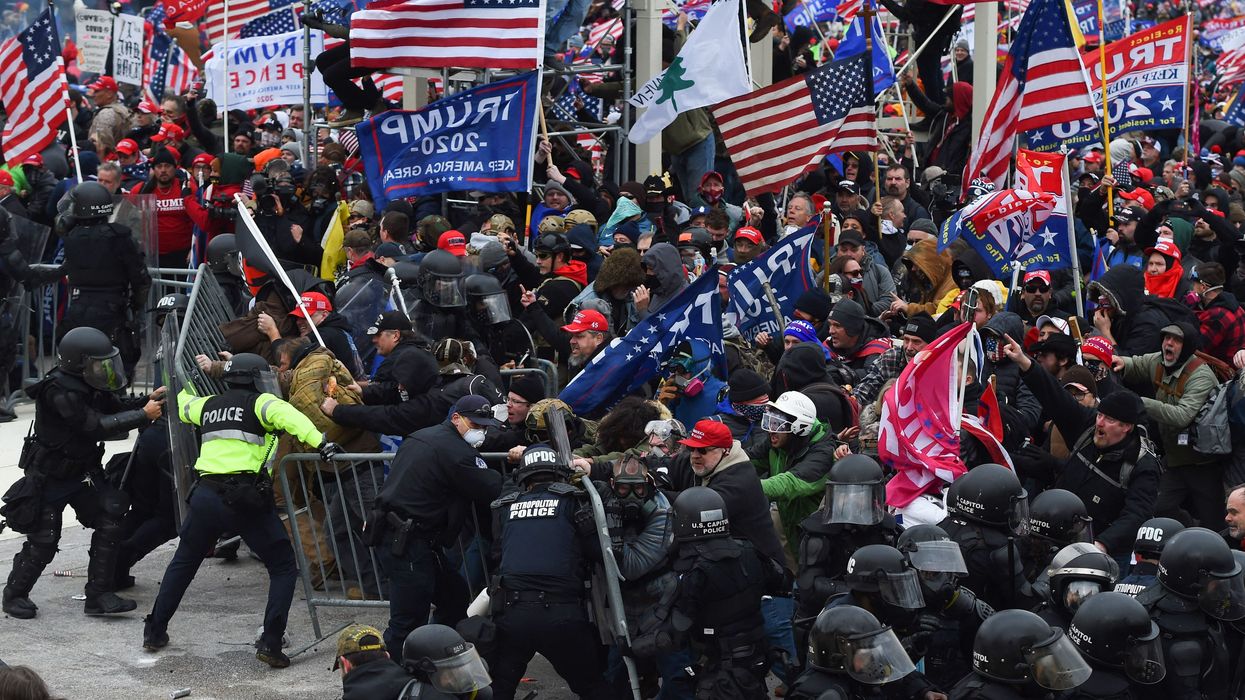
"Firing the FBI agents who investigated violent attacks against police officers on January 6 would set a dangerous precedent and make all of us less safe," Stand Up America executive director Christina Harvey said in a statement. "This is a shameless act of political retribution that weakens federal law enforcement and the rule of law."
"This is a massacre meant to chill our efforts to fight crime without fear or favor."
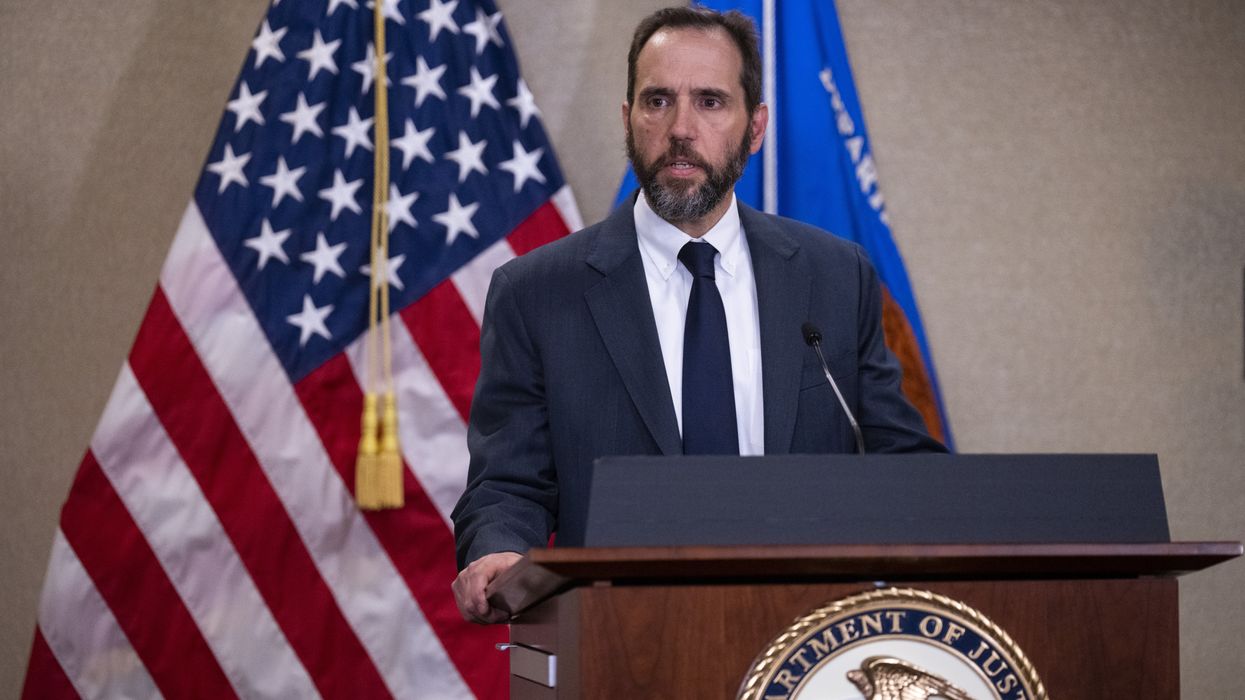
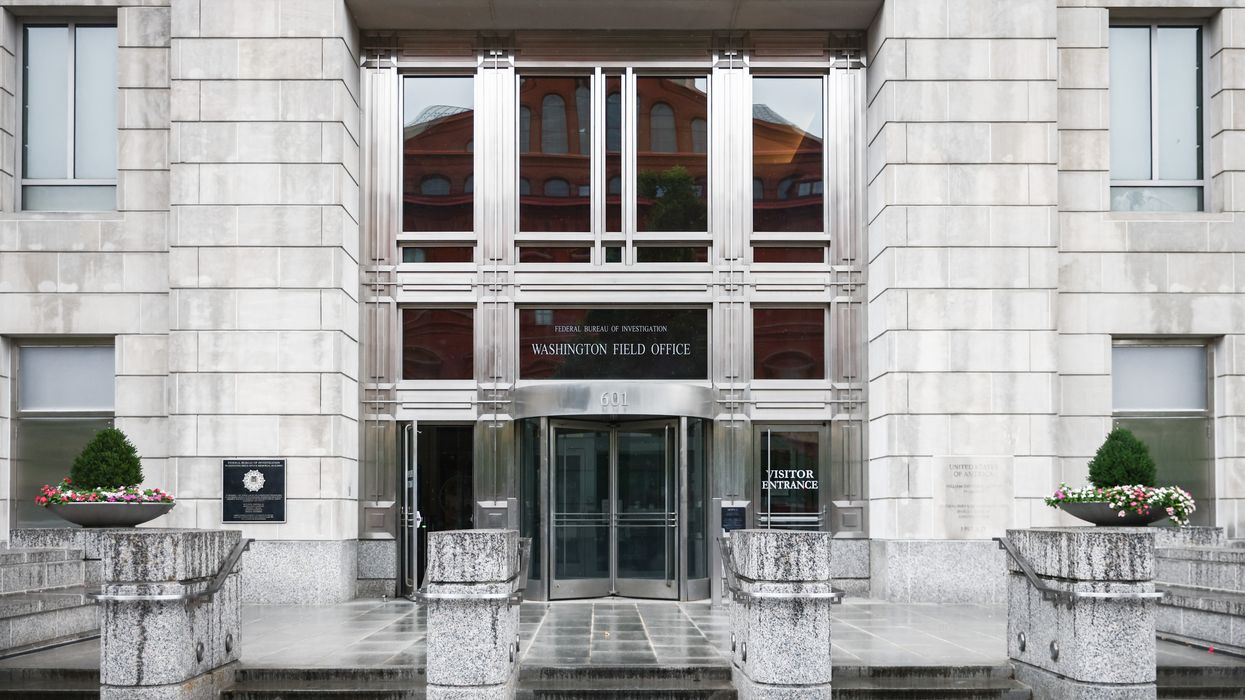
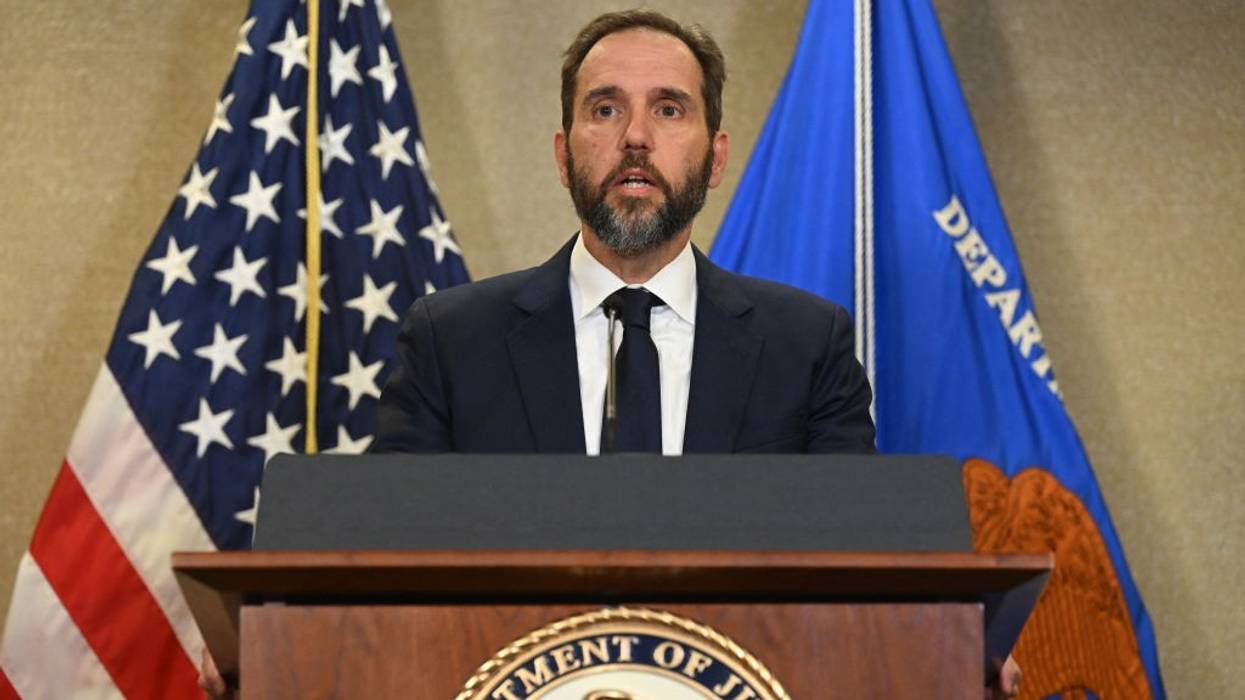
The FBI higher-ups forced out included the agency's six most senior executives as well as more than 20 directors of field offices including Washington, D.C., Miami, Los Angeles, Philadelphia, New Orleans, Seattle, and Las Vegas. The targeted officials had been promoted by former FBI Director Christopher Wray, according to The New York Times. The Washington, D.C. field office worked extensively on Special Counsel Jack Smith's investigations into Trump's mishandling of classified documents and involvement in the January 6 insurrection, as well as the investigations of the rioters themselves, NBC News reported. One source told The Hill that agents who had worked on the cases were physically escorted out of the D.C. field office on Friday.
NBC reported that several of the senior officials had chosen to retire, even though they could have challenged their dismissals as nonpolitical appointees subject to civil service regulations.
Many of the agents received the ultimatum the same day that U.S. President Donald Trump's nominee to head the FBI, Kash Patel, promised in his Senate confirmation hearing that he would not retaliate against any agents who worked on the Trump cases and was not aware of any attempts to do so.
"All FBI employees will be protected against political retribution," Patel told the Senate.
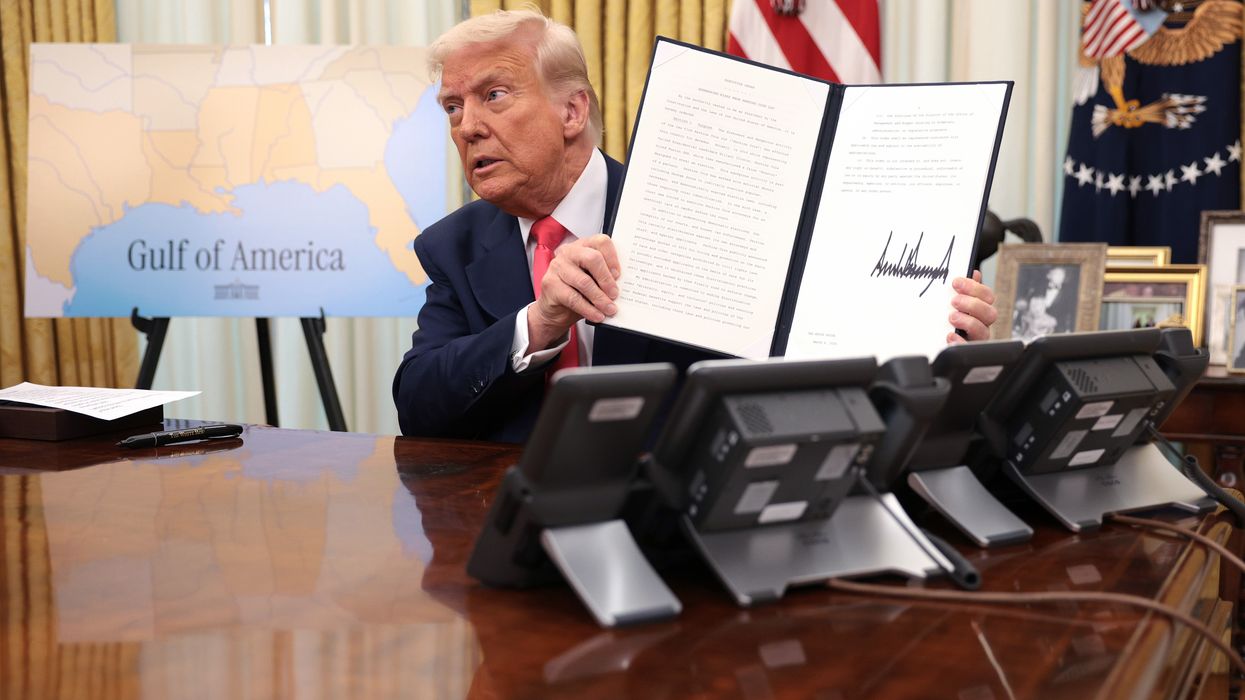
Trump, meanwhile, said on Friday that he was not aware of the firings, but added, "If they fired some people over there, that's a good thing, because they were very bad. They were very corrupt people, very corrupt, and they hurt our country very badly with the weaponization."
Another memo sent by Bove to acting FBI Director Brian J. Driscoll Jr. laid the groundwork for more firings, as Driscoll was asked to submit a list of all agents and employees "assigned at any time to investigations and/or prosecutions" related to January 6, as The New York Times reported. Field offices received a similar request from the FBI's counterterrorism division. Bove also asked for a list of agents who worked on a case against Hamas leadership, though it is not clear why.
One employee told CNN that the January 6 case was the largest case the bureau had ever worked on, observing that "everyone touched that case."
In an email to staff on Friday reported by NBC, Driscoll noted, "We understand that this request encompasses thousands of employees across the country who have supported these investigative efforts," adding, "I am one of those employees."
"This is a massacre meant to chill our efforts to fight crime without fear or favor," another anonymous agent told CNN. "Even for those not fired, it sends the message that the bureau is no longer independent."
The FBI Agents Association, which represents over 14,000 active and former agents, issued a scathing statement on Friday.
"If true, these outrageous actions by acting officials are fundamentally at odds with the law enforcement objectives outlined by President Trump and his support for FBI Agents," the association said. "Dismissing potentially hundreds of agents would severely weaken the bureau's ability to protect the country from national security and criminal threats and will ultimately risk setting up the bureau and its new leadership for failure. These actions also contradict the commitments that Attorney General-nominee Pam Bondi and Director-nominee Kash Patel made during their nomination hearings before the United States Senate."
The group added that Patel had promised association members in a meeting that "agents would be afforded appropriate process and review and not face retribution based solely on the cases to which they were assigned."
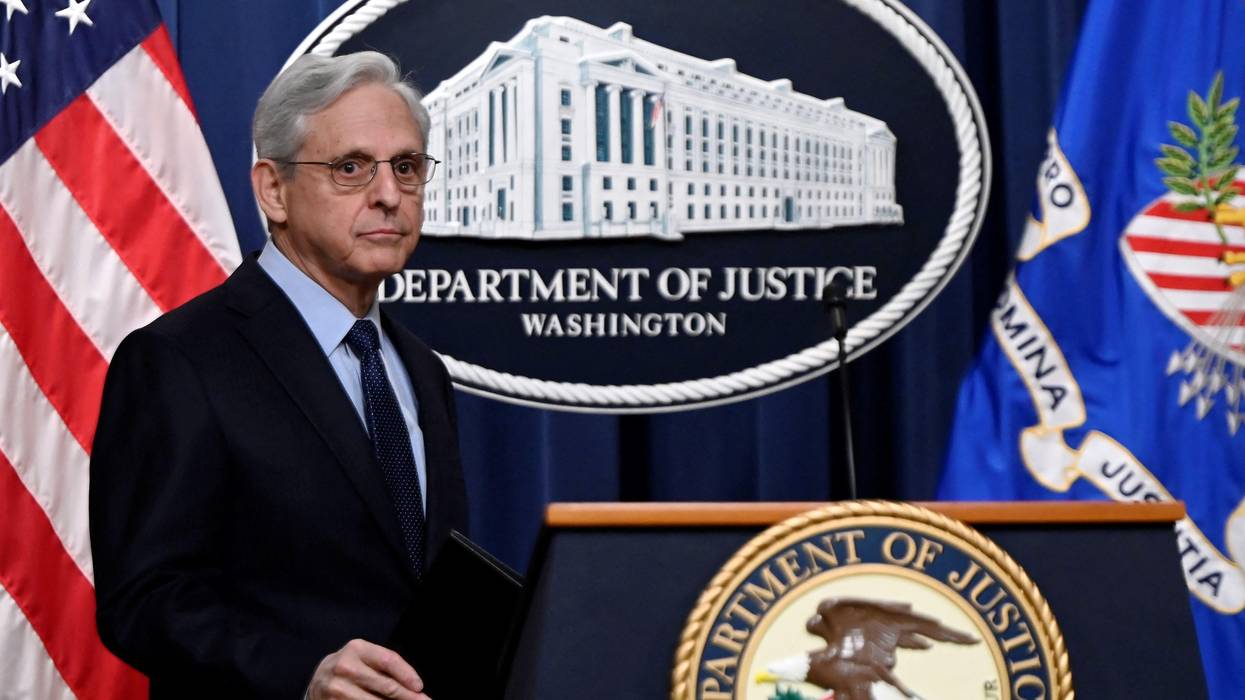
Finally on Friday, DOJ prosecutors received an email from Interim U.S. Attorney Ed Martin, telling them they were being fired and including a memo from Bove. The fired prosecutors had been hired to work on the January 6 cases and were made permanent by the Biden administration following the November election. In his memo, Bove suggested the prosecutors had been made permanent in an inappropriate attempt to protect them from being fired.
"I will not tolerate subversive personnel actions by the previous administration at any U.S. Attorney's Office," Bove wrote, as POLITICO reported. "Too much is at stake. In light of the foregoing, the appropriate course is to terminate these employees."
One of the impacted prosecutors told POLITICO that 25 to 30 people were let go.
"This attack on the Justice Department and particularly on the FBI is the beginning of America's first true era of dictatorship."
The latest round of DOJ firings comes days after the Trump administration already fired a dozen lawyers who had helped bring Smith's two cases against Trump. They also come a week after Trump's firing of 12 inspectors general. Trump also pardoned all approximately 1,500 people involved in the January 6 insurrection on his first day in office.
News of the FBI and DOJ firings sparked ire from Democratic lawmakers.
"Trump's outrageous attack on the DOJ and FBI is a clear and present danger to public safety, and a wrecking ball swinging at the rule of law," said Rep. Jamie Raskin (D-Md.), ranking member of the House Committee on the Judiciary, in a statement. "Trump wants to send the message to the police and federal officers that the law doesn't apply to Trump and his enablers. It's also part of his campaign to replace nonpartisan career civil servants with political loyalists and incompetent sycophants. Trump's moves have already left the Justice Department and the FBI rudderless and adrift by ousting their career senior ranks. Now, these unprecedented purges of hundreds of prosecutors, staff, and experienced law enforcement agents will undermine the government's power to protect our country against national security, cyber, and criminal threats."
"The loyal friend of autocrats, kleptocrats, oligarchs, and broligarchs, Trump doesn't care about the requirements of democracy, national security, and public safety," Raskin continued. "His agenda is vengeance and retribution. If allowed to proceed, Trump's purge of our federal law enforcement workforce will expose America to authoritarianism and dictatorship."
Sen. Dick Durbin, (D-Ill.), who serves on the Judiciary Committee, called the firings "a major blow to the FBI and Justice Department's integrity and effectiveness."
"This is a brazen assault on the rule of law that also severely undermines our national security and public safety," Durbin continued. "Unelected Trump lackeys are carrying out widespread political retribution against our nation's career law enforcement officials. President Trump would rather have the FBI and DOJ full of blind admirers and loyalists than experienced law enforcement officers."
Rep. Jim Himes (D-Conn.) also decried the firings and cast doubt on the integrity of Bondi and Patel, whom Trump had tapped to lead the DOJ and FBI respectively.
"Pam Bondi and Kash Patel both committed to protecting the Department of Justice and the FBI from politics and weaponization. If these reports are true, it's clear they misled the Senate," Himes said. "As ranking member of the House Intelligence Committee, I have repeatedly asked the FBI for more information about these reports and will insist on answers."
Fellow Connecticut Democrat Rep. Rosa DeLauro wrote on social media: "Priority #1 for the Trump administration: Protect the lawless and purge those who uphold the law. The firing of FBI agents and federal prosecutors without cause is an assault on the rule of law and law enforcement. It leaves Americans vulnerable and less safe. We will push back."
As Democrats promised action, Harvey of Stand Up America also called on Republican lawmakers to respond.
"This is not about public safety—it's about revenge and control," Harvey said. "Removing experienced law enforcement professionals and replacing them with political loyalists puts all of our safety at risk. If there are any Republican senators left who care about protecting the rule of law and public safety, they should oppose this dangerous purge and reject Kash Patel's nomination as FBI Director."
Progressive political commenter Thom Hartmann urged U.S. citizens to call their representatives.
"Let's just call these mass firings at Justice and the FBI what they are. Donald Trump is a lawless man who is ripping apart the FBI to turn it into a banana republic-style group of enforcing thugs who will only do his will," Hartmann wrote on his Substack Saturday morning. "They will spare his friends and persecute his enemies. We've seen this over and over during the past century in countries all over the world; it's nothing new. It's just that we never expected to see it here in America."
"[Russian President Vladimir] Putin dreamed for most of his life of destroying America; he now has a friend who is doing it for him. This attack on the Justice Department and particularly on the FBI is the beginning of America's first true era of dictatorship. The only question now is how long and how far Democratic and Republican politicians and career government employees will tolerate this, and, when their resistance comes, whether it will be too late. The phone number for Congress is 202-224-3121."