
SUBSCRIBE TO OUR FREE NEWSLETTER
Daily news & progressive opinion—funded by the people, not the corporations—delivered straight to your inbox.
5
#000000
#FFFFFF
To donate by check, phone, or other method, see our More Ways to Give page.


Daily news & progressive opinion—funded by the people, not the corporations—delivered straight to your inbox.
Members of Congress should boycott Netanyahu’s address, and the public should join the protests being organized during his visit.
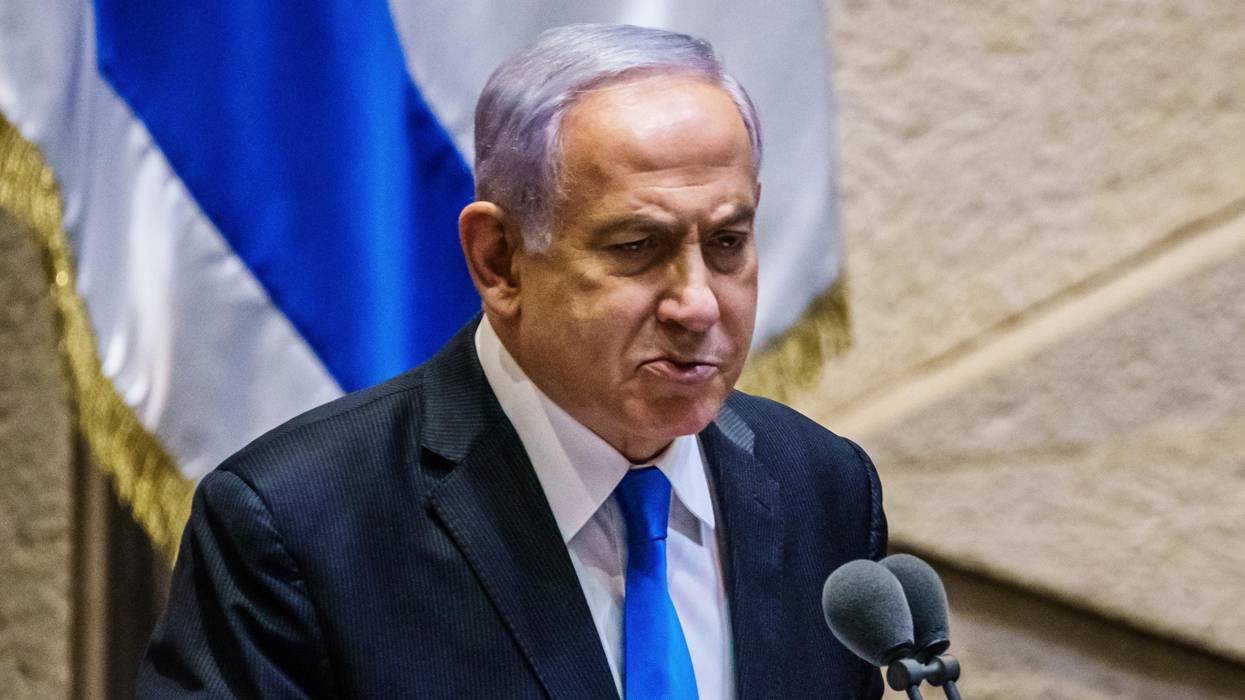
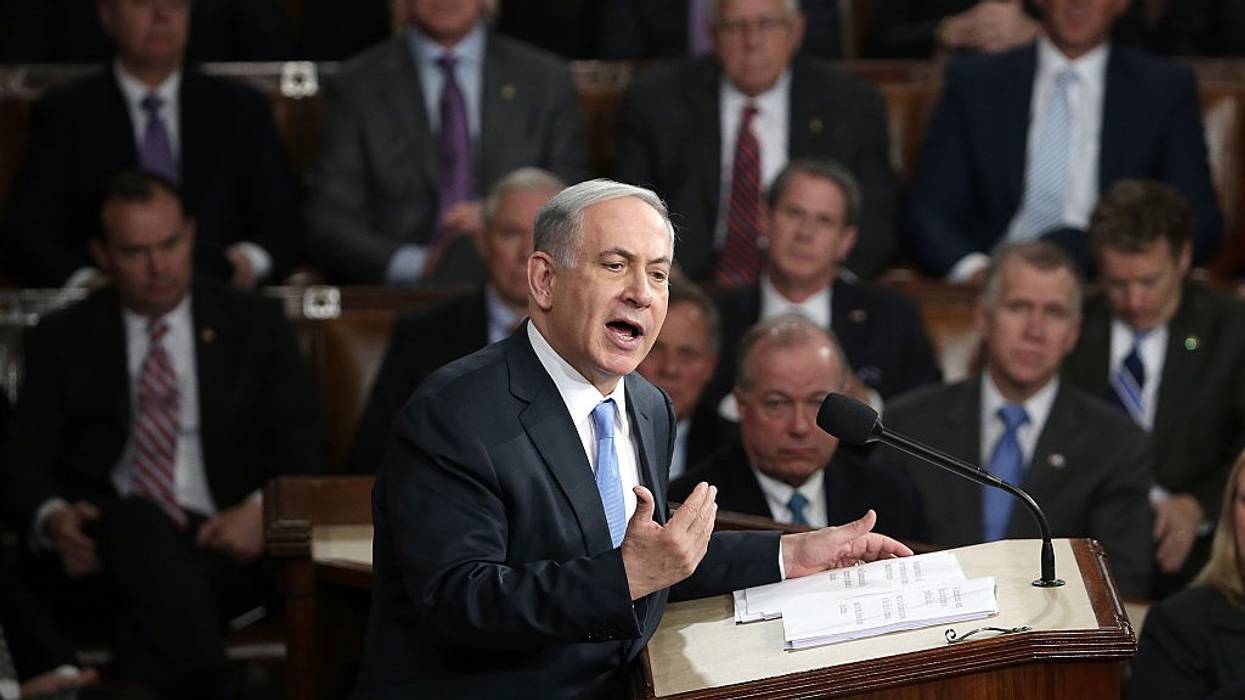
On Wednesday, July 24, Israeli Prime Minister Benjamin Netanyahu is set to deliver his record-setting fourth address to a Joint Session of Congress. Here are 10 compelling reasons why he should not have been invited and why members of Congress should boycott his visit:
For these reasons, members of Congress should boycott Netanyahu’s address and the public should join the protests being organized during his visit.
The invitation has outraged many Israelis—majorities of whom despise Netanyahu, who is under indictment by Israeli prosecutors for corruption.
Unless the GOP in Congress has a last-minute rethinking, Prime Minister Benjamin Netanyahu of Israel will enjoy his record-setting fourth address to a Joint Session of Congress on July 24, 2024. Scores of Democrats are boycotting the event. Meanwhile, in Gaza, Netanyahu is committing mass murders and war crimes and killing hundreds of thousands of Palestinian civilians, most of them children and women, blowing up their crucial life-saving facilities, and wounding the survivors rendered homeless and defenseless against Biden-provided deadly weapons.
Netanyahu’s first address to Congress was on July 10, 1996, when a younger Netanyahu promised to end U.S. aid to a prosperous Israel and received a standing ovation. He obviously has broken this promise, as his U.S. lobbies have demanded tens of billions of more U.S. taxpayer dollars.
Netanyahu’s third address to Congress on March 3, 2015 bypassed then-President Barack Obama in an arrogant breach of protocol. The supine Congress gave him many standing ovations.
The push for Netanyahu’s forthcoming address was spearheaded by the fanatic GOP House Speaker Michael Johnson (R-La.) who easily politically intimidated House Democratic leader Hakeem Jeffries (D-N.Y.) and Senate Democratic Majority Leader Chuck Schumer (D-N.Y.) into going along.
Johnson’s invitation has outraged many Israelis—majorities of whom despise Netanyahu, who is under indictment by Israeli prosecutors for corruption and because of his attacks on the judiciary and destruction of their protest rights.
Former House Speaker Nancy Pelosi (D-Calif.) told CNN regarding the invitation to Netanyahu, “I think this is wrong.” Hundreds of House and Senate staffers are signing petitions urging Democratic lawmakers to protest or boycott it. The staffers pointed to “bombings of schools, hospitals, and mosques” and a “campaign of mass starvation against Palestinian children” in addition to censoring media coverage of the devastation.
Noting that world opinion is overwhelmingly against Netanyahu’s genocidal war on Gaza, the staffers’ letter emphasized that “Israelis have been protesting in the streets for months, decrying his failure to negotiate a cease-fire and release of hostages.”
An outstanding affirmation of these sentiments by congressional staff came on June 26, 2024 in an op-ed in The New York Times by six very prominent Israelis, including a former prime minister, titled “We Are Israelis Calling on Congress to Disinvite Netanyahu.” It is pertinent to present an excerpt from this urgent dispatch, as follows:
WE ARE ISRAELIS CALLING ON CONGRESS TO DISINVITE NETANYAHU
By David Harel, Tamir Pardo, Talia Sasson, Ehud Barak, Aaron Ciechanover, and David Grossman
The leaders of the U.S. Congress have invited Prime Minister Benjamin Netanyahu of Israel to address a joint meeting of the Senate and the House of Representatives on July 24. Normally, we Israelis would consider the invitation recognition of our two nations’ shared values and a welcome gesture from our closest friend and ally, to whom we are deeply and morally indebted.
But Congress has made a terrible mistake. Mr. Netanyahu’s appearance in Washington will not represent the State of Israel and its citizens, and it will reward his scandalous and destructive conduct toward our country.
We come from a variety of areas of Israeli society: science, technology, politics, defense, law, and culture. We are thus in a good position to assess the overall effect of Mr. Netanyahu’s government, and like many, we believe that he is driving Israel downhill at an alarming speed, to the extent that we may eventually lose the country we love.
To date, Mr. Netanyahu has failed to come up with a plan to end the war in Gaza and has been unable to gain the freedom of scores of hostages. At the very least, an invitation to address Congress should have been contingent upon resolving these two issues and, in addition, calling for new elections in Israel.
Inviting Mr. Netanyahu will reward his contempt for U.S. efforts to establish a peace plan, allow more aid to the beleaguered people of Gaza, and do a better job of sparing civilians. Time and again, he has rejected President Joe Biden’s plan to remove Hamas from power in Gaza through the establishment of a peacekeeping force. Such a move would very likely bring in its wake a far broader regional alliance, including a vision to solve the Israeli-Palestinian conflict, which is not only in Israel’s interest but also in the interest of both political parties in the United States. Mr. Netanyahu constitutes the main obstacle to these outcomes.
The man who will address Congress next month has failed to assume responsibility for the blunders that allowed the Hamas assault, initially blaming security chiefs (then quickly backtracking), and has yet to announce the establishment of a direly needed state commission of inquiry headed by a Supreme Court judge to look into the fiasco.
…..
Above all, many Israelis are convinced that Mr. Netanyahu has obstructed proposed deals with Hamas that would have led to the release of the hostages in order to keep the war going and thus avoid the inevitable political reckoning he will face when it ends.
…..
For months now, many of us have participated in nationwide demonstrations demanding an immediate release of the hostages, an end to the war, and immediate elections. Polls of Israelis show that a majority want immediate elections, or elections right at the end of the war.
A large portion of Israelis have lost faith in Mr. Netanyahu’s government.
…..
That’s where Mr. Netanyahu’s speech to Congress fits in with his political needs. No doubt it will be carefully stage-managed to prop up his shaky hold on power and allow him to boast to his constituents about America’s so-called support for his failed policies.
His supporters in Israel will be emboldened by his appearance in Congress to insist that the war continue, which will further distance any deal to secure the release of the hostages, including several U.S. citizens.
Giving Mr. Netanyahu the stage in Washington will all but dismiss the rage and pain of his people, as expressed in the demonstrations throughout the country. American lawmakers should not let that happen. They should ask Mr. Netanyahu to stay home.
This full communication to the American people can be seen either in The New York Times or the Congressional Record of July 11, 2024.
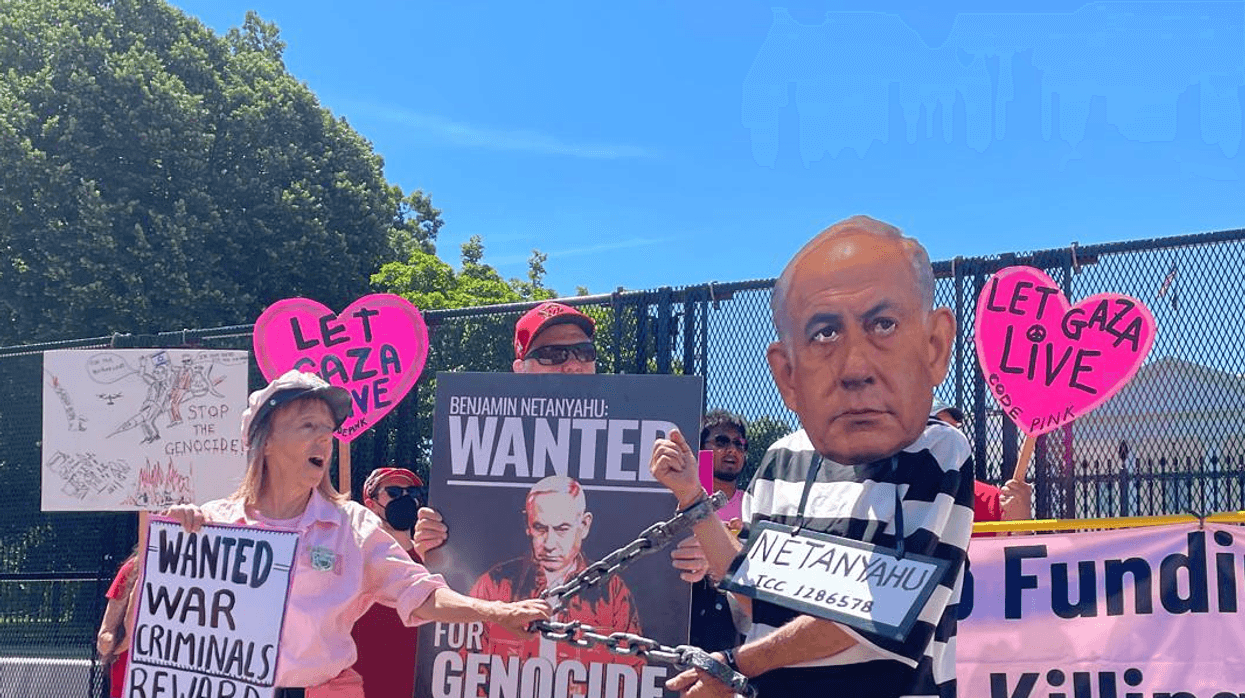
There will be mass protests outside Congress on July 24 by Jewish Voice for Peace, CodePink, Veterans for Peace, and other civic groups. But there would be a great benefit for boycotters like Sen. Bernie Sanders (I-Vt.), Progressive House Caucus Chair Pramila Jayapal (D-Wash.), and Rep. Mark Pocan (D-Wis.) to secure a House Committee Room and invite, via Zoom, these six leading Israelis to testify before the media on the same day. These messages could reach the grisly, complicit architects of this disgraceful defamation of the Peoples’ Legislature more than the bullhorns of the upstanding peaceful protesters kept far away by the security police.
While Israelis, including those in the media class, ponder if their country is run by inept and corrupt leadership, much of the U.S. media skip all this and insinuate that now is no longer the time for debate.
As the world watches the ongoing horror in southern Israel and in the Gaza Strip, media grapple not only with the immediate violence, but to understand why this happened and how it can stop. This is truly no other Middle East skirmish anymore. Likely the deadliest offensive against Israel on its soil, and perhaps the most audacious operation by Palestinian militants, it’s been compared both to 9/11 and to the bloody 1973 war between Israel and a coalition of Arab nations.
How could Israel—so famous for its military might and advanced intelligence capabilities—have missed the warnings of such an attack? The coordinated nature of the rocket attacks and assaults on nearby towns make clear that this was a huge operation that took time and planning; paragliding attacks require practice runs that are not easy to hide (L’Orient Today, 10/9/23), for instance. Already, Israeli media have begun looking closely at the Israeli government’s actions to understand how and why this happened—in sharp contrast to U.S. broadsheet opinion, which has largely rallied unquestioningly behind Israeli “national unity.”
The Times of Israel (10/8/23) noted that Netanyahu was quoted telling Likud Party members in 2018 about his stance on Gaza, summarizing his quote saying “those who oppose a Palestinian state should support the transfer of funds to Gaza”—meaning to Gaza’s Hamas-led government—as doing so maintains the “separation between the Palestinian Authority in the West Bank and Hamas in Gaza,” thus dividing and conquering the Palestinians once and for all.
Gaza is sealed off, contained, and highly surveilled (Middle East Institute, 4/27/22); it’s hard to believe no one in the Israeli government didn’t know something was being planned. The above ToI report quoted Assaf Pozilov, a reporter for the Israeli public broadcasting outlet Kan, saying before the attack, “The Islamic Jihad organization has started a noisy exercise very close to the border, in which they practiced launching missiles, breaking into Israel, and kidnapping soldiers.”
An Israeli military veteran in the New York Post (10/9/23), hardly considered a pro-Palestine publication, blamed Israel for ignoring warnings from Egyptian intelligence about “something big.”
“Netanyahu should be removed as prime minister immediately—not ‘after the war,’ not after a plea bargain in his corruption trial, not after an election. Now.”
An editorial at Ha’aretz (10/8/23) put the blame squarely on Netanyahu, saying “he is the ultimate arbiter of Israeli foreign and security affairs.” It also pointed the finger at his right-wing policies on settlement expansion and allies with far-right extremist parties. “As expected, signs of an outbreak of hostilities began in the West Bank, where Palestinians started feeling the heavier hand of the Israeli occupier,” the editorial said, noting that “Hamas exploited the opportunity in order to launch its surprise attack.”
At the Jewish Telegraphic Agency (10/7/23), David Halperin, chief executive officer of the Israel Policy Forum, wrote that for the last year, “my colleagues and I… have joined with others in expressing concern about the nature of Israel’s far-right government.” The article—which questioned why Netanyahu’s government, famously hard-nosed on security, failed to protect the people—was reprinted in The Jerusalem Post (10/7/23).
Alon Pinkas (Ha’aretz, 10/9/23) wrote more directly: “Netanyahu should be removed as prime minister immediately—not ‘after the war,’ not after a plea bargain in his corruption trial, not after an election. Now.”
But top U.S. editorial boards are elsewhere, failing to ask questions about intelligence failures and Netanyahu’s hand on the wheel. Instead, they urged Israelis to put aside the concerns they’ve had about democracy, which brought throngs of liberal and left-wing Israelis into the streets to denounce the Netanyahu government’s neutering of an independent judiciary—a decision that has been likened to the “sham democracy” of Hungary (Foreign Policy, 8/3/23). This summer, military reservists joined the protests, causing alarm about the country’s military readiness (AP, 7/19/23).
A Wall Street Journal editorial (10/7/23) used the Hamas offensive to downplay Netanyahu’s judicial power grab, saying, “The internal Israeli debates over its Supreme Court look trivial next to the threat to Israel’s existence.”
The Journal also discounted any criticism of the ongoing Israeli blockade of Gaza, saying, “Israel has been allowing 17,000 Gazans to work in Israel each day and would like to allow more.” The editorial said “the assault also underscores the continuing malevolence of Iran,” because its government “cheered on the attacks,” “provided the rockets and weapons for Hamas,” and “may have encouraged the timing as well.”
Not only is Knesset opposition to Netanyahu’s internal policies now viewed as some kind of softness on the Hamas attack, but it was the nerve of the people to organize to protect their institutions that opened up the nation to the latest offensive.
A Washington Post editorial (10/7/23) did blame the right-wing government for initiating the internal political crisis, but hoped that the political factions would soon come together. “Early signs are that Israel’s leading politicians are putting aside their differences with Mr. Netanyahu to meet the emergency,” it said. Another Post editorial (10/9/23) suggested that the U.S. could take a lesson from Israel on the “risks of disunity,” criticizing Netanyahu’s judicial overhaul for setting off a “distracting backlash.”
An editorial at Bloomberg (10/8/23) admitted that Netanyahu’s judicial reform efforts “have needlessly riven Israeli society” and that his aggressive military policies in the Occupied Territories worsened things for Israelis and Palestinians alike. Yet the news service waved that all away, saying, “But all that’s for another time.” It also said the “assault deserves only one response from the world: outrage, and unwavering support for Israel’s right to defend itself.”
The New York Times editorial board (10/9/23) said that though Israelis were right to march against Netanyahu’s judicial restrictions, the Hamas attack changed the terrain, because “Israel’s military strength depends on its national unity, and Israelis have now come together to defend themselves.”
Of course, Israel, while mobilizing for war, has moved toward forming a unity government (Reuters, 10/10/23).
Worse, the Times gave column space (10/8/23) to Shimrit Meir, a former advisor to far-right Israeli Prime Minister Naftali Bennett, to cite Israel’s political division as military weakness, urging the country to close ranks.
Israel was vulnerable to an attack because years of dissolving Knessets and new elections left the country divided, Meir said, adding that Israel had “forgotten its second role in the world, as a place that embodies the idea of Jewish solidarity,” and that the people “instead found themselves engaged in an all-out war—not against terrorists but against themselves.”
The idea that the Israeli populace–which has long included right-wing militarists, religious fanatics of various Jewish sects, left-wing anti-occupation activists, and techy neoliberals—has always been one big family in political consensus without fierce debate is laughable. But for Meir, the dissension in recent years is a dangerous aberration:
As a nation, Israelis acted as if we could afford the luxury of a vicious internal fight, the kind in which your political rival becomes your enemy. We let animosity, demagogy, and the poisonous discourse of social media take over our society, rip apart the only Jewish army in the world. This is our tragedy. And it carries a lesson for other polarized democracies: There is someone out there waiting to gain from your self-made weakness. This someone is your enemy.
She said she hoped that Israel returned “to its senses, ending the political crisis and forming a unity government.”
In other words, not only is Knesset opposition to Netanyahu’s internal policies now viewed as some kind of softness on the Hamas attack, but it was the nerve of the people to organize to protect their institutions that opened up the nation to the latest offensive.
The Washington Post, to its credit, ran an op-ed (10/9/23) from a Palestinian journalist that didn’t necessarily put the blame squarely on Netanyahu, but called on the U.S. to support Palestinian statehood. But Post columnist David Ignatius (10/8/23) jumped in on the idea that the quarrel over the Supreme Court contributed to Hamas’ offensive. “Did that political chaos contribute to the Gaza attacks? I don’t know,” he said, adding that the “domestic feuds of the past few months might have led Hamas and its backers in Tehran to believe that Israel was internally weak and, perhaps, vulnerable.”
Meanwhile, The Wall Street Journal ran fiercely jingoistic pieces from well-known American neoconservatives like Douglas Feith (10/9/23) and Daniel Pipes (10/8/23), while Mitch McConnell (10/9/23), the Republican Senate minority leader, called for more U.S. support for Israel’s war effort. And far from questioning the Israeli government’s preparedness, law professor Eugene Kontorovich (10/8/23) said the U.S. and others “must not only refrain from limiting Israel’s operation in Gaza but resolve to oust the genocidal regime in Tehran.”
While Israelis, including those in the media class, ponder if their country is run by inept and corrupt leadership, much of the U.S. media skip all this and insinuate that now is no longer the time for debate, but a time to brush aside uncomfortable conversations in the face of war.
There is a broad consensus among both those who are for and those against the judicial overhaul about the importance of deepening apartheid.
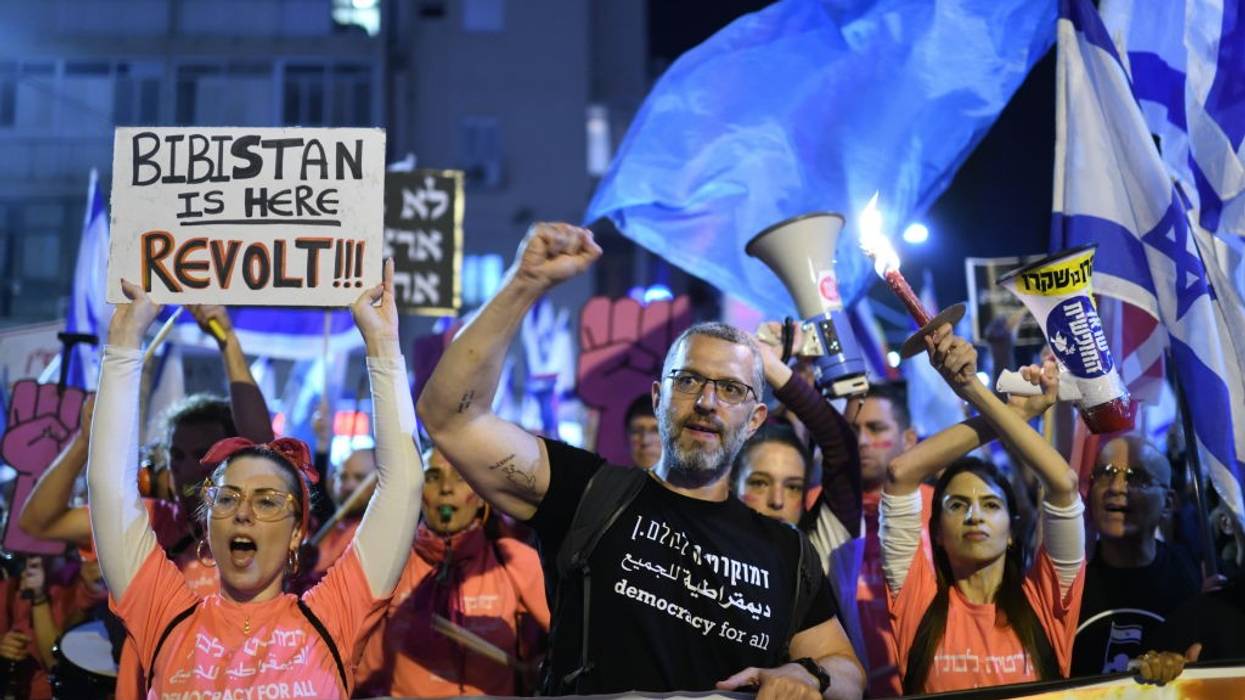
In a glowing profile, The New York Times recently characterized Israeli particle physicist Dr. Shikma Bressler as “the face of Israel’s protests.”
The description could not be more apt. For nearly 30 weeks, Bressler—alongside a few others—has been leading hundreds of thousands of protesters in an effort to stop the judicial overhaul planned by Prime Minister Benjamin Netanyahu’s right-wing government.
The level and breadth of the mobilization are unprecedented, and, according to Bressler, the effort is motivated by a deep concern for Israel’s future. “We can either fall into a very dark, extreme, racist place where the Israel that we know, in all its social and economic aspects, will be destroyed,” she explained to the Times reporter, “or we can build a new stronger, better democracy for the good of all the people.”
Even as the protesters believe their “home” is being destroyed, the racism of liberal Zionism runs so deep that Bressler can describe her wish for a “democracy for the good of all the people” and yet completely elide Palestinians from this vision.
Like most mainstream media outlets, in this recent article, the Times presents Bressler and the movement she leads as the pinnacle of liberal values. Unfortunately, however, as is often the case with media coverage of developments in Israel, there is more to this story than meets the eye.
For example, on July 3, a just few hours after Israeli soldiers marched into the Jenin refugee camp, killing at least 12 Palestinians and injuring over 100 more, the same Bressler posted a tweet drawing a link between the military incursion and the protests in Tel Aviv.
“In order to continue standing with our heads held high and with all of our hearts against the threats looming from outside; so our heroic children, brothers and partners who are now fighting in Jenin will not be exposed to prosecution at The Hague, we must guarantee that Israel remain a De-mo-cr-acy. The well-being of our soldiers as well as their future and the future of our country are now (also) in the hands of the struggle.”
In many ways, Bressler is spot on: Israel’s Supreme Court has always served as a shield for soldiers invading Palestinian cities from Jenin in the north to Rafah in the south, and the government’s attack on the court could potentially leave soldiers vulnerable to international prosecution in the future. But, of course, these words also invalidate Bressler’s claim that she is fighting for “democracy for the good of all the people.” Well, at least in the eyes of those who consider Palestinians human, too.
Protection against war crime indictments became a major theme in the weeks leading up to the July 24 vote on the controversial “reasonable standard” bill—a central piece of legislation aimed at weakening the judiciary. At one point, 1,142 air force reservists, including 235 fighter pilots, 173 drone operators, and 85 special forces soldiers, threatened to stop their volunteer military service should the bill pass.
The Israeli media was up in arms, spending vast amounts of time analyzing the potential impact of widespread refusal on Israel’s military preparedness, and featuring a long line of generals to underscore the acute dangers of extensive insubordination. A few of the refuseniks were also interviewed on TV, explaining that while they were proud of their military service, they were unwilling to protect a non-democratic regime.
The subtext was clear. Israeli pilots are willing to continue dropping lethal bombs on Gaza’s crowded cities and refugee camps, but, echoing Bressler, they, too, find it difficult to trust the government and with the judicial overhaul, they are afraid they might end up being accused of war crimes in The Hague. In other words, they believe with this judiciary overhaul, the government is abdicating its responsibility to protect Jewish citizens and the privileges bestowed upon them.
The refusenik threats did not immediately succeed in stopping the legislation, and on July 25 the government passed the “reasonable standard” bill. The very next day, the Knesset passed an extension to the Admissions Committees Law but since this bill was much less controversial it received almost no media attention in the West.
The original Admissions Committees Law was enacted in 2010 to circumvent a High Court of Justice ruling that prohibited cooperative communities from leasing land exclusively to Jews. While the 2010 law allowed only communities of up to 400 families residing in the Negev or Galilee to refuse to admit Palestinian citizens of Israel into their settlement, the new bill raises the bar so that communities of up to 700 families in any part of Israel can ban Palestinian citizens from purchasing a plot.
And here is the crux of the issue: This law received the support of parliamentarians on both sides of the aisle, namely those who in the eyes of Bressler and the Israeli pilots are attacking Israeli democracy and those who are defending it. Indeed, out of 110 Jewish Knesset members (the remaining 10 are Palestinians), only two voted against this law.
Immediately after the bill passed, 20 local leaders from across the political spectrum—ranging from the directors of the Kibbutzim and Moshavim Movements to heads of regional and local councils—posted an infographic thanking Orit Strook, who is among the leaders of the Jewish settlement in Hebron and the current Minister of Settlements and National Missions, for passing the law. Addressing Strook and a number of other Knesset Members, they dispatched the following message:
During a period of division and disputes, we witnessed a rare moment of unity around one of the basic values of Zionism: settlement. Ministers and Members of Knesset from the right and the left joined together to pass the amendment to the Admissions Committees Law, which will allow the expansion of settlements in the periphery, the absorption of young people, and the strengthening of communities.
There is, in other words, a broad consensus among both those who are for and those against the judicial overhaul about the importance of deepening apartheid. And that is what unites Jewish Israelis despite the current political impasse.
Even as the protesters believe their “home” is being destroyed, the racism of liberal Zionism runs so deep that Bressler can describe her wish for a “democracy for the good of all the people” and yet completely elide Palestinians from this vision. It is also this racism that is destroying the possibility of any truly democratic entity from emerging.
Currently, about half of Israel’s Jewish citizenry are in favor of the judicial overhaul and the other half are against it, suggesting that the only way those resisting the current government have a chance of winning is by creating an alliance with Palestinians who, after all, comprise 20% of the country’s citizenry. But since such an alliance would involve abandoning the Zionists’ worldview and the privileges that come with it, the majority of protesters, including Shikma Bressler, are unwilling to even contemplate it. Thus, while theoretically there is a path leading to the establishment of a democratic polity in Israel/Palestine, the current protest movement is a very far cry from making this a reality.
Of course, even when it was more democratic for Jewish citizens, Israel presided over a hybrid colonial system that deprived 5 million of its subjects of citizenship or the franchise, the Palestinians in the Occupied Territories.
The Israeli newspaper Arab 48 reports that on Monday, the Israeli parliament or Knesset passed the article removing the power of review from Israeli courts on grounds of “reasonability” in light of the country’s basic laws. The measure passed 64-0 in the 120-seat body, with the far right-wing coalition of Prime Minister Binyamin Netanyahu unanimously in favor and the opposition having left the chamber in protest.
The country was thrown into chaos.
The move is similar to but more brazen than steps taken in illiberal states like Viktor Orban’s Hungary to place the courts under the authority of the ruling Fidezc Party. In other words, Israel has entered the category of what Fareed Zakariya has called the “illiberal democracies.” I prefer the term “elective dictatorship.” In such states, elections are held, but that is the only occasion upon which citizens have political agency, and they are expected to sit down and shut up after a government is formed, on pain of being charged with political libel. Of course, even when it was more democratic for Jewish citizens, Israel presided over a hybrid colonial system that deprived 5 million of its subjects of citizenship or the franchise, i.e. the Palestinians under Israeli military rule in the Occupied Territories.
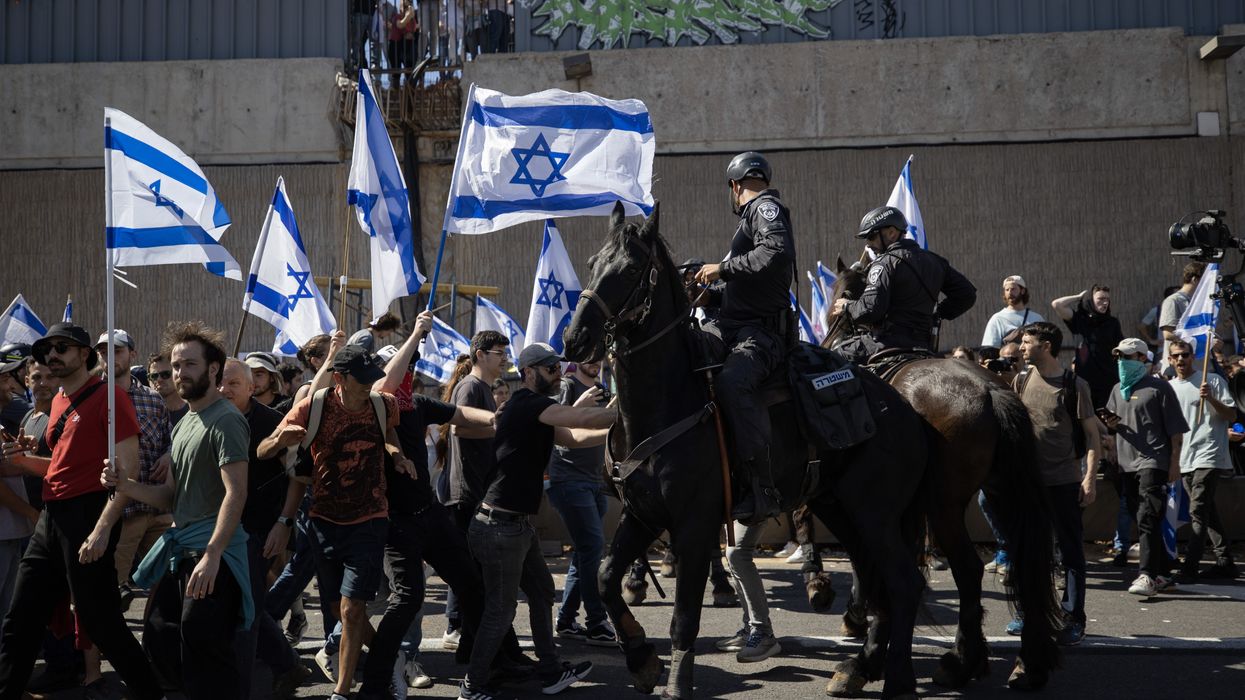
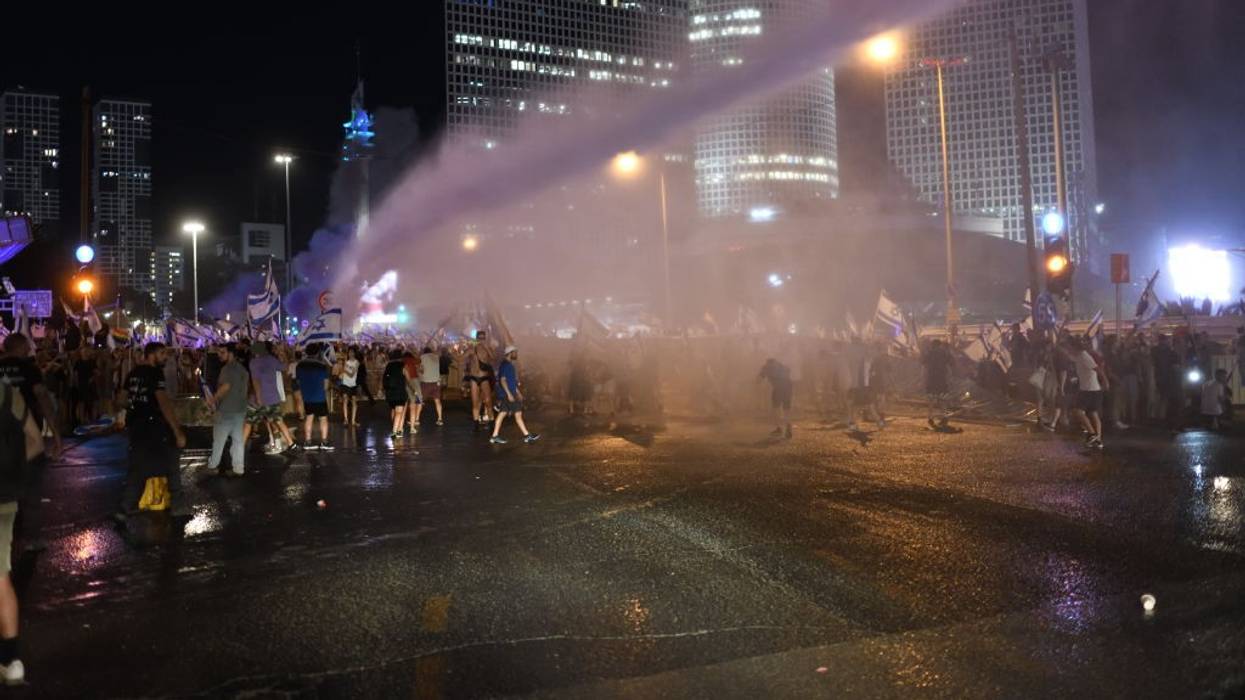
In addition to physically assaulting demonstrators, even throwing them over road barriers, and tossing burning wood planks at them, the police used water cannons and skunk water in an attempt to disperse the crowds, much the same techniques the Israeli Occupation security forces use against Palestinians in the West Bank.
Before the vote, some protesters attempted to invade the parliament building or to prevent the parliamentarians from entering and voting. At least 54 protesters were arrested.
The far right-wing coalition took the step despite massive nation-wide street protests every week for the past few months.
There have also been an unprecedented number of threats by military reservists to resign or to refuse to show up for periodic training. Last weekend 10,000 reservists threatened to go AWOL, and before that 1,400 officers in the reserves, including 400 fighter jet pilots, made a similar threat. These steps have been backed by large numbers of retired security chiefs.
The Israeli Chief of Staff, Lt. Gen. Herzi Halevi, warned Netanyahu after the vote that he and his cabinet must cease slamming the Israeli soldiers and reservists, since it was causing a serious morale problem. Many Israelis in the military, whether regular troops or reservists, have complained that they only signed up to defend a democracy, not an elective dictatorship. These statements and threats of resignations have caused harsh condemnation. Transport Minister Miri Regev called for reservists who refused to show up for training to be jailed. Halevi had been trying to get a meeting with Netanyahu since last Thursday but had been repeatedly rebuffed.
Large numbers of Israeli businesses have also been fleeing abroad with their capital and expertise, a sign that they believe that without court oversight the government will be incorrigibly corrupt in ways that will hurt free market competition. The Israeli stock market crashed, and the value of the shekel against the dollar plummeted after the vote.
In January, the Israeli Supreme Court ordered Shas Party leader Aryeh Makhlouf Deri barred from a cabinet position in the government because of a long history of embezzling, fraud, and money laundering. Although he initially defied the court, Deri ultimately stepped down and nevertheless kept his ultra-Orthodox party in the coalition. The law passed on Monday would remove from the court the ability to interfere in such appointments, so that there is now no check on corruption in high places. Israel’s legislature only has one house, so there is no senate. The executive in a prime ministerial system is elected by a majority of parliament and so is also not able to offer any check or balance regarding parliamentary overreach.
Hundreds of thousands of protesters demonstrated in the streets of Tel Aviv, Jerusalem, and other major cities on Monday evening in the wake of the legislation, often blocking major thoroughfares. The police in Tel Aviv complained that hundreds of thousands of shekels’ worth of damage to the city’s infrastructure had been done by the demonstrators. In Tel Aviv, police used tactics of especial brutality as violence escalated. In addition to physically assaulting demonstrators, even throwing them over road barriers, and tossing burning wood planks at them, the police used water cannons and skunk water in an attempt to disperse the crowds, much the same techniques the Israeli Occupation security forces use against Palestinians in the West Bank.
Right-wing organizations bused thousands of counter-demonstrators into Jerusalem, mainly from squatter settlements on Palestinian land in the Palestinian West Bank. At Kfar Saba, a right-winger rammed his car into the protesters, causing non-lethal injuries.
The Supreme Court had curbed some squatters’ initiatives, as when private individuals went off to squat on Palestinian farms with no government sanction, which even Israeli authorities consider “illegal settlements.” The current government, which includes several squatters as cabinet members, is determined to conduct a massive theft of Palestinian property and ultimately to annex the West Bank to Israel, while keeping its 3 million Palestinian inhabitants stateless and without rights. Henceforth, apparently, there will be no such thing as an illegal settlement in Israeli law.
In international law, all squatting by Israelis on occupied Palestinian territory is illegal.
Minister of Finance and racist extremist Bezalel Smotrich taunted the protesters that he understood their pain, since he had been similarly upset at the Oslo Peace Accords in 1993 and the decision of the government of Ariel Sharon to withdraw settlers from Palestinian Gaza in 2005.
Some observers are wondering whether the Supreme Court may strike down the legislation, provoking a major constitutional crisis. At that point, it seems to me, it becomes consequential with whom Lt. Gen. Halevi sides.
If right-wing reforms giving Prime Minister Benjamin Netanyahu and members of parliament more power over the judiciary are passed, "the protests will intensify," said organizers.
Tens of thousands of people opposed to the far-right Israeli government's proposed judicial overhaul once again hit the streets of Jerusalem and Tel Aviv on Monday, where they implored lawmakers to vote against the measures during the afternoon's first reading.
"On the morning of the vote, small groups of protesters sat down outside the front doors of some coalition lawmakers' homes in a bid to block them from leaving for parliament. They were removed by the police," The New York Times reported. After blocking highways to Jerusalem, protesters gathered outside parliament, where doctors "set up a mock triage station for 'casualties of the judicial reform.'"
Despite weeks of massive demonstrations, members of the Israeli Knesset are expected to pass the legislation, which is supported by right-wing Prime Minister Benjamin Netanyahu and his close ally, Justice Minister Yariv Levin.
If that happens, the Supreme Court's ability to overrule parliament would be weakened, as a simple 61-vote majority could override the court's decisions; the Supreme Court's ability to review and strike down attempts to change Israel's 13 quasi-constitutional "Basic Laws" would be abolished; and the ruling coalition would gain control of the Judicial Appointments Commission, a panel tasked with picking new judges.
The legislation must be approved three times to become law, with Monday afternoon's vote marking the first step in the process. Israeli President Isaac Herzog, a largely ceremonial figure, and opposition leader Yair Lapid have pleaded for Netanyahu's government to delay the legislation, to no avail.
On the eve of the initial vote, Levin said, "We won't stop the legislation now, but there is more than enough time until the second and third readings to hold an earnest and real dialogue and to reach understandings."
But as the Times noted, "critics have dismissed the government's position as disingenuous, arguing that once the bills have passed a first vote, only cosmetic changes will be possible."
Organizers, for their part, said Monday that "with the passage of the dictator's bill, the protests will intensify," according to i24 News.
Opponents "say the proposed overhaul would place unchecked power in the hands of the government, remove protections afforded to individuals and minorities, and deepen divisions in an already fractured society," the Times reported. They also worry that "Netanyahu, who is standing trial on corruption charges, could use the changes to extricate himself from his legal troubles."
In addition, Al Jazeera reported, opponents fear that "Netanyahu's nationalist allies want to weaken the Supreme Court to establish more settlements on land the Palestinians seek for a state. But settlements, which are considered illegal under international laws, have continued under successive Israeli governments. Nearly 600,000-750,000 Israelis now live in illegal settlements in the occupied West Bank and East Jerusalem."
Last week, Netanyahu's administration granted retroactive "legalization" to nine such settlements, and the prime minister has also intensified deadly raids, killing at least 50 Palestinians in occupied territories so far this year.
A right-wing neutering of the Supreme Court could exacerbate Israel's regime of violent dispossession and ethnic cleansing.
But the weekslong demonstrations against the proposed judicial overhaul "include very few Palestinians," Jewish Currents editor Peter Beinart observed Sunday in a Times op-ed titled "You Can't Save Democracy in a Jewish State."
"In fact, Palestinian politicians have criticized them for having, in the words of former Knesset member Sami Abu Shehadeh, 'nothing to do with the main problem in the region—justice and equality for all the people living here,'" Beinart wrote.
"The reason is that the movement against Mr. Netanyahu is not like the pro-democracy opposition movements in Turkey, India, or Brazil—or the movement against Trumpism in the United States," he added. "It's not a movement for equal rights. It's a movement to preserve the political system that existed before Mr. Netanyahu's right-wing coalition took power, which was not, for Palestinians, a genuine liberal democracy in the first place. It's a movement to save liberal democracy for Jews."
For Palestinians, Israel is not a democracy but rather an apartheid state, an assessment shared by numerous human rights groups around the world. The Israeli government has enacted discriminatory laws against Palestinians and colonized their land for decades, including under Lapid.
According to Beinart: "The principle that Mr. Netanyahu's liberal Zionist critics say he threatens—a Jewish and democratic state—is in reality a contradiction. Democracy means government by the people. Jewish statehood means government by Jews. In a country where Jews comprise only half of the people between the Jordan River and the Mediterranean Sea, the second imperative devours the first."
"Ultimately, a movement premised on ethnocracy cannot successfully defend the rule of law," he added. "Only a movement for equality can."
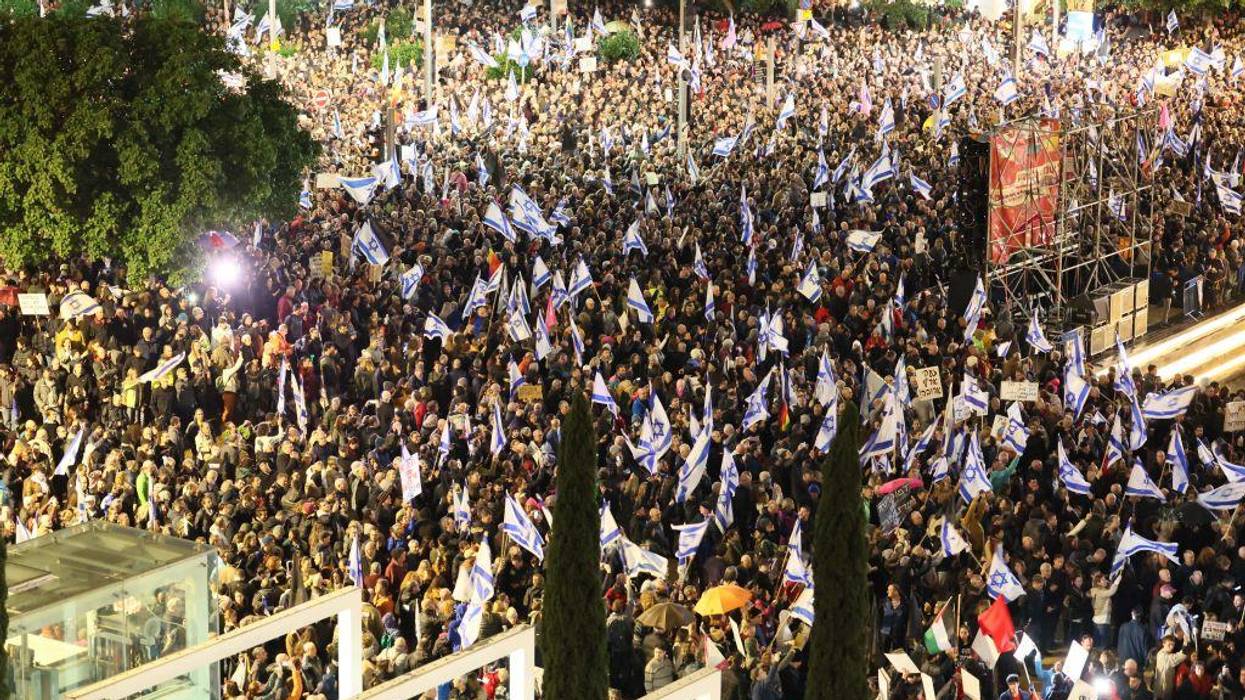
Over 100,000 marched in Tel Aviv against the government, in one of the biggest protests in Israel in many years
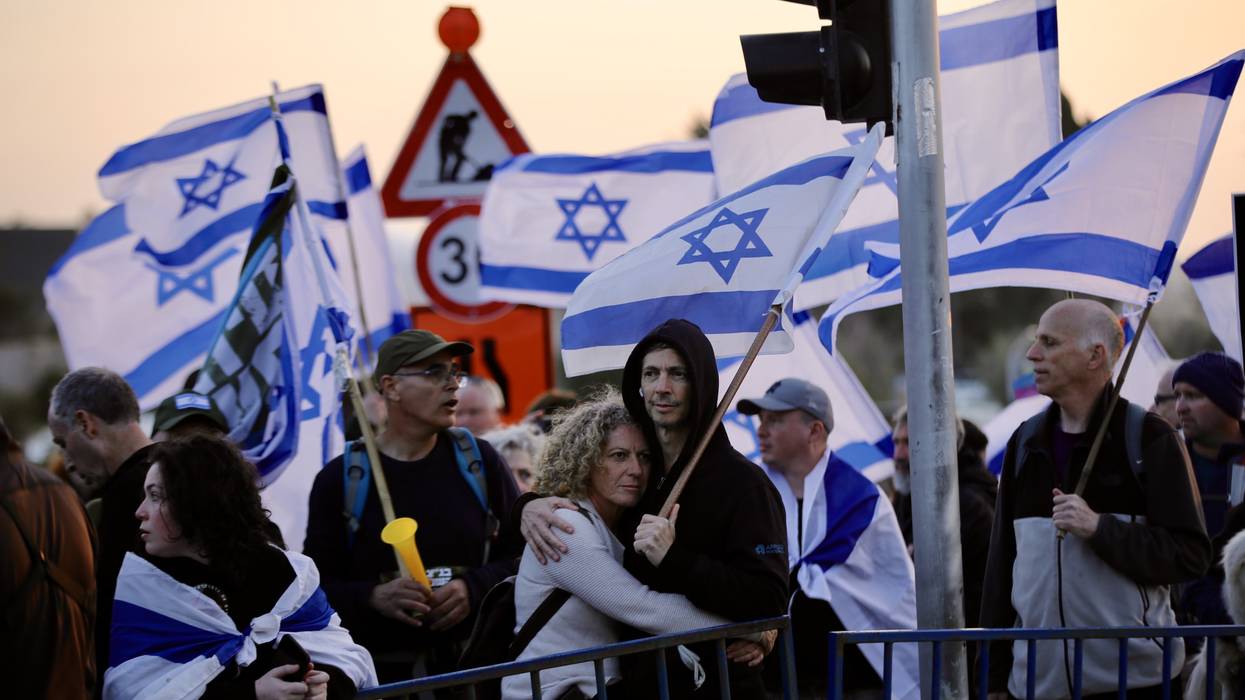
Tens of thousands of Israelis marched in central Tel Aviv and in two other major cities on Saturday night, protesting far rightwing PM Benjamin Netanyahu's plan to overhaul the legal system and weaken the Supreme Court — undermining democratic rule just weeks after his election.
Despite cold, rainy weather, marchers, many covered with umbrellas, held Israeli flags and placards saying “Criminal Government," “The End of Democracy,” and "We Are Preserving Our Shared Home." Netanyahu was guilty of a "legal putsch," read another.
Critics say Netanyahu's would cripple judicial independence, foster corruption, set back minority rights, and deprive Israel's court system of credibility.
Netanyahu and his ultranationalist security minister Itamar Ben-Gvir ordered police to take tough action if protesters displayed Palestinian flags at Saturday’s protest. Social media footage showed a number of Palestinian flags on display in defiance of Netanyahu.
"Elections do not give anyone the power to destroy democracy itself," said former Justice Minister Tzipi Livni as she addressed the protest in Tel Aviv, adding that Israel's far-right government is "carrying out a political takeover of the country and waging a war against its democratic institutions."
"Spilled poison, lies, slandering one's brother, marking as an enemy anyone who thinks differently. [They are doing] everything so that we crumble from the inside and weaken as a society before the big attack," she said.
"We will stop you, and we will not compromise because democracy in Israel, our freedom and our rights are not political trade," Livni said. "They can call us traitors, but we are the ones who protect the motherland from them. They can threaten handcuffs – we are not afraid," she said.
"We can see right now many laws being advocated for against LGBTQ, against Palestinians, against larger minorities in Israel," said one organizer.
Carrying signs reading, "Together against fascism and apartheid" and "Democracy in danger," thousands of Israelis on Saturday marched in protest of Prime Minister Benjamin Netanyahu's far-right coalition government, which less than a week after being sworn in has already threatened to strip the country's judiciary of power and announced punitive measures against Palestinian people and leaders.
According to Haaretz, about 20,000 people attended two different marches—one organized by the grassroots group Standing Together and calling for equality and partnership between Palestinians and Israelis, and another focusing on Netanyahu's threats to the Israeli justice system.
The protests came days after Netanyahu's new national security minister, Itamar Ben Gvir, angered Palestinians and the Israeli opposition by entering the Al-Aqsa mosque compound in East Jerusalem, which was seen as a provocation and an escalation of Israel's attacks on Palestine.
"Extremists are starting to deploy their forces and it's not the majority," a protester named Omer told France24 at a march in Tel Aviv.
Netanyahu's government, which has been called the most right-wing in Israel's history, also announced that it would expand settlements in the occupied West Bank. The prime minister's office indicated on Friday the punitive measures are being taken in retaliation for Palestinians' call for the International Court of Justice to render a legal opinion on Israeli's policies in the West Bank and East Jerusalem. Despite the opposition of Israel and the U.S., the United Nations General Assembly voted last week in favor of a resolution calling for an opinion.
One U.S.-based observer noted that language describing Israeli's violent anti-Palestinian policies as "apartheid" was prevalent at Saturday's demonstration. The term has long been rejected by supporters of Israel and used by human rights advocates and experts.
The protests were held days after Netanyahu's newly appointed justice minister, Yariv Levin, announced reforms that would allow lawmakers to override Supreme Court decisions. Members of Netanyahu's Cabinet have also made derogatory claims about LGBTQ+ people and reportedly plan to roll back laws allowing gay couples to adopt children.
"We can see right now many laws being advocated for against LGBTQ, against Palestinians, against larger minorities in Israel," Rula Daood of Standing Together told ABC News. "We are here to say loud and clear that all of us, Arabs and Jews and different various communities inside of Israel, demand peace, equality, and justice."
In addition to the expansion of illegal settlements, Netanyahu's government announced last week that it would withhold $39 million from the Palestinian Authority and use the funds to compensate the families of Israeli victims of the conflict and said on Sunday that it had revoked Palestinian Foreign Minister Riad Malki's travel permit.