

SUBSCRIBE TO OUR FREE NEWSLETTER
Daily news & progressive opinion—funded by the people, not the corporations—delivered straight to your inbox.
5
#000000
#FFFFFF
To donate by check, phone, or other method, see our More Ways to Give page.
Daily news & progressive opinion—funded by the people, not the corporations—delivered straight to your inbox.
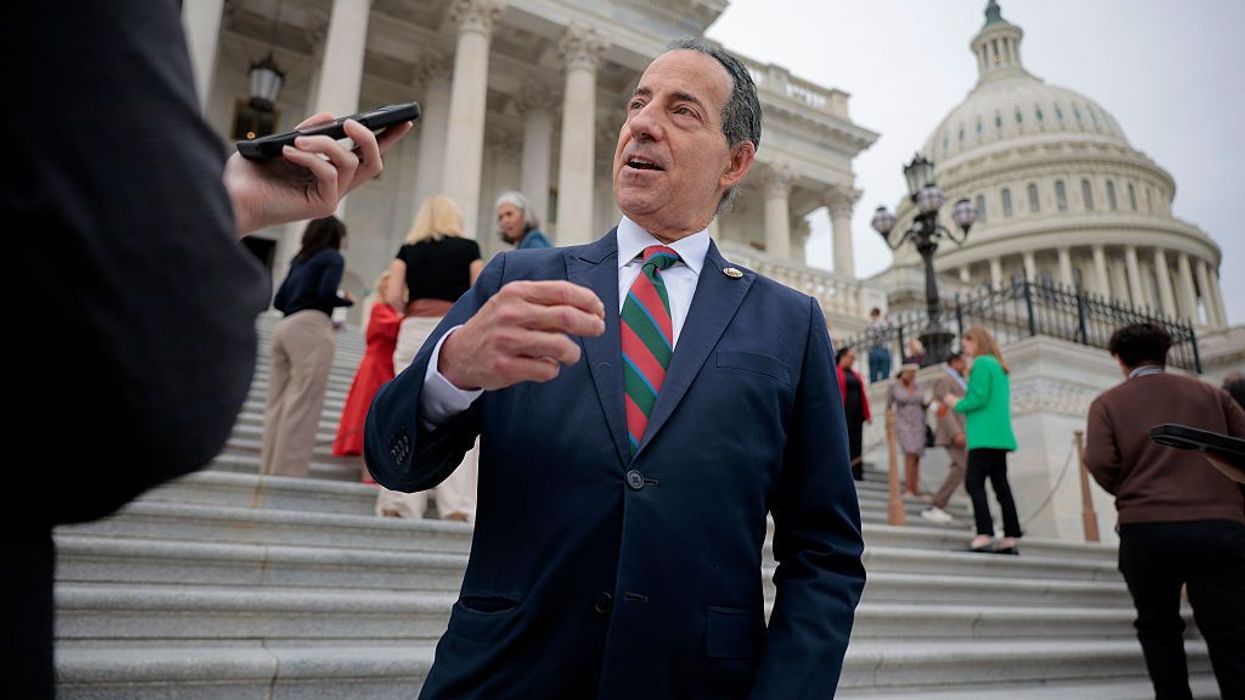
"One of the most blatantly corrupt provisions for political self-dealing and the plunder of public resources ever proposed."
House Judiciary Committee ranking member Jamie Raskin is calling out Republicans in the US Senate for slipping into their government funding bill a provision that would let eight GOP senators personally each rake in an extra $1 million in taxpayer money.
As reported by The Hill, the provision allows Republican senators whose data was obtained without their knowledge during former special counsel Jack Smith's investigation to sue the FBI.
"The provision, which is retroactive to 2022, only applies to members of the Senate and would allow them to sue for $500,000 if data was sought without their being notified, as well as once it was obtained," noted The Hill.
Raskin (D-Md.) responded by blasting the "million-dollar jackpot provision" in the Senate bill as "one of the most blatantly corrupt provisions for political self-dealing and the plunder of public resources ever proposed."
Raskin also contrasted Republican senators giving themselves the ability to score a quick $1 million with the economic uncertainty and anxiety facing the American people.
"If it were to pass, this astounding provision would give eight Republican senators a personal payday of at least one million dollars each paid for directly by US taxpayers," he said. "This jackpot is being set up at the same time Republicans throw millions of Americans off Medicaid and deny millions more a tax credit that helps make premiums for health insurance more affordable."
Raskin also shot down claims by the senators that law enforcement officials had violated their rights to privacy during Smith's probe, which sought Republican senators' phone records as part of his investigation into President Donald Trump's efforts to illegally remain in power after losing the 2020 presidential election.
"To be clear, there was no ‘phone tap’ or eavesdropping on the content of their conversations," he said. "The call records subpoenaed were the kind of information you see on a phone bill—a list of calls made and received."
Raskin wasn't the only House Democrat to blast the provision slipped into the funding bill. During a contentious House Rules Committee meeting on Tuesday, Rep. Joe Neguse (R-Colo.) called the provision "deeply insidious" and pushed an amendment to strip it from the legislation ahead of a vote in the House later this week.
"I think it is outrageous for these Republican senators to effectively guarantee themselves million-dollar paydays!" he said. "A retroactive provision in this bill that very clearly applies to them. The removal of all relevant immunity defenses on the part of the United States government. This is insanity to allow this provision to go forward, and I would hope that my Republican colleagues would join us in supporting the removal of this provision."
Neguse: I think it is outrageous for these Republican senators to effectively guarantee themselves million-dollar paydays, a provision in this bill that very clearly applies to them. The removal of all relevant immunity defenses on the part of the United States government. This… pic.twitter.com/ukmEnybcd7
— Acyn (@Acyn) November 12, 2025
Democrats weren't the only congresspeople who criticized the provision, as Reps. Austin Scott (R-Ga.) and Chip Roy (R-Texas) also said that it should be removed, although they both expressed concern that doing so would prolong the government shutdown.
"I personally agree this should removed," Scott said, according to HuffPost reporter Igor Bobic. "The problem is if we remove it, it has to go back to the Senate. I’ve struggled with what to do."

"Who's he gonna pick?" Republican Thomas Massie asked of Speaker Mike Johnson. "Is he going to stand with the pedophiles and underage sex traffickers? Or is he gonna pick the American people and justice for the victims?"
Republicans on the House Rules Committee have ground business in the chamber to a halt to avoid having to vote on Democratic amendments calling for the release of the Jeffrey Epstein files.
For weeks now, Republicans in Congress, facing pressure from the White House, have dodged efforts to force the release of the files, which may implicate U.S. President Donald Trump in crimes committed by the convicted sex criminal.
According to Axios, the House had been scheduled to vote on GOP legislation involving immigration and environmental legislation this week. But in order for these votes to reach the floor, they'd first need to pass through the Speaker-controlled Rules Committee, which has also been presented with multiple Epstein amendments.
Republicans on House Rules "don't want to vote no because they're then accused of helping hide the truth about Epstein," Punchbowl News reported Tuesday morning. So instead, they've chosen to simply stop work for the week to avoid having to vote at all.
This has essentially ground all business in the House to a halt, potentially until after Congress gets back from its August recess.
On Monday, the ranking Democrat on the Rules Committee, Jim McGovern (D-Mass.), told Politico reporter Mia Camille, "We're done in [the] Rules Committee until September."
"The Rules Committee decides what gets voted on in the House. It's where Republicans have already voted six times against forcing the release of the Epstein files," said Rep. Teresa Leger Fernandez (D-N.M.). "They'd rather shut down Congress than vote to release the files. What are they hiding?"
The Epstein cloud has only grown thicker over the White House over the past week after The Wall Street Journal reported that in 2003, Trump gave Epstein a salacious letter for his 50th birthday containing talk of a "secret" between the two men and a drawing of a nude woman. Trump has sued The Journal, calling the letter "a fake thing."
The New York Times later reported that a decade earlier, Trump hosted a party full of young women where Epstein was the only other guest.
Amid the drip of scandal, the White House has remained dismissive of calls, including from the president's own supporters, for the Department of Justice to release all its files related to Epstein.
Not long ago, officials in his administration made promises to release the files themselves, assuring damning revelations. But now, Trump describes the files as a "hoax" by the "radical left." Of the Trump-faithful who have called for their release, he said, "I don't want their support anymore!"
Late last week, Trump called for the DOJ to release grand jury transcripts pertaining to the investigation. But many other critical pieces of information, including ones that could implicate the president, would remain hidden.
House Speaker Mike Johnson (R-La.) has closely coordinated the House GOP's response to the Epstein fiasco with the White House, saying repeatedly that there is "no daylight" between his position and that of the administration.
Johnson last week introduced a non-binding resolution to provide the public with "certain" Epstein-related documents, but it had no legal weight, allowing the White House to have total control over the information they disclosed. But even that resolution, Johnson said, would not be brought forth for a vote until after the August recess.
This has provoked the ire of a fellow Republican, Rep. Thomas Massie (R-Ky.), who—along with Democratic Rep. Ro Khanna (Calif.)—drafted a discharge petition last week in an attempt to force a vote on the Epstein files onto the House floor.
"I think this is the referendum on [Johnson's] leadership," Massie said. "Who's he gonna pick? Is he going to stand with the pedophiles and underage sex traffickers? Or is he gonna pick the American people and justice for the victims?"
Last week, a CNN/SSRS poll found that just 3% of Americans were satisfied with the amount of information the government had released about the Epstein files, while more than half said they were dissatisfied.
"This is the ultimate decision the speaker needs to make. And it's irrespective of what the president wants," Massie said.

"We won't stop until the files are released," Rep. Ro Khanna said after the GOP shot down his amendment. "This may have been our first attempt, but the public will not be gaslit. We will keep fighting for transparency."
Republicans on the House Rules Committee have blocked an amendment that would force the Department of Justice to release the full Jeffrey Epstein files to the public.
Rep. Ro Khanna (D-Calif.) introduced the amendment to a cryptocurrency bill on Monday, seizing on the controversy that erupted after the Trump administration said it would not release any more documents related to the sex-trafficking billionaire.
Had the measure passed out of committee, it would have required the entire House to vote on whether to force Attorney General Pam Bondi to publish all documents related to Epstein to a "publicly accessible website."
"Trump promised that his administration would release the Epstein files to the public," Khanna said before the amendment's introduction. "Now, the Department of Justice is shielding Trump's rich and powerful friends by refusing to release additional files."
All four Democrats on the committee voted for Khanna's amendment. They were joined by Republican Rep. Ralph Norman (R-S.C.). Seven other Republicans voted the measure down, while Rep. Chip Roy (R-Texas) did not vote.
Explaining why he joined Democrats, Norman said: "The public's been asking for it. I think there are files. All of a sudden not to have files is a little strange. We'll see how it plays out… I think the president will do the right thing."
Rep. Virginia Foxx (R-N.C.), the chair of the Rules Committee, defended her colleagues' decision to vote down the amendment.
"I think most of us believe what's appropriate will be released when it is time for the president to release it," Foxx said.
The administration's back-track on the Epstein files has ripped apart the MAGA coalition in recent days, with prominent Trump allies issuing some of their fiercest criticisms of the president's entire second term after he told the public to "not waste Time and Energy on Jeffrey Epstein."
Trump himself is also potentially implicated in the release of the files. He has a well-documented history with Epstein, who once referred to himself on tape as "Donald Trump's closest friend."
In June, amid a public falling-out with the president, billionaire Elon Musk said that the Trump administration, which he'd just departed, was covering up the files to protect Trump.
Rep. Teresa Leger Fernández (D-N.M.), who voted in favor of the amendment, said before the vote that it was of particular interest to her as the chair of the Democratic Women's Caucus.
"The Epstein files concern the abuse of women and the abuse of children," Fernández said to her Republican colleagues. "Why are they not just releasing them?"
"What are they hiding?" she asked on Instagram after the vote failed.
Khanna said this will not be the last attempt to get a vote to the House floor for a release of the files.
"We should see whose side are you on. That's really what this Epstein file issue has become," he told MSNBC. "It's not just about knowing who's being protected, the rich and the powerful...who had interactions with Jeffrey Epstein. It's the sense that people have that the government is too beholden to certain interests who have their thumb on the scale."
He mentioned other Democratic congresspeople who are pushing for the release of the files, including Marc Veasey (D-Texas) who introduced his own resolution calling for their release this weekend.
"We won't stop until the files are released," Khanna wrote on X. "This may have been our first attempt, but the public will not be gaslit. We will keep fighting for transparency."

"This is what Republicans do—pay for massive tax breaks for billionaires by going after programs families rely on the most: Medicaid, food assistance, and now Medicare."
The sprawling reconciliation package that House Republicans are rushing through committee would trigger over $500 billion in automatic cuts to Medicare, according to a Congressional Budget Office estimate released late Tuesday.
The CBO analysis, requested by Rep. Brendan Boyle (D-Pa.), came just hours before Republicans convened a dead-of-night House Rules Committee hearing on the budget legislation as they scramble to meet their Memorial Day deadline.
If enacted, the Republican bill would add trillions of dollars to the deficit over the next decade by delivering another round of tax cuts skewed to the rich, partially offset by huge cuts to Medicaid and other programs.
According to the CBO, the bill's addition to the deficit would trigger a process known as sequestration under the Statutory Pay‑As‑You‑Go (PAYGO) Act of 2010, a law long reviled by progressives that requires spending cuts equal to legislation's average deficit impact.
Unless lawmakers offset the deficit impact of the Republican bill or agree to waive the PAYGO requirements—which the GOP measure does not do—the Office of Management and Budget (OMB) "would be required to issue a sequestration order not more than 14 days after the end of the current session of Congress (excluding weekends and holidays) to reduce spending by $230 billion in fiscal year 2026," the CBO said.
"The deficit will explode so badly it will trigger automatic cuts, including over half a trillion dollars from Medicare."
Under PAYGO, automatic Medicare cuts are capped at 4%. The CBO estimates that the Republican legislation would trigger roughly $45 billion in Medicare cuts in 2026 and a total of $490 billion in cuts to the program between 2027 and 2034.
"This Republican budget bill is one of the most expensive—and dangerous—bills Congress has seen in decades," said Boyle, the top Democrat on the House Budget Committee. "The nonpartisan CBO makes it clear: The deficit will explode so badly it will trigger automatic cuts, including over half a trillion dollars from Medicare."
"This is what Republicans do—pay for massive tax breaks for billionaires by going after programs families rely on the most: Medicaid, food assistance, and now Medicare," Boyle added. "It's reckless, dishonest, and deeply harmful to the middle class."
Boyle highlighted the CBO's findings during his testimony at the House Rules Committee hearing, which began in the early hours of Wednesday morning.
"This is really the breaking news," Boyle said. "Over the last several months, there's been no discussion of Medicare at all. There has been of Medicaid, but not of Medicare."
"Because of the size of the deficits, because of the PAYGO or Pay-As-You-Go Act, that would trigger sequestration of Medicare, and it would total over $500 billion," Boyle continued. "The official figure that CBO confirms is $535 billion in cuts to Medicare."
Boyle: "This is really the breaking news ... because of the size of the deficits, because of the paygo act, that would trigger sequestration of Medicare, and it would total over $500 billion. The official figure that CBO confirms is $535 billion in cuts to Medicare." pic.twitter.com/29mGQj0mgi
— Aaron Rupar (@atrupar) May 21, 2025
Boyle and other Democrats said the looming Medicare cuts amount to a betrayal of President Donald Trump's vow to shield the program—a promise that was included in the GOP's 2024 election platform.
"They're not just cutting Medicaid," said Rep. Teresa Leger Fernández (D-N.M.), referring to the reconciliation bill's roughly $600 billion in proposed cuts to the healthcare program for low-income Americans. "They're cutting Medicare too."
House Budget Committee Democrats wrote on social media that "Trump promised to protect Medicare."
"He lied," they added.

"In this bill, Republicans are saying the quiet part out loud: Billionaires, big companies, and special interests not only deserve a tax break, but that it should be paid for by everyday Americans."
Republicans on the House Rules Committee voted late Monday to advance a budget resolution that, if translated into law, would enact painful cuts to Medicaid and federal nutrition assistance, potentially stripping critical benefits from tens of millions of low-income Americans to help fund trillions of dollars in tax giveaways that would flow primarily to the rich.
The rules panel voted 9-4 along party lines in favor of the budget blueprint, setting the stage for a House floor debate and vote as soon as Tuesday evening.
While some House Republicans have publicly and privately voiced concerns about the scale of the Medicaid cuts proposed in the budget resolution, GOP members of the rules panel on Monday rejected Democratic amendments aimed at preventing cuts to the healthcare program as well as the Supplemental Nutrition Assistance Program (SNAP) and other spending.
"Republicans can't have it both ways—they can't claim to stand up for their constituents on SNAP and Medicaid and then reject amendments that would do just that," said Rep. Gabe Amo (D-R.I.), who sponsored the proposed changes. "My common-sense amendments would have supported these two key programs that feed hungry children and care for sick Americans. Democrats provided Republicans with several chances to stand with the many instead of the rich. They declined multiple times. I'll continue to pull out every stop as I seek to prevent these cuts from becoming reality."
"Put simply: the bill is a betrayal of the promise that every Republican made just months ago to lower costs."
Monday's committee vote came after a Center on Budget and Policy Priorities (CBPP) analysis found that the SNAP cuts proposed by the House GOP resolution "would result in widespread harm," potentially taking benefits from "more than 9 million low-income people in an average month."
"Deep SNAP cuts would worsen food insecurity, hurt local businesses, and weaken SNAP's ability to boost jobs in every state. SNAP is highly effective at reducing food insecurity and poverty, and research links SNAP participation to better health outcomes and lower healthcare costs," CBPP noted. "Regardless of how lawmakers impose $230 billion or more in cuts to SNAP, these cuts would make it harder for low-income families in every state to afford groceries, worsening food insecurity and hardship. Slashing low-income households' grocery budgets would also reduce revenue for thousands of businesses in every state, with ripple effects throughout the food supply chain."
CBPP previously estimated that House Republicans' plans for Medicaid—specifically their push to impose work requirements—could put 36 million Americans at risk of losing health coverage.
The Economic Policy Institute (EPI) separately found that if the House GOP's proposal for $880 billion in Medicaid cuts over the next decade becomes reality, it would "reduce incomes for the bottom 40% more than extending the [Trump tax cuts] would boost them—and the lowest-income households would fare the worst."
"Strikingly, this is true even as the full $880 billion in Medicaid cuts would only pay for about 20% of the total cost of the [Tax Cuts and Jobs Act]—other cuts and economic damage falling on non-rich families stemming from tax cuts for the rich would still be forthcoming," EPI's Josh Bivens wrote last week. "Meanwhile, the TCJA boosts the incomes of the top 1% significantly, while these households do not rely in any way on Medicaid."
Democrats are expected to unanimously oppose the House Republican budget resolution, leaving Speaker Mike Johnson (R-La.) with extremely narrow margins to pass the measure and move ahead with President Donald Trump's legislative agenda. Trump has endorsed the House resolution, despite claiming to oppose cuts to Medicaid.
House Republicans must also reconcile major differences with their Senate colleagues, who want to advance Trump's agenda in separate, smaller bills rather than one sprawling measure.
"The bill House Republicans are bringing forward tomorrow is a gift to Trump's billionaire donors paid for by hard-working Americans who are already feeling the heat from high prices in Donald Trump's America," Tony Carrk, executive director of the watchdog group Accountable.US, said in a statement Monday. "In this bill, Republicans are saying the quiet part out loud: Billionaires, big companies, and special interests not only deserve a tax break, but that it should be paid for by everyday Americans."
"For far too many Americans, this bill will only increase their everyday costs, from their healthcare to their groceries," Carrk added. "Put simply: the bill is a betrayal of the promise that every Republican made just months ago to lower costs."
Rep. Pramila Jayapal (D-Wash.), a senior whip for the House Democratic caucus, wrote in a social media post on Monday that she will not "vote for a budget that gives tax breaks to billionaires and cuts critical programs for working families—including healthcare and education."
"I will be a NO on the Republican budget resolution this week," Jayapal added.
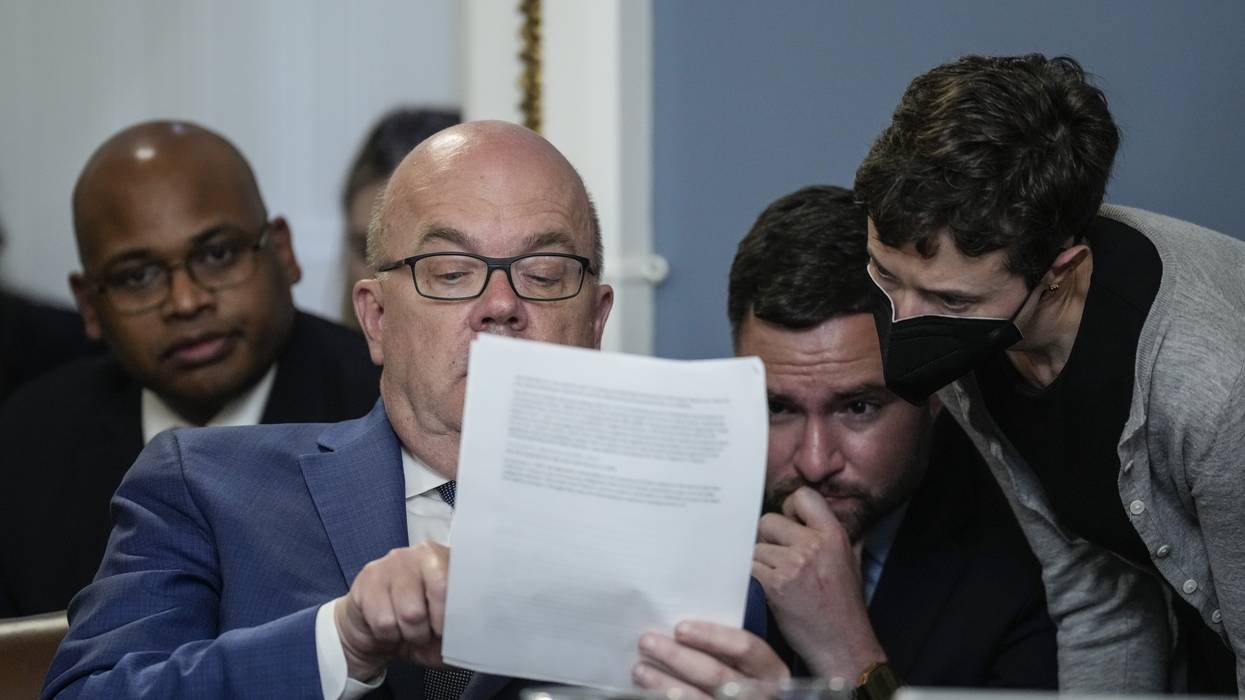
Rep. Jim McGovern said the House GOP's rules package offers "the clearest window yet into their agenda for the next two years."
Democratic U.S. Rep. Jim McGovern said Wednesday that the House GOP's newly released rules package for the incoming Congress shows that Republicans are "doubling down on their extremism" by moving to further diminish the power of the minority party and paving the way for a legislative agenda that rewards billionaires and large corporations.
McGovern (D-Mass.), the top Democrat on the House Rules Committee, said in a statement that the GOP's proposed changes "would, for the first time in American history, shield the speaker from accountability to the entire chamber by making it so that only Republicans can move to oust the speaker."
The provision in question states that a resolution to vacate the House speakership "shall not be privileged except if it is offered by a member of the majority party and has accumulated eight cosponsors from the majority party at the time it is offered." Axios noted that "for most of U.S. history, any singular House member in either party has been able to introduce a motion to vacate."
The new GOP rules package for the 119th Congress would also set the stage for fast-tracked consideration of a dozen Republican bills, including a measure to sanction the International Criminal Court and prohibit any moratorium on fracking.
Under the proposed rules, neither party would be allowed to offer amendments to the 12 bills.
In his statement Wednesday, McGovern said that the Republican bills offer "the clearest window yet into their agenda for the next two years."
"Here's what I see: Nothing to help workers. Nothing to bring down grocery prices. Nothing to lower rent or make housing more affordable. Silent on inflation and healthcare costs. Next to nothing on jobs and the economy," said McGovern. "Instead, I have no doubt they'll find time to pass tax breaks for billionaires and massive corporations at the expense of everyday Americans."
The Washington Post reported Thursday that Republicans intend to offset the massive cost of their proposed tax cut package by slashing federal nutrition assistance, imposing work requirements on Medicaid recipients, and blocking a rule that would require Medicare and Medicaid to cover anti-obesity medications, among other changes.
"The American people did not vote for whatever the hell this is," McGovern added, "and you better believe that Democrats will not let Republicans turn the House of Representatives into a rubber stamp for their extremist policies."
The GOP's proposed rules package will receive a vote in the House once a speaker is chosen—which could happen as soon as Friday. House Speaker Mike Johnson (R-La.), backed by President-elect Donald Trump, is running for reelection for the leadership post, but he has very slim margins and at least one Republican opponent—Rep. Thomas Massie (R-Ky.).
As The American Prospect's David Dayen wrote Thursday, "One problem for Republicans is that they only have three days to get the Speaker in place before January 6, when the presidential electors are confirmed by Congress, rolls around."
"The typical scenario for the House is that they must select a speaker first, and only move forward afterward. Members-elect aren't even sworn in as members of the House until there's a speaker," Dayen added. "The signs of another dysfunctional two years in Congress are all around. That doesn't completely nullify what Trump can do—much of his agenda, like mass deportations and tariffs, will be carried out mostly unilaterally—but it does mean that a unified Democratic Party could make things very difficult for Republicans. Someone should tell that to Democrats!"
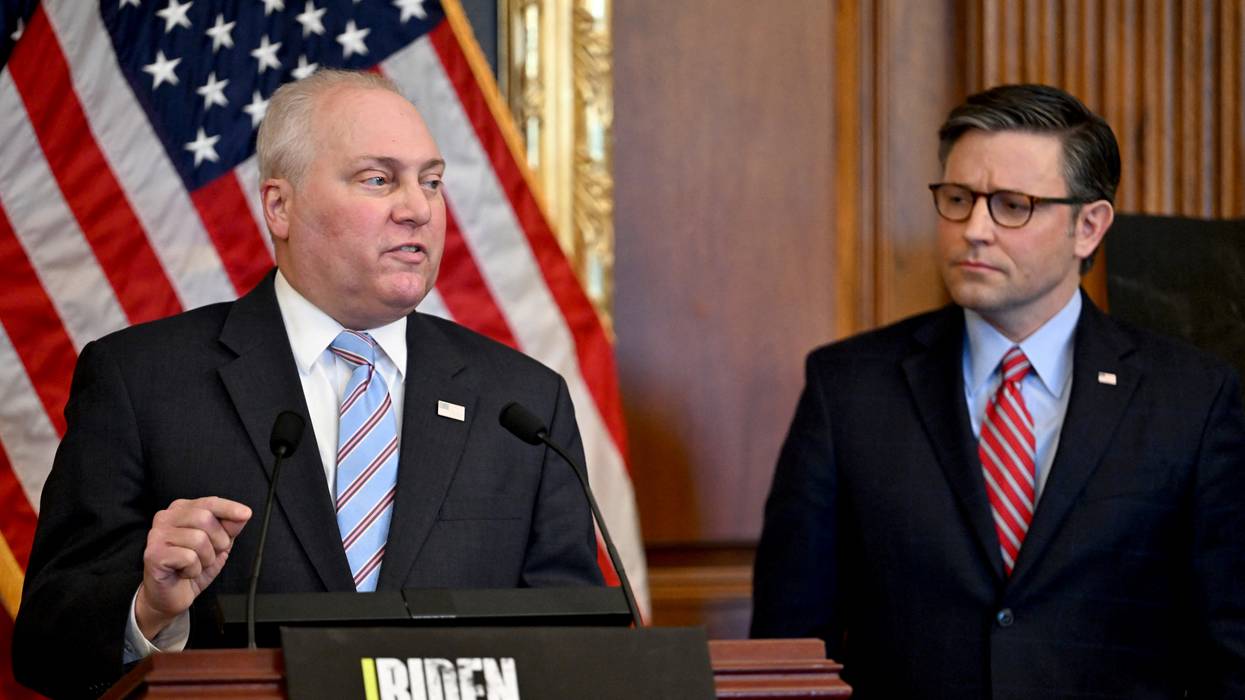
The House Rules Committee ranking member said that "Americans will see that this impeachment sham is a national disgrace, designed by extreme Republicans to distract from their incompetence and help Donald Trump."
Republicans on the U.S. House Rules Committee voted 9-4 Tuesday to advance a resolution that would formalize the GOP's ongoing impeachment inquiry into Democratic President Joe Biden.
House Resolution 918, introduced last week by Congressman Kelly Armstrong (R-N.D.), directs the chamber's Oversight and Accountability, Ways and Means, and Judiciary committees to continue ongoing probes of alleged misconduct by the president related to his son Hunter Biden's business dealings and legal issues.
Although the GOP has failed to uncover any proof of presdential misconduct—which some Republican lawmakers are openly admitting—party leadership is plowing ahead. According to The Hill, House Majority Leader Steve Scalise (R-La.) said that a floor vote on the resolution is expected Wednesday.
"Rather than tackling the real issues facing the American people, Republicans are playing political games with our nation's most serious checks and balances."
"Let's be clear: This impeachment inquiry is nothing more than a political stunt, and it sets a terrible precedent for our democracy," Sean Eldridge, founder and president of the progressive group Stand Up America, said in a statement after the committee vote.
"Despite months of posturing, House Republicans haven't provided a shred of evidence of wrongdoing by President Biden," he stressed. "Rather than tackling the real issues facing the American people, Republicans are playing political games with our nation's most serious checks and balances."
Eldridge added that "members of the House of Representatives still have a chance to do the right thing and vote against this sham inquiry when it hits the House floor. Voters will be watching to see if their representatives put political stunts ahead of the American people."
The president is seeking reelection next year. The GOP's current 2024 front-runner is former President Donald Trump, who after the 2020 election led an unsuccessful effort to prevent the peaceful transfer of power despite his loss to Biden.
House Rules Committee Ranking Member Jim McGovern (D-Mass.) declared Tuesday that "Americans will see that this impeachment sham is a national disgrace, designed by extreme Republicans to distract from their incompetence and help Donald Trump. This is about vengeance, retaliation, distraction, and denial."
After Armstrong unveiled his resolution last week, House Oversight Committee Ranking Member Jamie Raskin (D-Md.) similarly charged that "everyone knows that the floundering Biden impeachment probe is designed to give Donald Trump something to say when it's pointed out he has been twice impeached and is a proven fraudster, sexual assailant, and defamer of women who now faces 91 felony charges in federal and state court."
NBC News reported Tuesday that Michael Tyler, the Biden campaign's communications director, also pushed back against the impeachment inquiry in a new memo, pointing to Trump's remark last week that he would be a dictator only on "day one."
"The only branch of government MAGA Republicans control is following through on Donald Trump's promise to use the levers of government to enact political retribution on his enemies," Tyler said. "You know, like the followers of a dictator."
"Instead of trying to deliver results for the American people," he added, "Trump's MAGA followers in the House are using their power to pursue an evidence-free impeachment sham all to help Trump's 2024 campaign."

GOP members of the House Rules Committee instead advanced an amendment led by Rep. Marjorie Taylor Greene that would only ban the transfer of the weapons to Ukraine.
House Republicans on Thursday tanked a bipartisan amendment that aimed to ban the U.S. government from selling or transferring cluster munitions worldwide, instead opting to advance a GOP-led proposal that would only prevent the delivery of the widely prohibited weapons to Ukraine.
During a House Rules Committee meeting on the National Defense Authorization Act (NDAA), all nine Republicans on the panel voted down a motion from Rep. Jim McGovern (D-Mass.) to allow a full floor vote on an amendment barring the U.S. from selling cluster munitions around the world—a proposal led by Reps. Sara Jacobs (D-Calif.) and Ilhan Omar (D-Minn.).
In its place, the rules panel advanced a far narrower proposal led by Reps. Marjorie Taylor Greene (R-Ga.), Matt Gaetz (R-Fla.), and Thomas Massie (R-Ky.). A summary of the amendment states that "no cluster munitions or cluster munitions technology shall be sold or transferred to Ukraine."
Massie claimed during Thursday's hearing that the narrower amendment would have a better chance of passing. The House is set to debate that amendment and hundreds of others on Thursday.
The Jacobs-Omar proposal—which had initially garnered support from a handful of Republicans, including Gaetz—did not specify any country, and its authors have made clear that they want a global ban on cluster munitions as the Biden administration moves to send the weapons to Ukraine as it fights invading Russian forces.
More than 100 countries, including most NATO members, have signed the United Nations Convention on Cluster Munitions, which bans the use, sale, or stockpiling of the weapons. Neither the U.S., Ukraine, nor Russia have signed the international treaty.
"We are going down a slippery slope where either this president or future presidents will feel that it is OK to be able to send these weapons to other countries in other very dangerous situations."
McGovern, the top Democrat on the House Rules Committee, expressed bafflement over the GOP's maneuver during Thursday's meeting, noting that the chairman of the Armed Services Committee and the ranking member of that panel both said they have no problem with allowing the Jacobs-Omar amendment to reach the House floor for a vote.
"I don't understand what the controversy is," McGovern said.
The anti-war group Just Foreign Policy suggested that the Republican decision to advance an amendment spearheaded by Greene was designed to "undercut" growing bipartisan opposition to the Biden administration's move to transfer cluster bombs to Ukraine.
Some prominent Republicans in the House and Senate, including Rep. Michael McCaul (R-Texas) and Sen. Tom Cotton (R-Ark.), openly welcomed the Biden administration's approval of the munitions transfer.
Republican war hawks, Just Foreign Policy argued, "hope that having MTG lead the vote will reduce the vote total opposing Biden's transfer. They have several strong reasons to think so: Polls show she's deeply unpopular, she just got expelled from the Freedom Caucus, she burns bridges with anti-war Dems."
McGovern, who has previously introduced legislation to restrict the use and export of cluster bombs, said the Republican alternative to the Jacobs-Omar proposal "implies that we're OK with sending cluster munitions to other countries around the world" and would likely not gain enough Democratic support for that reason.
"Let's just all be clear: By the time the NDAA is debated in the House and Senate and goes to the president, these munitions will already have been delivered to Ukraine," the Massachusetts Democrat said. "So nothing we do here is going to stop the delivery of these weapons to Ukraine in the short run."
"But we are going down a slippery slope where either this president or future presidents will feel that it is OK to be able to send these weapons to other countries in other very dangerous situations," McGovern added. "It is not just about Ukraine. It's about sending them to any conflict in any country in the world."
McGovern ultimately suggested that the Rules Committee allow a full House vote on both the Jacobs-Omar amendment and the more limited Republican alternative, but GOP members objected.
Republicans on the committee also voted against allowing a House vote on Rep. Barbara Lee's (D-Calif.) amendment calling for a $100 billion cut to the Pentagon budget.
Correction: The vote on McGovern's motion took place in the early hours of Thursday morning, not Wednesday.