

SUBSCRIBE TO OUR FREE NEWSLETTER
Daily news & progressive opinion—funded by the people, not the corporations—delivered straight to your inbox.
5
#000000
#FFFFFF
To donate by check, phone, or other method, see our More Ways to Give page.
Daily news & progressive opinion—funded by the people, not the corporations—delivered straight to your inbox.
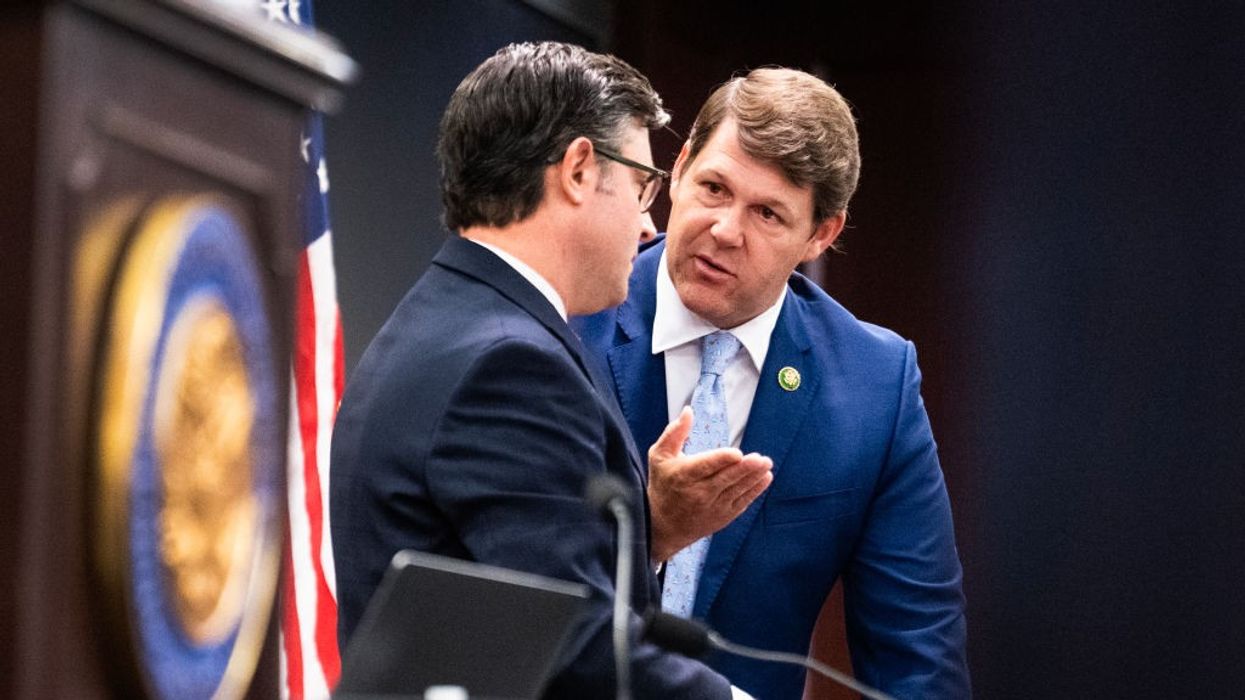
"MAGA House Republicans are demonstrating their hostility to working Americans and retirees," said one critic.
Congressional Democrats and other defenders of Social Security and Medicare responded with alarm after U.S. House Budget Committee Republicans on Thursday advanced a sweeping resolution that includes support for a fiscal commission intended to gut the crucial programs.
While Chair Jodey Arrington (R-Texas) and House Speaker Mike Johnson (R-La.) celebrated the committee's passage of the Concurrent Resolution on the Budget for Fiscal Year 2025, Ranking Member Brendan Boyle (D-Pa.) declared that "today, we saw just how backward and extreme House Republicans' vision for the future really is."
"We saw just how willing Republicans are to sell out American families in order to continue giving trillions in tax cuts to price gouging corporations and the ultrarich," Boyle said. "And we saw just how hellbent they are on gutting critical programs—raising the cost of living and pushing the middle class out of reach for hardworking families."
"Budget Committee Democrats know who we're fighting for. That's why we proposed amendments that would have protected Social Security and Medicare, prevented Republicans from raising healthcare costs, and defended American families against the devastating cuts in this budget resolution," he continued. "By voting for this dangerous budget and by rejecting our amendments today, committee Republicans have made it clear who they're fighting for—the wealthy and the well-connected."
"The commission is designed to slash vital earned benefits through a fast-track, closed-door process, intended to allow Republicans to avoid political accountability."
The committee vote came as President Joe Biden prepared to deliver his third State of the Union speech at 9:00 pm ET. The Democrat is a fierce critic of the GOP's proposed "death panel," as the White House and other opponents call the commission. He is seeking reelection in November and is expected to face former Republican President Donald Trump.
"After hearing Budget Committee Republicans tell us how they'll take us backward, I look forward to hearing President Biden tell us how he'll keep America moving forward at the State of the Union tonight," said Boyle. The congressman was not alone in referencing the Thursday night address in remarks about the GOP attack on key programs.
Social Security Works president Nancy Altman said that "at tonight's State of the Union, President Joe Biden has a golden opportunity to slam the Trump-Arrington death panel. In addition, Biden should renew his promise to protect and expand Social Security—and pay for it by taxing the ultrarich. Then the American people will know which party stands with them and which party stands with the billionaire class."
"The commission is designed to slash vital earned benefits through a fast-track, closed-door process, intended to allow Republicans to avoid political accountability," Altman stressed. "Every Republican who voted for this budget voted to cut Social Security and Medicare."
"This markup comes two days after Donald Trump enthusiastically endorsed Chairman Arrington," she noted. "Arrington is a fervent supporter of the death panel commission, and wants to attach it to must-pass government spending bills. By endorsing Arrington, Trump has endorsed the Social Security death panel."
Max Richtman, president and CEO of the National Committee to Preserve Social Security and Medicare, also took aim at not only the committee's Republicans but also Trump, referencing the Tax Cuts and Jobs Act that he signed into law in 2017.
"MAGA House Republicans are demonstrating their hostility to working Americans and retirees via their fiscal year 2025 budget resolution," he said. "The MAGA budget includes trillions of dollars in cuts to domestic spending while extending the Trump/GOP tax giveaways to the wealthy and profitable corporations that swelled the debt."
Richtman called the commission "equally troubling," adding that "we fiercely oppose such a commission as a scheme for cutting seniors' earned benefits while shielding members of Congress from accountability."
"Social Security and Medicare Part A do not contribute to the debt. Seniors' earned benefits should be protected from a commission that would fast-track benefit cuts," he argued. "If MAGA Republicans really want to reduce the debt, they should start by letting the Trump tax cuts expire. Current and future seniors on fixed incomes should not be punished for the GOP's fiscal recklessness."

"The labor movement stands united in our belief that slashing crucial programs like Medicare and Social Security... will make people poorer, sicker, hungrier and even lose their homes," said AFL-CIO president Liz Shuler.
A coalition of U.S. labor leaders spoke out forcefully on Thursday against the Republican-led push for a "fiscal commission," denouncing the proposal as an attack on Social Security, Medicare, and other programs that tens of millions of current and retired workers depend on to meet basic needs.
Liz Shuler, president of the AFL-CIO, said in a statement that a fiscal commission is a "terrible idea that would push older Americans into poverty, take away people's healthcare, and end up costing the government more."
"The labor movement stands united in our belief that slashing crucial programs like Medicare and Social Security—which millions of hardworking individuals rely on and have contributed to—will make people poorer, sicker, hungrier and even lose their homes; it also would put the pay and benefits for federal workers on the chopping block," Shuler added. "This commission is a power grab that is trying to bypass the regular democratic process by hiding behind closed doors and fast-tracking a plan that escapes public scrutiny and accountability, and rips away the security older people rely on and have paid for."
Other union leaders, including American Federation of Government Employees (AFGE) president Everett Kelley, joined Rep. John Larson (D-Conn.) at a Washington, D.C. press conference on Thursday calling attention to and criticizing the proposed commission, which the Republican-controlled House Budget Committee approved with the support of three Democrats last month.
"Our members know, and they know quite well, what a fiscal commission means, because we have lived through that," said Kelley, pointing to the Bowles-Simpson commission that recommended Social Security benefit cuts in 2010 during the Obama administration.
"The new commission plans mean federal pay freezes," Kelley said. "What do y'all think about that? A commission means retirement cuts. What do you think about that? A commission means sequestration. And yes, a commission means devastating cuts to Social Security and Medicare."
The bill that passed out of the House Budget Committee last month would establish a 16-member bipartisan commission with a mandate to craft reforms to the nation's trust fund programs, including Social Security and Medicare.
If approved by the commission, the recommended reforms would be placed on a fast track in the House and Senate, with no amendments allowed.
During debate over the Fiscal Commission Act last month, Republicans on the House Budget Committee rejected Democratic amendments that would have required the commission to propose changes that would strengthen and secure Social Security and Medicare.
Supporters of the Fiscal Commission Act are hoping to attach the legislation to a must-pass government funding measure that lawmakers are racing to finish by the end of the month.
Larson, a leading advocate of expanding Social Security by requiring the rich to pay more into the program, said during Thursday's press conference that "nothing is more undemocratic" than a fast-tracked vote on policy recommendations crafted behind closed doors by a panel of 16 people.
"We need hearings out in the open on specific proposals so the public can see what's going on and everybody can add to that," said Larson. "We are a body of 435 people. The Senate is a body of 100 people. How about we do something unusual in Congress: we actually vote, actually vote on Social Security and Medicare."
"We know where the American people are," he added. "We don't need a commission."
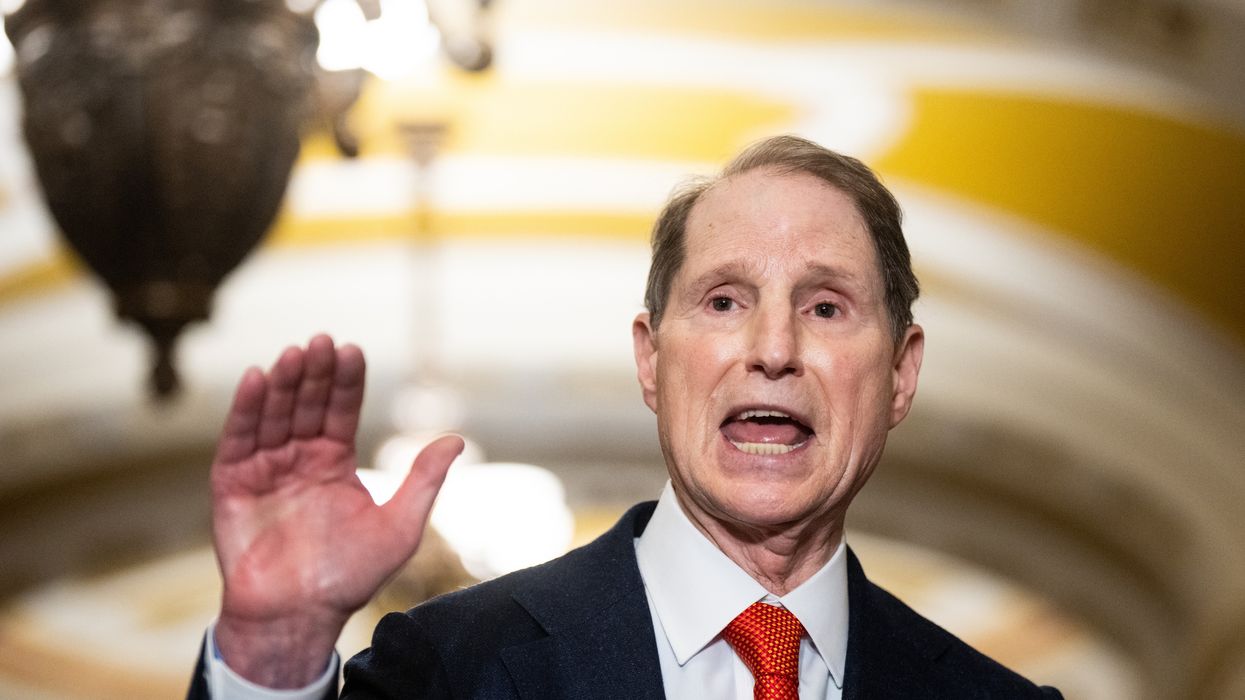
"The term 'fiscal commission' is the ultimate Washington buzzword, and it translates to trading away Americans' earned benefits in a secretive, closed-door process," said Sen. Ron Wyden.
The chair of the Senate Finance Committee said legislation advanced Thursday by the GOP-controlled House Budget Committee is a "backroom scheme" to cut Social Security and Medicare outside of the regular political process, a warning that came as Republicans signaled their intention to attach the bill to a must-pass government funding measure.
"Republicans in Congress know their plans to gut Americans' Social Security and Medicare benefits are deeply unpopular, so they are resorting to schemes that short-circuit the legislative process, rushing through cuts to Americans' earned benefits," Sen. Ron Wyden (D-Ore.) said of the Fiscal Commission Act, which passed out of the House Budget Committee in a largely party-line vote.
Three Democrats—Reps. Earl Blumenauer (D-Ore.), Scott Peters (D-Calif.), and Jimmy Panetta (D-Calif.)—joined Republicans in supporting the bill, which now heads to the full House.
Wyden argued Thursday that "the term fiscal commission' is the ultimate Washington buzzword, and it translates to trading away Americans' earned benefits in a secretive, closed-door process."
"Instead of trying to cut Social Security, Medicare, and Medicaid," Wyden added, "Republicans should work with Democrats to ensure the wealthy pay their fair share, which would go a long way towards securing Social Security and Medicare long into the future."
If passed, the Fiscal Commission Act would establish a bipartisan, bicameral, 16-member panel consisting of both lawmakers and individuals from the private sector, all chosen by congressional leaders.
The commission would be tasked with crafting and voting on policy recommendations for Social Security, Medicare, and other trust fund programs. If approved by the commission, the recommendations would receive expedited consideration in both the House and Senate, with no amendments to the final document allowed.
Social Security defenders have long warned that the GOP-led push for a fiscal commission is a ploy to slash the New Deal program, which helps keep tens of millions of seniors and children above the poverty line every year.
During Thursday's budget committee hearing, Republican members did nothing to assuage concerns about their intentions, voting down a proposed amendment from Rep. Brendan Boyle (D-Pa.) that said the fiscal commission "shall propose recommendations to strengthen and secure Social Security" by "protecting Social Security benefits" and requiring the wealthy to contribute more to the program.
Republican committee members also rejected Rep. Sheila Jackson Lee's (D-Texas) amendment stating that the fiscal commission "shall propose recommendations to strengthen and secure Medicare" by "protecting the traditional Medicare program" and extending its solvency by "requiring taxpayers with incomes above $400,000 to contribute more" and closing a loophole that allows rich business owners to avoid Medicare taxes.
"This bill should be opposed by any member of Congress who cares about Social Security, Medicare, and their constituents who depend on them."
At a press conference following Thursday's hearing, House Budget Committee Chair Jodey Arrington (R-Texas) said that Speaker Mike Johnson (R-La.)—a longtime supporter of deep Social Security and Medicare cuts—is "100% committed to this commission" and hopes to tie it to government funding legislation.
"Probably that's its best chance of success, but I also think it's most germane to attach it to our final funding bill."
The Fiscal Commission Act has some support in the Senate. In a joint statement on Thursday, Sens. Joe Manchin (D-W.Va.) and Mitt Romney (R-Utah)—both of whom declined to run for reelection this year—applauded the budget committee for "advancing this commonsense legislation."
"We also appreciate Speaker Johnson's continued support for this effort," added the senators, who are leading a companion bill in the upper chamber. "Taking immediate, corrective action to reverse this catastrophic financial demise of our own making will help ensure that our children and grandchildren are not burdened by our poor fiscal choices."
But the National Committee to Preserve Social Security and Medicare (NCPSSM) stressed Thursday that "Social Security and Medicare Part A are fully self-funded and do not contribute to the debt."
"The biggest drivers of the debt are 'tax expenditures'—giveaways to the wealthy and large corporations like the Trump/GOP tax cuts of 2017 that Republicans insist be extended," the group noted. According to a recent analysis by the Center for American Progress, debt as a percentage of the U.S. economy would be on the decline if the Bush and Trump tax cuts were never passed.
Max Richtman, NCPSSM's president and CEO, said in a statement that the fiscal commission push is "designed to give individual members of Congress political cover for cutting Americans' earned benefits."
"Any changes to Social Security and Medicare should go through regular order and not be relegated to a commission unaccountable to the public and rushed through the Congress," he added. "This bill should be opposed by any member of Congress who cares about Social Security, Medicare, and their constituents who depend on them."

"Republicans are plowing ahead with their closed-door commission designed to cut Social Security and Medicare," said Social Security Works president Nancy Altman.
With the help of three Democratic members, the Republican-controlled House Budget Committee on Thursday advanced legislation to establish a fiscal commission that critics say is a trojan horse for Social Security and Medicare cuts.
The final vote to send the bill to the full House was 22-12, with Reps. Earl Blumenauer (D-Ore.), Scott Peters (D-Calif.), and Jimmy Panetta (D-Calif.) joining every present Republican in supporting the
Fiscal Commission Act.
The committee rejected four proposed Democratic amendments, including one supporting tax hikes on the rich to bolster Social Security and Medicare.
"Republicans are plowing ahead with their closed-door commission designed to cut Social Security and Medicare," Nancy Altman, the president of Social Security Works, said in a statement. "Many of the Republicans tried to claim that was not their goal, but they tellingly voted down Democratic amendments to rule out cutting those programs and instead require billionaires to pay their fair share."
"The vast majority of Democrats on the committee rightfully opposed the commission. Shame on the handful of exceptions," Altman added. "They have stabbed the American people in the back, and undermined President Joe Biden."
In his opening remarks at Thursday's hearing, Rep. Brendan Boyle (D-Pa.)—the top Democrat on the committee—warned that "there are absolutely those who are getting ready to use a commission as a backdoor way to force through unpopular cuts" to Social Security and Medicare.
"We can put both trust funds on the path to full solvency for the rest of this century," said Boyle, who introduced legislation last year that would extend Social Security's solvency by at least 75 years by making the wealthy pay a more equitable share into the program. "We don't need a commission to do that."
Early in Thursday's hearing, Social Security Works executive director Alex Lawson interrupted the proceedings to deliver half a million petition signatures to the committee opposing the creation of a fiscal commission.
"We don't need a smoky back room. I would like you to listen to the American people when they say, 'Absolutely no cuts to Social Security,'" Lawson said as he was escorted out of the hearing room by a Capitol police officer. "A vote for a commission is a vote to cut Social Security."
The establishment of a fiscal commission is a top priority of House Speaker Mike Johnson (R-La.), who proposed trillions of dollars in cuts to Social Security and Medicare during his tenure as chair of the Republican Study Commission—which has continued to push for steep cuts to the two programs.
Following Thursday's vote, House Budget Committee Chair Jodey Arrington (R-Texas) rattled off a list of right-wing groups that have supported the push for a fiscal commission, including Citizens Against Government Waste and Americans for Prosperity—an organization founded by the Koch brothers.
The AARP, the AFL-CIO, and other prominent advocacy organizations have vocally criticized the Republican-led demand for a fiscal commission, as Boyle noted at the end of Thursday's hearing.
If passed by Congress, the bill advanced Thursday would establish a 16-member commission tasked with recommending policy changes designed to "balance the budget" and improve the "long-term fiscal outlook" of the nation's trust fund programs.
Any recommendations approved by the panel would be placed on a fast track in both chambers of Congress, with no amendments or delays permitted.
"Fiscal commissions are not the answer," the Alliance for Retired Americans said Thursday. "They are just smokescreens for politicians to hide behind while slashing earned benefits."
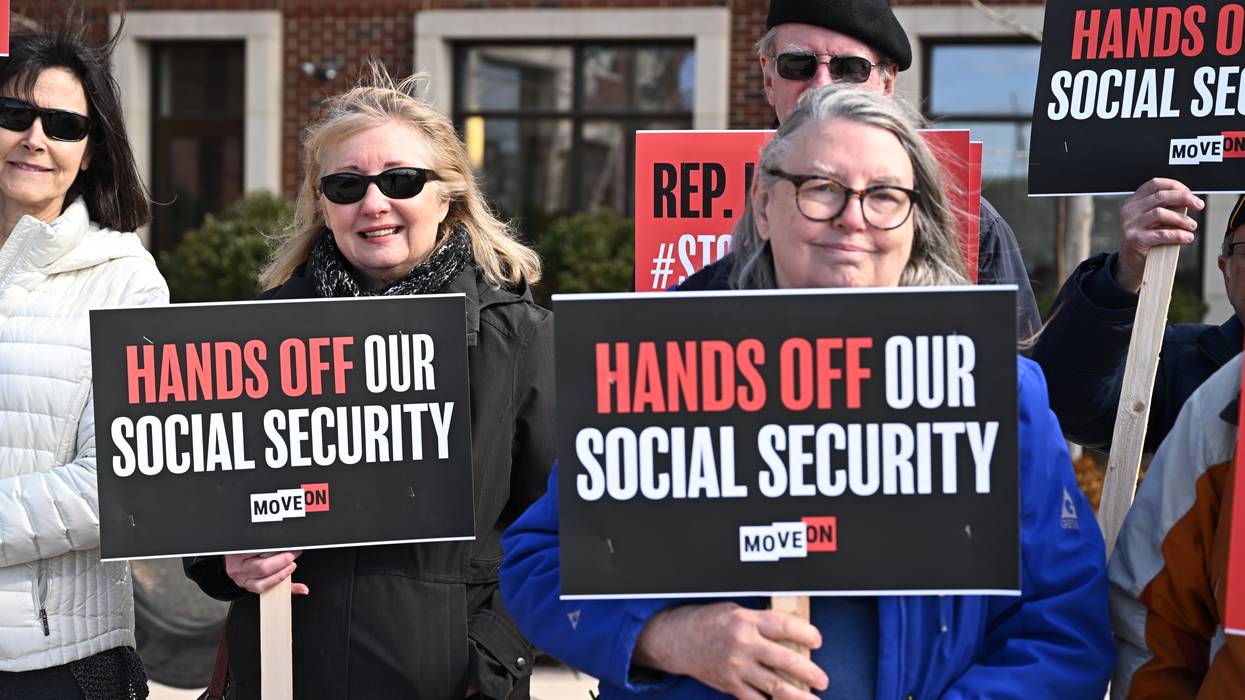
"We cannot allow House Republicans to ram through their closed-door commission that is designed to fast-track cuts to the benefits hardworking Americans rely on," asserted Rep. Bill Pascrell Jr.
Decrying Republican plans for "ripping away Social Security from seniors behind closed doors" via a so-called fiscal commission, more than half of U.S. House Democrats on Thursday urged congressional leaders to scrap plans to fast-track the controversial panel.
Fiscal commission legislation being considered by the House Budget Committee "would create a process in which legislating would be done by a small group of individuals behind closed doors" to pass a law "that cuts benefits and calls for an up-or-down vote without hearings, and that is unamendable," 116 House Democrats led by Reps. John Larson (D-Conn.) and Jan Schakowsky (D-Ill.) wrote in a letter to House Speaker Mike Johnson (R-La.) and Minority Leader Hakeem Jeffries (D-N.Y.).
The lawmakers continued:
There is no shortage of legislation that will improve the fiscal standing of the United States while directly benefiting the public. Democratic proposals include legislation that would extend Social Security's solvency for another generation while expanding benefits the American people rely on—benefits that haven't been expanded in more than 50 years. It is Congress' responsibility to conduct the oversight and recommend enhancements to solvency or cuts, and it should be done in the open and not behind closed doors.
In a statement, Larson said that "we cannot allow House Republicans to ram through their closed-door commission that is designed to fast-track cuts to the benefits hardworking Americans rely on, like Social Security."
"If they want to have debates about policy that directly impacts the lives and livelihoods of Americans families, we should have these discussions out in the open for our constituents to see and be a part of," he added.
While House Republicans claim the purpose of the proposed fiscal commission is to control the $34 trillion national debt, Democrats have expressed skepticism regarding their true intentions, noting that GOP lawmakers have dramatically increased the debt via tax cuts for corporations and rich Americans in recent years.
In November, House Republicans proposed cuts to Internal Revenue Service funding that would slash federal revenue by $27 billion, according to the Congressional Budget Office. A 2023 analysis by the Center for American Progress found that tax cuts approved during the George W. Bush and Trump administration have added $10 trillion to the national debt this century.
Social Security, meanwhile, does not add to the long-term federal deficit because the program is required by law to pay benefits from an internal trust fund and is prohibited from borrowing.
"Republicans are not serious about the deficit. They are not even serious about governing. They are serious about only one thing, and that is ripping away Social Security from seniors behind closed doors," said Schakowsky. "A so-called fiscal commission would fast-track cuts to vital benefits Americans rely on."
"Social Security benefits are already modest—only about $21,384 a year, yet Republicans want to put these hard-earned benefits at risk," she added. "We must expand Social Security benefits, not cut them."
"Republicans are not serious about the deficit. They are not even serious about governing. They are serious about only one thing, and that is ripping away Social Security from seniors behind closed doors."
Republican presidential candidates have openly expressed willingness to slash Social Security, a stance still viewed as the deadly "third rail" of U.S. politics. While GOP front-runner and former President Donald Trump and Florida Gov. Ron DeSantis have attacked rival Nikki Haley, a former South Carolina governor and United Nations ambassador, for openly advocating slashing the program and raising the retirement age, Trump told the World Economic Forum in 2020 that he would consider cutting benefits "at some point," while DeSantis said he would "revamp" Social Security.
Rep. Bill Pascrell Jr. (D-N.J.), who signed the letter, called Social Security "one of America's great success stories."
"It stands as a monument to decency and dignity, and is a birthright of hardworking Americans, yet it has been under attack," Pascrell said on the House floor Wednesday night. "The Republican Study Committee proposed slashing Social Security benefits by $718 billion and the GOP leadership wants to create a so-called 'fiscal commission'—a wolf in sheep's clothing."
Other critics have likened Republicans' proposed fiscal commission to a "death panel." The proposal is deeply unpopular, with more than 80% of U.S. voters opposing cuts to Social Security and Medicare. Advocates applauded House Democrats for standing against the proposal.
"They recognize it for what it is—a scheme to slash Social Security behind closed doors," Nancy Altman, president of the advocacy group Social Security Works, told Common Dreams.
"Democratic leaders in both the House and Senate should make it clear that a commission is a poison pill, something they will never accept under any circumstances," Altman continued. "Social Security and Medicare are earned benefits. They should never be negotiating chips."
"Instead of a closed door commission, the House should hold an up or down vote on the Social Security 2100 Act," she added. "This legislation increases Social Security's modest benefits and ensures the expanded benefits can be paid in full and on time for decades to come."
Everett Kelley, president of the American Federation of Government Employees (AFGE)—the nation's largest federal workers' union—said in a statement that "a fiscal commission would give a small group of lawmakers and nonelected individuals enormous power to recommend cuts to Social Security and other popular programs without any ability for the public to weigh in."
"If Congress is serious about preserving Social Security, Medicare, and similar programs for future generations, then it needs to have an honest discussion about how to do that—not pawn off these decisions to a secret group behind closed doors," Kelley continued.
"With just a week before government funding runs out for various departments including Veterans Affairs, Agriculture, [Housing and Urban Development], and Transportation, Congress should focus on passing full-year funding for these and other government programs instead of trying to pawn off its tough decisions to an exclusive commission," he added.

GOP lawmakers want the commission to commit the dirty work of slashing Social Security and Medicare to death without leaving their fingerprints on the murder weapon.
This week, House Budget Committee Republicans held a hearing on creating a so-called “fiscal commission.” The hearing made it crystal clear what their real goal is: decimate Social Security and Medicare behind closed doors.
Their commission is a scheme, specifically designed to avoid accountability from voters. They would require Congress to vote on the commission’s recommendations right after the 2024 election, without any amendments. This will allow members to run on the claim that they won’t cut Social Security and Medicare, and then turn around and vote for cuts. They will insist that they hated the cuts, but had to do something about the federal debt, so their hands were tied. Some voting for it will have lost re-election or will be retiring, with nothing to lose. All of them will be as far away from the next election as possible.
During the hearing, Rep. Steve Womack (R-Ark.), one of the witnesses, stated that “If raising the [retirement] age needs to be part of that discussion then a fiscal commission will tell us that.” He added: “You cannot, rationally, take any option off the table.”
Those who are most familiar with past commissions know exactly why a new one would be so dangerous.
“Everything on the table” is Washington-speak for doing what the American people don’t want.
What options do Republicans want to put on the table? That’s not hard to glean for any of us who follow the issue closely. The Republican Study Committee, a group that comprises about 75 percent of House Republicans, has released a budget that would raise the retirement age, decimate middle-class Social Security benefits, and privatize Medicare. Past versions of their plan have also included a stingier cost-of-living adjustment. That’s what Republicans mean when they say that “everything is on the table.” What they want is political cover.
Those who are most familiar with past commissions know exactly why a new one would be so dangerous. Rep. Jan Schakowsky (D-Ill.) served on the Bowles-Simpson Commission, which today’s commission proponents cite as a model. During the hearing, she said that “this kind of commission is a way for members of Congress to get out of having to take the blame for the kinds of cuts that may be presented.”
In a Common Dreams op-ed this week, Schakowsky was even more specific. “The speaker [of the House Mike Johnson]... has devised an accountability-free way to gut [Social Security]. [We] don’t have to guess that this is what will happen, because Republicans have tried this before. During discussions on forming Bowles-Simpson in 2010, Senator Max Baucus (D-Mont.) astutely pointed out that ‘The Chairman and Ranking Republican Member of the Budget Committee have painted a big red bull’s eye on Social Security. Their commission is a Social Security-cutting machine.’ Sen. Baucus was right.”
Those seeking to create another Social Security-cutting machine sometimes argue that the problem isn’t commissions per se, and point to the Greenspan Commission as an example of a successful one. But those who make that claim were not involved 40 years ago. I staffed Alan Greenspan in his capacity as Chair of that commission. Recently, I and other former commission staffers, who worked for both Democrats and Republicans, issued a statement to set the record straight and to argue forcefully against what is being proposed today.
We conclude our statement by quoting the late Robert M. Ball, who then-Speaker of the House Tip O’Neill put on the Greenspan Commission to represent him. As the talk of the Greenspan Commission as a model for today arose, Ball was so concerned that he requested—literally on his deathbed—that the chapter from his memoir about the Greenspan Commission be published as a separate monograph. He made the deathbed request in an effort to avoid the misuse of the Greenspan Commission to force the type of commission that Speaker Johnson is determined to create. In the monograph, Ball warned that “to suggest that the Greenspan Commission provides a model for resolving questions about Social Security’s future would be laughable if it were not so dangerous.”
The real reason—the only reason—to create a closed-door, fast-track commission is to do what the American people don’t want: Cut benefits.
Notably, unlike today’s effort to avoid political accountability, the Greenspan Commission’s recommendations were just that: recommendations. They did not have the force of law and were not fast-tracked. Rather, they went through regular order, with open hearings, and the ability to amend and, in the Senate, to filibuster.
Congress should simply consider, through regular order, one of the several Social Security legislative proposals that have been introduced in this Congress. All the options are already known. No commission is needed – other than to avoid political accountability. Rather than establish a commission to amend Social Security, Congress should do its job: Determine Social Security’s future through regular order, in the light of day, as the Democrats want to do.
As Rep. Jim McGovern (D-Mass.) said at the hearing: “There already is a bipartisan forum where these kinds of decisions should get made. It's called Congress and we shouldn't pass the buck to a fiscal commission to do the work that we ourselves don't want to do.”
McGovern was being diplomatic with his colleagues. What Republicans want is not to avoid the work but rather to cut Social Security without leaving fingerprints on the murder weapon. President Biden understands this clearly. His White House has called the planned commission a death panel for Social Security and Medicare. House Democratic Leader Hakeem Jeffries is staunchly opposed to the commission. So are AARP, the AFL-CIO, Indivisible, MoveOn, the Strengthen Social Security Coalition, and over 100 other organizations who have signed letters in opposition.
What Republicans want is not to avoid the work but rather to cut Social Security without leaving fingerprints on the murder weapon.
Those opposed to a Social Security cutting-machine in the form of a fast-track commission represent the overwhelming will of the American people — Republicans, Democrats, and Independents. Voters of all parties, from MAGA supporters to Democratic socialists, overwhelmingly support protecting and expanding Social Security, not cutting it, and paying for it by requiring the wealthy to contribute their fair share. That’s the real bipartisan solution, and there’s no reason to go behind closed doors to enact it.
The real reason—the only reason—to create a closed-door, fast-track commission is to do what the American people don’t want: Cut benefits.
As Rep. Bobby Scott (D-VA) masterfully explained during the hearing, Republicans like Speaker Mike Johnson (R-LA) and House Budget Chairman Jodey Arrington (R-TX) happily voted for deficit-exploding tax handouts to the wealthy. Now they are crying crocodile tears about the deficit and demanding closed-door cuts to Social Security — which doesn’t contribute a single penny to the deficit.
A few corporate-friendly Democrats testified at the hearing, including retiring Senator Joe Manchin. But they are, thankfully, extreme outliers. They represent wealthy donors (and are uber-wealthy themselves), not their constituents. In fact, Manchin is so uninterested in representing his constituents that he’s leaving the Senate.
At this week’s hearing, Democrats—including Schakowksy, McGovern, Scott, and Ranking Member Brendan Boyle (D-Pa.)—were outspoken in their opposition to a commission. Every Democrat should join them, and make it clear that there’s nothing bipartisan about cutting our earned benefits behind closed doors.
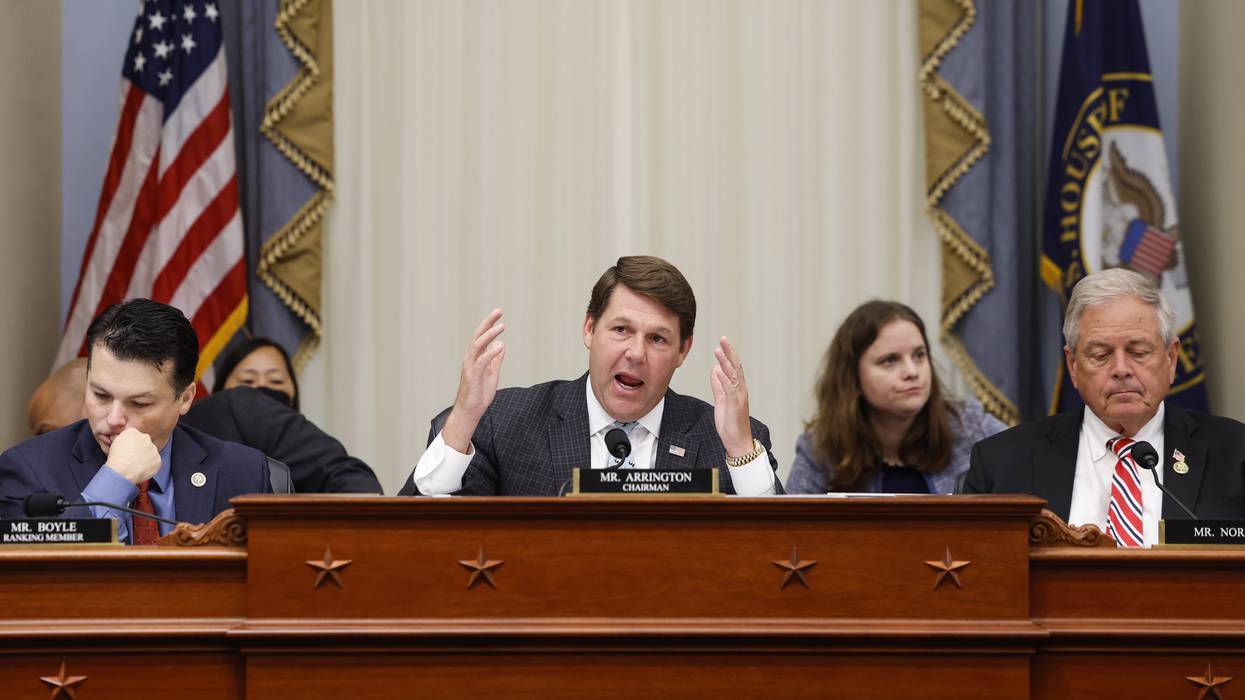
"At today's hearing, Republicans made the true purpose of their 'fiscal commission' crystal clear: demolish Social Security and Medicare behind closed doors," said one campaigner.
The Republican-led push to establish a fiscal commission for the U.S. debt was met with vocal opposition during a House Budget Committee hearing on Wednesday, with progressive advocates and Democratic lawmakers calling the proposal a thinly veiled ploy to further undermine and cut Social Security and Medicare.
Rep. Jim McGovern (D-Mass.), one of eight witnesses who testified at Wednesday's hearing, said he was "a little skeptical" that Republican lawmakers are now concerned about the national debt given that they have driven it up with tax cuts for the rich and large corporations in recent years—and are still trying to increase it.
According to one analysis, the series of tax cuts approved under former Presidents George W. Bush and Donald Trump have added $10 trillion to the debt since their enactment and are responsible for the bulk of the increase in the debt ratio since 2001.
Social Security, by contrast, is
not a driver of federal deficits.
"If we want to ensure long-term solvency [for Social Security], there are two choices: Some on the other side think we should cut benefits, I think we should ask the ultra-rich to pay their fair share. We don't need a commission to tell us that," McGovern said during his testimony. "And my fear is that a commission would be used by some as an excuse to slash Social Security, Medicare, Medicaid, and other federal anti-poverty programs."
Rep. Jan Schakowsky (D-Ill.), a member of the House Budget Committee who served on the infamous Bowles-Simpson commission that proposed deep cuts to Social Security, expressed similar concerns during Wednesday's hearing.
Schakowsky said she was "happy" the Bowles-Simpson proposals—which she vocally opposed at the time—weren't adopted and warned that a fiscal commission of the kind backed by Republicans and right-wing Democrats is "a way for members of Congress to get out from under having to take the blame for the kinds of cuts that may be presented."
In an op-ed for Common Dreams on Wednesday, Schakowsky wrote that "if Republicans cared about improving our fiscal position, they would demand the rich pay their fair share."
"If Republicans wanted to actually solve our budget challenges, they would robustly fund tax enforcement to ensure corporations are complying with laws already on the books," she added. "But Republicans aren't serious about the deficit. They aren't even serious about governing. They are serious about only one thing, and that's ripping away Social Security from seniors behind closed doors."
Wednesday's hearing examined three pieces of legislation put forth by bipartisan groups of lawmakers in the House and Senate.
A bill introduced earlier this month by Sens. Mitt Romney (R-Utah) and Joe Manchin (D-W.Va.)—both of whom testified at Wednesday's hearing—would form a 16-member bipartisan, bicameral fiscal commission comprised of 12 elected officials and four outside experts tasked with crafting legislation to "improve solvency of federal trust funds over a 75-year period."
If approved by the commission, the legislation would be put on a fast track in the House and Senate.
Romney insisted during his testimony Wednesday that he doesn't know of a single Republican or Democrat who wants to cut Social Security and said benefit reductions should be off the table.
But Social Security Works, a progressive advocacy group, pointed out that a proposal released earlier this year by the Republican Study Committee (RSC)—a panel comprised of 175 House Republicans—called for raising the Social Security retirement age, which would de facto cut benefits across the board.
Rep. Jodey Arrington (R-Texas), who presided over Wednesday's hearing, is a member of the RSC. During his opening remarks, Arrington described efforts to prevent what he called a "sovereign debt crisis" as "our generation's World War."
Alex Lawson, executive director of Social Security Works, told Common Dreams that "at today's hearing, Republicans made the true purpose of their 'fiscal commission' crystal clear: demolish Social Security and Medicare behind closed doors, while avoiding accountability from voters."
"Chairman Jodey Arrington referred to the commission's supporters as 'partners in crime,'" Lawson added. "That's exactly what they are: criminals who are plotting to reach into our pockets and steal our earned benefits."
"It should be a national scandal that middle- and working-class families have to pay Social Security taxes on all of their income but millionaires and billionaires do not."
Instead of taking the deeply unpopular step of slashing benefits, Democrats who spoke at the budget committee hearing argued that Congress should pass legislation requiring the rich to contribute more to Social Security. This year, because of the payroll tax cap, millionaires stopped paying into the program in late February.
"It should be a national scandal that middle- and working-class families have to pay Social Security taxes on all of their income but millionaires and billionaires do not," said McGovern.
Rep. Brendan Boyle (D-Pa.), the top Democrat on the House Budget Committee, said at Wednesday's hearing that Congress could extend Social Security's solvency through the end of the century by requiring the rich to pay more in taxes.
"I think that is fair. I think that is appropriate," said Boyle. "And for those who disagree, I would be very interested in seeing what their plan is and their alternative."
Following the hearing, Rep. Summer Lee (D-Pa.) delivered a speech on the House floor condemning Republicans for working to "establish a death panel commission to gut earned benefits" and described the effort as part of a "cycle" that must be opposed.
"First, Republicans pass tax handouts for their filthy rich donors, promising a trickle-down miracle that never has and will never happen—from Reaganomics to Trump's tax scam," said Lee. "Then, when their tax scam causes the economy to slow and deficits to grow, they refuse to correct their mistake. Instead they blame immigrants, poor folks, Black folks, and brown folks."
"Then they repeat the cycle," she continued, "hoping enough of us will forgive or forget their scheme to tear away Medicare and Social Security and believe their lie that they were 'only after' food assistance, healthcare, and housing for poor folks—not your earned benefits—when the truth is that they always were and always will be after it all."