

SUBSCRIBE TO OUR FREE NEWSLETTER
Daily news & progressive opinion—funded by the people, not the corporations—delivered straight to your inbox.
5
#000000
#FFFFFF
To donate by check, phone, or other method, see our More Ways to Give page.
Daily news & progressive opinion—funded by the people, not the corporations—delivered straight to your inbox.
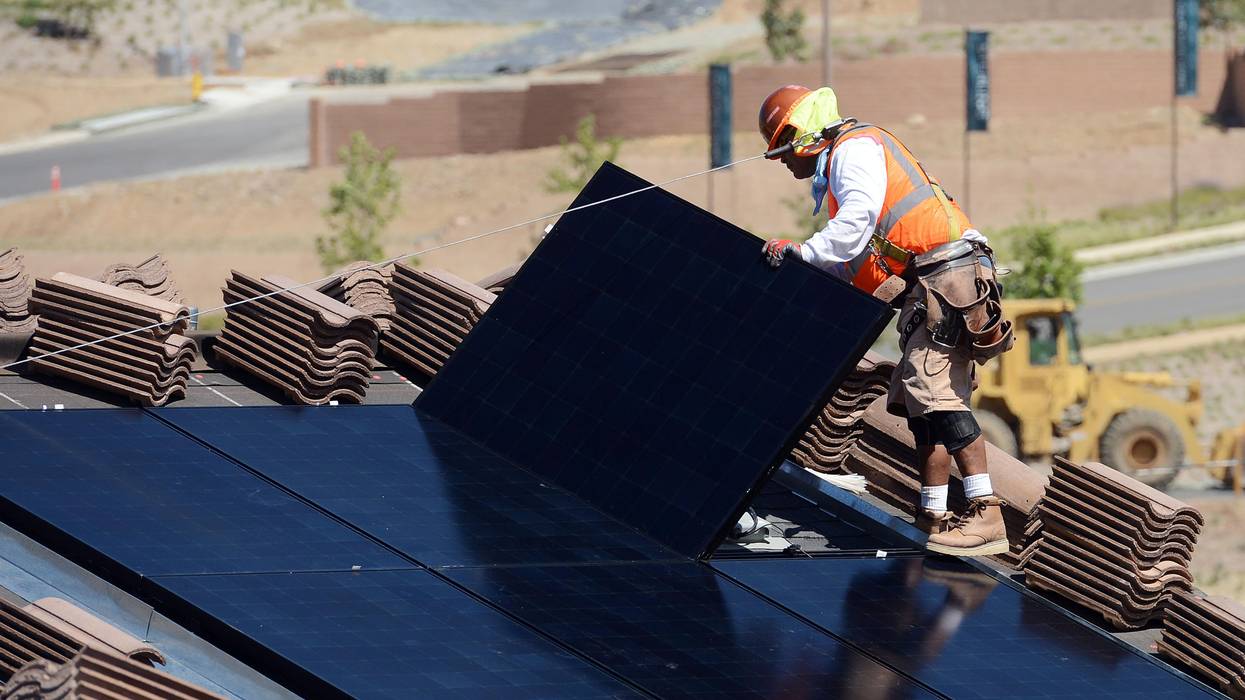
“The commission shrugged off California's climate goals, put rooftop solar's benefits further out of reach of working-class families, and gave another gift to corporate utilities," said one climate advocate.
Climate advocates on Monday asked the California Supreme Court to reverse a new rooftop solar panel policy in the state that the groups say has proven "irony is alive and well," as the policy is impeding the expansion of renewable energy in California just as regulators are calling for a solution to the state's energy crisis.
The California Public Utilities Commission (CPUC) approved a new solar policy last year at the urging of the state's three investor-owned utilities, led by Pacific Gas & Electric. The new rules slashed a solar power incentive for homeowners by about 75%, sharply reducing the amount utilities pay people with solar panels when they sell surplus power to the grid.
The "disastrous decision," made with the approval of three companies whose "only real competition" is customer-owned solar, said the Environmental Working Group (EWG), has reduced solar industry jobs by 17,000 in less than a year, and the group reported that "75% of California's once-thriving rooftop solar installation companies face a 'high risk' of bankruptcy."
A state appeals court upheld CPUC's new policy last month, leading EWG, the Center for Biological Diversity (CBD), and the Protect Our Communities Foundation (POCF) to bring the case to the state Supreme Court.
"California utility regulators shouldn't be untouchable and I'm hopeful the state's highest court will agree," said Roger Lin, a senior attorney at CBD. "The commission shrugged off California's climate goals, put rooftop solar's benefits further out of reach of working-class families, and gave another gift to corporate utilities."
Last month, Lin said, "the appeals court wrongly deferred to these state regulators. This sets a dangerous precedent of endorsing utility talking points and torpedoing an essential tool to fight the climate emergency and environmental injustice."
CBD noted that the California Court of Appeals ignored a state law that "requires the court to review the commission's decisions as it would those of any state agency."
The three-judge panel claimed there was "no basis for faulting the commission's work."
State Sen. Scott Wiener (D-11) said the state is "shooting itself in the foot" by following the guidance of utilities which have a financial interest in reducing solar energy even as the state promotes its ambitious climate goals.
As CalMatters reported last week, California's aim of transitioning to 90% carbon-free electricity by 2035 and 100% by 2045 requires a significant shift to solar power.
"The market is in the gutter," Bernadette Del Chiaro, executive director of the California Solar & Storage Association, told CalMatters. "It should be no surprise to anybody. If you are a business and your market took a 80% nosedive, with great pain, you have to lay off. Some companies shut their doors."
"We are talking about the largest solar market in the country," Del Chiaro added. "This was the most impactful energy decision, easily, for this century so far."
EWG accused California regulators of holding a "confused position" on energy sources, as the group is also challenging a separate decision by the state in the U.S. Court of Appeals for the 9th Circuit. In that case, EWG is joining Friends of the Earth and Mothers for Peace in arguing against extending operations for "the dangerous, outdated Diablo Canyon nuclear plant," which opponents say runs a safety risk as the plant as its reactors are on several earthquake fault lines.
In the Diablo Canyon case, said EWG, "California is arguing—apparently with zero self-awareness—that the state is in the midst of an energy crisis and needs to generate more electricity... Solar is one of the energy leading solutions, but California can't even seem to agree with itself on the right path forward."
In its state Supreme Court case launched on Monday, EWG said it was asking the court to review the CPUC's "failure to assess the far-reaching benefits of widespread customer-owned rooftop solar."
"Instead, in approving the utility's plan, the commission looked at a narrow set of economic factors only," said EWG. "We'll argue this violates the CPUC's duty under state law to look at a broader range of benefits."
The commission impeded the expansion of rooftop solar power in the state as climate scientists and energy experts have made clear that extreme weather events including wildfires—which have increasingly plagued California in recent years—are intensifying and growing more destructive as a result of continued fossil fuel extraction and planetary heating.
CalMatters reported that the loss of solar power jobs has also devastated communities that would have benefited from employment in the growing industry, which pays solar panel installers an average of $70,000 per year.
"These jobs have been a foot in the door for people who have been in the justice system; their lives have changed," said Adewale OgunBadejo, vice president of workforce development for the non-profit Grid Alternatives, told CalMatters. "This is 100% a job killer."
Caroline Leary, general counsel and chief operating officer at EWG, said it was "absurd" to leave "the destiny of California's clean energy aspirations and the battle against the climate crisis" up to the CPUC's five unelected members.
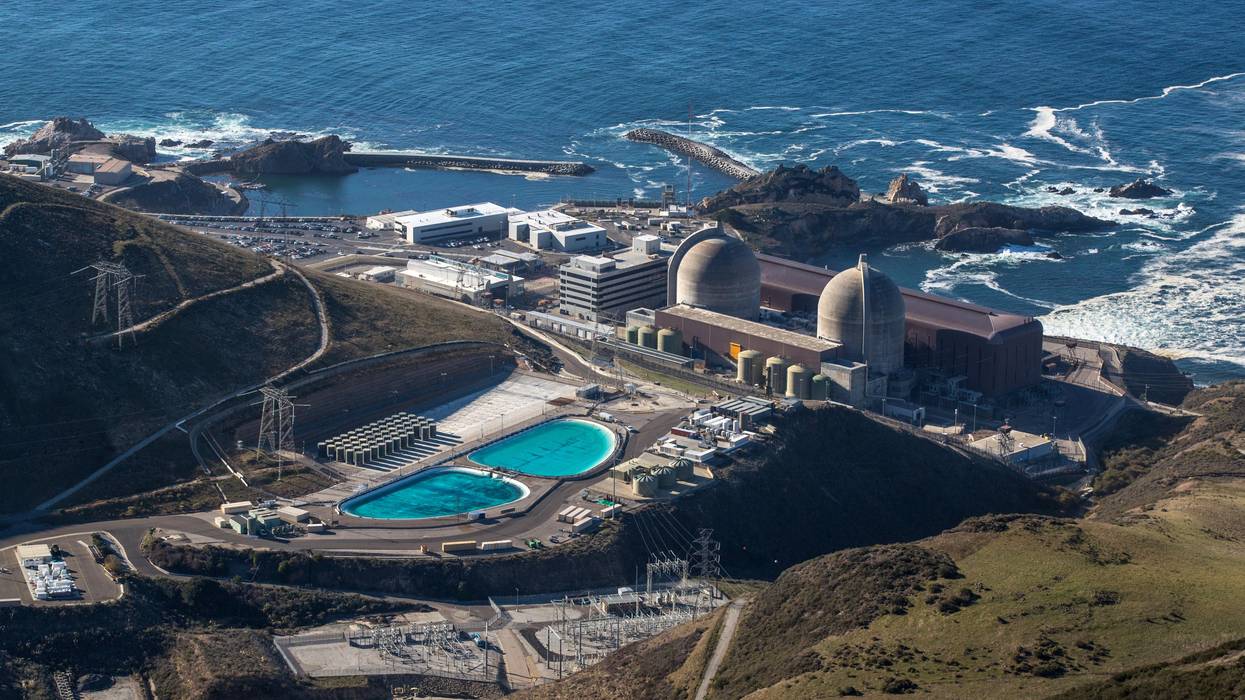
"The tens of billions it will cost to keep Diablo Canyon operating will ultimately be borne by PG&E's ratepayers, who already pay some of the highest electricity bills in the country," said one campaigner.
Keeping California's last nuclear power plant running could cost customers of the state's largest utility as much as $45 billion through 2045, according to an analysis published Tuesday.
Pacific Gas & Electric's (PG&E) Diablo Canyon Power Plant—located near Avila Beach in San Luis Obispo County—was slated to be closed in 2025. However, last September, California state lawmakers overwhelmingly approved legislation signed by Democratic Gov. Gavin Newsom to keep the nearly 37-year-old facility online until 2030, a decision Environmental Working Group (EWG) president Ken Cook called a "dangerous and dumb" impediment to "California's drive to make solar and wind the prevailing sources of electricity in the state."
"The power this problematic plant generates could easily be replaced by new clean energy investments."
In a move EWG blasted as a "cave to PG&E," the U.S. Nuclear Regulatory Commission in March subsequently approved the utility giant's continued operation of Diablo Canyon without a renewed license or safety review while the company seeks a 20-year extension.
The following month, the environmental advocacy group Friends of the Earth sued PG&E, arguing that the company breached its contract to close the plant.
If Diablo Canyon remains operational through 2045, EWG estimates PG&E customers would be on the hook for between $20 billion and $45 billion or more.
"And that's just the expense of prolonging the troubled facility's life," the green group said. "It doesn't account for the enormous extra costs that would be incurred following a major disaster like a reactor leak or an earthquake that damages the plant."
In a statement Tuesday, Cook said that "keeping Diablo Canyon open past its closure date is a terrible idea for many reasons, including the staggering price tag that unwitting ratepayers will face for keeping the dilapidated and dangerous nuclear plant operating."
"Let's be clear," he added, "the tens of billions it will cost to keep Diablo Canyon operating will ultimately be borne by PG&E's ratepayers, who already pay some of the highest electricity bills in the country, while the monopoly's shareholders will reap additional profits."
However, Grant Smith, EWG's energy adviser and a co-author of the new analysis, argued that "the power this problematic plant generates could easily be replaced by new clean energy investments."
California has committed to slashing planet-heating greenhouse gas emissions by 85% and achieving carbon neutrality by 2045 amid a worsening climate emergency.
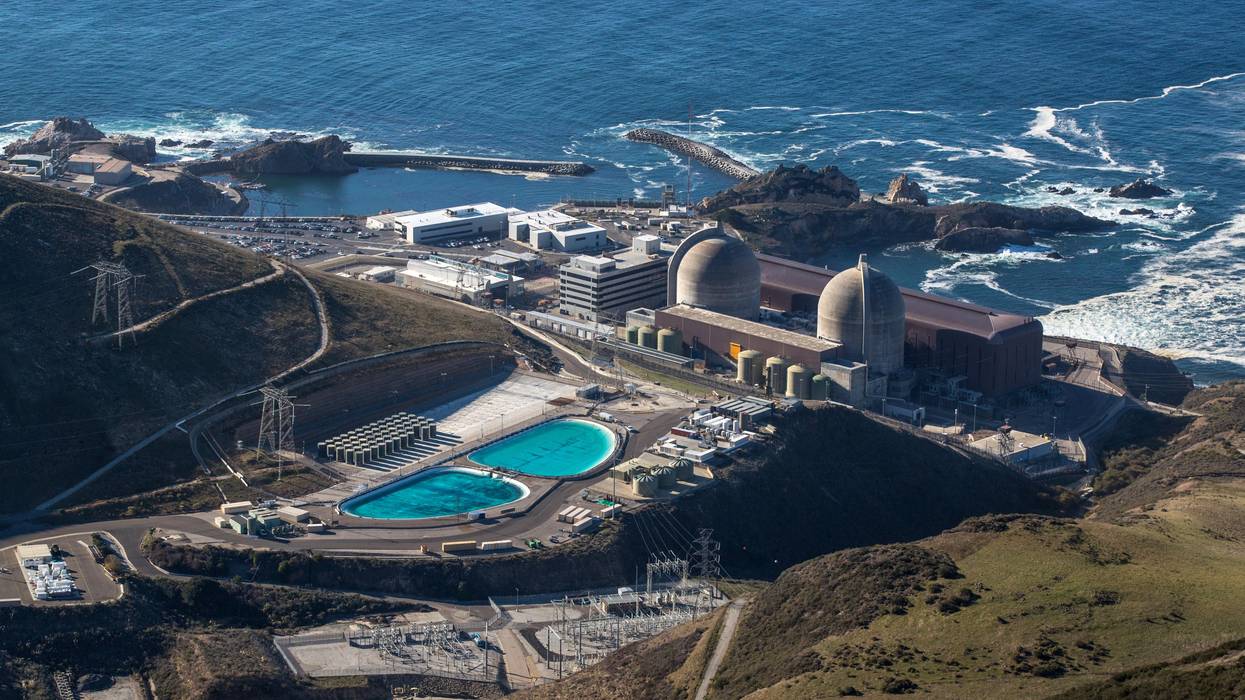
"We hope our litigation can push PG&E to reconsider its potential breach and uphold its obligations, including preparing for the agreed-upon retirement," FOE's legal director explained.
The environmental group Friends of the Earth on Tuesday sued Pacific Gas and Electric in a bid to block the California utility giant from breaching its contract to shutter the Diablo Canyon nuclear power plant when the operating licenses for its two reactors expire in 2024 and 2025.
Friends of the Earth (FOE) explained the reason for its lawsuit, which was filed in San Francisco Superior Court, in a statement Tuesday:
In 2016, Friends of the Earth entered into a contract with PG&E to retire Diablo Canyon. This was in exchange for Friends of the Earth dropping a separate legal challenge over environmental and public safety concerns associated with the power plant's continued operations. Diablo Canyon—California's last remaining nuclear plant—is located in San Luis Obispo near at least three seismic fault lines, which puts the entire state at risk of a devastating accident. It also operates on an outdated cooling system that puts marine life and water quality at significant risk of harm.
Friends of the Earth's new lawsuit follows recent actions by PG&E that indicate an intent to breach the 2016 contract. These include applying to the U.S. Department of Energy for funding to aid Diablo's extended operations and securing approval from the U.S. Nuclear Regulatory Commission to continue operating Diablo Canyon beyond the expiration of current operating licenses while NRC considers PG&E's forthcoming license renewal applications.
"Contracts simply don't vanish into thin air," FOE legal director Hallie Templeton said in a statement. "Yet ever since California passed legislation supporting Diablo Canyon's extension, PG&E has been acting as if our contract has disappeared."
"Setting aside the agreement to retire Diablo, there are myriad legal prerequisites for extending operations of a nuclear power plant, including federal decisions that states cannot dictate," Templeton added. "We hope our litigation can push PG&E to reconsider its potential breach and uphold its obligations, including preparing for the agreed-upon retirement."
"Contracts simply don't vanish into thin air."
PG&E said last month that it would seek permission to keep Diablo Canyon operating for up to 20 more years. However, state officials have not said whether they will allow the plant to continue running after 2030. A law passed last year by the California Legislature allows the facility to remain operational for the remainder of this decade, while the Biden administration last November announced a billion-dollar bailout for PG&E to keep the plant running.
Democratic California Gov. Gavin Newsom, the Democrat-controlled state Legislature, and even some environmentalists favor keeping Diablo Canyon operational.
"This is an ominous warning sign for how independent the NRC will be in evaluating the earthquake risk and the overall operational integrity of the Diablo Canyon reactors," said one critic.
In a move blasted by one environmental group as a "cave to PG&E," the U.S. Nuclear Regulatory Commission on Thursday approved the criminal corporation's continued operation of California's last nuclear power plant without a renewed license or safety review while it seeks a 20-year-extension.
The NRC granted an "administrative" exception allowing the Diablo Canyon plant near Avila Beach in San Luis Obispo County—which began operating in 1985—to remain operational under its current license beyond its scheduled 2025 closure date. The commission said in a statement that the exemption "will not present an undue risk to the public health and safety, and is consistent with the common defense and security."
PG&E senior vice president and chief nuclear officer Paula Gerfen welcomed the NRC decision as a way to "improve statewide electric system reliability and reduce greenhouse gas emissions as additional renewable energy and carbon-free resources come online."
However, green groups denounced the move.
"The decision is unprecedented," Friends of the Earth said in a statement. "The NRC has never approved an exemption for a license renewal applicant that would allow it to operate a nuclear reactor past its 40-year limit without a comprehensive safety and environmental review."
"The NRC's own rules recognize that continued operation of a reactor past the 40-year statutory limit poses safety risks that are different from operational risks during the facility's first 40 years in operation and require a separate review," the group added. "But the NRC, in its bow to PG&E, completely ignored its own rules, with far-reaching implications for all its safety standards."
The NRC's decision came days after the California Energy Commission rubber-stamped a plan backed by Democratic Gov. Gavin Newsom, the state Legislature, and PG&E to keep Diablo Canyon operating.
Visiting the facility on Wednesday, Newsom cited last year's record heatwave and other climate-driven extreme weather events to assert that Diablo Canyon "is important to support energy reliability as we accelerate progress towards achieving our clean energy and climate goals."
As CalMatters' Nadia Lopez reported, PG&E said it will seek permission to keep Diablo Canyon operating for up to 20 additional years, although state officials have not said whether they will allow the plant to run after 2030. A law passed last year by the California Legislature allows the facility to remain operational for the remainder of the decade, while the Biden administration last November announced a billion-dollar bailout for PG&E to keep the plant running.
According to Friends of the Earth:
Major safety and environmental risks will only increase if Diablo Canyon's twin reactors continue running past their expiration dates. First, the reactors are sited on a web of earthquake fault lines. A recent New York Times article detailed how similar the fault lines are beneath Diablo to those that caused the recent 7.8 earthquake that has killed roughly 50,000 people in Turkey and Syria combined.
Furthermore, the NRC is proposing to let Diablo Canyon continue operating without environmental review of the significant adverse effects on the marine environment from the plant's once-through cooling, or OTC, system. PG&E was due to replace the OTC system with cooling towers in 2024 and 2025, but now will be allowed to abandon that effort without an environmental risk evaluation.
"This is an ominous warning sign for how independent the NRC will be in evaluating the earthquake risk and the overall operational integrity of the Diablo Canyon reactors," Friends of the Earth legal director Hallie Templeton said in a statement. "We will consider all available means to ensure that they are held to the letter of the law on this and future decisions and do not put people and the environment at risk."
Diane Curran, lead attorney for the anti-nuclear group San Luis Obispo Mothers for Peace, said that "this decision is frightening because it casts aside the serious safety and environmental issues raised by operating Diablo Canyon past its expiration dates without a comprehensive safety and environmental review."
"The NRC calls the exemption a mere 'administrative' decision, as if it were choosing paper clip sizes," Curran added. "There is nothing 'administrative' about allowing this aging reactor duo to continue running for days, months, or years when each day of operation poses the risk of an accident that could devastate the entire state and beyond."
Ken Cook, president of the Environmental Working Group, called NRC's behavior mafia-like.
"Public safety concerns were blatantly ignored by the NRC over this politically motivated and reckless decision to bend the law for PG&E," he said.
"A federal agency responsible for protecting public safety is now simply serving as the consigliere for the nuclear industry," he added.
Environmental and climate campaigners decried Monday's announcement that the Biden administration--which promotes nuclear energy as part of its solution to the climate emergency--will give more than a billion dollars to California's largest utility to keep the state's last nuclear power plant operating.
"Our state and our nation need to be laser-focused on building an efficient energy system powered by renewable sources."
The U.S. Department of Energy (DOE) said it will award $1.1 billion in credits to Pacific Gas & Electric--which has pleaded guilty to numerous manslaughter charges resulting from dozens of wildfires caused by the utility--to keep the Diablo Canyon plant, located near Avila Beach in San Luis Obispo County, online.
Noting that nuclear energy provides about half of the nation's carbon-free electricity, U.S. Energy Secretary Jennifer Granholm called the grant "a critical step toward ensuring that our domestic nuclear fleet will continue providing reliable and affordable power to Americans as the nation's largest source of clean electricity."
While California politicians including U.S. Sen. Dianne Feinstein and U.S. Rep. Salud Carbajal--both Democrats--joined Green Nuclear Deal and other advocates in welcoming the Biden administration's move, anti-nuclear campaigners expressed their chagrin.
"We need to get our priorities straight. It's disappointing to see the federal government throw PG&E more than a billion in taxpayer dollars for an outdated and potentially dangerous power source, when cleaner, safer, and more affordable energy solutions exist. This is a poster child for sending good money after bad," Laura Deehan, state director at Environment California, said in a statement.
"Taxpayers shouldn't prop up aging nuclear plants while commonsense energy efficiency programs, such as the Weatherization Assistance program, get only a fraction of the federal support," she added.
DOE's announcement came two months after California lawmakers voted 67-3 to keep Diablo Canyon--which was slated to shut down in 2025--online until at least 2030, including by loaning bankrupt PG&E $1.4 billion.
State lawmakers, nuclear advocates, and even some environmental groups pointed to soaring summer temperatures and expected energy shortages in calling to keep Diablo Canyon open, arguing that it will be difficult to achieve California's goal of transitioning to 100% renewable energy by 2045 without the plant's 2,250-megawatt capacity.
California Gov. Gavin Newsom, a Democrat, asserted in September that Diablo Canyon "is critical in the context of making sure we have energy reliability going forward."
"That energy does not produce greenhouse gases," he noted. "That energy provides baseload and reliability and affordability that will complement and allow us to stack all of the green energy that we're bringing online at record rates."
However, opponents point to catastrophes like the 2011 Fukshima meltdown in Japan and the 1986 Chernobyl disaster in the then-Soviet Union--which left an area the size of the U.S. state of Rhode Island uninhabitable for centuries, if not millennia--in arguing against nuclear power.
"Instead of putting Diablo Canyon back on life support, dependent on a drip of taxpayer subsidies, California should turn a new leaf and lean into building the electric system of the future," said Deehan. "Our state and our nation need to be laser-focused on building an efficient energy system powered by renewable sources such as the sun, the wind, and the heat of the Earth."
Meanwhile, a group of Chumash--the largest Indigenous tribe in California prior to the genocidal Spanish, Mexican, and U.S. conquest of the region--is seeking a return of the stolen land on which Diablo Canyon was built.
"We want to be in a position to protect this land. Protect what's there, not just for our benefit, it's for the benefit of California. It's for the benefit of all people," Mona Tucker, chair of the Yak Tityu Tityu Yak Tilhini Northern Chumash, told the New Times of San Luis Obispo in July.
"[While] I can't speak for other tribes, I'd like for communities and governments, organizations [to] maybe reach out to the local tribes in your area and ask them what help can you provide," Tucker added. "Because we all need allies. We all need friends. And in order for us to get our land back, we're asking for help."
A plan to shutter California's last remaining nuclear power plant and replace it with renewable energy is being heralded widely as "a clear blueprint for fighting climate change," which environmentalists hope will serve as "a model" for the nation.
The San Francisco Chronicle described the announcement made Tuesday by Pacific Gas & Electric (PG&E), which operates the aging Diablo Canyon power plant on California's central coast, as "the end of an atomic era."
The joint proposal (pdf), drafted by the utility company along with several labor and environmental groups, states: "PG&E in consultation with the Parties, has concluded that the most effective and efficient path forward for achieving California's SB350 policy goal for deep reductions of [greenhouse gas (GHG)] emissions is to retire Diablo Canyon at the close of its current operating license period and replace it with a portfolio of GHG free resources."
The licenses expire in 2024 and 2025, and under the deal, the utility will replace that power source with renewable energy, energy efficiency, and energy storage. The agreement also contains provisions to protect the plant's workforce and the economy of the local San Luis Obispo community. PG&E further commits to derive 55 percent of the electricity produced across its entire fleet from clean, renewable sources by 2031.
"For years, some have claimed that we can't fight climate change without nuclear power because shutting down nuclear plants would mean burning more fossil fuels to generate replacement electricity. That's wrong, of course, and now we have the proof."
--Rhea Suh, NRDC
"This is an historic agreement," said Erich Pica, president of Friends of the Earth, which helped draft the plan, along with Natural Resources Defense Council, Environment California, International Brotherhood of Electrical Workers Local 1245, Coalition of California Utility Employees, and Alliance for Nuclear Responsibility.
Pica continues, "It sets a date for the certain end of nuclear power in California and assures replacement with clean, safe, cost-competitive, renewable energy, energy efficiency, and energy storage. It lays out an effective roadmap for a nuclear phase-out in the world's sixth largest economy while assuring a green energy replacement plan to make California a global leader in fighting climate change."
Rhea Suh, president of NRDC, said the joint agreement is "a tribute to what can be accomplished when we rally together around a common goal."
"What's more," Suh added, "this plan is a model that can be replicated around the country, where nearly 100 nuclear reactors will retire in the coming decades, and around the world."
"For years," she continued, "some have claimed that we can't fight climate change without nuclear power because shutting down nuclear plants would mean burning more fossil fuels to generate replacement electricity. That's wrong, of course, and now we have the proof."
"Today's agreement is a good example of how we can replace dirty energy with clean when we set our minds to it," agreed Rob Sargent, Energy Program Director at Environment America. "It's this kind of commitment that will put us on a path to 100 percent renewable energy."
Tuesday's announcement follows years of public opposition to the plant, which sits in an earthquake-prone zone near four prominent fault lines—one of which runs just 2,000 feet from the two reactors. As anti-nuclear activist Harvey Wasserman recently noted, "[m]ore protestors have been arrested at Diablo than at any other American nuke."
In addition to the risks posed by potential earthquake damage, Wasserman wrote, "Diablo dumps daily some 2.5 billion gallons of super-heated water into the ocean, killing vast quantities of marine life and worsening the global climate crisis. The project's chemical runoff infamously killed millions of abalone years before it operated."
The detailed phase-out proposal will now be submitted to the California Public Utility Commission and then to federal regulators for approval.
According to the Chronicle, the decommissioning process is estimated to cost $3.8 billion, $2.6 million of which PG&E has already collected in an earmarked fund. The utility reportedly seeks to raise monthly electricity rates by roughly 51 cents to make up the shortfall.
Voicing his support for the plan, California lieutenant governor Gavin Newsom, said: "The idea that the economics-- from PG&E's perspective--work for renewables is a pretty profound moment in energy policy. We've been asserting it for decades. And here you have a major utility acknowledging a low-carbon, green future."
The chain reactor operator Entergy has announced it will close the Pilgrim Nuke south of Boston. The shutdown will bring the U.S. reactor fleet to 98, though numerous other reactors are likely to face abandonment in the coming months.
But Entergy says it may not take Pilgrim down until June 1, 2019--nearly four years away.
Entergy is also poised to shut the FitzPatrick reactor in New York. It promises an announcement by the end of this month.
Entergy also owns Indian Point 2 and Indian Point 3, which are some 40 miles north of Manhattan. Unit 2's operating license has long since lapsed. Unit 3's will expire in December.
Meanwhile California's two reactors at Diablo Canyon are surrounded with earthquake faults. They violate state and federal water quality laws and are being propped up by a corrupt Public Utilities Commission under fierce grassroots attack. With a huge renewable boom sweeping the state, Diablo's days are numbered--and hopefully, will shut before the next quake shakes them to rubble.
Meanwhile, like nearly all old American nukes, both Pilgrim and FitzPatrick are losing tons of money. Entergy admits to loss projections of $40 million/year or more at Pilgrim, with parallel numbers expected at FitzPatrick. The company blames falling gas and oil prices for the shortfalls.
Owners of King CONG (Coal, Oil, Nukes and Gas) facilities hate renewables. But in fact, the boom in wind, solar, increased efficiency, and other Solartopian advances are at the real core of nuke power's escalating economic meltdown.
The plummeting prices of green power are fast undercutting the economics of America's aging reactor fleet. They are also chopping into the use of coal and gas, whose costs are rising. Renewables are essentially free at the margin. So green power voids the "baseline" function of both nuke and fossil fuel generators.
The situation at Pilgrim has long been critical. Nearly a quarter-century ago the Nuclear Regulatory Commission (NRC) was forced to advise Pilgrim's owners (back then it was Boston Edison) that the plant did not meet basic safety standards. The nuke opened in 1972. The commission recently renewed its license for 20 more years.
But its fire protection apparatus has long been illegal. Entergy recently announced it would hire two new employees whose job it would be to watch for fires!
Various estimates confirm Entergy would have to spend tens of millions merely to bring Pilgrim up to basic code. The NRC has labelled it one of the nation's most dangerous nuke.
So the announcement that it will shut down has been widely welcomed throughout the region, especially by activists who've fought 40 years and more to get it down.
But the idea that this ancient, substandard reactor would operate for nearly four more years has people shaking. "They want to gamble with the health and safety of the public for these coming years," says Paul Gunter of Beyond Nuclear. "It's not right."
There is unfortunate precedent. At Vermont Yankee, Entergy trashed a decade's worth of agreements with the state and went to court to stay open despite a host of safety and fiscal violations.
Oyster Creek's owners cut a deal with the state of New Jersey to operate seven additional years despite being in violation of water quality standards.
The NRC has ignored Indian Point 2's lack of a license. The NRC is expected to do the same when Unit 3's license expires in December.
It's presumed that Entergy will want special dispensations for FitzPatrick if it decides to announce a shut-down there.
FirstEnergy wants Ohio to hand it a massive bailout to keep Davis-Besse open despite extremely dangerous safety violations and millions in operating losses. Exelon wants millions in public bailouts from the state of Illinois for five money-losing reactors that are also falling apart.
So Entergy's decision to shut Pilgrim is welcomed by safe energy activists everywhere as part of the rapid collapse of the atomic power mis-adventure.
But across the U.S. some two dozen Fukushima clones still operate. The entire industry is a decayed, money-losing tombstone for the failed lies about "too cheap to meter."
So it's great another shutdown has been announced. But four more years of yet another decayed, increasingly dangerous and hugely unprofitable reactor being kept open is unacceptable.
The no nukes movement will not take it lying down. Stay tuned.
Ok. So we don't expect much from these mega-blockbuster disaster films.
But maybe just a hint about reality could spice things up. At least maybe a passing acknowledgement that the actual San Andreas could turn the Diablo Canyon nukes into a seething heap of radioactive rubble and permanently irradiate all of California?
Is that too much to ask, even of Hollywood?
Apparently so.
Ok. So we don't expect much from these mega-blockbuster disaster films.
But maybe just a hint about reality could spice things up. At least maybe a passing acknowledgment that the actual San Andreas could turn the Diablo Canyon nukes into a seething heap of radioactive rubble and permanently irradiate all of California?
Is that too much to ask, even of Hollywood?
Apparently so.
In a Hollywood high-budget Earth-coming-to-an-end flick like this one, there will always be a lame love story, totally improbable close calls where death is narrowly escaped again and again, and lead characters--male and female alike--with zero body fat who emerge onto the screen fresh from four hours of pumping iron.
San Andreas more than delivers on all of the above. The male lead (Dwayne "The Rock" Johnson) might be mistaken in some circles for basketball superstar LeBron James, who is six feet eight, 250 pounds--but who leaps like a gazelle and ball handles like a ballerina.
I knew this guy wasn't LeBron because LeBron and the Cavaliers were losing game one of the NBA finals to the Warriors elsewhere in the Bay Area exactly as we watched this.
The Warriors also emerged from that game with an improbable (overtime) victory.
And I hope you appreciate that I missed that memorable contest and suffered through the excruciating, sleep-inducing, occasional laugh-out-loud plot twists of this mega-melodrama to confirm just one thing:
Yes! In fact they did make a super-high-budget disaster movie about the eruption of the San Andreas fault without once mentioning the nuclear power plant that would define it all for generations to come.
In the film two seismologists discover how to predict earthquakes just in time to warn the world that San Francisco is about to shudder and fall.
The destruction of the city is actually a sight to behold. And an awesome tsunami does make an appearance.
Three words do not: Fukushima; Diablo Canyon.
Should we reasonably expect such a real-world accommodation in such a frivolous entertainment?
Here's what we know:
The San Andreas is 45 miles from the two 1,100-megawatt-plus reactors at Diablo Canyon. That's just half the distance Fukushima was from the quake that wrecked at least Unit 1 and sent in that tsunami to finish off Units 2, 3 and 4.
In all likelihood a 9-plus shaking from the San Andreas could reduce the two reactors at Diablo to radioactive rubble. As at Fukushima, we'd expect hydrogen explosions, maybe some fission, the loss of the cores, the cracking of the spent fuel pools, fires, mayhem, and apocalyptic emissions.
Things would be made far worse, of course, because we now know at least a dozen fault lines surround those reactors, and they were not made to withstand them. One, the Shoreline, passes within 700 yards of the two cores. The NRC's own resident inspector, Dr. Michael Peck, has warned that Diablo simply cannot reliably survive those faults going off ... and should be shut.
We also know that all those fault lines are interconnected. There's a hint of that as our scientific expert (Paul Giamatti) shows us how a previously unknown fault line in Nevada could touch off the Big One in California.
In fact, there's simply no way that a shock and tsunami anywhere near as big as depicted in this 3-D IMAX monster would not result in the state being saturated with massive radiation releases from those melted, exploded, rubble-ized reactors. Diablo's radioactive cloud would quickly blanket North America, destroying our food sources and our economy and ultimately killing millions.
None of this, of course, makes it into the film.
The reason is simple: imagine yourself a Hollywood screenwriter depicting extreme bravery followed by happy endings while everyone both on the screen and in the city where it's being shown are massively dosed by a radioactive cloud that will continue to spew for the next, say, thousand years.
Try to envision the dramatic possibilities of watching the vast majority of the nation's fruit, vegetable and nut supplies being hopelessly contaminated, and the land on which they're being grown rendered useless for millennia to come.
Then let's think about the romantic twists of radiation sickness setting in and millions of chiseled Hollywood actors realizing that their lives and those of their progeny have been forever ruined.
Let's throw in a few humorous moments here and there to lighten things up. Plus some flappings of the American flag and a stage right hymn to the exceptional ability of we Americans to "start all over again."
Then, when we've written such a screenplay, let's go get it funded.
So the rumor that San Andreas makes no mention of Diablo Canyon is confirmed. The spent fuel pools at San Onofre, Rancho Seco and Humboldt do not appear. Nor are we reminded that a tsunami far smaller than what the filmmakers roll through the San Francisco Bay would utterly wreck not only Diablo but all the fracking, oil and other extraction rigs along the coast and inland throughout the Golden State, taking the term "pollution" to a whole new level.
At great personal cost, I've confirmed all that. If you like seeing apocalyptic urban destruction and a giant tsunami wave, take in this film. You might want to bring something to read during the dramatic interludes.
But don't count on even a shred of radioactive reality.
And join me to watch Game 2. Unless the Big One does come.
In which case, I guarantee, despite what you won't see in San Andreas ... it will be "Game Over."