

SUBSCRIBE TO OUR FREE NEWSLETTER
Daily news & progressive opinion—funded by the people, not the corporations—delivered straight to your inbox.
5
#000000
#FFFFFF
To donate by check, phone, or other method, see our More Ways to Give page.
Daily news & progressive opinion—funded by the people, not the corporations—delivered straight to your inbox.
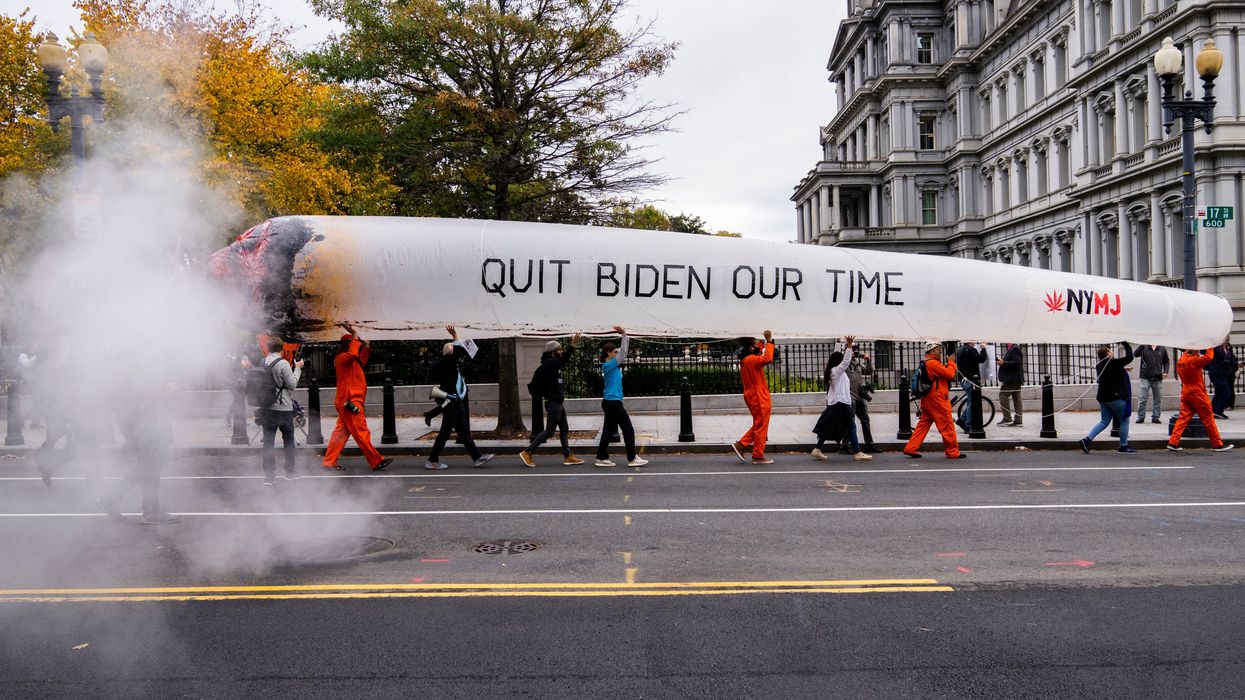
"As more states have adopted legalization, public support for this policy has risen dramatically," said one campaigner. "Voters prefer legalization and regulation over the failed policy of marijuana prohibition."
A record 7 in 10 voting-age Americans think marijuana should be legal, according to Gallup polling published Wednesday, a day after voters in Ohio made it the 24th state to legalize adult recreational use of the plant.
After holding steady at 68% for three straight years, Gallup found that support for legalization rose to 70%, with 29% of respondents saying cannabis should not be legal and 1% undecided. That's a 12% increase in support from 2013 levels and a 36% rise from 2003. In 1969, when Gallup first asked Americans if marijuana should be legal, only 12% said "yes."
"There's no 'buyer's remorse' among the public when it comes to legalizing cannabis," Paul Armentano, deputy director at the National Organization for the Reform of Marijuana Laws (NORML), said in a statement. "As more states have adopted legalization, public support for this policy has risen dramatically. That's because these policies are largely working as intended and because voters prefer legalization and regulation over the failed policy of marijuana prohibition."
According to Gallup:
For the second straight year, majority support for legalization is found among all major subgroups, including by age, political party, and ideology. Self-identified conservatives were the last major subgroup to express majority support, reaching 51% in 2022. Republicans first gave marijuana majority-level backing in 2017.
As of today, support for legal marijuana use is highest among self-identified liberals (91%) and Democrats (87%) and lowest among conservatives (52%) and Republicans (55%). Support is inversely correlated with age, reaching 79% among 18- to 34-year-olds. However, even among the oldest age group, nearly two-thirds (64%) are in favor.
This widespread support for legal marijuana was evident on Tuesday as nearly 57% of voters in Ohio—a state that voted for former President Donald Trump in the last two elections and has a Republican governor—approved the legalization and regulation of marijuana for people age 21 and older, who are also allowed to grow up to six cannabis plants per person and 12 plants per residence. The measure imposes a 10% tax on cannabis sales.
"Marijuana is no longer a controversial issue," Tom Haren, spokesperson for the Coalition to Regulate Marijuana Like Alcohol, told Marijuana Moment. "Ohioans demonstrated this by passing State Issue 2 in a landslide."
Marijuana Policy Project interim executive director Matthew Schweich told MJBizDaily that the Ohio vote "shows that a cannabis legalization campaign can win anytime and anywhere."
"To achieve victory in a nonpresidential year in a red state shows just how strong public support for legalization has become," he added.
The rise in support for legal marijuana parallels "the rise in Americans' self-reported use of the drug," Gallup said, citing a July survey. "The percentage saying they personally smoke marijuana has risen 10 points to 17% since 2013, and the percentage who have ever tried it has increased 12 points to 50%."
Despite state-level gains—only 10 states have not legalized marijuana for recreational or medical use—cannabis remains strictly prohibited at the federal level, where the U.S. Drug Enforcement Administration (DEA) lists the plant as a Schedule I controlled substance.
Schedule I drugs, the DEA explains, have "no currently accepted medical use and a high potential for abuse," and in addition to cannabis include heroin, LSD, MDMA, and peyote. Far more dangerous substances than marijuana—including cocaine, methamphetamine, and fentanyl—are classified as Schedule II.
After granting a mass pardon last year to U.S. citizens and permanent residents convicted of simple federal marijuana possession, President Joe Biden ordered Attorney General Merrick Garland and Health and Human Services Secretary Xavier Becerra to initiate a review which resulted in an August recommendation by HHS to reclassify cannabis as Schedule III. Such a move would place the plant in the same category as codeine, ketamine, testosterone, and anabolic steroids.
"Just as it is intellectually dishonest to categorize cannabis in the same placement as heroin, it is equally disingenuous to treat cannabis in the same manner as anabolic steroids," Armentano said at the time. "The majority of Americans believe that cannabis ought to be legal and that its hazards to health are less significant than those associated with federally descheduled substances like alcohol and tobacco."
"Like those latter substances, we have long argued the cannabis plant should be removed from the Controlled Substances Act altogether," he added, "thereby proving state governments—rather than the federal government—the ability to regulate marijuana in the manner they see fit without violating federal law."
In the Democrat-controlled U.S. Senate, the bipartisan Secure and Fair Enforcement Regulation (SAFER) Banking Act—which would legally protect banks and credit unions that serve cannabis businesses—was approved by the Banking Committee in September.
Last week, a bipartisan group of U.S. House lawmakers reintroduced H.B. 6028, the States Reform Act, legislation led by Rep. Nancy Mace (R-S.C.) that would remove cannabis from the Controlled Substances Act, facilitate the expungement of certain marijuana-related offenses, and provide regulatory oversight for state-legal marijuana markets.
However, Republicans control the lower chamber, and new House Speaker Mike Johnson (R-La.) is a Christian fundamentalist who opposes marijuana on religious grounds. In recent years, Johnson has voted against legislation that would end federal prohibition, allow banks to work with state-legal cannabis businesses, and fund medical marijuana research.
Congresswoman Pramila Jayapal welcomed the "strong action" from the Justice Department "to hold pharma and distributors accountable."
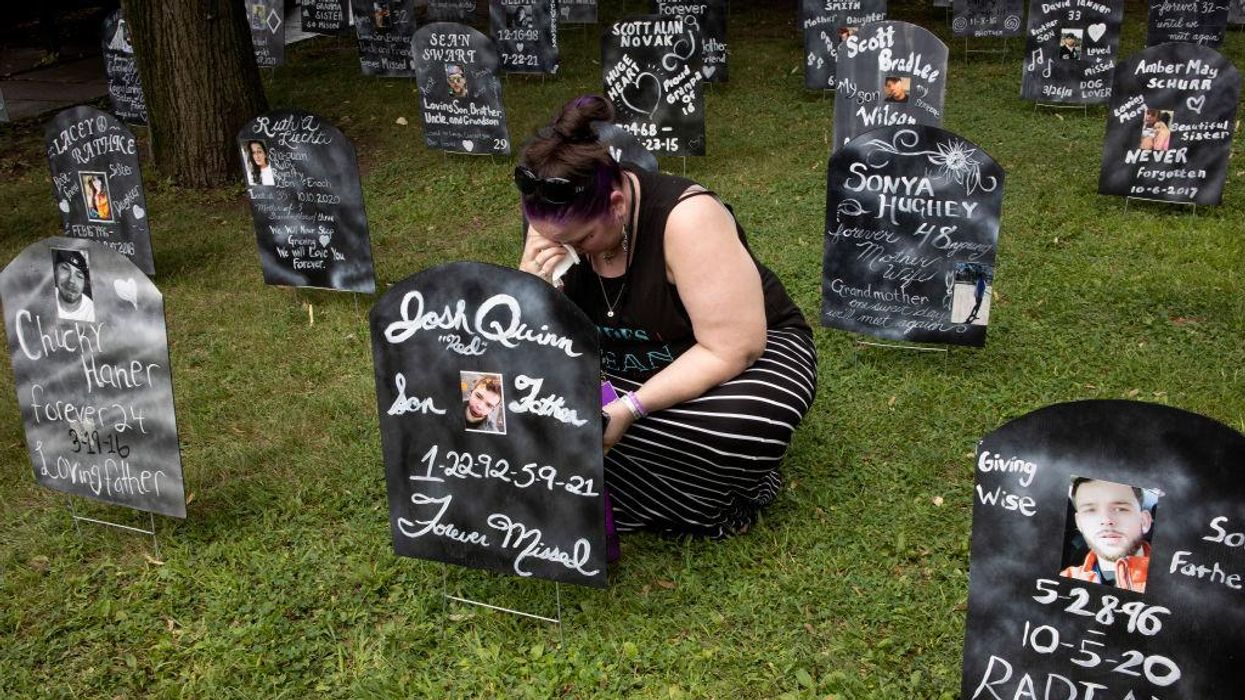
The Biden administration on Thursday filed suit against one of the nation's largest pharmaceutical distributors, AmerisourceBergen, and two of its subsidiaries for allegedly violating federal law and contributing to the opioid epidemic.
Filed in the U.S. District Court for the Eastern District of Pennsylvania, the complaint accuses AmerisourceBergen of at least hundreds of thousands of violations of the Controlled Substances Act. The U.S. Department of Justice (DOJ) is requesting civil penalties and injunctive relief.
"The Department of Justice is committed to holding accountable those who fueled the opioid crisis by flouting the law."
"The Department of Justice is committed to holding accountable those who fueled the opioid crisis by flouting the law," Associate Attorney General Vanita Gupta said in a statement. "Companies distributing opioids are required to report suspicious orders to federal law enforcement. Our complaint alleges that AmerisourceBergen—which sold billions of units of prescription opioids over the past decade—repeatedly failed to comply with that requirement."
Anne Milgram, head of the Drug Enforcement Administration (DEA), a Justice Department agency, highlighted that the complaint "alleges that the company's repeated and systemic failure to fulfill this simple obligation helped ignite an opioid epidemic that has resulted in hundreds of thousands of deaths over the past decade."
Citing data from the U.S. Centers for Disease Control and Prevention, the National Institute on Drug Abuse said earlier this year that "opioid-involved overdose deaths rose from 21,088 in 2010 to 47,600 in 2017 and remained steady in 2018 with 46,802 deaths. This was followed by a significant increase through 2020 to 68,630 overdose deaths."
The DOJ's complaint spotlights five pharmacies to which AmerisourceBergen distributed drugs: two in New Jersey and one each in Colorado, Florida, and West Virginia.
"For years, AmerisourceBergen put its profits from opioid sales over the safety of Americans," declared Philip R. Sellinger, the U.S. attorney for the District of New Jersey. "According to the complaint, this was part of a brazen, blatant, and systemic failure by one of the largest companies in America."
Jacqueline C. Romero, the U.S. attorney for the Eastern District of Pennsylvania, said that "the allegations against AmerisourceBergen are disturbing, especially for a company that is headquartered only a few miles from neighborhoods in Philadelphia devastated by the opioid epidemic."
In a lengthy statement responding to the new suit, the distributor provided details about each of the five pharmacies, and claimed that the examples "were cherry-picked by DOJ from the thousands of pharmacies AmerisourceBergen delivers medicines to be the most incriminating to the company."
"An objective review of the facts shows that the DOJ's complaint about AmerisourceBergen is simply an attempt to shift blame from past administrations at the Department of Justice and specifically their agency, the DEA, to industries they were tasked with regulating," the company added.
Meanwhile, in a tweet Thursday, Congresswoman Pramila Jayapal (D-Wash.) welcomed the "strong action" from the DOJ "to hold pharma and distributors accountable for fueling the opioid crisis."
Various multibillion-dollar settlements for other suits have already been reached with opioid distributors, manufacturers, and retailers—including AmerisourceBergen, Cardinal Health, CVS, Johnson & Johnson, McKesson, Walgreens, and Walmart.
However, many policymakers, experts, and advocates argue more must be done. As Jayapal put it: "All these companies need to be held accountable. This is a start."
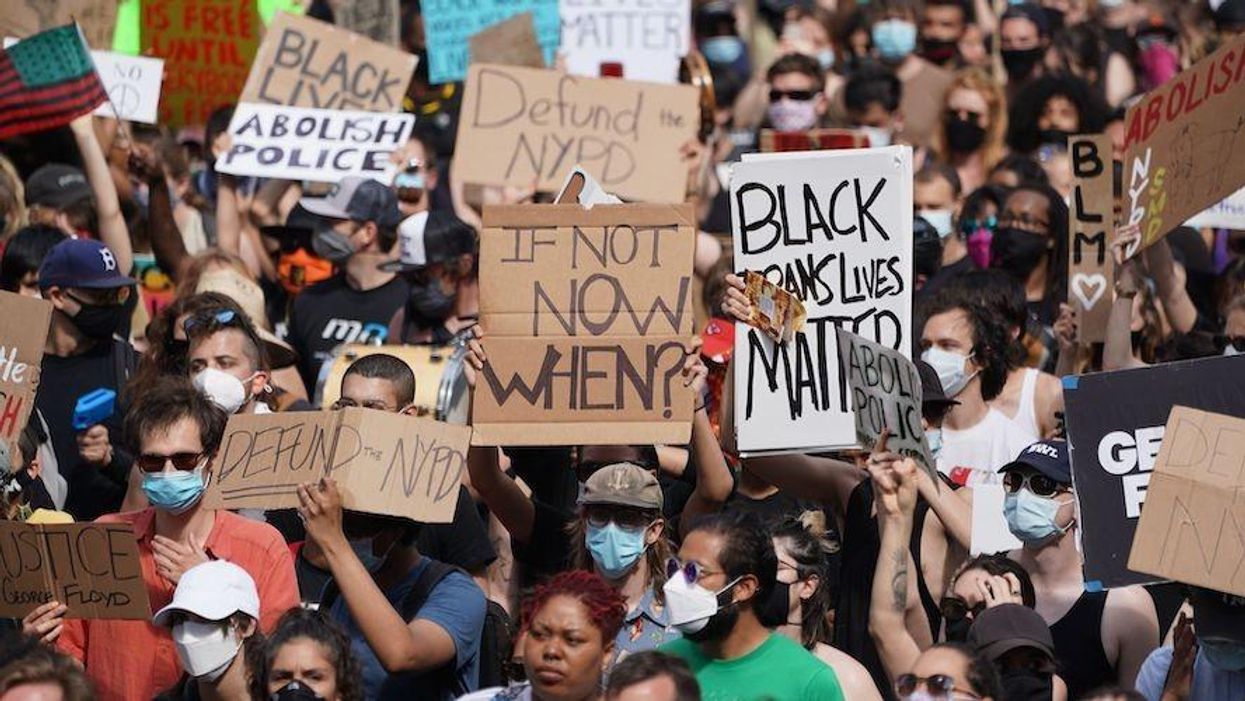
The Drug Enforcement Administration approved at least 51 requests from state, local, and federal law enforcement agencies to conduct covert surveillance during racial justice protests last summer, according to records obtained by CREW. The nationwide surveillance operation occurred in cities including Los Angeles, Tampa, Denver, and St. Louis, and involved agents infiltrating crowds undercover, as well as aerial and vehicular surveillance to monitor protesters.
The operations were part of a two-week expansion of the DEA's domestic surveillance authority by Justice Department leadership in June 2020, as first reported by BuzzFeed News. An initial release of records, obtained by CREW in an ongoing Freedom of Information Act lawsuit, detailed DEA's surveillance efforts in Philadelphia, Chicago, and Albuquerque.
The new records reveal the full scope of the DEA's surveillance operations last summer. While some agencies sought DEA's help with apprehending people suspected of theft or looting, CREW counted at least 51 instances where agencies enlisted DEA to secretly monitor protesters engaged in First Amendment-protected activity.
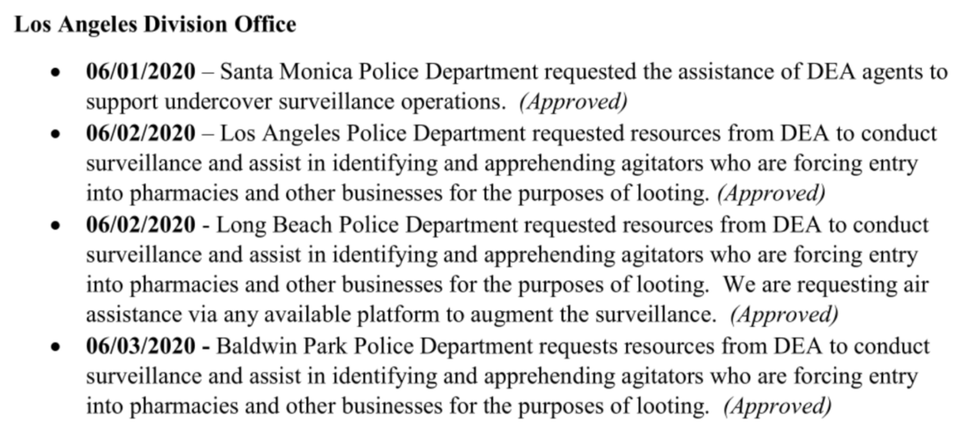
In California, the DEA approved surveillance requests submitted to its Los Angeles Division Office by police departments in Santa Monica, Los Angeles, Long Beach, and Baldwin Park. The Santa Monica Police Department specifically sought "the assistance of DEA agents to support undercover surveillance operations."
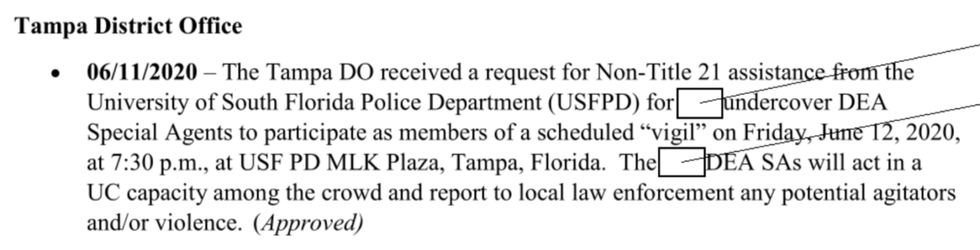
In Florida, the DEA approved a request submitted to its Tampa District Office by the University of South Florida Police Department for "undercover DEA Special Agents" to pose as "members of a scheduled 'vigil'" on June 12 at the university's Martin Luther King, Jr. Plaza. Press reports show that the vigil was peaceful and proceeded without incident.
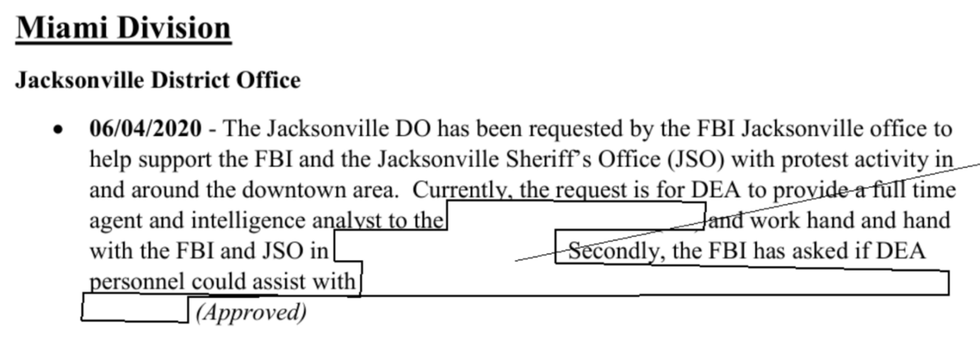
The DEA also approved a request from the Jacksonville Sheriff's Office to provide a "full time agent and intelligence analyst" to work "hand in hand" with officers.
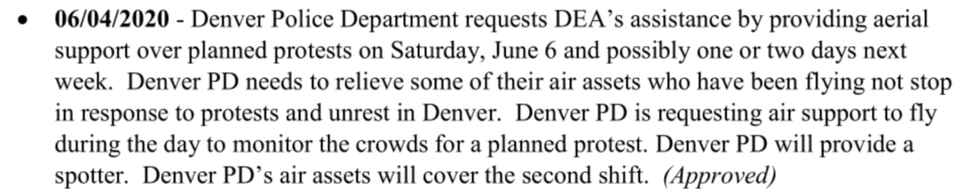
In some cities, the DEA provided aircraft surveillance to local divisions and police departments. The Denver Police Department requested DEA "aerial support" to monitor planned protests for up to two days.
U.S. Customs and Border Protection's Air division requested the assistance of DEA's San Antonio District Office "to conduct surveillance during a protest scheduled for...June 2."

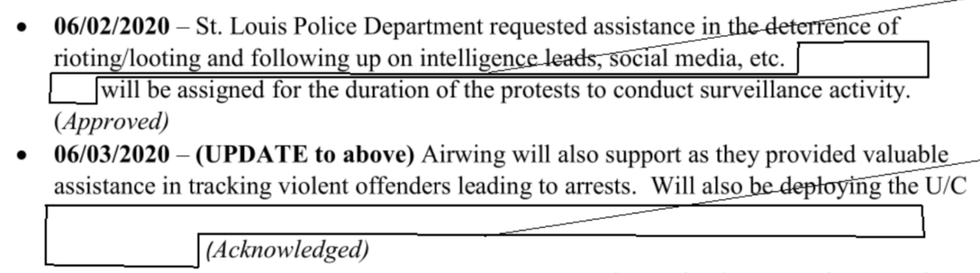
On June 2, the St. Louis Police Department requested surveillance-related support for "rioting/looting." They followed up the next day with an updated request for aerial support.
Many cities requested that DEA agents monitor protests from within while undercover. Two police departments in upstate New York requested that DEA agents dress in "plain clothes."
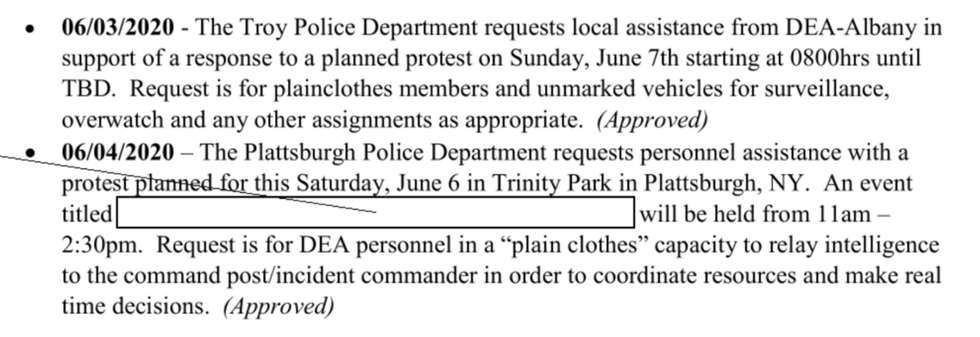
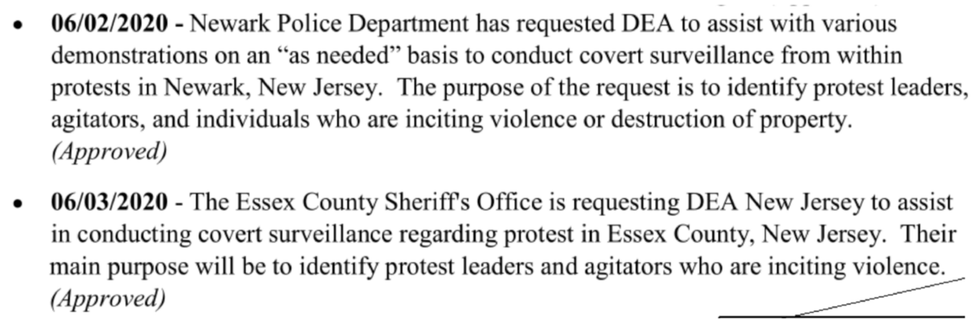
In New Jersey, the Newark Police Department and Essex County Sheriff's Office requested that the DEA conduct surveillance to "identify protest leaders and agitators who are inciting violence." Similarly, records obtained by CREW in April show that law enforcement officers in Philadelphia requested that the DEA identify protest leaders.
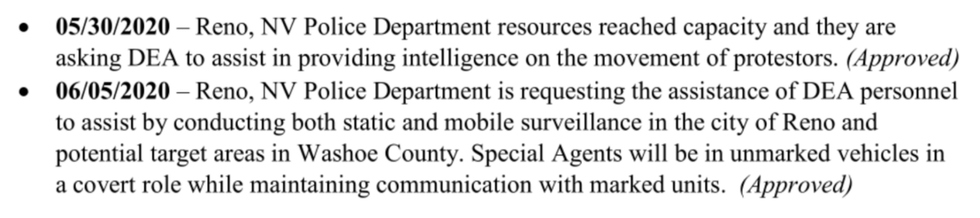
In Nevada, the DEA approved the Reno Police Department's May 30 request "to assist in providing intelligence on the movement of protesters." They followed up with another request on June 5 for "static and mobile surveillance" and covert vehicle intelligence gathering support.
Similarly, the Asbury Park Police Department in New Jersey requested "mobile/vehicular surveillance" to "provide intelligence on agitators and radical groups such as [redacted]."

The records also provided additional insight into DEA's previously reported surveillance activities in Chicago and Albuquerque.
The stark difference between federal law enforcement's preparations for racial justice protests last summer and the failures in preparation for the white nationalist attack on our Capitol on January 6 demands close scrutiny. The full extent of protester surveillance must be made public to prevent future politically motivated responses and abuses by law enforcement. If culpable individuals and institutions are not held accountable, they will continue to maintain harmful policies and systems at the expense of communities of color.
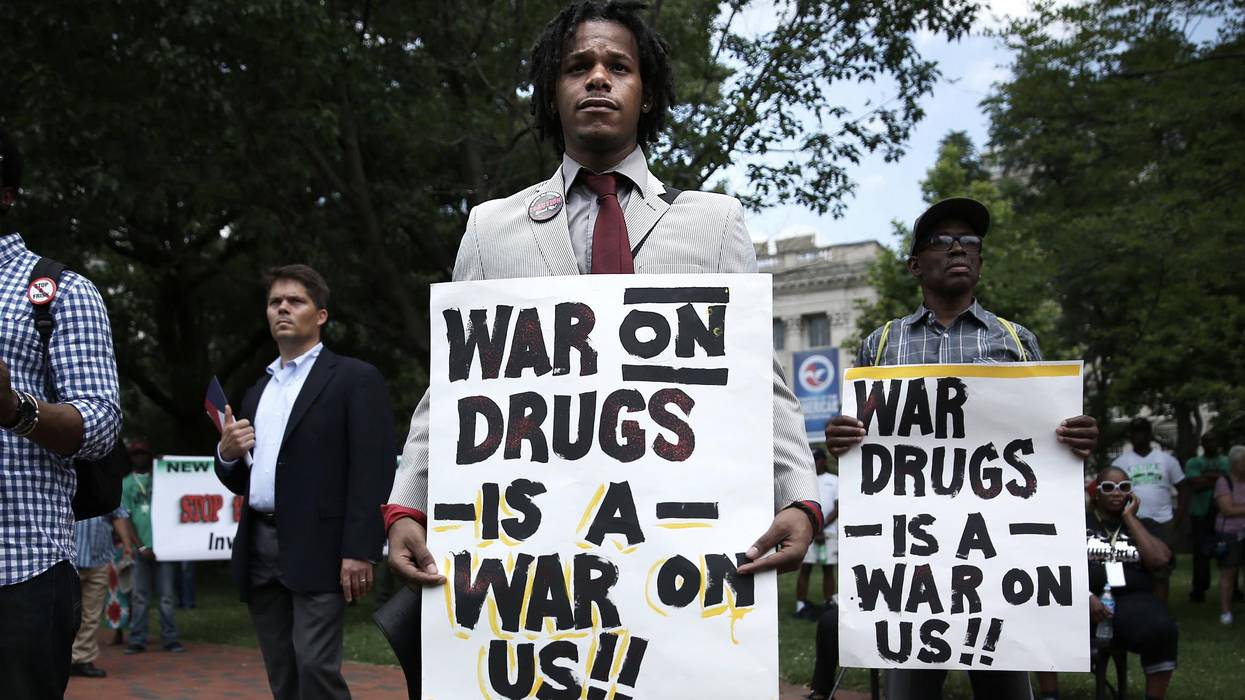
Fifty years ago this month, on June 17, 1971, President Richard Nixon declared a "full scale attack" on drug use. It was the beginning of the War on Drugs.
After generations of broken lives, broken families, and broken dreams, we must end it now.
Nixon--and many presidents since--promised the War on Drugs would save lives. Trillions of dollars later, incarceration and preventable overdose deaths have skyrocketed and continue to rise.
After generations of broken lives, broken families, and broken dreams, we must end it now.
Nixon's War on Drugs turned out to be a war on people. Once he saw there was no political benefit in drug treatment, he declared "an all-out war on the drug menace" with a federal Drug Enforcement Agency and stiffer penalties. This helped Nixon target his political enemies.
As White House advisor John Erlichman explained, "By getting the public to associate the hippies with marijuana and blacks with heroin, and then criminalizing both heavily, we could disrupt those communities. We could arrest their leaders, raid their homes, break up their meetings, and vilify them night after night on the evening news."
"Did we know we were lying about the drugs?" Erlichman asked. "Of course we did."
Nixon's "tough on crime" stance did not save his presidency, but his War on Drugs--and its disproportionate impacts on America's poorest communities--continued. Leaders from Ronald Reagan to BIll Clinton and Joe Biden, when he was still a tough-on-crime senator from Delaware, have spent billions on this failed policy, knowing all it buys them is short-term political gain.
The DEA's budget is $3.1 billion today, with many billions more spent on incarceration and military drug enforcement. Yet 2020 was the worst year in history for overdose deaths.
President Biden now tells us he wants to break from the failed policies of the past to improve the lives of regular people. He calls for green jobs and infrastructure, and expanded access to health care. Will he also, finally, call for an end to the War on Drugs, and invest in public health measures to save lives?
There is hope. In February, Biden's Office on National Drug Control Policy announced top priorities including "enhancing evidence-based harm reduction efforts" and "confronting racial equity issues related to drug policy."
This is a historic break from the "punish first" drug policies that have caused so much heartbreak. It came after People's Action, a national grassroots network, led more than 200 drug and health-focused groups to call for an end to the War on Drugs in favor of evidence-based solutions rooted in racial and economic justice and compassion.
But words are not enough. President Biden needs to follow through on his campaign promises to decriminalize drug use and offer treatment to drug users. He should throw his full weight behind the Mainstreaming Addiction Treatment (MAT) Act, so health care providers can prescribe treatments for addiction.
But President Biden's approach to drug policy thus far has been one step forward, two steps back. He says he supports the best solutions, but retreats when he fears a political cost--like when he extended the blanket scheduling of fentanyl, which increases overdose deaths and imposes harsh penalties on users.
Does Biden have the courage it will take to truly end the War on Drugs?
Local communities aren't waiting for an answer.
Vermont just became the first state to decriminalize small amounts of buprenorphine, a prescription drug that eases addiction. New York State just said it will no longer punish those who carry clean syringes. And in Portsmouth, Ohio, community members defeated their police department's bid to buy a $256,000 armored tank, so that money can go towards saving lives.
But we need leadership from the top. President Biden, it's time, once and for all, to end the War on Drugs and invest in the best public health strategies that will save lives. It's up to you.
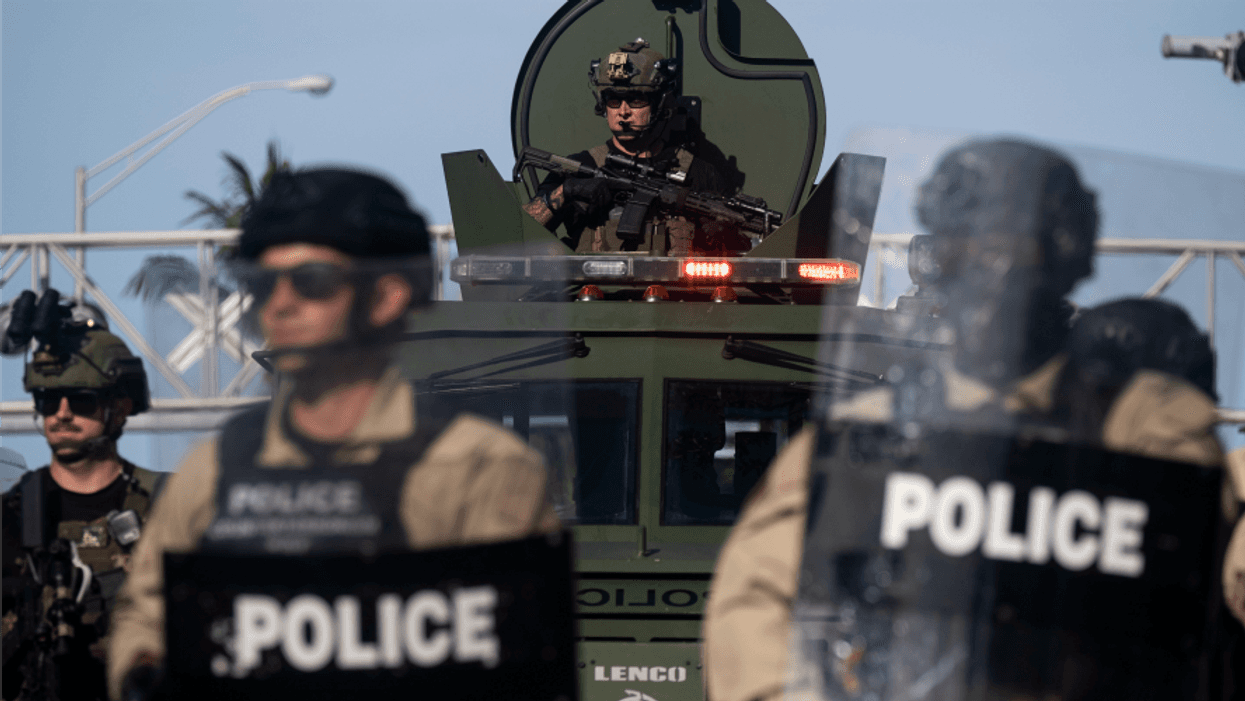
On Monday, House and Senate Democrats introduced the Justice in Policing Act of 2020. This bill includes much-needed provisions to help end racial profiling, ban chokeholds, create a national database for police misconduct and use-of-force, as well as establish a national use-of-force standard. But this bill fails to fully address issues like police militarization and the use of quick-knock raids. These policing practices are deadly tactics of the drug war, disproportionately used against people of color in drug investigations. This legislative measure is not the bold solution this moment requires.
The increased transfer of equipment through the 1033 program has been shown to increase the number of police killings in communities. For decades, the war on drugs has funded militarized policing through various grant programs including the Department of Defense's "1033 program," which the Justice in Policing Act attempts to reform. The 1033 program was created by Congress in 1990 for the purpose of expanding drug enforcement. Over the years, it has resulted in the transfer of approximately $7.2 billion worth of surplus military equipment to state, local and tribal law enforcement agencies. It has equipped law enforcement agencies with military-grade equipment such as armored vehicles, military-style assault rifles, and explosives, and has funded the creation of special tactical teams for drug investigations.
The increased transfer of equipment through the 1033 program has been shown to increase the number of police killings in communities. It has paved the way for militarized police responses to protests against police violence, like we witnessed in the summer of 2014 in Ferguson, Missouri when people protesting the killing of Michael Brown at the hands of a police officer were met with law enforcement equipped with tanks and riot gear. Moreover, the 1033 program has been notoriously mismanaged. A 2017 federal government oversight report found that the program could not prevent fraudulent applications from acquiring weapons of war from the program.
Reforming this botched program, as the Justice in Policing Act aims to do, is not enough to prevent further harm to communities of color. It must be abolished along with other funding streams that support militarized policing.
The Justice in Policing Act also attempts to reduce the harms of another drug war policing tactic--the serving of warrants. Thousands of "no-knock" warrants are issued to law enforcement every year, allowing law enforcement to forcibly enter a person's home without announcing who they are or their intent. Judges rarely deny these warrants and they have been increasingly permitted by courts in pursuit of the drug war. No-knock warrants are often used in conjunction with SWAT team deployments and have led to numerous tragic killings like that of Breonna Taylor in March 2020.
Similar to no-knock warrants, "quick-knocks" are also used in SWAT responses to drug cases. Like no-knock warrants, quick-knock raids do not give people much time to respond to police presence and can lead to deadly outcomes. According to a 2014 report by the American Civil Liberties Union, the use of SWAT teams to execute search warrants in drug cases has disproportionately targeted African American and Latino individuals, who make up a staggering 61% of the total number of individuals impacted by SWAT raids for drug cases. While the Justice in Policing Act would prohibit no-knock warrants, this bill must go further and also outlaw the use of quick-knock raids to prevent militarized police responses in drug investigations and save lives.
This moment calls for investing in infrastructure that increases public safety such as ensuring all of have equal access to quality education, affordable housing, a living wage, and infusing money in non-carceral responses to social issues like harm reduction programs for people who use drugs problematically.
But the most glaring failing of the Justice in Policing Act is that it neglects to reimagine public safety. It continues to fund police departments rather than redirect resources to communities, particularly Black and Brown communities that have been most harmed by over-policing and the war on drugs. This moment calls for investing in infrastructure that increases public safety such as ensuring all of have equal access to quality education, affordable housing, a living wage, and infusing money in non-carceral responses to social issues like harm reduction programs for people who use drugs problematically. It requires that we end the criminalization of work that people engage in to survive, such as sex work and drug sales.
This moment requires a bold legislative solution and this bill falls short. Even now, as Congress and communities mobilize to demand justice, the Drug Enforcement Administration (DEA) and Customs and Border Patrol (CBP) have been granted more power--which, when used, will ultimately continue to fuel mass incarceration, racial disparities, and other problems exacerbated by the drug war.
Against this backdrop, Congress must do more to ensure a standard for justice, policing and safety in America. Congress must act swiftly on police reform and strengthen this bill--not just for Breonna Taylor and George Floyd--but for the countless Black, Latinx, and Native American lives lost before them, and the countless others that devastatingly will follow if we don't begin to act.

Warning of grave threats to Americans' privacy and demanding transparency in the name of public good, the national ACLU and its Massachusetts chapter filed a federal lawsuit Thursday against the U.S. Department of Justice, the Federal Bureau of Investigation, and the Drug Enforcement Administration in an effort to unveil the agencies' secretive use of facial recognition technology nationwide.
"There can be no accountability if there is no transparency."
--Kade Crockford, ACLU of Massachusetts
"There can be no accountability if there is no transparency," declared Kade Crockford, director of the ACLU of Massachusetts' Technology for Liberty Program. "This dystopian surveillance technology threatens to fundamentally alter our free society into one where we're treated as suspects to be tracked and monitored by the government 24/7."
The lawsuit (pdf), filed under the Freedom of Information Act in the U.S. District Court for the District of Massachusetts, aims "to understand and inform the public about, among other things, how face recognition and other biometric identification technologies are currently being used by the government, and what, if any, safeguards are currently in place to prevent their abuse and protect core constitutional rights."
Pointing out in blog post on the ACLU's website that "face and other biometric surveillance technologies can enable undetectable, persistent, and suspicionless surveillance on an unprecedented scale," Crockford highlighted concerns about the FBI specifically, considering the agency's track record.
"When placed in the hands of the FBI--an unaccountable, deregulated, secretive intelligence agency with an unresolved history of anti-Black racism--there is even more reason for alarm," Crockford wrote. "And when that agency stonewalls our requests for information about how its agents are tracking and monitoring our faces, we should all be concerned."
In January, the ACLU filed a public records request seeking information about the FBI and DEA's "use of facial recognition and other biometric system." However, despite both agencies acknowledging the following month that they had received the request, neither has provided the legal group with any relevant documents--refusals which eventually led to Thursday's lawsuit.
Some information about the FBI's use of such technology is already publicly known, as The Washington Post reported Thursday:
The FBI allows federal and local investigators to submit a "probe" photo of someone's face and search against a database of more than 30 million criminal mug shots using its Next Generation Identification system, which the bureau calls "the world's largest and most efficient electronic repository of biometric and criminal history information."
More than 640 million facial photos, including from state driver's license databases, are also available for search by an internal FBI unit known as Facial Analysis, Comparison and Evaluation, or FACE, the Government Accountability Office reported in June. That team has logged more than 390,000 facial recognition searches from local, state and federal investigators since 2011.
Crockford, in the blog post, also detailed some of the FBI's recent uses of the technology--and why it's concerning.
"Since at least 2010, the FBI has monitored civil society groups, including racial justice movements, Occupy Wall Street, environmentalists, Palestinian solidarity activists, Abolish ICE protesters, and Cuba and Iran normalization proponents," Crockford noted. "In recent years, the FBI has wasted considerable resources to spy on Black activists, who the agency labeled 'Black Identity Extremists' to justify even more surveillance of the Black Lives Matter movement and other fights for racial justice. The agency has also investigated climate justice activists including 350.org and the Standing Rock water protectors under the banner of protecting national security."
"Because of the FBI's secrecy, little is known about how the agency is supercharging its surveillance activities with face recognition technology," Crockford continued. "This lack of transparency would be frightening enough if the technology worked. But it doesn't: Numerous studies have shown face surveillance technology is prone to significant racial and gender bias."
Crockford concluded that "of course, even in the highly unlikely event that face recognition technology were to become 100 percent accurate, the technology's threat to our privacy rights and civil liberties remains extraordinary."
Given that threat and the absence of federal rules on use of the technology by governments or private entities, muncipalties and states are pursuing local restrictions and bans with the help of privacy advocacy groups including the ACLU.
The Obama administration has rejected efforts to reschedule marijuana to a less restrictive drug category, keeping it classified as a Schedule 1 substance--illegal for any purpose.
That means states that allow marijuana for medical or recreational use will remain in violation of federal law.
The decision, announced by the U.S. Drug Enforcement Administration (DEA) on Thursday, follows efforts by lawmakers and activists to reschedule marijuana to a category in the Controlled Substances Act (CSA) that would loosen restrictions on its use. In a letter to the petitioners--Washington Gov. Jay Inslee (D), Rhode Island Gov. Gina Raimondo, and New Mexico nurse practitioner Bryan Krumm--DEA chief Chuck Rosenberg wrote, "Simply put, evaluating the safety and effectiveness of drugs is a highly specialized endeavor."
The Washington Post explains the impacts of the decision:
The current federal status of marijuana makes it impossible for state-legal marijuana businesses to take the same tax deductions afforded to other business, with some marijuana operations complaining that their effective tax rates are in the range of 60 percent to 90 percent, according to a Denver accountant who works with such businesses, Jordan Cornelius. Federal restrictions also make banks reluctant to work with marijuana businesses, leading many of them to become all-cash operations -- with all the risks that entails.
Legalization advocates were disappointed by the ruling, but saw a minor victory in the DEA's decision that it would end its monopoly on marijuana research, which Michael Collins of the Drug Policy Alliance (DPA) said would remove some obstacles.
It's "a bad day for legalization efforts and a good day for scientists."
--Kevin Sabet, Smart Approaches to Marijuana
"Keeping marijuana in Schedule I shows that the DEA continues to ignore research, and places politics above science," said Collins, the DPA's deputy director of national affairs. "In reality, marijuana should be descheduled and states should be allowed to set their own policies."
Ending the National Institute on Drug Abuse's (NIDA) monopoly, however, "is a very welcome move that will enable more research," Collins added.
For years, the University of Mississippi has been the only institution in the U.S. to grow marijuana for research purposes. NIDA funds the school's program. "This restriction has so limited the supply of marijuana federally approved for research purposes that scientists said it could often take years to obtain it and in some cases it was impossible to get," the New York Times noted on Wednesday, and loosening that particular restriction "will have a significant practical effect."
Kevin Sabet, president of Smart Approaches to Marijuana and a former Obama administration drug advisor, told USA Today that the decision signals "a bad day for legalization efforts and a good day for scientists."
Mason Tvert, spokesperson for the Marijuana Policy Project, agreed.
"The DEA's refusal to remove marijuana from Schedule I is, quite frankly, mind-boggling," he said Thursday. "It is intellectually dishonest and completely indefensible. Not everyone agrees marijuana should be legal, but few will deny that it is less harmful than alcohol and many prescription drugs. It is less toxic, less addictive, and less damaging to the body."
"We are pleased the DEA is finally going to end NIDA's monopoly on the cultivation of marijuana for research purposes," he continued. "Removing barriers to research is a step forward, but the decision does not go nearly far enough. Marijuana should be completely removed from the CSA drug schedules and regulated similarly to alcohol."
Currently, 42 states and the District of Columbia have adopted laws that recognize marijuana's medical medical value, and four states--Alaska, Colorado, Oregon, and Washington--have legalized recreational use. At least eight more states will consider marijuana-related issues in November, including ballot measures for full legalization in Arizona, California, Massachusetts, Maine, and Nevada.
The 2016 spending bill approved last week by U.S. Congress and signed late Friday by President Barack Obama included a measure that effectively ended the federal ban on medical marijuana and paved the way for significant reforms of the war on drugs.
"For decades, Congress has been responsible for passing disastrous drug laws," said Michael Collins, deputy director of national affairs for the Drug Policy Alliance (DPA). "It's encouraging to see them starting to roll back the war on drugs by allowing states to set their medical marijuana policies."
One provision prevents the Department of Justice (DOJ) and the Drug Enforcement Administration (DEA) from spending money to interfere with state laws on medical marijuana—the amendment, sponsored by Reps. Dana Rohrabacher (R-CA) and Sam Farr (D-CA) were passed temporarily earlier this year and were up for renewal in the 2016 budget.
Congress has codified the order into law by approving it within the omnibus bill.
"Patients who benefit from medical marijuana should not be treated like dangerous criminals, and the businesses that support them need to be protected from the old drug war mentality that still runs deep within the DEA," said Neill Frankin, executive director at Law Enforcement Against Prohibition (LEAP). "It's very encouraging to see such widespread support for protecting state and patient rights."
Rep. Barbara Lee (D-Oakland) added, "The federal government should never interfere with patients and their medicine."
The impact could be significant in states where the DOJ and DEA continued to raid dispensaries even after the passage of the Rohrabacher-Farr amendment, which prohibited them from interfering with states that complied with local regulations on medical marijuana. In October, a federal court in California ruled that the DOJ and the DEA violated the law when they ransacked and shut down several medical marijuana providers in the state. Judge Charles Breyer of the U.S. District Court in northern California slammed the agencies for their loose interpretation of the amendment, which they claimed only blocked the DEA from challenging state laws, not prosecuting individuals or businesses.
That decision and some pending cases give drug reform campaigners hope that the agencies will adhere to the new law and give up attempts to circumvent it.
"The war on medical marijuana is over. Now the fight moves on to legalization of all marijuana."
--Bill Piper, Drug Policy Alliance
"It's always a challenge when you're depending on the Department of Justice to police itself, but at least in this case, we have the advantage that it's being litigated," DPA senior director of national affairs Bill Piper told Common Dreams on Monday. "The intent is very clear."
The passage of the measure follows a sea change in public perception of marijuana as states continue to legalize pot nationwide. Arrests for public consumption have dropped in Washington, D.C., since voters in the district approved recreational marijuana last year, Piper said. Law enforcement has realized "they're on the losing side of history. We have proved the political support is there. I think there's a norm that is being set that you shouldn't waste resources on marijuana, especially in states where it's legal."
Ironing out the wrinkles may take time, Piper added. "The DEA is probably going to be the last agency to come to their senses on this."
Nonetheless, legalization advocates were optimistic that the drug reform movement was starting to make significant progress.
Another provision passed within the omnibus lifts a freeze on using federal dollars to support needle exchange programs. The ban on such programs, which allow drug users to hand over used syringes for new, sterile ones to reduce the risk of disease, was put into place in 1988 at the height of the AIDS crisis. It was repealed in 2009, then reinstated in the 2011 omnibus after Republicans took control of the House of Representatives.
DPA said outbreaks of HIV in Indiana, along with the increase of heroin use in places like Kentucky and West Virginia, prompted Republicans to rethink their stance on the programs.
"Syringe access programs are a sound public health intervention, rooted in science, and proven to drastically reduce the spread of HIV and hepatitis C," DPA's Collins said. "Lifting this archaic ban will save thousands of lives."
LEAP called the measure "an incredible victory for public health."
Neill Frankin told Common Dreams, "Syringe exchange programs save lives. It's as simple as that. I applaud Congress for finally releasing funds to implement them and hope this is the start of a greater trend toward putting public health ahead of politics."
In a huge victory for the medical marijuana industry in California, a federal court on Monday ruled that the Department of Justice (DOJ) violated the law when it misused an amendment in last year's federal spending bill to prosecute legal dispensaries in the state.
Judge Charles Breyer of the U.S. District Court in northern California handed down a biting decision chastising the DOJ for its twisted interpretation of the Rohrabacher-Farr amendment, which bars the department or the Drug Enforcement Administration (DEA) from taking legal action against suppliers in compliance with state regulations.
The DOJ used the amendment to do that, claiming it only blocks the agency from challenging state laws but not from going after individuals or businesses. In the process, it shut down one of California's oldest dispensaries, the Marin Alliance for Medical Marijuana (MAMM).
"It defies language and logic for the government to argue that it does not prevent California from implementing its medical marijuana laws by shutting down these ... heavily regulated medical marijuana dispensaries," Breyer wrote in the decision for MAMM v. USDOJ, which could set a precedent for how the justice system addresses state-legal protection of pot businesses.
Breyer's is the first known ruling by a federal judge to rule in favor of a dispensary under the Rohrabacher-Farr amendment, which was only approved for one year after the spending bill was signed into law by President Barack Obama in 2014 but which is expected to be renewed by U.S. Congress.
The decision to lift the injunction also allows MAMM founder Lynnette Shaw to reopen the dispensary. If upheld on appeal, it will also give the same breathing room to other dispensaries, including Oakland's Harborside Health Center and the Berkeley Patients Group, both of which were shut down in similar raids. The ruling "means I can have my life back," Shaw told the San Francisco Chronicle.
The ruling also redeems Breyer's 2011 approval of the injunction that shuttered MAMM's doors.
In April, U.S. House Reps. Dana Rohrabacher (R-Orange County) and Sam Farr (D-Carmel) sent a letter to then-Attorney General Eric Holder stating that their amendment was intended to prevent the government from "wasting its limited law enforcement resources on prosecutions and asset forfeiture actions against medical marijuana patients and suppliers," and that the DOJ had misinterpreted its meaning.
While DOJ lawyers argued that shutting down a handful of dispensaries did not impede access to pot for most California buyers, Breyer said there was evidence that medical marijuana supplies had been "substantially impeded" by the department's actions. The DOJ's reading of the amendment "tortures the plain meaning of the statute" and is "at odds with fundamental notions of the rule of law," he wrote.
Bill Piper, director of national affairs for the Drug Policy Alliance, said Breyer's decision shows "that the Justice Department is not above the law and must leave legal state medical marijuana dispensaries alone."
"Cancer, MS, AIDS, and other medical marijuana patients can sleep a little easier tonight knowing that a federal judge will protect them and the people providing them their medicine," Piper said.
Dan Riffle of the Marijuana Policy Project added, "This is a big win for medical marijuana patients and their providers and a significant victory in our efforts to end the federal government's war on marijuana. Federal raids of legitimate medical marijuana businesses aren't just stupid and wasteful, but also illegal."
As of Thursday, U.S. federal law enforcement agencies will no longer be able to use a secretive cell phone surveillance technology without a warrant, as the Justice Department introduced long-awaited new rules on the controversial devices known colloquially as Stingrays.
The Federal Bureau of Investigation (FBI), the Drug Enforcement Administration (DEA), and other law enforcement agencies will now be required to obtain search warrants by probable cause before being allowed to use the cell-site simulators in any criminal investigation. In announcing the new rules (pdf), the DOJ cited concerns over privacy, civil liberties, and "higher legal standards."
Stingrays mimic cell tower signals to trick mobile phones into connecting with them, allowing law enforcement agents to track a target's location, record text messages or calls, or deny service to a particular phone. The controversial technology has been slammed by civil liberties groups for what they say are invasive and unconstitutional methods, while the departments who employ them have historically remained secretive over their use and ownership of the devices.
In addition to the new rules on warrants, the DOJ's enhanced policies, which go into effect immediately for all federal law enforcement agencies, require more stringent data deletion and ban agents from using the devices to collect communications, emails, contact lists, images, or any other data contained on the phone itself.
The new rules will "enhance transparency and accountability, improve training and supervision, establish a higher and more consistent legal standard and increase privacy protections in relation to law enforcement's use of this critical technology," the DOJ said in its announcement.
"With only this policy shielding us, there's nothing keeping warrantless Stingray evidence out of court, and therefore nothing to deter agents from behaving badly."
--Nate Cardozo, Electronic Frontier Foundation
"At long last," responded Electronic Frontier Foundation staff attorney Nate Cardozo.
Cardozo provided more details on the new rules in a write-up published Friday:
What today's changes do:
- Federal law enforcement agents will be required to obtain a search warrant supported by probable cause prior to using a cell-site simulator in a law enforcement context. A search warrant requires a showing by the agent, under oath, that meets one of the highest standards in federal law. This incredibly important change is precisely what EFF has been asking for.
- Agents will only be allowed to use Stingrays in "pen register" mode, meaning the devices will collect only the basic location of the phone and the numbers of incoming and outgoing calls and texts. Agents will not be allowed to collect the content of your communications -- like your emails or text messages -- even if the cell-site simulator is capable of such collection.
- Finally, Agencies must delete data on users not targeted in either 24 hours or 30 days, depending on context.
What today's changes don't do:
- The new policy isn't law and doesn't provide any remedy to people whose data is swept up by Stingrays operated without a warrant. Indeed, it won't even act to keep evidence collected in violation of the policy out of court (this is known as suppression).
- The policy doesn't apply to the use of Stingrays outside of the criminal investigation context. For instance, when federal agents use cell-site simulators for "national security" purposes, they won't be required to obtain a warrant by the terms of this policy.
- There are two enumerated exceptions to the warrant requirement in today's guidance. The first is the traditional "exigent circumstances" exception, common to all warrant requirements and not particularly worrisome. But the second exception listed in today's policy for undefined "exceptional circumstances" is potentially problematic. We have no idea what that means, so we're waiting to see if and how the exception will be used.
The reaction from civil liberties groups on Thursday, while largely positive, asserted that the new rules must only be seen as a starting point.
"The DOJ's new policy on cell-site simulators is a step in the right direction," Jeramie Scott, national security counsel at the Electronic Privacy Information Center (EPIC), told Common Dreams. "Most importantly, the policy requires a warrant to use the devices, prohibits their use to intercept communications, and requires the deletion of all non-target data."
"Unfortunately, the policy only applies to DOJ components," Scott continued. "Additionally the national security exception could be used as a loophole around the warrant requirement in some circumstances if combined with parallel construction--a practice of reconstructing the evidence obtained in a criminal case to conceal the true source."
Nathan Freed Wessler, staff attorney for the ACLU's Speech, Privacy, and Technology Project, added in a statement: "After decades of secrecy in which the government hid this surveillance technology from courts, defense lawyers, and the American public, we are happy to see that the Justice Department is now willing to openly discuss its policies. Requiring the FBI, DEA, and other agencies to obtain a warrant before deploying these surveillance technologies--in most circumstances--is a positive first step."
"However, this policy does not adequately address all concerns," Wessler continued.
While federal agencies have been hesitant to disclose information about the technology, civil liberties groups like the ACLU have previously obtained documents through Freedom of Information Act (FOIA) requests that indicate widespread use of the devices in certain locations, such as Florida, New York, and Baltimore.
And while police departments often invoke counter-terrorism measures as justification for buying up Stingrays and related technology, reporting by the ACLU also found that they are used as a first resort in the investigation of minor crimes.
As Cardozo explains, "With only this policy shielding us, there's nothing keeping warrantless Stingray evidence out of court, and therefore nothing to deter agents from behaving badly."
Wessler added, "Disturbingly, the policy does not apply to other federal agencies or the many state and local police departments that have received federal funds to purchase these devices. In addition, the guidance leaves the door open to warrantless use of Stingrays in undefined 'exceptional circumstances' while permitting retention of innocent bystander data for up to 30 days in certain cases."
"The DOJ should close any loopholes created by the exceptions and work to extend the policy to all federal agencies as well as state and local law enforcement that receive federal funding to buy the cell-site simulators," Scott said.