

SUBSCRIBE TO OUR FREE NEWSLETTER
Daily news & progressive opinion—funded by the people, not the corporations—delivered straight to your inbox.
5
#000000
#FFFFFF
To donate by check, phone, or other method, see our More Ways to Give page.
Daily news & progressive opinion—funded by the people, not the corporations—delivered straight to your inbox.
"These fossil fuel actors should be held accountable to the victims of their lethal conduct, and this wrongful death suit provides a compelling new approach for climate victims moving forward."
Two years after legal scholars wrote in the Harvard Environmental Law Review that fossil fuel companies could feasibly be charged with homicide in cases of people who are killed by climate-fueled extreme weather events, one woman is taking a major step toward holding oil and gas giants accountable for a specific death—that of her mother, who died during an extreme heatwave in 2021.
Misti Leon filed a civil lawsuit against Exxon Mobil, Chevron, Shell, BP, ConocoPhillips, Phillips 66, and BP subsidiary Olympic Pipeline Company, arguing that their knowledge going back decades that extracting oil and gas would heat the planet makes them liable for the death of her mother, Juliana.
Juliana Leon, who was 65, was making a 100-mile drive home from a doctor's appointment in Seattle on June 28, 2021 when she pulled over and rolled down her car windows. Emergency workers found her hours later having died of hyperthermia, or overheating, with her body temperature having reached 110°F.
A heat dome had settled over the Pacific Northwest, with high pressure trapping hot air over the region, and the World Weather Attribution later found that the heat dome would have been "virtually impossible" without climate change resulting from fossil fuel emissions.
About 600 more people died in Oregon and Washington in late June 2021 than would have been typical for a one-week period, and Leon is arguing that the death of her mother from hyperthermia, or overheating, was the direct result of fossil fuel companies' actions.
Leon is arguing in the case that, as numerous investigations have found, fossil fuel companies have known for decades that extracting oil and gas would cause planet-heating emissions and could result in extreme, potentially deadly weather events like heatwaves, flooding, and wildfires.
"The purpose of criminal law enforcement is to deter future crimes, promote public safety, punish wrongdoers, and encourage the convicted to pursue less harmful practices. All of these public safety goals apply to Big Oil's continuing contributions to climate change."
"Why shouldn't we hold someone legally accountable for this kind of behavior?" David Arkush, director of Public Citizen's Climate Program and a co-author of the Harvard Environmental Law Review paper, told The New York Times. "There would be no question that we would hold them accountable if they caused other types of deaths. This is no different. They foresaw this, they did it anyway, and they hurt people."
Lee Wasserman of the Rockefeller Family Fund called the lawsuit an "important moment for climate accountability."
Although Leon's case is the first, according to legal experts, to attempt to hold fossil fuel giants accountable for a specific death, it is a significant step in a wider effort to bring the industry to justice for its role in causing weather disasters.
Vermont and New York both passed climate superfund laws last year that would allow the states to hold oil companies financially liable for extreme weather events and force them to pay for damages. U.S. Attorney General Pam Bondi has announced lawsuits against the two states over the laws.
In the past decade, dozens of localities and states have also filed lawsuits against oil and gas companies for hiding their knowledge of the impact fossil fuel extraction would have on average global temperatures and the climate.
Aaron Regunberg, accountability project director for Public Citizen's Climate Program, said climate disasters like the one that allegedly killed Juliana Leon "are the foreseeable, and foreseen, consequences of specific actions by fossil fuel corporations, CEOs, and boards of directors."
"They caused the climate crisis and deceived the public about the dangerousness of their products in order to block and delay solutions that could prevent heat deaths like Juliana's," said Regunberg. "These fossil fuel actors should be held accountable to the victims of their lethal conduct, and this wrongful death suit provides a compelling new approach for climate victims moving forward."
"The purpose of criminal law enforcement is to deter future crimes, promote public safety, punish wrongdoers, and encourage the convicted to pursue less harmful practices," he added. "All of these public safety goals apply to Big Oil's continuing contributions to climate change, and prosecutors across the country should take note of this new wrongful death suit and carefully consider how the climate effects their constituents are experiencing fit the criminal laws they are charged with enforcing."
Their fortunes are the result of poisoning you, me, our children and grandchildren, every other living thing on Earth, and destroying the temperature stability of our atmosphere. This week it's horrifying to look out and see the world they are creating for the rest of us.
Public Citizen would like you to know that there are killers among us.
They wear $2,000 suits and travel in private jets, unbothered by the TSA or the teeming masses. Their children attend the finest universities in the world, and they vacation on private islands and yachts. Many “earn” more in a day than most Americans take home in a year; their positions ensure their heirs will never have to work a day in their lives.
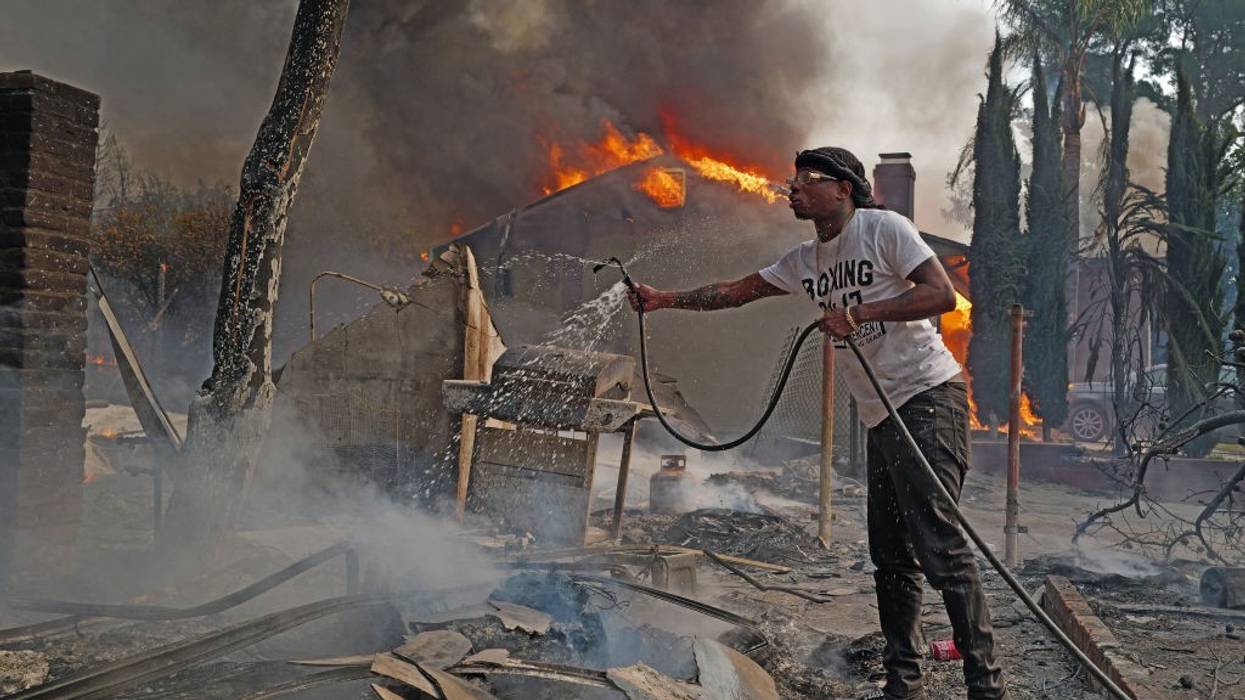
Their fortunes are the result of poisoning you, me, our children and grandchildren, every other living thing on Earth, and destroying the temperature stability of our atmosphere. This week they’re arguably responsible, in part, for billions of dollars in losses, numerous deaths, and thousands of shattered lives in Southern California.
Illegitimate president-elect Trump is trying his best to cover for them, claiming that the fires ripping through the Los Angeles area are the fault of California’s Democratic governor, calling Gavin Newsome by a childish name to draw more attention to Trump’s efforts on behalf of the Republican Party’s most generous donors.
Oil industry executives and fossil fuel billionaires are the hands holding the smoking gun of climate change that have directly or indirectly caused tens of thousands of deaths and millions of people displaced worldwide over the past two decades. And now the fires in southern California.
Mainstream media is largely going along with Trump’s charade, choosing not to even mention — in the vast majority of their reports on the crisis — the role of climate change in the fires. And never, G-d forbid, mentioning the role of the fossil fuel industry in the climate change that has turned these fires from an annual nuisance into a hellscape.
It’s as frankly absurd as a TV news person reporting on a plane crash and, instead of asking aviation experts what caused it, simply lifting their collective shoulders with a helpless “shit happens” shrug.
But these fires — and the droughts and changing weather patterns that made them so severe — aren’t something that just happens by random happenstance, any more than an airliner crash.
And the oil industry has known for decades this day was coming.
In November, 1959, the famous scientist Edward Teller — the “Father of the H-Bomb” — was the keynote speaker at a conference on “The Energy of the Future” in New York, organized by the American Petroleum Institute and the Columbia Graduate School of Business. The news he conveyed to the assembled oil industry executives was stark:
“Whenever you burn conventional fuel, you create carbon dioxide. ... The carbon dioxide is invisible, it is transparent, you can’t smell it, it is not dangerous to health, so why should one worry about it? Carbon dioxide has a strange property. It transmits visible light but it absorbs the infrared radiation which is emitted from the earth. Its presence in the atmosphere causes a greenhouse effect ...
“It has been calculated that a temperature rise corresponding to a 10 per cent increase in carbon dioxide will be sufficient to melt the icecap and submerge New York. All the coastal cities would be covered, and since a considerable percentage of the human race lives in coastal regions, I think that this chemical contamination is more serious than most people tend to believe.”
This shocking news apparently provoked a scramble in the oil industry, probably similar to when the asbestos industry learned in the 1930s that their product caused lung cancer (the mesothelioma that killed my father), or in 1939 when the tobacco industry learned that smoking also killed people.
They set out to determine if Teller’s prediction was true. He’d predicted that CO2 levels would reach the point where they’d begin to seriously melt the polar and Greenland ice caps and alter weather patterns within a few decades, telling the oil executives at that 1959 meeting:
“At present the carbon dioxide in the atmosphere has risen by 2 per cent over normal. By 1970, it will be perhaps 4 per cent, by 1980, 8 per cent, by 1990, 16 per cent [about 360 parts per million, by Teller’s accounting], if we keep on with our exponential rise in the use of purely conventional fuels. By that time, there will be a serious additional impediment for the [heat] radiation leaving the earth.”
For the next decade, industry scientists went to work along with studies commissioned by major universities. One of the most well-known was a 1968 report the American Petroleum Institute hired the Stanford Research Institute to conduct. Its findings corroborated Teller’s prediction:
“Significant temperature changes are almost certain to occur by the year 2000, and these could bring about climatic changes. ... there seems to be no doubt that the potential damage to our environment could be severe. ... pollutants which we generally ignore because they have little local effect, CO2 and submicron particles, may be the cause of serious world-wide environmental changes.”
It was the first of dozens of studies the industry paid for or knew about, all predicting pretty much exactly what’s happening right now in Los Angeles, including major reports in 1979, 1982, and 1991.
And then the “climate denial” began.
Fossil fuel billionaires and their oil companies funded think tanks to promote skepticism, pushed frontmen onto radio and TV to claim that climate scientists and people like Al Gore were “in it for the money,” and began funding the campaigns of politicians willing to exchange the future habitability of the planet for a few decades of power and wealth.
In 2015, the Union of Concerned Scientists documented decades of internal industry memos and strategy sessions that were organizing, funding, and detailing roughly three decades of lies foisted on the American Public. The industry and its executives’ efforts were all, apparently, in the service of preserving their income stream and avoiding any liability for the deaths they knew would one day come as a result of their product poisoning our atmosphere.
And now that day is here. Oil industry executives and fossil fuel billionaires are the hands holding the smoking gun of climate change that have directly or indirectly caused tens of thousands of deaths and millions of people displaced worldwide over the past two decades. And now the fires in southern California.
Two-thirds of voters, according to a 2024 poll, believe the fossil fuel industry and its pampered executives should be held civilly responsible for the damage climate change is causing, and a plurality want them to face criminal charges.
Public Citizen published a 2023 report titled “Charging Big Oil with Climate Homicide,” including legal rationales and possible strategies for holding the killers in suits accountable by state and local prosecutors.
Will Los Angeles District Attorney Nathan Hochman or California Attorney General Rob Bonta have the courage to hold these companies and/or their executives accountable for the lies and deceptions they’ve funded that this week are killing Angelinos?
Will enough people call their members of Congress at 202-224-3121 to provoke investigations that could lead to congressional action?
Will our media ever begin to call out Trump and the alleged climate lies and deceptions of the industry that owns him?
"It is likely that continued increases in average temperatures, the number of 'hot days,' and the frequency and intensity of heatwaves could be playing a role," said one researcher.
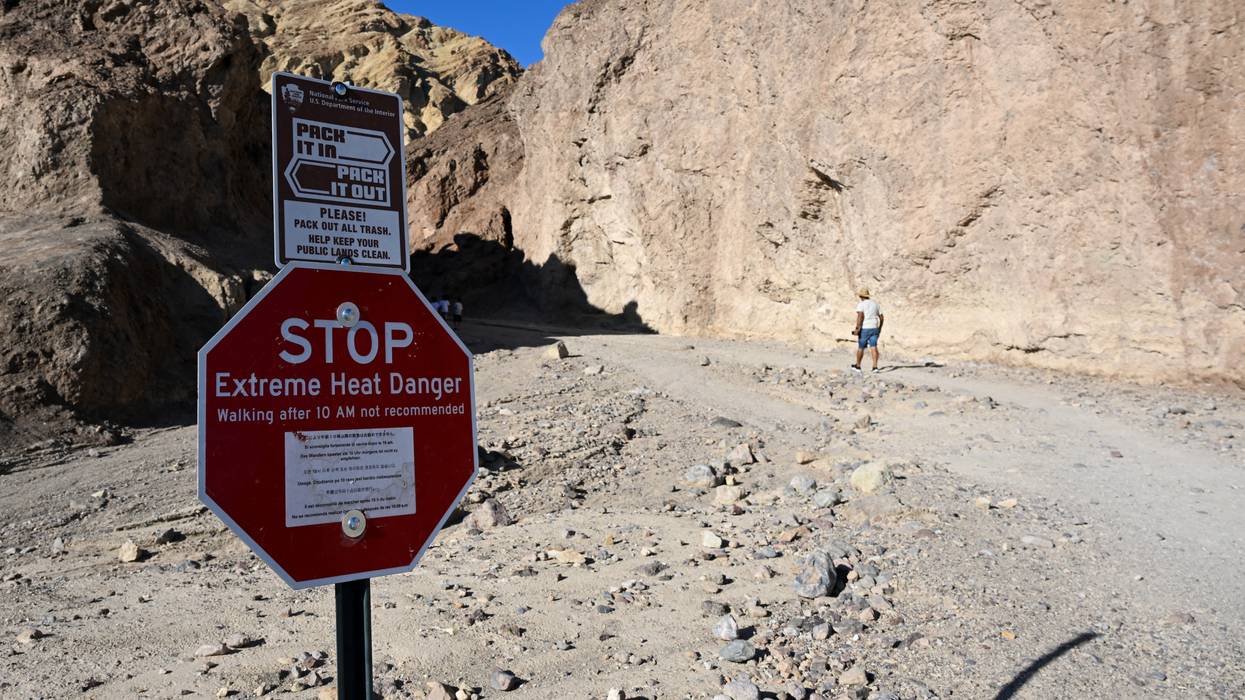
As 55 million people in the U.S. Midwest faced heat alerts on Monday, research published in the peer-reviewed Journal of the American Medical Association showed that heat-related deaths in the country rose 117% between 1999 and 2023.
"The current trajectory that we're on, in terms of warming and the change in the climate, is starting to actually show up in increased deaths," lead author Jeffrey Howard, an associate professor of public health at the University of Texas at San Antonio, told USA Today. "That's something that we hadn't had measured before."
Using a U.S. Centers for Disease Control and Prevention platform, Howard and co-authors from Pennsylvania State University and the Uniformed Services University of the Health Sciences analyzed all deaths from those 25 years coded for "hyperthermia of newborn," "effects of heat and light," or "exposure to excessive natural heat" as either a contributing or underlying cause of death.
They found 21,518 deaths for the full period, with 1,069 in 1999. The lowest annual figure was in 2004 (311) and the highest was in 2023 (2,325). Last year was the hottest on record globally and scientists are already warning that this year is expected to continue that trend.
"As temperatures continue to rise because of climate change, the recent increasing trend is likely to continue."
Last year broke the record that was set in 2016—a year that's also significant in the new study: "The number of heat-related deaths... showed year-to-year variability, with spikes in 2006 and 2011, before showing steady increases after 2016."
Howard told CBS News that "it is likely that continued increases in average temperatures, the number of 'hot days,' and the frequency and intensity of heatwaves could be playing a role" in the rise since 2016.
"There is also a social and behavioral component as well," he added, "including differences in access to air conditioning, outdoor work, the number of unhoused individuals, and things like that."
The researcher noted that Arizona, California, Nevada, and Texas had the highest heat-related deaths—which he said is "not terribly surprising because we know that these are some of the hottest regions in the country, but it does reinforce that the risk varies regionally."
The paper warns that "as temperatures continue to rise because of climate change, the recent increasing trend is likely to continue. Local authorities in high-risk areas should consider investing in the expansion of access to hydration centers and public cooling centers or other buildings with air conditioning."
The authors also acknowledged limitations of their research—including "the potential for misclassification of causes of death, leading to possible underestimation of heat-related mortality rates; potential bias from increasing awareness over time; and lack of data for vulnerable subgroups"—meaning the true death toll could be higher.
A legal memo published in June by the watchdog Public Citizen detailed how local or state prosecutors could bring criminal charges against oil and gas companies for deaths from extreme heat made more likely by the fossil fuel-driven climate emergency.
"These victims deserve justice no less than the victims of street-level homicides," said Aaron Regunberg, senior policy counsel for the group. "And this memo shows that prosecutors have a path to secure that justice, if they choose to pursue it."

"The only question left," said Bill McKibben, "is whether our legal system will recognize these crimes—and this report shows there's a good chance the answer could be yes."
A U.S.-based consumer watchdog unveiled a legal memo Wednesday detailing how local or state prosecutors could bring criminal charges against Big Oil for deaths from extreme heat made more likely by the fossil fuel-driven climate emergency.
"As Americans reel from another lethal heatwave, it's important to remember that these climate disasters didn't come out of nowhere," said Aaron Regunberg, senior policy counsel for Public Citizen, the group behind the framework.
Extreme heat and other deadly weather events, he continued, "were knowingly caused by fossil fuel companies that chose to inflict this suffering to maintain their profits, while regular people, like the victims of the July 2023 heatwave, and of so many other climate disasters, pay the price."
"These victims deserve justice no less than the victims of street-level homicides. And this memo shows that prosecutors have a path to secure that justice, if they choose to pursue it," added Regunberg, lead author of the new preliminary prosecution memorandum, which focuses on the fatal heatwave last summer during the hottest year in human history.
"These victims deserve justice no less than the victims of street-level homicides."
The memo's other authors are George Washington University law professor Donald Braman—who also worked with Regunberg for a paper on "climate homicide" recently published in the Harvard Environmental Law Review—as well as David Arkush, director of Public Citizen's Climate Program, and Cindy Cho, a law professor at Indiana University.
"When someone causes suffering by breaking the law, good prosecutors know it is their duty to bring appropriate charges," said Cho, a former federal prosecutor. "Some of the very best public servants I've had the privilege to work with are prosecutors who embrace really tough cases because they can also be the most righteous cases."
"Although civil remedies are of course vital, sometimes only our criminal laws can measure up to the harm someone has inflicted," she added. "If human-generated climate change is killing people, and the organizations that generated it knew the risks, then it stands to reason that criminal charges may be exactly what society expects."
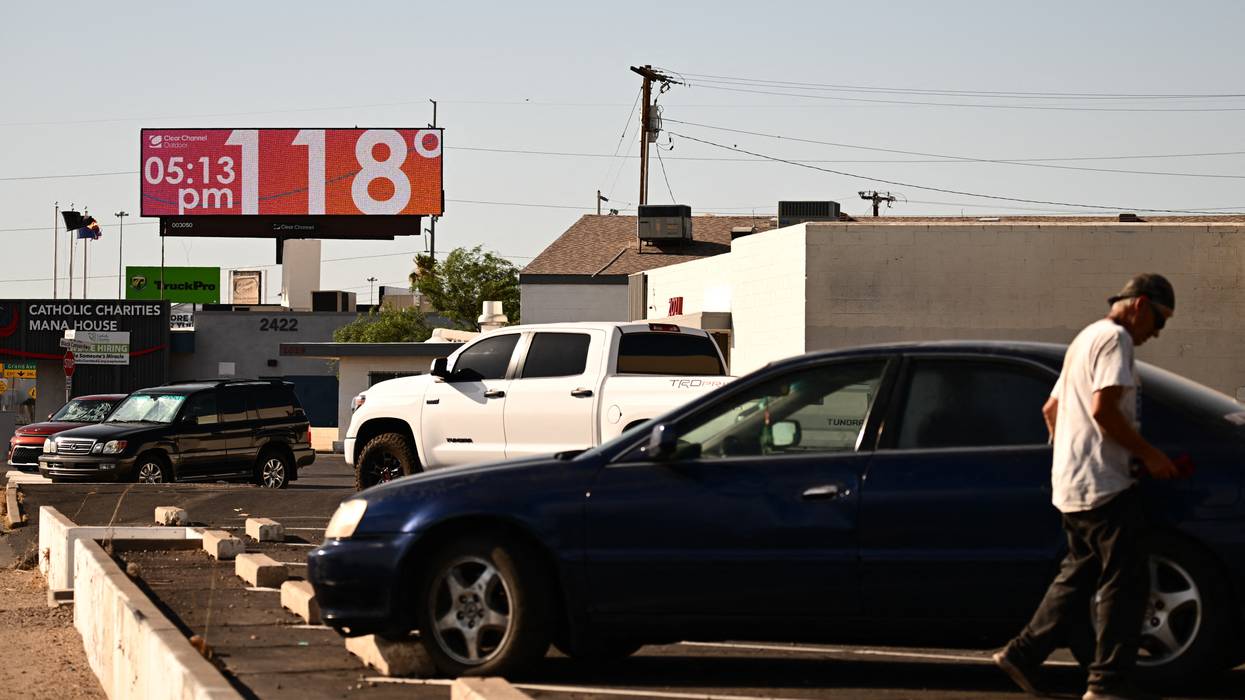
Last summer, the memo explains, "a lethal heatwave which would have been 'virtually impossible' but for human-caused climate change broke temperature records across the American Southwest. Communities like Phoenix, Arizona experienced a historic 31 days in a row with temperatures above 110 degrees."
"Hundreds of people across the region were killed," the document notes, "with Maricopa County alone recording 403 heat-related deaths in July 2023—far more than all the murders the county experienced that year."
The defendants in a potential prosecution for last year's deadly heat, according to the memo, "would include some of the world's largest investor-owned fossil fuel companies and a national oil and gas trade association: ExxonMobil, Chevron, Shell, BP, ConocoPhillips, Occidental, BHP, Peabody, and the American Petroleum Institute."
The proposed offenses are reckless manslaughter, defined as "recklessly causing the death of another person," and second-degree murder, which is recklessly killing someone by creating a "grave risk of death" under circumstances "manifesting extreme indifference to human life."
Pursuing those charges would require prosecutors to show that last July's heatwave caused deaths, climate change caused the heatwave, and the fossil fuel companies caused climate change. The memo lays out how they could do all three—thanks in part to advances in attribution science—and explores various potential defenses.
It also emphasizes that "while the July 2023 heatwave was devastating, it was not a unique occurrence. In recent years climate-fueled heatwaves, hurricanes, wildfires, and other disastrous weather events have killed thousands of Americans—have burned children alive in Maui, drowned families in Puerto Rico, killed people by heatstroke in the Pacific Northwest and elsewhere—and this loss of life will continue to accelerate as climate chaos intensifies."
"The charges described in this memo provide a starting point for similar analyses that could, and should, be undertaken by prosecutors in every jurisdiction that experiences loss of life due to climate disasters," the document declares.
Welcoming the memo's release amid more widely anticipated extreme heat, author and climate activist Bill McKibben stressed that "what's happened to the climate is a crime: After fair warning from scientists about what would happen, Big Oil went right ahead pouring carbon into the atmosphere, and now there's a huge pile of dead bodies (and a larger one of dead dreams)."
"After fair warning from scientists about what would happen, Big Oil went right ahead pouring carbon into the atmosphere, and now there's a huge pile of dead bodies."
"The only question left," he said, "is whether our legal system will recognize these crimes—and this report shows there's a good chance the answer could be yes."
Earlier this month, McKibben moderated a virtual panel featuring the memo's four authors along with Amy Fettig, deputy director of Fair and Just Prosecution; Kathy Mulvey, accountability campaign director at the Union of Concerned Scientists; and Hadrien Goux, fossil fuel campaign officer at Bloom, which recently filed a criminal complaint against TotalEnergies in France.
"There's a lot of work to do here," Regunberg said during that discussion. "We are creating a movement... and it needs to grow."
Others suggested that legal leaders across the United States may be open to pursuing such cases, particularly if they face public pressure to do so. Cho said that early on in the research, she was skeptical about criminally prosecuting Big Oil in this way—but she concluded that "it actually isn't as much of a stretch as the people on this call might think."
"It fits within the framework of what they seek to do with their careers," she said of prosecutors who want to protect their communities.
Fettig pointed out that for the most part, prosecutors and district attorneys are elected officials, meaning that "they're accountable to you."
"The truth has been that most people haven't paid attention to those elections and so we haven't seen the kind of public accountability for district attorneys and prosecutors that is really available—so as constituents, get to the ballot box," Fettig said. "That's an important power that you have."

Mounting evidence about "what fossil fuel companies knew and what they did with that knowledge is revealing a story of antisocial conduct generating lethal harm so extensive it may soon become unparalleled in human history."
Fossil fuel corporations—the primary drivers of the climate emergency—are facing dozens of civil lawsuits that could see them pay billions of dollars for knowingly unleashing environmental destruction.
But a pair of legal experts argue they should be held criminally responsible for extreme weather-related deaths that occurred after the industry downplayed the dangers of burning coal, oil, and gas.
In a new paper titled Climate Homicide: Prosecuting Big Oil for Climate Deaths, Public Citizen's David Arkush and George Washington University law professor Donald Braman contend that "if our criminal legal system cannot focus more intently on climate crimes—and soon—we may leave future generations with significantly less for the law to protect."
"As of this writing, no prosecutor in any jurisdiction is bringing homicide charges of any kind against fossil fuel companies (FFCs) for even a single death related to climate change. They should," states the paper, which is set to be published next spring in the Harvard Environmental Law Review.
According to Arkush and Braman:
The case for homicide prosecutions is increasingly compelling. A steady growth in the information about what FFCs knew and what they did with that knowledge is revealing a story of antisocial conduct generating lethal harm so extensive it may soon become unparalleled in human history.
FFCs have long understood the "globally catastrophic" risks that the production, marketing, and sale of their product generates. But when confronted with extensive internal and external research about the grave dangers posed by their business model, they did not notify the public, regulators, or legislators, much less work to find solutions or change their business model. Instead, they developed extensive disinformation and political influence campaigns to obscure the risks, confuse others, and block legal or regulatory restriction of their increasingly lethal conduct. Moreover, while they put their wealth to work reducing regulatory and legal risks to their profit margins, they privately used the data they disputed and obscured to reduce their own exposure to climate-change-related industrial risks to further maximize their future profits.
FFCs were technically sophisticated enough to know that they could hide the harms they were generating from lay observers for decades, allowing them to earn trillions of dollars while researchers, activists, and regulators struggled to overcome the sophisticated disinformation and political influence campaigns these profits supported. In recent years, the harms have become increasingly lethal and will likely continue to worsen for decades to come. These harms, while global, already include thousands of readily foreseeable deaths of residents of the United States, a toll that may escalate into the hundreds of thousands and, over time, potentially millions.
In the co-authors' words, the preceding summary "describes the core elements of an ongoing mass homicide: conduct undertaken with a culpable mental state that substantially contributes to or accelerates death."
"Regardless of whether FFCs knew their conduct would contribute to these lethal risks, were aware of the substantial and unjustifiable risks they were running, or merely should have known and should have investigated further—that is, whether they had a knowing, reckless, or negligent attitude towards these risks—they satisfy at least one of the culpable mental states required for some gradation of homicide," Arkush and Braman argue. "Further, under misdemeanor manslaughter or felony murder laws, if prosecutors can prove that FFCs engaged in any related criminal conduct involving fraud, racketeering, anti-competitive practices, or safety violations, homicide liability could obtain independent of any mental state regarding the risk of death."
"As additional evidence of FFCs' knowledge of the lethal risks they were generating surfaces through leaks and court-mandated discovery, obstacles to a successful prosecution are falling away," the scholars continue. "At the same time, with every new wave of climate-related deaths, the justification for prosecution grows."
"Although some of the harmful externalities that FFCs generate may be suitable for tort or regulatory suits, the lethality of FFCs' conduct, their awareness of the risks they are generating, and their efforts to obscure those risks make criminal prosecution for homicide particularly appropriate," they add. "Perhaps most importantly, if FFCs continue to fight speedy reductions in the harms they are generating, and if they continue to obstruct or delay state and federal regulation and civil suits designed to reduce the lethal impact of their conduct, then homicide prosecutions may prove necessary."
Last month, BP and Shell announced they are diluting their emission-reduction targets and expanding fossil fuel production after Big Oil enjoyed record-breaking profits in 2022 as Russia's invasion of Ukraine disrupted global energy markets and gave firms an excuse to hike prices. Climate scientists have made clear that such decisions are, as United Nations Secretary-General António Guterres put it earlier this year, "inconsistent with human survival."
After the U.N.'s Intergovernmental Panel on Climate Change released its latest assessment report on Monday, Guterres said that limiting global warming to 1.5°C is possible, "but it will take a quantum leap in climate action," including a prohibition on funding and approving new coal, oil, and gas projects along with a phaseout of existing fossil fuel production.
The deadly consequences of unmitigated greenhouse gas pollution, which has increased average surface temperatures by roughly 1.1°C over preindustrial levels to date, are already apparent.
For instance, a report released Monday by UNICEF, the World Health Organization, and Somalia's health ministry found that an ongoing drought caused 43,000 excess deaths in the country last year. Nearly 130,000 people in Somalia and other countries in the Horn of Africa are at risk of dying prematurely this year from famine. In southern Africa, a record-breaking cyclone has killed more than 500 people this month, while last year's unprecedented flooding in Pakistan killed more than 1,700 people.
This is just a small sample of recent climate change-intensified calamities affecting the residents of low-income countries who have contributed the least to planet-heating pollution but are disproportionately vulnerable to its impacts. Nevertheless, increasingly frequent and severe hurricanes, heatwaves, wildfires, and other extreme weather disasters that are consistent with scientists' longstanding warnings are also wreaking deadly havoc in rich nations, including the United States.
Because their paper "addresses the question of criminal prosecution under domestic law," Arkush and Braman focus their attention on the U.S., where an estimated 12,000 people died each year from climate change-related heat exposure between 1991 and 2018—an annual mortality figure that is expected to surge to 96,000 by the end of the century.
Speaking with E&E News on Monday, Arkush said prosecutors are already intrigued by the novel legal theory of "climate homicide."
"We have some indication they're at least listening and curious," Arkush, director of Public Citizen's climate program and a fellow at the Roosevelt Institute, told the outlet. "To someone who knows the criminal law, there's a moment of 'What!?' and then, 'It's OK. It's not crazy.'"
"We concluded there aren't really any legal or factual barriers to prosecution," said Arkush. "The real potential barriers are political, cultural. Does this strike people as just too out there? Do the fossil fuel companies have too much power, culturally, politically, economically? Those are the real barriers."
According to Braman: "What's really probably stopping them is that no one has done it before. The level of culpability and the extent of the harm is so massive that it's not the kind of thing that prosecutors are used to prosecuting."
Anthony Moffa, an associate law professor at the University of Maine who has previously assessed the possibility of criminal liability for environmental policy decisions, told E&E News, "I think it's the next thing."
"If we're doing it in these other instances and saying there was environmental harm, logically it's hard to distinguish that from the climate crisis," said Moffa. The causal link between burning fossil fuels and climate change-exacerbated storms might be "longer and maybe more attenuated, but it's still a pretty direct line."
As E&E News reported: "Corporations can't be put behind bars even if they are convicted of a crime. But Arkush and Braman say they've identified an option for prosecutors to use in climate homicide cases that could lead to public good, rather than prison time or corporate dissolution. Companies that are convicted of criminal charges could instead face restructuring into a 'public benefit corporation,' a designation that gives a company latitude to focus on priorities other than simply maximizing shareholder value."
According to Arkush and Braman's paper, this could enable a reduction in "the production and distribution of fossil fuels at the fastest pace feasible—but not so fast as to cause harm—while protecting displaced workers and local economies and investing in the development and deployment of clean energy."