

SUBSCRIBE TO OUR FREE NEWSLETTER
Daily news & progressive opinion—funded by the people, not the corporations—delivered straight to your inbox.
5
#000000
#FFFFFF
To donate by check, phone, or other method, see our More Ways to Give page.
Daily news & progressive opinion—funded by the people, not the corporations—delivered straight to your inbox.
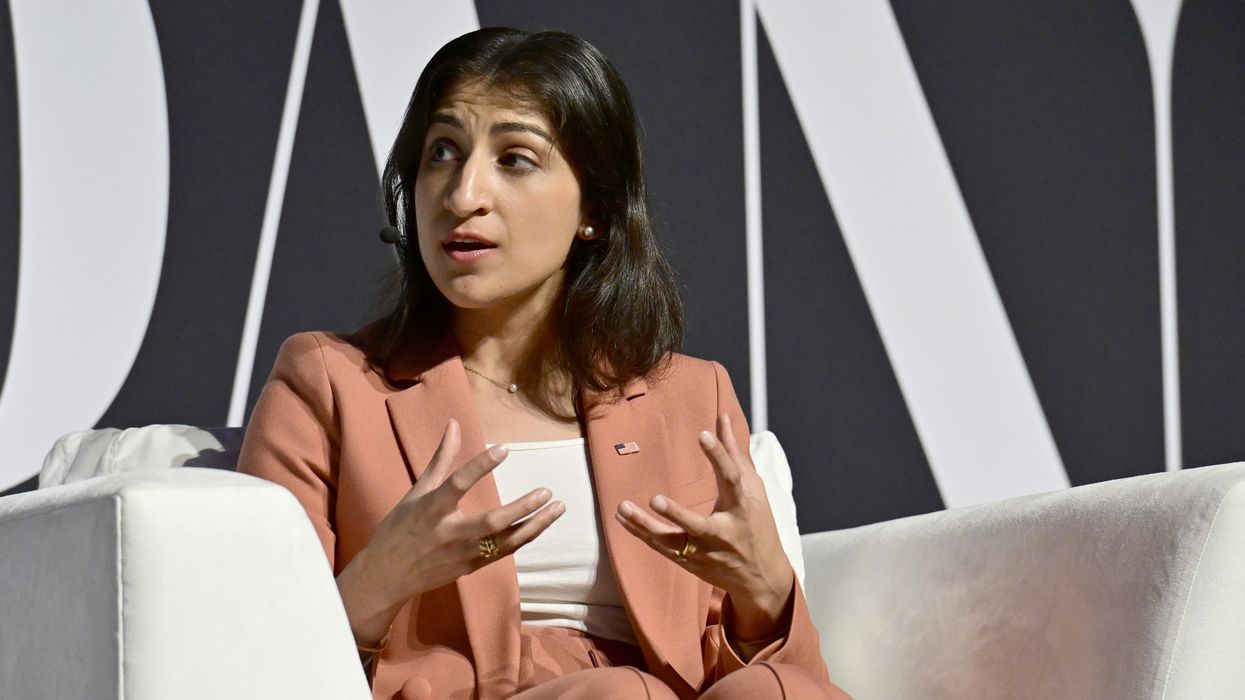
The FTC quietly removed from its website an article titled "AI and the Risk of Consumer Harm" as the Trump administration looks to undercut efforts to regulate artificial intelligence.
The Trump administration's sweeping purge of government content that conflicts with its far-right ideological and policy project has extended to Federal Trade Commission blog posts warning about the threat that burgeoning artificial intelligence technology poses to US consumers.
Wired reported Monday that the Trump administration has, without explanation, deleted AI-related articles published by the FTC during antitrust trailblazer Lina Khan's tenure as chair of the agency. The headlines of two of the removed posts were "Consumers Are Voicing Concerns About AI" and "AI and the Risk of Consumer Harm."
The latter article, which can still be read here, states that the FTC "is increasingly taking note of AI's potential for real-world instances of harm—from incentivizing commercial surveillance to enabling fraud and impersonation to perpetuating illegal discrimination."
"As firms think about their own approach to developing, deploying, and maintaining AI-based systems, they should be considering the risks to consumers that each of them carry in the here and now, and take steps to proactively protect the public before their tools become a future FTC case study," reads the post, which was authored by staff at the FTC's Office of Technology and Division of Advertising Practices.
The page on the FTC website that previously hosted the article now displays an error message.
Wired noted that the Trump FTC's deletion of the Khan-era blog post is part of a broader scrubbing of government content critical of tech giants and artificial intelligence. In March, the outlet reported that Trump's FTC—currently led by Andrew Ferguson—"removed four years' worth of business guidance blogs as of Tuesday morning, including important consumer protection information related to artificial intelligence and the agency's landmark privacy lawsuits under former chair Lina Khan against companies like Amazon and Microsoft."
The mass removal of Khan-era posts marks a sharp—and potentially illegal—break from the previous administration's handling of government-hosted content that conflicted with its views.
"During the Biden administration, FTC leadership placed 'warning' labels on business directives and other guidance published during previous administrations that it disagreed with," Wired reported. One unnamed FTC source told the outlet that the Trump administration's removal of the Khan-era posts "raises serious compliance concerns under the Federal Records Act and the Open Government Data Act."
The Trump administration's deletion of government content critical of AI comes months after it released an "AI Action Plan" that watchdogs pilloried as a gift to large tech corporations and an attempt to hamstring future efforts to regulate artificial intelligence.
The plan calls for a review of all AI-related FTC investigations launched during Khan's tenure "to ensure that they do not advance theories of liability that unduly burden AI innovation."
Robert Weissman, co-president of the consumer advocacy group Public Citizen, said in July that the Trump White House's AI plan was "written by Big Tech."
"A serious AI plan would recognize that the regulation to which this administration is so hostile facilitates innovation—it can help us ensure that we have AI for social good, rather than just corporate profit," said Weissman.
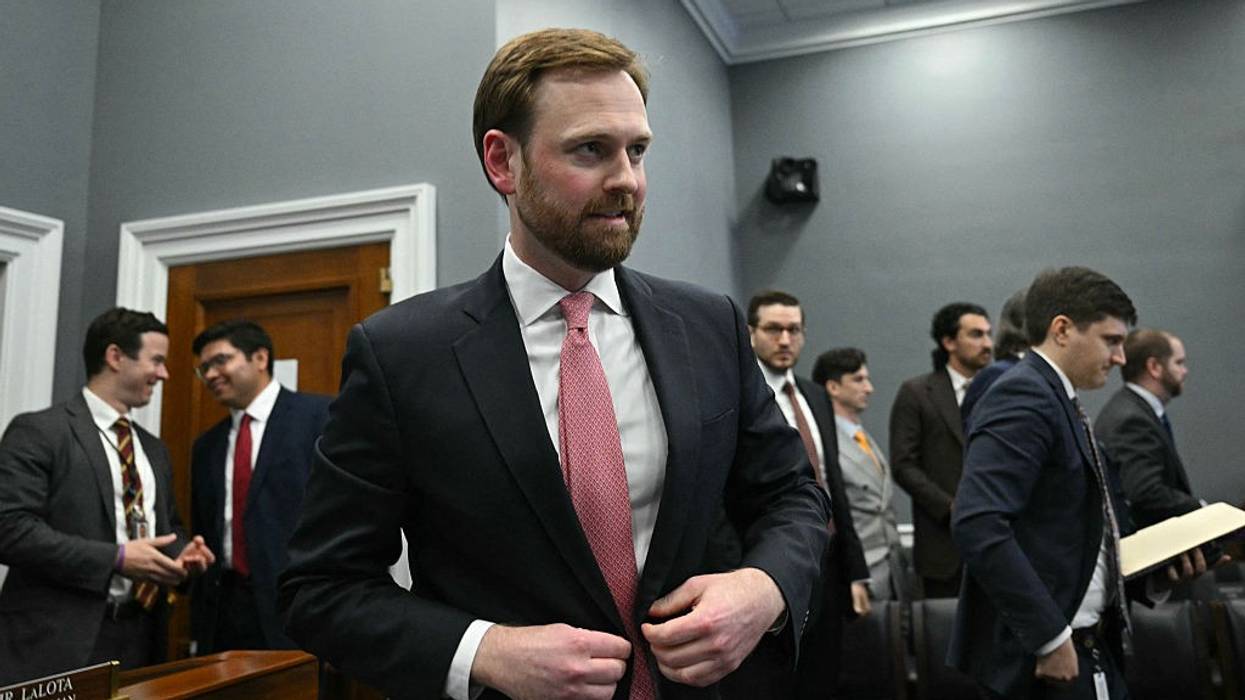
Republicans on the Federal Trade Commission have "ensured that hardworking people will keep getting stuck with subscriptions they don't want or can't afford," said one consumer advocate.
Consumer advocates said Tuesday that the Trump administration is to blame for an appeals court decision that effectively killed the Federal Trade Commission's click-to-cancel rule, a Biden-era effort to stop companies from trapping consumers in subscriptions with onerous cancellation terms.
The U.S. Court of Appeals for the 8th Circuit vacated the rule entirely on procedural grounds on Tuesday, siding with the U.S. Chamber of Commerce and other corporate interests that claimed the FTC's process in crafting and finalizing the rule did not give industry sufficient "opportunity to assess" the agency's "cost-benefit analysis of alternatives."
After the rule was finalized last October, the FTC—then led by Lina Khan—said it had received more than 16,000 public comments on the proposal, which would have required companies to make it just as easy for consumers to cancel subscriptions as it was to enroll. The agency said the number of subscription-related public complaints rose to nearly 70 per day in 2024, indicating growing anger at companies' predatory tactics.
Khan wrote on social media Tuesday that public comments on the rule were "overwhelmingly" supportive and criticized the Trump FTC for giving industry groups time to block the effort. The rule was originally set to take effect on May 14, but the Trump FTC—now led by Republican Andrew Ferguson and two GOP commissioners—voted on May 9 to delay implementation, citing industry concerns that "it would take a substantial amount of time to come into compliance."
"The rule was set to go into effect in May but this FTC slow-walked it—and now a court has tossed it out, claiming industry didn't get enough of a say," Khan lamented.
Lee Hepner, senior legal counsel at the American Economic Liberties Project, said Tuesday that "the byzantine rulemaking process provides courts with infinite discretion to torpedo rules in service of deep-pocketed corporations and in spite of overwhelming public support."
"The commission received 16,000 public comments on its rule, yet the 8th Circuit has the temerity to suggest the commission failed to provide enough process to the Chamber of Commerce," Hepner added. "Congress gave the FTC the power to stop unfair and deceptive practices."
"If the FTC is serious about affordability for everyday Americans, it must reissue the rule immediately."
Mark Meador, one of just three commissioners left at the FTC following President Donald Trump's firing of the agency's two Democratic members earlier this year, declared following the appeals court decision that the click-to-cancel rule "isn't going into effect for one reason: The Biden FTC cut corners and didn't follow the law."
The American Prospect's David Dayen wrote in response that Meador, a commissioner "who has the ability to reissue the rule," is "more interested in cheering on judicial obstruction than simply saying he will reissue the rule."
Given that Ferguson and Republican FTC Commissioner Melissa Holyoak voted against finalizing the click-to-cancel rule last year, it is unlikely that they will support reviving the rule in the wake of the appeals court decision. Meador was not an FTC commissioner when the rule was finalized.
Nidhi Hegde, executive director of the American Economic Liberties Project, slammed the Trump FTC for delaying the rule's enforcement "long enough for big corporate lobbyists to win in court."
"It's bad enough that the Trump FTC has done nothing to bring down costs for the American people," Hegde said in a statement Tuesday. "Now, by slow-walking a simple, massively popular protection, they've ensured that hardworking people will keep getting stuck with subscriptions they don't want or can't afford from cable companies, gyms, and online services. If the FTC is serious about affordability for everyday Americans, it must reissue the rule immediately."
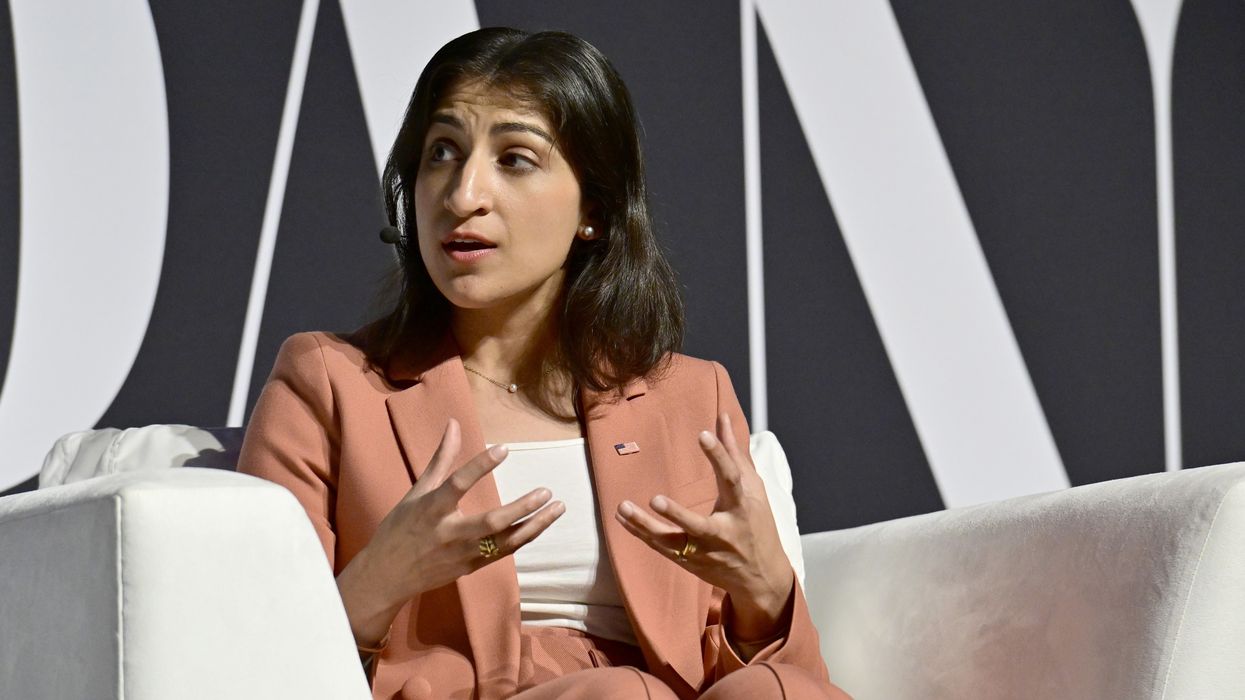
"This meritless dismissal is a win for monopolists and billionaires," said the senior legal counsel for the American Economic Liberties Project.
The U.S. Federal Trade Commission on Thursday dismissed a price discrimination lawsuit against the drink and food giant PepsiCo, a move that former FTC Chair Lina Khan, who served under former President Joe Biden, called "disturbing behavior."
The lawsuit, filed only a few days before U.S. President Donald Trump returned to the White House, accused PepsiCo of providing a big box retailer customer, Walmart, with pricing advantages, while increasing prices for competing customers and retailers.
"This lawsuit would've protected families from paying higher prices at the grocery store and stopped conduct that squeezes small businesses and communities across America," Khan wrote on X on Thursday. "Dismissing it is a gift to giant retailers as they gear up to hike prices."
The three members of the FTC, all Republicans, voted 3-0 to drop the suit. Current FTC Chair Andrew Ferguson, who was named chairman by Trump, cast the lawsuit as a "nakedly political effort to commit this administration to pursuing little more than a hunch that Pepsi had violated the law." He also said that the FTC under Biden "rushed to authorize the case." Ferguson also opposed the lawsuit when the FTC first voted to pursue it.
Antimonopoly groups were quick to criticize Thursday's move.
"This meritless dismissal is a win for monopolists and billionaires," said Lee Hepner, senior legal counsel at the American Economic Liberties Project, in a statement on Thursday. "Adding insult to injury, the agency dropped the case just one day before the parties were due to justify extensive redactions in the complaint, denying the public the ability to review the facts and judge the merits for themselves. This is a corporate pardon for Walmart and PepsiCo."
Open Markets legal director Sandeep Vaheesan said the move illustrates that despite their rhetoric, the current FTC commissioners are "not willing to faithfully apply the law enacted by Congress."
Stacy Mitchell, co-director at the Institute for Local Self-Reliance, which is an advocate for independent businesses, called it "effectively an endorsement of the predatory tactics Walmart uses to crush local grocery sores, create food deserts, and drive up prices."
The agency had sued PepsiCo under the Robinson-Patman Act, a 1936 law intended to prevent price discrimination but has been little used in recent decades.
The announcement of the dropped lawsuit came the same day it was reported that the FTC is investigating the progressive watchdog group Media Matters for America over potential coordination with other groups, including the Global Alliance for Responsible Media, which was a World Federation of Advertiser initiative. Media Matters president Angelo Carusone confirmed in a statement to Axios that the investigation is over claims Media Matters and other groups coordinated advertising boycotts of the social media site X.
X's owner, billionaire Elon Musk, who has played a core role in the Trump administration, has ongoing lawsuits against both the World Federation of Advertisers and Media Matters.

"The new tariffs have created a cloud of uncertainty that gives companies cover to raise prices on all goods," the lawmakers wrote.
Dozens of congressional Democrats are urging the country's top antitrust enforcer to probe the extent to which big companies are taking advantage of Trump administration tariffs, or confusion around the tariffs, to boost prices, and to take action against any that are inappropriately raising prices in excess of cost increases, also known as price gouging.
In a letter sent last week, 36 Democrats asked Republican Federal Trade Commission (FTC) Chair Andrew Ferguson to answer questions about his decision to effectively shut down an inquiry into so-called "surveillance pricing" practices—a move that, according to the outlet The Lever, has emboldened consultants who peddle surveillance pricing tools to advise companies on how to hike prices in response to tariffs, or even just the threat of tariffs.
Surveillance pricing refers to a practice when companies collect personal information like location or browsing history to set different prices for specific consumers for the same goods with the aim of generating more profit.
In January, the FTC released the initial findings of a surveillance pricing market study, and then opened up a public comment period for consumers and businesses around surveillance pricing. But the FTC under Ferguson, who replaced former Chair Lina Khan in January, shut down the comment period, which was supposed to run through mid-April.
"The message that is coming out of this administration… is that the watchdog is gone and companies feel emboldened to rip people off," a former FTC official told The Lever.
"President [Donald] Trump's on-again, off-again tariffs build an especially fertile environment for price gouging," the letter states. "The new tariffs have created a cloud of uncertainty that gives companies cover to raise prices on all goods, regardless of whether they are subject to new tariffs or whether their costs have meaningfully increased, above and beyond what is necessary to cover any cost increases."
Sens. Ruben Gallego (D-Ariz.), Sheldon Whitehouse (D-R.I.), Elizabeth Warren (D-Mass.), Cory Booker (D-N.J.), and Rep. Rosa DeLauro (D-Conn.) led their colleagues on the letter. A statement from Gallego's office last week framed the letter as a demand to "prevent corporations from using Trump's reckless tariffs as an excuse to price gouge hardworking Americans."
The Trump administration has imposed 10% baseline tariffs and imposed higher duties on goods coming from China. Last week, the Trump administration and China agreed to lower the tariffs they had imposed on one another. China will now be subject to a 30% tariff, whereas before many goods coming to the U.S. from China previously had at least a 145% tariff. Negotiations with other countries are ongoing.
Citing The Lever's reporting, the Democratic lawmakers are urging Ferguson to use his authority under Section 6(b) of the Federal Trade Commission Act to compel big companies to report their costs and retail and wholesale prices dating back to the day after Trump was elected in November, and also to report how much tariffs have increased their costs. The group is urging the FTC to use its power to investigate and prosecute companies who are engaging in "unfair or deceptive acts" regarding commerce.
The Democrats are also demanding answers, by May 30, to a number of questions around the end of the inquiry into surveillance pricing practices, such as why Ferguson chose to close the forum for public comments early, and whether he met with any of the businesses subject to the inquiry in advance of the termination of the public comment.
The Lever reported that some large companies who were subject to the inquiry gave money to Trump's inauguration fund.
Common Dreams as reached out to the FTC and Gallego's office for comment.

"Corporations get let off the hook, Musk gets insider information, and the American people get hosed."
The latest U.S. agency in the crosshairs of billionaire Elon Musk's Department of Government Efficiency is reportedly the Federal Trade Commission, an already-understaffed department tasked with preventing monopolistic practices and shielding consumers from corporate abuses.
Axios reported Friday that at least two DOGE staffers "now have offices at" the FTC. According to The Verge, two DOGE members "were spotted" at the agency's building this week and "are now listed in the FTC's internal directory."
The Verge noted that the FTC is "a fairly lean agency with fewer than 1,200 employees," a number that the Trump administration has already cut into with the firing of some of the department's consumer protection and antitrust staff.
At least two of Musk's companies, Tesla and X, have faced scrutiny in recent years from the FTC, which is now under the leadership of Trump appointee Andrew Ferguson, who previously pledged to roll back former chair Lina Khan's anti-monopoly legacy.
Emily Peterson-Cassin, corporate power director at the Demand Progress Education Fund, which referred to the operatives as Musk's "minions," said Friday that "DOGE is yet again raiding a federal watchdog tasked with protecting working Americans from Wall Street and Big Tech."
"The FTC has worked to stop monopolistic mergers that would have led to higher grocery prices and is now gearing up to go to court against Meta's social media monopoly," said Peterson-Cassin. "It's no surprise that at this moment, while the economy is in freefall and fraud is on the rise, DOGE is choosing to raid the federal watchdog that protects everyday Americans and threatens corporate monopolies and grifters."
News of DOGE staffers' infiltration of the FTC came as Trump's sweeping new tariffs continued to cause global economic turmoil and heightened concerns that companies in the U.S. will use the tariffs as a new excuse to jack up prices and pad their bottom lines.
Ferguson pledged in a social media post Thursday that under his leadership, the FTC "will be watching closely" to ensure companies don't view Trump's tariffs "as a green light for price fixing or any other unlawful behavior."
But Trump has hobbled the agency—and prompted yet another legal fight—by firing its two Democratic commissioners, a move that sparked fury and has already impacted the FTC's ability to pursue cases against large corporations.
Peterson-Cassin said Friday that "the only winners" of DOGE's targeting of the FTC "are Trump's billionaire besties like [Meta CEO] Mark Zuckerberg and especially Musk, who now stands to gain access to confidential financial information about every company ever investigated by the FTC, including the auto manufacturers, aerospace firms, internet providers, tech companies, and banks that directly compete with his own companies."
"Corporations get let off the hook, Musk gets insider information, and the American people get hosed," Peterson-Cassin added.
"The FTC is an independent agency founded 111 years ago to fight fraudsters and monopolists," said fired commissioner Alvaro Bedoya. "Now, the president wants the FTC to be a lap dog for his golfing buddies."
U.S. President Donald Trump said he fired the two Democrats on the Federal Trade Commission Tuesday, a move blasted by consumer rights and democracy advocates as yet another illegal abuse of power by the twice-impeached Republican felon.
The White House announced the termination of Commissioners Rebecca Kelly Slaughter and Alvaro Bedoya from the FTC, a five-member body tasked with enforcing civil antitrust law and protecting consumers.
"Today the president illegally fired me from my position as a federal trade commissioner, violating the plain language of a statute and clear Supreme Court precedent," Slaughter said in a statement. "Why? Because I have a voice. And he is afraid of what I'll tell the American people."
Just got a statement from Rebecca Kelly Slaughter, a Democratic FTC commissioner, who was unlawfully fired today, furthering a showdown in the courts over control of independent agencies.
[image or embed]
— David Dayen (@ddayen.bsky.social) March 18, 2025 at 2:22 PM
"The administration clearly fears the accountability that opposition voices would provide if the president orders Chair [Andrew] Ferguson to treat the most powerful corporations and their executives—like those that flanked the president at his inauguration—with kid gloves," Slaughter continued, referring to multibillionaire tech CEOs Jeff Bezos, Elon Musk, and Mark Zuckerberg.
Last month, Ferguson endorsed the fringe legal theory that the president can terminate commissioners without cause—despite federal legislation against this. Bolstered by obsequious Republicans in his administration and Congress as well as a Supreme Court that critics say has granted the president king-like powers, Trump has moved to assert greater control over the federal government, including agencies meant to be independent.
Bedoya wrote on social media: "The president just illegally fired me. This is corruption, plain and simple."
Full statement of @bedoyaftc.bsky.social, in my opinion the best FTC commissioner ever to commish, who was just fired by Trump
[image or embed]
— Evan Greer (@evangreer.bsky.social) March 18, 2025 at 2:22 PM
"The FTC is an independent agency founded 111 years ago to fight fraudsters and monopolists, our staff is unafraid of the Martin Shkrelis and Jeff Bezos of the world. They take them to court and they win," Bedoya continued. "Now, the president wants the FTC to be a lap dog for his golfing buddies."
"I'll see the president in court," he added.
Responding to Trump's move, Jeff Hauser, founder and executive director of the watchdog group Revolving Door Project, said that "on the surface, this constitutional crime is about law and process and other abstract topics people often tune out—but underneath, it is motivated by good old-fashioned greed that will hurt every one of us who isn't a corrupt financier."
"Americans are rapidly losing their defenders against corporate fraud and malfeasance," Hauser continued. "First, the Consumer Financial Protection Bureau was gutted illegally by billionaire Elon Musk and his lackeys. Now, Trump is attempting, without a legal basis, to fire the FTC's two Democratic commissioners."
"As antitrust enforcement dies out and a handful of corporations accumulate even more economic power, Americans will only have one person to blame for the new fraud economy: Donald Trump," he added.
Emily Peterson-Cassin, the corporate power director at Demand Progress Education Fund, warned: "President Trump's illegal attempt to fire Alvaro Bedoya and Rebecca Slaughter opens the floodgates to unfettered corruption and self-dealing. This reckless attack on the FTC invites a return to the rampant, corporate graft that brought on the Great Depression."
"Billionaires like Elon Musk, Mark Zuckerberg, and Jeff Bezos paid a lot for their concierge access to the White House and now President Trump is repaying their investment," she continued. "The FTC is currently investigating or suing many of the biggest corporations—including Google, which announced a multibillion-dollar merger just this afternoon."
"These illegal firing attempts put these investigations in doubt and could seriously curb the agency's power and responsibility to protect everyday Americans and honest, Main Street businesses from being scammed and trampled by megacorporations," Peterson-Cassin added. "With this action, the president is choosing to please his billionaire cronies, wreck the rule of law, and do generations of damage to a critical consumer protection agency."

"Chairman Ferguson could have done any number of things to actually lower the cost of living and create opportunities for American businesses and workers," said one Democratic FTC commissioner. "He did none of them."
U.S. President Donald Trump's Federal Trade Commission chair began his stint at the helm of the key agency this week by shutting down requests for public comment on corporate surveillance pricing and other exploitative tactics that were a focus of the FTC under the leadership of Lina Khan.
Shortly after taking over as FTC chair earlier this week, Andrew Ferguson declared that "DEI is over" at the agency and demanded a swift vote on a motion giving him sweeping authority to "comply with President Trump's orders ending DEI across the federal government."
Meanwhile, with no such fanfare, Ferguson shuttered FTC requests for information and public comments on
corporate mergers and acquisitions, "protecting workers from illegal business practices," "predatory pricing," and "surveillance pricing practices," which refer to companies' use of personal data to set individualized prices.
Democratic FTC commissioners expressed alarm over Ferguson's early actions and said they're a telling indication of his priorities.
"Andrew Ferguson could have made his first public act as chairman a motion to study the rising cost of groceries," Commissioner Alvaro Bedoya said in a statement Thursday. "He could have acted on a pending public petition from a group of wall and ceiling contractors to investigate how lawbreaking contractors can effectively rig contract competitions in the commercial construction industry."
"Chairman Ferguson could have done any number of things to actually lower the cost of living and create opportunities for American businesses and workers. He did none of them," Bedoya continued. "Instead, he canceled 'DEI.'"
Douglas Farrar, former director of the FTC's public affairs office, said it is "unthinkable that the new chair of the FTC starts his tenure by censoring small businesses facing down monopolies, and American consumers already struggling with high prices."
"The American people deserve to have a voice in government," Farrar added, "not just be dictated to by oligarchs."
Ferguson defended his focus on DEI on the grounds that Trump "campaigned openly" on ending diversity, equity, and inclusion initiatives across the federal government.
But Bedoya noted that Trump, on the day of his inauguration, also ordered "the heads of all executive departments and agencies to deliver emergency price relief, consistent with applicable law, to the American people and increase the prosperity of the American worker."
"Chairman Ferguson seems uninterested in the challenges that regular human beings face," Bedoya said Thursday. "One of his first actions as Chairman was to quietly remove the opportunity for the public to comment on five different requests for information."
"Rather than let the American people speak to him," Bedoya added, "Chairman Ferguson shut them out."
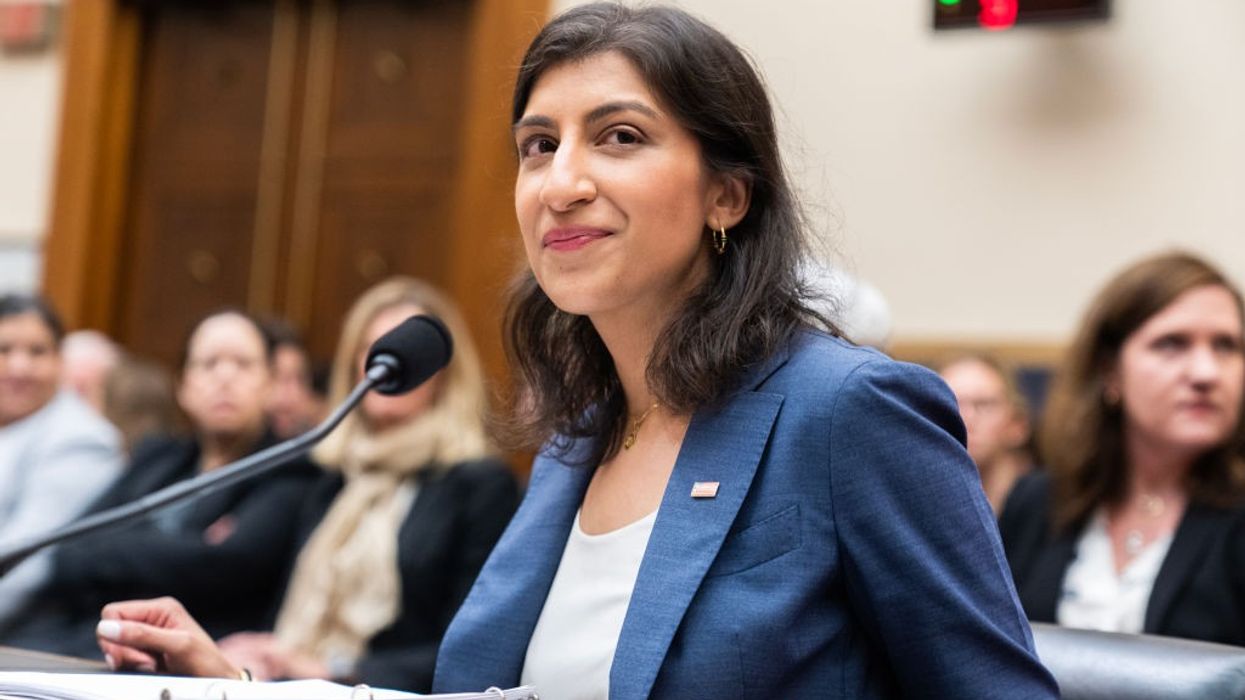
Khan’s FTC has scored historic victories for consumers and workers—even as she’s faced powerful industry opposition and obstruction from right-wing judges.
In June 2021, just months into the Biden era, Zephyr Teachout argued that Lina Khan’s appointment to the Federal Trade Commission “may be the best thing Joe Biden has done” in office. With a firm reputation as a leader in the anti-monopoly movement, her nomination to the FTC was a clear victory for progressives in an administration otherwise primarily staffed by moderates.
Three years on, it’s clear that this optimistic outlook about a Khan-run FTC has been vindicated. In her position, Khan’s FTC has scored historic victories for consumers and workers—even as she’s faced powerful industry opposition and obstruction from right-wing judges.
Understanding the significance of Khan’s tenure means understanding how antitrust enforcement has been sabotaged in recent decades by right-wing ideologues. The federal government adopted antitrust laws beginning in 1890, which would become a crucial tool for reining in corporate abuses for decades to come. But beginning in the 1970s, federal courts would embrace a right-wing reimagining of antitrust law under the guise of promoting “consumer welfare.” Unsurprisingly, this hands-off approach helped create an economy defined by extreme corporate concentration, leading to fewer and worse choices for American consumers.
While the leadership of both agencies are set to change under President-elect Donald Trump, the new merger guidelines mean that Khan’s pro-competition vision will help shape FTC decision-making well past her tenure.
While still in law school, Khan rose to prominence in 2017 for her critique of laissez-faire antitrust enforcement. Given her reputation, observers were quick to speculate on how she’d be able to put her principles to action at the FTC. For one, the commission in recent decades has built a track record of being deferential to the very monopolies it’s tasked to regulate. Additionally, the commission has long suffered from inadequate funding, which has hindered its capacity to police monopolies. But despite these institutional constraints, Khan’s FTC has secured major wins for American consumers, all while facing down hostile corporate actors and their allies in the judiciary.
Monopolistic behavior in the food industry over the past few decades has robbed consumers of choice while increasing grocery costs. Two years ago, grocery giants Kroger and Albertsons announced a massive merger deal that quickly raised alarms among consumer advocates. While such a merger may have gone through unscathed a decade or so prior, the Khan-led FTC filed suit to block the deal. Last month, the FTC won one of its biggest victories in recent years by blocking the merger in court. This victory, along with the FTC’s successful effort to block Tapestry’s acquisition of Capri, shows that Khan’s view of antitrust is increasingly finding support in court.
Sharing jurisdiction on antitrust matters with the Department of Justice (DOJ) Antitrust Division, the two agencies successfully modernized merger guidelines to help identify illegal mergers in their tracks. Observers have credited both the FTC and DOJ Antitrust Division’s aggressive enforcement efforts with a recent decline in merger efforts. And while the leadership of both agencies are set to change under President-elect Donald Trump, the new merger guidelines mean that Khan’s pro-competition vision will help shape FTC decision-making well past her tenure.
These developments, of course, only scrape the surface of the FTC’s accomplishments under Khan. The commission notably blocked an effort by Nvidia to acquire Arm, which was set to be the biggest merger deal in semiconductor industry history. The ultimate failure of Amazon to acquire iRobot, which caused concern among various international antitrust regulators, has been at least partially credited to the FTC’s scrutiny. Among the most meaningful impact of renewed FTC antitrust scrutiny may be felt on private equity firms, a welcome development given said firms’ harms to competition and American society at large.
The Khan-led FTC’s ability to build bipartisan support for efforts such as recent rulemaking on junk fees, as well as on merger guidelines, should be seen as a model for Democratic governance. Moreover, the Khan-led FTC should be applauded for using long-neglected tools at the commission’s disposal, such as its ability to police price discrimination as interlocking directorates.
With Khan set to be succeeded by Andrew Ferguson, Trump’s pick to lead the FTC, it's likely that the FTC will soon shift its approach on antitrust and consumer protection. Nevertheless, it’s clear that Khan will leave behind a legacy that will influence antitrust enforcement for decades to come. And in doing so, Khan will also leave behind a track record that shows what successful progressive governance looks like.

Andrew Ferguson has opposed several major initiatives championed by Lina Khan, including FTC rules banning anti-worker noncompete agreements and making it easier for consumers to cancel subscriptions.
President-elect Donald Trump's pick to lead the Federal Trade Commission cast the lone no vote Tuesday against a newly finalized rule banning deceptive junk fees in live-event ticketing and short-term lodging.
The rule, according to an FTC release, "targets specific and widespread unfair and deceptive pricing practices in the sale of live-event tickets and short-term lodging, while preserving flexibility for businesses."
"It does not prohibit any type or amount of fee, nor does it prohibit any specific pricing strategies," the agency said. "Rather, it simply requires that businesses that advertise their pricing tell consumers the whole truth up-front about prices and fees."
FTC Commissioner Andrew Ferguson, Trump's choice to head the bipartisan agency, was the only member to vote against the junk fees rule. In his dissenting statement, Ferguson wrote that his opposition had "nothing to do with the merits" of the finalized rule but was rather a vote against any additional rulemaking by the Biden administration.
"It is particularly inappropriate for the Biden-Harris FTC to adopt a major new rule that it will never enforce, as the final rule will not take effect until many months after President Trump takes his oath of office," Ferguson wrote.
Ferguson has been a consistent opponent of causes championed by FTC Chair Lina Khan, including the agency's rules banning anti-worker noncompete agreements and making it easier for consumers to cancel subscriptions.
Nidhi Hegde, interim executive director of the American Economic Liberties Project, said in response to the newly finalized rule that "banning junk fees is broadly popular across the country because Americans are tired of being tricked by hidden costs that inflate prices and distort competition."
"Finalizing this rule with bipartisan support demonstrates Chair Khan and the commission's commitment to delivering real results for consumers, saving Americans both time and money," said Hegde. "We're pleased to see the FTC work to get this done, and encourage federal and state policymakers to build on this effort to put an end to junk fees once and for all."
With his dissent on Tuesday, Ferguson offered a glimpse of "how he plans to lead the FTC—and how the Trump administration plans to run the independent agencies put in the crosshairs by the Project 2025 plan," political reporter Matt Sledge wrote for The Intercept on Wednesday.
"While calling on the FTC to stop issuing rules until Trump takes office might win favor with the incoming president, it is sharply at odds with positions on the agency's independence that Republicans were putting out just weeks ago," Sledge noted. "As recently as October, the House Oversight Committee released a report dinging Khan for a supposed lack of independence from the Biden administration."
"Since Trump's election, however, Republicans have shown newfound enthusiasm for the idea of bringing independent agencies under executive control," he added. "That vision was laid out in Project 2025."
Since he's already a commissioner at the agency, Ferguson will not require Senate confirmation to become FTC chair once Trump takes office next month.
In his job pitch to Trump's team, Ferguson pledged to use his tenure as FTC chair to "reverse Lina Khan's anti-business agenda" and halt her "war on mergers."
"The proposed Kroger-Albertsons merger would have led to higher prices at the grocery store and harmed workers," said the Vermont senator.
Praise for Federal Trade Commission Chair Lina Khan continued to pour in on Wednesday after a pair of judges blocked the merger of grocery chains Kroger and Albertsons following challenges by the FTC and state attorneys general.
"The proposed Kroger-Albertsons merger would have led to higher prices at the grocery store and harmed workers," said U.S. Sen. Bernie Sanders. "Let me thank FTC Chair Lina Khan for successfully fighting this merger and standing up to corporate greed."
Congressman Mark Pocan (D-Wis.) also welcomed the rulings and sent "a big thank you to Lina Khan and her team at the FTC."
Their comments on Wednesday followed similar applause from Sen. Elizabeth Warren (D-Mass.) and Rep. Pramila Jayapal as well as groups including the American Economic Liberties Project (AELP) and Groundwork Collaborative.
Khan addressed the win during a Tuesday stream with political commentator Hasan Piker, noting that "this is the first time that the FTC has ever sought to block a merger not just because it's gonna be bad for consumers, but also because it's gonna be bad for workers."
Khan, an appointee of outgoing Democratic President Joe Biden, has won praise from progressives for taking on not only grocery giants and other companies trying to build monopolies but also Big Pharma and Big Tech.
Sanders recently called her "the best FTC chair in modern history" and AELP earlier this year published a document detailing how, under Khan's leadership, the agency "has entered a new era of more effective, modern, and democratic enforcement to better protect consumers, workers, and independent businesses."
Examples included in the AELP roundup include Khan's "crackdown on deceptive 'junk fees,'" a ban on noncompete clauses that's being challenged in court, a historic lawsuit against Amazon.com, and a "click-to-cancel" rule that requires sellers to "make it as easy for consumers to cancel their enrollment as it was to sign up."
However, the new era of the FTC is set to soon come to an end. Since President-elect Donald Trump's victory last month, speculation has been building that he would replace Khan with someone who would do the bidding of big business. Amid celebrations of the rulings against the Kroger-Albertsons merger on Tuesday, the Republican announced Andrew Ferguson as his pick for chair.
As Common Dreams reported earlier Wednesday, Basel Musharbash, principal attorney at Antimonopoly Counsel, said that elevating Ferguson, who already sits on the FTC, to chair, "is an affront to the antitrust laws and a gift to the oligarchs and monopolies bleeding this country dry."
Although the agency is expected to be friendlier to mergers under the next Trump administration, Albertsons responded to the Tuesday rulings by bailing on the $24.6 billion deal and suing Kroger for billions of dollars on Wednesday, rather than appealing or moving to in-house FTC hearings.
That move could reflect industry fears of U.S. courts that are willing to block major mergers, as The American Prospect executive editor David Dayen pointed out after the federal court decision on Tuesday.
"The important thing here is not that Biden's enforcers blocked a merger... it's that courts are increasingly comfortable with merger enforcement," he said. "States can sue under the Sherman Act, and they will. The real change to track is in the judiciary. Wall Street, take note."