

SUBSCRIBE TO OUR FREE NEWSLETTER
Daily news & progressive opinion—funded by the people, not the corporations—delivered straight to your inbox.
5
#000000
#FFFFFF
To donate by check, phone, or other method, see our More Ways to Give page.
Daily news & progressive opinion—funded by the people, not the corporations—delivered straight to your inbox.
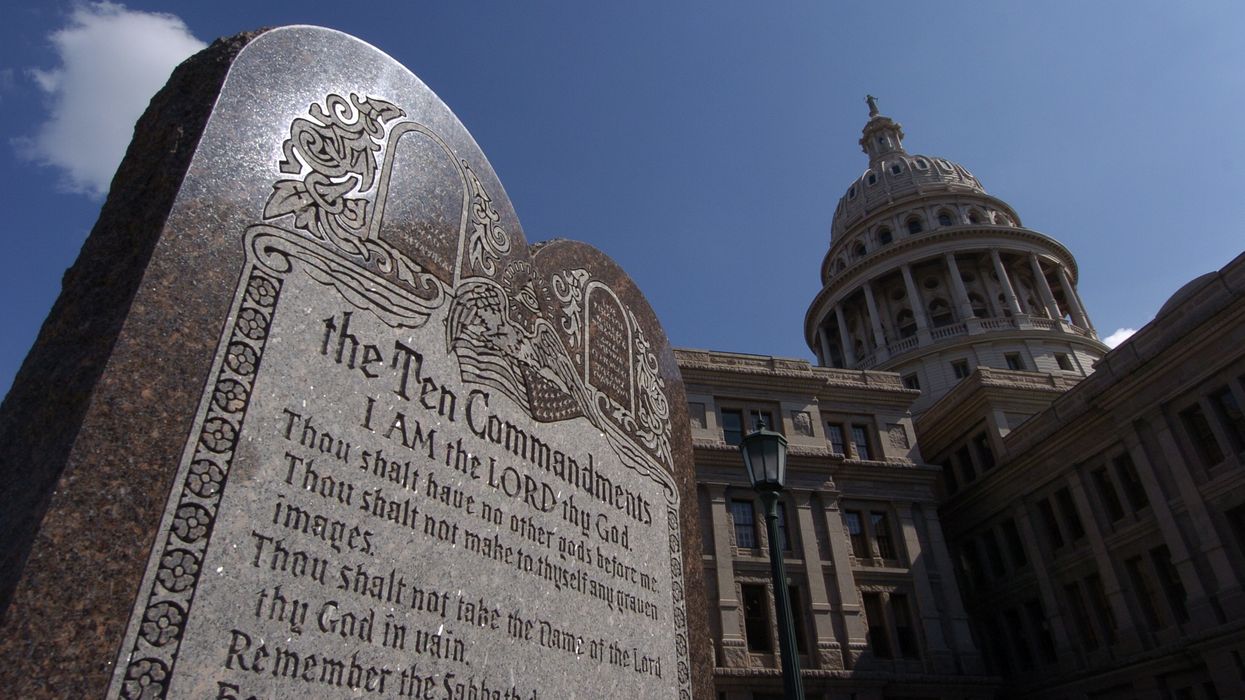
"In a diverse public school environment, all students should be treated with equal respect, regardless of their religious beliefs, or lack thereof," said one plaintiff.
A group of families is asking the US Supreme Court to strike down Texas Senate Bill 10, a state law mandating that a copy of the Ten Commandments be displayed in public school classrooms.
The families, who come from a variety of religious denominations and are being represented by several prominent civil liberties groups, argued in a Monday court filing that SB 10 violates the First Amendment of the US Constitution because it "imposes on public school children, for nearly every hour they are in school, the state's favored scripture."
In making their case, the families argued that a recent appeals court ruling upholding the Texas law ran afoul of multiple past Supreme Court rulings, including the 2022 ruling in Kennedy v. Bremerton School District, which made reference to "problematically coercive" religious messages being "publicly broadcast or recited to a captive audience," and the 1980 ruling in Stone v. Graham, which determined that posting the Ten Commandments in schools violates the Constitution's establishment clause.
Rabbi Joshua Fixler, a plaintiff in the case, said the Texas Ten Commandments law made him "not only worried about my own kids," but "deeply concerned about all the children in my congregation."
"These displays put children in the position of having to defend themselves and their families’ religious beliefs," said Fixler, "against a government mandate that makes them feel different and separate from their classmates."
Fellow plaintiff Nichole Manning, an atheist from Dallas, argued that the Texas law is "interfering with our family’s decisions about how our children engage with religion."
“As a parent, I intentionally choose to have my children attend public school because I prefer an educational environment without any religious affiliation," Manning emphasized. "In a diverse public school environment, all students should be treated with equal respect, regardless of their religious beliefs, or lack thereof."
In an editorial published in the Houston Chronicle on Monday, plaintiff Audrey Nath said that the Texas law was interfering with her right to raise her children to "celebrate the diversity of religious faiths in our families: Hinduism, Jainism, Judaism, and Quakerism."
"My 9-year-old son is proud of his heritage, and he even brought that statue of Shiva to his public school as part of a presentation about his family history," Nath explained. "SB 10 puts a permanent, state-mandated sign above his desk telling him what he carried in is forbidden."
ACLU of Texas staff attorney Chloe Kempf, who is co-representing the families, said that past legal precedents give the current Supreme Court a clear roadmap to overturn the Texas law.
"The US Supreme Court has rejected this kind of government-imposed religion before, and it should do so again,” said Kempf. “Having these posters in Texas classrooms puts students at risk of bullying, stigmatization, and religious coercion. Our nation’s bedrock principle of separating church and state means that families and faith communities—not politicians—get to decide what role religion plays in children’s lives."
Annie Laurie Gaylor, co-president of the Freedom From Religion Foundation, argued that mandating schools display the First Commandment alone is "the antithesis of our First Amendment" because it dictates "which god must be worshipped."
"It is not the government’s role to daily expose young children to a coercive display of one religion’s set of religious edicts in our public schools," Gaylor emphasized. "Our public schools exist to educate, not to proselytize."
"Children's religious beliefs should be instilled by parents and faith communities, not politicians and public schools," said a Texas rabbi who sued the state over the law.
A federal judge on Wednesday shot down a Texas law that would have mandated all public school classrooms across the state display the Ten Commandments.
As reported by local news station KSAT, US District Judge Fred Biery of the United States District Court for the Western District of Texas issued a preliminary injunction, ruling that the state's law crossed the line from education to proselytizing on behalf of a specific sect of Christianity.
Noting that "the Ten Commandments set out in Texas's Ten Commandments law differs from the version observed by some Protestant faiths, and most adherents of the Catholic and Jewish faiths," Biery argued that the law violated the First Amendment of the United States Constitution, which states that Congress shall make no law respecting the establishment of a religion.
Biery imagined the uproar that would ensue if the city of Hamtramck, Michigan, which is majority Muslim, passed a law mandating that all public schools post passages from the Quran in all classrooms. He then argued that such a law would be just as unconstitutional as the Texas Ten Commandments law.
"While 'We the people' rule by a majority, the Bill of Rights protects the minority Christians in Hamtramck and those 33% of Texans who do not adhere to any of the Christian denominations," he wrote.
The judge also argued that the classroom displays "are likely to pressure the [students] into religious observance, meditation on, veneration, and adoption of the state's favored religious scripture, and into suppressing expression of their own religious or nonreligious background and beliefs while at school."
Organizations that advocate for the separation of church and state were quick to praise Biery's decision to strike down the law, which had been due to go into effect on September 1.
Tommy Buser-Clancy, senior staff attorney at the ACLU of Texas, said that the ruling affirmed that the state cannot coerce any Texans into adopting a particular religious faith.
“Today's ruling is a major win that protects the constitutional right to religious freedom for Texas families of all backgrounds," he said. "The court affirmed what we have long said: Public schools are for educating, not evangelizing."
Rabbi Mara Nathan, one of the plaintiffs who sued to get the law overturned, welcomed the ruling and stated that "children's religious beliefs should be instilled by parents and faith communities, not politicians and public schools."
Freedom From Religion Foundation co-president Annie Laurie Gaylor similarly said that "religious instruction must be left to parents, not the state, which has no business telling anyone how many gods to have, which gods to have or whether to have any gods at all."
Rachel Laser, president and CEO of Americans United for Separation of Church and State, hailed the ruling and said that it sends a "strong and resounding message across the country that the government respects the religious freedom of every student in our public schools."
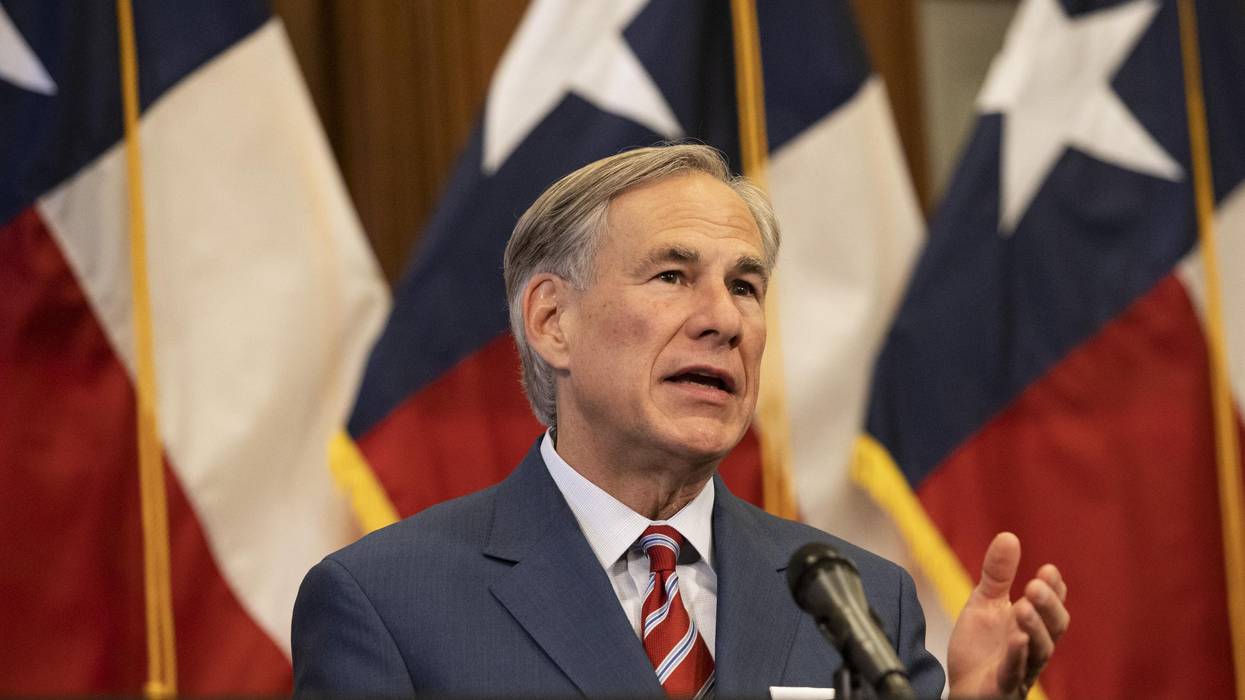
S.B. 4 "will have a devastating impact on people seeking safety at our borders and Texans throughout the state," said one advocate.
Vowing to stop Republican Texas Gov. Greg Abbott from enforcing an anti-immigration law that "overrides bedrock constitutional principles" and that has already prompted travel advisories for people planning to visit the Lone Star State, the ACLU led civil rights groups on Tuesday in suing to block Senate Bill 4.
The national group led the ACLU of Texas and the Texas Civil Rights Project (TCRP) in challenging the law a day after Abbott signed it, permitting local and state law enforcement officers to arrest and detain people who they suspect of being undocumented immigrants.
Under the law, which is set to go into effect in March unless courts block it, state judges would also be empowered to order a person's deportation even if they were eligible to seek asylum or other protections under federal law.
Texas judges, said the ACLU, "are not trained in immigration law and have no proper authority to enforce it"—just one of the ways in which S.B. 4 is unconstitutional, according to the groups.
"Texas," said the ACLU as it announced the lawsuit, "we'll see you in court."
Representing the Las Americas Immigrant Advocacy Center, American Gateways, and the County of El Paso, Texas, the legal groups argued in their complaint that S.B. 4 violates the supremacy clause of the U.S. Constitution, which establishes that federal laws—such as the right to seek asylum and the right to due process of law—take precedence over measures passed by states.
"We have sued to block Senate Bill 4 because it will have a devastating impact on people seeking safety at our borders and Texans throughout the state," said Rochelle Garza, president of the TCRP. "This law blatantly disregards people's right to due process and will allow Texas law enforcement to funnel family, friends, and loved ones into the deportation pipeline. S.B. 4 is unconstitutional—Texas does not have the power to implement its own immigration laws. We will not let this stand."
S.B. 4 has also led Mexican President Andres Manuel López Obrador to prepare a legal challenge through his country's foreign ministry, and several federal lawmakers from Texas and in the Congressional Hispanic Caucus to call on U.S. Attorney General Merrick Garland to block the law.
"S.B. 4 is dangerous for the people of Texas and interferes with the federal government's exclusive authority over immigration and foreign affairs," wrote the lawmakers, including U.S. Reps. Joaquin Castro (D-Texas), Nanette Diaz Barragán (D-Calif.), and Al Green (D-Texas). "S.B. 4 is an unlawful attempt to engage in federal immigration enforcement. This law will also interfere with federal efforts to create a safe, humane, and orderly system at the border."
The ACLU pointed out that the law could arbitrarily subject thousands of people of color to Texas' state prison system, "which is already rife with civil rights abuses."
In addition to being unconstitutional, said Anand Balakrishnan, senior staff attorney at the ACLU's Immigrants' Rights Project, S.B. 4 is "dangerously prone to error, and will disproportionately harm Black and Brown people regardless of their immigration status."
"We're using every tool at our disposal, including litigation, to stop this egregious law from going into effect," said Balakrishnan.
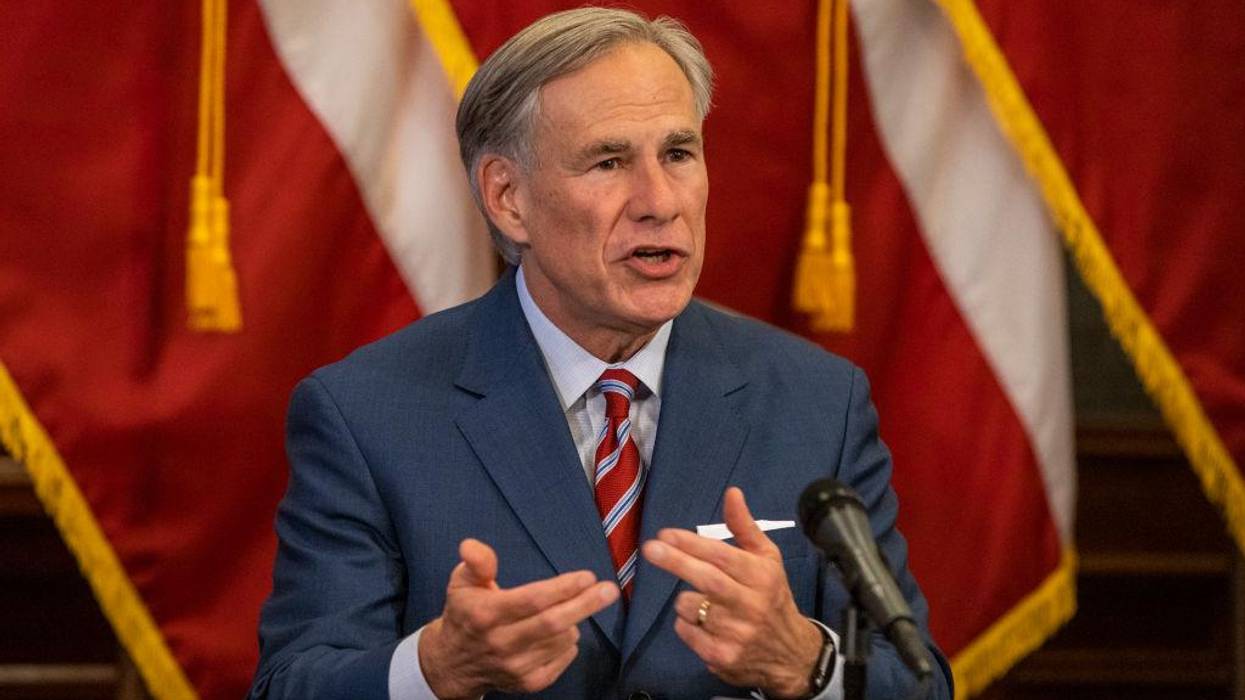
"When local policymaking is stifled, community voices are silenced," said a coalition of progressive groups.
Local leaders in Texas' increasingly progressive major cities were joined by workers' rights advocates and other pro-democracy groups on Thursday as they applauded a district court judge's ruling that a Republican-authored law aimed at superseding local regulations is unconstitutional and should be temporarily halted.
House Bill 2127, which has been called the Death Star Law by progressive groups, had been set to go into effect on Friday and would prevent cities from enacting and passing local ordinances, including many that would protect workers' rights.
The local governments of Houston, San Antonio, and other Texas cities sued the state after the law was passed in June, allowing Republican Gov. Greg Abbott's administration to overturn existing local rules governing a range of matters including property, natural resources, labor rights, and agriculture, as well as allowing the state to stop cities from implementing new measures.
The law was passed as a long stretch of intense heat began in Texas—setting temperature records across the state, putting people at risk for severe contact burns, and breaking power consumption records—and sparked national outrage as it would prevent cities from imposing rules requiring businesses to give water breaks to construction workers and other people who work outdoors.
The Texas AFL-CIO, Local Progress Texas, Every Texan, ACLU of Texas, and Workers Defense Project said in a joint statement that the judge's ruling on Wednesday will allow "critical, lifesaving local policies to remain in place... reflecting the importance of local leaders being able to respond to their communities' urgent needs."
"Today, we celebrate our powerful communities across the great state of Texas," said the groups. "The overturning of H.B. 2127... represents the power of our localities, our local elected officials, and the communities they represent."
"Texas is a home rule state, built on the values of local democracy and freedom," they added. "The Death Star Law directly contradicted those values—prioritizing corporate interests by using preemption to undermine local democracy and stifle local progress in Texas. Everyday Texans work in collaboration with local leaders to pass policies they need to thrive. So when local policymaking is stifled, community voices are silenced."
Houston Mayor Sylvester Turner called the ruling a "tremendous victory," while U.S. Rep. Jasmine Crockett (D-Texas) said the decision will, for the time being, allow cities to pass local ordinances without the input of "partisan politicians hundreds of miles away."
Advocates noted that the ruling imposed only a temporary injunction blocking H.B. 2127 from going into effect and that Republican lawmakers have made clear that they will work to eventually impose the law, with an appeal from Abbott's administration expected. States across the country have also passed a number of laws in recent years preempting or limiting local control of a variety of issues, and the federal government has not taken action to ensure that all workers in the U.S. have the kinds of protections the Texas government seeks to remove.
"We celebrate this win today while also acknowledging that this fight is far from over," said the coalition in Texas. "The Death Star law is part of a trend of conservative state legislatures across the country using preemption as a tool to undermine local policies that protect vulnerable Americans and concentrate power in the hands of extreme lawmakers and their corporate interests. We hope that the Texas Supreme Court will uphold this decision to protect local democracy."
"Today, we celebrate this win for Texas communities across the state," the groups said. "Tomorrow, we continue to fight abusive state preemption that silences communities."

A Republican-passed bill to allow public schools to replace professional counselors with unlicensed chaplains is expected to be signed into law by Gov. Greg Abbott.
The Republican-controlled Texas Legislature has passed a bill to allow public schools to replace professional counselors with uncertified religious chaplains.
GOP lawmakers in the state House approved Senate Bill 763 on Wednesday, one day after their counterparts in the state Senate passed the legislation. The measure, which permits school districts "to employ or accept as volunteers chaplains to provide support, services, and programs for students," now heads to the desk of far-right Gov. Greg Abbott, who is expected to sign it into law.
In addition to undermining religious freedom, the legislation also advances the American Legislative Exchange Council's longstanding goal of weakening occupational licensing requirements, thus threatening both the secular foundations and quality of public education in the Lone Star State. The right-wing Christian lawmakers backing S.B. 763 and related bills have called the separation of church and state a "false doctrine."
Senate Bill 1515, which would have required teachers to display an edited version of the Ten Commandments in every classroom in Texas, was approved by Senate Republicans last month, but the proposal died in the House because the chamber didn't vote on it before midnight Tuesday.
"The purpose of these bills is clear: The same lawmakers trying to control what students think by banning books and censoring curricula now want to dictate what students worship."
S.B. 1515 "was an unconstitutional attack on our core liberties that threatened the freedom of and from religion we hold dear as Texans. It should never have gotten this close to passage," ACLU of Texas attorney David Donatti said in a statement. "Whether trying to place the Ten Commandments in every classroom or replacing school counselors with unlicensed chaplains, certain Texas lawmakers have launched a coordinated effort to force state-sponsored religion into our public schools."
"We cannot overlook their attempts to push legislation that would sanction religious discrimination and bullying," said Donatti. "The First Amendment guarantees families and faith communities—not politicians or the government—the right to instill religious beliefs in their children."
S.B. 763 and S.B. 1515 "came in a session of aggressive legislative measures in Texas and several other states aiming to weaken decades of distinction between religion and government," The Washington Post observed. "Supporters say they believe the [U.S.] Supreme Court's ruling last summer in Kennedy v. Bremerton, in favor of a high school football coach who prayed with players, essentially removed any guardrails between them."
Texas Senate Republicans "also passed a bill to allow districts to require schools to set aside time for staff and students to pray and read religious texts, and a second bill to allow public employees to 'engage in religious prayer and speech'—modeled after the coach ruling," the newspaper reported. "Those two bills failed to make it out of House committees Wednesday and were not considered likely to resurface this session."
Carisa Lopez, senior political director for the progressive Texas Freedom Network, denounced GOP lawmakers for approving S.B. 763.
"This bill violates the religious freedom of all faiths and Texans of non-faith by placing chaplains in our schools who are not required to be certified educators or omit their personal religious beliefs when working with students," Lopez said in a statement. "Chaplains, unlike counselors, are not given the professional training required to care for the mental health of all students, and we cannot be reasonably certain that every chaplain hired or allowed to volunteer would give unbiased and adequate support to an LGBTQIA+ student, someone grappling with reproductive health decisions, or a student who may struggle with suicidal ideation or self-harm."
"I find it egregious—especially on the one-year anniversary of the Robb Elementary shooting in Uvalde—that lawmakers would pass a bill allowing chaplains to be compensated with funding meant to address school safety," said Lopez.
"Yet again, our elected officials have squandered their opportunity to pass meaningful legislation that would keep kids safe, like commonsense gun reform or bills addressing the school counselor and teacher shortage," she added. "We will never stop fighting the religious right's agenda to inject their personal beliefs into our schools, and we urge Texans to hold these lawmakers accountable at the ballot box."
Rev. Erin Walter, a Unitarian Universalist minister in Texas, also condemned the state's GOP lawmakers for pushing theocratic legislation that violates the U.S. Constitution and, in the case of S.B. 763, could harm the well-being of students by leaving them in the care of unqualified chaplains rather than licensed counselors who have completed the requisite training.
"As a religious leader, I'm disgusted by this assault on religious freedom and the right of all religious communities to conduct their own religious education," said Walter. "As a mother, I'm angry that these politicians believe they know how to raise Texas children better than their own parents do."
"As a former public school teacher, I'm appalled by this erosion of public education as a means of preparing young people to thrive in our diverse state," Walter continued. "And as a fourth-generation Texan, I refuse to accept this government intrusion into our private lives."
Earlier this month, Rep. Cole Hefner (R-5), the House sponsor of S.B. 763, insisted during a floor debate that the legislation doesn't seek to promote religion.
"We have to give schools all the tools; with all we're experiencing, with mental health problems, other crises, this is just another tool," said Hefner.
But as The Texas Tribune reported, "opponents fear the bill is a 'Trojan horse' for evangelizing kids and will worsen the state's mental health crisis through disproven counseling approaches."
"Our elected officials have squandered their opportunity to pass meaningful legislation that would keep kids safe, like commonsense gun reform or bills addressing the school counselor and teacher shortage."
Critics of S.B. 763, including some religious groups and Christian Democrats, worry it could allow "religious activists to recruit in schools and would exacerbate tensions at local school boards, which would have the final say on whether to allow chaplains in schools," the Tribune noted. "Worse, opponents say, the bill could deepen the state's youth mental health crisis by providing students with unproven, lightly supervised, and nonscientific counseling that treats common childhood problems, such as anxiety, as 'sins' or issues that can merely be prayed away."
According to the newspaper, "The head of the National School Chaplain Association—a key supporter of the chaplains bill—has led another group for decades that touted its ability to use school chaplains for evangelizing to kids."
During debate on the House floor, "a half-dozen Democratic lawmakers rose to ask Hefner to amend the bill, saying it didn't provide protection for a diversity of religions, among other things," the Post reported. "Hefner and the majority rejected almost all amendments, including one requiring parental consent and another requiring chaplains to serve students of all faiths and not proselytize."
"Groups that watch church-state issues say efforts nationwide to fund and empower religion—and, more specifically, a particular type of Christianity—are more plentiful and forceful than they have been in years," the newspaper noted. "Americans United for Separation of Church and State says it is watching 1,600 bills around the country in states such as Louisiana and Missouri. Earlier this year, Idaho and Kentucky signed into law measures that could allow teachers and public school employees to pray in front of and with students while on duty." However, the group "said it knows of no other bills that replace guidance counselors with chaplains."
In a blog post published earlier this week by the ACLU of Texas, Walter argued that "the purpose of these bills is clear: The same lawmakers trying to control what students think by banning books and censoring curricula now want to dictate what students worship."

While police continue to investigate the incident, immigrants' rights groups noted that it comes amidst increasingly anti-immigrant rhetoric and hard-line policy proposals.
Eight people were killed and several others injured Sunday when a man drove an SUV into a crowd of people who were waiting for a bus outside of a migrant center in the border city of Brownsville, Texas.
While police continue to investigate the motives of the driver, immigrants' rights groups noted that the incident comes amidst increasingly dehumanizing rhetoric toward migrants and asylum-seekers as well as proposals for hard-line immigration policies on both the state and federal level.
"We grieve for the victims in Brownsville, Texas, who were run over outside a migrant shelter where people from around the world are seeking asylum and safety," Oni Blair, the executive director ACLU of Texas, said in a statement. "We understand the motive is still under investigation. This horrific event comes after weeks of escalating anti-immigrant policymaking by Texas politicians and while the Biden administration considers imposing a new asylum ban aimed at deterring, rather than welcoming, migrants seeking protection."
The killings took place at around 8:30 am CT Sunday as migrants who had spent the night in Brownsville's Bishop Enrique San Pedro Ozanam Center were waiting for the bus, Sister Norma Pimentel, executive director of Catholic Charities of the Rio Grande Valley, told The Associated Press. Because the stop is not marked and has no bench, many sat on the curb as they waited.
At that moment, an SUV drove onto the curb.
"We were going to the airport and it happened unexpectedly because a woman in a car passed by and advised us to separate and moments later the killer was coming in the car gesturing and insulting us," survivor Luis Herrera told Valley Central.
The car then flipped over and kept moving for another 200 feet or so, shelter director Victor Maldonado told AP after looking at the shelter's video footage.
"This SUV, a Range Rover, just ran the light that was about 100 feet (30 meters) away and just went through the people who were sitting there in the bus stop," Maldonado said.
The vehicle also crashed into some people who were walking on the sidewalk around 30 feet from the main group. Seven people were declared dead on the scene, while 10 victims were rushed to local hospitals for treatment, Brownsville Police Investigator Martin Sandoval told Valley Central. Another person had died by Sunday night.
"There is no doubt that our state's leaders are painting a target on migrants' backs."
Bystanders stopped the driver from running away until police arrived, Maldonado told AP. Afterward, he was taken to the hospital for injuries sustained in the crash.
Maldonado told AP that most of the victims were men from Venezuela. Venezuelans made up 4,000 of the approximately 6,000 migrants taken into Border Patrol custody in Texas' Rio Grande Valley Thursday.
Brownsville declared an emergency in the last several weeks because of a growing number of people crossing the border into the city, AP reported. While the shelter has a capacity of 250, Maldonado said that it had received up to 380 people a day for the past two months.
Despite Herrera's report that the driver insulted the migrants before plowing into them, police said his motivations are not yet known, though he has been arrested for reckless driving and could face additional charges.
"Now, we don't know the actual cause of the accident," Sandoval told Valley Central. "Like I said, it could be three different things. One, he could be intoxication. Two, it could be just an accidental one or three, it could be intentional."
However, while Maldonado said his shelter—the only one in Brownsville—received no threats before the killings, it did after the fact.
"I've had a couple of people come by the gate and tell the security guard that the reason this happened was because of us," Maldonado told AP.
Local politicians and rights groups were also quick to point out that the driver's actions did not take place in a vacuum.
Beyond President Joe Biden's proposed asylum ban, the Texas House on Tuesday is set to debate H.B. 20, a bill that would empower the state administration to deputize any "law-abiding" citizen to serve in a "Border Protection Unit" to enforce the law against anyone suspected of being a migrant, Human Rights Watch explained. Members of this unit would be granted criminal and civil immunity.
"I hope that today serves as a wake-up call, and that state officials will begin investing in a humanitarian response that might have helped the people who were impacted by this morning's tragedy," Rochelle Garza, president of the Texas Civil Rights Project and a Brownsville resident, said in a statement.
Texas Democratic State Party Chairman Gilberto Hinojosa, who hails from Brownsville, also called out the state response.
"While the incident is still under investigation, there is no doubt that our state's leaders are painting a target on migrants' backs. Political actors—who just want to score points with the absolute worst fringes of society—are ginning people up and getting them to hate their fellow brothers and sisters, and turning human being against human being," Hinojosa said in a statement reported by Valley Central.
The ACLU of Texas, meanwhile, emphasized the rights of witnesses to the incident to testify.
"President Biden, Texas Gov. [Greg] Abbott, and other elected officials continue to spread fear about immigration instead of treating the needs of people crossing the border as a humanitarian matter. We call on federal, state, and local governments to take immediate action to protect migrants and to lead with compassion. That includes ensuring witnesses of the alleged attack can come forward without fear of deportation or reprisals," Blair said. "No matter where we live or how long we've been there, every person in Texas should feel safe going about our daily lives."

"This hostile takeover threatens to close schools, drive out teachers, and take away the power of local communities to elect their own leaders," said the ACLU of Texas.
Public education advocates on Wednesday were outraged as Texas Republican Gov. Greg Abbott's administration announced the state would take over the Houston Independent School District despite recent improvements in school performance that were achieved as the district remains chronically underfunded.
State education commissioner Mike Morath announced the takeover by the Texas Education Agency (TEA) in a letter to district officials, saying the decision had been made largely due to several years of low "accountability ratings" for a single high school—one of 50 high schools and 276 public schools in the city.
Phillis Wheatley High School, where 96% of students financially qualify for a free lunch program and the student body is made up almost entirely of people of color, was cited as a primary reason for the TEA's original attempt to take control of the district in 2019.
In 2015, the Republican-controlled state legislature passed a law mandating a state takeover of any school district where at least one campus was given a failing grade for student performance by the TEA for five consecutive years—a threshold Wheatley met in 2019.
HISD sued the state to block the 2019 takeover attempt, and has made strides in improving test scores since then. Wheatley earned a C grade from TEA in 2022, and the school district reduced the number of schools that earned a D or F—50 in 2019 compared to just 10 last year. According to the Texas Tribune, 94% of schools in the state's largest school district were given an A, B, or C grade last year, while HISD earned a B.
"The test scores have risen, but they're still trying to take over after we have worked so hard to accomplish that," Nyla McCullum, who is set to graduate from Wheatley this spring, told the Tribune.
The improvements have been achieved even as the state of Texas has spent more than $3,000 less per pupil on public school funding, according to the Kinder Institute for Urban Research at Rice University. HISD teachers earn nearly $1,000 less on average than other educators in Texas, teaching in a district where more than 78% of students are economically disadvantaged. More than 61% of HISD students are Latino and 22% are Black.
Despite the improvements in academic performance, the Republican-led state legislature passed education laws in recent years clearing the way for the takeover to move forward.
"The state takeover of HISD is not about public education—it's about political control of a 90% Black and brown student body in one of the country's most diverse cities," said the ACLU of Texas. "And it's not what our students and teachers need."
Under the takeover, which will officially take effect in June, the TEA will replace Superintendent Millard House II, who joined the district in 2021, and will appoint a "board of managers" in place of the district's elected board of trustees. The board will be in control of the district for at least two years, according to the Associated Press.
"The state-appointed managers will hold immense power," reported Houston Public Media. "They can control the budget, school closures, collaborations with charter networks, policies around curriculum and library books, as well as hiring or firing the superintendent, among other important decisions."
American Federation of Teachers President Randi Weingarten called the takeover "a shameful power play" with the ultimate aim of weakening public schools.
The takeover comes as Republicans in Missouri are pushing a proposal to place St. Louis police under the control of the governor and right-wing lawmakers in Mississippi are advocating for state control of the police, courts, and the water system in Jackson, which has a higher percentage of Black residents than any other major U.S. city.
The Houston-based advocacy group Community Voice for Public Education called the takeover "an irresponsible experiment that will disenfranchise Houston voters, lead to skyrocketing teacher turnover, school closures, and endless [standardized testing] prep."
A national study in 2021 found that state takeovers of schools—which have also happened in cities including Philadelphia, New Orleans, and Detroit—did not improve academic performance. The 35 school districts the researchers examined "generally saw dips in English test scores," reported Chalkbeat, while "in math, there were no clear effects at all."
Schools in New Orleans and Camden, New Jersey also saw the number of teachers of color decline after state takeovers.
"This hostile takeover threatens to close schools, drive out teachers, and take away the power of local communities to elect their own leaders," said the ACLU of Texas.
Houston Mayor Sylvester Turner said in a statement that the TEA and Abbott's government "deserves an F on how they have handled this process up to this point."
"No community engagement, no engagement with the parents, no information being provided to the students, dropping this in the middle of spring break," Turner said.
"What other resources are you bringing to the school district that's going to have a different outcome?" he added. "What the state is saying [is], 'We are going to commit to you that there will be no failing schools in HISD.' What additional resources will you be bringing to HISD?"