SUBSCRIBE TO OUR FREE NEWSLETTER
Daily news & progressive opinion—funded by the people, not the corporations—delivered straight to your inbox.
5
#000000
#FFFFFF
To donate by check, phone, or other method, see our More Ways to Give page.
Daily news & progressive opinion—funded by the people, not the corporations—delivered straight to your inbox.
The US and FIFA have turned the world’s greatest football celebration into a human rights crisis.
The 2026 World Cup was supposed to be a symbol of global unity, cultural diversity, and a shared celebration among nations; an event that would place football beyond politics, borders, and ideology. Yet the closer we move toward the start of the tournament, another image is taking shape: one that speaks not of football’s excitement, but of the heavy shadow of securitization, anti-immigrant hostility, discrimination, and a crisis of human rights legitimacy. Human Rights Watch’s recent warning that the 2026 World Cup could turn into a “human rights disaster” is not merely a publicity-driven statement; it is a sign of a deep rupture between the West’s moral claims and the political reality of the United States today.
The 2026 World Cup is set to be jointly hosted by the US, Canada, and Mexico; three countries presented in FIFA’s official publicity as symbols of “multiculturalism,” “freedom,” and “diversity.” In practice, however, the tournament will be held in an environment shaped by hard-line immigration policies, the securitized atmosphere following President Donald Trump’s return, the rise of far-right currents, and intensifying cultural wars—an environment that displays a very different face of these countries.
The remarks by Minky Worden, director of Global Initiatives at Human Rights Watch, are highly significant because she points to an issue that FIFA and the US are trying to sidestep: the possible role of US Immigration and Customs Enforcement (ICE) in the security environment of the World Cup. The central concern is not merely the presence of immigration officers in stadiums; the issue is that the World Cup may become a platform for normalizing harsh immigration policies and securitized control. In a country where images of migrant detentions, mass deportations, family separations, and violent treatment of asylum-seekers have repeatedly made headlines in recent years, it is only natural that many human rights activists would be concerned about the psychological and social safety of migrants, Muslims, Latinos, and even foreign fans.
The reality is that the US today is no longer able to preserve the uncontested image of the “land of freedom” as it did in the 1990s, or even during the Obama era. Trump’s return, the intensification of domestic polarization, and the radicalization of the political atmosphere have pushed the United States into a stage in which “security” has prevailed over “freedom” more than ever before. The 2026 World Cup will be held precisely in such an atmosphere: one in which football is not merely a sporting event, but part of the US' internal political and identity struggle.
Perhaps the greatest danger for US and FIFA is precisely this: that the world may remember the 2026 World Cup not for its goals and matches, but for images of migrant detentions, a police-state atmosphere, culture wars, and human rights contradictions.
One of the most important dimensions of the crisis is the issue of the “culture war,” a concept Worden also references. Today in the US, issues such as migrants’ rights, LGBTQ+ rights, race, religion, and cultural identity have become the main battlefield of political confrontation. Under such conditions, the World Cup can no longer claim that “sport is separate from politics.” On the contrary, the tournament is likely to become a stage for displaying these very ideological fractures.
This issue is especially significant when it comes to LGBTQ+ rights. The fact that only the city of Atlanta has referred in its official programs to support for LGBTQ+ rights shows that even among the US host cities, there is no clear consensus on human rights standards. This comes as FIFA has repeatedly claimed in recent years that it has made human rights one of its strategic principles. The glaring contradiction lies here: An institution that took positions on minority rights in Qatar is now acting with greater caution and silence in the face of potential human rights crises in the US.
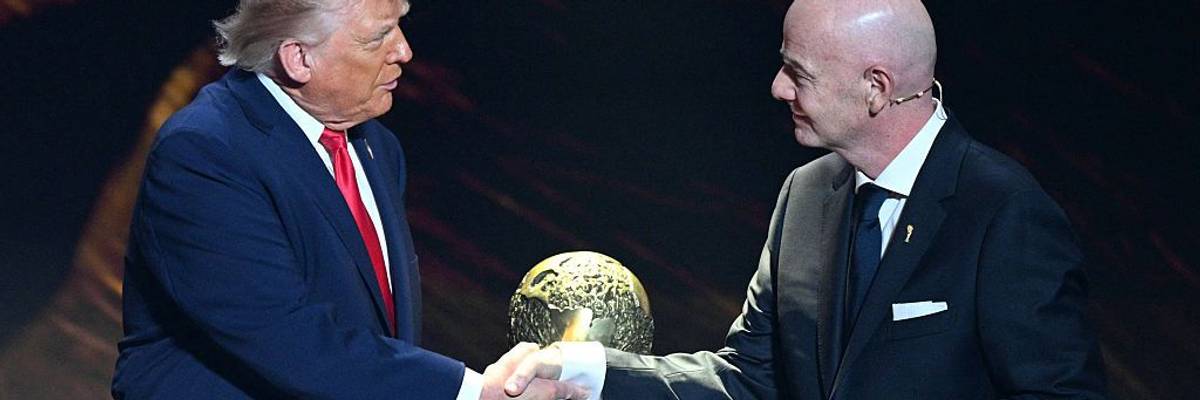
At this point, the main issue is no longer only the US; it is the crisis of FIFA’s own legitimacy. FIFA has tried for years to present itself as an institution above politics, but the reality is that global football has long since become part of the structure of power and geopolitical interests. The granting of the so-called “peace prize” to Trump, at a time when his immigration and security policies face widespread global criticism, became so controversial precisely for this reason. Critics believe FIFA is less concerned with human rights than with preserving its relations with the political and economic powers of the host countries.
This crisis is not merely a moral issue; it is directly tied to the future credibility of international institutions. If FIFA remains silent in the face of discriminatory policies, a securitized environment, and civil restrictions, how can it continue to claim that it defends universal values? Are human rights standards applied only to non-Western countries? And if human rights violations in the US are ignored, does the very concept of the “universality” of human rights not fall into crisis?
The US itself, meanwhile, faces a profound contradiction. For decades, Washington has used human rights as a tool for producing global legitimacy and has pressured many of its rivals through this very discourse. But now, the same country that accused others of violating freedoms is facing warnings from human rights organizations about its treatment of migrants, minorities, and its internal security environment. This development is a sign of the erosion of American soft power—power that was once Washington’s most important instrument of global influence.
From this perspective, the 2026 World Cup is not merely a sporting event; it is a test of the gap between the US' official narrative and its domestic reality. If the tournament is accompanied by an intensely securitized atmosphere, the control of migrants, discriminatory treatment, or the suppression of protests, the image of the US that forms in the minds of millions of global viewers will be very different from the traditional narrative of a “free American society.” In the age of social media, even one violent encounter around the stadiums could turn into a global crisis for the credibility of both the US and FIFA.
In the meantime, the more important point is that football is no longer merely a tool of entertainment as it once was. Today, the World Cup is part of the competition of narratives and the war of images. Countries try to use this event to display their stability, legitimacy, and cultural appeal. But if the US cannot manage the contradiction between its human rights slogans and the reality of its domestic politics, the 2026 World Cup may become a symbol of crisis in the very values the West has claimed for decades to defend.
Perhaps the greatest danger for US and FIFA is precisely this: that the world may remember the 2026 World Cup not for its goals and matches, but for images of migrant detentions, a police-state atmosphere, culture wars, and human rights contradictions. In that case, this tournament will not merely be a failed sporting event; it will become a symbol of an era in which even the greatest celebration of world football could not conceal the rupture between power, politics, and human rights.
Dear Common Dreams reader, It’s been nearly 30 years since I co-founded Common Dreams with my late wife, Lina Newhouser. We had the radical notion that journalism should serve the public good, not corporate profits. It was clear to us from the outset what it would take to build such a project. No paid advertisements. No corporate sponsors. No millionaire publisher telling us what to think or do. Many people said we wouldn't last a year, but we proved those doubters wrong. Together with a tremendous team of journalists and dedicated staff, we built an independent media outlet free from the constraints of profits and corporate control. Our mission has always been simple: To inform. To inspire. To ignite change for the common good. Building Common Dreams was not easy. Our survival was never guaranteed. When you take on the most powerful forces—Wall Street greed, fossil fuel industry destruction, Big Tech lobbyists, and uber-rich oligarchs who have spent billions upon billions rigging the economy and democracy in their favor—the only bulwark you have is supporters who believe in your work. But here’s the urgent message from me today. It's never been this bad out there. And it's never been this hard to keep us going. At the very moment Common Dreams is most needed, the threats we face are intensifying. We need your support now more than ever. We don't accept corporate advertising and never will. We don't have a paywall because we don't think people should be blocked from critical news based on their ability to pay. Everything we do is funded by the donations of readers like you. When everyone does the little they can afford, we are strong. But if that support retreats or dries up, so do we. Will you donate now to make sure Common Dreams not only survives but thrives? —Craig Brown, Co-founder |
The 2026 World Cup was supposed to be a symbol of global unity, cultural diversity, and a shared celebration among nations; an event that would place football beyond politics, borders, and ideology. Yet the closer we move toward the start of the tournament, another image is taking shape: one that speaks not of football’s excitement, but of the heavy shadow of securitization, anti-immigrant hostility, discrimination, and a crisis of human rights legitimacy. Human Rights Watch’s recent warning that the 2026 World Cup could turn into a “human rights disaster” is not merely a publicity-driven statement; it is a sign of a deep rupture between the West’s moral claims and the political reality of the United States today.
The 2026 World Cup is set to be jointly hosted by the US, Canada, and Mexico; three countries presented in FIFA’s official publicity as symbols of “multiculturalism,” “freedom,” and “diversity.” In practice, however, the tournament will be held in an environment shaped by hard-line immigration policies, the securitized atmosphere following President Donald Trump’s return, the rise of far-right currents, and intensifying cultural wars—an environment that displays a very different face of these countries.
The remarks by Minky Worden, director of Global Initiatives at Human Rights Watch, are highly significant because she points to an issue that FIFA and the US are trying to sidestep: the possible role of US Immigration and Customs Enforcement (ICE) in the security environment of the World Cup. The central concern is not merely the presence of immigration officers in stadiums; the issue is that the World Cup may become a platform for normalizing harsh immigration policies and securitized control. In a country where images of migrant detentions, mass deportations, family separations, and violent treatment of asylum-seekers have repeatedly made headlines in recent years, it is only natural that many human rights activists would be concerned about the psychological and social safety of migrants, Muslims, Latinos, and even foreign fans.
The reality is that the US today is no longer able to preserve the uncontested image of the “land of freedom” as it did in the 1990s, or even during the Obama era. Trump’s return, the intensification of domestic polarization, and the radicalization of the political atmosphere have pushed the United States into a stage in which “security” has prevailed over “freedom” more than ever before. The 2026 World Cup will be held precisely in such an atmosphere: one in which football is not merely a sporting event, but part of the US' internal political and identity struggle.
Perhaps the greatest danger for US and FIFA is precisely this: that the world may remember the 2026 World Cup not for its goals and matches, but for images of migrant detentions, a police-state atmosphere, culture wars, and human rights contradictions.
One of the most important dimensions of the crisis is the issue of the “culture war,” a concept Worden also references. Today in the US, issues such as migrants’ rights, LGBTQ+ rights, race, religion, and cultural identity have become the main battlefield of political confrontation. Under such conditions, the World Cup can no longer claim that “sport is separate from politics.” On the contrary, the tournament is likely to become a stage for displaying these very ideological fractures.
This issue is especially significant when it comes to LGBTQ+ rights. The fact that only the city of Atlanta has referred in its official programs to support for LGBTQ+ rights shows that even among the US host cities, there is no clear consensus on human rights standards. This comes as FIFA has repeatedly claimed in recent years that it has made human rights one of its strategic principles. The glaring contradiction lies here: An institution that took positions on minority rights in Qatar is now acting with greater caution and silence in the face of potential human rights crises in the US.
At this point, the main issue is no longer only the US; it is the crisis of FIFA’s own legitimacy. FIFA has tried for years to present itself as an institution above politics, but the reality is that global football has long since become part of the structure of power and geopolitical interests. The granting of the so-called “peace prize” to Trump, at a time when his immigration and security policies face widespread global criticism, became so controversial precisely for this reason. Critics believe FIFA is less concerned with human rights than with preserving its relations with the political and economic powers of the host countries.
This crisis is not merely a moral issue; it is directly tied to the future credibility of international institutions. If FIFA remains silent in the face of discriminatory policies, a securitized environment, and civil restrictions, how can it continue to claim that it defends universal values? Are human rights standards applied only to non-Western countries? And if human rights violations in the US are ignored, does the very concept of the “universality” of human rights not fall into crisis?
The US itself, meanwhile, faces a profound contradiction. For decades, Washington has used human rights as a tool for producing global legitimacy and has pressured many of its rivals through this very discourse. But now, the same country that accused others of violating freedoms is facing warnings from human rights organizations about its treatment of migrants, minorities, and its internal security environment. This development is a sign of the erosion of American soft power—power that was once Washington’s most important instrument of global influence.
From this perspective, the 2026 World Cup is not merely a sporting event; it is a test of the gap between the US' official narrative and its domestic reality. If the tournament is accompanied by an intensely securitized atmosphere, the control of migrants, discriminatory treatment, or the suppression of protests, the image of the US that forms in the minds of millions of global viewers will be very different from the traditional narrative of a “free American society.” In the age of social media, even one violent encounter around the stadiums could turn into a global crisis for the credibility of both the US and FIFA.
In the meantime, the more important point is that football is no longer merely a tool of entertainment as it once was. Today, the World Cup is part of the competition of narratives and the war of images. Countries try to use this event to display their stability, legitimacy, and cultural appeal. But if the US cannot manage the contradiction between its human rights slogans and the reality of its domestic politics, the 2026 World Cup may become a symbol of crisis in the very values the West has claimed for decades to defend.
Perhaps the greatest danger for US and FIFA is precisely this: that the world may remember the 2026 World Cup not for its goals and matches, but for images of migrant detentions, a police-state atmosphere, culture wars, and human rights contradictions. In that case, this tournament will not merely be a failed sporting event; it will become a symbol of an era in which even the greatest celebration of world football could not conceal the rupture between power, politics, and human rights.
The 2026 World Cup was supposed to be a symbol of global unity, cultural diversity, and a shared celebration among nations; an event that would place football beyond politics, borders, and ideology. Yet the closer we move toward the start of the tournament, another image is taking shape: one that speaks not of football’s excitement, but of the heavy shadow of securitization, anti-immigrant hostility, discrimination, and a crisis of human rights legitimacy. Human Rights Watch’s recent warning that the 2026 World Cup could turn into a “human rights disaster” is not merely a publicity-driven statement; it is a sign of a deep rupture between the West’s moral claims and the political reality of the United States today.
The 2026 World Cup is set to be jointly hosted by the US, Canada, and Mexico; three countries presented in FIFA’s official publicity as symbols of “multiculturalism,” “freedom,” and “diversity.” In practice, however, the tournament will be held in an environment shaped by hard-line immigration policies, the securitized atmosphere following President Donald Trump’s return, the rise of far-right currents, and intensifying cultural wars—an environment that displays a very different face of these countries.
The remarks by Minky Worden, director of Global Initiatives at Human Rights Watch, are highly significant because she points to an issue that FIFA and the US are trying to sidestep: the possible role of US Immigration and Customs Enforcement (ICE) in the security environment of the World Cup. The central concern is not merely the presence of immigration officers in stadiums; the issue is that the World Cup may become a platform for normalizing harsh immigration policies and securitized control. In a country where images of migrant detentions, mass deportations, family separations, and violent treatment of asylum-seekers have repeatedly made headlines in recent years, it is only natural that many human rights activists would be concerned about the psychological and social safety of migrants, Muslims, Latinos, and even foreign fans.
The reality is that the US today is no longer able to preserve the uncontested image of the “land of freedom” as it did in the 1990s, or even during the Obama era. Trump’s return, the intensification of domestic polarization, and the radicalization of the political atmosphere have pushed the United States into a stage in which “security” has prevailed over “freedom” more than ever before. The 2026 World Cup will be held precisely in such an atmosphere: one in which football is not merely a sporting event, but part of the US' internal political and identity struggle.
Perhaps the greatest danger for US and FIFA is precisely this: that the world may remember the 2026 World Cup not for its goals and matches, but for images of migrant detentions, a police-state atmosphere, culture wars, and human rights contradictions.
One of the most important dimensions of the crisis is the issue of the “culture war,” a concept Worden also references. Today in the US, issues such as migrants’ rights, LGBTQ+ rights, race, religion, and cultural identity have become the main battlefield of political confrontation. Under such conditions, the World Cup can no longer claim that “sport is separate from politics.” On the contrary, the tournament is likely to become a stage for displaying these very ideological fractures.
This issue is especially significant when it comes to LGBTQ+ rights. The fact that only the city of Atlanta has referred in its official programs to support for LGBTQ+ rights shows that even among the US host cities, there is no clear consensus on human rights standards. This comes as FIFA has repeatedly claimed in recent years that it has made human rights one of its strategic principles. The glaring contradiction lies here: An institution that took positions on minority rights in Qatar is now acting with greater caution and silence in the face of potential human rights crises in the US.
At this point, the main issue is no longer only the US; it is the crisis of FIFA’s own legitimacy. FIFA has tried for years to present itself as an institution above politics, but the reality is that global football has long since become part of the structure of power and geopolitical interests. The granting of the so-called “peace prize” to Trump, at a time when his immigration and security policies face widespread global criticism, became so controversial precisely for this reason. Critics believe FIFA is less concerned with human rights than with preserving its relations with the political and economic powers of the host countries.
This crisis is not merely a moral issue; it is directly tied to the future credibility of international institutions. If FIFA remains silent in the face of discriminatory policies, a securitized environment, and civil restrictions, how can it continue to claim that it defends universal values? Are human rights standards applied only to non-Western countries? And if human rights violations in the US are ignored, does the very concept of the “universality” of human rights not fall into crisis?
The US itself, meanwhile, faces a profound contradiction. For decades, Washington has used human rights as a tool for producing global legitimacy and has pressured many of its rivals through this very discourse. But now, the same country that accused others of violating freedoms is facing warnings from human rights organizations about its treatment of migrants, minorities, and its internal security environment. This development is a sign of the erosion of American soft power—power that was once Washington’s most important instrument of global influence.
From this perspective, the 2026 World Cup is not merely a sporting event; it is a test of the gap between the US' official narrative and its domestic reality. If the tournament is accompanied by an intensely securitized atmosphere, the control of migrants, discriminatory treatment, or the suppression of protests, the image of the US that forms in the minds of millions of global viewers will be very different from the traditional narrative of a “free American society.” In the age of social media, even one violent encounter around the stadiums could turn into a global crisis for the credibility of both the US and FIFA.
In the meantime, the more important point is that football is no longer merely a tool of entertainment as it once was. Today, the World Cup is part of the competition of narratives and the war of images. Countries try to use this event to display their stability, legitimacy, and cultural appeal. But if the US cannot manage the contradiction between its human rights slogans and the reality of its domestic politics, the 2026 World Cup may become a symbol of crisis in the very values the West has claimed for decades to defend.
Perhaps the greatest danger for US and FIFA is precisely this: that the world may remember the 2026 World Cup not for its goals and matches, but for images of migrant detentions, a police-state atmosphere, culture wars, and human rights contradictions. In that case, this tournament will not merely be a failed sporting event; it will become a symbol of an era in which even the greatest celebration of world football could not conceal the rupture between power, politics, and human rights.