SUBSCRIBE TO OUR FREE NEWSLETTER
Daily news & progressive opinion—funded by the people, not the corporations—delivered straight to your inbox.
5
#000000
#FFFFFF
To donate by check, phone, or other method, see our More Ways to Give page.
I think we can assess one outcome of this stupid war already: Both the emotional valence and the structural understanding of different energy sources has shifted, and for good. Meaning takes a very long time to erode, but when it does the switch can come quickly; we’re living at a hinge moment, and on the other side of the door is a different world. We tend to think about energy in hard terms—kilowatts, dollars—but in the end our visceral sense of the path forward is what matters most, because attitude informs decision without us even quite realizing it. The world between our ears has changed, decisively, in the direction of renewable power from the sun and wind
Let’s begin by understanding the deep, underpinning role that fossil fuel has played in modernity, both its reality and its psychology. What we call the Industrial Revolution means simply that we learned to control the combustion of coal, then oil, then gas, and in the process gave human life a sweeping set of new powers. Suddenly mobility—the train, the car, the plane—was easy; suddenly muscle power gave way to the genies in a barrel of petroleum, summonable at will to perform endless tasks. Fossil fuel was freedom and power, and this understanding—again, both emotional and structural—set in very deep.
Deep enough that it was able to survive the emerging problems it created. When pollution dimmed cities in the 1960s, that gave rise to the first Earth Day—and to the catalytic converters and the smokestack filters that reduced the problem enough that it never challenged hydrocarbon dominance: We could have our cake and breathe it too. The oil shocks of the 1970s threatened that dominance in the targeted US but didn’t quite topple it; the Reagan program of dramatically increased drilling, and the extension of America’s military shield to the Middle East, gave us enough sense of safety that we stayed on course.
Rising fears about climate change seemed set to tarnish fossil fuel—after all, it now threatened an end to the physical future of our civilizations—but the effects of global warming have in the early stages been sporadic and local, and when the heatwave fades or the fire goes out or the flood recedes we’ve generally reverted back to the perceived and comforting inevitability of fossil fuel. It’s what we’ve known, and hence we’ve put up with a lot to keep the relationship going.
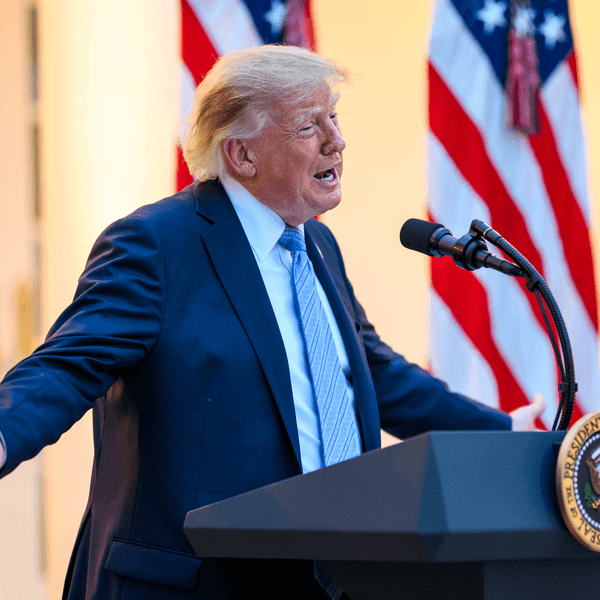
Donald Trump has managed to break the two-century-old grip of fossil fuel on the human imagination.
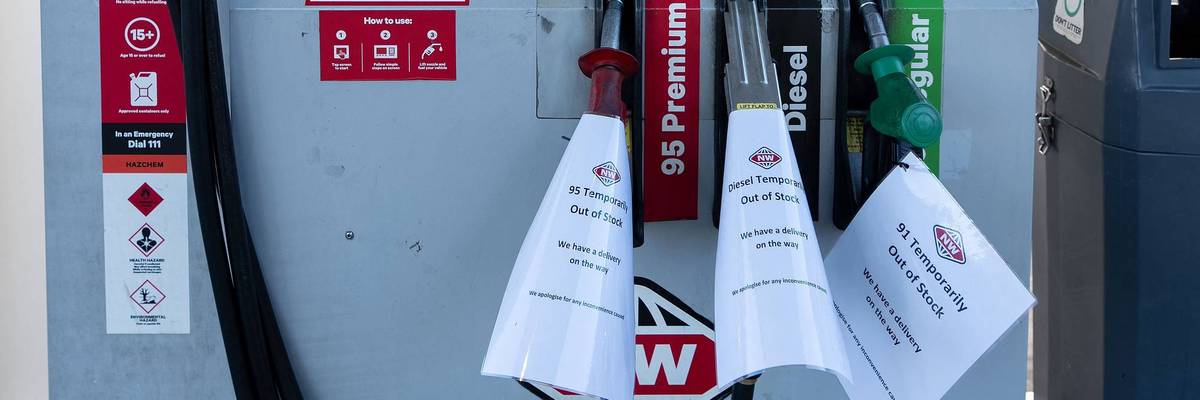
But there’s been nothing sporadic or local about the effects of this war. As tanker traffic through the Strait of Hormuz slowed and then stopped, the effects have been dramatic, immediate, and global. In Thailand farmers report they can’t find diesel to keep the pumps that irrigate rice paddies running; in Myanmar, as fertilizer prices soar, the World Food Program has warned that food production costs could double compared with last year’s harvest, in a country where a quarter of the population is already facing acute hunger. There are things we can change to cut energy use (the Thai prime minister said AC units should be set at 80°F, and that bureaucrats should stop wearing neckties “except for ceremonies”) but other customs are harder to rearrange: Bodies are piling up at Thai temples because they’re out of fuel for cremations. In Bangladesh, the prime minister has turned off most of the lights in his office, and economic life is changing by the week:
“I used to do 15 trips a day. Now I spend hours just looking for a pump that’s open, and sometimes I go home empty,” said Sohel Sarker, 38, a ridesharing biker in Dhaka. “I don’t know from one day to the next whether I’ll find fuel.”
These anecdotes add up to much more. As a team from the Financial Times concluded after a global inventory of the shifts:
High fuel prices and shortages force consumers to buy fewer goods. Businesses invest less and governments conserve scarce resources, causing economies to experience weaker growth. The enduring disruption of an energy shock can trigger the destruction of demand, driving economies toward stagnation and recession.
But that’s the macro level. At the micro level, it’s as much about psychology as anything else. The Guardian published an excellent account of how fuel shortages are affecting daily life around the world, and I found myself thinking about the words of another Thai, Teerayut Ruenrerng, owner of a mobile grocery truck:
At about midday, I return home from my morning selling session. I’ll pass three gas stations on the way and stop at each one. Sometimes I can get fuel, sometimes I can’t. Sometimes they will only give me 300 baht or 500 baht (US$9.15 to US$15.25) worth. At lunchtime I take a break, and sleep for about an hour. I start work at midnight.
If I’m able to fill up a full tank, I can relax because I know I don’t need to search for gas for at least three days and it’s guaranteed I can go out and sell. But if I can’t find any, I start to get stressed and panic about what I’ll do if I can’t get fuel.
Here’s an interior designer in Sydney:
It’s frightening, because you don’t know how long it’s going to go on for.
I just started looking for jobs, because I don’t know whether people are even going to want to spend money on renovating right now, or are going to want a designer. I’m pretty much throwing everything at it, which I think is part of the panic setting in.
And here’s a warehouse worker in Delhi:
As I get ready for work, my eyes keep returning to the gas stove. I last ate yesterday afternoon, some lentils with chapatis. It has been more than a day. I am very hungry, but there is only enough gas left for four or five meals. I hold back, saving it for worse days. There are a couple of cucumbers and tomatoes. I will cut them, add salt, and eat that, and save one more day.
Now, just think of that for a moment. The gas stove, to an Indian, is suddenly a symbol of scarcity, deprivation, fear. The stuff that supplies it comes from somewhere distant over which he has no control—if President Donald Trump gets an idea, or the Islamic Republican Guards get an idea, then the flow on which it depends can stop, and then he goes hungry, counting how many meals his canister might still contain. Multiply this by a few billion people and a few key facets of each life—dinner, commute, heat, cold—and you end up with a profoundly different mindset.
In the very short run, that may mean that countries like India lurch toward coal—fairly cheap, and fairly easily available. The forecast for May and June in India is even hotter than usual before the monsoon descends, and according to Bloomberg the country is preparing to burn more of the black rocks to keep air conditioners running. Even a few years ago, that would have been the country’s only real recourse: belt-tightening, and shifting to a different fossil fuel. But the Trumpian revelations about the undependability of fossil fuel come at a significant moment in human history, a moment when we have—again, suddenly—a very different choice. As David Fickling reports:
With the LNG [liquefied natural gas] drought pushing up electricity prices and photovoltaics providing a cheaper, easier alternative, a boom in rooftop solar is far more likely than a return to coal. Don’t look under the ground for the solution to the LNG crisis. The answer is in the skies.
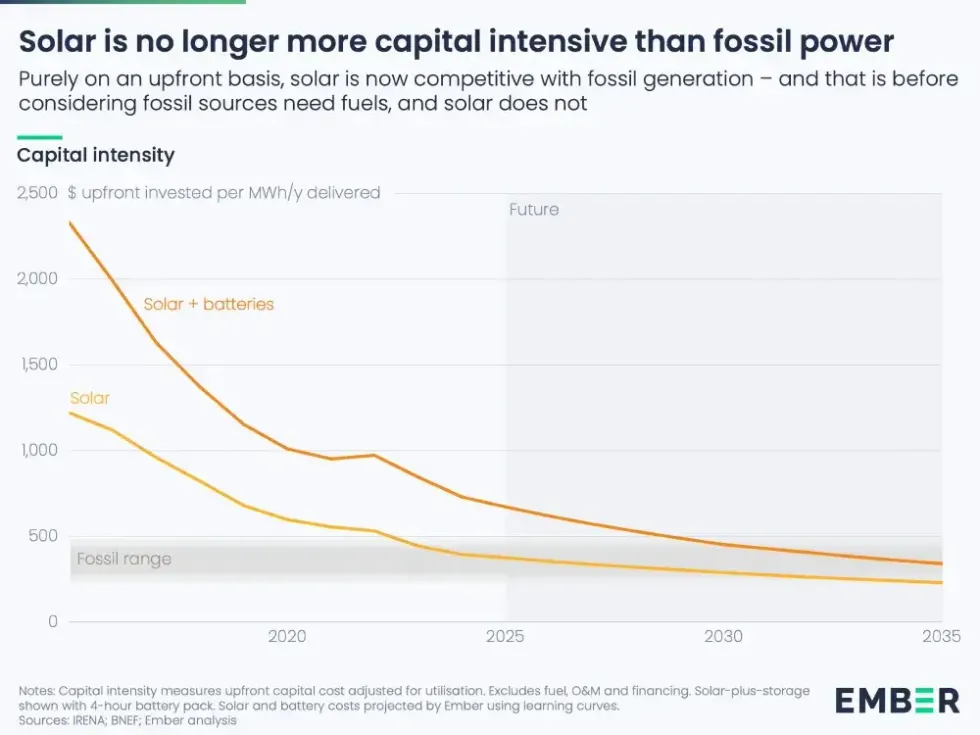
Here’s a chart worth looking at, from the think tank Ember. It requires a bit of explaining. The old story about clean energy—that is, the story of the last five years—is that it was cheaper to operate than fossil fuel power, because the fuel (sunshine) was free, but that the upfront costs were higher because you had to build those solar panels. But now it’s so cheap to build the solar panels that from the jump it make sense to switch. That gray band at the bottom is the price of the fossil fuel system, and that orange line is solar with batteries, which provides the same reliable power. Again, this is the upfront cost—in the long run, of course, the solar system is hugely cheaper, because, again, the sun delivers the energy for free when it rises above the horizon.
Anyway, let’s think about India and stoves again. For a long time if you wanted to cook your food in India, you needed to go out and gather firewood or dung, something that took a long time (and was a chore usually assigned to women). When you burned it, you had to tend the fire carefully, and you (and your kids) breathed a lot of bad stuff. There have been many attempts to supply alternative cookstoves, but they never worked very well. But now—well, now, the government is moving quickly to boost production and import of induction cooktops. An induction cooktop—I’m simmering chowder on mine as I write—produces heat for cooking without much electricity, and that electricity can be supplied by solar panels and batteries, which are cheap. Suddenly the stuff we want from energy comes more easily, more dependably, and more affordably from the sun and wind.
This is happening, all of a sudden, everywhere and with everything. Here’s a Pakistani farmer explaining why, with a solar panel to run his irrigation pump, he no longer cares about the supply of gas from the Gulf:
“Now, I don’t care if the prices of diesel increase,” he says, proudly pointing to the sun above. “As long as there is this sun, I can grow my watermelons.”
In Europe, the online marketplace Olx reported a huge jump in inquiries about electric vehicless—for instance, in France (up 50%), Portugal (up 54 percent), Romania (up 40%), and Poland (up 39%). From Jakob Steinschaden, news exported a total of 120,083 electric and hybrid vehicles in March 2026, an increase of 65% compared to March 2025. The Washington Post reported yesterday that shares in China’s biggest battery maker had jumped by nearly a third since the war began:
Indonesian President Prabowo Subianto said in March that his government would build 100 gigawatts of solar power in the next two years. Philippines’ state-owned pension is offering loans of up to $8,300 for members to buy and install solar power for their homes.
When Abraham Maslow first detailed the hierarchy of human needs, he put our physiological needs—food, shelter—at the bottom, and just above them our need for stability and security. There have been critiques of his theory, but the basic idea stands. What’s curious about renewable energy is that it’s always filled higher-order desires—for belonging, for esteem—better than fossil fuel; poll after poll shows that pretty much everyone understands that, all things equal, it’s better not to pollute the air. But now clean energy fills those most basic psychological requirements better too.
Think of the amount of money the fossil fuel industry has spent over the years to invest oil and gas with psychological power: Who could forget, for instance, the campaign that Rebecca Leber uncovered years ago that paid cash to influencers to gush about the homeyness of cooking with gas.
“#cookingwithgas makes food taste better,” says Camille, an LA-based foodie who poses artfully with her spatula, to her 16,700 followers.
But that’s not what cooking with gas means any more. Now it means wondering about the supply. The sun already provides us with warmth, with light, and via photosynthesis our supper—we have a pretty good psychological relationship with the sun already. When it comes out, we smile. And so the idea that it will happily supply us with all the power we need won’t be a hard sell.
Security fears keep ordinary people awake at night, but also elites. Here’s Frank Elderson, a member of the board of the European Central Bank, writing Tuesday in the bank’s official blog, and in the bloodless language of bureaucrats he says: More sun now:
Europe cannot eliminate geopolitical risk, but it can significantly reduce its exposure to it. The most effective way to do that is by cutting reliance on imported fossil fuels and accelerating an orderly shift to home‑grown clean energy. If Europe were to meet its sustainable energy targets, the link between domestic energy prices and volatile global energy markets would weaken substantially.
Donald Trump has managed to break the two-century-old grip of fossil fuel on the human imagination. As he explained to the GOP House caucus last month, “No other president can do some of the shit I’m doing.”
I think we can assess one outcome of this stupid war already: Both the emotional valence and the structural understanding of different energy sources has shifted, and for good. Meaning takes a very long time to erode, but when it does the switch can come quickly; we’re living at a hinge moment, and on the other side of the door is a different world. We tend to think about energy in hard terms—kilowatts, dollars—but in the end our visceral sense of the path forward is what matters most, because attitude informs decision without us even quite realizing it. The world between our ears has changed, decisively, in the direction of renewable power from the sun and wind
Let’s begin by understanding the deep, underpinning role that fossil fuel has played in modernity, both its reality and its psychology. What we call the Industrial Revolution means simply that we learned to control the combustion of coal, then oil, then gas, and in the process gave human life a sweeping set of new powers. Suddenly mobility—the train, the car, the plane—was easy; suddenly muscle power gave way to the genies in a barrel of petroleum, summonable at will to perform endless tasks. Fossil fuel was freedom and power, and this understanding—again, both emotional and structural—set in very deep.
Deep enough that it was able to survive the emerging problems it created. When pollution dimmed cities in the 1960s, that gave rise to the first Earth Day—and to the catalytic converters and the smokestack filters that reduced the problem enough that it never challenged hydrocarbon dominance: We could have our cake and breathe it too. The oil shocks of the 1970s threatened that dominance in the targeted US but didn’t quite topple it; the Reagan program of dramatically increased drilling, and the extension of America’s military shield to the Middle East, gave us enough sense of safety that we stayed on course.
Rising fears about climate change seemed set to tarnish fossil fuel—after all, it now threatened an end to the physical future of our civilizations—but the effects of global warming have in the early stages been sporadic and local, and when the heatwave fades or the fire goes out or the flood recedes we’ve generally reverted back to the perceived and comforting inevitability of fossil fuel. It’s what we’ve known, and hence we’ve put up with a lot to keep the relationship going.
Donald Trump has managed to break the two-century-old grip of fossil fuel on the human imagination.
But there’s been nothing sporadic or local about the effects of this war. As tanker traffic through the Strait of Hormuz slowed and then stopped, the effects have been dramatic, immediate, and global. In Thailand farmers report they can’t find diesel to keep the pumps that irrigate rice paddies running; in Myanmar, as fertilizer prices soar, the World Food Program has warned that food production costs could double compared with last year’s harvest, in a country where a quarter of the population is already facing acute hunger. There are things we can change to cut energy use (the Thai prime minister said AC units should be set at 80°F, and that bureaucrats should stop wearing neckties “except for ceremonies”) but other customs are harder to rearrange: Bodies are piling up at Thai temples because they’re out of fuel for cremations. In Bangladesh, the prime minister has turned off most of the lights in his office, and economic life is changing by the week:
“I used to do 15 trips a day. Now I spend hours just looking for a pump that’s open, and sometimes I go home empty,” said Sohel Sarker, 38, a ridesharing biker in Dhaka. “I don’t know from one day to the next whether I’ll find fuel.”
These anecdotes add up to much more. As a team from the Financial Times concluded after a global inventory of the shifts:
High fuel prices and shortages force consumers to buy fewer goods. Businesses invest less and governments conserve scarce resources, causing economies to experience weaker growth. The enduring disruption of an energy shock can trigger the destruction of demand, driving economies toward stagnation and recession.
But that’s the macro level. At the micro level, it’s as much about psychology as anything else. The Guardian published an excellent account of how fuel shortages are affecting daily life around the world, and I found myself thinking about the words of another Thai, Teerayut Ruenrerng, owner of a mobile grocery truck:
At about midday, I return home from my morning selling session. I’ll pass three gas stations on the way and stop at each one. Sometimes I can get fuel, sometimes I can’t. Sometimes they will only give me 300 baht or 500 baht (US$9.15 to US$15.25) worth. At lunchtime I take a break, and sleep for about an hour. I start work at midnight.
If I’m able to fill up a full tank, I can relax because I know I don’t need to search for gas for at least three days and it’s guaranteed I can go out and sell. But if I can’t find any, I start to get stressed and panic about what I’ll do if I can’t get fuel.
Here’s an interior designer in Sydney:
It’s frightening, because you don’t know how long it’s going to go on for.
I just started looking for jobs, because I don’t know whether people are even going to want to spend money on renovating right now, or are going to want a designer. I’m pretty much throwing everything at it, which I think is part of the panic setting in.
And here’s a warehouse worker in Delhi:
As I get ready for work, my eyes keep returning to the gas stove. I last ate yesterday afternoon, some lentils with chapatis. It has been more than a day. I am very hungry, but there is only enough gas left for four or five meals. I hold back, saving it for worse days. There are a couple of cucumbers and tomatoes. I will cut them, add salt, and eat that, and save one more day.
Now, just think of that for a moment. The gas stove, to an Indian, is suddenly a symbol of scarcity, deprivation, fear. The stuff that supplies it comes from somewhere distant over which he has no control—if President Donald Trump gets an idea, or the Islamic Republican Guards get an idea, then the flow on which it depends can stop, and then he goes hungry, counting how many meals his canister might still contain. Multiply this by a few billion people and a few key facets of each life—dinner, commute, heat, cold—and you end up with a profoundly different mindset.
In the very short run, that may mean that countries like India lurch toward coal—fairly cheap, and fairly easily available. The forecast for May and June in India is even hotter than usual before the monsoon descends, and according to Bloomberg the country is preparing to burn more of the black rocks to keep air conditioners running. Even a few years ago, that would have been the country’s only real recourse: belt-tightening, and shifting to a different fossil fuel. But the Trumpian revelations about the undependability of fossil fuel come at a significant moment in human history, a moment when we have—again, suddenly—a very different choice. As David Fickling reports:
With the LNG [liquefied natural gas] drought pushing up electricity prices and photovoltaics providing a cheaper, easier alternative, a boom in rooftop solar is far more likely than a return to coal. Don’t look under the ground for the solution to the LNG crisis. The answer is in the skies.
Here’s a chart worth looking at, from the think tank Ember. It requires a bit of explaining. The old story about clean energy—that is, the story of the last five years—is that it was cheaper to operate than fossil fuel power, because the fuel (sunshine) was free, but that the upfront costs were higher because you had to build those solar panels. But now it’s so cheap to build the solar panels that from the jump it make sense to switch. That gray band at the bottom is the price of the fossil fuel system, and that orange line is solar with batteries, which provides the same reliable power. Again, this is the upfront cost—in the long run, of course, the solar system is hugely cheaper, because, again, the sun delivers the energy for free when it rises above the horizon.
Anyway, let’s think about India and stoves again. For a long time if you wanted to cook your food in India, you needed to go out and gather firewood or dung, something that took a long time (and was a chore usually assigned to women). When you burned it, you had to tend the fire carefully, and you (and your kids) breathed a lot of bad stuff. There have been many attempts to supply alternative cookstoves, but they never worked very well. But now—well, now, the government is moving quickly to boost production and import of induction cooktops. An induction cooktop—I’m simmering chowder on mine as I write—produces heat for cooking without much electricity, and that electricity can be supplied by solar panels and batteries, which are cheap. Suddenly the stuff we want from energy comes more easily, more dependably, and more affordably from the sun and wind.
This is happening, all of a sudden, everywhere and with everything. Here’s a Pakistani farmer explaining why, with a solar panel to run his irrigation pump, he no longer cares about the supply of gas from the Gulf:
“Now, I don’t care if the prices of diesel increase,” he says, proudly pointing to the sun above. “As long as there is this sun, I can grow my watermelons.”
In Europe, the online marketplace Olx reported a huge jump in inquiries about electric vehicless—for instance, in France (up 50%), Portugal (up 54 percent), Romania (up 40%), and Poland (up 39%). From Jakob Steinschaden, news exported a total of 120,083 electric and hybrid vehicles in March 2026, an increase of 65% compared to March 2025. The Washington Post reported yesterday that shares in China’s biggest battery maker had jumped by nearly a third since the war began:
Indonesian President Prabowo Subianto said in March that his government would build 100 gigawatts of solar power in the next two years. Philippines’ state-owned pension is offering loans of up to $8,300 for members to buy and install solar power for their homes.
When Abraham Maslow first detailed the hierarchy of human needs, he put our physiological needs—food, shelter—at the bottom, and just above them our need for stability and security. There have been critiques of his theory, but the basic idea stands. What’s curious about renewable energy is that it’s always filled higher-order desires—for belonging, for esteem—better than fossil fuel; poll after poll shows that pretty much everyone understands that, all things equal, it’s better not to pollute the air. But now clean energy fills those most basic psychological requirements better too.
Think of the amount of money the fossil fuel industry has spent over the years to invest oil and gas with psychological power: Who could forget, for instance, the campaign that Rebecca Leber uncovered years ago that paid cash to influencers to gush about the homeyness of cooking with gas.
“#cookingwithgas makes food taste better,” says Camille, an LA-based foodie who poses artfully with her spatula, to her 16,700 followers.
But that’s not what cooking with gas means any more. Now it means wondering about the supply. The sun already provides us with warmth, with light, and via photosynthesis our supper—we have a pretty good psychological relationship with the sun already. When it comes out, we smile. And so the idea that it will happily supply us with all the power we need won’t be a hard sell.
Security fears keep ordinary people awake at night, but also elites. Here’s Frank Elderson, a member of the board of the European Central Bank, writing Tuesday in the bank’s official blog, and in the bloodless language of bureaucrats he says: More sun now:
Europe cannot eliminate geopolitical risk, but it can significantly reduce its exposure to it. The most effective way to do that is by cutting reliance on imported fossil fuels and accelerating an orderly shift to home‑grown clean energy. If Europe were to meet its sustainable energy targets, the link between domestic energy prices and volatile global energy markets would weaken substantially.
Donald Trump has managed to break the two-century-old grip of fossil fuel on the human imagination. As he explained to the GOP House caucus last month, “No other president can do some of the shit I’m doing.”
I think we can assess one outcome of this stupid war already: Both the emotional valence and the structural understanding of different energy sources has shifted, and for good. Meaning takes a very long time to erode, but when it does the switch can come quickly; we’re living at a hinge moment, and on the other side of the door is a different world. We tend to think about energy in hard terms—kilowatts, dollars—but in the end our visceral sense of the path forward is what matters most, because attitude informs decision without us even quite realizing it. The world between our ears has changed, decisively, in the direction of renewable power from the sun and wind
Let’s begin by understanding the deep, underpinning role that fossil fuel has played in modernity, both its reality and its psychology. What we call the Industrial Revolution means simply that we learned to control the combustion of coal, then oil, then gas, and in the process gave human life a sweeping set of new powers. Suddenly mobility—the train, the car, the plane—was easy; suddenly muscle power gave way to the genies in a barrel of petroleum, summonable at will to perform endless tasks. Fossil fuel was freedom and power, and this understanding—again, both emotional and structural—set in very deep.
Deep enough that it was able to survive the emerging problems it created. When pollution dimmed cities in the 1960s, that gave rise to the first Earth Day—and to the catalytic converters and the smokestack filters that reduced the problem enough that it never challenged hydrocarbon dominance: We could have our cake and breathe it too. The oil shocks of the 1970s threatened that dominance in the targeted US but didn’t quite topple it; the Reagan program of dramatically increased drilling, and the extension of America’s military shield to the Middle East, gave us enough sense of safety that we stayed on course.
Rising fears about climate change seemed set to tarnish fossil fuel—after all, it now threatened an end to the physical future of our civilizations—but the effects of global warming have in the early stages been sporadic and local, and when the heatwave fades or the fire goes out or the flood recedes we’ve generally reverted back to the perceived and comforting inevitability of fossil fuel. It’s what we’ve known, and hence we’ve put up with a lot to keep the relationship going.
Donald Trump has managed to break the two-century-old grip of fossil fuel on the human imagination.
But there’s been nothing sporadic or local about the effects of this war. As tanker traffic through the Strait of Hormuz slowed and then stopped, the effects have been dramatic, immediate, and global. In Thailand farmers report they can’t find diesel to keep the pumps that irrigate rice paddies running; in Myanmar, as fertilizer prices soar, the World Food Program has warned that food production costs could double compared with last year’s harvest, in a country where a quarter of the population is already facing acute hunger. There are things we can change to cut energy use (the Thai prime minister said AC units should be set at 80°F, and that bureaucrats should stop wearing neckties “except for ceremonies”) but other customs are harder to rearrange: Bodies are piling up at Thai temples because they’re out of fuel for cremations. In Bangladesh, the prime minister has turned off most of the lights in his office, and economic life is changing by the week:
“I used to do 15 trips a day. Now I spend hours just looking for a pump that’s open, and sometimes I go home empty,” said Sohel Sarker, 38, a ridesharing biker in Dhaka. “I don’t know from one day to the next whether I’ll find fuel.”
These anecdotes add up to much more. As a team from the Financial Times concluded after a global inventory of the shifts:
High fuel prices and shortages force consumers to buy fewer goods. Businesses invest less and governments conserve scarce resources, causing economies to experience weaker growth. The enduring disruption of an energy shock can trigger the destruction of demand, driving economies toward stagnation and recession.
But that’s the macro level. At the micro level, it’s as much about psychology as anything else. The Guardian published an excellent account of how fuel shortages are affecting daily life around the world, and I found myself thinking about the words of another Thai, Teerayut Ruenrerng, owner of a mobile grocery truck:
At about midday, I return home from my morning selling session. I’ll pass three gas stations on the way and stop at each one. Sometimes I can get fuel, sometimes I can’t. Sometimes they will only give me 300 baht or 500 baht (US$9.15 to US$15.25) worth. At lunchtime I take a break, and sleep for about an hour. I start work at midnight.
If I’m able to fill up a full tank, I can relax because I know I don’t need to search for gas for at least three days and it’s guaranteed I can go out and sell. But if I can’t find any, I start to get stressed and panic about what I’ll do if I can’t get fuel.
Here’s an interior designer in Sydney:
It’s frightening, because you don’t know how long it’s going to go on for.
I just started looking for jobs, because I don’t know whether people are even going to want to spend money on renovating right now, or are going to want a designer. I’m pretty much throwing everything at it, which I think is part of the panic setting in.
And here’s a warehouse worker in Delhi:
As I get ready for work, my eyes keep returning to the gas stove. I last ate yesterday afternoon, some lentils with chapatis. It has been more than a day. I am very hungry, but there is only enough gas left for four or five meals. I hold back, saving it for worse days. There are a couple of cucumbers and tomatoes. I will cut them, add salt, and eat that, and save one more day.
Now, just think of that for a moment. The gas stove, to an Indian, is suddenly a symbol of scarcity, deprivation, fear. The stuff that supplies it comes from somewhere distant over which he has no control—if President Donald Trump gets an idea, or the Islamic Republican Guards get an idea, then the flow on which it depends can stop, and then he goes hungry, counting how many meals his canister might still contain. Multiply this by a few billion people and a few key facets of each life—dinner, commute, heat, cold—and you end up with a profoundly different mindset.
In the very short run, that may mean that countries like India lurch toward coal—fairly cheap, and fairly easily available. The forecast for May and June in India is even hotter than usual before the monsoon descends, and according to Bloomberg the country is preparing to burn more of the black rocks to keep air conditioners running. Even a few years ago, that would have been the country’s only real recourse: belt-tightening, and shifting to a different fossil fuel. But the Trumpian revelations about the undependability of fossil fuel come at a significant moment in human history, a moment when we have—again, suddenly—a very different choice. As David Fickling reports:
With the LNG [liquefied natural gas] drought pushing up electricity prices and photovoltaics providing a cheaper, easier alternative, a boom in rooftop solar is far more likely than a return to coal. Don’t look under the ground for the solution to the LNG crisis. The answer is in the skies.
Here’s a chart worth looking at, from the think tank Ember. It requires a bit of explaining. The old story about clean energy—that is, the story of the last five years—is that it was cheaper to operate than fossil fuel power, because the fuel (sunshine) was free, but that the upfront costs were higher because you had to build those solar panels. But now it’s so cheap to build the solar panels that from the jump it make sense to switch. That gray band at the bottom is the price of the fossil fuel system, and that orange line is solar with batteries, which provides the same reliable power. Again, this is the upfront cost—in the long run, of course, the solar system is hugely cheaper, because, again, the sun delivers the energy for free when it rises above the horizon.
Anyway, let’s think about India and stoves again. For a long time if you wanted to cook your food in India, you needed to go out and gather firewood or dung, something that took a long time (and was a chore usually assigned to women). When you burned it, you had to tend the fire carefully, and you (and your kids) breathed a lot of bad stuff. There have been many attempts to supply alternative cookstoves, but they never worked very well. But now—well, now, the government is moving quickly to boost production and import of induction cooktops. An induction cooktop—I’m simmering chowder on mine as I write—produces heat for cooking without much electricity, and that electricity can be supplied by solar panels and batteries, which are cheap. Suddenly the stuff we want from energy comes more easily, more dependably, and more affordably from the sun and wind.
This is happening, all of a sudden, everywhere and with everything. Here’s a Pakistani farmer explaining why, with a solar panel to run his irrigation pump, he no longer cares about the supply of gas from the Gulf:
“Now, I don’t care if the prices of diesel increase,” he says, proudly pointing to the sun above. “As long as there is this sun, I can grow my watermelons.”
In Europe, the online marketplace Olx reported a huge jump in inquiries about electric vehicless—for instance, in France (up 50%), Portugal (up 54 percent), Romania (up 40%), and Poland (up 39%). From Jakob Steinschaden, news exported a total of 120,083 electric and hybrid vehicles in March 2026, an increase of 65% compared to March 2025. The Washington Post reported yesterday that shares in China’s biggest battery maker had jumped by nearly a third since the war began:
Indonesian President Prabowo Subianto said in March that his government would build 100 gigawatts of solar power in the next two years. Philippines’ state-owned pension is offering loans of up to $8,300 for members to buy and install solar power for their homes.
When Abraham Maslow first detailed the hierarchy of human needs, he put our physiological needs—food, shelter—at the bottom, and just above them our need for stability and security. There have been critiques of his theory, but the basic idea stands. What’s curious about renewable energy is that it’s always filled higher-order desires—for belonging, for esteem—better than fossil fuel; poll after poll shows that pretty much everyone understands that, all things equal, it’s better not to pollute the air. But now clean energy fills those most basic psychological requirements better too.
Think of the amount of money the fossil fuel industry has spent over the years to invest oil and gas with psychological power: Who could forget, for instance, the campaign that Rebecca Leber uncovered years ago that paid cash to influencers to gush about the homeyness of cooking with gas.
“#cookingwithgas makes food taste better,” says Camille, an LA-based foodie who poses artfully with her spatula, to her 16,700 followers.
But that’s not what cooking with gas means any more. Now it means wondering about the supply. The sun already provides us with warmth, with light, and via photosynthesis our supper—we have a pretty good psychological relationship with the sun already. When it comes out, we smile. And so the idea that it will happily supply us with all the power we need won’t be a hard sell.
Security fears keep ordinary people awake at night, but also elites. Here’s Frank Elderson, a member of the board of the European Central Bank, writing Tuesday in the bank’s official blog, and in the bloodless language of bureaucrats he says: More sun now:
Europe cannot eliminate geopolitical risk, but it can significantly reduce its exposure to it. The most effective way to do that is by cutting reliance on imported fossil fuels and accelerating an orderly shift to home‑grown clean energy. If Europe were to meet its sustainable energy targets, the link between domestic energy prices and volatile global energy markets would weaken substantially.
Donald Trump has managed to break the two-century-old grip of fossil fuel on the human imagination. As he explained to the GOP House caucus last month, “No other president can do some of the shit I’m doing.”