SUBSCRIBE TO OUR FREE NEWSLETTER
Daily news & progressive opinion—funded by the people, not the corporations—delivered straight to your inbox.
5
#000000
#FFFFFF
To donate by check, phone, or other method, see our More Ways to Give page.
Daily news & progressive opinion—funded by the people, not the corporations—delivered straight to your inbox.
Human life cannot be reduced to barrels of oil, dollars of growth, or inflation points. To do so is to make mass murder manageable, calculable, acceptable.
When a bomb falls on a school, a hospital, or a home, no euphemism can soften the truth. Babies die in incubators. Teenage girls die in classrooms. Civilians experience violence not as a “military operation” or a “precision strike,” but as death delivered with terrifying immediacy. Yet governments persist in cloaking catastrophe with language that sanitizes it, as if calling mass murder an “operation” could contain its human cost.
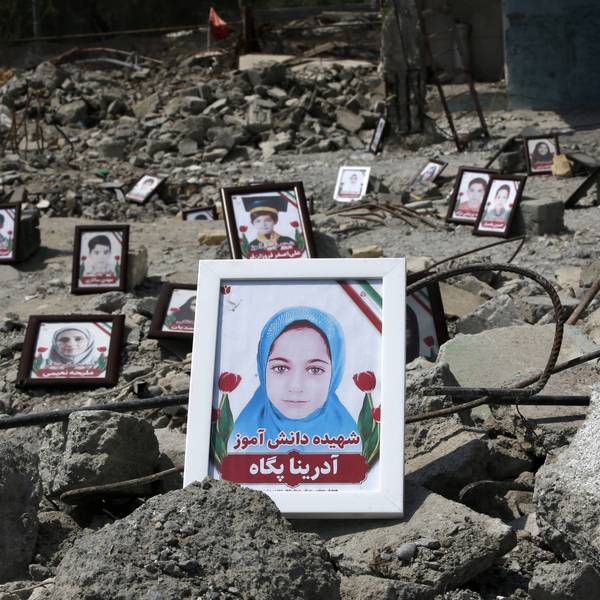
In the opening days of the war involving Iran, an airstrike hit the Shajareh Tayyebeh girls’ elementary school in Minab, a coastal city in southern Iran. Iranian authorities report 165 dead, many of them schoolchildren, and dozens more wounded. Satellite imagery shows the school nestled among civilian and military structures. Neither the United States nor Israel has claimed responsibility; both insist civilians were not intentionally targeted. That absence of attribution is not a minor detail. It is a tool of evasion, allowing states to obscure responsibility while the innocent pay the price.
I’ve watched two images closely since the conflict began.
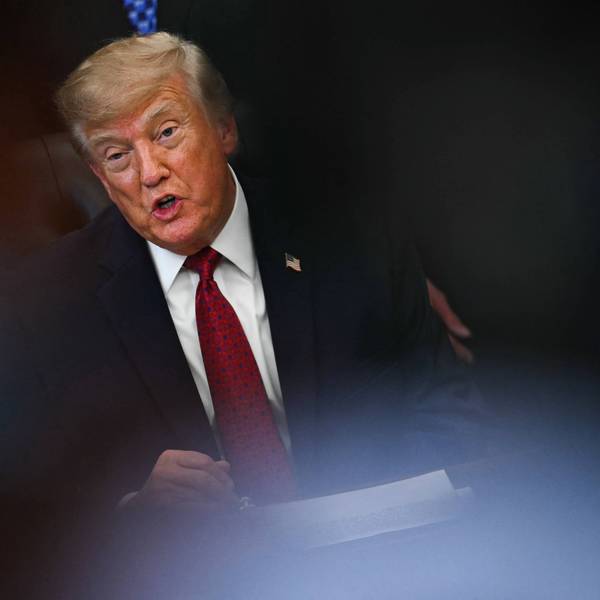
The first unfolds in the Oval Office, that carefully staged room where power is both exercised and performed. President Donald Trump asks an aide to hand him a model bomber. He turns it over in his hands, smiling, admiring it, and then almost tenderly hugs it.
Have we no shame? We watch children die and count barrels of oil. We hear names read off casualty lists and ask instead whether the gas pump is under $2.00.
“Give me that bomber… let me just hug that little sucker.”
Something in me recoiled, not just at the moment itself, but at how easily it could pass as normal. How quickly the machinery of war can be made small, harmless, even affectionate.
Because I know what that machine is.
The real aircraft—the Northrop B-2 Spirit—was designed to move through the sky without being seen. Built by Northrop Grumman with partners like Boeing, it exists to penetrate defenses, to arrive without warning, to deliver payloads that can level entire structures in seconds. It can carry dozens of precision-guided bombs. It can carry nuclear weapons. It is engineering in the service of disappearance: disappearance of sound, of visibility, of warning.
And maybe most dangerously, disappearance of consequence.
The second scene is one I can’t stop imagining.
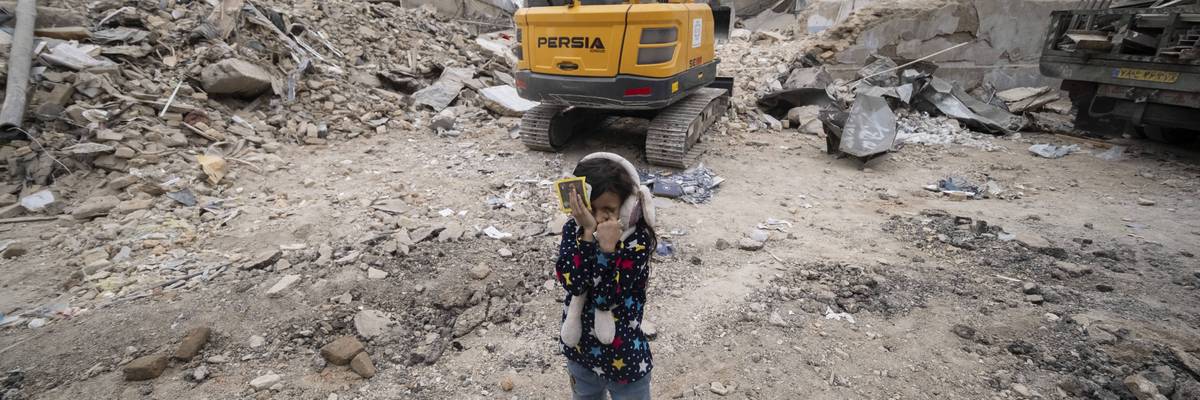
A young girl in Tehran is crying for her mother.
I don’t know her name. That is part of what haunts me. I don’t know what her voice sounds like, what her favorite game is, what her mother used to say to calm her down at night. I only know that somewhere beneath broken concrete and dust, her mother is gone, killed in an airstrike, and that whatever the last hug between them was, it has already happened.
When I think about that Oval Office clip, I don’t stay in that room for long. My mind goes somewhere else entirely.
It goes to her.
It goes just as quickly to the families of American service members. Grief doesn’t recognize borders, and loss doesn’t check passports. According to reporting by USA Today, the number of US troops injured in this war has climbed to 200. Ten are seriously wounded. More than 180 have already returned to duty. Thirteen are dead.
I read their names slowly, not as information but as interruption:
Maj. John A. Klinner. Capt. Ariana G. Savino. Tech. Sgt. Ashley B. Pruitt.
Capt. Seth R. Koval. Capt. Curtis J. Angst. Tech. Sgt. Tyler H. Simmons.
Capt. Cody A. Khork. Sgt. 1st Class Noah L. Tietjens. Sgt. 1st Class Nicole M. Amor. Sgt. Declan J. Coady. Maj. Jeffrey O’Brien. Chief Warrant Officer 3 Robert Marzan. Sgt. Benjamin Pennington.
I think about who spoke their names last. I think about the last time they hugged someone goodbye without knowing it would be the last time.
And I think about the children, who will grow up with that absence shaping everything.
The human toll extends even further. Thousands of American and Israeli air strikes have targeted Iranian leadership, Tehran’s nuclear program, and missile installations. President Donald Trump has said the assault will continue until an “unconditional surrender” by Tehran, though US officials offer conflicting definitions of victory even as they assure the public ground troops won’t be involved. Tehran’s leadership has struck a defiant tone, giving no indication of surrender.
This is not new. The US Constitution vests Congress with the power to declare war. Yet modern conflicts are launched through executive fiat, bypassing debate and public scrutiny. Military actions framed as “operations” rather than wars slip past safeguards designed to enforce accountability. From Vietnam’s “body counts” to Iraq’s “surgical strikes” and Afghanistan’s decades-long campaigns, euphemisms have long softened the moral weight of military action. History shows they do not lessen harm. They only obscure it.
Consider Russian President Vladimir Putin’s 2022 invasion of Ukraine. Moscow called it a “special military operation.” Russian media were forbidden from using the words “war” or “invasion.” Official messaging emphasized demilitarization and denazification. Language shaped perception. Language concentrated power. Language justified violence. And violence followed.
Words matter because they frame reality. “Operation” implies precision. “Precision strike” implies control. These words belong to surgery and engineering, not human lives ripped apart by bombs. War is never neat. War is never clean. War is messy, chaotic, and irrevocably human. Babies die. Children die. Parents dig through rubble. Words cannot erase that.
The strike in Minab exists within a broader struggle over the Middle East. Analysts see the conflict as part of a long-running effort to reshape regional power. Washington’s strategic conversations often center on limiting Iran’s military capacity, weakening alliances, and consolidating influence. These objectives go beyond battlefields; they aim to construct a political order in which local actors depend on foreign power, a system where autonomy is constrained.
Wars described as “limited operations” rarely end neatly. Targeted strikes can evolve into protracted campaigns. Euphemisms smooth the path for persistence, allowing conflicts to expand without the scrutiny or reckoning that accompanied formal war declarations in earlier eras.
International humanitarian law draws clear lines. Combatants and civilians must be distinguished. Deliberately targeting civilians is a war crime. Disproportionate attacks that fail to discriminate may also violate the laws of war. Yet phrases like “collateral damage” and “precision strike” mute moral alarm, constructing distance between planners of violence and those who endure it. For the victims, no such distance exists.
And yet, the conversation often circles back to the economy. Gas prices. Stock markets. “Is the pump near $2.00 a gallon?” “Is inflation holding?” As if killing children can be measured and balanced against a commodity. As if a girl crushed beneath concrete is only tragic insofar as her death might jolt the price of crude oil.
Shall we start calculating how much gas a child in Iran would consume in their life? Or how much they might contribute to economic production decades from now? That is exactly the kind of grotesque calculus some people apply, and it is morally bankrupt. Human life cannot be reduced to barrels of oil, dollars of growth, or inflation points. To do so is to make mass murder manageable, calculable, acceptable.
When I put all these images together, I can’t keep the usual distance that commentary seems to require. I don’t experience this war as strategy or policy first. I experience it as a series of human ruptures that keep multiplying.
A man in power holding a model of a bomber like something precious.
A child reaching for a mother who will never hold her again.
Families in Ohio, Kentucky, or Florida trying to make sense of a knock on the door that changes everything.
We are told that around 2,000 people have been killed across the region, more than 1,300 in Iran alone. The numbers rise, they are updated, they are absorbed into the rhythm of the news cycle.
But I can’t relate to the numbers.
I relate to the hug.
To the presence of it. To the absence of it.
War depends on a kind of distance I can no longer maintain. Not emotional distance. Not moral distance. Once you really let yourself imagine the moment after impact—the dust, the silence, the voice calling out—it becomes impossible to return to abstraction.
It becomes impossible to look at a bomber, even a small one, and not see what it does.
So I keep coming back to those two scenes, even when I’d rather not.
A president hugging a machine built to erase.
A child calling out into the space where her mother used to be.And somewhere between them, all of us, deciding quietly what we are willing to see and what we are willing to hold.
Have we no shame? We watch children die and count barrels of oil. We hear names read off casualty lists and ask instead whether the gas pump is under $2.00. We hug machines built to erase, and we pretend the consequences are abstract. But the dust, the silence, the absent voices are not abstractions. They are proof that human life cannot be reduced to a commodity, a strategy, or a “precision strike.” And if we cannot summon shame for what we allow to happen in our name, then we are complicit in the erasure, every single day.
As Mahatma Gandhi observed, “I object to violence because when it appears to do good, the good is only temporary; the evil it does is permanent.” Leaders may rationalize actions in the language of necessity. Alliances may shift. Strategic objectives may evolve. But the destruction left behind by war does not vanish with rhetoric. It endures. It demands recognition. It demands justice.
Dear Common Dreams reader, It’s been nearly 30 years since I co-founded Common Dreams with my late wife, Lina Newhouser. We had the radical notion that journalism should serve the public good, not corporate profits. It was clear to us from the outset what it would take to build such a project. No paid advertisements. No corporate sponsors. No millionaire publisher telling us what to think or do. Many people said we wouldn't last a year, but we proved those doubters wrong. Together with a tremendous team of journalists and dedicated staff, we built an independent media outlet free from the constraints of profits and corporate control. Our mission has always been simple: To inform. To inspire. To ignite change for the common good. Building Common Dreams was not easy. Our survival was never guaranteed. When you take on the most powerful forces—Wall Street greed, fossil fuel industry destruction, Big Tech lobbyists, and uber-rich oligarchs who have spent billions upon billions rigging the economy and democracy in their favor—the only bulwark you have is supporters who believe in your work. But here’s the urgent message from me today. It's never been this bad out there. And it's never been this hard to keep us going. At the very moment Common Dreams is most needed, the threats we face are intensifying. We need your support now more than ever. We don't accept corporate advertising and never will. We don't have a paywall because we don't think people should be blocked from critical news based on their ability to pay. Everything we do is funded by the donations of readers like you. When everyone does the little they can afford, we are strong. But if that support retreats or dries up, so do we. Will you donate now to make sure Common Dreams not only survives but thrives? —Craig Brown, Co-founder |
When a bomb falls on a school, a hospital, or a home, no euphemism can soften the truth. Babies die in incubators. Teenage girls die in classrooms. Civilians experience violence not as a “military operation” or a “precision strike,” but as death delivered with terrifying immediacy. Yet governments persist in cloaking catastrophe with language that sanitizes it, as if calling mass murder an “operation” could contain its human cost.
In the opening days of the war involving Iran, an airstrike hit the Shajareh Tayyebeh girls’ elementary school in Minab, a coastal city in southern Iran. Iranian authorities report 165 dead, many of them schoolchildren, and dozens more wounded. Satellite imagery shows the school nestled among civilian and military structures. Neither the United States nor Israel has claimed responsibility; both insist civilians were not intentionally targeted. That absence of attribution is not a minor detail. It is a tool of evasion, allowing states to obscure responsibility while the innocent pay the price.
I’ve watched two images closely since the conflict began.
The first unfolds in the Oval Office, that carefully staged room where power is both exercised and performed. President Donald Trump asks an aide to hand him a model bomber. He turns it over in his hands, smiling, admiring it, and then almost tenderly hugs it.
Have we no shame? We watch children die and count barrels of oil. We hear names read off casualty lists and ask instead whether the gas pump is under $2.00.
“Give me that bomber… let me just hug that little sucker.”
Something in me recoiled, not just at the moment itself, but at how easily it could pass as normal. How quickly the machinery of war can be made small, harmless, even affectionate.
Because I know what that machine is.
The real aircraft—the Northrop B-2 Spirit—was designed to move through the sky without being seen. Built by Northrop Grumman with partners like Boeing, it exists to penetrate defenses, to arrive without warning, to deliver payloads that can level entire structures in seconds. It can carry dozens of precision-guided bombs. It can carry nuclear weapons. It is engineering in the service of disappearance: disappearance of sound, of visibility, of warning.
And maybe most dangerously, disappearance of consequence.
The second scene is one I can’t stop imagining.
A young girl in Tehran is crying for her mother.
I don’t know her name. That is part of what haunts me. I don’t know what her voice sounds like, what her favorite game is, what her mother used to say to calm her down at night. I only know that somewhere beneath broken concrete and dust, her mother is gone, killed in an airstrike, and that whatever the last hug between them was, it has already happened.
When I think about that Oval Office clip, I don’t stay in that room for long. My mind goes somewhere else entirely.
It goes to her.
It goes just as quickly to the families of American service members. Grief doesn’t recognize borders, and loss doesn’t check passports. According to reporting by USA Today, the number of US troops injured in this war has climbed to 200. Ten are seriously wounded. More than 180 have already returned to duty. Thirteen are dead.
I read their names slowly, not as information but as interruption:
Maj. John A. Klinner. Capt. Ariana G. Savino. Tech. Sgt. Ashley B. Pruitt.
Capt. Seth R. Koval. Capt. Curtis J. Angst. Tech. Sgt. Tyler H. Simmons.
Capt. Cody A. Khork. Sgt. 1st Class Noah L. Tietjens. Sgt. 1st Class Nicole M. Amor. Sgt. Declan J. Coady. Maj. Jeffrey O’Brien. Chief Warrant Officer 3 Robert Marzan. Sgt. Benjamin Pennington.
I think about who spoke their names last. I think about the last time they hugged someone goodbye without knowing it would be the last time.
And I think about the children, who will grow up with that absence shaping everything.
The human toll extends even further. Thousands of American and Israeli air strikes have targeted Iranian leadership, Tehran’s nuclear program, and missile installations. President Donald Trump has said the assault will continue until an “unconditional surrender” by Tehran, though US officials offer conflicting definitions of victory even as they assure the public ground troops won’t be involved. Tehran’s leadership has struck a defiant tone, giving no indication of surrender.
This is not new. The US Constitution vests Congress with the power to declare war. Yet modern conflicts are launched through executive fiat, bypassing debate and public scrutiny. Military actions framed as “operations” rather than wars slip past safeguards designed to enforce accountability. From Vietnam’s “body counts” to Iraq’s “surgical strikes” and Afghanistan’s decades-long campaigns, euphemisms have long softened the moral weight of military action. History shows they do not lessen harm. They only obscure it.
Consider Russian President Vladimir Putin’s 2022 invasion of Ukraine. Moscow called it a “special military operation.” Russian media were forbidden from using the words “war” or “invasion.” Official messaging emphasized demilitarization and denazification. Language shaped perception. Language concentrated power. Language justified violence. And violence followed.
Words matter because they frame reality. “Operation” implies precision. “Precision strike” implies control. These words belong to surgery and engineering, not human lives ripped apart by bombs. War is never neat. War is never clean. War is messy, chaotic, and irrevocably human. Babies die. Children die. Parents dig through rubble. Words cannot erase that.
The strike in Minab exists within a broader struggle over the Middle East. Analysts see the conflict as part of a long-running effort to reshape regional power. Washington’s strategic conversations often center on limiting Iran’s military capacity, weakening alliances, and consolidating influence. These objectives go beyond battlefields; they aim to construct a political order in which local actors depend on foreign power, a system where autonomy is constrained.
Wars described as “limited operations” rarely end neatly. Targeted strikes can evolve into protracted campaigns. Euphemisms smooth the path for persistence, allowing conflicts to expand without the scrutiny or reckoning that accompanied formal war declarations in earlier eras.
International humanitarian law draws clear lines. Combatants and civilians must be distinguished. Deliberately targeting civilians is a war crime. Disproportionate attacks that fail to discriminate may also violate the laws of war. Yet phrases like “collateral damage” and “precision strike” mute moral alarm, constructing distance between planners of violence and those who endure it. For the victims, no such distance exists.
And yet, the conversation often circles back to the economy. Gas prices. Stock markets. “Is the pump near $2.00 a gallon?” “Is inflation holding?” As if killing children can be measured and balanced against a commodity. As if a girl crushed beneath concrete is only tragic insofar as her death might jolt the price of crude oil.
Shall we start calculating how much gas a child in Iran would consume in their life? Or how much they might contribute to economic production decades from now? That is exactly the kind of grotesque calculus some people apply, and it is morally bankrupt. Human life cannot be reduced to barrels of oil, dollars of growth, or inflation points. To do so is to make mass murder manageable, calculable, acceptable.
When I put all these images together, I can’t keep the usual distance that commentary seems to require. I don’t experience this war as strategy or policy first. I experience it as a series of human ruptures that keep multiplying.
A man in power holding a model of a bomber like something precious.
A child reaching for a mother who will never hold her again.
Families in Ohio, Kentucky, or Florida trying to make sense of a knock on the door that changes everything.
We are told that around 2,000 people have been killed across the region, more than 1,300 in Iran alone. The numbers rise, they are updated, they are absorbed into the rhythm of the news cycle.
But I can’t relate to the numbers.
I relate to the hug.
To the presence of it. To the absence of it.
War depends on a kind of distance I can no longer maintain. Not emotional distance. Not moral distance. Once you really let yourself imagine the moment after impact—the dust, the silence, the voice calling out—it becomes impossible to return to abstraction.
It becomes impossible to look at a bomber, even a small one, and not see what it does.
So I keep coming back to those two scenes, even when I’d rather not.
A president hugging a machine built to erase.
A child calling out into the space where her mother used to be.And somewhere between them, all of us, deciding quietly what we are willing to see and what we are willing to hold.
Have we no shame? We watch children die and count barrels of oil. We hear names read off casualty lists and ask instead whether the gas pump is under $2.00. We hug machines built to erase, and we pretend the consequences are abstract. But the dust, the silence, the absent voices are not abstractions. They are proof that human life cannot be reduced to a commodity, a strategy, or a “precision strike.” And if we cannot summon shame for what we allow to happen in our name, then we are complicit in the erasure, every single day.
As Mahatma Gandhi observed, “I object to violence because when it appears to do good, the good is only temporary; the evil it does is permanent.” Leaders may rationalize actions in the language of necessity. Alliances may shift. Strategic objectives may evolve. But the destruction left behind by war does not vanish with rhetoric. It endures. It demands recognition. It demands justice.
When a bomb falls on a school, a hospital, or a home, no euphemism can soften the truth. Babies die in incubators. Teenage girls die in classrooms. Civilians experience violence not as a “military operation” or a “precision strike,” but as death delivered with terrifying immediacy. Yet governments persist in cloaking catastrophe with language that sanitizes it, as if calling mass murder an “operation” could contain its human cost.
In the opening days of the war involving Iran, an airstrike hit the Shajareh Tayyebeh girls’ elementary school in Minab, a coastal city in southern Iran. Iranian authorities report 165 dead, many of them schoolchildren, and dozens more wounded. Satellite imagery shows the school nestled among civilian and military structures. Neither the United States nor Israel has claimed responsibility; both insist civilians were not intentionally targeted. That absence of attribution is not a minor detail. It is a tool of evasion, allowing states to obscure responsibility while the innocent pay the price.
I’ve watched two images closely since the conflict began.
The first unfolds in the Oval Office, that carefully staged room where power is both exercised and performed. President Donald Trump asks an aide to hand him a model bomber. He turns it over in his hands, smiling, admiring it, and then almost tenderly hugs it.
Have we no shame? We watch children die and count barrels of oil. We hear names read off casualty lists and ask instead whether the gas pump is under $2.00.
“Give me that bomber… let me just hug that little sucker.”
Something in me recoiled, not just at the moment itself, but at how easily it could pass as normal. How quickly the machinery of war can be made small, harmless, even affectionate.
Because I know what that machine is.
The real aircraft—the Northrop B-2 Spirit—was designed to move through the sky without being seen. Built by Northrop Grumman with partners like Boeing, it exists to penetrate defenses, to arrive without warning, to deliver payloads that can level entire structures in seconds. It can carry dozens of precision-guided bombs. It can carry nuclear weapons. It is engineering in the service of disappearance: disappearance of sound, of visibility, of warning.
And maybe most dangerously, disappearance of consequence.
The second scene is one I can’t stop imagining.
A young girl in Tehran is crying for her mother.
I don’t know her name. That is part of what haunts me. I don’t know what her voice sounds like, what her favorite game is, what her mother used to say to calm her down at night. I only know that somewhere beneath broken concrete and dust, her mother is gone, killed in an airstrike, and that whatever the last hug between them was, it has already happened.
When I think about that Oval Office clip, I don’t stay in that room for long. My mind goes somewhere else entirely.
It goes to her.
It goes just as quickly to the families of American service members. Grief doesn’t recognize borders, and loss doesn’t check passports. According to reporting by USA Today, the number of US troops injured in this war has climbed to 200. Ten are seriously wounded. More than 180 have already returned to duty. Thirteen are dead.
I read their names slowly, not as information but as interruption:
Maj. John A. Klinner. Capt. Ariana G. Savino. Tech. Sgt. Ashley B. Pruitt.
Capt. Seth R. Koval. Capt. Curtis J. Angst. Tech. Sgt. Tyler H. Simmons.
Capt. Cody A. Khork. Sgt. 1st Class Noah L. Tietjens. Sgt. 1st Class Nicole M. Amor. Sgt. Declan J. Coady. Maj. Jeffrey O’Brien. Chief Warrant Officer 3 Robert Marzan. Sgt. Benjamin Pennington.
I think about who spoke their names last. I think about the last time they hugged someone goodbye without knowing it would be the last time.
And I think about the children, who will grow up with that absence shaping everything.
The human toll extends even further. Thousands of American and Israeli air strikes have targeted Iranian leadership, Tehran’s nuclear program, and missile installations. President Donald Trump has said the assault will continue until an “unconditional surrender” by Tehran, though US officials offer conflicting definitions of victory even as they assure the public ground troops won’t be involved. Tehran’s leadership has struck a defiant tone, giving no indication of surrender.
This is not new. The US Constitution vests Congress with the power to declare war. Yet modern conflicts are launched through executive fiat, bypassing debate and public scrutiny. Military actions framed as “operations” rather than wars slip past safeguards designed to enforce accountability. From Vietnam’s “body counts” to Iraq’s “surgical strikes” and Afghanistan’s decades-long campaigns, euphemisms have long softened the moral weight of military action. History shows they do not lessen harm. They only obscure it.
Consider Russian President Vladimir Putin’s 2022 invasion of Ukraine. Moscow called it a “special military operation.” Russian media were forbidden from using the words “war” or “invasion.” Official messaging emphasized demilitarization and denazification. Language shaped perception. Language concentrated power. Language justified violence. And violence followed.
Words matter because they frame reality. “Operation” implies precision. “Precision strike” implies control. These words belong to surgery and engineering, not human lives ripped apart by bombs. War is never neat. War is never clean. War is messy, chaotic, and irrevocably human. Babies die. Children die. Parents dig through rubble. Words cannot erase that.
The strike in Minab exists within a broader struggle over the Middle East. Analysts see the conflict as part of a long-running effort to reshape regional power. Washington’s strategic conversations often center on limiting Iran’s military capacity, weakening alliances, and consolidating influence. These objectives go beyond battlefields; they aim to construct a political order in which local actors depend on foreign power, a system where autonomy is constrained.
Wars described as “limited operations” rarely end neatly. Targeted strikes can evolve into protracted campaigns. Euphemisms smooth the path for persistence, allowing conflicts to expand without the scrutiny or reckoning that accompanied formal war declarations in earlier eras.
International humanitarian law draws clear lines. Combatants and civilians must be distinguished. Deliberately targeting civilians is a war crime. Disproportionate attacks that fail to discriminate may also violate the laws of war. Yet phrases like “collateral damage” and “precision strike” mute moral alarm, constructing distance between planners of violence and those who endure it. For the victims, no such distance exists.
And yet, the conversation often circles back to the economy. Gas prices. Stock markets. “Is the pump near $2.00 a gallon?” “Is inflation holding?” As if killing children can be measured and balanced against a commodity. As if a girl crushed beneath concrete is only tragic insofar as her death might jolt the price of crude oil.
Shall we start calculating how much gas a child in Iran would consume in their life? Or how much they might contribute to economic production decades from now? That is exactly the kind of grotesque calculus some people apply, and it is morally bankrupt. Human life cannot be reduced to barrels of oil, dollars of growth, or inflation points. To do so is to make mass murder manageable, calculable, acceptable.
When I put all these images together, I can’t keep the usual distance that commentary seems to require. I don’t experience this war as strategy or policy first. I experience it as a series of human ruptures that keep multiplying.
A man in power holding a model of a bomber like something precious.
A child reaching for a mother who will never hold her again.
Families in Ohio, Kentucky, or Florida trying to make sense of a knock on the door that changes everything.
We are told that around 2,000 people have been killed across the region, more than 1,300 in Iran alone. The numbers rise, they are updated, they are absorbed into the rhythm of the news cycle.
But I can’t relate to the numbers.
I relate to the hug.
To the presence of it. To the absence of it.
War depends on a kind of distance I can no longer maintain. Not emotional distance. Not moral distance. Once you really let yourself imagine the moment after impact—the dust, the silence, the voice calling out—it becomes impossible to return to abstraction.
It becomes impossible to look at a bomber, even a small one, and not see what it does.
So I keep coming back to those two scenes, even when I’d rather not.
A president hugging a machine built to erase.
A child calling out into the space where her mother used to be.And somewhere between them, all of us, deciding quietly what we are willing to see and what we are willing to hold.
Have we no shame? We watch children die and count barrels of oil. We hear names read off casualty lists and ask instead whether the gas pump is under $2.00. We hug machines built to erase, and we pretend the consequences are abstract. But the dust, the silence, the absent voices are not abstractions. They are proof that human life cannot be reduced to a commodity, a strategy, or a “precision strike.” And if we cannot summon shame for what we allow to happen in our name, then we are complicit in the erasure, every single day.
As Mahatma Gandhi observed, “I object to violence because when it appears to do good, the good is only temporary; the evil it does is permanent.” Leaders may rationalize actions in the language of necessity. Alliances may shift. Strategic objectives may evolve. But the destruction left behind by war does not vanish with rhetoric. It endures. It demands recognition. It demands justice.