5
#000000
#FFFFFF
To donate by check, phone, or other method, see our More Ways to Give page.
Daily news & progressive opinion—funded by the people, not the corporations—delivered straight to your inbox.
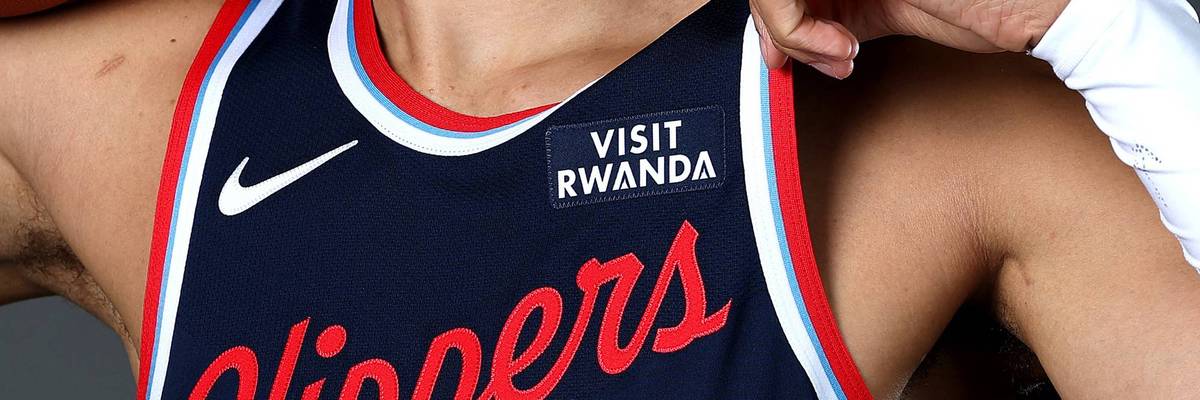
A detailed view of a Visit Rwanda logo is seen on the jersey of Yanic Konan Niederhauser #14 of the Los Angeles Clippers as he poses for a portrait during media day at Intuit Dome on September 29, 2025 in Inglewood, California.
The league must rethink its commercial partnership with Rwanda, whose army and senior officials the US government recently sanctioned for backing a deadly armed group that is committing “horrific human rights abuses.”
As an iconic sports league with a deep historic commitment to social justice, two of the National Basketball Association’s commercial branding relationships contradict the league’s values.
Questions are being raised about the branding deal the NBA struck with the United Arab Emirates, ignoring the killer drones and other support it is sending to a militia which the United Nations found to be committing genocide in Sudan.
Much less critical attention has been paid to the NBA’s commercial partnership with Rwanda, whose army and senior officials the US government recently sanctioned for backing a deadly armed group that is committing “horrific human rights abuses.” Rwanda has been a central partner in the Basketball Africa League (BAL), the NBA’s first professional basketball league outside North America. The Rwandan government pays the NBA between $6 million and $7 million annually to be a sponsor and to host some of the BAL playoffs. And Rwanda’s national airline is the official travel partner for the BAL.
The Los Angeles Clippers signed their own sponsorship deal with Rwanda last year. “Visit Rwanda” is their official jersey patch sponsor, so it appears on all uniforms. There is “Visit Rwanda” branding in the Clippers’ arena, and it is the official coffee sponsor for the team.
The NBA and the Clippers have some uncomfortable decisions to make. Should they continue to accept money from a government that is in large part responsible for one of the largest humanitarian emergencies in the world?
The uncomfortable truth for the NBA and the Clippers is that Rwanda invaded eastern Democratic Republic of Congo (DRC) in 2022 and dramatically escalated its invasion last year, deploying up to 12,000 troops and backing a very violent proxy rebel group known as the M23. Under Rwandan command and control, the M23 has committed extensive human rights abuses, including mass killings targeted at certain ethnic groups, torture, and forced deportations. Over 5 million people in DRC are now displaced from their homes due to the conflict, and 10 million people are now at risk of starvation, as M23 “has driven farmers from their land… and blocked food imports.”
NBA deputy commissioner Mark Tatum responded to a bipartisan letter from US senators in September 2024, "If American policies were to change regarding business activities in and relating to Rwanda or any other BAL market, our actions would, of course, change accordingly."
Therein lies the rub. US policy on Rwanda has changed suddenly and significantly over the last two months, with major implications for the NBA’s close involvement with Rwanda. Just days following the signing of a peace accord between Rwanda and DRC brokered by the US and overseen by President Donald Trump last December, Rwanda and its proxy force launched a new, bloody offensive that left 200,000 more civilians displaced. Instead of pulling back to make peace, Rwanda doubled down on war right after telling the White House it would do the opposite.
The breach of the peace agreement has since led to a major shift in long-standing US policy on Rwanda. Secretary of State Marco Rubio stated in December that “Rwanda’s actions are… a clear violation of the Washington Accords…, and the United States will take action to ensure promises made to the President are kept.” US Ambassador to the United Nations Mike Waltz then argued that “Rwanda is leading the region… toward more war.”
The US government has followed up with a series of actions, including placing sanctions on the entire Rwandan army, visa restrictions on senior Rwandan officials, suspending a US-Rwanda health agreement, and canceling an investment conference and negotiations with Rwanda over a new development finance project.
M23 forces continue to occupy nearly all strategic areas of eastern DRC, Rwanda maintains 7,000 troops there, and the conflict is deepening. Notably, the DRC government is also responsible for many human rights abuses, and it must halt its partnerships with deadly armed groups.
Rwanda is also profiting from the deadly trade in illicit gold and other minerals from eastern DRC, minerals that provide fuel for the conflict. Rwanda-backed M23 occupies key gold and critical minerals mines and exports the minerals to Rwanda. Despite having no major domestic gold mines, Rwanda is estimated to have skyrocketed its gold exports to $2 billion in 2025, a more than five-fold increase from four years ago. Ironically, most of their smuggled gold exports go to the UAE, the other major NBA partner.
Because of Rwanda’s heinous behavior in eastern DRC, several major sports teams have recently halted their partnerships with the Rwandan government following campaigns from human rights groups. The English soccer club Arsenal ended its commercial branding deal with Rwanda following a campaign by the group Gunners for Peace, as did German soccer giant Bayern Munich.
The NBA’s main defense of its commercial partnership with Rwanda has been that its dealings have been consistent with US policy. That policy has now changed in response to Rwanda’s unwillingness to end its greed-fueled military intervention in DRC.
The NBA and the Clippers have some uncomfortable decisions to make. Should they continue to accept money from a government that is in large part responsible for one of the largest humanitarian emergencies in the world? Should they continue to be part of Rwanda’s strategy of “sportswashing” its image? Can they follow in the footsteps of Arsenal and Bayern Munich and drop Rwanda’s commercial branding sponsorship? These questions won’t garner the same attention as gambling players and tanking teams, but the stakes for millions of Congolese lives couldn’t be greater.
Dear Common Dreams reader, It’s been nearly 30 years since I co-founded Common Dreams with my late wife, Lina Newhouser. We had the radical notion that journalism should serve the public good, not corporate profits. It was clear to us from the outset what it would take to build such a project. No paid advertisements. No corporate sponsors. No millionaire publisher telling us what to think or do. Many people said we wouldn't last a year, but we proved those doubters wrong. Together with a tremendous team of journalists and dedicated staff, we built an independent media outlet free from the constraints of profits and corporate control. Our mission has always been simple: To inform. To inspire. To ignite change for the common good. Building Common Dreams was not easy. Our survival was never guaranteed. When you take on the most powerful forces—Wall Street greed, fossil fuel industry destruction, Big Tech lobbyists, and uber-rich oligarchs who have spent billions upon billions rigging the economy and democracy in their favor—the only bulwark you have is supporters who believe in your work. But here’s the urgent message from me today. It's never been this bad out there. And it's never been this hard to keep us going. At the very moment Common Dreams is most needed, the threats we face are intensifying. We need your support now more than ever. We don't accept corporate advertising and never will. We don't have a paywall because we don't think people should be blocked from critical news based on their ability to pay. Everything we do is funded by the donations of readers like you. When everyone does the little they can afford, we are strong. But if that support retreats or dries up, so do we. Will you donate now to make sure Common Dreams not only survives but thrives? —Craig Brown, Co-founder |
As an iconic sports league with a deep historic commitment to social justice, two of the National Basketball Association’s commercial branding relationships contradict the league’s values.
Questions are being raised about the branding deal the NBA struck with the United Arab Emirates, ignoring the killer drones and other support it is sending to a militia which the United Nations found to be committing genocide in Sudan.
Much less critical attention has been paid to the NBA’s commercial partnership with Rwanda, whose army and senior officials the US government recently sanctioned for backing a deadly armed group that is committing “horrific human rights abuses.” Rwanda has been a central partner in the Basketball Africa League (BAL), the NBA’s first professional basketball league outside North America. The Rwandan government pays the NBA between $6 million and $7 million annually to be a sponsor and to host some of the BAL playoffs. And Rwanda’s national airline is the official travel partner for the BAL.
The Los Angeles Clippers signed their own sponsorship deal with Rwanda last year. “Visit Rwanda” is their official jersey patch sponsor, so it appears on all uniforms. There is “Visit Rwanda” branding in the Clippers’ arena, and it is the official coffee sponsor for the team.
The NBA and the Clippers have some uncomfortable decisions to make. Should they continue to accept money from a government that is in large part responsible for one of the largest humanitarian emergencies in the world?
The uncomfortable truth for the NBA and the Clippers is that Rwanda invaded eastern Democratic Republic of Congo (DRC) in 2022 and dramatically escalated its invasion last year, deploying up to 12,000 troops and backing a very violent proxy rebel group known as the M23. Under Rwandan command and control, the M23 has committed extensive human rights abuses, including mass killings targeted at certain ethnic groups, torture, and forced deportations. Over 5 million people in DRC are now displaced from their homes due to the conflict, and 10 million people are now at risk of starvation, as M23 “has driven farmers from their land… and blocked food imports.”
NBA deputy commissioner Mark Tatum responded to a bipartisan letter from US senators in September 2024, "If American policies were to change regarding business activities in and relating to Rwanda or any other BAL market, our actions would, of course, change accordingly."
Therein lies the rub. US policy on Rwanda has changed suddenly and significantly over the last two months, with major implications for the NBA’s close involvement with Rwanda. Just days following the signing of a peace accord between Rwanda and DRC brokered by the US and overseen by President Donald Trump last December, Rwanda and its proxy force launched a new, bloody offensive that left 200,000 more civilians displaced. Instead of pulling back to make peace, Rwanda doubled down on war right after telling the White House it would do the opposite.
The breach of the peace agreement has since led to a major shift in long-standing US policy on Rwanda. Secretary of State Marco Rubio stated in December that “Rwanda’s actions are… a clear violation of the Washington Accords…, and the United States will take action to ensure promises made to the President are kept.” US Ambassador to the United Nations Mike Waltz then argued that “Rwanda is leading the region… toward more war.”
The US government has followed up with a series of actions, including placing sanctions on the entire Rwandan army, visa restrictions on senior Rwandan officials, suspending a US-Rwanda health agreement, and canceling an investment conference and negotiations with Rwanda over a new development finance project.
M23 forces continue to occupy nearly all strategic areas of eastern DRC, Rwanda maintains 7,000 troops there, and the conflict is deepening. Notably, the DRC government is also responsible for many human rights abuses, and it must halt its partnerships with deadly armed groups.
Rwanda is also profiting from the deadly trade in illicit gold and other minerals from eastern DRC, minerals that provide fuel for the conflict. Rwanda-backed M23 occupies key gold and critical minerals mines and exports the minerals to Rwanda. Despite having no major domestic gold mines, Rwanda is estimated to have skyrocketed its gold exports to $2 billion in 2025, a more than five-fold increase from four years ago. Ironically, most of their smuggled gold exports go to the UAE, the other major NBA partner.
Because of Rwanda’s heinous behavior in eastern DRC, several major sports teams have recently halted their partnerships with the Rwandan government following campaigns from human rights groups. The English soccer club Arsenal ended its commercial branding deal with Rwanda following a campaign by the group Gunners for Peace, as did German soccer giant Bayern Munich.
The NBA’s main defense of its commercial partnership with Rwanda has been that its dealings have been consistent with US policy. That policy has now changed in response to Rwanda’s unwillingness to end its greed-fueled military intervention in DRC.
The NBA and the Clippers have some uncomfortable decisions to make. Should they continue to accept money from a government that is in large part responsible for one of the largest humanitarian emergencies in the world? Should they continue to be part of Rwanda’s strategy of “sportswashing” its image? Can they follow in the footsteps of Arsenal and Bayern Munich and drop Rwanda’s commercial branding sponsorship? These questions won’t garner the same attention as gambling players and tanking teams, but the stakes for millions of Congolese lives couldn’t be greater.
As an iconic sports league with a deep historic commitment to social justice, two of the National Basketball Association’s commercial branding relationships contradict the league’s values.
Questions are being raised about the branding deal the NBA struck with the United Arab Emirates, ignoring the killer drones and other support it is sending to a militia which the United Nations found to be committing genocide in Sudan.
Much less critical attention has been paid to the NBA’s commercial partnership with Rwanda, whose army and senior officials the US government recently sanctioned for backing a deadly armed group that is committing “horrific human rights abuses.” Rwanda has been a central partner in the Basketball Africa League (BAL), the NBA’s first professional basketball league outside North America. The Rwandan government pays the NBA between $6 million and $7 million annually to be a sponsor and to host some of the BAL playoffs. And Rwanda’s national airline is the official travel partner for the BAL.
The Los Angeles Clippers signed their own sponsorship deal with Rwanda last year. “Visit Rwanda” is their official jersey patch sponsor, so it appears on all uniforms. There is “Visit Rwanda” branding in the Clippers’ arena, and it is the official coffee sponsor for the team.
The NBA and the Clippers have some uncomfortable decisions to make. Should they continue to accept money from a government that is in large part responsible for one of the largest humanitarian emergencies in the world?
The uncomfortable truth for the NBA and the Clippers is that Rwanda invaded eastern Democratic Republic of Congo (DRC) in 2022 and dramatically escalated its invasion last year, deploying up to 12,000 troops and backing a very violent proxy rebel group known as the M23. Under Rwandan command and control, the M23 has committed extensive human rights abuses, including mass killings targeted at certain ethnic groups, torture, and forced deportations. Over 5 million people in DRC are now displaced from their homes due to the conflict, and 10 million people are now at risk of starvation, as M23 “has driven farmers from their land… and blocked food imports.”
NBA deputy commissioner Mark Tatum responded to a bipartisan letter from US senators in September 2024, "If American policies were to change regarding business activities in and relating to Rwanda or any other BAL market, our actions would, of course, change accordingly."
Therein lies the rub. US policy on Rwanda has changed suddenly and significantly over the last two months, with major implications for the NBA’s close involvement with Rwanda. Just days following the signing of a peace accord between Rwanda and DRC brokered by the US and overseen by President Donald Trump last December, Rwanda and its proxy force launched a new, bloody offensive that left 200,000 more civilians displaced. Instead of pulling back to make peace, Rwanda doubled down on war right after telling the White House it would do the opposite.
The breach of the peace agreement has since led to a major shift in long-standing US policy on Rwanda. Secretary of State Marco Rubio stated in December that “Rwanda’s actions are… a clear violation of the Washington Accords…, and the United States will take action to ensure promises made to the President are kept.” US Ambassador to the United Nations Mike Waltz then argued that “Rwanda is leading the region… toward more war.”
The US government has followed up with a series of actions, including placing sanctions on the entire Rwandan army, visa restrictions on senior Rwandan officials, suspending a US-Rwanda health agreement, and canceling an investment conference and negotiations with Rwanda over a new development finance project.
M23 forces continue to occupy nearly all strategic areas of eastern DRC, Rwanda maintains 7,000 troops there, and the conflict is deepening. Notably, the DRC government is also responsible for many human rights abuses, and it must halt its partnerships with deadly armed groups.
Rwanda is also profiting from the deadly trade in illicit gold and other minerals from eastern DRC, minerals that provide fuel for the conflict. Rwanda-backed M23 occupies key gold and critical minerals mines and exports the minerals to Rwanda. Despite having no major domestic gold mines, Rwanda is estimated to have skyrocketed its gold exports to $2 billion in 2025, a more than five-fold increase from four years ago. Ironically, most of their smuggled gold exports go to the UAE, the other major NBA partner.
Because of Rwanda’s heinous behavior in eastern DRC, several major sports teams have recently halted their partnerships with the Rwandan government following campaigns from human rights groups. The English soccer club Arsenal ended its commercial branding deal with Rwanda following a campaign by the group Gunners for Peace, as did German soccer giant Bayern Munich.
The NBA’s main defense of its commercial partnership with Rwanda has been that its dealings have been consistent with US policy. That policy has now changed in response to Rwanda’s unwillingness to end its greed-fueled military intervention in DRC.
The NBA and the Clippers have some uncomfortable decisions to make. Should they continue to accept money from a government that is in large part responsible for one of the largest humanitarian emergencies in the world? Should they continue to be part of Rwanda’s strategy of “sportswashing” its image? Can they follow in the footsteps of Arsenal and Bayern Munich and drop Rwanda’s commercial branding sponsorship? These questions won’t garner the same attention as gambling players and tanking teams, but the stakes for millions of Congolese lives couldn’t be greater.