SUBSCRIBE TO OUR FREE NEWSLETTER
Daily news & progressive opinion—funded by the people, not the corporations—delivered straight to your inbox.
5
#000000
#FFFFFF
To donate by check, phone, or other method, see our More Ways to Give page.
Daily news & progressive opinion—funded by the people, not the corporations—delivered straight to your inbox.
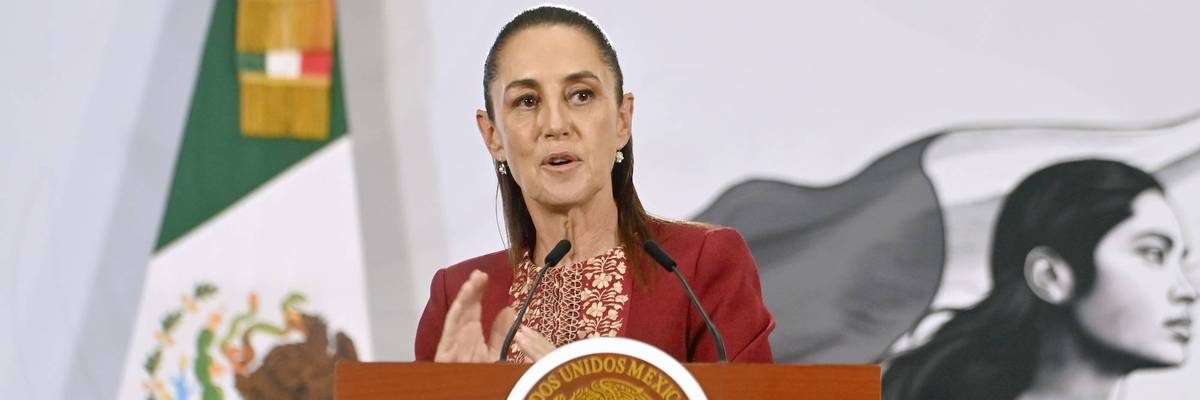
President of Mexico Claudia Sheinbaum speaks during the daily morning briefing at Palacio Nacional on April 7, 2026 in Mexico City, Mexico.
Healthcare is neither a commodity nor the exclusive privilege of the wealthy—it is a human right. Far from “outrageous,” guaranteeing healthcare to all is about ensuring that everyone can live a rich and fulfilling life.
On April 6, the Trump administration announced it will increase payments to privately-run Medicare Advantage, or MA, plans by 2.48% in 2027—this will result in more than $13 billion in additional payments to companies like UnitedHealth, CVS Health, and Humana. Unsurprisingly, following this announcement, shares of those companies rose by more than 9%.
MA plans have been a significant source of growth and profit for insurance companies. As the Medicare Rights Center reports, this profitability is driven by enormous overpayments, including from fraudulent billing practices such as “upcoding.” This involves submitting billing codes that make patients appear sicker than they really are to secure higher government payments than are warranted. Despite this, the Trump administration is currently considering a policy that would automatically enroll seniors into MA plans as the “default enrollment option”—a proposal outlined in the Heritage Foundation’s extremist Project 2025.
The Center for American Progress estimates that making MA the default option would generate nearly $2 trillion in overpayments over 10 years, while significantly jeopardizing traditional Medicare’s financial stability. It would give for-profit corporations more control to restrict patient choices and deny doctor-recommended care.
Instead of more privatization that puts profits over people, we should embrace Medicare For All (M4A). Yet, President Donald Trump contends that paying for our current safety nets is already too much for the wealthiest nation on Earth. He remarks: “It’s not possible for us to take care of day care, Medicaid, Medicare, all these individual things. They can do it on a state basis. You can’t do it on a federal. We have to take care of one thing: military protection. We have to guard the country.”
Sheinbaum’s embrace of universal healthcare—as well as her support of Cuba—shows us what is possible when the well-being of people is championed unconditionally.
For Trump, spending billions in an illegal war takes precedence over providing healthcare for Americans. His 2027 budget calls for a 10% reduction in all nondefense spending, including reducing funding to the Department of Health and Human Services by $15.8 billion. This, at the same time, that a measles outbreak sweeps the nation, uninsured rates continue to climb, and the prevalence of children with chronic conditions grows to unprecedented levels.
While Trump prioritizes death and destruction, Mexican President Claudia Sheinbaum offers a different vision. On April 7, she issued a presidential decree establishing the Universal Health Service (Servicio Universal de Salud), which will allow patients from across Mexico to seek free care at any public health institution. Universal access will be rolled out in phases starting with emergency care and continuity of care in early 2027. Radiotherapy, laboratory tests, imaging studies, and other specialized services will be added later that year. Finally, in 2028, universal prescription fulfillment and hospitalization will be consolidated. For Sheinbaum, “The goal is that when we leave the government [in 2030], any Mexican man or woman can go to any health institution for treatment for any ailment and be received.”
The transition to universal healthcare began on April 13 when Mexicans aged 85 and older were eligible to register for their new Universal Health Credential. As Deputy Health Minister Eduardo Clark notes, these new credentials are “the guarantee of the right to healthcare” for Mexican citizens and eligible foreign residents.
This is the fundamental difference. In Mexico, healthcare is recognized as a human right enshrined in their Constitution. In 2023, then-Secretary of Foreign Affairs Alicia Bárcena said before the United Nations General Assembly, “In Mexico, we believe that coverage must be universal, public and free, starting with the most marginalized areas and prioritizing, as always, the poorest.” She continued: “It is unacceptable to profit from illness. In Mexico, we know that public health is not for sale. It is a public and universal good, and we defend it."
By contrast, for Trump, healthcare is a privilege meant solely for those who deserve it. During his first presidential campaign, he remarked: “Where I come from, you have to prove your worth. You have some guy with no college degree working a minimum wage job; no ambition, no goals, nothing to show for it. Yet for some reason, the current [Obama] administration believes he—and millions of people like him, should have access to health insurance. It’s outrageous.” While Mexico starts with “the poorest,” Trump finds it “outrageous” to provide healthcare to minimum wage workers.
Trump’s position is immoral and vile. Healthcare is neither a commodity nor the exclusive privilege of the wealthy—it is a human right. Far from “outrageous,” guaranteeing healthcare to all is about ensuring that everyone can live a rich and fulfilling life.
For most (if not everyone), lacking healthcare will prevent them from living the kind of life they desire. Those suffering from untreated illness may struggle to spend time with their loved ones, pursue the opportunities they desire, and exercise their political rights. Since, at some point, everyone will eventually get sick, healthcare is a universal good that benefits each of us. Moreover, as the Covid-19 pandemic made clear, our individual health is not solely a personal issue. My health impacts the lives of others around me just as their health impacts mine. Healthcare is thus a collective and communal good.
Still, one might object that even if healthcare is not a commodity, the market is still the best mechanism to allocate scarce resources; Trump’s push toward privatization will be better than Sheinbaum’s universal care.
Such blind faith in the market is misguided. Despite spending far more than other countries with universal coverage, more than a quarter of Americans report skipping consultations, tests, treatments and follow-ups because of costs. Roughly 21% report skipping medication for the same reason. Studies consistently find that universal care provides more access, better quality, and lower costs than privatized healthcare.
Ironically, Trump once understood this. In his 2000 The America We Deserve, he writes, “We must have universal healthcare. Just imagine the improved quality of life for our society as a whole if the issue of access to healthcare were dealt with imaginatively. With more than 40 million Americans living day to day in the fear that an illness or injury will wipe out their savings or drag them into bankruptcy, how can we truly engage in the ‘pursuit of happiness’ as our Founders intended?”
Trump was right. What we need is not more privatization that exploits the sick and dying, but rather a politic that works to radically defend life, liberty, and pursuit of happiness. What is needed is the imagination to rethink how we use (and misuse) our country’s wealth and resources. Sheinbaum’s embrace of universal healthcare—as well as her support of Cuba—shows us what is possible when the well-being of people is championed unconditionally.
A better future is possible—already, in the US, support for M4A continues to grow, and several 2026 midterm candidates have made it an explicit part of their platforms. Together, by embracing life and rejecting capitalism, we can make America great.
Dear Common Dreams reader, It’s been nearly 30 years since I co-founded Common Dreams with my late wife, Lina Newhouser. We had the radical notion that journalism should serve the public good, not corporate profits. It was clear to us from the outset what it would take to build such a project. No paid advertisements. No corporate sponsors. No millionaire publisher telling us what to think or do. Many people said we wouldn't last a year, but we proved those doubters wrong. Together with a tremendous team of journalists and dedicated staff, we built an independent media outlet free from the constraints of profits and corporate control. Our mission has always been simple: To inform. To inspire. To ignite change for the common good. Building Common Dreams was not easy. Our survival was never guaranteed. When you take on the most powerful forces—Wall Street greed, fossil fuel industry destruction, Big Tech lobbyists, and uber-rich oligarchs who have spent billions upon billions rigging the economy and democracy in their favor—the only bulwark you have is supporters who believe in your work. But here’s the urgent message from me today. It's never been this bad out there. And it's never been this hard to keep us going. At the very moment Common Dreams is most needed, the threats we face are intensifying. We need your support now more than ever. We don't accept corporate advertising and never will. We don't have a paywall because we don't think people should be blocked from critical news based on their ability to pay. Everything we do is funded by the donations of readers like you. When everyone does the little they can afford, we are strong. But if that support retreats or dries up, so do we. Will you donate now to make sure Common Dreams not only survives but thrives? —Craig Brown, Co-founder |
On April 6, the Trump administration announced it will increase payments to privately-run Medicare Advantage, or MA, plans by 2.48% in 2027—this will result in more than $13 billion in additional payments to companies like UnitedHealth, CVS Health, and Humana. Unsurprisingly, following this announcement, shares of those companies rose by more than 9%.
MA plans have been a significant source of growth and profit for insurance companies. As the Medicare Rights Center reports, this profitability is driven by enormous overpayments, including from fraudulent billing practices such as “upcoding.” This involves submitting billing codes that make patients appear sicker than they really are to secure higher government payments than are warranted. Despite this, the Trump administration is currently considering a policy that would automatically enroll seniors into MA plans as the “default enrollment option”—a proposal outlined in the Heritage Foundation’s extremist Project 2025.
The Center for American Progress estimates that making MA the default option would generate nearly $2 trillion in overpayments over 10 years, while significantly jeopardizing traditional Medicare’s financial stability. It would give for-profit corporations more control to restrict patient choices and deny doctor-recommended care.
Instead of more privatization that puts profits over people, we should embrace Medicare For All (M4A). Yet, President Donald Trump contends that paying for our current safety nets is already too much for the wealthiest nation on Earth. He remarks: “It’s not possible for us to take care of day care, Medicaid, Medicare, all these individual things. They can do it on a state basis. You can’t do it on a federal. We have to take care of one thing: military protection. We have to guard the country.”
Sheinbaum’s embrace of universal healthcare—as well as her support of Cuba—shows us what is possible when the well-being of people is championed unconditionally.
For Trump, spending billions in an illegal war takes precedence over providing healthcare for Americans. His 2027 budget calls for a 10% reduction in all nondefense spending, including reducing funding to the Department of Health and Human Services by $15.8 billion. This, at the same time, that a measles outbreak sweeps the nation, uninsured rates continue to climb, and the prevalence of children with chronic conditions grows to unprecedented levels.
While Trump prioritizes death and destruction, Mexican President Claudia Sheinbaum offers a different vision. On April 7, she issued a presidential decree establishing the Universal Health Service (Servicio Universal de Salud), which will allow patients from across Mexico to seek free care at any public health institution. Universal access will be rolled out in phases starting with emergency care and continuity of care in early 2027. Radiotherapy, laboratory tests, imaging studies, and other specialized services will be added later that year. Finally, in 2028, universal prescription fulfillment and hospitalization will be consolidated. For Sheinbaum, “The goal is that when we leave the government [in 2030], any Mexican man or woman can go to any health institution for treatment for any ailment and be received.”
The transition to universal healthcare began on April 13 when Mexicans aged 85 and older were eligible to register for their new Universal Health Credential. As Deputy Health Minister Eduardo Clark notes, these new credentials are “the guarantee of the right to healthcare” for Mexican citizens and eligible foreign residents.
This is the fundamental difference. In Mexico, healthcare is recognized as a human right enshrined in their Constitution. In 2023, then-Secretary of Foreign Affairs Alicia Bárcena said before the United Nations General Assembly, “In Mexico, we believe that coverage must be universal, public and free, starting with the most marginalized areas and prioritizing, as always, the poorest.” She continued: “It is unacceptable to profit from illness. In Mexico, we know that public health is not for sale. It is a public and universal good, and we defend it."
By contrast, for Trump, healthcare is a privilege meant solely for those who deserve it. During his first presidential campaign, he remarked: “Where I come from, you have to prove your worth. You have some guy with no college degree working a minimum wage job; no ambition, no goals, nothing to show for it. Yet for some reason, the current [Obama] administration believes he—and millions of people like him, should have access to health insurance. It’s outrageous.” While Mexico starts with “the poorest,” Trump finds it “outrageous” to provide healthcare to minimum wage workers.
Trump’s position is immoral and vile. Healthcare is neither a commodity nor the exclusive privilege of the wealthy—it is a human right. Far from “outrageous,” guaranteeing healthcare to all is about ensuring that everyone can live a rich and fulfilling life.
For most (if not everyone), lacking healthcare will prevent them from living the kind of life they desire. Those suffering from untreated illness may struggle to spend time with their loved ones, pursue the opportunities they desire, and exercise their political rights. Since, at some point, everyone will eventually get sick, healthcare is a universal good that benefits each of us. Moreover, as the Covid-19 pandemic made clear, our individual health is not solely a personal issue. My health impacts the lives of others around me just as their health impacts mine. Healthcare is thus a collective and communal good.
Still, one might object that even if healthcare is not a commodity, the market is still the best mechanism to allocate scarce resources; Trump’s push toward privatization will be better than Sheinbaum’s universal care.
Such blind faith in the market is misguided. Despite spending far more than other countries with universal coverage, more than a quarter of Americans report skipping consultations, tests, treatments and follow-ups because of costs. Roughly 21% report skipping medication for the same reason. Studies consistently find that universal care provides more access, better quality, and lower costs than privatized healthcare.
Ironically, Trump once understood this. In his 2000 The America We Deserve, he writes, “We must have universal healthcare. Just imagine the improved quality of life for our society as a whole if the issue of access to healthcare were dealt with imaginatively. With more than 40 million Americans living day to day in the fear that an illness or injury will wipe out their savings or drag them into bankruptcy, how can we truly engage in the ‘pursuit of happiness’ as our Founders intended?”
Trump was right. What we need is not more privatization that exploits the sick and dying, but rather a politic that works to radically defend life, liberty, and pursuit of happiness. What is needed is the imagination to rethink how we use (and misuse) our country’s wealth and resources. Sheinbaum’s embrace of universal healthcare—as well as her support of Cuba—shows us what is possible when the well-being of people is championed unconditionally.
A better future is possible—already, in the US, support for M4A continues to grow, and several 2026 midterm candidates have made it an explicit part of their platforms. Together, by embracing life and rejecting capitalism, we can make America great.
On April 6, the Trump administration announced it will increase payments to privately-run Medicare Advantage, or MA, plans by 2.48% in 2027—this will result in more than $13 billion in additional payments to companies like UnitedHealth, CVS Health, and Humana. Unsurprisingly, following this announcement, shares of those companies rose by more than 9%.
MA plans have been a significant source of growth and profit for insurance companies. As the Medicare Rights Center reports, this profitability is driven by enormous overpayments, including from fraudulent billing practices such as “upcoding.” This involves submitting billing codes that make patients appear sicker than they really are to secure higher government payments than are warranted. Despite this, the Trump administration is currently considering a policy that would automatically enroll seniors into MA plans as the “default enrollment option”—a proposal outlined in the Heritage Foundation’s extremist Project 2025.
The Center for American Progress estimates that making MA the default option would generate nearly $2 trillion in overpayments over 10 years, while significantly jeopardizing traditional Medicare’s financial stability. It would give for-profit corporations more control to restrict patient choices and deny doctor-recommended care.
Instead of more privatization that puts profits over people, we should embrace Medicare For All (M4A). Yet, President Donald Trump contends that paying for our current safety nets is already too much for the wealthiest nation on Earth. He remarks: “It’s not possible for us to take care of day care, Medicaid, Medicare, all these individual things. They can do it on a state basis. You can’t do it on a federal. We have to take care of one thing: military protection. We have to guard the country.”
Sheinbaum’s embrace of universal healthcare—as well as her support of Cuba—shows us what is possible when the well-being of people is championed unconditionally.
For Trump, spending billions in an illegal war takes precedence over providing healthcare for Americans. His 2027 budget calls for a 10% reduction in all nondefense spending, including reducing funding to the Department of Health and Human Services by $15.8 billion. This, at the same time, that a measles outbreak sweeps the nation, uninsured rates continue to climb, and the prevalence of children with chronic conditions grows to unprecedented levels.
While Trump prioritizes death and destruction, Mexican President Claudia Sheinbaum offers a different vision. On April 7, she issued a presidential decree establishing the Universal Health Service (Servicio Universal de Salud), which will allow patients from across Mexico to seek free care at any public health institution. Universal access will be rolled out in phases starting with emergency care and continuity of care in early 2027. Radiotherapy, laboratory tests, imaging studies, and other specialized services will be added later that year. Finally, in 2028, universal prescription fulfillment and hospitalization will be consolidated. For Sheinbaum, “The goal is that when we leave the government [in 2030], any Mexican man or woman can go to any health institution for treatment for any ailment and be received.”
The transition to universal healthcare began on April 13 when Mexicans aged 85 and older were eligible to register for their new Universal Health Credential. As Deputy Health Minister Eduardo Clark notes, these new credentials are “the guarantee of the right to healthcare” for Mexican citizens and eligible foreign residents.
This is the fundamental difference. In Mexico, healthcare is recognized as a human right enshrined in their Constitution. In 2023, then-Secretary of Foreign Affairs Alicia Bárcena said before the United Nations General Assembly, “In Mexico, we believe that coverage must be universal, public and free, starting with the most marginalized areas and prioritizing, as always, the poorest.” She continued: “It is unacceptable to profit from illness. In Mexico, we know that public health is not for sale. It is a public and universal good, and we defend it."
By contrast, for Trump, healthcare is a privilege meant solely for those who deserve it. During his first presidential campaign, he remarked: “Where I come from, you have to prove your worth. You have some guy with no college degree working a minimum wage job; no ambition, no goals, nothing to show for it. Yet for some reason, the current [Obama] administration believes he—and millions of people like him, should have access to health insurance. It’s outrageous.” While Mexico starts with “the poorest,” Trump finds it “outrageous” to provide healthcare to minimum wage workers.
Trump’s position is immoral and vile. Healthcare is neither a commodity nor the exclusive privilege of the wealthy—it is a human right. Far from “outrageous,” guaranteeing healthcare to all is about ensuring that everyone can live a rich and fulfilling life.
For most (if not everyone), lacking healthcare will prevent them from living the kind of life they desire. Those suffering from untreated illness may struggle to spend time with their loved ones, pursue the opportunities they desire, and exercise their political rights. Since, at some point, everyone will eventually get sick, healthcare is a universal good that benefits each of us. Moreover, as the Covid-19 pandemic made clear, our individual health is not solely a personal issue. My health impacts the lives of others around me just as their health impacts mine. Healthcare is thus a collective and communal good.
Still, one might object that even if healthcare is not a commodity, the market is still the best mechanism to allocate scarce resources; Trump’s push toward privatization will be better than Sheinbaum’s universal care.
Such blind faith in the market is misguided. Despite spending far more than other countries with universal coverage, more than a quarter of Americans report skipping consultations, tests, treatments and follow-ups because of costs. Roughly 21% report skipping medication for the same reason. Studies consistently find that universal care provides more access, better quality, and lower costs than privatized healthcare.
Ironically, Trump once understood this. In his 2000 The America We Deserve, he writes, “We must have universal healthcare. Just imagine the improved quality of life for our society as a whole if the issue of access to healthcare were dealt with imaginatively. With more than 40 million Americans living day to day in the fear that an illness or injury will wipe out their savings or drag them into bankruptcy, how can we truly engage in the ‘pursuit of happiness’ as our Founders intended?”
Trump was right. What we need is not more privatization that exploits the sick and dying, but rather a politic that works to radically defend life, liberty, and pursuit of happiness. What is needed is the imagination to rethink how we use (and misuse) our country’s wealth and resources. Sheinbaum’s embrace of universal healthcare—as well as her support of Cuba—shows us what is possible when the well-being of people is championed unconditionally.
A better future is possible—already, in the US, support for M4A continues to grow, and several 2026 midterm candidates have made it an explicit part of their platforms. Together, by embracing life and rejecting capitalism, we can make America great.