5
#000000
#FFFFFF
To donate by check, phone, or other method, see our More Ways to Give page.
Daily news & progressive opinion—funded by the people, not the corporations—delivered straight to your inbox.
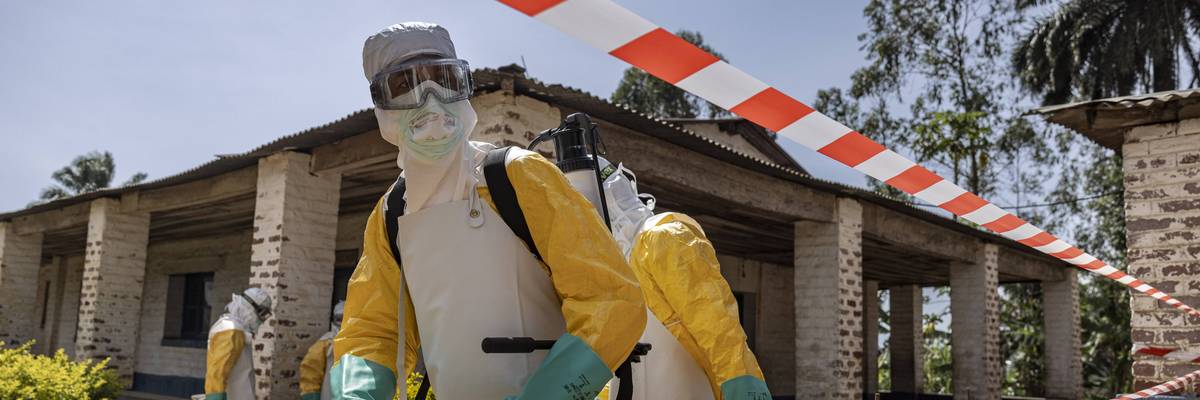
A member of the Médecins Sans Frontières (MSF) Ebola response team disinfects a restricted area outside the General Referral Hospital of Mongbwalu during outbreak preparedness and infection prevention activities on May 26, 2026 in Mongbwalu, Congo.
While we should all fear and work to stop this outbreak, we should also be willing to fear and confront the conditions that enabled its devastation.
As Congo faces the world’s third-largest Ebola outbreak, treatment centers have been attacked, masks and boots are running out, and entire communities are left vulnerable amid ongoing conflict and international neglect. This disaster is possible due to centuries of exploitation that amplifies the spread. The trail of inhumanity and structural violence is very scary and needs to end.
History shows that this country has been ravaged by colonial violence and foreign profiteering. Under King Leopold II of Belgium, an estimated 10 million Congolese people were murdered, mutilated, and terrorized as rubber and ivory were extracted for enormous profit. As a matter of policy and to enforce quotas, colonizers cut off limbs and heads.
Congo was also plundered by the transatlantic slave trade, which kidnapped, displaced, and enslaved millions of Congolese people.
Later, global demand for diamonds, gold, coltan, and other conflict minerals remade the region into a site of ongoing wars and labor exploitation. Much of this extraction still occurs through artisanal mining, a form of labor whereby individuals risk their lives to extract these valuable and raw natural resources under dangerous conditions.
The extreme situation in Congo did not develop in a vacuum; rather, it has formed from centuries of cruel and callous structural-based and enduring violence.
Cobalt, a rare and toxic metal essential to smartphones, electric vehicles, AI, and other technologies, reveals this contradiction at the center of our global economy. Our demand for these goods relies on the same brutal dynamics that have played out for centuries in this land: environmental harm, contamination of land and water, child labor, gender and sexual-based violence, and the exploitation of class under-resourced people of color in Congo. Wealthier people get the goods while the output biases in our systems of production allow us distance and plausible deniability in the face of untold suffering. When we look at our own commodity chains, the often hidden trails of our batteries and other electronic products in time and space before they got into our hands, we can trace many of our products to Congo. We are materially connected, whether we acknowledge it or not.
Congo has an estimated $24 trillion in untapped natural reserves. It is one of the most inherently valuable places on Earth. Yet, due to these longstanding and asymmetrical power relations, it is simultaneously extremely vulnerable. In 2020, 85.3% of the population in Congo lived on less than $3 a day. By 2026, projections estimate that fully 94.9% of the population will be at or below this international poverty threshold.
But, it doesn't have to be this way. We can do more than express fear and enforce travel bans and restrictions.
We can understand the Ebola outbreak as a medical crisis shaped by structural violence in which we are all complicit.
If we can recognize how we are connected to these systems, then we can take responsibility and action to change them. We can reinvest in funding the United Nations and support long-term healthcare infrastructure. We can become more socially and environmentally sustainable by holding corporations and governments accountable for exploitative labor and harmful environmental practices. We can demand more ethical and transparent supply chains. We can recognize that racism and environmental racism enable this disproportionate harm and take steps to do better. We can vote for people who have a world systems view, who understand that global trade, politics, and public health are connected. Leaders of this era need to understand that what we do, and how we do it, matter in life-and-death ways for people beyond our local contexts.
The extreme situation in Congo did not develop in a vacuum; rather, it has formed from centuries of cruel and callous structural-based and enduring violence. This cycle can end, if only we can align our shared values of more sustainable and equitable practices with our political will.
A virus with a potential mortality rate of 90% should concern us all. We should all fear and work to stop this outbreak. We should also be willing to fear and confront the conditions that enabled its devastation. And, we need to engage in the transformative justice required to facilitate sustainable social and environmental ways rather than those of depravity.
Dear Common Dreams reader, It’s been nearly 30 years since I co-founded Common Dreams with my late wife, Lina Newhouser. We had the radical notion that journalism should serve the public good, not corporate profits. It was clear to us from the outset what it would take to build such a project. No paid advertisements. No corporate sponsors. No millionaire publisher telling us what to think or do. Many people said we wouldn't last a year, but we proved those doubters wrong. Together with a tremendous team of journalists and dedicated staff, we built an independent media outlet free from the constraints of profits and corporate control. Our mission has always been simple: To inform. To inspire. To ignite change for the common good. Building Common Dreams was not easy. Our survival was never guaranteed. When you take on the most powerful forces—Wall Street greed, fossil fuel industry destruction, Big Tech lobbyists, and uber-rich oligarchs who have spent billions upon billions rigging the economy and democracy in their favor—the only bulwark you have is supporters who believe in your work. But here’s the urgent message from me today. It's never been this bad out there. And it's never been this hard to keep us going. At the very moment Common Dreams is most needed, the threats we face are intensifying. We need your support now more than ever. We don't accept corporate advertising and never will. We don't have a paywall because we don't think people should be blocked from critical news based on their ability to pay. Everything we do is funded by the donations of readers like you. When everyone does the little they can afford, we are strong. But if that support retreats or dries up, so do we. Will you donate now to make sure Common Dreams not only survives but thrives? —Craig Brown, Co-founder |
As Congo faces the world’s third-largest Ebola outbreak, treatment centers have been attacked, masks and boots are running out, and entire communities are left vulnerable amid ongoing conflict and international neglect. This disaster is possible due to centuries of exploitation that amplifies the spread. The trail of inhumanity and structural violence is very scary and needs to end.
History shows that this country has been ravaged by colonial violence and foreign profiteering. Under King Leopold II of Belgium, an estimated 10 million Congolese people were murdered, mutilated, and terrorized as rubber and ivory were extracted for enormous profit. As a matter of policy and to enforce quotas, colonizers cut off limbs and heads.
Congo was also plundered by the transatlantic slave trade, which kidnapped, displaced, and enslaved millions of Congolese people.
Later, global demand for diamonds, gold, coltan, and other conflict minerals remade the region into a site of ongoing wars and labor exploitation. Much of this extraction still occurs through artisanal mining, a form of labor whereby individuals risk their lives to extract these valuable and raw natural resources under dangerous conditions.
The extreme situation in Congo did not develop in a vacuum; rather, it has formed from centuries of cruel and callous structural-based and enduring violence.
Cobalt, a rare and toxic metal essential to smartphones, electric vehicles, AI, and other technologies, reveals this contradiction at the center of our global economy. Our demand for these goods relies on the same brutal dynamics that have played out for centuries in this land: environmental harm, contamination of land and water, child labor, gender and sexual-based violence, and the exploitation of class under-resourced people of color in Congo. Wealthier people get the goods while the output biases in our systems of production allow us distance and plausible deniability in the face of untold suffering. When we look at our own commodity chains, the often hidden trails of our batteries and other electronic products in time and space before they got into our hands, we can trace many of our products to Congo. We are materially connected, whether we acknowledge it or not.
Congo has an estimated $24 trillion in untapped natural reserves. It is one of the most inherently valuable places on Earth. Yet, due to these longstanding and asymmetrical power relations, it is simultaneously extremely vulnerable. In 2020, 85.3% of the population in Congo lived on less than $3 a day. By 2026, projections estimate that fully 94.9% of the population will be at or below this international poverty threshold.
But, it doesn't have to be this way. We can do more than express fear and enforce travel bans and restrictions.
We can understand the Ebola outbreak as a medical crisis shaped by structural violence in which we are all complicit.
If we can recognize how we are connected to these systems, then we can take responsibility and action to change them. We can reinvest in funding the United Nations and support long-term healthcare infrastructure. We can become more socially and environmentally sustainable by holding corporations and governments accountable for exploitative labor and harmful environmental practices. We can demand more ethical and transparent supply chains. We can recognize that racism and environmental racism enable this disproportionate harm and take steps to do better. We can vote for people who have a world systems view, who understand that global trade, politics, and public health are connected. Leaders of this era need to understand that what we do, and how we do it, matter in life-and-death ways for people beyond our local contexts.
The extreme situation in Congo did not develop in a vacuum; rather, it has formed from centuries of cruel and callous structural-based and enduring violence. This cycle can end, if only we can align our shared values of more sustainable and equitable practices with our political will.
A virus with a potential mortality rate of 90% should concern us all. We should all fear and work to stop this outbreak. We should also be willing to fear and confront the conditions that enabled its devastation. And, we need to engage in the transformative justice required to facilitate sustainable social and environmental ways rather than those of depravity.
As Congo faces the world’s third-largest Ebola outbreak, treatment centers have been attacked, masks and boots are running out, and entire communities are left vulnerable amid ongoing conflict and international neglect. This disaster is possible due to centuries of exploitation that amplifies the spread. The trail of inhumanity and structural violence is very scary and needs to end.
History shows that this country has been ravaged by colonial violence and foreign profiteering. Under King Leopold II of Belgium, an estimated 10 million Congolese people were murdered, mutilated, and terrorized as rubber and ivory were extracted for enormous profit. As a matter of policy and to enforce quotas, colonizers cut off limbs and heads.
Congo was also plundered by the transatlantic slave trade, which kidnapped, displaced, and enslaved millions of Congolese people.
Later, global demand for diamonds, gold, coltan, and other conflict minerals remade the region into a site of ongoing wars and labor exploitation. Much of this extraction still occurs through artisanal mining, a form of labor whereby individuals risk their lives to extract these valuable and raw natural resources under dangerous conditions.
The extreme situation in Congo did not develop in a vacuum; rather, it has formed from centuries of cruel and callous structural-based and enduring violence.
Cobalt, a rare and toxic metal essential to smartphones, electric vehicles, AI, and other technologies, reveals this contradiction at the center of our global economy. Our demand for these goods relies on the same brutal dynamics that have played out for centuries in this land: environmental harm, contamination of land and water, child labor, gender and sexual-based violence, and the exploitation of class under-resourced people of color in Congo. Wealthier people get the goods while the output biases in our systems of production allow us distance and plausible deniability in the face of untold suffering. When we look at our own commodity chains, the often hidden trails of our batteries and other electronic products in time and space before they got into our hands, we can trace many of our products to Congo. We are materially connected, whether we acknowledge it or not.
Congo has an estimated $24 trillion in untapped natural reserves. It is one of the most inherently valuable places on Earth. Yet, due to these longstanding and asymmetrical power relations, it is simultaneously extremely vulnerable. In 2020, 85.3% of the population in Congo lived on less than $3 a day. By 2026, projections estimate that fully 94.9% of the population will be at or below this international poverty threshold.
But, it doesn't have to be this way. We can do more than express fear and enforce travel bans and restrictions.
We can understand the Ebola outbreak as a medical crisis shaped by structural violence in which we are all complicit.
If we can recognize how we are connected to these systems, then we can take responsibility and action to change them. We can reinvest in funding the United Nations and support long-term healthcare infrastructure. We can become more socially and environmentally sustainable by holding corporations and governments accountable for exploitative labor and harmful environmental practices. We can demand more ethical and transparent supply chains. We can recognize that racism and environmental racism enable this disproportionate harm and take steps to do better. We can vote for people who have a world systems view, who understand that global trade, politics, and public health are connected. Leaders of this era need to understand that what we do, and how we do it, matter in life-and-death ways for people beyond our local contexts.
The extreme situation in Congo did not develop in a vacuum; rather, it has formed from centuries of cruel and callous structural-based and enduring violence. This cycle can end, if only we can align our shared values of more sustainable and equitable practices with our political will.
A virus with a potential mortality rate of 90% should concern us all. We should all fear and work to stop this outbreak. We should also be willing to fear and confront the conditions that enabled its devastation. And, we need to engage in the transformative justice required to facilitate sustainable social and environmental ways rather than those of depravity.