SUBSCRIBE TO OUR FREE NEWSLETTER
Daily news & progressive opinion—funded by the people, not the corporations—delivered straight to your inbox.
5
#000000
#FFFFFF
To donate by check, phone, or other method, see our More Ways to Give page.
You know their names.
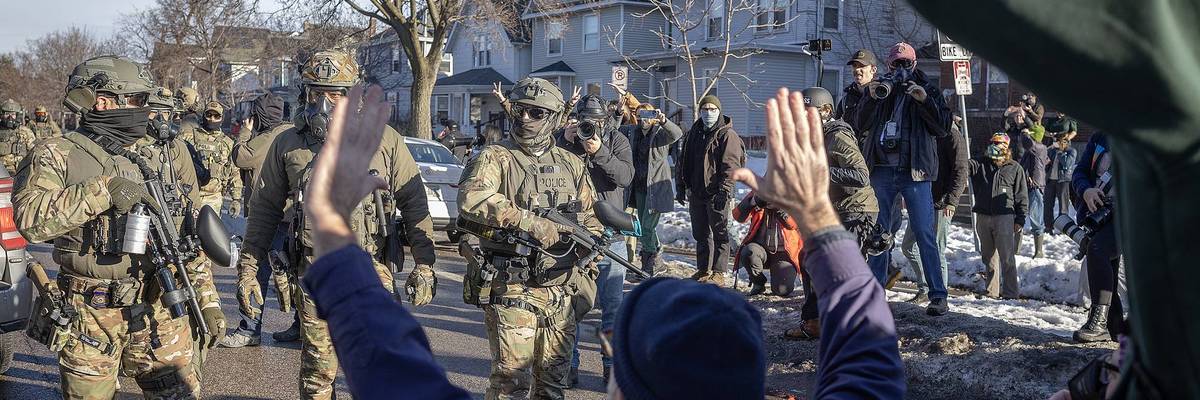
Renee Good was 37 years old, a poet, a mother of three, when an Immigration and Customs Enforcement officer named Jonathan Ross fired three shots into her car on a January morning in Minneapolis. The Hennepin County Medical Examiner has ruled her death a homicide. Evidence indicates she was still alive when other federal agents prevented a bystander physician from reaching her.
Alex Pretti, also 37 years old, an intensive-care nurse, was holding a smartphone—what Jon Stewart, in the kind of bitter eulogy that has lately become the medium for social media’s truth-telling, called “a 1080p, 60fps weapon of mass illumination”—when two Border Patrol agents, whose identities the federal government still refuses to release, shot him dead. Federal immigration officers have shot at least 14 people in the United States between September and February. Four are dead. No officer has been charged. Soon, the United States Congress will move to pass another $72-billion package—nearly all of it for the agencies that killed them and the immigration enforcement apparatus around them—on a procedural track designed expressly to bypass the majority of Americans who do not want this.
The track is called reconciliation. Created in 1974 for narrow fiscal adjustments, it allows the majority party to pass certain budget legislation with 51 votes instead of the 60 otherwise needed to overcome a filibuster. It has been steadily stretched into a vehicle for major policy, and this time the policy is the funding of an enforcement operation that has killed US citizens—with no Democratic input and no accountability reforms attached.
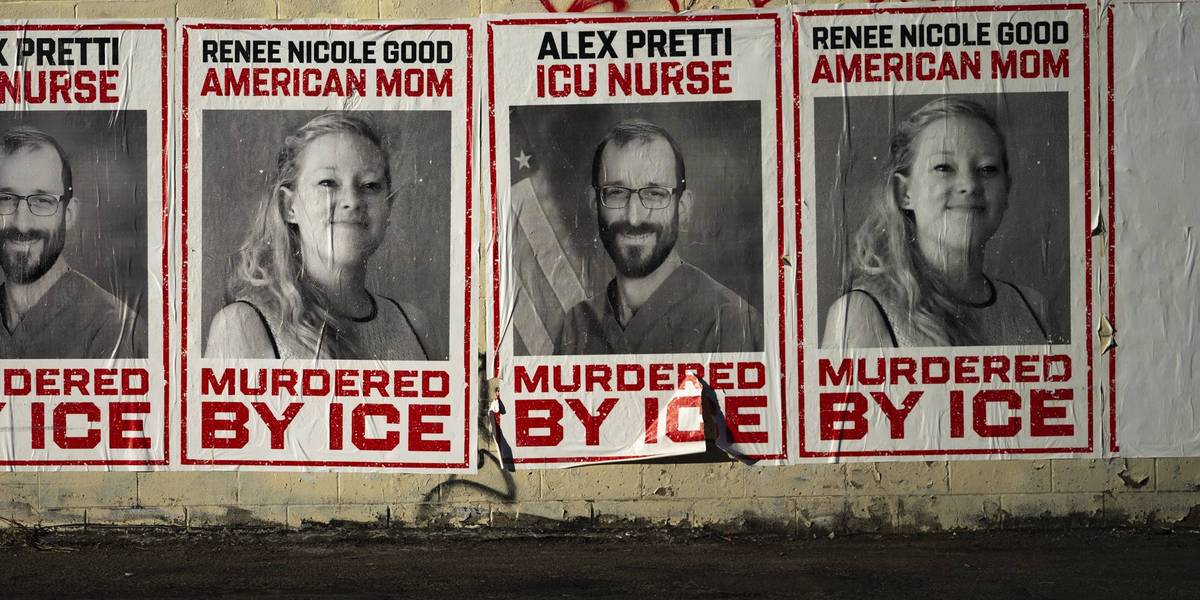 Signs memorializing Renee Good and Alex Pretti are seen pasted to the wall of a building on February 12, 2026 in Minneapolis, Minnesota. (Photo by Stephen Maturen/Getty Images)
The pending bill also tucks in $1 billion for the Secret Service to add security features to the ballroom President Donald Trump has been building at the White House. Read that again. Seventy-one billion dollars for the agencies Rep. John Mannion, a New York Democrat, has accurately called “a personal paramilitary unit of the president”—and the immigration enforcement apparatus around them. One billion to harden the walls of the room where the architects of this oppressive system will raise glasses to one another.
What can be done? The odds are against stopping the bill outright—but the procedural fight is already producing results. One lever is the Byrd Rule, a 1985 Senate procedure that bars reconciliation bills from including provisions whose policy effect outweighs their budget effect, or that fall outside the relevant committee’s jurisdiction. The pre-floor adjudication is called the Byrd Bath, and it is the minority’s most powerful tool against a reconciliation bill. Last week, Parliamentarian Elizabeth MacDonough advised that core sections of the bill—including most of the Customs and Border Protection funding and a provision that would undermine Flores Settlement protections for unaccompanied immigrant children—violate the Byrd Rule. Over the weekend, she ruled that the $1 billion in ballroom security money does too.
Beyond Byrd Rule challenges, Democrats can force costly amendment votes during the vote-a-rama (the marathon amendment voting that follows the 24-hour debate clock), refuse the unanimous consent agreements that would compress the procedure, and use every floor hour to make this vote painful for those who cast it. Democrats plan to use those amendments to tie the package to the unauthorized Iran war and the ballroom—putting Republicans on record on all three at once. Whether they will is a question worth asking—directly, by phone, in volume—of every Democratic senator before the floor vote. It is also worth asking the two Republican senators who voted against the budget resolution last month, Lisa Murkowski of Alaska and Rand Paul of Kentucky, to hold the line on the substantive vote. And it is worth asking Sen. Susan Collins of Maine—who chairs Appropriations and is in the fight of her political life for reelection this November—whether she wants the vote her constituents remember in October to be a vote for this.
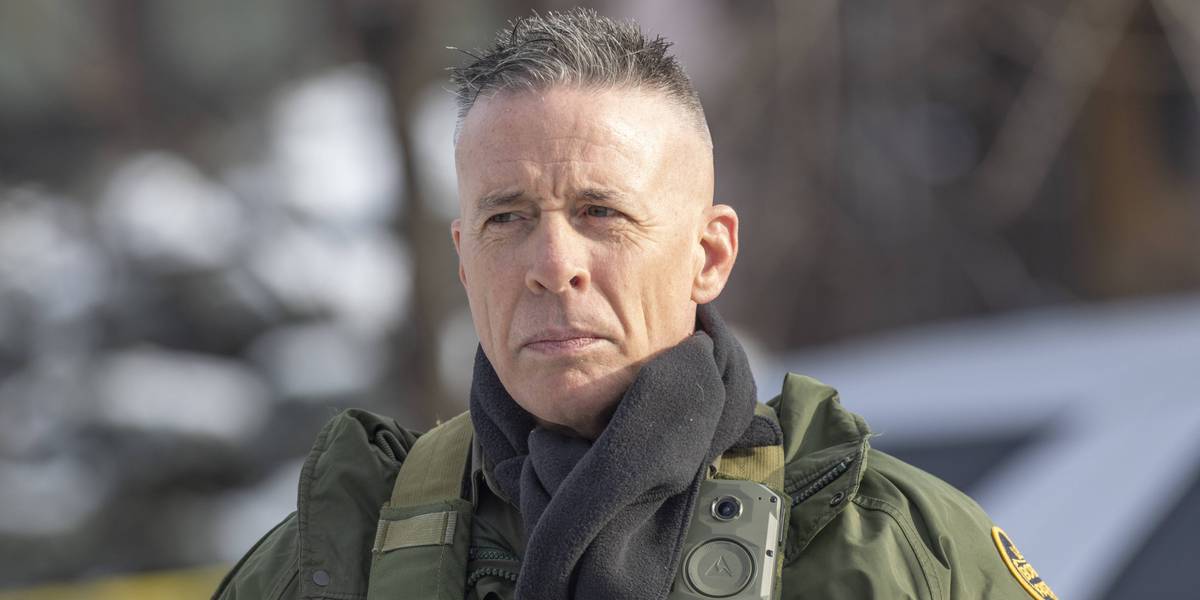 Gregory Bovino, the Commander-at-Large stands around the scene where ICE agents fatally shoot a woman earlier in the day in Minneapolis, Minnesota, United States, on January 7, 2026. (Photo by Christopher Juhn/Anadolu via Getty Images)
The House, where the bill must also pass, offers Republicans almost no margin for error. With one of the thinnest majorities in recent memory and several seats currently vacant, a small number of Republican defections—if Democrats hold together—would be enough to sink the bill.
The members worth calling are not only the obvious ones—the moderates and Latino-district Republicans whose constituents are already being targeted by the agencies this bill funds—but the Democrats whose offices need to hear, the same thing they heard from voters in January and February: that this is intolerable, that the silence of decent people in the face of it is intolerable, that the elected representative who does not, in this moment, expend every iota of political capital available to them is not in fact representing anyone whose vote they should expect to receive again.
This is what is happening: an agency whose officer shot a poet through her windshield is about to receive an appropriation of historic size, through a process designed to insulate the appropriation from democratic accountability, in a bill that also funds a ballroom. There is a way to oppose it. The way requires phone calls and every other form of direct action. They have to start now.
Call the Congressional switchboard at (202) 224-3121 and ask for your senators and your representative. Tell them to vote no, and to use every procedural tool available—e.g. Byrd Rule challenges, vote-a-rama amendments, refusal of unanimous consent—to slow, shape, and defeat this bill. Tell them this: funding the agencies that killed Renee Good and Alex Pretti, without reform, without accountability, on a track designed to escape consent, is not something you will forget at the next election.
You know their names.
Renee Good was 37 years old, a poet, a mother of three, when an Immigration and Customs Enforcement officer named Jonathan Ross fired three shots into her car on a January morning in Minneapolis. The Hennepin County Medical Examiner has ruled her death a homicide. Evidence indicates she was still alive when other federal agents prevented a bystander physician from reaching her.
Alex Pretti, also 37 years old, an intensive-care nurse, was holding a smartphone—what Jon Stewart, in the kind of bitter eulogy that has lately become the medium for social media’s truth-telling, called “a 1080p, 60fps weapon of mass illumination”—when two Border Patrol agents, whose identities the federal government still refuses to release, shot him dead. Federal immigration officers have shot at least 14 people in the United States between September and February. Four are dead. No officer has been charged. Soon, the United States Congress will move to pass another $72-billion package—nearly all of it for the agencies that killed them and the immigration enforcement apparatus around them—on a procedural track designed expressly to bypass the majority of Americans who do not want this.
The track is called reconciliation. Created in 1974 for narrow fiscal adjustments, it allows the majority party to pass certain budget legislation with 51 votes instead of the 60 otherwise needed to overcome a filibuster. It has been steadily stretched into a vehicle for major policy, and this time the policy is the funding of an enforcement operation that has killed US citizens—with no Democratic input and no accountability reforms attached.
Signs memorializing Renee Good and Alex Pretti are seen pasted to the wall of a building on February 12, 2026 in Minneapolis, Minnesota. (Photo by Stephen Maturen/Getty Images)
The pending bill also tucks in $1 billion for the Secret Service to add security features to the ballroom President Donald Trump has been building at the White House. Read that again. Seventy-one billion dollars for the agencies Rep. John Mannion, a New York Democrat, has accurately called “a personal paramilitary unit of the president”—and the immigration enforcement apparatus around them. One billion to harden the walls of the room where the architects of this oppressive system will raise glasses to one another.
What can be done? The odds are against stopping the bill outright—but the procedural fight is already producing results. One lever is the Byrd Rule, a 1985 Senate procedure that bars reconciliation bills from including provisions whose policy effect outweighs their budget effect, or that fall outside the relevant committee’s jurisdiction. The pre-floor adjudication is called the Byrd Bath, and it is the minority’s most powerful tool against a reconciliation bill. Last week, Parliamentarian Elizabeth MacDonough advised that core sections of the bill—including most of the Customs and Border Protection funding and a provision that would undermine Flores Settlement protections for unaccompanied immigrant children—violate the Byrd Rule. Over the weekend, she ruled that the $1 billion in ballroom security money does too.
Beyond Byrd Rule challenges, Democrats can force costly amendment votes during the vote-a-rama (the marathon amendment voting that follows the 24-hour debate clock), refuse the unanimous consent agreements that would compress the procedure, and use every floor hour to make this vote painful for those who cast it. Democrats plan to use those amendments to tie the package to the unauthorized Iran war and the ballroom—putting Republicans on record on all three at once. Whether they will is a question worth asking—directly, by phone, in volume—of every Democratic senator before the floor vote. It is also worth asking the two Republican senators who voted against the budget resolution last month, Lisa Murkowski of Alaska and Rand Paul of Kentucky, to hold the line on the substantive vote. And it is worth asking Sen. Susan Collins of Maine—who chairs Appropriations and is in the fight of her political life for reelection this November—whether she wants the vote her constituents remember in October to be a vote for this.
Gregory Bovino, the Commander-at-Large stands around the scene where ICE agents fatally shoot a woman earlier in the day in Minneapolis, Minnesota, United States, on January 7, 2026. (Photo by Christopher Juhn/Anadolu via Getty Images)
The House, where the bill must also pass, offers Republicans almost no margin for error. With one of the thinnest majorities in recent memory and several seats currently vacant, a small number of Republican defections—if Democrats hold together—would be enough to sink the bill.
The members worth calling are not only the obvious ones—the moderates and Latino-district Republicans whose constituents are already being targeted by the agencies this bill funds—but the Democrats whose offices need to hear, the same thing they heard from voters in January and February: that this is intolerable, that the silence of decent people in the face of it is intolerable, that the elected representative who does not, in this moment, expend every iota of political capital available to them is not in fact representing anyone whose vote they should expect to receive again.
This is what is happening: an agency whose officer shot a poet through her windshield is about to receive an appropriation of historic size, through a process designed to insulate the appropriation from democratic accountability, in a bill that also funds a ballroom. There is a way to oppose it. The way requires phone calls and every other form of direct action. They have to start now.
Call the Congressional switchboard at (202) 224-3121 and ask for your senators and your representative. Tell them to vote no, and to use every procedural tool available—e.g. Byrd Rule challenges, vote-a-rama amendments, refusal of unanimous consent—to slow, shape, and defeat this bill. Tell them this: funding the agencies that killed Renee Good and Alex Pretti, without reform, without accountability, on a track designed to escape consent, is not something you will forget at the next election.
You know their names.
Renee Good was 37 years old, a poet, a mother of three, when an Immigration and Customs Enforcement officer named Jonathan Ross fired three shots into her car on a January morning in Minneapolis. The Hennepin County Medical Examiner has ruled her death a homicide. Evidence indicates she was still alive when other federal agents prevented a bystander physician from reaching her.
Alex Pretti, also 37 years old, an intensive-care nurse, was holding a smartphone—what Jon Stewart, in the kind of bitter eulogy that has lately become the medium for social media’s truth-telling, called “a 1080p, 60fps weapon of mass illumination”—when two Border Patrol agents, whose identities the federal government still refuses to release, shot him dead. Federal immigration officers have shot at least 14 people in the United States between September and February. Four are dead. No officer has been charged. Soon, the United States Congress will move to pass another $72-billion package—nearly all of it for the agencies that killed them and the immigration enforcement apparatus around them—on a procedural track designed expressly to bypass the majority of Americans who do not want this.
The track is called reconciliation. Created in 1974 for narrow fiscal adjustments, it allows the majority party to pass certain budget legislation with 51 votes instead of the 60 otherwise needed to overcome a filibuster. It has been steadily stretched into a vehicle for major policy, and this time the policy is the funding of an enforcement operation that has killed US citizens—with no Democratic input and no accountability reforms attached.
Signs memorializing Renee Good and Alex Pretti are seen pasted to the wall of a building on February 12, 2026 in Minneapolis, Minnesota. (Photo by Stephen Maturen/Getty Images)
The pending bill also tucks in $1 billion for the Secret Service to add security features to the ballroom President Donald Trump has been building at the White House. Read that again. Seventy-one billion dollars for the agencies Rep. John Mannion, a New York Democrat, has accurately called “a personal paramilitary unit of the president”—and the immigration enforcement apparatus around them. One billion to harden the walls of the room where the architects of this oppressive system will raise glasses to one another.
What can be done? The odds are against stopping the bill outright—but the procedural fight is already producing results. One lever is the Byrd Rule, a 1985 Senate procedure that bars reconciliation bills from including provisions whose policy effect outweighs their budget effect, or that fall outside the relevant committee’s jurisdiction. The pre-floor adjudication is called the Byrd Bath, and it is the minority’s most powerful tool against a reconciliation bill. Last week, Parliamentarian Elizabeth MacDonough advised that core sections of the bill—including most of the Customs and Border Protection funding and a provision that would undermine Flores Settlement protections for unaccompanied immigrant children—violate the Byrd Rule. Over the weekend, she ruled that the $1 billion in ballroom security money does too.
Beyond Byrd Rule challenges, Democrats can force costly amendment votes during the vote-a-rama (the marathon amendment voting that follows the 24-hour debate clock), refuse the unanimous consent agreements that would compress the procedure, and use every floor hour to make this vote painful for those who cast it. Democrats plan to use those amendments to tie the package to the unauthorized Iran war and the ballroom—putting Republicans on record on all three at once. Whether they will is a question worth asking—directly, by phone, in volume—of every Democratic senator before the floor vote. It is also worth asking the two Republican senators who voted against the budget resolution last month, Lisa Murkowski of Alaska and Rand Paul of Kentucky, to hold the line on the substantive vote. And it is worth asking Sen. Susan Collins of Maine—who chairs Appropriations and is in the fight of her political life for reelection this November—whether she wants the vote her constituents remember in October to be a vote for this.
Gregory Bovino, the Commander-at-Large stands around the scene where ICE agents fatally shoot a woman earlier in the day in Minneapolis, Minnesota, United States, on January 7, 2026. (Photo by Christopher Juhn/Anadolu via Getty Images)
The House, where the bill must also pass, offers Republicans almost no margin for error. With one of the thinnest majorities in recent memory and several seats currently vacant, a small number of Republican defections—if Democrats hold together—would be enough to sink the bill.
The members worth calling are not only the obvious ones—the moderates and Latino-district Republicans whose constituents are already being targeted by the agencies this bill funds—but the Democrats whose offices need to hear, the same thing they heard from voters in January and February: that this is intolerable, that the silence of decent people in the face of it is intolerable, that the elected representative who does not, in this moment, expend every iota of political capital available to them is not in fact representing anyone whose vote they should expect to receive again.
This is what is happening: an agency whose officer shot a poet through her windshield is about to receive an appropriation of historic size, through a process designed to insulate the appropriation from democratic accountability, in a bill that also funds a ballroom. There is a way to oppose it. The way requires phone calls and every other form of direct action. They have to start now.
Call the Congressional switchboard at (202) 224-3121 and ask for your senators and your representative. Tell them to vote no, and to use every procedural tool available—e.g. Byrd Rule challenges, vote-a-rama amendments, refusal of unanimous consent—to slow, shape, and defeat this bill. Tell them this: funding the agencies that killed Renee Good and Alex Pretti, without reform, without accountability, on a track designed to escape consent, is not something you will forget at the next election.