
SUBSCRIBE TO OUR FREE NEWSLETTER
Daily news & progressive opinion—funded by the people, not the corporations—delivered straight to your inbox.
5
#000000
#FFFFFF
To donate by check, phone, or other method, see our More Ways to Give page.


Daily news & progressive opinion—funded by the people, not the corporations—delivered straight to your inbox.
An agency whose officer shot a poet through her windshield is about to receive an appropriation of historic size, through a process designed to insulate the appropriation from democratic accountability, in a bill that also funds a ballroom.
You know their names.
Renee Good was 37 years old, a poet, a mother of three, when an Immigration and Customs Enforcement officer named Jonathan Ross fired three shots into her car on a January morning in Minneapolis. The Hennepin County Medical Examiner has ruled her death a homicide. Evidence indicates she was still alive when other federal agents prevented a bystander physician from reaching her.
Alex Pretti, also 37 years old, an intensive-care nurse, was holding a smartphone—what Jon Stewart, in the kind of bitter eulogy that has lately become the medium for social media’s truth-telling, called “a 1080p, 60fps weapon of mass illumination”—when two Border Patrol agents, whose identities the federal government still refuses to release, shot him dead. Federal immigration officers have shot at least 14 people in the United States between September and February. Four are dead. No officer has been charged. Soon, the United States Congress will move to pass another $72-billion package—nearly all of it for the agencies that killed them and the immigration enforcement apparatus around them—on a procedural track designed expressly to bypass the majority of Americans who do not want this.
The track is called reconciliation. Created in 1974 for narrow fiscal adjustments, it allows the majority party to pass certain budget legislation with 51 votes instead of the 60 otherwise needed to overcome a filibuster. It has been steadily stretched into a vehicle for major policy, and this time the policy is the funding of an enforcement operation that has killed US citizens—with no Democratic input and no accountability reforms attached.

The pending bill also tucks in $1 billion for the Secret Service to add security features to the ballroom President Donald Trump has been building at the White House. Read that again. Seventy-one billion dollars for the agencies Rep. John Mannion, a New York Democrat, has accurately called “a personal paramilitary unit of the president”—and the immigration enforcement apparatus around them. One billion to harden the walls of the room where the architects of this oppressive system will raise glasses to one another.
What can be done? The odds are against stopping the bill outright—but the procedural fight is already producing results. One lever is the Byrd Rule, a 1985 Senate procedure that bars reconciliation bills from including provisions whose policy effect outweighs their budget effect, or that fall outside the relevant committee’s jurisdiction. The pre-floor adjudication is called the Byrd Bath, and it is the minority’s most powerful tool against a reconciliation bill. Last week, Parliamentarian Elizabeth MacDonough advised that core sections of the bill—including most of the Customs and Border Protection funding and a provision that would undermine Flores Settlement protections for unaccompanied immigrant children—violate the Byrd Rule. Over the weekend, she ruled that the $1 billion in ballroom security money does too.
Beyond Byrd Rule challenges, Democrats can force costly amendment votes during the vote-a-rama (the marathon amendment voting that follows the 24-hour debate clock), refuse the unanimous consent agreements that would compress the procedure, and use every floor hour to make this vote painful for those who cast it. Democrats plan to use those amendments to tie the package to the unauthorized Iran war and the ballroom—putting Republicans on record on all three at once. Whether they will is a question worth asking—directly, by phone, in volume—of every Democratic senator before the floor vote. It is also worth asking the two Republican senators who voted against the budget resolution last month, Lisa Murkowski of Alaska and Rand Paul of Kentucky, to hold the line on the substantive vote. And it is worth asking Sen. Susan Collins of Maine—who chairs Appropriations and is in the fight of her political life for reelection this November—whether she wants the vote her constituents remember in October to be a vote for this.

The House, where the bill must also pass, offers Republicans almost no margin for error. With one of the thinnest majorities in recent memory and several seats currently vacant, a small number of Republican defections—if Democrats hold together—would be enough to sink the bill.
The members worth calling are not only the obvious ones—the moderates and Latino-district Republicans whose constituents are already being targeted by the agencies this bill funds—but the Democrats whose offices need to hear, the same thing they heard from voters in January and February: that this is intolerable, that the silence of decent people in the face of it is intolerable, that the elected representative who does not, in this moment, expend every iota of political capital available to them is not in fact representing anyone whose vote they should expect to receive again.
This is what is happening: an agency whose officer shot a poet through her windshield is about to receive an appropriation of historic size, through a process designed to insulate the appropriation from democratic accountability, in a bill that also funds a ballroom. There is a way to oppose it. The way requires phone calls and every other form of direct action. They have to start now.
Call the Congressional switchboard at (202) 224-3121 and ask for your senators and your representative. Tell them to vote no, and to use every procedural tool available—e.g. Byrd Rule challenges, vote-a-rama amendments, refusal of unanimous consent—to slow, shape, and defeat this bill. Tell them this: funding the agencies that killed Renee Good and Alex Pretti, without reform, without accountability, on a track designed to escape consent, is not something you will forget at the next election.
The Republicans who passed this bill must pay a political price. It's time to get to work.
Editor's note: U.S. Senator Bernie Sanders released the following after Republicans in the U.S. Senate approved their "big ugly bill" on Tuesday, July 1, 2025.
The reconciliation bill that Republicans passed in the U.S. Senate by one vote on Tuesday will give the top 1% a trillion dollars in tax breaks. At a time of unprecedented income and wealth inequality, the very rich just got much richer.
Pathetically, these tax breaks for the wealthy are paid for by a trillion dollars in cuts to Medicaid and the Affordable Care Act. The result of those cuts will be that over 16 million Americans will lose their health insurance and an estimated 50,000 will die unnecessarily each year. These cuts will also be devastating to rural hospitals, nursing homes and community health centers.
But that’s not all. While the very rich celebrate their good fortune in fancy restaurants, this bill cuts nutrition programs for hungry kids and, because of cuts to education, will make it harder for working class young people to afford college.
And for those of us concerned about climate change, this bill makes a very ominous situation even worse. It delivers massive reductions in funding for energy efficiency and sustainable energy while giving even more corporate welfare to the fossil fuel industry.
The Republicans who passed this bill must pay a political price. Starting now, we must work overtime to make certain that these corporate controlled politicians are defeated in 2026.
"That's what this moment demands of them and what we expect," said a progressive group pushing Democrats to slow down Republicans' massive reconciliation bill.
A progressive group is pressuring Democratic lawmakers to use every tactic available to obstruct passage of the Republican budget reconciliation bill, which contains large tax cuts for the wealthy funded by slashing social safety net programs.
The organization Indivisible put out an urgent call Wednesday, pressing voters to help "disrupt" what it called the "Republican tax scam." The group urged Democrats to call their senators, encouraging them to gum up the works using procedural tactics to stop the bill, which has been described as even more extreme and regressive than the one already passed in the House.
"Your Democratic senators can make voting on this bill slower, more divisive, and more politically damaging than any vote these Republicans have ever taken," an email from the group said. "In fact, that's what this moment demands of them and what we expect."
The Senate's version of the bill introduces new cuts to Medicaid and the Supplemental Nutrition Assistance Program (SNAP) that will hit parents, homeless individuals, and veterans even harder than the House version. It also contains new provisions, including one that would eliminate taxes on many firearms and accessories.
Indivisible noted that the "vote-a-rama" process could begin as soon as Thursday. During this arcane stage of budget reconciliation, senators may propose unlimited amendments to a bill, each of which is voted on in succession.
Using the vote-a-rama has become a tried-and-true strategy for minority parties to drag out votes for these omnibus packages, which can pass with just a simple majority and cannot be filibustered. In 2022, Republicans used the tactic to delay voting for 16 hours in hopes of picking off just one Democrat who could tank Biden's climate, energy, and tax package.
With Democrats in the minority, Indivisible hopes they will launch a similar marathon. The group encouraged constituents not only to call their senators, but also to submit their own amendments for senators to introduce.
The organization gave examples of what sorts of things to propose: Amendments "to transfer all the dollars for [Immigration and Customs Enforcement] funding to NPR and PBS," "to tax recipients of luxury jets gifted by foreign governments at 100% of the jet's market value," or "to cut every lawmaker's salary and per diem by the same percentage SNAP gets cut."
"Some of your suggestions may be silly. Some may be poignant. Some will be genuinely good policy. Pretty much all of them will be better than the disaster MAGA Republicans want to force on us," the email said.
By delaying the process long enough, the group hopes to buy time to fracture the Republican coalition, which is already divided over some provisions of the bill.
Several Republican senators—including Josh Hawley (R-Mo.), Susan Collins (R-Maine), and Jerry Moran (R-Kan.)—have voiced concerns about how cuts to Medicaid would affect funding for rural hospitals.
With enough time, Indivisible hopes to use this and other issues as a wedge to pick off enough GOP defectors to stop the bill's passage altogether.
"The longer we can drag this process out, the more we can toxify a bill that Republicans are already publicly tearing apart," Indivisible said. "The more we can toxify the bill, the better the chance we can ultimately defeat it."
"The reconciliation bill that Republicans are attempting to ram through the Senate this week would be a death sentence for working-class and low-income Americans," said Sen. Bernie Sanders.
The GOP budget legislation currently before the U.S. Senate would strip health coverage from 19 Americans for every millionaire household it gives a tax break, according to a report that Sen. Bernie Sanders released Wednesday as he worked to highlight and build public opposition to President Donald Trump and the Republican Party's draconian assault on the nation's social safety net.
The report integrates alarming testimony from healthcare providers who warn that the Republican legislation would have devastating impacts on their patients and the broader U.S. healthcare system—stripping insurance from millions, raising costs, and shuttering rural hospitals.
"If Medicaid is cut, my patients will die," Louisiana-based doctor Helen Pope told Sanders' team. "I realize I am being dramatic. It is a dramatic situation. They are humans who are doing their best. Please don't allow them to suffer more."
Farhan Malik, a pediatric critical care specialist based in Florida, echoed that warning, saying that "children will die as a result of these cuts."
"Hospitals will cut back on ICU doctors, doctors will leave because of salary cuts, critical ancillary services will be reduced, more medical students will avoid going into pediatric residencies," said Malik.
The report comes as Republican lawmakers continue to debate just how far they want to go with their proposed cuts to Medicaid, which—under both the House and Senate versions of their legislation—would be the largest in U.S. history.
Last week, Senate Republicans called for even more aggressive cuts than those approved by the House GOP, which voted in May for a plan that would kick roughly 11 million Americans off their health insurance—or 16 million when accounting for the party's refusal to extend Affordable Care Act tax credits that are set to expire at the end of the year.
Meanwhile, an estimated 800,000 millionaire households would receive a tax cut under the Republican legislation.
"Children will die as a result of these cuts." —Farhan Malik, Florida-based pediatric critical care specialist
Sanders (I-Vt.), the ranking member of the Senate Health, Education, Labor, and Pensions (HELP) Committee, has focused closely on the legislation's potentially catastrophic healthcare impacts. Earlier this month, a Sanders-commissioned report estimated that around 51,000 additional Americans would die unnecessarily each year if the Republican budget reconciliation bill becomes law.
In a statement on Wednesday, Sanders said his new report "makes it abundantly clear that the reconciliation bill that Republicans are attempting to ram through the Senate this week would be a death sentence for working-class and low-income Americans throughout the country."
"Not only would this disastrous and deeply immoral bill throw 16 million people off of their healthcare and lead to over 50,000 unnecessary deaths every year, it would create a national healthcare emergency in America," said Sanders. "It would devastate rural hospitals, community health centers, and nursing homes throughout our country and cause a massive spike in uninsured rates in red states and blue states alike."
"That's not Bernie Sanders talking," the senator added. "That is precisely what doctors, healthcare providers, and hospitals have told us."
Sanders' new report was accompanied by a breakdown of how much the uninsured rate would rise over the next decade if the House-passed reconciliation bill becomes law. At least 16 states would see their uninsured rates jump by more than 70% under the Republican bill.
"We cannot allow Republicans to take healthcare away from 16 million Americans in order to pay for more tax breaks to billionaires," Sanders said Wednesday. "As the ranking member of the HELP Committee, I will do everything that I can to see that it is defeated. Healthcare must be a human right for all, not a privilege for the wealthy few."
Why the Big Beautiful Bill’s bond provision is a direct assault on constitutional rights.
The Senate’s latest reconciliation bill, officially titled the “One Big Beautiful Bill Act,” is a sprawling package aimed at slashing Medicaid, cutting taxes, and gutting federal regulatory power. But buried deep within its language lies a provision so dangerous, so surgically designed to undermine judicial oversight, that it threatens the very architecture of American democracy. It would require plaintiffs seeking to block a federal policy through a court injunction to first post massive financial bonds, potentially in the millions or even billions of dollars. If enacted, this single clause could shield unconstitutional actions from judicial review, deny due process to millions, and render our courts effectively powerless in the face of unlawful executive action.
There is a line we are never supposed to cross. A final guardrail, often invisible but deeply trusted. It is the courts. Imperfect, slow, sometimes maddening, yet still the one place where an ordinary citizen can stand toe to toe with the federal government and say, “This is wrong. This is illegal. This must stop.”
Now, the Senate GOP is preparing to tear that line down. Not with fanfare. Not with fire. But with quiet legal sabotage.
The administration understands that by silencing the courts for two or three years, it can move unimpeded.
At first glance, this provision sounds technical. A rule requiring plaintiffs to post a bond before a judge can issue a preliminary injunction. But the real-world impact is devastating. If the government comes for your rights, your voice, your home, or your freedom, you will have to pay just to ask the courts to pause the harm. Not hundreds. Not thousands. This bill would allow federal agencies to demand bonds in the millions. If you cannot pay, you cannot be heard. You cannot stop it. You cannot seek justice in time.
That is not constitutional governance. That is authoritarianism, disguised in budget language and legal jargon.
Arizona Supreme Court Justice Clint Bolick explains it plainly in his June 14 article for The UnPopulist, titled “The Judiciary Will Become Virtually Powerless in Protecting Your Rights if the Current Budget Bill Becomes Law”:
Requiring potentially massive bonds to enjoin government action could prevent many or even most such lawsuits from being filed in the first place, because few would have the means to pay upfront.
This is not a budgetary fix. It is a blunt-force weapon designed to strip the judiciary of its emergency powers. It shields unlawful government actions from timely review. It muzzles the courts when they are most needed.
Legal scholars from across the spectrum agree: This provision is not only unconstitutional, it is morally indefensible. It denies due process. It guts judicial oversight. It shuts the courthouse doors to anyone who cannot afford the price of admission.
Under a good-faith reading of Senate procedure, this provision should be thrown out. The Byrd Rule prohibits non-budgetary items from being smuggled into reconciliation bills. This bond requirement regulates court procedure, not federal revenue. It clearly does not belong. In a functioning Senate, it would be struck without hesitation.
But this is not a functioning Senate. And this is not a moment governed by principle.
The current Senate majority has shown again and again that it will not defend its institutional role. It has failed to enforce the Constitution it swore to uphold. It has chosen obedience over oversight and party loyalty over legal accountability. It has surrendered its independence and turned against the judicial branch, voting in unflinching lockstep.
And now, it is preparing to weaponize the reconciliation process itself. A tool originally created to adjust budgets is being used to enact sweeping ideological laws. If the parliamentarian rules that this provision violates Senate rules, the vice president can simply ignore her judgment. If 51 senators vote to back that override, the ruling stands. The Byrd Rule is neutralized. And so are the courts.
What happens then?
Illegal policies go into effect. Emergency relief becomes unreachable. People affected by mass deportations, censorship orders, or politically targeted enforcement will have to pay millions of dollars just to ask a judge to intervene. Most will not be able to. Some will try and fail. A few may wait years for a final ruling, long after the harm is done.
Even if legal challenges are filed immediately, the provision will remain in effect while the courts deliberate. And this Supreme Court has shown no urgency in halting executive power grabs. From Trump v. Hawaii to TransUnion v. Ramirez, the majority has narrowed standing, raised evidentiary burdens, and repeatedly deferred to executive branch authority. Even if the court eventually finds this provision unconstitutional, the delay will have served its purpose. The damage will be entrenched. The laws will be enforced. And the public will grow numb to what used to be unthinkable.
This is not policy. This is strategy. The administration understands that by silencing the courts for two or three years, it can move unimpeded. That is enough time to reshape the nation’s legal norms, cement illegal practices, and punish dissenters. This provision is not a bug. It is a blueprint.
And if the courts are silenced, only one line of defense remains: us.
We become the firewall. We become the resistance. Not as litigants, but as citizens. As neighbors. As human beings who will not give up the last functioning check on power without a fight.
Senate leaders are pushing to pass the One Big Beautiful Bill Act before the July 4 recess, though negotiations could extend beyond that. As this deadline nears, the administration has every incentive to keep the public distracted from what is buried deep in the bill.
Expect manufactured chaos. Already there are daily military photo ops, escalations in political rhetoric, and fresh legal theater on television. The headlines will be filled with distractions: stunts, threats, emergency declarations, and partisan noise. All of it is designed to keep the public too overwhelmed or outraged to notice that the judiciary is being quietly stripped of its power to intervene.
The American Civil Liberties Union (ACLU), the Brennan Center for Justice, and Demand Justice have long defended access to the courts and judicial independence. While they have not formally announced action on this provision, their legal strategies, public education efforts, and advocacy infrastructure are likely to play a central role if this fight escalates. You can support their work by signing up for alerts, amplifying their messaging, attending events, or donating to help expand their reach.
Here is how to prioritize your personal efforts:
Remember: You have two senators, and they report to you. They are elected to represent you, and your voice still matters. Your family, friends, and extended network may collectively reach dozens more senators. Each call, letter, or conversation ripples outward. Do not underestimate the power of showing up.
Every voice, every message, every headline counts. The sooner we act, the harder it becomes for this provision to pass quietly, and the more likely we are to protect what remains of the judiciary’s power to stop unconstitutional abuse.
If the courts go quiet, democracy will not be far behind, and neither will the next assault on your rights. This is the moment to be loud.
One expert critic said the updated request "confirms once again that the president continues to break his promises to lower families' costs and help people who are struggling to make ends meet."
Progressive critics and Democratic lawmakers responded with predictable fury and contempt after President Donald Trump delivered new details for his 2026 budget request in a Friday night news dump that appeared timed to attract as little attention as possible from the voting public.
"It's telling that President Trump has chosen to release his budget on a Friday night with no fanfare whatsoever," said Sen. Patty Murray (D-Wash.), ranking member of the Senate Budget Committee, following the administration's release of approximately 1,200 pages of budget documents. "That's probably because his budget would raise costs for working people, destroy basic services we all count on, and let our adversaries run circles around us—all while President Trump works to shower billionaires like himself in new tax breaks."
Murray added that, for Trump, "it’s no billionaire left behind—and good luck to everyone else."
As his Republican allies in Congress continued work on a major reconciliation bill that would offer sweeping tax cuts to the nation's corporate giants and wealthiest Americans while gutting Medicaid and food assistance programs for the poor, the more detailed budget request from Trump offers a deeper look into the far-right president's desired slash-and-burn approach to the nation's social safety net, valued programs, and key institutions relied upon by tens of millions.
While the topline target of the Trump proposal aims to cut $163 billion from the 2026 fiscal budget, a lack of critical details withheld by the White House appears to be part of a concerted effort to limit public outrage over the impact it would have—on people and communities as well as the overall economy. As the Washington Post's Jeff Stein explains:
With little fanfare, the budget office released 1,224 pages that spell out its spending plans in detail, expanding on the abbreviated "skinny budget" it unveiled this month. So far, though, the administration has addressed only the portion of federal outlays known as discretionary spending, which doesn't cover programs such as Social Security, Medicare and Medicaid that make up the bulk of the federal budget.
Typically, the White House releases a comprehensive budget proposal each year that provides 10-year estimates of federal spending, revenue and deficits, as well as projections of economic growth, interest rates and other important indexes. These numbers are hotly contested and typically initiate a debate over the White House's priorities. But the Trump administration appears to be trying to avoid that debate, at least for now, by ignoring the traditional process for releasing a budget.
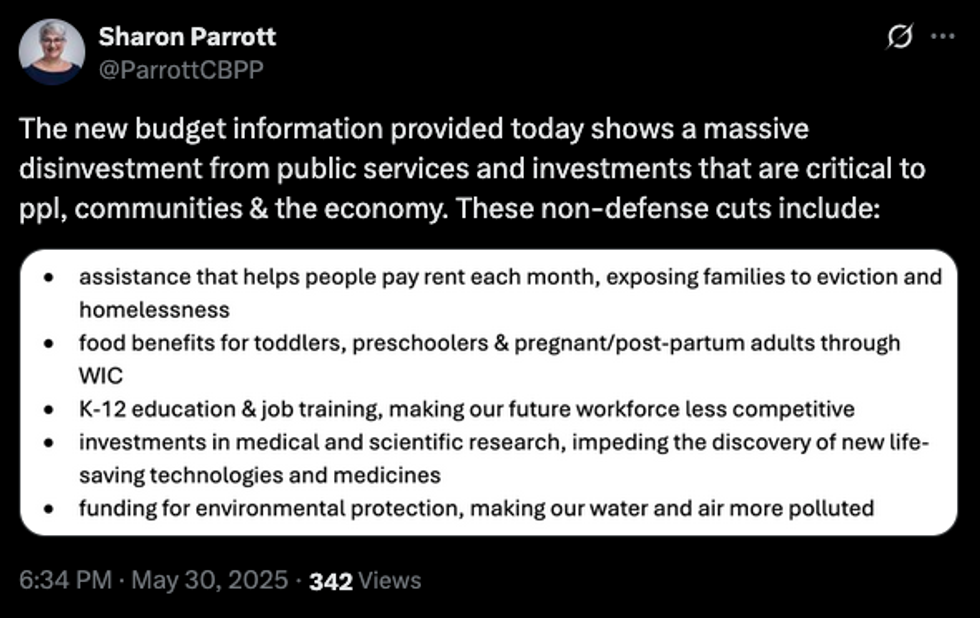
However, slashed funding for key programs is clear throughout the documents released by the administration, with cuts to healthcare initiatives, public education, student loan support, environmental and labor protections, food aid, and housing assistance for low-income Americans among the most prominent.
According to the New York Times:
The updated budget reiterated the president's pursuit of deep reductions for nearly every major federal agency, reserving its steepest cuts for foreign aid, medical research, tax enforcement and a slew of anti-poverty programs, including rental assistance. The White House restated its plan to seek a $33 billion cut at the Department of Housing and Urban Development, for example, and another $33 billion reduction at the Department of Health and Human Services.
Targeting the Education Department, the president again put forward a roughly $12 billion cut, seeking to eliminate dozens of programs while unveiling new changes to Pell grants, which help low-income students pay for college.
Sharon Parrott, president of the left-leaning Center on Budget and Policy Priorities (CBPP), said the updated request "confirms once again that the president continues to break his promises to lower families' costs and help people who are struggling to make ends meet."
Parrott emphasized that the updated Trump budget request cannot be separated from what the GOP are trying to push through Congress in their spending package.
"To get the full picture of the administration's harmful agenda requires including the Trump-backed bill under consideration in Congress, which gives massive tax cuts to the wealthy, partly paid for by raising costs and taking away health coverage and food assistance from millions," explained Parrott. "Policymakers of both parties in Congress need to see this budget, and this entire agenda, for what it is—an irresponsible tax giveaway at the expense of everyday families and investments in our future—and plan a better course for the country."
An estimate by the nonpartisan Congressional Budget Office, which examined an earlier version of Trump's budget, forecasted that the plan would add over $2 trillion to the federal debt over the next decade.
Rep. Brendan F. Boyle (D-Pa.), ranking member of the House Budget Committee, decried the budget request update as a "half-baked proposal" which only serves to prove Trump's determination "to make life harder for struggling families" nationwide.
" Republicans are already pushing a bill that would inflict the largest losses of health care coverage and food assistance in our nation's history," added Boyle. "This funding request goes even further, decimating critical public- and mental-health programs and slashing housing aid, home-energy support, and job-training grants. Republicans will claim these cuts are about fiscal responsibility, yet they're happy to add trillions to the deficit to shower billionaires with tax breaks."
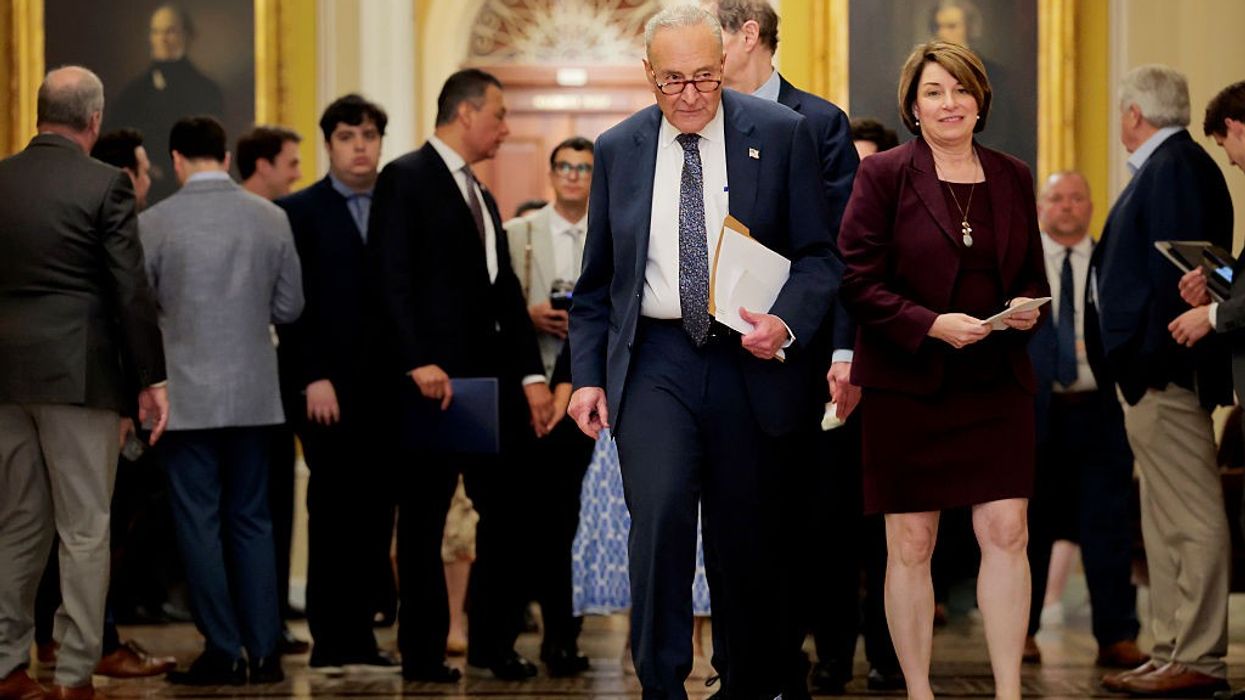
For his part, Senate Minority Leader Chuck Schumer (D-N.Y.), vowed committed opposition from his party in the upper chamber.
"Trump's radical 2026 budget would be a gut punch to working families and a windfall for billionaires—raising prices for American families while hollowing out the programs critical to families across the country," Schumer said on Saturday. "Senate Democrats will never let it become law."
"Stealing money away from life-sustaining programs to fund war, weapons, and death should be an immediate nonstarter for every member of Congress," said one advocate and author of a new report.
With the House GOP's Medicaid-slashing reconciliation bill now headed to the Republican-controlled Senate, a trio of groups on Thursday highlighted that the tens of billions the reconciliation legislation allocates for the Pentagon and the Trump administration's immigration crackdown efforts could instead be used to protect and expand health insurance access for millions.
House Republicans' reconciliation bill includes $163 billion for the Pentagon and for mass deportation and border-related expenses that U.S. President Donald Trump has requested be allocated in fiscal year 2026. Those dollars could instead go toward providing 31 million adults with Medicaid, or providing 71 million people with Supplemental Nutrition Assistance Program (SNAP) benefits, according to a report titled Trading Life for Death: What the Reconciliation Bill Puts at Stake in Your State.
The report is a joint publication from the progressive watchdog Public Citizen, the progressive policy research organization the Institute for Policy Studies (IPS), and the National Priorities Project (NPP), which is a federal budget research organization and a project of IPS.
In a statement on Thursday, Lindsay Koshgarian, program director at NPP and one of the authors of the report, framed the reconciliation package as a "direct redistribution of resources from struggling Americans to the Pentagon and militarization."
The reconciliation bill, which passed 215-214 in the House of Representatives on Thursday, includes tax cuts tilted toward the wealthy that would add $3.8 trillion to the national debt, a roll back in clean energy tax credits, sweeping cuts to Medicaid and SNAP to the tune of nearly $1 trillion, and an increase in the maximum payment available through the child tax credit until 2028—though the bill is designed so that it would block an estimated 4.5 million children from accessing the credit, according to the Center for Migration Studies.
Under the legislation, an estimated 8.6 million people would lose Medicaid coverage over the next 10 years, according to a May 11 analysis from the nonpartisan Congressional Budget Office. The Center on Budget and Policy Priorities estimates that 11 million people would be at risk of losing at least some of their food assistance under the changes to SNAP.
Millions more could lose their healthcare due to Obamacare decisions/provisions.
Per the report, the militarized spending increases for 2026 would more than enough to fund Medicaid for the millions who are at risk of losing their health insurance under the bill, and the millions at risk of losing their SNAP benefits.
In addition to highlighting that the bill includes a huge cash injection for the U.S. Department of Defense, the report argues the Pentagon does not need more money. "The United States is already the world's largest military spender, allocating more taxpayer dollars to the Pentagon than the next nine countries combined," according to the report, which also notes that the department has never passed an audit.
The three groups also quantify the tradeoffs between defense spending and healthcare at a more granular level.
For example, the bill includes a $25 billion initial investment in Trump's "Golden Dome" project, a multilayered defense system that Trump has said will be capable of "intercepting missiles even if they are launched from other sides of the world and even if they are launched from space," according to CBS News.
In just one congressional district, Tennessee's 2nd District, taxpayer funds going toward the investment in the Golden Dome could instead be used to put 12,310 people on Medicaid, according to the report. In Texas' 21st District, taxpayers' funds redirected to support the Golden Dome could provide Medicaid to 13,589 people.
"If implemented, this budget would rip the rug out from under everyday Americans relying on Medicaid and SNAP to survive, just to further enrich Pentagon contractors," said Savannah Wooten, People Over Pentagon advocate at Public Citizen and report co-author, in a statement on Thursday. "Stealing money away from life-sustaining programs to fund war, weapons, and death should be an immediate nonstarter for every member of Congress."
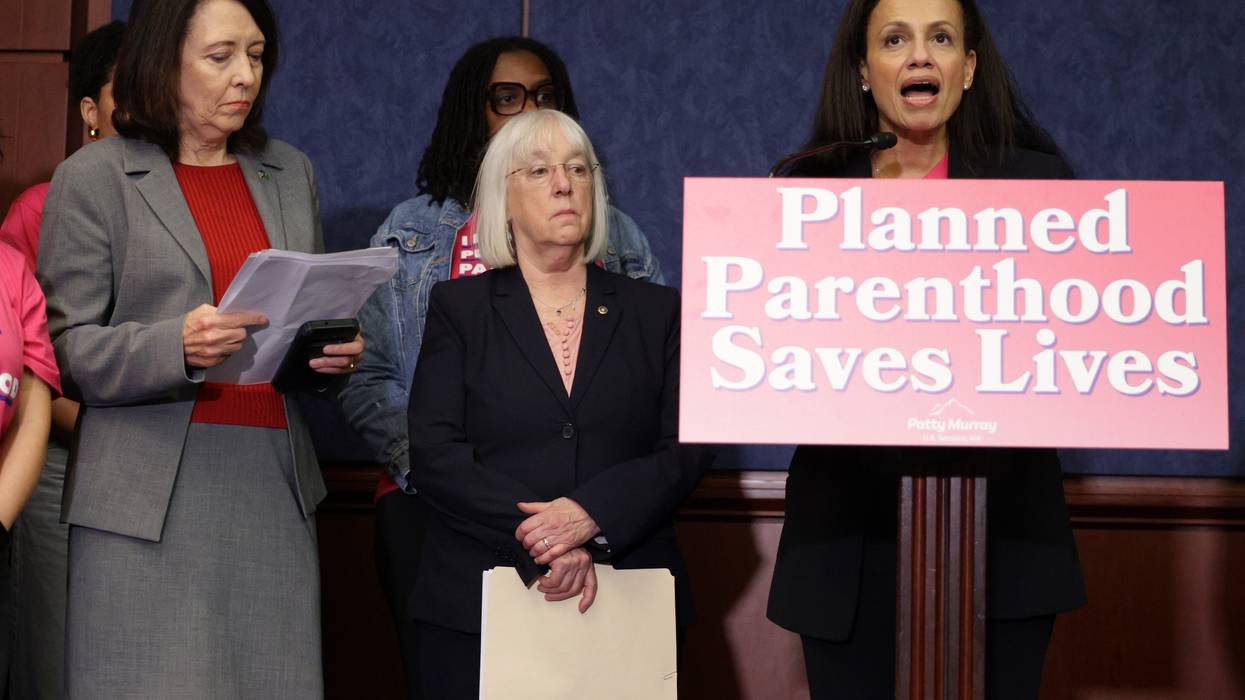
"This is nothing more than an attempt to end abortion in the United States, and they are willing to take away birth control, cancer screenings, STI testing and treatment and more to do it," said the head of the reproductive healthcare group.
As the U.S. House Energy and Commerce Committee on Wednesday voted along party lines to advance legislation that includes a measure which seeks to cut Medicaid funding for the abortion and healthcare provider Planned Parenthood, reproductive rights defenders are sounding the alarm on the impacts that such a move would have.
"This provision is about punishing Planned Parenthood health centers for providing abortion care, and threatening access to affordable birth control, wellness checkups, and cancer screenings for millions of people across the country in the process," said Alexis McGill Johnson, the president and CEO of Planned Parenthood, in a statement on Wednesday.
"It is indefensible how far abortion opponents, who claim to care about women and families, are willing to go to shut down health centers and line the pockets of billionaires and big corporations," McGill added.
The measure is part of a sweeping GOP spending and tax cuts bill currently making its way through Congress. The House Energy and Commerce Committee's portion of the legislation also includes cuts to Medicaid and takes back unspent funds from Inflation Reduction Act grant programs.
The outlet NOTUS reported Wednesday that the measure pertaining to Planned Parenthood would bar the organization from receiving federal funds, even via Medicaid payments. According to the 19th, the language of the measure does not specifically call out Planned Parenthood, but is crafted to apply to the organization.
The proposed cuts would impact Planned Parenthood's ability to offer services like birth control, cancer screenings, and pap smears. Medicaid is already barred from providing funds for abortion care, which only account for a small percentage of the services that Planned Parenthood's affiliates provide.
"It's no surprise that a goal of this reconciliation bill is to force Planned Parenthood health centers to shut down. Republicans have been trying—unsuccessfully—to shut down Planned Parenthood for decades," said Mini Timmaraju, president and CEO of Reproductive Freedom for All, an abortion rights and reproductive freedom group. "Plain and simple, this legislation will mean millions of people will have nowhere to go for basic health care."
"The sheer cruelty and enormity of their actions, and the harm they will inflict on the very people they were elected to represent, is unconscionable," Timmaraju continued.
Rachana Desai Martin, chief U.S. program officer at the Center for Reproductive Rights, on Tuesday denounced the fact that Trump has already frozen millions in funding for Planned Parenthood through the Title X program.
Planned Parenthood has said freezing that funding "effectively blocks people from getting birth control, STI testing and treatment, and lifesaving cancer screenings."
Speaking Tuesday, before the committee advanced its portion of the bill, Martin said that the Center for Reproductive Rights stands with Planned Parenthood and all reproductive healthcare providers and that "these baseless, politically motivated attacks against reproductive health care providers must stop."
A leaked preliminary estimate from the nonpartisan Congressional Budget Office (CBO) reported on by Mother Jones this week estimates that the measure aimed at Planned Parenthood would cost taxpayers $300 million over the next ten years. According to the outlet, spokespeople at CBO did not offer comment on how they came to that $300 million figure.
"Any additional money pumped into this system is likely to be wasted," said one analyst. "The only beneficiaries will be weapons contractors."
Congressional Republicans on Sunday released legislation that would pump an additional $150 billion into the Pentagon—a morass of waste and profiteering—over the next decade as part of a sweeping reconciliation package that's also expected to include deep cuts to Medicaid and tax breaks for the wealthy.
The House Armed Services Committee, a major target of weapons industry lobbying, unveiled the plan for what it called "a historic investment of $150 billion to restore America's military capabilities and strengthen our national defense." The panel said the legislation was developed "in close conjunction" with Senate Republicans and President Donald Trump, who is separately pursuing a $1 trillion U.S. military budget for the next fiscal year.
The legislation would direct the new Pentagon funding toward a number of initiatives backed by the president, including a "Golden Dome" missile defense system that experts have called a massive boondoggle that could benefit Elon Musk.
The bill, which is scheduled for a committee markup on Tuesday, also includes $4.5 billion to speed production of the B-21 stealth bomber, a Northrop Grumman-made aircraft capable of delivering nuclear weapons.
William Hartung, a senior research fellow at the Quincy Institute for Responsible Statecraft, said Sunday that the GOP's proposed Pentagon spending increase is "a glaring example of misplaced priorities."
"This is no time to throw more money at a weapons manufacturing base that is already maxed out," said Hartung. "Any additional money pumped into this system is likely to be wasted. The only beneficiaries will be weapons contractors, who will be glad to accept the new funds whether they can use them effectively or not."
"Given that the Pentagon and its contractor network are having a hard time spending existing funds well," Hartung added, "Congress should think twice before sending more taxpayer money their way."
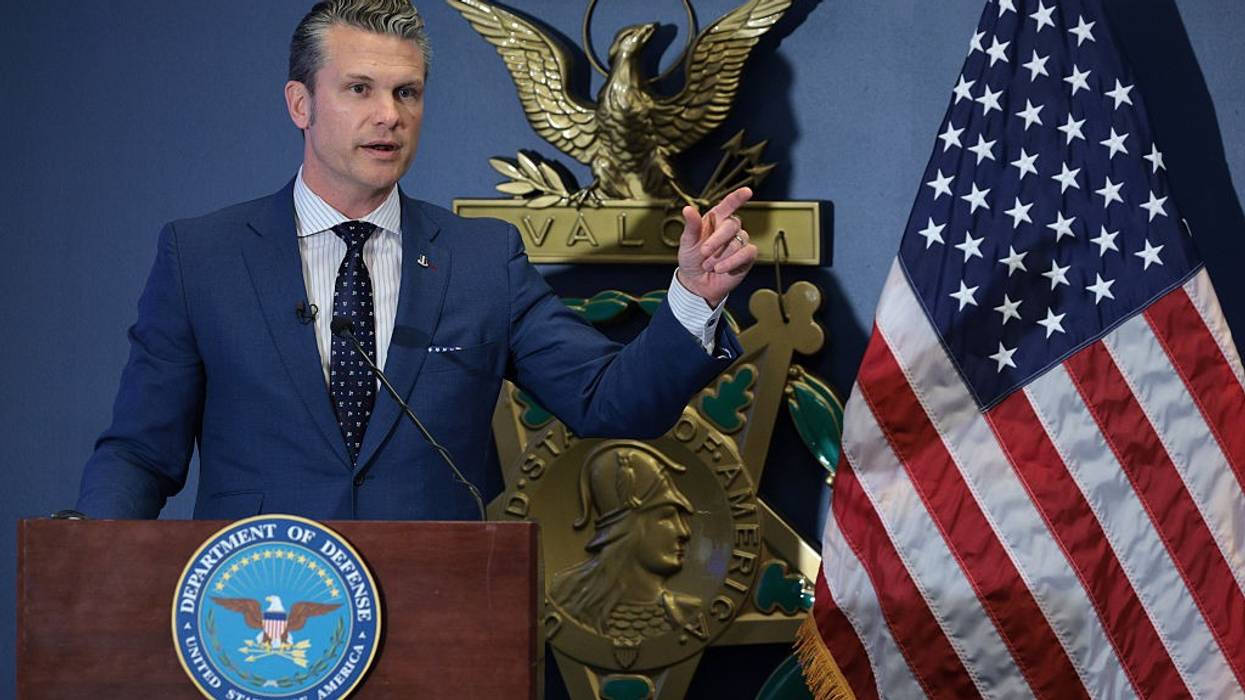
The Republican push for additional Pentagon funding comes as Defense Secretary Pete Hegseth is facing calls to resign for sharing plans for a U.S. military attack on Yemen in at least two private group chats.
Earlier this month, as Common Dreams reported, Hegseth endorsed Trump's push for a $1 trillion U.S. military budget, which would mark the highest level of spending since the Second World War.
"Trump and Senate Republicans are showing who they truly care about as they slash programs for families to line the pockets of their billionaire friends," said Democratic Sen. Jeff Merkley.
Senate Republicans approved a budget resolution early Friday after rejecting a flurry of Democratic amendments aimed at preventing cuts to Medicaid, school meal initiatives, and other programs.
Republicans in the House and Senate are moving in the direction of legislation that would slash critical programs to help fund trillions of dollars in tax cuts, which would primarily benefit the wealthiest Americans. Both chambers' resolutions would also increase the U.S. military budget, which is approaching $1 trillion per year.
President Donald Trump has endorsed the House budget resolution, which is broader than the measure the Republican-controlled Senate passed in a mostly party-line vote on Friday morning, following a marathon "vote-a-rama." The two chambers must ultimately reconcile their differences to advance Trump's legislative agenda.
The Center on Budget and Policy Priorities noted after the Senate GOP unveiled its resolution earlier this month that "the budget framework lays a path for a future budget bill that could pay for increased military and homeland security spending with harmful policies that take food assistance and health coverage away from people who struggle to afford the basics and make college more expensive."
Sen. Jeff Merkley (D-Ore.), the top Democrat on the Senate Budget Committee, said following the upper chamber's passage of the GOP resolution that "families lose and billionaires win."
"That's the heart of the Republicans' budget resolution," said Merkley. "This Republican budget proposes $1 trillion cuts to programs for working families by the end of this fiscal year. The only way to cut $1 trillion by September 30 is to gut entire agencies and all of their services, which families rely on. Trump and Senate Republicans are showing who they truly care about as they slash programs for families to line the pockets of their billionaire friends. Trump's tax plan is the Great Betrayal of working families."
"The American people are sick and tired of this bait-and-switch of Republicans campaigning on fiscal responsibility and then governing by driving up deficits and debt at the expense of critical programs," the senator added.
The Republican budget plan is simple: billionaires win, families lose. Republicans say it's about border security, but it's not. They want to rip away support for working Americans, gut critical programs like Medicaid, and balloon the deficit.
— Jeff Merkley (@jeff-merkley.bsky.social) February 19, 2025 at 10:38 PM
Among the Democratic amendments Senate Republicans rejected during the all-night voting session were proposals "against legislation that would cut funding from the school lunch or school breakfast programs," "against legislation that would reduce Medicare and Medicaid benefits for Americans," "to prevent tax cuts for the wealthy if a single dollar of Medicaid funding is cut," and halt the Trump administration's attack on National Institutes of Health funding.
"The Trump administration is working to destroy medical research as we know it with an illegal, unrealistic cap on the NIH reimbursement rate for indirect costs," Sen. Patty Murray (D-Wash.), the sponsor of the latter amendment, said Friday. "That would mean: cancer researchers laid off, lifesaving clinical trials cancelled, and more. It also violates bipartisan appropriations law. I should know, I helped author that provision. And Republicans should know—they worked with me to pass it."
The Senate votes came after Trump endorsed a House GOP budget resolution that seeks to combine elements president's agenda—including tax cuts for the wealthy and border militarization—into one sprawling, filibuster-proof reconciliation bill.
Trump declared Wednesday that the House resolution, which calls for $880 billion in cuts to Medicaid over the next 10 years, "implements my FULL America First Agenda."