

SUBSCRIBE TO OUR FREE NEWSLETTER
Daily news & progressive opinion—funded by the people, not the corporations—delivered straight to your inbox.
5
#000000
#FFFFFF
To donate by check, phone, or other method, see our More Ways to Give page.
Daily news & progressive opinion—funded by the people, not the corporations—delivered straight to your inbox.
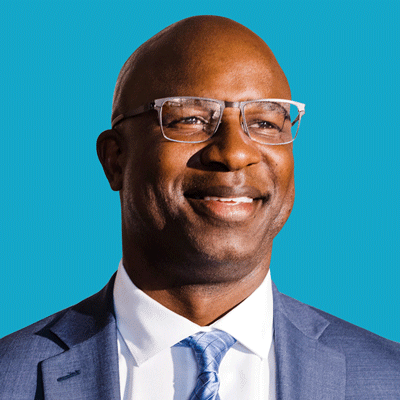
Today, Congressman Jamaal Bowman, Ed.D. (NY-16) unveiled the Emergency Price Stabilization Act, which will launch a whole-of-government effort to address America's cost-of-living crisis.
Today, Congressman Jamaal Bowman, Ed.D. (NY-16) unveiled the Emergency Price Stabilization Act, which will launch a whole-of-government effort to address America's cost-of-living crisis.
"In my district and across the country, people simply cannot afford to live," said Congressman Jamaal Bowman, Ed.D (NY-16). "From impossible rents and utility bills to soaring costs for food, health care, and other necessities of life, people in America are being crushed by the burden of high prices and wages that can't keep pace. While our government is taking several important steps in response, we must move with greater speed and agility to protect our constituents from price shocks and corporate profiteering. The Emergency Price Stabilization Act will do exactly that - first, by getting to the bottom of what is driving price increases in key sectors, and second, by designing targeted controls and regulations to rein in those prices. At every step of the way, we will mobilize and engage the public in the process. We cannot simply step back and allow the Federal Reserve, which hiked interest rates again last week, to address inflation on the backs of everyday people. That approach means throwing people out of work and risking a recession. Here is the question we must ask: do we have the resources and skills to reach our full productive capacity, make sure everyone in this country has a good job, and manage our economy in the interests of all people? I believe the answer is yes. But we'll need a new economic playbook to get there, and passing my Emergency Price Stabilization Act would be a major step in the right direction."
The Emergency Price Stabilization Act will expand the existing White House Supply Chains Disruption Task Force, creating a new Sub-Task Force that is empowered to:
Click here to read statements in support of the Emergency Price Stabilization Act from a range of individual economists and experts, including James K. Galbraith, Robert Reich, Isabella Weber, and Mark Paul.
"Though Wall Street tycoons would have us believe otherwise, retail prices for essential goods like food and energy are not set by simple supply and demand. They are egregiously manipulated by corporate giants that have achieved monopoly-level dominance over their markets," said Food & Water Watch Executive Director Wenonah Hauter. "Setting reasonable maximum prices for everyday needs would reduce out-of-pocket costs to consumers while curbing excessive profiteering by opportunistic corporations. This common-sense legislation is needed more than ever."
"Corporations are reaping record profits while working people's wages are falling behind inflation," said AFL-CIO Government Affairs Director William Samuel. "This bill will ensure that we have every tool available to help working people cope with rising prices."
"Even before the pandemic, millions of America's lowest-income and most marginalized households were struggling to keep roofs over their heads, always just one financial shock away from falling behind on rent and being threatened with eviction, and in the worst cases, homelessness," stated Diane Yentel, president and CEO of the National Low Income Housing Coalition. "Today, these same households are facing new threats with historic levels of inflation and skyrocketing rents. Just as some states have in place laws to prevent price or rent gouging after natural disasters, Congress should consider similar protections like those included in the Emergency Price Stabilization Act for renters coming out of a global pandemic."
"The rent is too damn high, and it is past time for the federal government to regulate the private rental market by setting price controls," said Tara Raghuveer, Homes Guarantee Campaign Director, People's Action. "Rent inflation is a national emergency, both a crisis for millions of tenants who can't afford their home, and a threat to our economic security as rent drives core inflation. Corporate landlords are using inflation as an excuse to raise rents, and they are raising rents beyond inflation; they are rent gouging. Congress and the President must act immediately to regulate rents, to curb inflation and to correct the imbalance of power between tenants and their landlords. This bill is a critical step in the right direction."
"It's time to take emergency pricing power out of the hands of corporate profiteers and put it in the hands of publicly accountable officials," said Matt Kent, Competition Policy Advocate at Public Citizen. "The Emergency Price Stabilization Act gives the federal government the tools necessary to step in on behalf of consumers when prices soar due to C-suite profit seeking during successive global emergencies. Crucially, the bill provides a targeted policy path for combating inflation without hiking interest rates, putting people out of work and tilting the economy into recession. "
"Rising costs are squeezing working people across the country, and politicians and policy makers keep insisting that the only way to stop it is to cut jobs and take money out of people's pockets by raising interest rates," said Natalia Salgado, Working Families Party Director of Federal Affairs. "Rep. Bowman's bill would give our government more and better options for fighting inflation by going directly at the prices set by firms with concentrated economic power. Working families need the government on our side and this is one important way to put it there."
Original co-sponsors of the legislation include: Reps. Cori Bush (D-MO), Steve Cohen (D-TN), Danny K. Davis (D-IL), Jesus G. "Chuy" Garcia (D-IL), Eleanor Holmes Norton (D-D.C.), Hank Johnson (D-GA), Mondaire Jones (D-NY), Barbara Lee (D-CA), Jerrold Nadler (D-N.Y.), Alexandria Ocasio-Cortez (D-N.Y.), Donald M. Payne, Jr. (D-NJ), Ayanna Pressley (D-MA), Jan Schakowsky (D-IL), Mark Takano (D-CA), Rashida Tlaib (D-MI), and Bonnie Watson Coleman (D-N.J.)
Organizations endorsing include: AFL-CIO, SEIU, International Brotherhood of Teamsters, National Nurses United, Food & Water Watch, Public Citizen, Indivisible, MoveOn, 1199 SEIU, Jobs with Justice, United for Respect, Community Change Action, Homes Guarantee Campaign, National Low Income Housing Coalition, National Housing Law Project, Housing Justice for All, Action Center on Race & the Economy (ACRE), NY PIRG, New York Communities for Change, Working Families Party, Fight Corporate Monopolies, Center for Popular Democracy Action, People's Action, Center for Biological Diversity, Friends of the Earth US, Sunrise Movement, Social Security Works, Campaign for NY Health, Unrig our Economy NYC, National Employment Law Project, Labor Network for Sustainability, Taproot Earth, Democracy Collaborative, Sane Energy Project, Climate and Community Project, and New York Lawyers for the Public Interest.
Click here to read a summary of the bill.
Click here to read the full text of the bill.
Jamaal Anthony Bowman is an American politician and educator serving as the U.S. representative for New York's 16th congressional district since 2021.
(202) 225-2464
"I think a lot of people expected that maybe the war would wrap up and the prices would go down some... then it just skyrocketed," said one farmer of the cost of diesel.
Farmers across the US are speaking up about their struggles as President Donald Trump's illegal war with Iran and trade war with Canada are taking a hammer to their finances.
In an interview with CBS News published Thursday, North Carolina farmer Matt Bell revealed that "I have never worried and stressed like I have the last year," thanks to the soaring costs of fuel, fertilizer, and farm equipment, all of which have gotten more expensive thanks to Trump's policies.
"The fertilizer, fuel, chemicals, seed, parts—you know, the whole nine yards," said Bell, "everything that we touch has gone up."
"We are fighting for survival."
Matt Bell, 52, has been farming for more than half his life in central North Carolina.
He grows soybeans, corn and wheat and raises beef cattle on more than 1,000 acres. But Bell, who voted for President Trump, says soaring prices for fuel,… pic.twitter.com/9ELYXkJywt
— CBS News (@CBSNews) September 18, 2026
Bell, who voted for Trump, said he feels "misled" and "strung along" when it comes to the president's rationale for attacking Iran without congressional authorization in February.
The North Carolina farmer said his costs for diesel fuel have doubled in the last year, driven in large part by Trump's war.
According to data released Friday by the American Automobile Association, the average price of diesel in the US now stands at a record-high $6.45 per gallon, a 74% increase of the average price of diesel one year ago.
"We are fighting for survival," Bell emphasized, "and we're running out of options."
Bell is far from the only farmer struggling.
Theresa Sisung, commodity and regulatory relations manager at the Michigan Farm Bureau, said in an interview with Up North Live that farmers in the state are about to "use a ton of fuel on their farms" due to the start of harvest season, making the record-high diesel prices particularly inconvenient.
"We have seen a slight increase in farm bankruptcies across the nation," said Sisung. "We are seeing those farms that are more stressed. We've had some negative margins for farms for a few years now, so there is certainly stress out in the countryside."
Michigan farmer Russell Ketchum told Up North Live that the high diesel prices have made what was already a challenging year and farming even more difficult.
"We started out the year with a lot of cold weather, a lot of freeze damage," Ketchum explained, "so we've been working on short crops all year and then the diesel fuel prices and the gas prices all on top of that, they made everything challenging to say the least."
North Dakota farmer Chris McDonald told the North Dakota Monitor in an interview published Wednesday that diesel prices have climbed so high that they "can erase your profit."
McDonald also tied the increase in diesel costs directly to Trump's war, which the president said would only last a matter of weeks but has since dragged on for more than six months.
"I think a lot of people expected that maybe the war would wrap up," said McDonald, "and the prices would go down some, and they never really did drop very much. Then it just skyrocketed.”
The Iran War isn't the only Trump policy that's hurting US agriculture and bringing pain to US farming families, as a Tuesday NPR report highlighted the impact that the president's trade war with Canada is having on farmers in Montana.
As noted by NPR, Canada is Montana's biggest trading partner, as it accounts for "$1 billion in cross-border sales." But the tariffs imposed by Trump, and the counter-tariffs imposed by Canada, have both harmed Montana farmers' sales and made the equipment they buy more expensive.
Steve Sheffels, a Montana wheat farmer, told NPR that he'd like to buy "a new drill" and some "grain bins that come out of Canada," but now fears that "I won't be able to afford them" thanks to the trade war.
Sheffels, whose wife is Canadian, also told NPR that he was not happy to see America's relationship with its largest trading partner deteriorate throughout Trump's second term.
"You don't treat your neighbors like this," he said.

"It’s time to stop making taxpayers subsidize luxury private jet travel and use our resources to green other industries," said one of the report's authors.
A handful of the world's wealthiest people are traveling aboard some of the planet's most polluting vehicles while receiving substantial public subsidies, according to a new report documenting how taxpayers and commercial airline passengers are funding billionaires' private jet lifestyles due to corporate lobbying, tax breaks, and other policies.
The Institute for Policy Studies' (IPS) "High Flyers 2026: The High Cost of Private Jet Excess," released on Friday, notes that only about 256,000 people around the world—roughly 0.003% of the global population—fly on private jets. Yet these ultrawealthy travelers account for a disproportionate share of aviation activity while paying a fraction of the taxes that fund air traffic infrastructure.
According to the report—which is co-authored by Chuck Collins, Omar Ocampo, Kalena Thomhave, and Emily Wagner—private jets and charter services account for roughly 16% of flight operations handled by the US Federal Aviation Administration (FAA), while noncommercial private jets account for about 7% of airspace activity.
NEW: Private jet travel — the most ecologically destructive form of transportation — is increasing among the wealthiest 0.003% of people. Taxpayers and commercial flyers are subsidizing it.It's time to tax this reckless consumption. REPORT:
[image or embed]
— Institute for Policy Studies (@ips-dc.org) September 18, 2026 at 6:05 AM
However, private jets contribute less than 0.6% of the taxes flowing into the Airport and Airway Trust Fund, which helps finance FAA operations.
"We all pay for the harms of private jet excess," the report states. "US taxpayers and commercial air travelers subsidize the luxury private jet transportation sector. Private jets fail to pay their fair share of their use of airspace and the costs of their carbon pollution, shifting the burden to everyone else."
The disparity is particularly stark when the climate consequences of private aviation are taken into account. IPS found that a passenger traveling by private jet is responsible for roughly 10 to 14 times the emissions of a passenger on a commercial airline and around 50 times those of a passenger traveling the same route by rail. On some low-carbon rail systems, the disparity can exceed 200-fold.
"Private jets are the super-polluters. On a warming planet, private jet operations are indefensible," the report's authors wrote. "Private jets account for a small sliver of aviation activity, but they are the most polluting form of transport and represent the fastest-growing segment of aviation emissions."
The report also found that at least half of private jet operations are for recreational, vacation, and personal luxury travel.
"The ultrarich and greedy corporations are private jet-setting at the expense of the rest of us," Collins told The Guardian on Friday. "The rest of us should not have to pay for the luxury excess of the private jet billionaire class."
The report comes amid increasing criticism of tax policies that have made private aircraft particularly lucrative investments for wealthy Americans. Last year, US President Donald Trump signed legislation permanently implementing 100% bonus depreciation for qualifying business assets, allowing full tax deductions for certain purchases—including private aircraft—in the year they are acquired.
In a May opinion piece published by Common Dreams, Collins and Wagner slammed what they described as "a massive tax break for billionaires and centimillionaires that use the most polluting form of transportation on the planet."
A corporation that buys a $50 million private jet could potentially deduct the entire purchase price from its taxes in the year of acquisition, meaning "ordinary taxpayers pick up the tab for the private jet industry and billionaire high flyers," according to Collins and Wagner.
The Trump administration has also recently declined to close another tax loophole benefiting wealthy private jet users. A proposal by Democratic senators would have changed the rules governing the so-called Standard Industry Fare Level method for calculating the taxable value of personal flights aboard corporate aircraft. The lawmakers argued that the system allows wealthy executives to substantially undervalue their personal use nof company jets.
"While working families struggle to afford groceries, housing, and gas," Sen. Chris Van Hollen (D-Md.) said earlier this month, the Trump administration "focuses on tax breaks for billionaires—including tax breaks for private jets. What a disgrace."
The private jet industry has also benefited from efforts to shield aircraft owners from scrutiny. Earlier this year, House Republicans sought to restrict government use of flight tracking data that can help identify privately owned aircraft for taxation purposes.
“Oh look—Republicans helping private-jet billionaires avoid paying taxes," Sen. Sheldon Whitehouse (D-RI) quipped in June. "If only they worked that hard for consumers.”
IPS noted the private aviation industry's substantial political influence. The National Business Aviation Association spent approximately $2 million lobbying for the sector in 2025, including on policies concerning tax breaks and private flight secrecy.
The report's authors list policy changes they say would help "decarbonize private jet users' indefensible behavior."
"A luxury tax of 10% on used jets and 5% on new jets could have raised more than $3 billion in 2025, funds that could be invested in sustainable ground transportation," they asserted.
"Congress should strip a private jet tax avoidance provision from the pending air traffic safety legislation, the ALERT Act," the authors argued.
The report also calls for:
“Since we first released our analysis on the costs of private jet travel to taxpayers and the planet in 2023, we’ve seen a shocking and irresponsible rise in the use of private jet travel,” Ocampo said in a statement.
“Unfortunately, the private jet lobby has worked hard to lower the tax obligations of the ultrawealthy," he added. "Meanwhile, the aviation industry pushes false solutions on the climate crisis. It’s time to stop making taxpayers subsidize luxury private jet travel and use our resources to green other industries.”
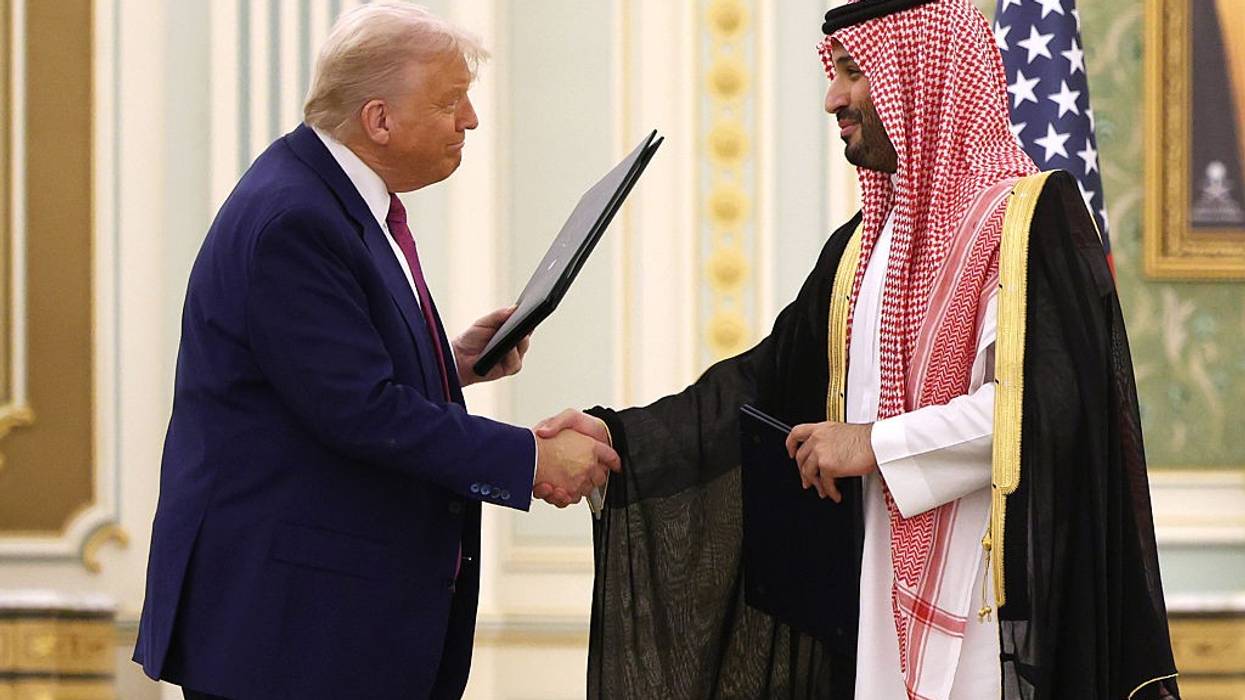
The effort comes as senators also sound the alarm about a possible nuclear energy agreement and the administration continues to greenlight arms sales to the kingdom.
A trio of progressive US senators this week introduced legislation to block a $5 billion conventional weapons sale to Saudi Arabia while also pushing for the release of more details about President Donald Trump's proposed nuclear cooperation agreement with the Middle Eastern kingdom.
"The United States must not send thousands of conventional weapons to Saudi Arabia or allow it to develop a nuclear program," said Sen. Ed Markey (D-Mass.) in a Thursday statement—a day after he partnered with Sens. Jeff Merkley (D-Ore.) and Bernie Sanders (I-Vt.) to introduce the joint resolution of disapproval, which was referred to the Senate Foreign Relations Committee.
"I am deeply concerned by the kingdom's human rights abuses, the security of the region as the war in Iran rages on, and the proxy war that is escalating between Iran and Saudi Arabia in Yemen," Markey explained. "Further escalation in the Saudi-Iran proxy war will worsen an already dire humanitarian catastrophe in Yemen and risks setting off a nuclear arms race between Iran and Saudi Arabia."
The resolution targets a sale approved by the US State Department on September 4 that includes over 10,000 joint direct attack munition (JDAM) guidance kits. As Breaking Defense detailed, "The prospective transaction includes a similar number of dumb bombs—split almost evenly between 500 lb. and 2,000 lb. munitions—which, when equipped with a JDAM, can be used as a precision weapon."
The bill does not apply to the other possible sale to Saudi Arabia endorsed by the department that same day—$750 million for AGT-1500 engines and related equipment—or the $24.3 billion deal for F-35 Lightning II fighter jets, which the Trump administration greenlit Thursday, after the resolution was introduced.
The latest approval "comes nearly two months after Saudi Defense Minister Khalid bin Salman traveled to Washington to lobby senior Trump administration officials on the sale, with Riyadh hoping to advance the deal ahead of the midterms," Semafor noted. The upcoming US elections could lead to Trump's Republican Party losing control of Congress.
The warplanes sale could also face pushback from Congress. According to Politico, Rep. Raja Krishnamoorthi (D-Ill.), who sits on the House Intelligence Committee, warned that "it could put the crown jewels of American military technology within reach of the Chinese Communist Party."
US approves $24.3 billion sale of 48 F-35 stealth warplanes to Saudi Arabia.US intelligence analysts have raised the possibility that China could acquire F-35 technology through its partnerships with Saudi. Israel had been the only country in the Middle East to operate the jetsu.afp.com/SjRn
[image or embed]
— AFP News Agency (@en.afp.com) September 17, 2026 at 9:41 PM
In addition to unveiling their resolution about the JDAMs and bombs on Wednesday, Markey and Merkley, co-chairs of the bicameral Nuclear Weapons and Arms Control Working Group, led a bipartisan group of senators—including Sanders—in urging a pair of Trump Cabinet members to declassify two side letters associated with the administration's proposed nuclear deal.
The administration submitted the pending 30-year agreement—which would allow US companies to share nuclear power technology with the kingdom—to Congress after it was signed by US Energy Secretary Chris Wright and Saudi Energy Minister Prince Abdulaziz bin Salman in July.
Under Section 123 of the Atomic Energy Act, Congress has 90 days of continuous session to review the deal and either move to block it or let it take effect. The senators' new letter to Wright and Secretary of State Marco Rubio notes that "in previous 123 agreements, the executive branch publicly released the agreement along with side letters and related documents."
"Access to the full text is required for the Senate and the public to have a clear understanding of the commitments being made on the nation's behalf and those being made by Saudi Arabia to the United States," the senators argued. "Their public release would also allow civil society, independent experts, and other affected stakeholders to scrutinize the deal."
"Transparency and open debate are cornerstones of our democracy," they emphasized. "Congress and the American public must have a meaningful opportunity to review and debate the key components of the US-Saudi nuclear deal before it potentially enters into force. To that end, we call on you to declassify and release the two side letters without delay."
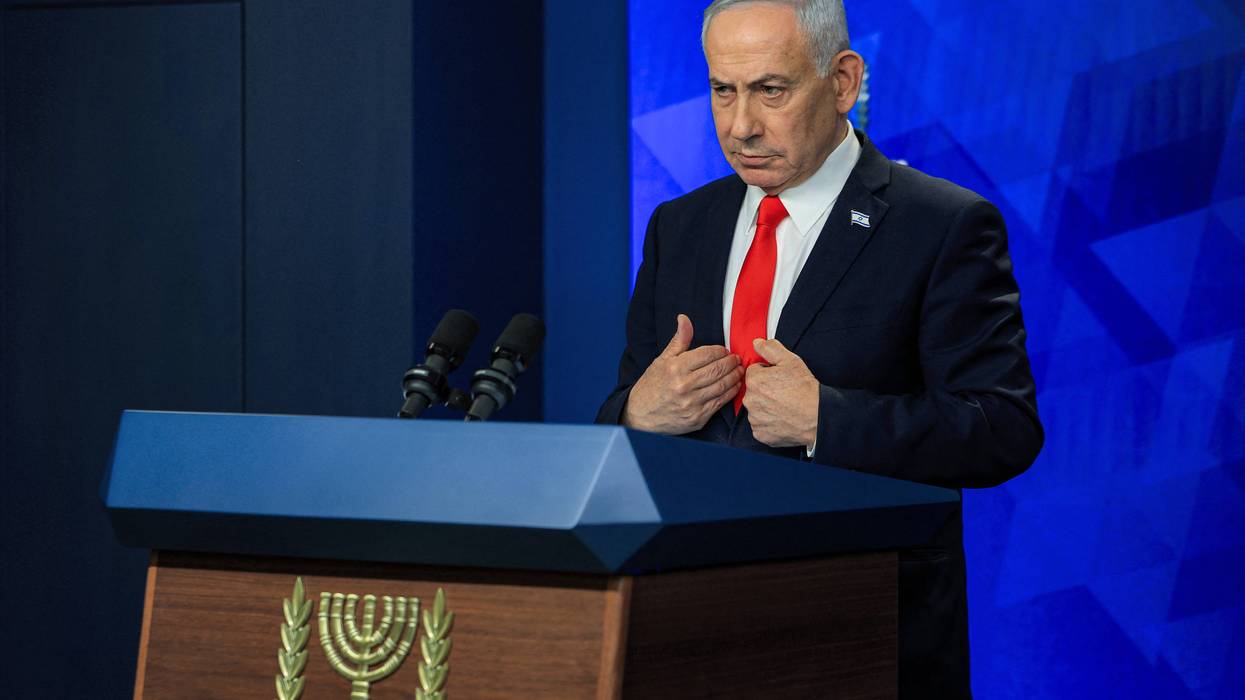
A director at Amnesty International said the US had made clear it was seeking to “punish the state of Palestine for pursuing international justice and accountability at international institutions.”
While the Trump administration bars Palestinian Authority President Mahmoud Abbas and his delegation from entering the US to attend the United Nations General Assembly for the second year in a row, it is welcoming Israeli Prime Minister Benjamin Netanyahu, who is accused of war crimes and crimes against humanity in Gaza by the International Criminal Court.
In November 2024, the ICC found “reasonable grounds to believe” that Netanyahu bore criminal responsibility for the use of starvation as a method of warfare and the crimes of murder, persecution, and other inhumane acts, including intentionally targeting civilians.
Since October 2023, Israel's assault on Gaza has killed at least 73,000 Palestinians, including more than 21,000 children, while reducing much of the landscape to rubble and leaving most of the population displaced. Meanwhile, Israel's restrictions on food, water, medicine, electricity, and other essentials have created conditions of severe hunger, dehydration, the collapse of medical care, and civilian deaths.
President Donald Trump has previously assured Netanyahu that he would not be arrested while visiting New York on the basis of the ICC warrant. The US and Israel are not parties to the Rome Statute, meaning that they are not obligated to enforce the ICC's warrant.
New York City Mayor Zohran Mamdani examined whether his administration had the legal authority to detain Netanyahu earlier this year. Officials determined they did not, but Mamdani called on the federal government to execute the ICC warrant and said, “Benjamin Netanyahu is not welcome in New York City, nor is any other war criminal at large."
As The Jerusalem Post reported earlier this week, there has been "unusual involvement" from the US Secret Service with the prime minister's visit next week, with more than 60 New York Police Department security officers and detectives expected to participate in his security detail.
Netanyahu is set to take the podium on Thursday, September 24, amid intense international scrutiny and condemnation of the aggressive US-Israeli war against Iran, the expansion of illegal Israeli settlements across the West Bank and the explosion of settler terrorism against Palestinians, and Israel's occupation of southern Lebanon.
The US State Department has emphasized that it barred Abbas and around 80 other Palestinian officials from attending—forcing Abbas to appear at the UNGA remotely via video call—partially in response to Palestinian leaders bringing evidence of Netanyahu's crimes before international tribunals including the ICC and the International Court of Justice (ICJ), where Israel has been accused of violating the 1948 Genocide Convention in Gaza.
The State Department described the use by Palestinians of international legal bodies like the ICC and ICJ as part of an effort to "internationalize the Israeli-Palestinian conflict.” Incidentally, around two-thirds of the weapons Israel has imported between 2021-25 have been from the US.
Erika Guevara Rosas, a senior director at Amnesty International, said on Thursday that “the State Department’s statement makes it obvious: This decision is designed to punish the state of Palestine for pursuing international justice and accountability at international institutions, including through the International Criminal Court (ICC) and the International Court of Justice (ICJ).”
"This measure is part of a relentless campaign of reprisals against the very notion of international justice," Guevara Rosas continued.
The Trump administration has also sanctioned ICC personnel over its case against Netanyahu, as well as Palestinian human rights organizations that provided evidence that assisted in the prosecution of Israeli nationals.
In July, US Secretary of State Marco Rubio said the US was launching a “whole-of-government response” intended to “systematically disable” the ICC's ability to operate and threatened to dismantle the institution “brick by brick, if necessary.”
Guevara Rosas argued that the ban on Abbas constituted a "clear violation" of the 1947 UN Headquarters Agreement, which states that the US cannot block individuals from entry simply because of poor relations with their home government.
The State Department acknowledged this explicitly on Thursday when it announced that it would allow the president and foreign minister of Iran—a nation with which the US has been at war for more than six months—into the country “consistent with our host country obligations,” though they have faced some shopping and travel restrictions.
Guevara Rosas said the Trump administration was "setting a dangerous precedent in which the US instrumentalizes its privilege as the host country of the UN to impose arbitrary restrictions on attending the UNGA, and other UN meetings."
On Thursday, the General Assembly voted 152-3 calling on the US to reverse its decision to deny entry to the Palestinian delegation in person and allow them to participate via a pre-recorded message.
Itay Epshtain, an Israeli international humanitarian law expert who works with the Norwegian Refugee Council, argued that the UN could do much more, including voting to move part of the General Assembly to a location where the Palestinians would be allowed to participate.
“The [UNGA] decision to allow President Abbas to speak remotely is welcome,” he wrote on social media. “But precedent is more exacting: In 1988, when the US barred PLO chairperson [Yasser] Arafat, the assembly moved its Palestine debate to Geneva.”
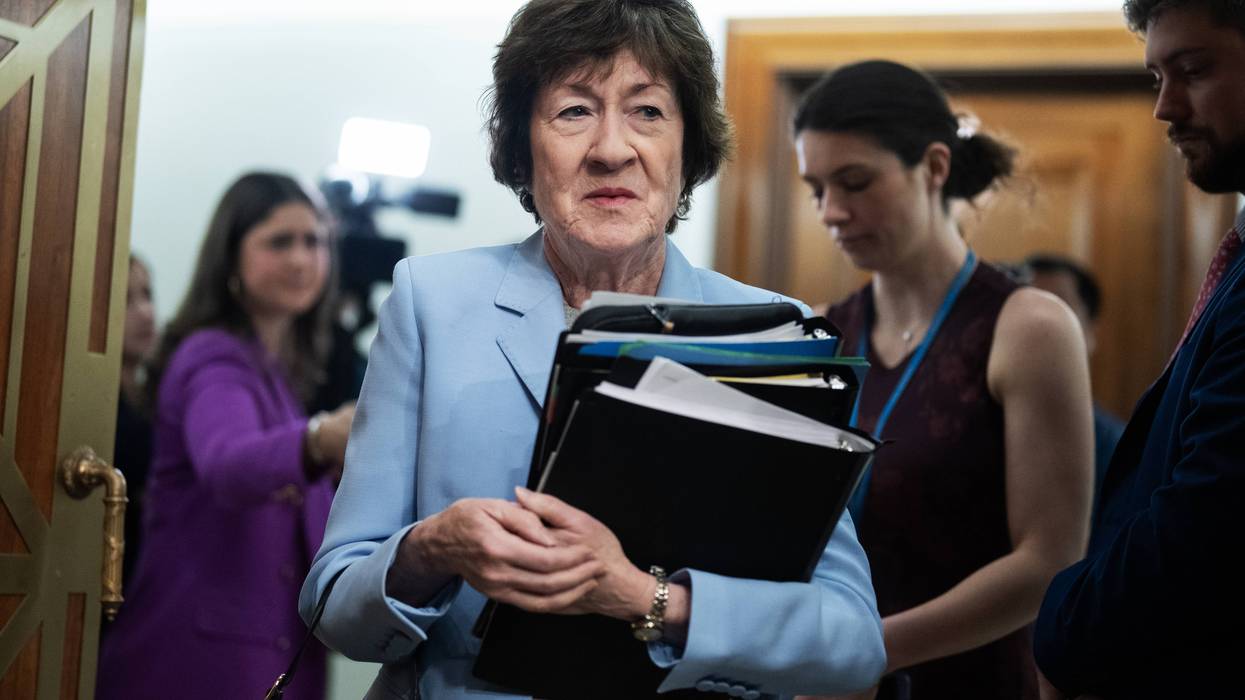
"Does she think that people in Maine are stupid?" said Jackson of the Republican senator, who has long claimed to be a supporter of reproductive rights.
"Enough is enough," Democratic US Senate candidate Troy Jackson declared on Thursday after Republican Sen. Susan Collins voted once again for an anti-abortion judge to join a federal court for a lifetime appointment—a frequent action taken by the five-term Maine lawmaker despite her persistent claims that she supports reproductive rights.
Collins' vote on Thursday was for Kasdin Miller Mitchell, a litigator and former solicitor general of Alabama who also served as a clerk for far-right US Supreme Court Justice Clarence Thomas. She was confirmed in a 49-45 vote to serve on the US District Court for the Northern District of Texas.
But Mitchell wasn't the only anti-choice judge Collins voted to confirm this week, Jackson noted with scorn.
On Tuesday, the former logger and Maine state Senate president recorded a video responding to her tie-breaking vote in support of Judge Matthew Byrne to join the US District Court for the Southern District of Ohio.
Byrne sits on the board of an anti-abortion crisis pregnancy center and said in 2020 that he opposed allowing pregnant patients to access abortion in nearly all cases, without any exceptions for rape or incest. He said he supported exceptions—which, in reality, often do little to protect access to care—for cases in which a pregnant patient's life is at risk, but said that the term “life of the mother” should be “strictly defined so as to avoid creating loopholes.”
Jackson asked in his video on Tuesday, "Does she think that people in Maine are stupid?"
"It's time that Mainers had somebody that's going to fight for their reproductive rights every damn time," he added.
On Thursday, Jackson expressed disbelief that for the second time in four days, Collins had voted in favor of an anti-choice judge.
Mitchell helped defend the state of Alabama as it tried to terminate Medicaid funding for Planned Parenthood, arguing in a brief that the state had "inherent sovereign authority to determine which providers qualified" for Medicaid, "based on their own unchecked assessment of an organization’s ethics," according to Reproductive Freedom for All.
Mitchell also signed letters to the Senate Judiciary Committee in support of other anti-abortion judges and served as the counsel of record for the Independent Women’s Law Center, an anti-choice group that has opposed the Affordable Care Act's contraception coverage, equal pay and family leave legislation, and the Violence Against Women Act.
Maine Democratic Party spokesperson Misha Linnehan said Collins' votes this week "show she’s not going to stand up for Maine women any time soon.”
“Susan Collins confirmed justices who overturned Roe v. Wade, and said herself she still doesn’t regret it," said Linnehan. "Now, she’s falling in line with Trump once again to put fanatical anti-abortion judicial nominees on the bench for life."
The Maine Democratic Party highlighted more than a dozen federal judges Collins has backed in recent months, including Judge Whitney Hermandorfer of the US Court of Appeals for the 6th Circuit, who defended Tennessee’s total abortion ban; Judge Joshua Dunlap of the US Court of Appeals for the 1st Circuit, which includes Maine, who advocated for a "fetal personhood" bill in the state; and Judge Maria Lanahan to the US District Court for the Eastern District of Missouri, who defended Missouri’s near-total abortion ban and pushed for restrictions on medication abortion.
"For the second time this week, Susan Collins has voted to confirm ANOTHER anti-abortion, MAGA judge," said Jackson on Thursday. "It’s time we send her packing."
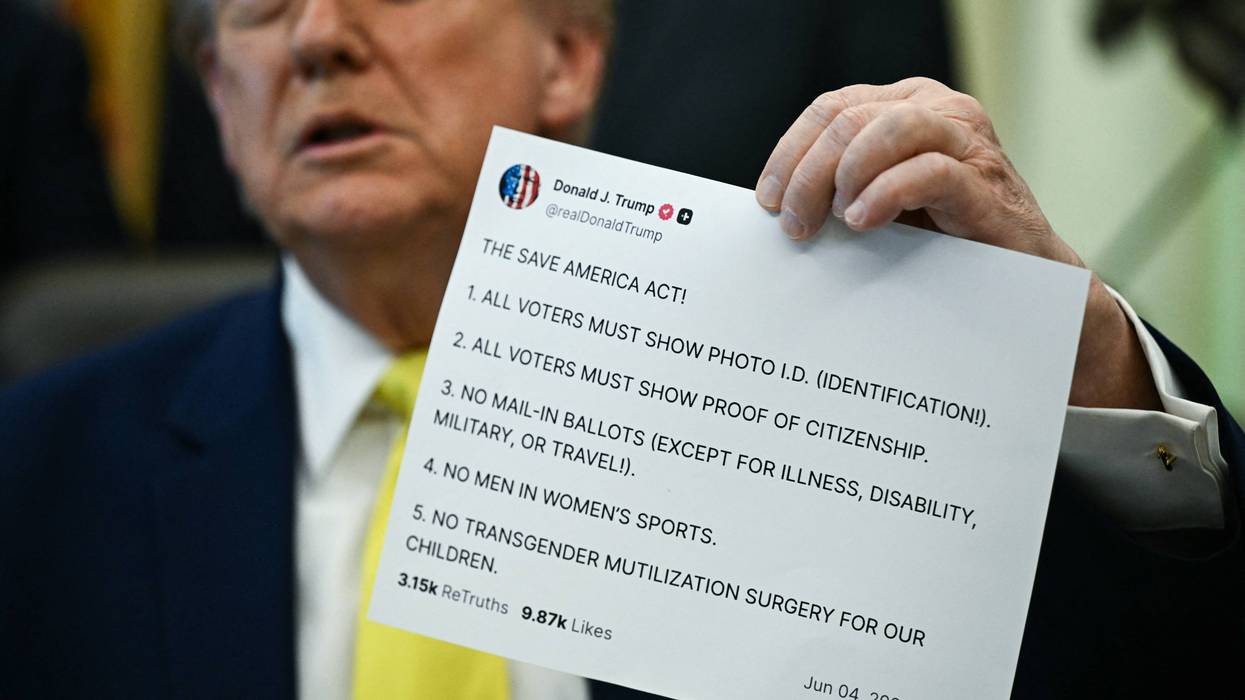
"This brazen scheme is illegal many times over and is an affront to the basic principle that the government exists to serve the people, not to enrich cronies and insiders," said their lawyer.
A pair of watchdog groups on Thursday sued President Donald Trump and other US officials over their "pay-to-play" scheme that gives subscribers who fork over a monthly fee of up to $100,000 early access to key decision-makers' posts on Truth Social.
The president's Trump Media & Technology Group announced the social media platform's program in July, drawing swift criticism from ethics experts and Democratic lawmakers—including House Judiciary Committee Ranking Member Jamie Raskin (D-Md.), who opened a probe. Despite corruption concerns, Truth Application Programming Interface (API) launched early last month.
Because Truth API covers the accounts of Trump, as well as White House Deputy Chief of Staff Dan Scavino, Transportation Secretary Sean Duffy, Health and Human Services Secretary Robert F. Kennedy Jr., and Federal Bureau of Investigation Director Kash Patel, they are all named in the new suit—as is the president's executive assistant, Natalie Harp.
"It is no accident that the Truth API covers so many official government accounts," says the complaint, filed by American Oversight and Campaign for Accountability, in the US District Court for the District of Columbia. "Information the Trump administration disseminates on Truth Social through its official accounts can have significant consequences for the global economy."
"Truth API subscribers—who now receive this potentially market-moving information before the rest of the public—can profit on their early knowledge of what the Trump administration says, does, and believes," the filing stresses.
In other words, "the president is selling Wall Street faster access to official government announcements and lining his own pockets in the process," said American Oversight executive director Chioma Chukwu. "Like so much of his agenda, this scheme is built to benefit the wealthy and well-connected while the rest of us are pushed to the back of the line."
Gerstein Harrow attorney Samuel Davis, who is representing the groups, declared that "this brazen scheme is illegal many times over and is an affront to the basic principle that the government exists to serve the people, not to enrich cronies and insiders."
Specifically, "this two-tier system of access" not only "serves no legitimate public purpose" but also "is irrational, inequitable, and illegal under the First and Fifth Amendments to the US Constitution and the Paperwork Reduction Act," the complaint argues. After outlining the alleged violations of federal law, the filing asks the court to declare the scheme unconstitutional and unlawful.
"If President Trump has one talent, it is finding new and creative ways to monetize his presidency," Campaign for Accountability executive director Michelle Kuppersmith said of the man who has pocketed at least $2.2 billion—over half of it from his family's cryptocurrency endeavors—during his first year back in the White House, according to recent disclosures.
"In another era, Congress would be outraged and take immediate action, but since that's out of the question, a lawsuit offers the only possible remedy," Kuppersmith continued. "We look forward to discovery so the American public can learn exactly which companies are willing to pay up."
The suit—filed less than two months ahead of the November midterm elections in which Democrats aim to take control of both chambers of Congress from Trump's Republican Party—is not the first filed over Trump API. The Freedom of the Press Foundation (FPF) and the media outlet The Intercept sued last month in the Southern District of New York.
That pair—represented by Citizens for Responsibility and Ethics in Washington, Yale Law School's Media Freedom and Information Access Clinic, the Public Integrity Project, and Altshuler Berzon—filed a motion seeking a preliminary injunction earlier this month. The Intercept's CEO, Annie Chabel, said that "Trump doesn't get to charge people for his own public statements."
"The First Amendment doesn't have a paywall, and we're not going to let him build one," Chabel added. "Journalists and the public shouldn't have to pay the president for news he's constitutionally obligated to share with everyone."
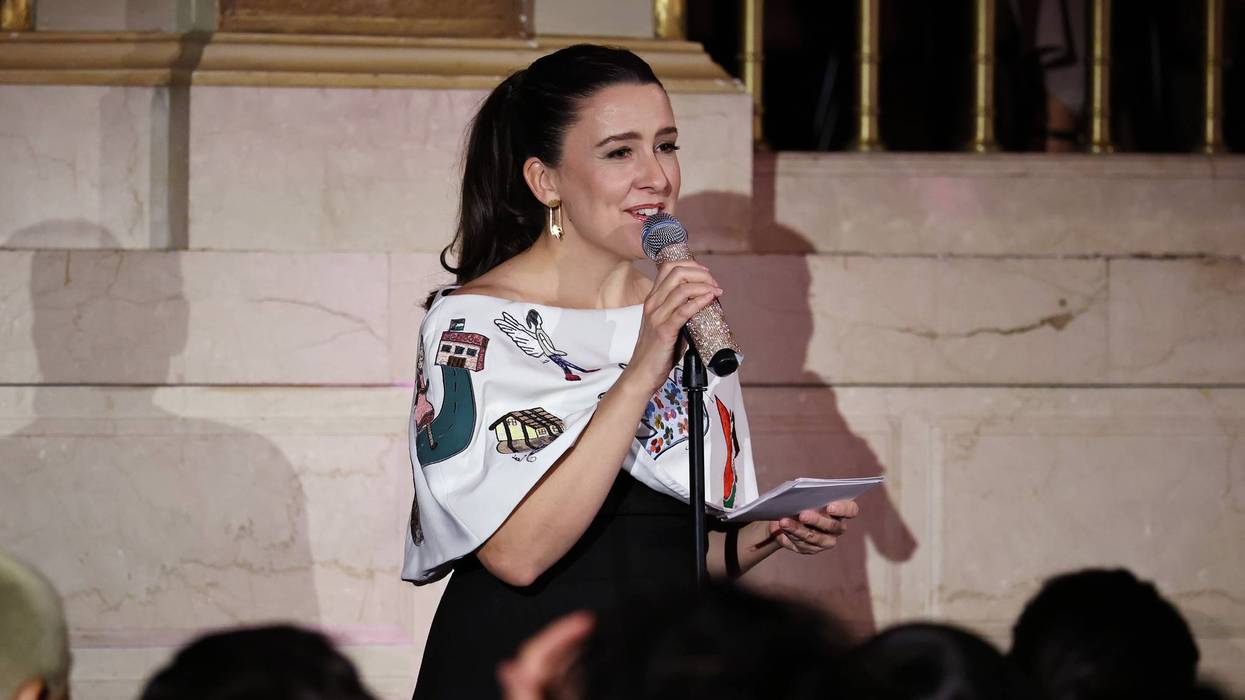
"We have a moral obligation to use our privilege and platforms to protect children and human rights," said Ms. Rachel.
Rachel Griffin Accurso, the YouTube star and child educator known popularly as Ms. Rachel, is vowing to match the $1 million donation made by rapper Macklemore to Palestinian aid organizations.
In a Thursday social media post, Ms. Rachel said she was giving $1 million to groups dedicated to helping Palestinians who have been suffering for years under Israeli military assaults and occupation.
The YouTube star also encouraged "every wealthy white celebrity to match it and speak out against the genocide in Gaza."
"Over 20,000 precious Palestinian children have been killed and children continue to be killed every day," Ms. Rachel said. "We have a moral obligation to use our privilege and platforms to protect children and human rights."
In the comments, Macklemore thanked Ms. Rachel, who has a long history of advocating for Palestinians and highlighting the horrors inflicted on Gaza by the Israeli military, for backing his campaign.
"Love you so much," he wrote.
Macklemore first announced his $1 million donation shortly after he was removed as an opening act from fellow musician Ed Sheeran's nationwide stadium tour because he said "Free Palestine" onstage earlier this month during a show at MetLife Stadium in New Jersey.
On Wednesday, Macklemore revealed his donation campaign and invited New England Patriots owner Robert Kraft—who led the pressure campaign to remove the rapper from the tour—to join him.
"Whatever we disagree about, perhaps we can agree on this: Palestinian lives are worth protection,” Macklemore wrote in a social media post, addressing Kraft directly. “A Palestinian life is no less valuable than any life on this earth.”
The rapper said he was giving to six organizations who were aiding Palestinians: HEAL Palestine, Gaza Soup Kitchen, Medical Aid for Palestinians, the United Nations Relief and Works Agency for Palestine Refugees in the Near East (UNRWA), and American Near East Refugee Aid.

"Wild that candidates are avoiding an enormously consequential issue with broad bipartisan support among voters, for fear of unleashing attack ads from super PACs funded by a tiny handful of AI billionaires and corporations."
A veteran aide for Sen. Bernie Sanders (I-Vt.) has some choice advice for Democrats running for office in this year's election, which is to ignore the guidance some of them are reportedly receiving from their political consultants on the question of regulating the artificial intelligence industry in the face of growing public concerns about runaway machine learning and the data center buildout that big tech companies are pursuing nationwide.
Warren Gunnels, who currently serves as the minority staff director for Sanders on the Health, Education, Labor and Pensions (HELP) Committee in the US Senate, issued his advice in response to a Politico article published Thursday, which had the headline "Democratic advisers are warning their candidates not to go too hard at AI."
While the reporting noted that members of the Democratic Party's consultancy class are "privately encouraging their battleground candidates to avoid talking about AI regulations out of fear that powerful tech groups will unleash a tidal wave of spending against them" ahead of this year's midterm election, Gunnels offered a 9-word antidote to what he considered bad political advice and a failure to recognize where most voters are on the issue.
"Nine words," said Gunnels in his post: "Fuck the consultants, End Citizens United, Ban super PACs." Gunnels backed up his statement with recent polling data suggesting that a strong stance on AI and data centers would likely help, not hurt, those seeking elected office.
Gunnels wasn't the only one to react negatively.
Brendan Fischer, director of strategic investigations at the Campaign Legal Center, said it's "wild that candidates are avoiding an enormously consequential issue with broad bipartisan support among voters, for fear of unleashing attack ads from super PACs funded by a tiny handful of AI billionaires and corporations."
The US Supreme Court's 2010 ruling in the Citizens United case, which unleashed a tidal wave of dark money campaign spending, said Fischer, "promised unlimited political spending would mean more speech and a more robust marketplace of ideas. But instead, candidates are chilled from discussing issues voters care about for fear of angering wealthy interests capable of spending millions to defeat them."
In July, Business Insider reported that the AI industry had already spent at least $65 million in midterm races, though other estimates have put that figure much higher. Meanwhile, Elon Musk, CEO of Space X and a major player in the AI space with his GROK model, has vowed to spend a $100 million help his preferred candidates and the Republican Party win.
At a summit on the need for robust regulation of the AI industry held earlier this week, Sanders said he had a message for leaders and executives running theses tech companies.
"My message to the AI CEO’s: If you truly care about the future of humanity," said Sanders, "stop pouring hundreds of millions of dollars into super PACs to defeat Members of Congress and candidates who are fighting for serious guardrails on AI."
My message to the AI CEO’s:
If you truly care about the future of humanity, stop pouring hundreds of millions of dollars into super PACs to defeat Members of Congress and candidates who are fighting for serious guardrails on AI. pic.twitter.com/2HooEeOQr3
— Sen. Bernie Sanders (@SenSanders) September 15, 2026
As the debate over AI regulation has emerged as a major topic in Washington, DC, and on the campaign trail in recent weeks, a series of polls have confirmed public anxieties about the technology.
A poll from The Associated Press-NORC Center for Public Affairs Research and the Energy Policy Institute at the University of Chicago released Wednesday showed that more than half of US voters (53%) are “extremely” or “very” concerned about artificial intelligence’s environmental impacts, and the poll also found broader concerns about the negative impacts of data centers, especially on local water resources and utility rates.
"Change is scary, and I think some of that is being reflected here,” said Michael Greenstone, who directs the University of Chicago institute that collaborated on the survey, of the results.
The Politico reporting, which drew Gunnel's fiery response, also acknowledged the public sentiment, but described how consultants working on various Democratic campaigns are trying to avoid provoking the ire of deep-pocketed tech giants:
Some top Democratic candidates and their campaigns are quietly trying to avoid crossing any red lines for tech super PACs — even as it’s unclear exactly what those lines would be, after Musk and two of the biggest AI CEOs called for more regulation on the technology last week.Democrats are especially wary of Leading the Future, a pro-AI industry super PAC that spent over $25 million in primary races this year and is backed by investors and executives of OpenAI. The rival super PAC network, Public First Action, pushes for AI regulation and is funded by OpenAI’s chief competitor, Anthropic.
While the fears of being targeted by the industry cash may not be unfounded, progressives like Gunnels suggest that a willingness to take a stand against powerful AI companies is exactly the kind of fight voters want to see from party candidates.
For the Politico article, Rep. Pramila Jayapal (D-Wash.), former chair of the Congressional Progressive Caucus in the House, explained how AI super PACs "come out and they say that they’re concerned, that they want regulation. But then they spend huge amounts of money on defeating anybody who wants legislative regulation."
In a social media post Thursday night, however, Jayapal backed the congressional campaign of Will Lawrence, running as a Democrat to win an open seat in Michigan's 7th Congressional District, by saying voters "need leaders who answer to their constituents, not the corporations that paid for their election."
Following Gunnels advice that bucking the influence of corporate donors is actually a key component of a winning electoral strategy in the 2026 midterms, Jayapal said "electing fighters who don’t take corporate PAC money"—whether on the issue of AI, healthcare, housing policy, or broader concerns about economic inequality and affordability—is key for Democrats.
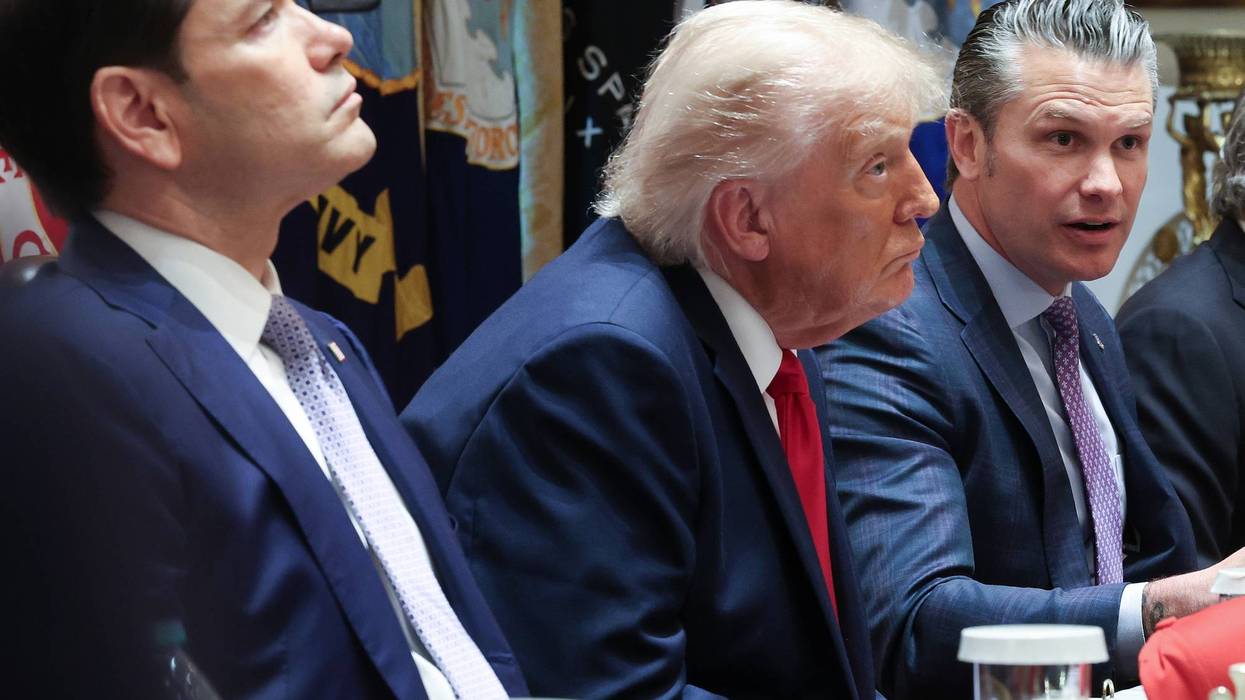
"Trump waving around 'annihilation' as if he’s God" is "startling to hear," wrote one progressive critic. "He is, after all, batshit crazy."
President Donald Trump on Thursday said he is weighing whether or not to "annihilate" Iran in a renewed effort to end the illegal 201-day US-Israeli war of choice, musings that came on the heels of a report by United Nations experts who said the United States likely committed war crimes during earlier attacks on the Middle East nation.
"I have a big decision coming up. Do I want to go in and annihilate them, or do I not?" Trump told Axios' Barak Ravid. "It's a big decision. Anything could happen with me."
Ravid said that Trump was referring to the Iranian government. However, the Iranian people have borne the brunt of six-and-a-half months of war and years of deadly economic strangulation.
Trump’s threat came as a United Nations fact-finding mission said there are “reasonable grounds to believe” the United States committed a war crime in two February strikes—one on the Shajareh Tayyebeh School in Minab and another on a sports complex and residential area in Lamerd—that killed a combined total of at least 178 civilians, including 120 children.
The UN experts' report pointed to the Trump administration’s “deprioritization of civilian harm mitigation and of compliance with [international humanitarian law], expressed through public statements by senior US leadership, including the president and the secretary of defense.”
Secretary of Defense Pete Hegseth said early in the war that the US would eschew “stupid rules of engagement" meant to protect civilians, while vowing that US forces would rain “death and destruction from the sky all day long.”
Trump has repeatedly expressed his willingness to commit war crimes and atrocities against Iran, including through threats to “completely obliterate” the country's power, energy and water infrastructure and bomb the nation of over 90 million people "back to the Stone Ages."
“If they don’t sign the deal, then the whole country is going to get blown up,” the president said in April while unsuccessfully trying to pressure Tehran into an agreement to end the war. He also said that Iran's “whole civilization will die” if Tehran did not accept his demands.
The UN experts said that while they could not independently verify how many Iranian casualties the US-Israeli war has caused, they have "strong grounds to believe that the true figures for deaths and injuries are significantly higher than the [Iranian] government's reported toll" earlier this year of over 28,000 people killed and wounded.
Responding to the president's latest threat, progressive commentator Heather Digby Parton—who blogs under the name Digby—wrote that "this could all be bluster."
"Trump waving around 'annihilation' as if he’s God is still startling to hear," she added. "But I don’t have the sense that even he believes it anymore. But I would never assume that he won’t. He is, after all, batshit crazy."
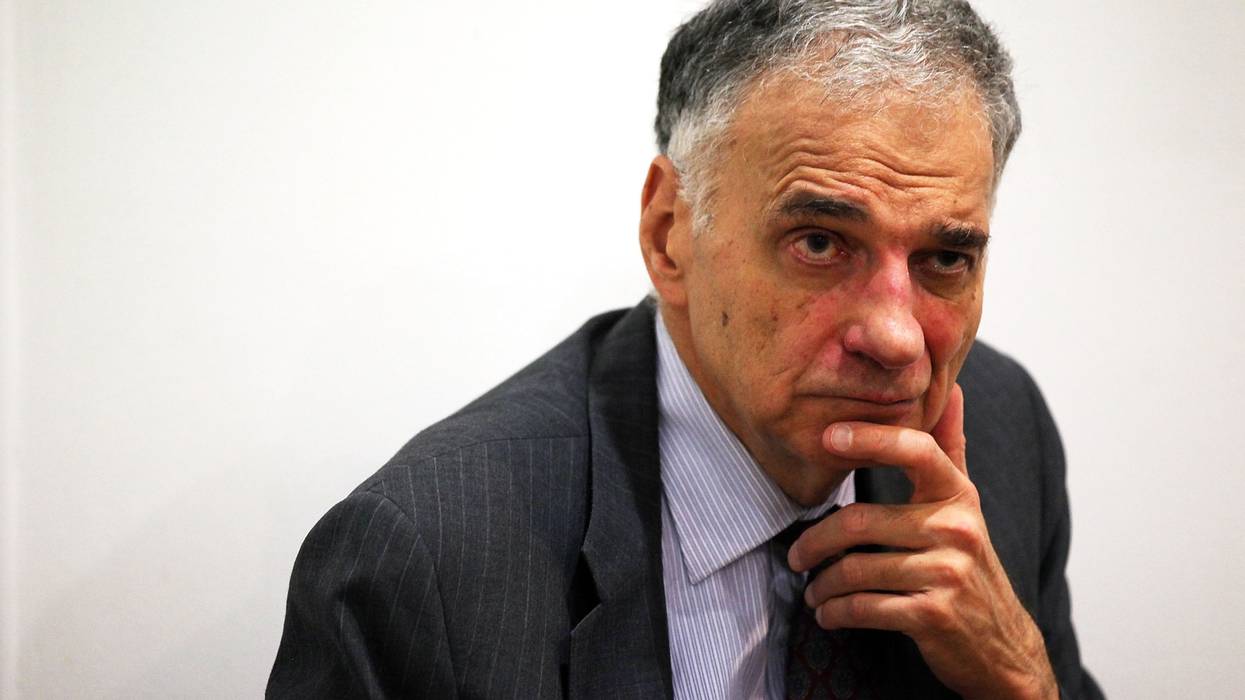
"The Democrats and electorally frightened Republicans pushed Richard Nixon out in 1974 for far, far lesser transgressions than those committed by Trump in a week."
As Democrats campaign for the November midterm elections after helping kill the latest congressional effort to impeach President Donald Trump, progressive consumer advocate and four-time presidential candidate Ralph Nader this week renewed attacks on the party's leadership for abandoning their constitutional responsibility to hold the president accountable.
In a September 14 essay published by Current Affairs, Nader argued that Democratic leaders have effectively given up on impeachment even as Trump's second administration faces continuing allegations of executive overreach and misconduct.
"The chronic prevaricator and delusionist Donald J. Trump knows that the worse his outlaw actions become, the less likely the Democrats in Congress are to impeach him," the Public Citizen co-founder wrote. "The massive number of blatant, impeachable acts by the lawless, corrupt, violent, systemically racist, unstable, dangerous tyrant increases by the day."
"The American public knows it," Nader continued. "The majority of Americans favor impeaching Trump. Among Democrats, it’s 84% in favor, as well as a majority of independents. Polling even shows that most Americans think Trump is a 'dangerous dictator whose power should be limited before he destroys American democracy.'"
Yet, "when asked about impeachment, House minority leader Hakeem Jeffries [D-NY] replied: 'We haven’t ruled anything in and we haven’t ruled anything out,'" he noted. "What? Every day, the mega-arsonist is burning down our republic and its Constitution, with tens of millions of Americans suffering and endangered. Yet Jeffries has been noncommittal about whether Democrats would pursue impeachment even if they had a congressional majority."
In a column republished by Common Dreams earlier this month, Nader wrote, “What must Tyrant Trump be thinking about his opponents’ feeble, weak, cowardly responses to his daily torrent of serious, impeachable offenses?”
“Even his egomaniacal narcissism cannot fully explain his amazing good luck," he opined.
Earlier this week, the House of Representatives voted 232-147 to table an impeachment resolution introduced by Rep. Al Green (D-Texas), effectively ending the measure's consideration. Eighteen Democrats joined Republicans in voting to table it, while 46 Democrats—including House Minority Leader Hakeem Jeffries—voted “present.”
Green's resolution accused Trump of high crimes and misdemeanors arising from the administration's deadly anti-immigrant crackdown, including alleged violations of civil liberties and due process. Green said before the vote that the Constitution contains no provision requiring Congress to wait before confronting impeachable conduct.
Democratic leaders have attempted to justify their decision not to support Green's resolution by arguing that impeachment requires a substantial investigative record, hearings, witness testimony, and document review. Jeffries, along with Democratic leaders Katherine Clark of Massachusetts—the House minority whip—and Pete Aguilar of California, the House Democratic Caucus chair, said they would vote “present” because “none of that serious work has been done," as they jointly explained.
Nader rejects that reasoning. In Current Affairs, he argued that saying Democrats “don’t have the votes” misses the purpose of a sustained impeachment campaign, which he described as a way of building public pressure and organizing voters.
“Impeachment is a mobilizer for get-out-the-vote efforts," he wrote, as well as "for educating and energizing the people back home."
Trump has already been impeached twice by the House, although the Senate failed to convict him either time. No other president has been impeached multiple times. Nader has pointed out that Trump's high crimes and misdemeanors are more grave than those for which then-President Nixon resigned from office in 1974 rather than face impeachment, and that Democrats' fear of the consequences for impeaching Trump again is no excuse for their cowardice.
"The Democrats and electorally frightened Republicans pushed Richard Nixon out in 1974 for far, far lesser transgressions than those committed by Trump in a week," he wrote.