December, 28 2017, 02:45pm EDT

For Immediate Release
Contact:
Paul Achitoff, (808) 262-8283, achitoff@earthjustice.org
Todd Steiner, (415) 488-7652, tsteiner@TIRN.net
Kristen Monsell, (510) 844-7137, kmonsell@biologicaldiversity.org
Court: Feds Unlawfully Allowed Hawaii Fishery to Kill Protected Sea Turtles, Birds
Ruling Confirms Trump Administration's New Interpretation of Bird Protection Law Is Wrong
Honolulu, HI
The National Marine Fisheries Service failed to properly analyze the Hawaii-based swordfish longline fishery's impacts on the endangered loggerhead sea turtles it kills and injures before permitting an expansion of that fishery in 2012, a federal court has ruled. The 9th Circuit Court of Appeals also found the U.S. Fish and Wildlife Service violated the Migratory Bird Treaty Act by allowing the longline fishery to kill albatrosses and other protected seabirds in the course of fishing operations.
The ruling refutes the Trump administration's new opinion that the Act does not prohibit incidental killing of migratory birds by the energy and fishing industries. Consistent with the findings of numerous federal courts, the decision undermines the legal reasoning behind the administration's Dec. 22 announcement that it will no longer prosecute industries that accidentally kill birds.
The ruling comes in response to a lawsuit filed by Earthjustice on behalf of Turtle Island Restoration Network and the Center for Biological Diversity, after the National Marine Fisheries Service allowed the fishery to double the number of sea turtles it hooks or entangles. Hawaii's swordfish industry uses longlines up to 60 miles long, with nearly 1,000 baited hooks, that often catch endangered leatherback and loggerhead sea turtles, as well as protected migratory birds such as black-footed and Laysan albatrosses. The court found the agency improperly ignored that the Hawai'i fishery kills sea turtles that are already heading toward extinction and must now study the consequences of contributing to that problem.
The court also held that the Migratory Bird Treaty Act -- one of the nation's oldest conservation laws -- does not allow the U.S. Fish and Wildlife Service to give commercial operations like the longline fishery, which provides no conservation benefits to birds, a free pass to kill them, even accidentally. Methods to minimize such accidental bird deaths have been studied and are available, but the longline industry has refused to adopt them.
"Both the National Marine Fisheries Service and the Fish and Wildlife Service, which are supposed to be protecting our wildlife, have instead been illegally helping the longliners push them to the brink of extinction," said Earthjustice attorney Paul Achitoff. "We won't allow it. And we won't stand by while the Trump administration turns its back on our children's natural heritage."
"The Hawaii longline fishery has gotten away with murder for years, killing and injuring seabirds, sea turtles and marine mammals, and this is only one of many court rulings trying to rein in their carnage," said Todd Steiner, biologist and executive director of Turtle Island Restoration Network. "This ruling is also another black eye for the Trump administration, which is trying to dismantle the very laws that protect these defenseless animals."
Sea turtles become hooked while trying to take longline bait, or become entangled while swimming through the walls of nearly invisible lines and hooks -- encounters that can drown the turtles or leave them fatally injured. Seabirds such as Laysan and black-footed albatrosses also dive for the bait and become hooked; worldwide, longline fishing has caused precipitous declines in most albatross populations.
"Sea turtles could go extinct if these deadly longlines aren't better regulated. We're happy to see the court reject the reckless expansion of this fishery's lethal impact on sea turtles and seabirds," said Kristen Monsell, a senior attorney with the Center for Biological Diversity. "But it's disappointing that the Trump administration is trying to give the energy and fishing industries a free pass to indiscriminately slaughter migratory birds."
At the Center for Biological Diversity, we believe that the welfare of human beings is deeply linked to nature — to the existence in our world of a vast diversity of wild animals and plants. Because diversity has intrinsic value, and because its loss impoverishes society, we work to secure a future for all species, great and small, hovering on the brink of extinction. We do so through science, law and creative media, with a focus on protecting the lands, waters and climate that species need to survive.
(520) 623-5252LATEST NEWS
'Unlike the United States,' Says Security Chief, Iran 'Has Prepared Itself for a Long War'
"Trump plunged the region into chaos with his 'delusional fantasies' and now fears more American troop casualties," said the secretary of the Iranian Supreme National Security Council, Ali Larijani.
Mar 02, 2026
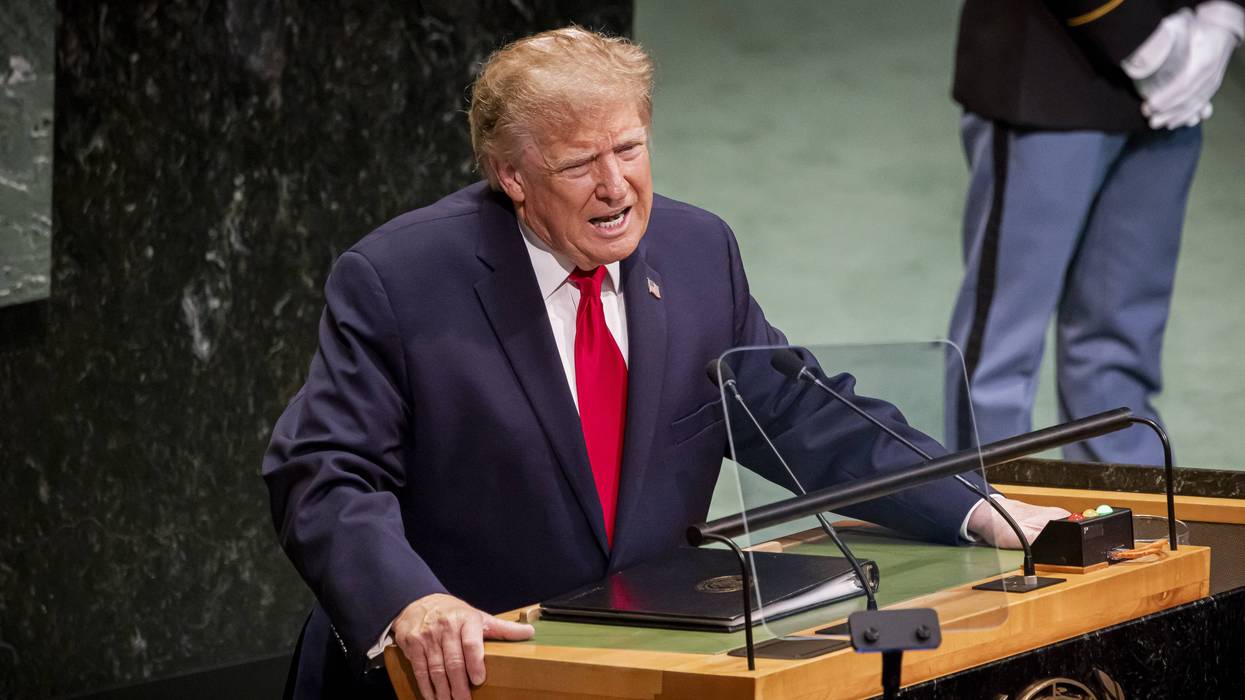
As US President Donald Trump unleashed a barrage of bombings on Monday in what is rapidly spiraling into a regional conflagration, Iran's security chief said the country is ready for a long war, but questioned whether the US is prepared for the same.
“Trump plunged the region into chaos with his ‘delusional fantasies’ and now fears more American troop casualties,” said Ali Larijani, the secretary of the Iranian Supreme National Security Council, in a post on social media Monday. “With his delusional actions, he turned his self-made 'America First' slogan into 'Israel First' and sacrificed American soldiers for Israel’s power-hungry ambitions.”
"Iran, unlike the United States, has prepared itself for a long war," he said.
Just before US-Israeli strikes began this weekend, Iran reportedly offered Trump a deal that included Iran giving up all of its enriched uranium and full cooperation with international nuclear inspectors—terms even more conciliatory than those in the original Iran nuclear agreement that Trump ripped up during his first presidency.
But now the US and Israel have taken out several senior Iranian officials, including Supreme Leader Ayatollah Ali Khamenei, and included what some observers described as the "carpet bombing" of Tehran, including heavily populated civilian areas, Larijani has declared diplomacy off the table.
"We will not negotiate with the United States," he wrote on social media, disputing reports that he'd restarted talks with Washington.
With diplomatic avenues once again blown up, Iran has shifted toward making a war maximally costly for the US and Israel and deterring its other Arab allies from joining.
At least four US military personnel have already been killed, and four others seriously wounded in attacks at military bases in Kuwait. Trump has acknowledged that more casualties are "likely," which may further heighten the backlash among the American public, which already largely does not support the war, according to a poll released this weekend.
All six of the Gulf nations that host US military bases—including Saudi Arabia, the United Arab Emirates, Qatar, Oman, and Bahrain—have been hit with Iranian missiles and drones, with some attacks spilling into civilian areas—including Dubai's and Kuwait’s international airports, as well as luxury hotels and residential skyscrapers, which resulted in at least three reported civilian deaths.
Israel has also been pummelled with artillery from Iran and its allied militia Hezbollah in Lebanon. Strikes from Iran have reportedly killed at least 11 people and left dozens more injured in Israel, according to local authorities. Israel has retaliated with a massive attack on Lebanon, which the Lebanese health ministry has said killed at least 31 people.
While Iran lacks the military might of the US and Israel, it is likely seeking to deploy its arsenal of cheaper, older drones to deplete the two powerful countries' expensive air defense systems and force them into a war of attrition, according to Amos C. Fox, a professor at Arizona State University’s Future Security Initiative, and Franz-Stefan Gady, an associate fellow for cyber power and future conflict at the International Institute for Strategic Studies.
"The attackers do not want to find themselves trapped in an attritional slugfest, where they burn through hundreds of millions of dollars per day, exhaust their stocks of the most advanced interceptors, and face the prospect of a prolonged war—not by losing on the battlefield but by simply exhausting their anti-air weapons in the coming days and weeks," they wrote in Foreign Policy magazine on Monday.
“The attackers do not want to find themselves trapped in an attritional slugfest, where they burn through hundreds of millions of dollars per day, exhaust their stocks of the most advanced interceptors, and face the prospect of a prolonged war—not by losing on the battlefield but by simply exhausting their anti-air weapons in the coming days and weeks,” they continued. “The United States and its allies may eventually win—but at what price in terms of material and treasure? Iran knows that Israeli and US theories of success are premised on a quick and decisive strike campaign. Iran’s strategy will therefore be to play for time, rather than operate in a way to support the US-Israeli timeline.”
Cranking up the pressure further, Iran has also declared that "no ship is allowed to pass" through the Strait of Hormuz, which handles around 20% of global oil shipments. Prices have already begun to spike, and shipments have been canceled. Financial analysts have predicted that the closure of the strait could drive the price of a barrel to nearly double, potentially triggering global economic instability.
While predicting that the war would be over in “four to five” weeks on Monday, Trump acknowledged the possibility for it to go “far longer than that,” saying, “We’ll do whatever.” He also said he would not rule out a deployment of ground troops.
Defense Secretary Pete Hegseth insisted that this war, which has already claimed the lives of nearly 600 Iranians, would not be “endless” like the war in Iraq, which dragged on for nearly a decade and is estimated to have killed around half a million Iraqis.
However, after killing Khamenei, the Trump administration has provided little clarity on its military objectives. Meanwhile, their rationalizations for the conflict—including claims that an attack on US troops from Iran was imminent, and that it was on the verge of acquiring a nuclear weapon—have proven untrue.
Trump has also admitted to Jonathan Karl, the chief Washington correspondent for ABC News, that many of the leading "candidates" to take over the country "are all dead" from US strikes.
Though Trump has said his goal is to secure the "freedom" of the Iranian people, international experts say decapitating its government is more likely to empower its most authoritarian elements or create a mad, violent scramble for power.
"The two most likely outcomes for Iran are the imposition of an even more ruthless regime controlled by the security apparatus and its new collective leadership or a fragmentation of the country, perhaps precipitated by tension between the military and the Islamic Revolutionary Guard (IRGC)," said Daniel Brumberg, non-resident senior fellow at the Arab Center in Washington DC. "Both could also ensue at once."
Shireen Hunter, an Iranian political scientist at the Prince Alwaleed Bin Talal Center for Muslim-Christian Understanding, said that permanent destabilization may be the goal for the US, and—more importantly—Israel, which views Iran as its primary antagonist in the region.
“Slogans such as ‘freedom for Iranians’ and ‘Make Iran Great Again’ are meaningless. Do they want Iran to remain as a unified country? I have my doubts,“ she said. ”Saddam Hussein once said that five small Irans are better than one big Iran. Netanyahu agrees with that. What neither the US nor Israel wants is a strong nationalist government in Iran.“
"There is no obvious leader with the necessary qualifications to shape the nature of the new regime in Iran... any leader who comes to power by foreign intervention soon loses his or her legitimacy," she continued. "If the conflict continues, the risk of civil or even regional war is high, as is the risk of Iran's disintegration with unforeseeable consequences for regional countries."
Keep ReadingShow Less
'Cuba's Next,' Says Lindsey Graham as Illegal Trump-Israel War on Iran Kills Hundreds
"Trump 2.0 seems to be about regime change," said one observer.
Mar 02, 2026
As American and Israeli bombs kill hundreds of Iranians—reportedly including at least 180 students and others at a girl's school in Minab—Sen. Lindsey Graham said Sunday that President Donald Trump is "on a roll" and that Cuba is the next nation in the US regime change crosshairs.
In an interview on Fox News, Graham (R-SC) said prematurely that "Trump finished the job" that former President Ronald Reagan "failed to do," namely, destroy Iran's Islamist government after the overthrow of a brutal US-backed monarchy in 1979. "I am a big admirer of Ronald Reagan but I'm here to tell you that Donald Trump, in my opinion, is the gold standard for Republicans, maybe any president, when it comes to foreign policy."
"Maduro—everybody talked about him, well, Donald Trump's got him in jail," Graham said of Venezuelan President Nicolás Maduro, who was abducted along with his wife two months by invading US forces.
"Cuba's next. They're gonna fall," Graham said of the revolutionary government in Havana that's outlasted a dozen American presidents, despite decades of US-led assassination attempts, sabotage, and subversion. "This communist dictatorship in Cuba, their days are numbered."
Lindsey Graham: Cuba is next. They are going to fall. Their days are numbered. pic.twitter.com/XZd1PyIqDP
— Acyn (@Acyn) March 2, 2026
The remarks by Graham—who previously berated Trump as a "jackass," "nut job," and "loser" unfit to be commander-in-chief—come amid reporting that Trump is feeling buoyed by what he views as successful attacks on Iran and Venezuela.
"The president is feeling like, 'I'm on a roll,' like, 'This is working,'" one unnamed Trump administration official told the Atlantic's Vivian Salama over the weekend.
This, from a president who said he deplored regime change and vowed "no new wars" while running for reelection.
A day before launching the US-Israeli war of choice against Iran, Trump floated what he described as a "friendly takeover" of Cuba, prompting vehement condemnation from Havana. Cuba is already suffering under decades of US sanctions that have devastated the socialist nation's economy and the well-being of its people.
In January, Trump issued an executive order baselessly declaring that Cuba poses "an unusual and extraordinary threat" to US national security and tightening the blockade to further starve the island of fuel.
Trump 2.0 seems to be about regime change. Is Cuba next? Listen onApple: interc.pt/40A4gef Spotify: interc.pt/4aKpVqd Elsewhere: interc.pt/4l53fod@mjbusta.bsky.social @andrespertierra.bsky.social @akelalacy.bsky.social
[image or embed]
— The Intercept (@theintercept.com) March 1, 2026 at 8:56 AM
Graham has backed every single US war since he was elected to Congress in 1994 and has openly advocated regime change in Cuba for more than a decade. He has also been accused of incitement to genocide for urging Israel to "level" Gaza—whose border crossings Israel has closed again, citing the attack on Iran.
Graham's support for regime change in Iran has been condemned across the political spectrum, from progressive Democrats including Rep. Ro Khanna of California to far-right figures like the late activist Charlie Kirk—who lambasted the senator's hawkish stance as "pathologically insane" shortly before his assassination last year.
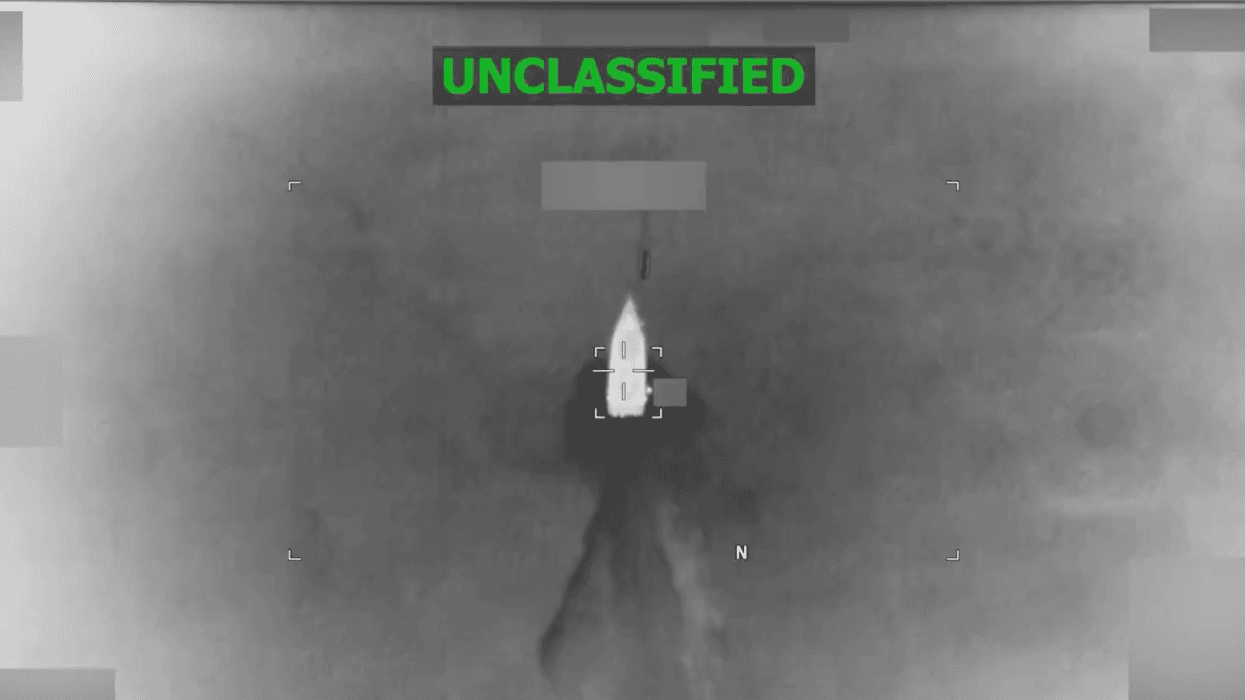
If the US does strike Cuba, it would be the 11th country attacked during Trump’s two terms in the White House. The president—who has said he feels snubbed for the Nobel Peace Prize—has bombed Afghanistan, Iran, Iraq, Libya, Nigeria, Pakistan, Somalia, Syria, Venezuela, and Yemen, as well as dozens of boats allegedly transporting drugs in international waters in the Caribbean Sea and Pacific Ocean.
Keep ReadingShow Less
'Don't Support Bootlickers': ChatGPT Subscribers Vow Mass Cancellations After Pentagon Deal
"We can push OpenAI over the edge," said one group encouraging a boycott of the AI giant.
Mar 02, 2026
Calls to boycott OpenAI have been growing over the last several days after the artificial intelligence giant reached a deal with the US Department of Defense to use its ChatGPT chatbot across its classified network.
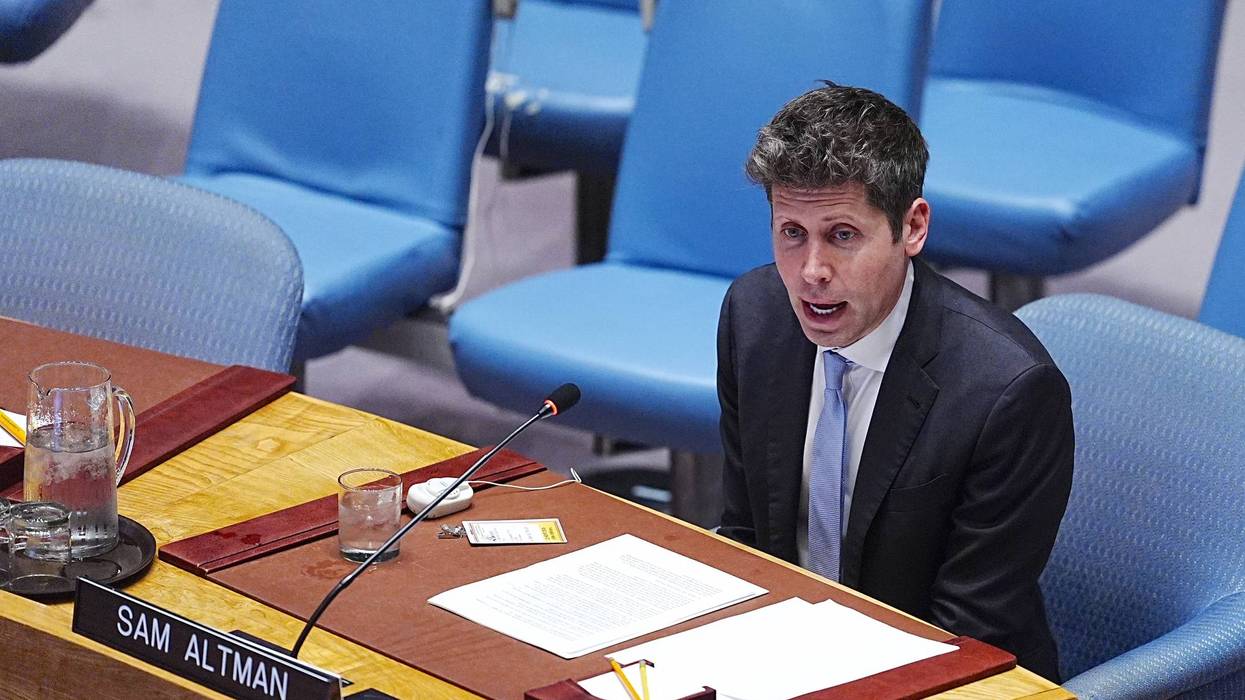
OpenAI CEO Sam Altman on Friday said that the deal reached with the Pentagon would have "prohibitions on domestic mass surveillance" and maintain "human responsibility for the use of force, including for autonomous weapon systems."
The DOD had previously gotten into a dispute with AI firm Anthropic, which refused to modify its Claude chatbot to allow for its use for domestic spying or to make final decisions on whether to take a human life.
President Donald Trump announced on Friday that he'd ordered the US military to stop using Anthropic's technology, describing the firm as "A RADICAL LEFT, WOKE COMPANY" in a Truth Social post.
Shortly after Trump's post, Altman announced that OpenAI had reached a deal with the Pentagon. This led many critics to suspect that, whatever Altman's denials, the DOD would be allowed to use ChatGPT in ways that it had been forbidden to utilize Claude.
Adam Cochrane, who runs activist venture capital firm Cinneamhain Ventures, said immediately after Altman's announcement that he was canceling his ChatGPT subscription on the grounds that "I don’t support bootlickers."
Dr. Simon Goddek, a biotech scientist, also revealed that he was canceling his ChatGPT subscription and encouraged others to do the same.
"Companies understand one language: MONEY," he wrote. "If they support wars of aggression, they can’t profit from me. I’m out. What’s stopping you?"
AI consultant Mark Gadala-Maria accused Altman of being two-faced with his DOD deal, noting that the OpenAI CEO had expressed solidarity with Anthropic in the face of the Trump administration's attacks.
"Just a few hours ago he was on TV saying he stood by Anthropic," wrote Gadala-Maria. "Then he undercuts them and takes the same contract that Anthropic just lost. How can anyone trust this guy?"
An OpenAI boycott group called "QuitGPT" went online shortly after Altman's announcement, and the organization claims that it has gotten more than 1.5 million people to cancel their ChatGPT subscriptions or stop using it all together.
QuitGPT also outlined why its boycott of OpenAI could be potentially effective given the highly competitive nature of the current consumer AI market.
"ChatGPT is the biggest chatbot in the world, but that advantage is fragile," QuitGPT explained. "ChatGPT has been losing market share. Their creator, OpenAI, is losing three times more than they earn. ChatGPT users skew young and progressive, and many don't know about alternatives. We can push OpenAI over the edge."
Keep ReadingShow Less
Most Popular