June, 18 2014, 09:07am EDT
For Immediate Release
Contact:
Alice Gillham in Reprieve’s press office: alice.gillham@reprieve.org.uk / +44 207 553 8160
PM Urged to Defend British Student Jailed After Torture in UAE
Prime Minister David Cameron is being urged to intervene to protect a British student who was tortured into 'confessing' to drugs charges in the United Arab Emirates (UAE).
LONDON
Prime Minister David Cameron is being urged to intervene to protect a British student who was tortured into 'confessing' to drugs charges in the United Arab Emirates (UAE).
Ahmad Zeidan, a 21-year-old from Berkshire, was arrested by local police in Sharjah in December 2013 and held incommunicado for over a week, during which time he was hooded, beaten, and threatened with rape. Mr Zeidan was also forced to sign documents in Arabic - a language he cannot read - which were subsequently used against him in a flawed trial process. Last month he was sentenced to nine years in Sharjah prison.
Maya Foa, director of the death penalty team at legal charity Reprieve, which is assisting Mr Zeidan, has written to the Prime Minister ahead of an appeal hearing later this month where the prosecution is expected to seek a harsher sentence. The letter says: "It is a scandal that he [Mr Zeidan] has been convicted to a lengthy prison sentence on the basis of a 'confession' which was effectively beaten out of him. In addition, we note with concern that the prosecution has appealed the case and are once again seeking to increase the penalty Mr Zeidan will ultimately receive."
In July 2013, three British nationals who were tortured and imprisoned in Dubai on similar charges were pardoned after Mr Cameron raised their case directly with UAE President Sheikh Khalifa bin Zayed.
Reprieve has uncovered evidence of a systematic pattern of torture in UAE prisons. A dossier submitted last month to the UN Special Rapporteur on Torture details a pattern of abuse that includes hooding, beatings, threats of rape, and extended periods of solitary confinement.
Speaking to BBC radio from the prison in an interview broadcast last week, Mr Zeidan described his arrest and torture, saying: "They just arrested me [and started] beating me... for eight days, my family didn't know where I was."
Commenting, Maya Foa said: "Ahmad has been through a terrifying ordeal, including being tortured into signing a false confession - this alone should be enough for his release. The Prime Minister must intervene as soon as possible to secure justice for him before it's too late, and tell the UAE to investigate its endemic torture problem."
Reprieve is a UK-based human rights organization that uses the law to enforce the human rights of prisoners, from death row to Guantanamo Bay.
LATEST NEWS
Defense of Nixon's Watergate Crimes Is JD Vance 'Telling on Himself,' Say Critics
"He’s insinuating that his own regime has so normalized corruption and lawlessness that past corruption and lawbreaking schemes now seem minor."
Jun 26, 2026
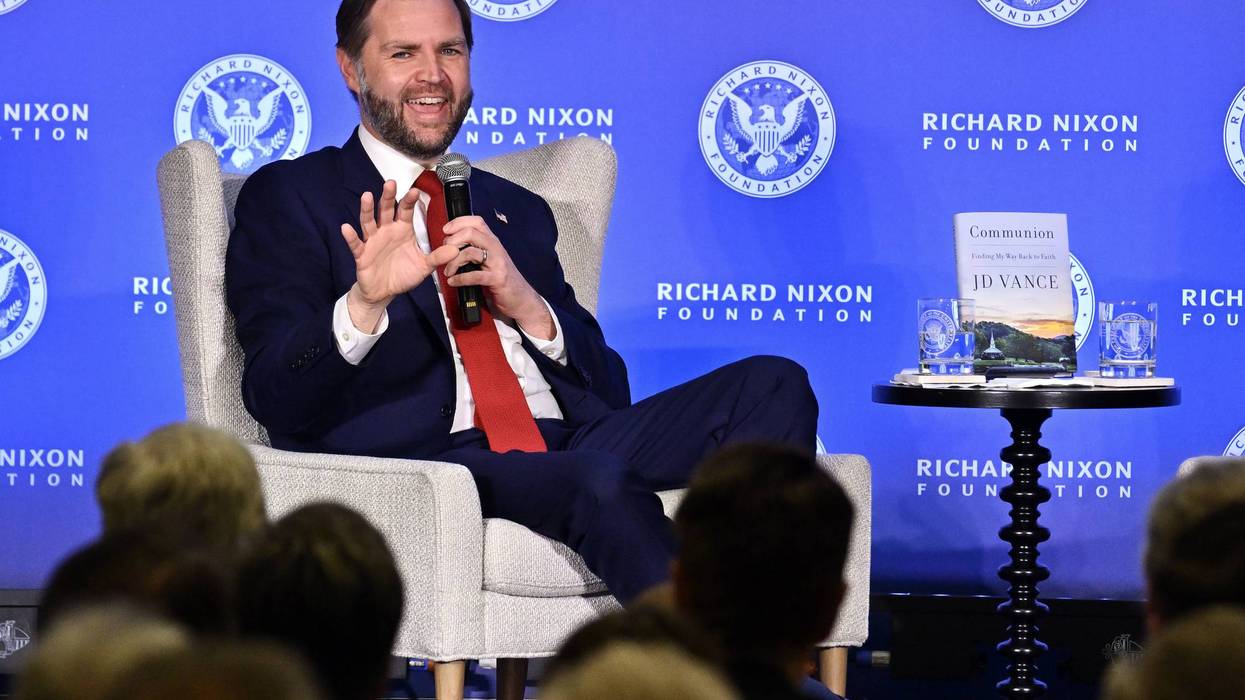
At an event for the Richard Nixon Foundation on Thursday, Vice President JD Vance suggested that if the 37th president's Watergate scandal had happened today, it would barely make the news, let alone destroy a presidency.
But his critics say that's only because President Donald Trump has totally "normalized" corruption.
During a speech at the Nixon Presidential Library in Yorba Linda, California, Vance celebrated that the "historical legacy" of Tricky Dick, whose name has functioned as a shorthand for presidential lawlessness since his resignation in 1974, "is enjoying a bit of a renaissance, and, I think, deservedly so."
"If Watergate happened tomorrow, it would be like a 12-hour news story," Vance said. "The idea that it would have taken down a presidency is crazy."
He said the way the "deep state took down Richard Nixon" was "not all that different from what the same groups of people, the same institutions tried to do to Donald Trump in the first Trump administration."
Vance also said he personally identified with Nixon: "Young senator, vice president, writes a bestselling book, is hated by the media. It kinda sounds like JD Vance," he said. "I've always liked Richard Nixon."
The vice president was correct that, as Trump adopts a similar philosophy of boundless executive authority, there is a concerted effort among Republicans to rehabilitate the image of Nixon—who infamously declared in a 1977 interview with David Frost that "if the president does it, that means it's not illegal."
Christopher Rufo, an intellectual architect of crusades by the so-called "New Right" against liberal cultural institutions, in 2023 cast Nixon's presidency as "a blueprint for counterrevolution—the last hope for restoring the American republic,” praising his efforts to use lawfare to destroy left-wing groups.
Vivek Ramaswamy, a 2024 Republican presidential candidate who is now running for governor of Ohio, has called for a "revival of Nixonian realism" in foreign policy, citing his "unapologetic American nationalism" and hyperfocus on US interests at the expense of moral concerns.
During a speech at the National Conservatism Conference in 2021, Vance himself cited Nixon's declaration that "the professors are the enemy" to say that the next Republican president would need to “honestly and aggressively attack the universities in this country."
Some critics described Vance's downplaying of Watergate's severity on Thursday as a sign of historical ignorance or willful deception.
"Let’s remember what Nixon actually did," said Rep. Mike Levin (D-Calif.). "Operatives tied to his reelection campaign broke into the Democratic National Committee headquarters to plant listening devices. Then Nixon personally orchestrated the cover-up. The 'smoking gun' tape caught him ordering the CIA to shut down the FBI’s investigation."
"Nixon weaponized the IRS and FBI against his political enemies, authorized burglaries of private citizens, and fired the special prosecutor investigating him in what is called the Saturday Night Massacre," continued Levin. "When the Supreme Court ordered him to release the tapes, the vote was unanimous. Even his most loyal defenders walked away once they heard his own words."
"JD Vance works for the most corrupt president in American history," Levin said. "So of course he wants you to believe Watergate was nothing."
Political scientist and author Michael McFaul suggested that Vance was not aware of how bad he sounded.
The fact that Watergate would probably be a mere blip, McFaul said, "is a tragic indictment of [Vance's] administration," and it's "amazing to me that’s not obvious to him."
Others saw it not as a feint from Vance, but as a boast about everything the Trump administration has gotten away with.
"'We do a Watergate twice a day' is a crazy way to confess your own corruption," said Rep. Jim McGovern (D-Mass.) in response to Vance's comments.
Amid a litany of other scandals during his second term, Trump has openly used the presidency to make nearly $4 billion since returning to office, accepted lavish gifts from foreign countries while rewarding them politically, and attempted to appropriate taxpayer money to reward his allies. He's pardoned donors and supporters who committed crimes while pushing the Justice Department to target enemies. His administration has brazenly defied the law and the courts to carry out mass deportations of immigrants without due process. And he has carried out hundreds of extrajudicial assassinations and launched multiple illegal wars of aggression without congressional approval.
"Vance is telling on himself," said The Lever editor-in-chief, David Sirota. "He’s insinuating that his own regime has so normalized corruption and lawlessness that past corruption and lawbreaking schemes now seem minor."
John Culver, a retired CIA analyst, said that Vance is "right" that Watergate would no longer register with the public today, "but not for the reasons he thinks."
He blamed modern corporate-controlled media for numbing the public to outrageous political scandals that would have once enveloped a presidency.
Washington Post owner Jeff Bezos "would have fired" Bob Woodward and Carl Bernstein, the journalists who broke the Watergate scandal, "a year earlier," Culver said. "The [New York Times] journos would save it for their book."
He said, "Trump has a Watergate-scale scandal every month, and media billionaires distract, distract, distract.”
Keep ReadingShow Less
Ordering Release of More Epstein Files, Judge Says Trump DOJ 'Conceded' It Violated Transparency Law
"We're one step closer to the full release of the Epstein files and getting survivors the justice they've long deserved," said US Rep. Ro Khanna.
Jun 26, 2026
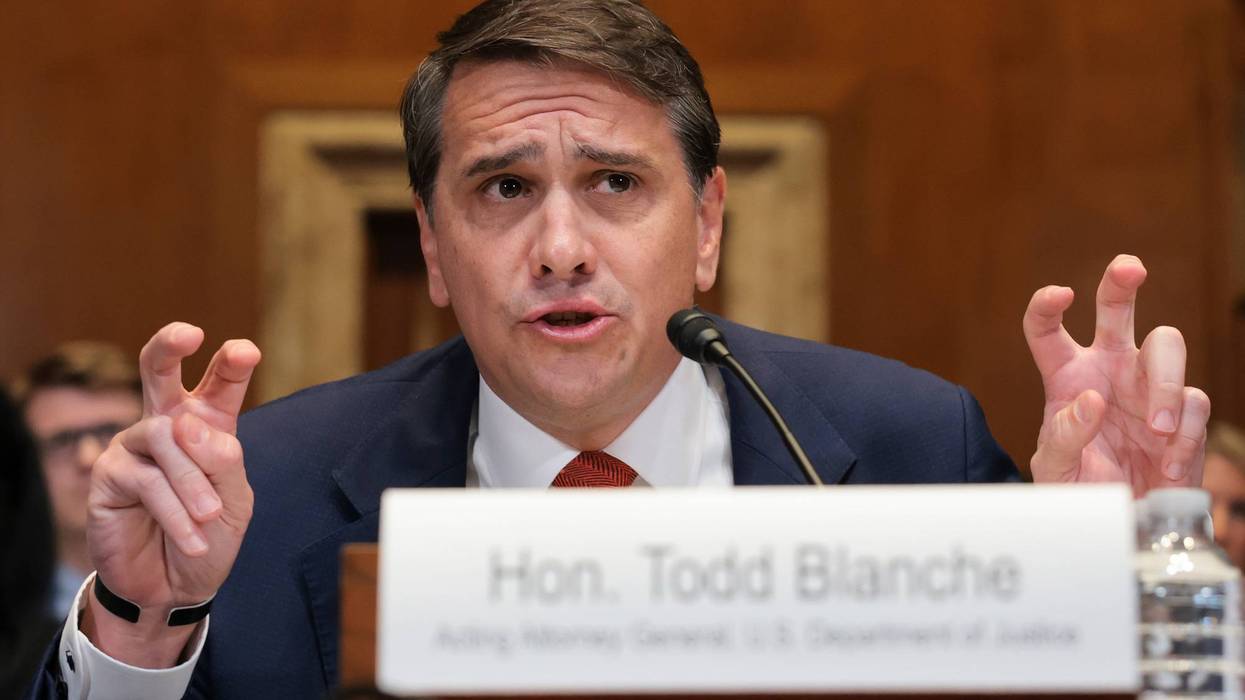
A federal judge on Thursday ordered the US Department of Justice to release more FBI files related to the investigation of late billionaire sex offender Jeffrey Epstein, while finding that acting Attorney General Todd Blanche violated the law that mandated their release.
In his ruling, US District Judge Emmet Sullivan said that Blanche "conceded that he is in violation" of the 2025 Epstein Files Transparency Act, which required the DOJ to release all unclassified files related to the Epstein case, as well as a log detailing justifications for redactions made to the files, by December 19, 2025.
Sullivan noted that Blanche failed to respond substantively to claims made by plaintiff Katie Phang, an attorney and former host on MSNOW who in a lawsuit accused the DOJ of improperly "redacting the names of co-defendants in a draft indictment, the names of individuals identified as 'co-conspirators.'"
Phang also alleged that Blanche improperly withheld information in the files that incriminated President Donald Trump, including "notes from FBI interviews with a victim who has alleged that in the 1980s, when she was about 13 years old, Epstein introduced her to Trump, who in turn assaulted her."
Sullivan granted Phang's request for a preliminary injunction and gave the DOJ until July 2 to release the information sought in the complaint or provide a more detailed explanation justifying its redaction.
In an analysis of the ruling, former US Attorney Joyce Vance argued that Sullivan was correct on the merits given that the information requested by Phang is "material that the [Epstein Files Transparency Act] clearly called for production of and that the government simply refused to provide, without offering reasons that justified withholding it."
Vance also remarked that "given the items the government must now provide publicly" as a result of Sullivan's ruling, "this is a highly significant development and a real win not just for Katie, but for the victims and the survivors."
Rep. Ro Khanna (D-Calif.), who along with Rep. Thomas Massie (R-Ky.) authored the Epstein Files Transparency Act, celebrated Sullivan's verdict while crediting Phang for forcing the government's hand.
"Thanks to [Phang's] tireless work, we're one step closer to the full release of the Epstein files," wrote Khanna, "and getting survivors the justice they've long deserved."
Brendan Ballou, an attorney representing Phang in the case, told Politico on Thursday that the administration's attempted coverup of the files was slowly coming apart.
"The government ignored its own law and blew off a judge’s order, all for the sake of protecting the very powerful and the very rich,” Ballou said. “Doing so had consequences, and now the public will finally get transparency around Jeffrey Epstein and his network.”
Keep ReadingShow Less

'Historic Victory': Mamdani Delivers on Key Campaign Promise as NYC Board Approves Rent Freeze
"We are so glad to have a partner in Mayor Mamdani who heeded our communities’ years of calls for a rent freeze and understands the needs of working families," said one organizer.
Jun 26, 2026
New York City Mayor Zohran Mamdani and tenant organizers celebrated a "historic victory" on Thursday after the city's Rent Guidelines Board approved a two-year rent freeze affecting roughly a million apartments—around 40% of NYC's rental housing.
The freeze, approved in a 7-1 vote, applies to tenants in rent-stabilized apartments on new one- and two-year leases beginning on or after October 1, 2026. Mamdani, whose mayoral campaign platform vowed to "immediately freeze the rent for all stabilized tenants," said in a statement that the vote provides "the relief that working people across our city deserve."
The mayor, who named six of the rent board's nine members, pledged to "continue working to deliver a more affordable city by building and preserving affordable housing, lowering building operating costs like insurance, and ensuring tenants know their rights."
"I'm grateful for the board members’ thoughtful consideration of the data, including tenants’ ability to pay, cost of living, and building operating costs," said Mamdani.
It might be hot outside but the rent is freezing. pic.twitter.com/EXPaI8emyv
— Mayor Zohran Kwame Mamdani (@NYCMayor) June 26, 2026
Celebrations broke out in response to the vote, with Gothamist reporting that jubilant tenants erupted in applause and "spilled into the street" to cheer the rent freeze, which marked the first time the city board has paused rent for both one- and two-year leases.
"Hundreds of tenants packed the theater at El Museo del Barrio, singing and chanting about tenant power ahead of the board’s decision," Gothamist noted. "Many in attendance, who had helped propel Mamdani’s successful campaign for mayor, which featured a viral vow to 'freeze the rent,' held signs demanding a rent freeze. At least one attendee blew a whistle to punctuate the slogans resonating through the auditorium."
Motion passes, after a lengthy speech acknowledging landlord struggles, Wynn acknowledges a rent freeze is in landlords best interest. A zero percent increase on 1 and 2 year leases beginning Oct. 1 passes unanimously. pic.twitter.com/NwwYUlERKg
— Hannah Fierick (@HannahFNYP) June 25, 2026
Fernanda P., a Brooklyn resident and member of the advocacy group Make the Road New York, said in a statement late Thursday that "our communities have spent years organizing and advocating for a rent freeze, and today our efforts have finally paid off."
"This rent freeze is a relief for the thousands of New Yorkers, like myself, who are struggling every day to pay for increasingly unaffordable housing," said Fernanda. "We are so glad to have a partner in Mayor Mamdani who heeded our communities’ years of calls for a rent freeze and understands the needs of working families. We will continue our fight for a New York that is affordable for everybody.”
Keep ReadingShow Less
Most Popular