October, 04 2010, 02:20pm EDT
For Immediate Release
Contact:
Maggie Martin, IVAW Media Coordinator
912.596.8484
maggiemartin1@gmail.com
Ethan McCord
316.285.6849; navyallday@yahoo.com
Zack Choat
678.986.0617; zach.choate@hotmail.com
Afghanistan & Iraq Vets Call for an End to Deployment of Traumatized Troops
Veterans launch historic campaign on 9 year anniversary of Afghanistan War
WASHINGTON
October 7th marks the 9-year anniversary of the Afghanistan War, the longest ongoing war in U.S. history. Pressure from fighting two wars has put enormous strain on U.S. troops, with multiple deployments leading to an explosion of Post-traumatic Stress Disorder (PTSD). PTSD makes service members six times more likely to commit suicide. Instead of being treated, troops are often redeployed to combat while still suffering from PTSD, Traumatic Brain Injury, and Military Sexual Trauma. Officials recognize that suicides and violent crimes are on the rise, with four decorated combat vets killing themselves at Ft. Hood in one week. "The emergency issue for me right now is the suicide issue," said Admiral Mike Mullen, Chairman of the Joint Chiefs of Staff, the highest-ranking person in the U.S. armed forces.
WHAT: Afghanistan & Iraq veterans will meet at Walter Reed Army Medical Center and embark on a six-mile march to Capitol Hill to announce the launch of Iraq Veterans Against the War's first veteran-led campaign - Operation Recovery: Stop the Deployment of Traumatized Troops. Service members will testify about their experiences being redeployed while traumatized. A letter will be read publicly and delivered to government and military officials requesting an end to the deployment of traumatized troops. Veterans will voice opposition to the ongoing occupations of Iraq and Afghanistan.
WHO: Iraq Veterans Against the War (Afghanistan & Iraq vets), Ethan McCord of Wikileaks "Collateral Murder" video, Civilian Soldier Alliance, Military Families Speak Out
WHEN/WHERE: Thursday, October 7th, 2010
10:15 Meet at Walter Reed Army Medical Center, 6900 Georgia Ave NW, Washington DC 20307
10:45 March begins
1:30 Press conference at Delaware Ave. NE and C St. NE 20510
WHY: Multiple deployments cause PTSD and increased incidents of suicides and violent crimes among service members, exemplified by the recent Ft. Hood suicides and twelve soldiers in Afghanistan who formed a "kill team" targeting civilians and collecting body parts as trophies. The occupations carry high human costs at home and abroad, while draining vast resources from American taxpayers during a recession. Furthermore, the strategy and objectives of the Afghanistan War remain questionable. Opposition to the occupations is growing within the military.
"I was denied treatment for the mental and physical wounds I sustained in battle, like so many others," says Ethan McCord, a veteran whose unit was captured in the "Collateral Murder" video distributed by Wikileaks. "IVAW's campaign is critical for soldiers because we are asserting our right to heal. Now, the government has a choice - will it recognize our right to heal, or deny it?"
VISUALS: Veterans marching, uniforms, banners, signs, press conference, Walter Reed
Matt Howard, Communications Director 646.723.0989Media@ivaw.org
LATEST NEWS
'Ruinous Venture' Alligator Alcatraz Closes, But Systemic Abuse of Immigrants Continues
"The fact that this site ever existed is a travesty, given the cruelty behind it, horrific conditions, and blatant violations of due process," said the deputy director of the ACLU's National Prison Project.
Jun 25, 2026
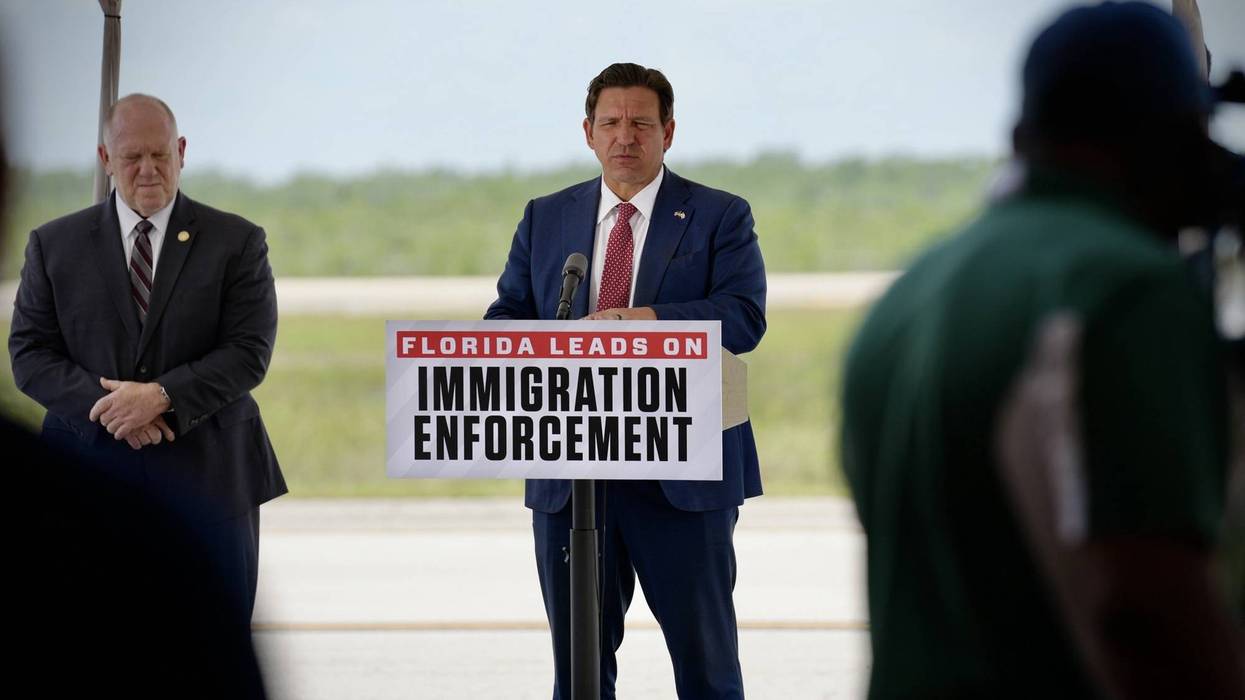
While welcoming Republican Florida Gov. Ron DeSantis' confirmation on Thursday that the immigrant detention center dubbed "Alligator Alcatraz" has closed, rights advocates also renewed criticism of how immigrants are being treated across the country as President Donald Trump continues his deadly push for mass detention and deportations.
The facility in the Everglades opened last summer despite concerns about both human rights and the environmental impact. DeSantis said Thursday that "Florida led the way in increasing much-needed detention capacity and working with our federal partners to streamline deportations, removing thousands of the most dangerous criminal aliens from our country."
Despite claims from the president and his allies, federal data have shown that most immigrants detained during his second term lack criminal convictions. In addition to flooding US streets with agents from Customs and Border Protection as well as Immigration and Customs Enforcement, Trump has repeatedly demanded that Congress give CBP and ICE more funding.
"Our detention operations support has led to nearly 30,000 additional deportations, and Florida accounts for more than 40% of all state/local immigration arrests nationwide," DeSantis added Thursday. "Alligator Alcatraz has fulfilled this mission. Detainees who are still awaiting deportation have been transferred to other federal facilities, and demobilization efforts are underway."
Responding to the governor on social media, Thomas Kennedy of the Florida Immigrant Coalition said: "You wasted more than $1 billion of Florida's emergency response fund on a failed PR stunt that hurt people and destroyed families. You should never be anywhere near public office again."
As The Associated Press noted Thursday:
Immigration advocates said the center’s tents were never safe or humane for holding people. Detainees at the facility have talked about their difficulty accessing lawyers and described poor physical conditions, including worms in the food, toilets that didn't flush, floors flooded with fecal waste, and mosquitoes and other insects everywhere.
They described large white tents with rows of and rows of bunk beds surrounded by chain-link cages. The air conditioning could shut off abruptly in the sweltering Florida heat. Detainees could go days without showering or getting prescription medicine.
The state and national ACLU as well as Americans for Immigrant Justice (AIJ) had sued over the facility last year.
"The fact that this site ever existed is a travesty, given the cruelty behind it, horrific conditions, and blatant violations of due process. We challenged the Trump administration and the state of Florida over the facility, and now celebrate its closure," Carmen Iguina González, deputy director for immigration detention with the ACLU's National Prison Project, said Thursday.
Keisha Mulfort, deputy executive director and strategy officer of the ACLU of Florida, declared that "with its official closure, 'Alligator Alcatraz' seals its reputation as a ruinous venture. This detention center stands as a monument to what happens when a state government abandons its conscience in service of a federal cruelty agenda."
"The DeSantis administration deliberately built a detention facility in the middle of the Everglades—not despite the harsh conditions, but because of them—and spent over $1 billion of Florida taxpayers' money to do it," she pointed out. "That is not governance; that is cruelty dressed up as policy, and complicity dressed up as leadership. In spite of this, hundreds of thousands of Floridians protested, organized, called their legislators, and refused to look away. They made this moment possible, and we should name that clearly: This is what accountability looks like when the government won't hold itself accountable."
Mulfort also stressed that "as people are transferred to other facilities, the abuses do not disappear—they relocate." She and Iguina González pledged that the state and national ACLU will not stop tracking abuses of immigrants across the country.
"The nightmarish scene found at 'Alligator Alcatraz' is not wholly unique and reflects systemic patterns of abuse at other ICE detention facilities nationwide," Iguina González said. "We remain very concerned that people may be transferred to other sites with sordid and dangerous conditions, and we will continue to monitor this situation."
Paul Chavez, director of litigation and advocacy at AIJ, also emphasized that "closing this facility is an important step, but the government's obligation to respect due process does not end at the facility gates. Constitutional rights must follow every person wherever they are detained."
"We remain deeply concerned that people transferred out of this facility will continue to face mistreatment and civil rights violations in other detention centers," he said. "Americans for Immigrant Justice will continue to defend due process, offer free legal representation to low-income immigrants, and stand strong with our immigrant neighbors, friends, and their families."
After using $1 billion to brutalize immigrants, the concentration camp known as "Alligator Alcatraz" has been emptied. Its victims still need justice.truthout.org/articles/flo...
[image or embed]
— UAINE (@mahtowin1.bsky.social) June 22, 2026 at 10:36 PM
As for the environmental impact, The New York Times reported that after the Trump administration announced that detainees had been relocated, Paul J. Schwiep, an attorney for groups suing over Alligator Alcatraz, promised last week to continue the lawsuit against what he called the "secret gulag in the Everglades."
"They hope that they can slink away in the middle of the night without explaining to anyone what they did, why they did it, or how they proposed to clean up the mess that they've made," said Schwiep. "And we don't intend to let them get away with it."
Ripping the facility as an "internment camp," Congressman Maxwell Frost (D-Fla.) similarly asserted on Thursday that "the fight isn't over. We need accountability for the billions of taxpayer dollars wasted, the abuse and harm inflicted on detainees, and the damage done to one of Florida's most sacred ecosystems."
Keep ReadingShow Less
Advocates Renew Call for End to US Sanctions After Devastating Venezuela Earthquakes
"This is the time for cooperation, compassion, and respect for Venezuela’s sovereignty," said CodePink.
Jun 25, 2026
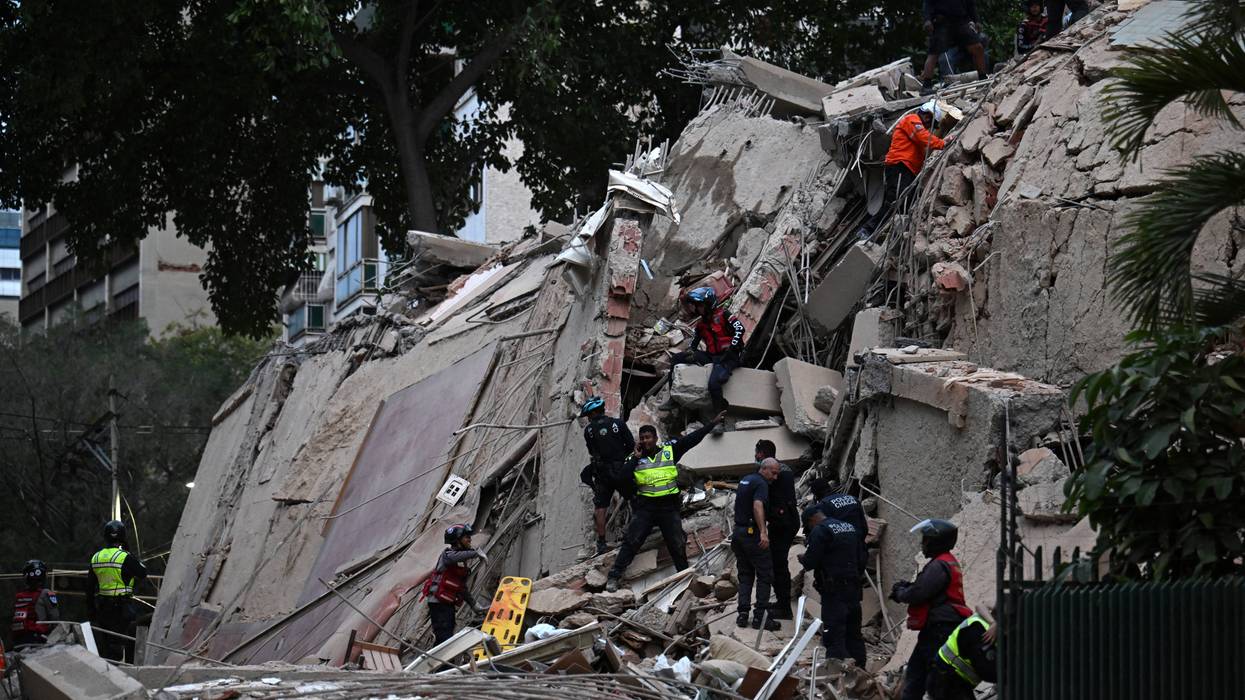
Human rights groups on Thursday implored the United States and allied countries to lift all sanctions against Venezuela—which experts say have already killed tens of thousands of people—as the beleaguered South American country reels from Wednesday's devastating earthquakes.
At least 188 people are dead and over 1,500 others injured, with those figures almost certain to rise, following a 7.2-magnitude temblor centered in San Felipe, Yaracuy—about 100 miles west of Caracas—and a 7.5-magnitude quake that struck less than a minute later, also in centered in Yaracuy.
US President Donald Trump, who authorized the illegal invasion of Venezuela and adbuction of President Nicolás Maduro earlier this year, wrote on social media after the earthquakes that his administration “stands ready, willing, and able to help."
“We will be there for our new and great friends," Trump claimed.
Delcy Rodríguez, Maduro's vice president and acting president since his ouster, thanked the Trump administration for "offering support and solidarity to the people of Venezuela in the face of this tragedy that has plunged us into mourning."
However, US sanctions—first imposed during then-President George W. Bush's second term while Hugo Chávez was leading Venezuela and ramped up under the Obama, Trump, and Biden administrations—remain in place, complicating relief efforts after one of the country's worst-ever natural disasters.
While the Trump administration has issued narrow exemptions from sanctions to companies looking to profit from Venezuela's crisis and copious natural resources, primarily oil, these waivers have not delivered broad relief to the people who need it most.
"Today’s catastrophe makes clear what we have long argued: When a country is deliberately weakened through economic warfare, its ability to prepare for, respond to, and recover from disasters is also weakened," the US-based peace group CodePink said in a statement. "The United States has a responsibility to help address the humanitarian consequences of the policies it has imposed."
🇻🇪 CODEPINK extends our deepest condolences to the people of Venezuela following the devastating earthquakes that have taken hundreds of lives, injured thousands, and left entire communities in urgent need of assistance.Our full statement: buff.ly/QzYcQ3p
[image or embed]
— CODEPINK (@codepink.bsky.social) June 25, 2026 at 2:22 PM
CodePink continued:
Too often, we’ve seen the US and other Western countries exploit natural disasters like this in order to deepen foreign control. In Haiti, the US and its allies have repeatedly pushed militarization and politically conditioned aid instead of genuine recovery led by the country itself. In this moment, the world must refuse to allow Venezuela to be forced down the same path.
We also call on the administration to immediately lift all US sanctions on Venezuela and release Venezuelan funds under US jurisdiction so they can be used for emergency relief, reconstruction, and recovery.
"This is the time for cooperation, compassion, and respect for Venezuela’s sovereignty," CodePink added. "We urge the international community to support relief efforts and stand with the Venezuelan people as they rebuild their homes, their communities, and their future."
The Center for Economic and Policy Research (CEPR), a Washington, DC-based think tank, said Thursday that "while the Trump administration has issued a series of general licenses to allow foreign businesses and banks to operate in Venezuela in spite of US sanctions, the continued existence of these sanctions significantly discourages international economic and financial actors from expanding operations there."
CEPR co-director Mark Weisbrot said that “we must remember that Venezuela suffered the worst depression in the history of the world, without a war, due to illegal US economic sanctions."
"This deadly destruction was not a mistake, but an expected result that would happen to any country that was cut off by sanctions from the international financial system, and also from the vast majority of its foreign exchange earnings from exports," he continued.
According to a 2019 CEPR report, as many as 40,000 Venezuelans died due to sanctions during the previous two years. The sanctions ostensibly targeted Maduro's government, but made it much more difficult for millions of people to obtain food, medicine, and other necessities.
“Tens of thousands, and more likely hundreds of thousands, of Venezuelans died as a result of those sanctions," Weisbrot said Thursday. "The United States is therefore obligated to help prevent further loss of life in Venezuela."
Keep ReadingShow Less
Rights Groups Argue Trump Orders Have 'Murdered Over 210 Civilians With No Sound Legal or Moral Basis'
“By claiming that these attacks are legal while refusing to provide any evidence or rationale, President Trump shows once again his disdain for basic transparency, human rights, and the rule of law."
Jun 25, 2026
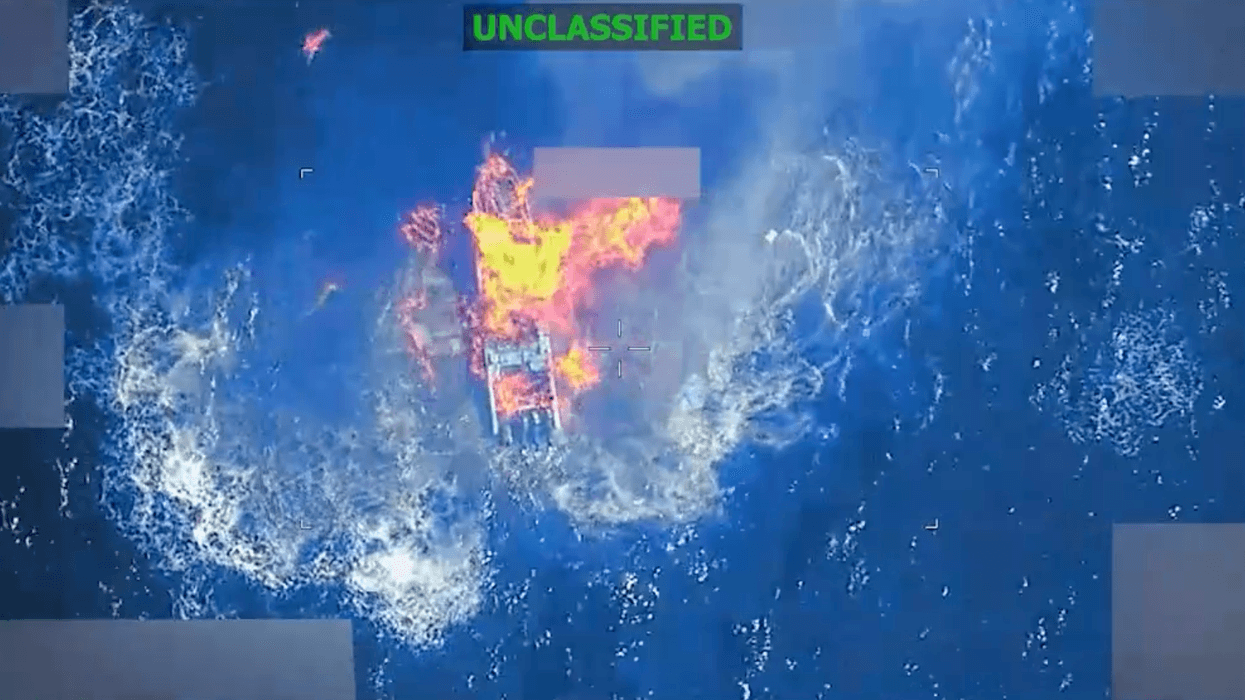
Civil rights groups squared off against the Trump administration in a New York federal court on Wednesday, with the former seeking to compel the release of a secret Department of Justice memo being used to justify illegal bombings of alleged narco-trafficking boats and the latter claiming executive privilege in a bid to avert the document's disclosure.
President Donald Trump signed an executive order on the first day of his second term designating drug cartels as foreign terrorist organizations and then reportedly signed a secret order directing the Pentagon to use military force against them. Last July, the DOJ's Office of Legal Counsel (OLC) issued a classified opinion providing the legal rationale for the strikes, which international law experts around the world contend are illegal acts of murder and possibly war crimes or even crimes against humanity.
The ACLU, New York Civil Liberties Union (NYCLU), and the Center for Constitutional Rights (CCR) argued in the US District Court for the Southern District of New York that the Trump administration cannot conceal its legal justification for boat strikes from the American people while repeatedly referring to it.
“People across the country, politicians across the aisle, and the families of victims have been demanding answers as to how our government is justifying the cold-blooded murder of civilians,” ACLU National Security Project staff attorney Jeffrey Stein said in a statement. “The Trump administration has murdered over 210 civilians with no sound legal or moral basis. At a minimum, the administration must disclose to the American people why it thinks this killing spree is lawful.”
The DOJ, which is seeking a summary judgment, claimed that the memo contains classified and highly sensitive information that, if disclosed, would compromise intelligence operations and sources. DOJ attorneys argued that executive privilege shields the memo from disclosure.
“Wouldn’t that be true of any OLC memo?f” US District Judge Paul Engelmayer countered, according to Courthouse News Service. “Is it the government’s position that any presidential communications privilege cannot be waived?"
Stein asserted that the boat strikes are being carried out "on the basis of secret law" that "has no place in a democratic society" and dismissed the government's claim as “contrary to the foundational presidential communications privileges" in Freedom of Information Act cases.
CCR legal director Baher Azmy accused the Trump administration of "displacing the fundamental mandates of international law with the phony wartime rhetoric of a basic autocrat."
“If the OLC opinion seeks to dress up the obvious illegality of these serial homicides in legalese in order to provide cover, the public needs to see this analysis and ultimately hold accountable all those who facilitate murder in the United States’ name," he added.
CCR said that the OLC memo "supposedly validates the ongoing strikes as lawful acts in an alleged 'armed conflict' with unspecified 'drug cartels.'"
"Reportedly, the memo also purports to immunize personnel who authorized or took part in these unlawful strikes from future criminal prosecution for what would otherwise simply be homicides," the group added.
As CCR said Wednesday:
Contrary to the government’s public assertions, the US is not, and could not be, in an armed conflict with Latin American drug cartels. Under international law, an armed conflict between a state and a nonstate actor exists only if the nonstate actor is an “organized armed group” that is structured and disciplined like regular armed forces and is engaged in “protracted armed violence” against the state. There is no plausible argument that any drug cartel satisfies this test vis-à-vis the United States.
Even if the OLC does release the memo, it doesn't mean that its arguments are actually legal under international law. OLC lawyers have notoriously written opinions that affirm the purported legality of their administration's policies, from John Yoo positing during former President George W. Bush's War on Terror that detainee abuse only crossed the threshold of torture when the pain inflicted upon the victim was equal to “organ failure, impairment of bodily function, or even death," to the Obama-era OLC determining that the president could order the extrajudicial assassination of US citizens under certain circumstances.
Since last September, US Southern Command (SOUTHCOM) has publicly disclosed 66 strikes on boats in the Caribbean Sea and Pacific Ocean that it has claimed—without providing evidence—were involved in "narco-trafficking operations." The bombings have killed 215 people and left around a dozen survivors, according to a strike tracker published by The Intercept. In the first of the attacks, a special operations commander ordered a second strike that killed two survivors, reportedly on orders from Defense Secretary Pete Hegseth to "kill everybody."
Relatives of people killed in previous US boat bombings, as well as officials in Venezuela and Colombia, have said that numerous victims were fishers who were not involved in the illicit drug trade. In January, relatives of two Trinidadian fishers killed in the strikes filed a federal wrongful death lawsuit in Massachusetts.
NYCLU staff attorney Ify Chikezie said Wednesday that "the public deserves to know how the Trump administration is rubber-stamping the killing of civilians."
“By claiming that these attacks are legal while refusing to provide any evidence or rationale, President Trump shows once again his disdain for basic transparency, human rights, and the rule of law," Chikezie added. "The court must step in and order the administration to release these documents immediately.”
Keep ReadingShow Less
Most Popular