

SUBSCRIBE TO OUR FREE NEWSLETTER
Daily news & progressive opinion—funded by the people, not the corporations—delivered straight to your inbox.
5
#000000
#FFFFFF
To donate by check, phone, or other method, see our More Ways to Give page.
Daily news & progressive opinion—funded by the people, not the corporations—delivered straight to your inbox.

David Guest, Earthjustice, (850) 681-0031, X 103
Robert Wiygul, Waltzer& Wiygul, (228) 990-1228
Joel Waltzer, Waltzer & Wiygul, (504) 430-0844
Cynthia Sarthou, Gulf Restoration Network, (504) 525-1528 ext. 202
Kristina Johnson, Sierra Club, (415) 977-5619
The Gulf Restoration Network and the Sierra Club filed a lawsuit
against the U.S. Minerals Management Service for exempting oil companies
drilling in the Gulf of Mexico from disclosing blowout and worst case oil spill
scenarios, as well as formulating detailed plans for such. The groups are
represented by Earthjustice, an environmental law firm, and the New Orleans law
firm of Waltzer & Wiygul.
"I've worked for 15 years to protect and restore the beaches, wetlands and
wildlife of the Gulf of Mexico," said Cynthia Sarthou of the Gulf Restoration
Network. "We are bracing ourselves against the environmental catastrophe this
will bring. BP's drilling disaster will
likely destroy countless victories we've won for a healthy Gulf."
By law, MMS is required to include blowout and worst case oil spill scenarios
before approving exploratory offshore drilling plans. These blow out and
worst case scenario disclosures must include the maximum volume of oil, the
maximum flow rate, the maximum duration of the blowout, and an estimate of the
time it would take to contain the resulting oil spill.
For the BP Deepwater Horizon rig exploration plan, MMS approved the plan
without this required step because MMS had issued a notice to oil companies
telling them that they didn't have to comply with those blowout and worst case
oil spill rules. Additionally, MMS was required by law to produce an analysis
of potential environmental impacts in the event of a blow-out; but failed to
take that necessary step as well.
"The basic problem here is that the Minerals Management Service tried to change
the law without telling anybody," said Robert Wiygul, an environmental lawyer
involved in the lawsuit. "That's bad policy, and the BP mess proves it's a
disaster for the environment."
This legal challenge asks the court to invalidate the MMS practice of sending
notices to oil companies informing them that they don't have to comply with the
rules and to order review of existing offshore drilling plans that do not
comply with existing rules.
"This case is about lax regulation by the Minerals Management Service" said
Earthjustice attorney David Guest. "It is actually easier to get a permit
for an offshore oil well than for a hot dog stand."
"The MMS failed to protect us from the worst-case scenario of offshore drilling
and now we are watching this scenario play out before our eyes," said Sierra
Club executive director Michael Brune. "Response to the blowout has included
desperate measures like lighting the sea on fire, pouring potent chemicals into
the water, using trash and human hair to prevent the flow of oil, and proposals
to dredge the sea and create new barrier islands. If oil companies aren't
capable of responding to a blowout, they shouldn't be permitted to drill."
"Our government clearly missed the painful engineering lessons taught by the
design failures that caused our levees to collapse in Hurricane Katrina.
When analysis of real data is abandoned in favor of assumption, disaster is
sure to follow," said Joel Waltzer, a New Orleans lawyer who had lost his
home to failed floodwalls in Katrina. "Is the bottom of the ocean that
different south of Louisiana and Mississippi?"
ADDITIONAL RESOURCES:
Note to lessees: https://www.earthjustice.org/library/legal_docs/gomr-ntl-08-g04.pdf
Earthjustice is a non-profit public interest law firm dedicated to protecting the magnificent places, natural resources, and wildlife of this earth, and to defending the right of all people to a healthy environment. We bring about far-reaching change by enforcing and strengthening environmental laws on behalf of hundreds of organizations, coalitions and communities.
800-584-6460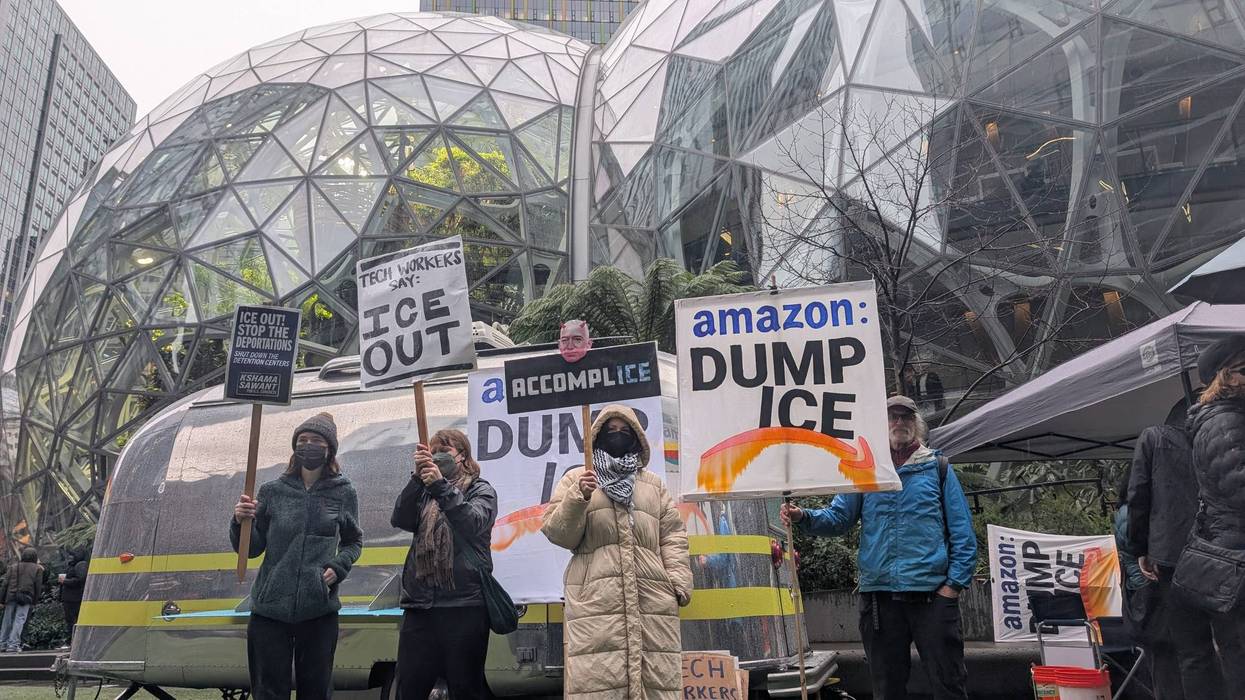
"Amazon knows that we know now that they are facilitating and profiting from the rise of a supercharged surveillance state that does not respect human rights or the rule of law, and it must end,” one participant said.
As backlash against Big Tech’s complicity with President Donald Trump’s authoritarian agenda grows, 200 to 250 people gathered on a rainy Seattle afternoon outside Amazon’s headquarters on Friday to demand that the company “dump” its support for Immigration and Customs Enforcement and Customs and Border Protection, which they illustrated by dumping ice onto the grass.
The protest came one day after Amazon-owned Ring announced it would cut ties with law-enforcement tech company Flock Safety, a move that followed public backlash after a Super Bowl ad showcased a “Search Party” feature that activates a network of Ring cameras and uses artificial intelligence for neighborhood surveillance. Ending the partnership with Flock had originally been one of the Seattle protesters’ three demands.
“Our third demand has already been met—which shows that these companies are waking up to how appalled regular people are about the dystopia they're creating for us," organizer Emily Johnston said in a statement.
Johnston said the backlash, as well as nationwide protests against Target’s complicity with ICE and an open letter from Google employees calling on that company to disclose and divest from its dealings with ICE and CBP, meant “it’s clear that we have momentum.”
“We want them to see that partnering with Palantir was a mistake and hosting ICE and CBP on Amazon Web Services was a mistake."
“No one wants surveillance and state violence except those who are profiting from it—and Amazon's thriving depends on both its workers and customers,” Johnston continued. “We have leverage, and we're going to use it."
The protesters on Friday called on Amazon to go further by stopping to host ICE and CBP on Amazon Web Services and ending its partnership with Palantir that also facilitates deportations and surveillance.
“Corporations for years have not only been complicit, but active beneficiaries of the tax money needlessly spent to tear apart immigrant families and communities,” Guadalupe of participating group La Resistencia said in a statement. “Tech plays a bigger role today more than ever in empowering ICE surveillance and its apparatuses of control.”
Eliza Pan, the co-founder of Amazon Employees for Climate Justice (AECJ), told the crowd that Ring dropping the Flock contract was “a big victory for every single person here.”
“We’re adding to that pressure by being here together,” she said. “Amazon knew about this rally, and knows that this is the first of many if they do not end these other partnerships. Amazon knows that we know now that they are facilitating and profiting from the rise of a supercharged surveillance state that does not respect human rights or the rule of law, and it must end.”
The Ring ad featured at the Super Bowl did not mention Flock and showed the Search Party feature being used to find lost dogs, yet viewers and advocates could easily imagine the technology being used in more invasive ways.
“The addition of AI-driven biometric identification is the latest entry in the company’s history of profiting off of public safety worries and disregard for individual privacy, one that turbocharges the extreme dangers of allowing this to carry on,” Beryl Lipton of the Electronic Frontier Foundation said in response to the ad. “People need to reject this kind of disingenuous framing and recognize the potential end result: a scary overreach of the surveillance state designed to catch us all in its net.”
The widely negative response told Amazon that partnering with Flock “was a mistake,” protest organizer Evan Sutton told Common Dreams.
“We want them to see that partnering with Palantir was a mistake and hosting ICE and CBP on Amazon Web Services was a mistake,” he said.
The protest was organized by local tech worker, immigrant justice, and other activist groups including AECJ, No Tech for Apartheid, Defend Immigrants Alliance, La Resistencia, Troublemakers, Washington for All, Seattle Indivisible, Seattle DSA, 350 Seattle, and Southend Indivisible.
The protesters gathered for about an hour to listen to six speakers, including progressive Seattle City Councilmember Alexis Mercedes Rinck. They distributed a flyer to Amazon employees and other passersby with a QR-code link for employees to connect with AECJ.
The demonstration reflects a growing frustration with the Trump-Tech alliance, both nationally and locally.
“We are seeing the American technocrats just full body hug the Trump administration right now, and in the case of Amazon, it’s a company that was born in Seattle, that has made Seattle home, that benefits from all the wonderful things about Seattle and is completely betraying Seattle values by profiting off of the industrial deportation complex and cuddling up to the Trump administration,” Sutton told Common Dreams.
He pointed out that on the night of the day that a CBP agent murdered Alex Pretti, Amazon CEO Andy Jassy attended a private White House premiere for the Melenia movie.
“We have a duty to let these companies know that we won’t stand for it,” he said.
“This historic strike built an unbreakable solidarity across our city, among families, students, educators, and community," said San Francisco's teachers union.
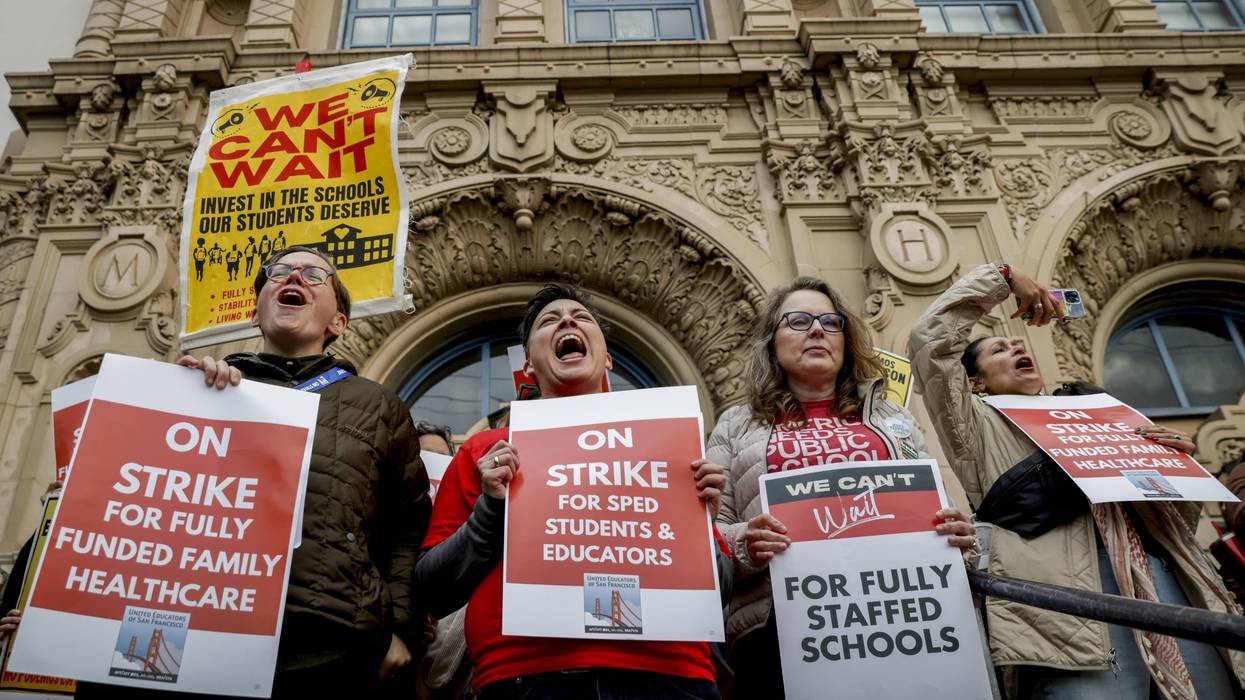
San Francisco public school teachers and their union celebrated Friday after negotiating a tentative agreement for a new contract with higher pay and fully funded family healthcare, ending a four-day walkout that was the city's first educator strike in nearly half a century.
United Educators of San Francisco (UESF) said its bargaining team reached a two-year tentative deal with the San Francisco Unified School District (SFUSD) at around 5:30 am local time Friday. The 120 public schools that were closed due to the walkout by around 6,000 teachers are set to reopen for classes next Wednesday.
"This historic strike built an unbreakable solidarity across our city, among families, students, educators, and community," UESF said in a statement. "This strike has made it clear what is possible when we join together and fight for the stability in our schools that many have said was out of our reach."
The tentative agreement, which follows 11 months of bargaining, includes the union's main demand for fully funded health coverage for dependents; raises of between 5-8.5%; caseload reductions for special educators; sanctuary protections for students and staff; limits on the use of artificial intelligence; preservation and expansion of the Stay Over program for unhoused students and their families; and better working conditions for librarians, substitute teachers, counselors, and other staff.
“By forcing SFUSD to invest in fully funded family healthcare, special education workloads, improved wages, sanctuary and housing protections for San Francisco families, we’ve made important progress towards the schools our students deserve,” said UESF president Cassondra Curiel “This contract is a strong foundation for us to continue to build the safe and stable learning environments our students deserve.”
SFUSD Superintendent Maria Su said in a statement: "I recognize that this past week has been challenging. Thank you to the SFUSD staff, community-based partners, and faith and city leaders who partnered with us to continue centering our students in our work every day."
"I am so proud of the resilience and strength of our community," Su added. "This is a new beginning, and I want to celebrate our diverse community of educators, administrators, parents, and students as we come together and heal."
However, Su also warned that “we do not have enough funds to pay for this year and the next two years," citing SFUSD's over $100 million budget deficit.
The striking teachers enjoyed widespread support and solidarity across the city, including at a massive rally outside City Hall on Monday.
San Francisco’s first public school teachers strike in 47 years started today with picket lines across the city and a rally at Civic Center. Schools will remain closed on Tuesday. Read live updates: https://t.co/5iRAt8eWdu
📝: Ezra Wallach, @low___impact, @allaboutgeorge pic.twitter.com/KMylN2L3fU
— The San Francisco Standard (@sfstandard) February 10, 2026
San Francisco teachers cheered the tentative agreement—especially its coverage of 100% of premiums on family health plans, which run about $1,500 per month, beginning next January.
“That amount of money is life-changing to us,” Balboa High School English teacher Ryan Alias said during a Thursday press conference.
“If we had that in our pocket, we would be able to save for retirement,” added Alias, who has two children in SFUSD schools. "We would be able to save for college funds. We’d be able to save for student loans. We’d be able to pay for art classes for our kids. This is the thing that is going to keep educators in the city.”
"Chairman Thompson appears poised to check off industry's cruel wish list," one critic warned.
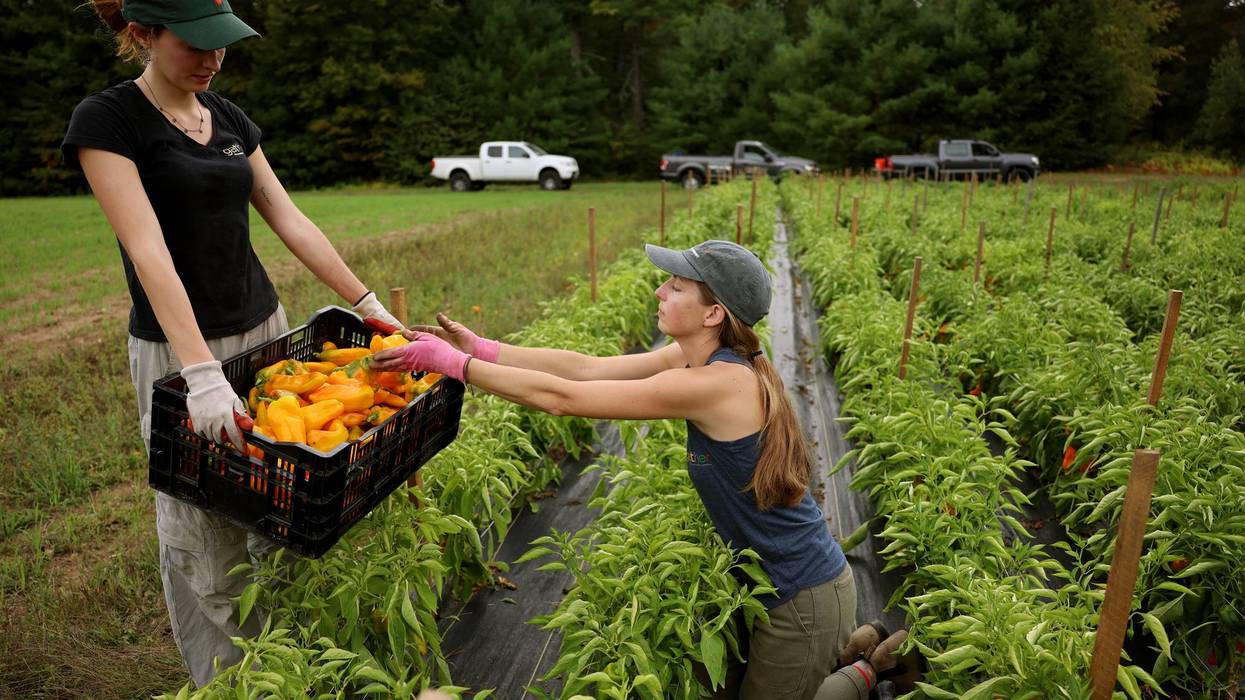
Advocates for animal welfare, environmental protection, public health, and small family farms fiercely condemned various "industry-backed poison pills" in the long-awaited Farm Bill draft unveiled Friday by a key Republican in the US House of Representatives.
"A new Farm Bill is long overdue, and the Farm, Food, and National Security Act of 2026 is an important step forward in providing certainty to our farmers, ranchers, and rural communities," said House Committee on Agriculture Chair Glenn "GT" Thompson (R-Pa.) in a statement.
While Thompson has scheduled a markup of the 802-page proposal for February 23, critics aren't waiting to pick apart the bill, which aligns with a 2024 GOP proposal that was also sharply rebuked. The panel's ranking member, Rep. Angie Craig (D-Minn.), said that from what she has seen so far, the new legislation "fails to meet the moment facing farmers and working people."
"Farmers need Congress to act swiftly to end inflationary tariffs, stabilize trade relationships, expand domestic market opportunities like year-round E15, and help lower input costs," Craig stressed. "The Republican majority instead chose to ignore Democratic priorities and focus on pushing a shell of a farm bill with poison pills that complicates if not derails chances of getting anything done. I strongly urge my Republican colleagues to drop the political charade and work with House Democrats on a truly bipartisan bill to address the very real problems farm country is experiencing right now—before it's too late."
Brett Hartl, government affairs director at the Center for Biological Diversity, similarly blasted the GOP legislation on Friday, declaring that "this Republican Farm Bill proposal is a grotesque, record-breaking giveaway to the pesticide industry that will free Big Ag to accelerate the flow of dangerous poisons into our nation's food supply and waterways."
"This bill would block people suffering from pesticide-linked cancers from suing pesticide makers, eviscerate the EPA's ability to protect rivers and streams from direct pesticide pollution, and give the pesticide industry an unprecedented veto over extinction-preventing safeguards for our nation's most endangered wildlife," he said, referring to the Environmental Protection Agency.
"If Congress passes this monstrosity, it will speed our march toward the dawn of a very real silent spring, a day without fluttering butterflies, chirping frogs, or the chorus of birds at sunrise," Hartl warned. "No one voted for Republicans to allow foreign-owned pesticide conglomerates to dominate the policies that impact the safety of the food every American eats. But this bill leaves no doubt that's exactly who is calling all the shots."
Food & Water Watch (FWW) managing director of policy and litigation Mitch Jones also sounded the alarm about industry-friendly poison pills, arguing that any draft containing the "Cancer Gag Act" that would shield pesticide companies from liability or the Ending Agricultural Trade Suppression Act—which would block state and local policies designed to protect animal welfare, farm workers, and food safety—"must be dead on arrival."
Sara Amundson, president of Humane World Action Fund—formerly called Humane Society Legislative Fund—also made a case against targeting state restrictions for animals like Proposition 12 in California, which the US Supreme Court let stand in 2023, in response to a challenge by the National Pork Producers Council and the American Farm Bureau Federation.
"Once again, the House Agriculture Committee Republican majority is bending to the will of a backwards-facing segment of the pork industry by trying to force through a measure to override the preferences of voters in more than a dozen states, upend the decisions of courts all the way up to the Supreme Court, and trample states' rights all at the same time," Amundson said Friday.
The National Family Farm Coalition highlighted that "instead of addressing the widespread concerns of family-scale farmers—ensuring fair prices for farmers, improving credit access, addressing corporate land consolidation, and creating a trade environment that benefits producers—this draft perpetuates the status quo that enriches and empowers corporate agribusiness. The result is an accelerating farm crisis that continues to hollow out rural communities across the US."
Thompson also faced outrage over other policies left out of the GOP legislation—particularly from those calling for the restoration of $187 billion in cuts to the Supplemental Nutrition Assistance Program (SNAP) that congressional Republicans and President Donald Trump forced through last year with their so-called One Big Beautiful Bill Act (HR 1).
"HR 1 shifts unprecedented costs to already cash-strapped states, expands time limits, and strips food benefits away from caregivers, veterans, older workers, people experiencing homelessness, and humanitarian-based noncitizens," noted Crystal FitzSimons, president of the Food Research & Action Center.
"HR 1 is an unforgiving assault on America's hungry, deliberately dismantling our nation's first line of defense against hunger," she continued. "Yet, when given the opportunity to correct this harm in the latest Farm Bill proposal, Chairman Thompson unveiled a package that will only deepen hunger instead of fixing it. Hunger is not something Congress can afford to ignore."
Jones of FWW said that "families and farmers are hungry for federal policy that supports small- and mid-sized producers and keeps food affordable. Instead, Chairman Thompson appears poised to check off industry's cruel wish list."
"America needs a fair Farm Bill," he emphasized. "It is imperative that this Farm Bill repeal all Trump SNAP cuts and restore full funding to this critical nutrition program; stop the proliferation of factory farms; and support the transition to sustainable, affordable food."