

SUBSCRIBE TO OUR FREE NEWSLETTER
Daily news & progressive opinion—funded by the people, not the corporations—delivered straight to your inbox.
5
#000000
#FFFFFF
To donate by check, phone, or other method, see our More Ways to Give page.
Daily news & progressive opinion—funded by the people, not the corporations—delivered straight to your inbox.

Kirsten Stade (202) 265-7337
The U.S. Environmental Protection Agency has not come clean on its
plan to dramatically raise permissible radioactive release levels,
according to a lawsuit filed today by Public Employees for
Environmental Responsibility (PEER). The new draft standards have been
promulgated in secrecy despite sharp controversy about allowing public
exposure to radiation levels vastly higher than those EPA had
previously deemed unacceptably dangerous.
The plan to
markedly relax radiation standards was signed off on in the final days
of the Bush administration, and suspended by the new Obama
administration prior to its publication. Obama EPA appointees are now
weighing its fate. On June 11, 2009, PEER submitted a request under
the Freedom of Information Act for all of the comments submitted by EPA
and other federal and state agency officials to the EPA Office of
Radiation and Indoor Air (ORIA) as it prepared its updated Protective
Action Guides, which govern radiation protection decisions following
releases from accidents or attacks. PEER had received verbal reports
that both internal and external reviewers registered grave concerns
about the radical relaxation of radiation exposure limits being
proposed.
ORIA has yet to produce a single document requested by PEER, months
beyond the response deadlines mandated under the Freedom of Information
Act. On October 16, 2009, EPA's Office of General Counsel directed
ORIA to comply but conceded that the only way to enforce its order
would be in court. ORIA had not met previous self-announced timelines
for delivery of documents or promises to provide records on a rolling
basis, as they had been cleared for release. Today, PEER filed a
lawsuit in federal district court in Washington, D.C. to compel
production.
"President Obama directed all agencies to act in a transparent way by
placing important documents in the public domain in a timely fashion,"
said PEER Counsel Christine Erickson, who drafted the complaint.
"Avoiding embarrassment is not a legal basis for deception or delay."
The radiation guides are protocols for responding to radiological
incidents ranging from nuclear power-plant accidents to transportation
spills to "dirty" bombs. They would significantly increase allowable
public exposure to radioactivity in drinking water, including a nearly
1000-fold increase in strontium-90, a 3000 to 100,000-fold hike for
iodine-131, and an almost 25,000 increase for nickel-63. The new
radiation guidance would also allow long-term cleanup standards
thousands of times more lax than anything EPA has ever before accepted,
permitting doses to the public that EPA itself estimates would cause a
cancer in as much as every fourth person exposed. These relaxations of
radiation protection requirements are favored by the nuclear industry
and allies in the Nuclear Regulatory Commission and Energy Department.
"EPA has bypassed open dialogue on how much radiation the public will
be allowed to receive in the event of a release, and is now suppressing
evidence of internal dissent on these controversial proposals," stated
PEER Executive Director Jeff Ruch, noting that congressional leaders,
such as Rep. Edward Markey (D-MA), have been expressing concerns about
EPA's intentions. "Who knew that EPA had a Doctor Strangelove wing?"
###
Read the PEER complaint
See the background of the radiation guidance issue
Look at Rep. Markey's news release
View EPA's invitation to sue
PEER protects public employees who protect our environment. We are a service organization for environmental and public health professionals, land managers, scientists, enforcement officers, and other civil servants dedicated to upholding environmental laws and values. We work with current and former federal, state, local, and tribal employees.

US Ambassador to Israel Mike Huckabee—who last year admitted Gazans were starving—was among those noting a new global hunger report by the UN agency that reported the 2025 famine as it unfolded.
For nearly three years, Israeli officials and their US backers have denounced United Nations agencies reporting the facts of Israel's genocidal assault on Gaza as lies, but now many of them are citing the latest global hunger study by the United Nations Children's Fund as proof that last year's famine that killed at least hundreds of Palestinians in the coastal exclave was a "hoax."
The UNICEF-led State of Palestine Nutrition Cluster Coordination Meeting report, published on July 22, shows decreased hunger rates in areas of Gaza accessible to those conducting the survey. With Israeli forces controlling the majority of Gaza's territory and much of the strip flattened and inaccessible, the report's authors warned that "the survey findings should therefore be interpreted as representative."
This did not stop the Israeli government and media, and Israel's supporters and sympathetic media abroad, from citing UNICEF—which on Thursday said that Israel is killing about one child a day in Gaza despite a so-called ceasefire—and the broader UN, which they formerly accused of "lies," "antisemitism," "blood libels," and "hoaxes" throughout a war that a UN commission of inquiry called a genocide.
"Once again, facts prevail over fiction," Israeli Ambassador to the United Nations Danny Danon said. "UN bodies are acknowledging that the false narrative against Israel is falling apart."
US Ambassador to Israel Mike Huckabee may have forgotten his acknowledgement last year—along with President Donald Trump and Vice President JD Vance—that Palestinians were "starving" in Gaza, aspersing the media for reporting on the starvation.
Eylon Levy—the British-Israeli former spokesperson for Israel known for purveying disinformation like the infamous October 7 "beheaded babies" lie—also ran with the narrative, posting on X that "the 'Gaza Famine' was always a hoax."
Except it wasn't.
UN agencies and other humanitarian groups started sounding the alarm on looming starvation in Gaza in the weeks after Israel began annihilating the strip in retaliation for the Hamas-led attack of October 7, 2023. By February 2024, UNICEF warned that "famine is imminent" in Gaza as the UN Office for the Coordination of Humanitarian Affairs cited the deaths of six infants from malnutrition and dehydration.
As Gaza's hunger crisis worsened under Israel's "complete siege," UN agencies, including UNICEF, regularly warned about starvation in the strip. In February 2024, UN officials were accusing Israel of using starvation as a weapon of war—one of the alleged crimes against humanity and war crimes for which Israeli Prime Minister Benjamin Netanyahu and Yoav Gallant, his former defense minister, are wanted by the International Criminal Court in The Hague. Michael Fakhri, the top UN expert on the right to food, accused Israel of genocidal forced starvation of Gazans.
In August 2025, the Integrated Food Security Phase Classification (IPC)—the UN-aided top global authority on hunger crises—declared a Phase 5, or "catastrophic," famine in Gaza as at least hundreds of Palestinians perished from malnutrition and related causes.
“Famine is now a grim reality for children in Gaza," UNICEF executive director Catherine Russell said at the time. “As we have repeatedly warned, the signs were unmistakable: children with wasted bodies, too weak to cry or eat; babies dying from hunger and preventable disease; parents arriving at clinics with nothing left to feed their children."
The IPC lifted Gaza's famine designation in December 2025, citing improved—but still highly restricted—access of humanitarian aid into Gaza following a nominal ceasefire agreement reached two months earlier. However, last month the IPC published an analysis showing that from mid-April to the end of June, more than 1.2 million people, or 59% of Gaza’s population, were experiencing Phase 3 (crisis) or worse levels of food insecurity. This included about 212,000 people in Phase 4 (emergency).
"The situation remains fragile," IPC warned.
Many of the people who deny that Israeli forces have killed or wounded a quarter million Palestinians in Gaza or that Israel is committing genocide there—a conclusion reached by numerous UN officials, scholars, jurists, rights groups, and the approximately 20 nations that formally joined South Africa's pending genocide case against Israel at the International Court of Justice—are the same ones who have denied not only the Gaza famine, but that anyone was ever starving there.
They asked to see photos of starving Palestinians, and when shown them, they, and corporate media outlets including The New York Times, attempted to explain or even dismiss the evidence by claiming the emaciated—or often dead—children suffered from preexisting conditions, as if that somehow absolved Israel for their deaths. Others posted images of a Gaza market stocked with food or overweight Palestinians in a bid to debunk the fact of starvation in Gaza.
Still others dismissed images of starving Gazans as Hamas propaganda, with US media personality Megyn Kelly opining that Palestinians are "fine having their own children starve just as long as they can put them on camera."

"These are the first smart glasses guaranteed to never record nude videos of you and send them to random people. I never thought I’d have to guarantee that, but here we are.”
As Meta faces heat for selling artificial intelligence-powered sunglasses that record people without their knowledge, the web browser DuckDuckGo responded with what it called "the world's most innovative anti-surveillance sunglasses"... otherwise known as normal sunglasses.
Meta, the Big Tech behemoth that owns Facebook and Instagram, likely did not expect to become the subject of relentless scorn and mockery over its new line of "Meta Glasses," which retail for upwards of $299 and have been plugged by the likes of Kylie Jenner.
But internet users have saddled the shades with the nickname "pervert glasses." For good reason: among other high-tech bells and whistles, the latest version is equipped with photo and video technology that some of the clientele have used to discreetly film strangers.
As the Los Angeles Times chronicles, some women have been approached by bespectacled creeps only to later find a recording of the encounter posted online, entirely without their consent. Although the glasses have a white light to indicate that recording is in progress, some elite-tier perverts have found ways to disable it.
DuckDuckGo, a company that has billed itself as an alternative to its data-mining, privacy-violating competitors, responded to the backlash against Meta by partnering with the eyewear company Knockaround and selling its own pair of glasses whose primary gimmick is that they do absolutely nothing but sit on your face.
"No camera, no microphone, no AI, no battery, no electronics of any kind," reads the website, "Just a beautifully crafted pair of matte black sunglasses with a glossy DuckDuckGo logo, designed to block the sun and never send data to the cloud."
“We’re obsessed with innovation. So when Big Tech started putting cameras in smart glasses, we asked ourselves a radical question: What if we just didn’t do that?” a July 30 social media post from DuckDuckGo said. “These are the first smart glasses guaranteed to never record nude videos of you and send them to random people. I never thought I’d have to guarantee that, but here we are.”
This was not merely a hyperbolic what-if. It's been reported that Meta's AI glasses have recorded videos of users having sex and using the bathroom that were then viewed by Kenyan subcontractors involved in manually training Meta's AI systems.
Internal documents have also revealed plans by Meta to embed facial recognition technology into the glasses, which dozens of rights groups, including the American Civil Liberties Union, warned "would allow anyone wearing them to identify by name any strangers in their vicinity—including at protests, medical clinics, and businesses."
After being secretly implemented for a brief period without being accessible to consumers, the technology was rolled back. But concerns remain that it could be added again, and there have been growing calls from lawmakers and privacy groups in the US and Europe to ban the glasses.
One British activist group called Everyone Hates Elon has begun a viral guerrilla marketing campaign against the Meta glasses.
One satirical ad, placed at a bus stop in London, shows the infamous sex criminal Jeffrey Epstein wearing the frames, with the tagline "glasses for people who don't do consent" next to the Meta logo.
"These glasses feel like they’re making perverts’ and abusers’ lives easier when we should actually be making women’s lives easier. They are pervert glasses," a spokesperson for the group told The Times of London. "We wanted to use Jeffrey Epstein to highlight who these glasses will be used by, and it’s powerful men and abusers.”
In this environment, it's perhaps not a surprise that DuckDuckGo's tech-free alternative has been a hit. The company said that within a week, the shades, which cost $35 a pair, had sold out.

"We cannot allow Meta to put its short-term profits above the emotional well-being of our kids," said Sen. Bernie Sanders.
A New Mexico court on Thursday ruled that Meta must pay an additional $567 million fine on top of the $375 million a jury fined the tech giant in March for harms caused to teens and children who use its Instagram and Facebook social media platforms.
First Judicial District Judge Bryan Biedscheid said in his 68-pager ruling that "significant numbers of people in New Mexico experience harm from Meta’s products due to risks of sexual exploitation, interference with education, and adverse mental health outcomes."
"The harm to the impacted New Mexicans is not doubtful, eventual, or contingent, but an immediate, temporally connected, and highly probable result of Meta’s actions," he continued.
"The youth mental health crisis has inflicted significant and widespread harm in New Mexico in terms of the number of youth suffering mental health harms, the profound suffering they and those in their families suffer, and the resulting interferences with the functioning of the schools, law enforcement, [and] healthcare systems in New Mexico," the judge added.
The case centered on allegations that Meta knowingly designed and operated Facebook and Instagram in ways that exposed children to harmful content, encouraged excessive use, and failed to adequately protect minors from exploitation. New Mexico officials argued that internal company knowledge and outside warnings showed Meta was aware of risks associated with its platforms but did not act sufficiently to address them.
Most of the new fine—$420 million—will go toward funding youth treatment services, while the rest is designated for awareness and prevention, screening services, and other costs.
Biedscheid's order also compels Meta to make changes to its platforms in New Mexico, including removing "like" counts and only showing them to minors with parental consent, and prohibiting overnight push notifications for users under age 18.
"Regardless of whether it is labeled as an 'addiction' or 'problematic use,' the evidence at trial proved that design elements, such as autoplay, infinite scroll, 'like counts,' and push notifications create a product that, particularly for adolescent users, is highly rewarding psychologically and neurochemically," he wrote. "As a result, for many, it is irresistibly compelling to start scrolling and very difficult to stop or abstain from its use."
"In addition," the judge added, "algorithmic content recommendations can create harmful feedback loops and 'rabbit hole' users. Within a similar vein, 'like counts'... can provide a potentially harmful focus for adolescent users."
Meta spokesperson Andy Stone said the company would appeal the ruling, claiming: “We work hard to keep people safe on our platforms and have been transparent about the challenges of identifying and removing bad actors and harmful content. We remain confident in our record of protecting teens online and will continue to defend ourselves against claims that misrepresent the facts."
New Mexico Attorney General Raúl Torrez hailed the ruling, saying that “Meta built products it knew would fuel addiction, deepen a youth mental health crisis, and expose children to sexual exploitation, then lied to parents and policymakers about the danger. Today, it pays for that choice.”
At Fairplay—a children's advocacy group—executive director Josh Golin hailed the "landmark ruling" as "the clearest indication yet that the tide is turning when it comes to protecting kids from social media."
"For the first time, Meta is being compelled by a court to change its dangerous and harmful design," he continued. "And with so many states lined up to sue Meta and other social media companies, we should expect to see a lot more injunctive relief to make online platforms used by young people safer."
“This ruling also clearly indicates why families need the Kids Online Safety Act," Golin added, referring to a controversial bill advanced this week by the Senate Commerce Committee. "The judge said it was up to Congress to address the addictive features on Instagram and other social media platforms. KOSA’s duty of care against compulsive use is the key to ensuring that Meta and other social media companies stop designing for addiction, as addictive design is the root of all social media harms.”
Justin Mazzola, deputy director of research at Amnesty International USA, said in a statement: "This verdict is an important step towards creating safer social media for children and young people. For years, Amnesty International has warned that major social media platforms have been designed to maximize engagement and profit, while failing to adequately protect children’s rights."
“Crucially, the court went beyond imposing a financial penalty," he continued. "By ordering changes to platform features, including removing 'like' counts for people under 18 and restricting overnight notifications, the ruling recognizes that the harms children experience online are often the result of deliberate design choices."
“Amnesty has been calling for exactly this kind of action," Mazzola added. "Child safety must be built into platforms from the start, not added as an afterthought once harms are identified. This decision sends a clear message that social media companies cannot continue to prioritize engagement at the expense of children’s well-being and rights.”
Congresswoman Pramila Jayapal (D-Wash.) said on Bluesky: "This is good news. For far too long, Big Tech corporations have put their bottom lines ahead of the health and safety of kids on their platforms."
"Congress must continue to push for accountability and real guardrails for companies like Meta as tech giants continue to grow," added Jayapal, who was critical of the Kids Internet and Digital Safety Act approved by the House of Representatives in June.
US Sen. Bernie Sanders (I-Vt.) also welcomed the ruling, posting on X that billionaire Meta CEO Mark Zuckerberg's "greed is fueling a youth mental health crisis in America."
"Today, a judge ordered Meta to pay a $567 million fine for the damage it has done to our kids," Sanders added. "Good start. We cannot allow Meta to put its short-term profits above the emotional well-being of our kids."
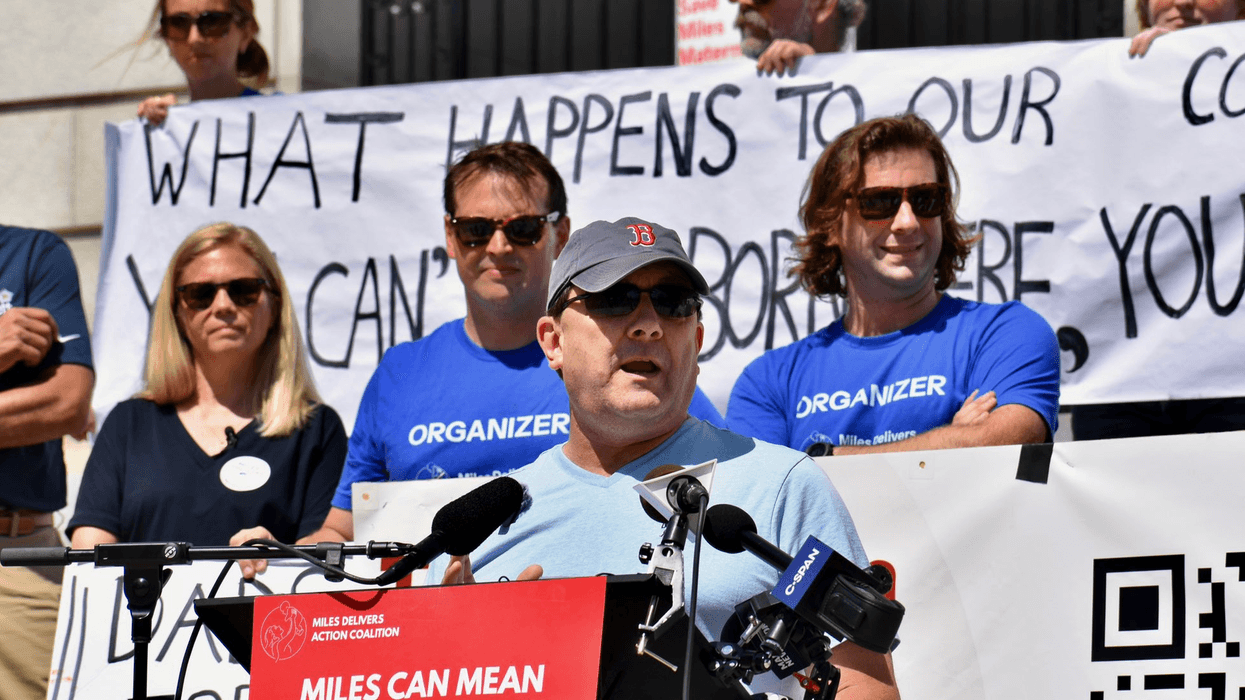
"It's past time that we fix our broken, profit-centered healthcare system that leaves many of us struggling to get care, and most of us struggling to pay for it when we do," said the US Senate candidate.
Democratic US Senate candidate Troy Jackson on Friday was among the Maine leaders expressing anger over the decision by MaineHealth, the state's largest nonprofit healthcare system, to close a labor and delivery unit that's crucial to families in three counties after local residents organized a monthslong grassroots effort to keep the department open.
"I'm angry," said Jackson, the former state Senate president who officially became the Democratic candidate last month. "This marks the 12th labor and delivery ward we've lost in this state since 2015."
With rural hospitals across Maine expected to continue closing—partially due to nearly $3 billion in Medicaid cuts over the next decade, which were included in President Donald Trump's One Big Beautiful Bill Act along with tax cuts for the wealthy—Jackson repeated his call for a government-funded universal healthcare system.
"It's past time that we fix our broken, profit-centered healthcare system that leaves many of us struggling to get care, and most of us struggling to pay for it when we do," said Jackson. "We must pass Medicare for All."
MaineHealth's Board of Trustees voted Thursday in favor of closing the labor and delivery unit at Lincoln Hospital on the health network's Miles Campus in the coastal town of Damariscotta. The decision leaves Lincoln, Waldo, and Sagadahoc counties without any labor and delivery units, and leaves half of the state's 34 hospitals without birthing wards.
The hospital system said it had reached the decision because it cannot "continue providing safe, reliable care for every mother and every baby, every day and every night," according to CEO Andrew Mueller.
Labor and delivery "requires highly specialized teams that are available around the clock and prepared to respond immediately to routine deliveries and unexpected emergencies," said Mueller. "We concluded that we could no longer consistently ensure that level of staffing and clinical coverage at Lincoln Hospital over the long term.”
Cindy Wade, president of Lincoln Hospital, told community members ahead of the vote that the potential closure was "not driven by finance," while acknowledging that staffing is a problem for the facility.
The day before the decision was announced, a woman named Corinna Stum, who had been set to deliver her baby at Miles in January—a month after the unit is set to close—filed a lawsuit in an effort to stop the closure. Stum requested an emergency injunction while the court determines whether MaineHealth violated its obligation to serve the public and be transparent in its review process
A grassroots organization called Miles Delivers Action Coalition, started by three women from the area, has held rallies alongside Jackson, Democratic gubernatorial candidate Hannah Pingree, and other local leaders, as well as working with clinicians to determine how the Miles Campus could deliver sustainable care for parents and babies and finding obstetricians who would be willing to work at the hospital.
The group also examined the finances of the $4 billion healthcare network, finding that the Miles Campus outperformed its parent system in terms of profitability and that deliveries at the hospital are on the rise, despite declining birth rates nationwide.
"A CEO paid $2.2 million should be expected to find solutions, not simply eliminate services," said the coalition as it rallied 10,000 supporters in a matter of months to help convince the hospital to keep the unit open.
When the coalition reached out to MaineHealth with its ideas for continuing to provide maternity services, the company argued that pregnant patients will be able to travel to Mid Coast Hospital for their deliveries—a 26-mile, 43-minute drive from Damariscotta.
When announcing the closure, MaineHealth also suggested families could also transfer their obstetrical care to Pen Bay Hospital, which is roughly the same distance from the town.
Dr. Tim Goltz, a family physician at Miles, told NPR earlier this week: "There's no doubt in my mind that if OB goes away at Miles, that there will be mothers and babies who die because of that decision. The literature is very clear that the further you have to travel to deliver a baby, the higher the risk is of serious complications and death. "
Miles Delivers Action Coalition said the vote on Thursday resulted in "one of the most harmful decisions our community will ever see," and accused MaineHealth of "cowardice."
“They have ignored the voice of our governor, politicians on all sides, the local ambulance service, businesses, far and wide, and they are creating a maternity desert in Lincoln County,” the group said. “This isn’t a hospital, it’s a morgue.”
Former US Senate candidate and organizer Jordan Wood, also an advocate for Medicare for All, said decisions like MaineHealth's would lead Mainers to "lose trust and faith in democracy."
"Millennials, women, moms, young moms, pregnant women organized in our community the minute that news broke that there was a possibility that Miles would close," said Wood. "It can feel like a failure, but it's not... We will fix this problem. This is a setback, it's not a failure."
MaineHealth just voted to close labor and delivery at Miles. The last birthing unit in Lincoln County. You can't make a birth profitable. So this system cuts it. Every time.
This isn’t the end of our fight. pic.twitter.com/fpXLzkAYKi
— Jordan Wood (@JordanWood) August 7, 2026
"There is no way to make labor and delivery profitable," said Wood. "We are living in an absolutely broken healthcare system by profit. By for-profit health insurance companies and pharmaceutical companies that only make money off of us being sick... This is the reminder for so many of us about why this healthcare system is so corrupt and broken and in need of a total overhaul."
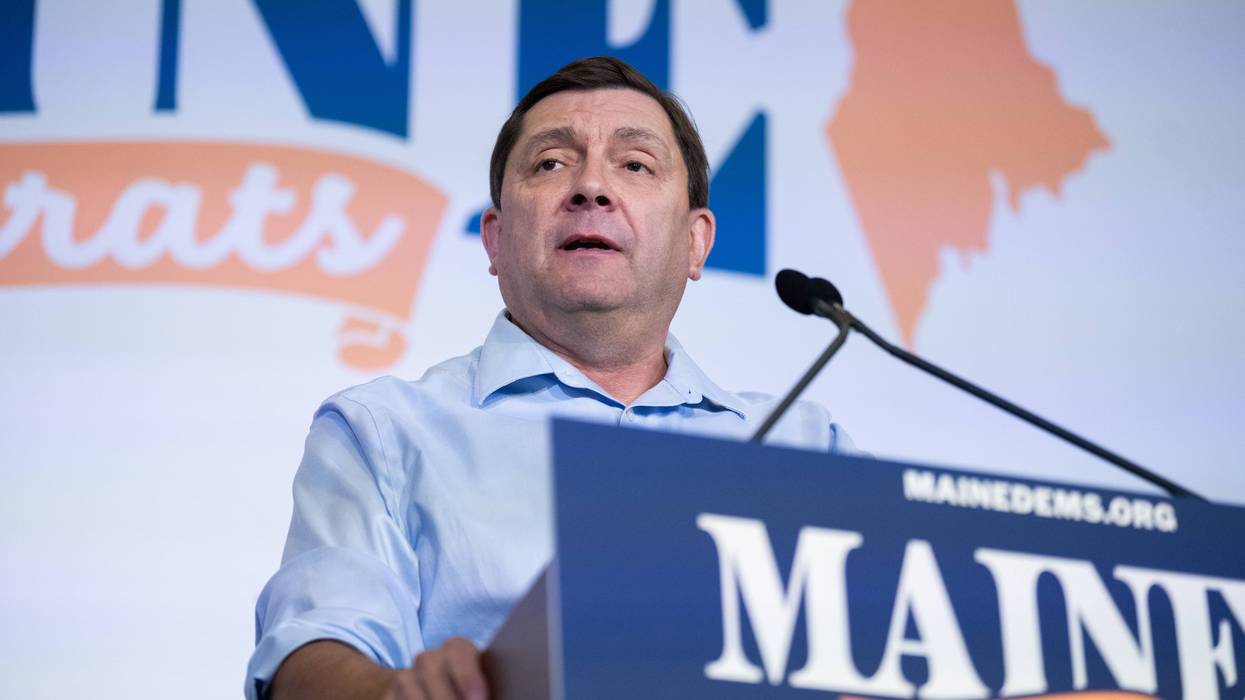
"Susan has voted with Trump 96% of the time. The other 4%? She waits until her vote won’t change the outcome."
Democratic US Senate candidate Troy Jackson on Friday accused rival Sen. Susan Collins of trying to pull the wool over Maine voters' eyes with her decision to vote against confirming Todd Blanche as the next US attorney general.
In a social media post, Jackson pointed to a statement from right-wing radio host John Fredericks praising Collins' (R-Maine) "very savvy team" for having her vote against Blanche while already knowing the former personal attorney for President Donald Trump would have enough support in the US Senate to be confirmed.
"They know that even without her, Blanche has the votes to get confirmed," Fredericks said. "So this was a vote to help her get elected, to help her with Maine voters, but it does nothing to hurt Todd Blanche because he’s already got the votes."
Jackson accused his Republican opponent of participating in a shell game where she arranged to be shielded from what would have been a very damaging vote.
"Weak sauce," wrote Jackson. "Susan has voted with Trump 96% of the time. The other 4%? She waits until her vote won’t change the outcome."
Jackson, the former president of the Maine state Senate, predicted that voters would see right through Collins' ploy.
"Mainers aren’t stupid," wrote Jackson. "We deserve a fighter who will actually stand up to Trump."
Collins earlier this week announced her intention to vote against Blanche, who as assistant attorney general orchestrated Trump's widely criticized $1.8 billion slush fund for political allies.
On Friday morning, Sen. Bill Cassidy (R-La.) announced he would be the final vote needed to drag Blanche's confirmation over the finish line, which led some critics to speculate that Collins knew all along that her vote would not be needed.
Collins in 2018 was a decisive vote in favor of confirming US Supreme Court Justice Brett Kavanaugh. During her speech announcing her vote for Kavanaugh, she insisted that he would uphold the precedent set by Roe v. Wade establishing the constitutional right to an abortion.
Four years later, however, Kavanaugh joined the Supreme Court majority in overturning Roe, and Jackson has been hammering Collins' decisive confirmation vote as a major reason why she must be unseated this fall.
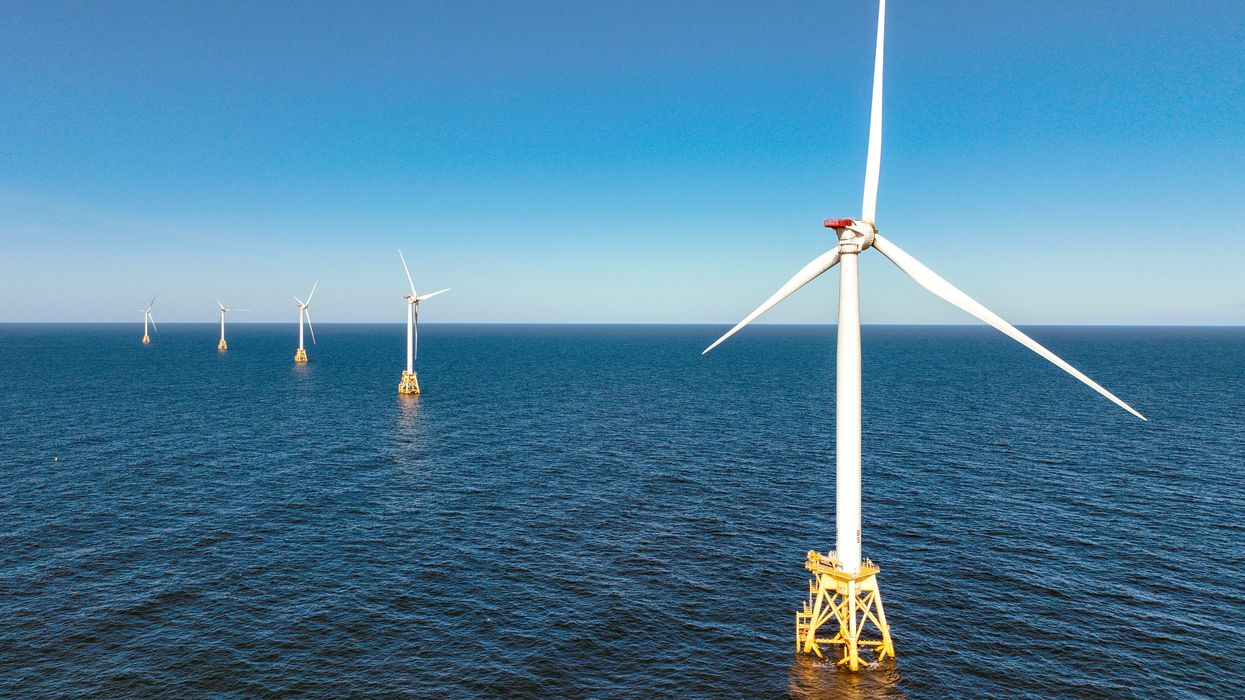
After RWE disclosed its new gas investments as part of the deal, one climate campaigner declared that "committing to reinvest over $1 billion in fossil fuels is a disastrous mistake."
Despite climate concerns and high prices from President Donald Trump's illegal war on Iran, his administration continued its assault on offshore wind this week, using another "taxpayer-funded bribe" to convince a company to instead invest in fossil fuels.
The German company RWE announced Thursday that it had reached a settlement with the US Department of the Interior to relinquish offshore wind leases off the coasts of New York, California, and Louisiana for $1.22 billion.
"After careful consideration, it was determined there is no path forward to permit these projects in the US for the foreseeable future," the firm said in a statement. "The company determined that this resolution best serves the interests of its stakeholders and allows it to direct resources toward energy projects that can be advanced with certainty."
RWE also disclosed that it would put $900 million toward an indirect 16% stake in a Louisiana liquefied natural gas project, and $300 million toward turbines for a pipeline of 15 natural gas peaking projects across target US markets.
Reuters reported that the deal is "the fifth, and largest, the administration has entered into this year as part of its wide-ranging effort to stop development of US offshore wind projects," which Trump has fought against since before becoming president. His current term has featured various moves collectively condemned as a "war against renewables."
The RWE deal was ripped by climate and labor advocates, as well as Senate Minority Leader Chuck Schumer (D-NY), who said that "everything the Trump administration does can be summed up in four words: CORRUPTION AT YOUR EXPENSE."
"Trump is again spending billions of taxpayer money to limit the US energy supply in favor of exporting more energy to countries like China," Schumer wrote on social media. "This will only make your utility bill MORE expensive."
Interior Secretary Doug Burgum fired back at Schumer, claiming that "your climate extremist energy 'transition' was actually energy SUBTRACTION," and "ZERO taxpayer money will be spent. It's a dollar-for-dollar repurposing of RWE's own money."
RWE explained that it had "invested more than $1 billion toward the leases and the development of these projects," and the new agreement resolves the company's "legal claims and provides $1.22 billion in settlement funds."
House Natural Resources Committee Democrats Ranking Member Jared Huffman (D-Calif.) joined Schumer and other critics in railing against the deal, saying Friday: "Trump just paid RWE over $1 BILLION in taxpayer money to walk away from offshore wind projects—including a project off Humboldt in my district—and invest in fossil fuels instead."
"This fake, illegal settlement kills good-paying jobs, raises electricity costs, and rewards Big Oil with taxpayer dollars," he continued. "When the accountability comes, and I promise you it's coming, everyone involved in these deals will answer for it."
This potential settlement has been feared for months. In May, over 50 US groups "alarmed to learn that RWE was contemplating a deal" sent a letter urging CEO Mark Krebber to resist the Trump administration's "bullying" and "vendetta against offshore wind."
Among those organizations was Friends of the Earth US, whose senior energy campaigner Raena Garcia declared Friday that "committing to reinvest over $1 billion in fossil fuels is a disastrous mistake."
"The Trump administration won't be around forever, and any company that cuts a deal like this should expect accountability eventually," Garcia added.
The BlueGreen Alliance, which brings together environmental groups and labor unions, has a webpage tracking the costs of the buyouts, which so far include $3.9 billion in taxpayer money, 21.15 gigawatts of anticipated energy, and over 57,000 projected jobs.
"The Trump administration is relentless in its war on offshore wind," alliance executive director Jason Walsh said of the latest deal. "Billions of taxpayers' dollars have gone to waste along with tens of thousands of lost potential jobs. At a time when energy demand and costs are rising, we are disheartened by this latest buyout. Now working people on three coasts will no longer get to reap the benefits of the clean and reliable energy that would have come from these projects."
The settlements still face legal hurdles. New York Attorney General Letitia James announced in June that she is leading a coalition that includes AGs from Connecticut, Maine, Massachusetts, New Jersey, Rhode Island, and Vermont in a lawsuit seeking to block one of them. California Attorney General Rob Bonta has sent a notice of intent to sue over another deal.
Despite Big Oil-backed Trump's attacks on renewables and support for climate-wrecking fossil fuels, new data shows that the United States is generating more power from the sun and wind than ever, as Common Dreams reported earlier Friday.
For example, in May, solar generation eclipsed every other source of electricity in Utah for the first time. Weber State University physics professor Dan Schroeder said that is "wonderful news for air quality, it's wonderful news for the climate, and it's wonderful news for jobs and the economy."
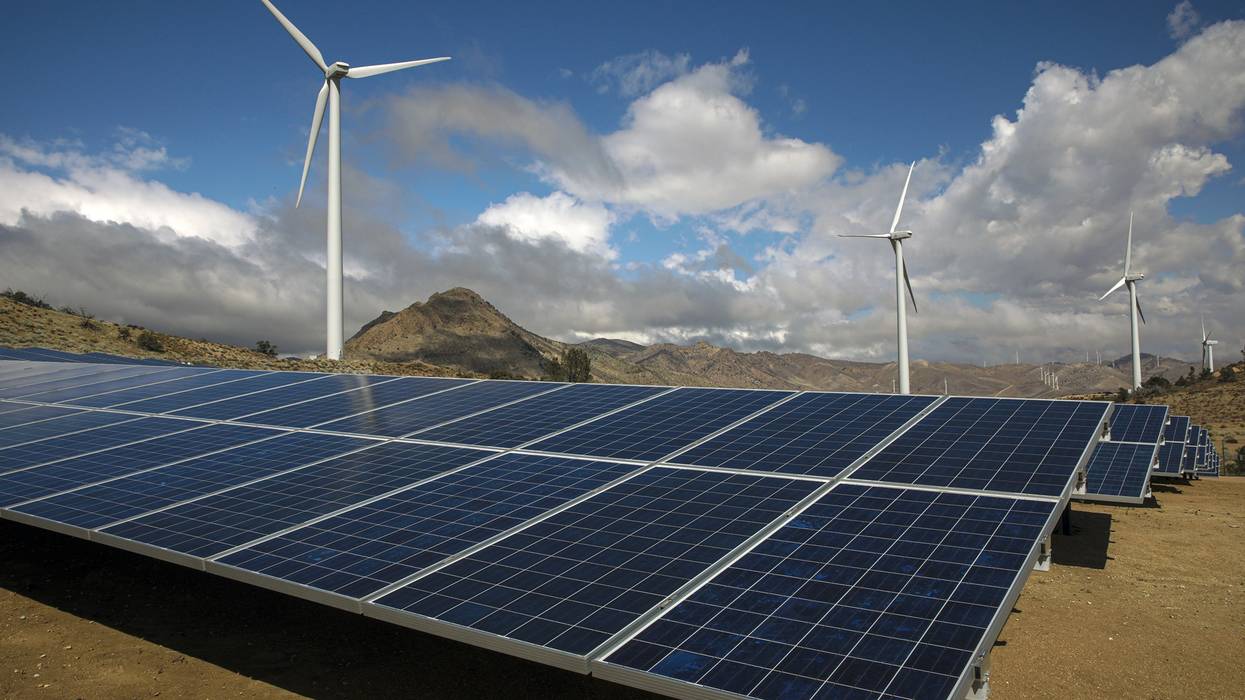
"Wind plus solar is on a tear right now," said one expert.
Despite the Trump administration's staunch support for the climate-wrecking fossil fuel industry and equally aggressive attacks on renewable energy, the US is generating more power from the sun and wind than ever, according to the latest figures on the matter.
Updated state-level data confirmed this week that solar generation eclipsed every other source of electricity in Utah for the first time in its history, with photovoltaic panels producing nearly 1 terawatt-hour in May. That's enough to power roughly 90,000 homes for an entire year, according to the US Department of Energy.
That amount represented nearly one-third of all electricity generated in Utah that month, according to data from the global energy think tank Ember. Natural gas generated 32% of Utah's electricity in May, while coal produced 28%, and wind 2%.
“The trend of more and more solar in Utah is wonderful news for air quality, it’s wonderful news for the climate, and it’s wonderful news for jobs and the economy,” Dan Schroeder, a physics professor at Weber State University in Ogden, told Grist in an article published on Thursday.
Meanwhile, California achieved an even more significant milestone. Solar was already the largest source of electricity generation in the Golden State. In May, solar produced 51% of California's electricity, the first time a renewable energy source generated more than half of a state's power for an entire month. Solar also outproduced natural gas in every month of 2026 through May, the last month confirmed.
Also in May, solar supplied more of the nation's electricity than coal for the first time, and solar and wind combined generated the majority of electricity in seven states and more than 30% of power in 20 states.
Good morning with good news: Solar & wind generated more than 50% of electricity in 7 US states & more than 30% in 20 states in May 2026! Top 10 S&W states:IA 67%SD 64%NM 63%CA 58.9%KS 58.3%MA 56.9%CO 51.8%VT 49%OK 48.6%ME 45.7%S&W generated 24.2% of US power in May.#energysky
[image or embed]
— John Hanger (@jrfhanger.bsky.social) August 7, 2026 at 4:42 AM
“We’re going to see milestones like this increasingly happen,” Logan Mitchell, a climate scientist and energy analyst with Utah Clean Energy, told Grist.
According to the US Energy Information Administration, approximately 51% of new utility-scale electricity generation in the United States is projected to come from the sun this year, as the nation is expected to add another 43.4 gigawatts of solar, compared to 6.3 gigawatts of natural gas generation and no new coal.
More broadly, the US produced nearly three times as much solar, wind, and geothermal power in 2025 than it did in 2016, with renewables accounting for more than 20% of the nation's power production, as shown by the recently launched State of Renewable Energy online dashboard published by Environment America Research & Policy Center and Frontier Group.
Renewables accounted for 21.4% of national retail electricity sales in 2025, up from just 8% in 2016. South Dakota led the nation by generating the equivalent of 95% of its retail electricity from wind, solar, or geothermal.
“In 2026, America is getting more power from the sun and wind than ever,” Wendy Wendlandt, president and chairwoman of Environment America Research & Policy Center, said in May. “Renewable energy is reliable, resilient, and shows up for free every day. When we replace polluting energy sources with solar and wind, it delivers a cleaner, healthier future for all Americans.”
The surge in renewables comes amid efforts by the administration of President Donald Trump—who ran on a "drill, baby, drill" energy platform during a 2024 presidential campaign generously supported by the fossil fuel industry—to boost oil, gas, and coal and roll back clean power initiatives.
At times, the Trump administration's animus toward renewables has been downright inane, like when Interior Secretary Doug Burgum—a billionaire who has personally profited from an oil lease on family land—infamously trashed solar by saying that "when the sun goes down, you have a catastrophic failure called sunset and there’s no solar energy produced," prompting some observers to question whether he's aware of batteries or how they work.
The One Big Beautiful Bill Act signed into law by Trump last year includes billions of dollars in handouts for the fossil fuel industry, boosts drilling on millions of acres of public lands, mandates oil and gas lease sales, and imposes new fees on renewable development. A report published last month by BlueGreen Alliance revealed that "23 manufacturing, clean energy, and industrial projects are already facing cancellations and delays representing at least $82.8 billion in capital investment, which could cost 111,765 jobs."
Last month, Common Dreams reported that Trump's rollback of clean energy policies will cost American consumers $650 billion in additional energy bills by 2040, based on figures from the San Francisco-based energy and climate policy think tank Energy Innovations.
Trump has also twice withdrawn the US from the Paris Agreement, rolled back Environmental Protection Agency rules, signed pro-fossil fuel executive orders—including one declaring what critics say is a "phony" energy emergency—resumed and accelerated approvals for new natural gas export terminals following a moratorium enacted during the Biden administration, and paid billions of taxpayer dollars to kill clean energy projects around the world.
The “energy emergency” has been invoked to fast-track fossil fuel permits, including for extraction projects on public lands. This, despite overwhelming evidence that burning fossil fuels is the leading driver of the climate emergency.
Still, clean energy advocates are buoyed by recent reports of rising renewables.
"Wind plus solar is on a tear right now," said Mitchell. "We may have achieved liftoff."

"The president has no... constitutionally assigned authority over that property."
A federal court on Friday ruled that President Donald Trump must halt most construction of his $400 million White House ballroom project, siding with a lower court that said it must be authorized by Congress.
“Each president is a temporary tenant, not the owner, of the White House and its executive residence,” wrote judges Patricia Millett and Bradley Garcia in a 2-1 decision for the US Court of Appeals for the District of Columbia. "The president has no—and claims no—constitutionally assigned authority over that property."
Friday’s ruling only affects the above-ground portions of the project. The construction of a fortified underground bunker and other “national security facilities” beneath the site is allowed to continue.
Trump has already demolished the East Wing of the White House to make room for the project, which he has said will be entirely privately funded, mostly by corporate donors, many of whom had business before the executive branch. However, reporting from The Washington Post in June revealed that he had secretly planned to dip into $300 million worth of taxpayer dollars for the project.
At Trump's urging, Republicans have attempted to add $1 billion in taxpayer money to the federal budget to pay for the project's security features, but the proposal to pass it through budget reconciliation without approval from Democrats was rejected by the Senate parliamentarian.
The court's majority said it’s ruling “has nothing at all to do with whether the proposed ballroom is desirable, or not, as a matter of policy… What it does mean is that the defendants may not do so during the district court’s expeditious litigation without securing Congress’s authorization, as the Constitution and laws require.”
Brent Leggs, the CEO of the National Trust for Historic Preservation, which sued to block the ballroom’s construction in December, said Friday was “a great day for our country and for the American people’s right to voice their opinions about the historic places they cherish, including the White House.”
"The White House, a global landmark that symbolizes American identity and the ideals of democracy, belongs to the American people," he said.
Trump reacted with predictable fury on Truth Social.
"We will be immediately appealing to the United States Supreme Court," he wrote. "The Military and Secret Service are viewing this horrendous, politically motivated, and unlawful ruling as a National Security threat to our Nation in that the entire Complex is being built for the protection of our Country and, additionally, all future Presidents."
The ruling is the second blow to one of Trump’s vanity projects this week. A report by the National Park Service recently found that his planned “Arc de Trump” near the National Mall could compromise the historical significance and "integrity" of dozens of other historic landmarks.
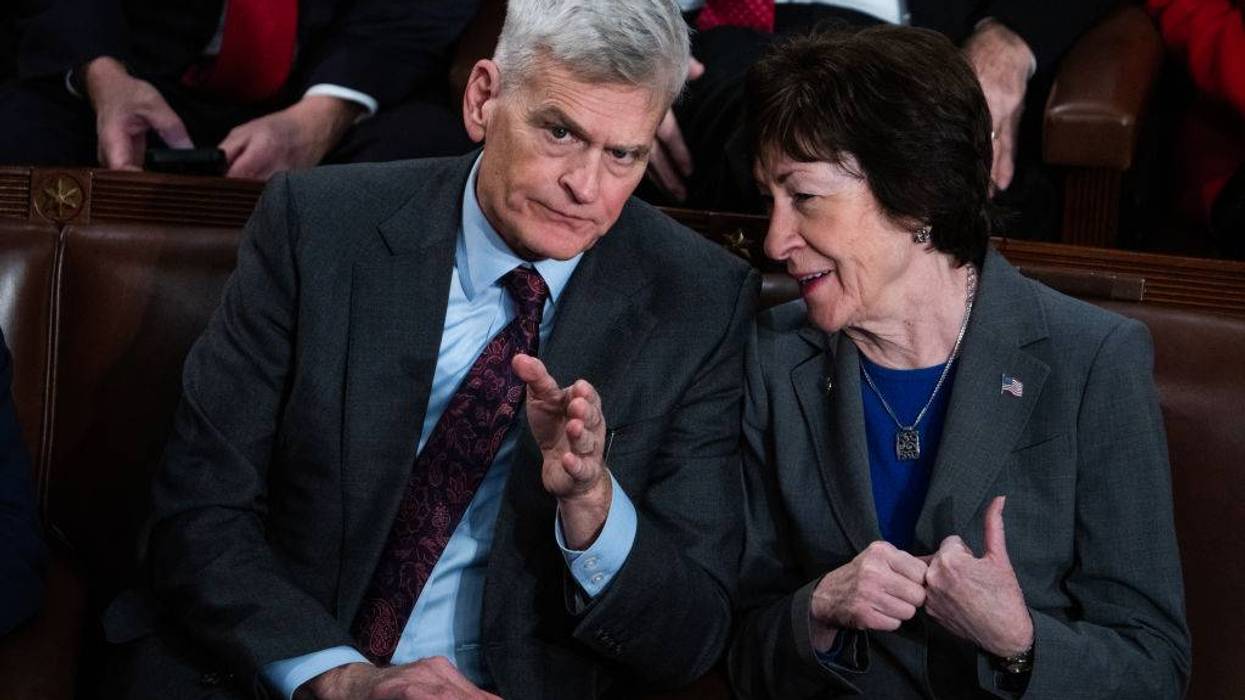
"The moment Collins announced she was a no on Blanche, you knew they had the votes," said MS NOW host Chris Hayes.
Republican Sen. Bill Cassidy of Louisiana announced Friday that he would vote yes on Todd Blanche's nomination for US attorney general, rendering vulnerable Sen. Susan Collins' opposition to President Donald Trump's former personal attorney effectively meaningless.
Sen. Lisa Murkowski (R-Alaska) on Friday morning came out in opposition to Blanche's confirmation—but Cassidy hours later announced that he would vote in vote in favor of the former personal attorney to President Donald Trump.
In a speech announcing the decision, Cassidy acknowledged that Blanche—who as deputy attorney general arranged for convicted sex trafficker Ghislaine Maxwell to be transferred to a minimum-security jail and who orchestrated the widely criticized $1.8 billion slush fund for Trump allies—is "not perfect."
I will support Todd Blanche for U.S. Attorney General. pic.twitter.com/PKWr3atuvA
— U.S. Senator Bill Cassidy, M.D. (@SenBillCassidy) August 7, 2026
"But the choice is not between perfection and Mr. Blanche," Cassidy continued. "It is between Mr. Blanche and another acting attorney general who may not run the department effectively under President Trump, and who indeed may not be as good as Mr. Blanche."
The Louisiana Republican added that he expected to "be criticized for this vote," before adding, "What's new?"
The sequence of Collins (R-Maine) and Murkowski announcing their opposition to Blanche, only for Cassidy to clinch his confirmation shortly after, made MS NOW host Chris Hayes suspicious that the fix was in from the start.
"The moment Collins announced she was a no on Blanche," Hayes wrote, "you KNEW they had the votes."
The social media account of Susan Collins Watch, a website that has tracked the Maine Republican's voting patterns for decades, made a similar observation.
"Of the thousands of GOP nominees Susan Collins has voted on over a 29-year career, NOT ONCE has she cast a tie-breaking vote against the GOP," they wrote. "But she's cast dozens of tie-breaking votes for GOP nominees, bills, etc. Are we supposed to believe this is some quirky statistical anomaly?"
Sam Stein, reporter for The Bulwark, argued Cassidy's yes vote on Blanche "doesn't help Collins" politically, as she "will continue to be tagged with only voting against Trump when her vote doesn't matter."
Collins in 2018 was the decisive vote in favor of confirming US Supreme Court Justice Brett Kavanaugh. During her speech announcing her vote for Kavanaugh, she insisted that he would uphold the precedent set by Roe v. Wade establishing the constitutional right to an abortion.
Four years later, however, Kavanaugh joined the Supreme Court majority in overturning Roe.
Former Maine state Senate President Troy Jackson, who is running against Collins as the Democratic Party's nominee for the US Senate, has highlighted the vote to confirm Kavanaugh as a major reason why she must be unseated.
“When Susan Collins was helping overturn Roe v. Wade,” Jackson said in a recent interview, “here in Maine... I co-sponsored one of the most progressive reproductive rights bills in the country—fought incredibly hard for it."
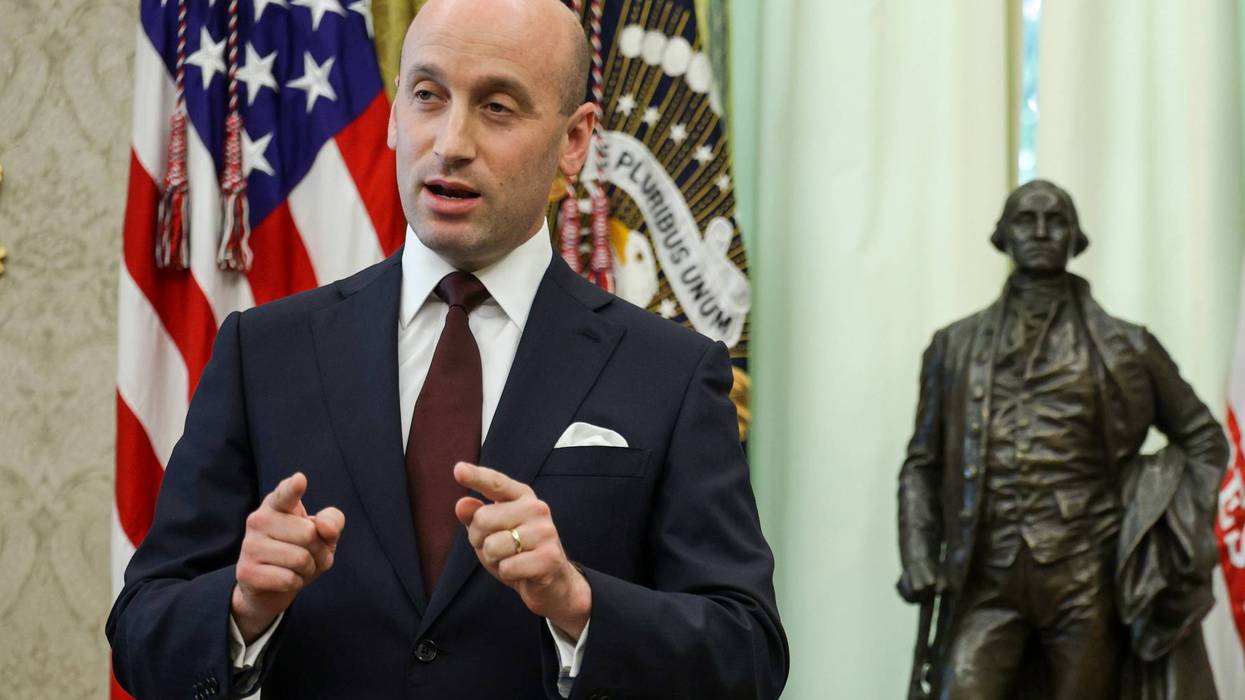
"You can crack down on visa fraud," said one observer. "You cannot have Stephen Miller stand beside the Resolute Desk and turn the 14th Amendment into a hotel checkout policy."
Stephen Miller, President Donald Trump's deputy White House chief of staff and the architect of much of his anti-immigration agenda over the past decade, has been fixated for years on ending birthright citizenship in the US—and one Democratic congresswoman said Thursday that his latest attempt should be the last straw.
"Stephen Miller architected the entirety of Trump’s racist and fascist mass deportation agenda, and he’s the one pushing relentlessly to end birthright citizenship—which is illegal," said Rep. Yassamin Ansari (D-Ariz.) after Trump and Miller announced two new executive orders related to the issue. "He needs to be investigated and prosecuted for the crimes he’s actively committing."
Weeks after the US Supreme Court—where three of the justices who make up the right-wing majority were appointed by Trump—ruled that the president's previous effort to end birthright citizenship for undocumented immigrants was unconstitutional, Trump signaled a new tactic focusing on terminating the right for the children of specific groups of people.
The first order would end automatic citizenship for children born to parents who work for foreign governments at embassies or organizations in the US, parents who "engaged in fraudulent activity to obtain citizenship," and parents who are part of designated terrorist groups or an "alien enemy."
Stephen Miller: The president is using his authority as commander in chief, to sign first an executive order using the new rule in the Supreme Court issued to expand the definitions of people who are ineligible for birthright citizenship
That includes, for example, alien enemies… pic.twitter.com/TtpWe0QYe1
— Acyn (@Acyn) August 6, 2026
The restriction would also pertain to babies who are "born in a territory or territorial waters of the United States where citizenship is not conferred by federal statute"—but eliminating birthright citizenship for children born in US territories would require congressional action, according to The New York Times.
The second order aims to crack down on what Trump called "birth tourism," with more restrictions on visitors to the US who give birth while in the country and try to obtain visas.
Aaron Reichlin-Melnick, senior fellow at the American Immigration Council, said the new executive action, like the order Trump signed to end birthright citizenship shortly after he took office last year, "seemingly violates the Constitution."
In the Oval Office at the White House late Thursday, the president cited no evidence as he claimed foreigners have obtained citizenship for their children, who numbered in the dozens.
“You have one man came in with a family... said he had 56 children," said Trump. "Another one came in. They said they had 98 children. This was not what it was for. This was meant for the babies of slaves. It was, it was right after one week or two weeks after the Civil War ended.”
Miller also emphasized that the 14th Amendment, which guarantees birthright citizenship, due process, and equal protection under the law, was meant to confer citizenship only to the children of people who had been enslaved before the Civil War ended.
But the origin of the law did not stop the Supreme Court from ruling in June that birthright citizenship is the law of the land under the US Constitution.
The president claimed "hundreds of thousands" of people in the US have benefited from birthright citizenship due to tourists giving birth in the country and the other scenarios described in the executive orders, but a study by Pennsylvania State University recently found that fewer than 0.3% of babies born in the US are born to tourists in any year.
Miller spoke during the Oval Office event, speaking out against people who "come here pretending to be a tourist... but the real reason they're here is to have a child."
Lying on a visa application in order to give birth in the US has long been illegal, Reichlin-Melnick pointed out.
Miller claimed that Section 215A of the Immigration and Nationality Act gives Trump the authority to enact the new restrictions on birthright citizenship, but even a Department of Homeland Security official who spoke anonymously to the Times said no new enforcement would come out of the birth tourism order.
The deputy chief of staff, who has also taken a leading role in orchestrating Trump's mass deportation campaign, claimed that the birth tourism order was "especially historic."
The word "historic," said writer Mike Young, was "doing a lot of work."
"You can crack down on visa fraud. You cannot have Stephen Miller stand beside the Resolute Desk and turn the 14th Amendment into a hotel checkout policy," said Young. "Birthright citizenship is not a loophole. It is the Constitution."
Immigration attorney Cyrus Mehta noted that even so-called "birth tourism" was covered in the Supreme Court's recent ruling, with Justice Samuel Alito noting that fact in his dissent.
"I expect a court to hold that most of Trump's new executive order is blatantly unconstitutional," said Mehta. "Trump is a small and petty man with a venal mind, and will be historically remembered as such down the ages, along with his henchman and collaborator Stephen Miller, who love to attack newborn children!"