5
#000000
#FFFFFF
To donate by check, phone, or other method, see our More Ways to Give page.
Daily news & progressive opinion—funded by the people, not the corporations—delivered straight to your inbox.
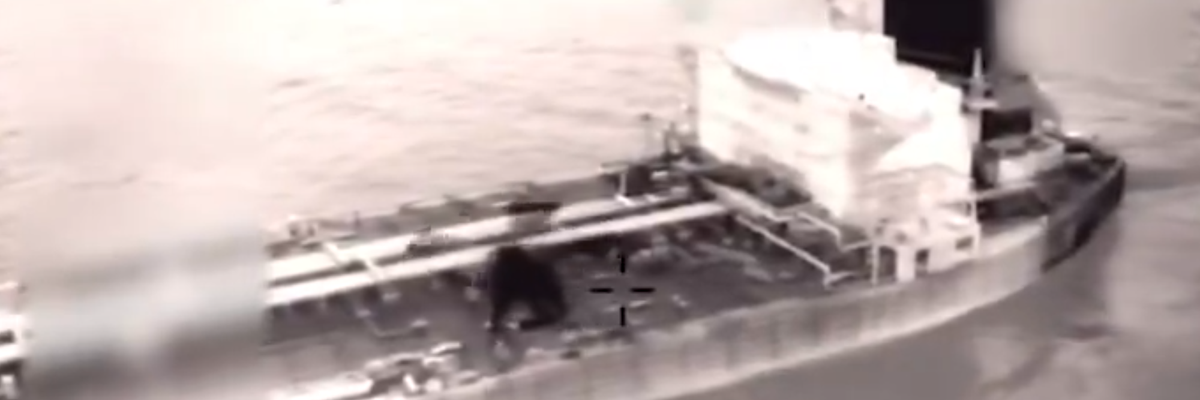
The oil tanker Olina is seized by US forces off the coast of Trinidad on January 9, 2025.
The US has purloined over $300 million of oil in a month while enforcing a blockade, which UN experts say has "seriously undermined the human rights of the Venezuelan people."
As President Donald Trump geared up for a meeting with fossil fuel executives about plans for them to tap into the "tremendous wealth" of Venezuela's vast oil supply, the US military seized another oil tanker in the Caribbean off the coast of Trinidad on Friday morning.
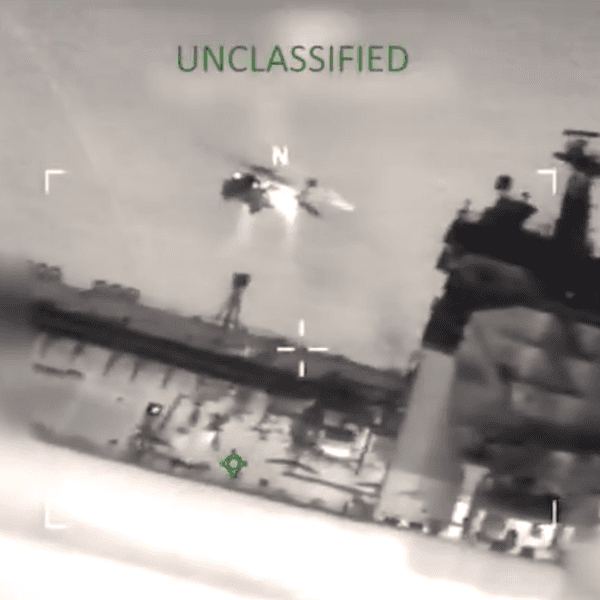
Homeland Security Secretary Kristi Noem posted unclassified footage from US Southern Command of explosives being deployed and soldiers boarding the vessel Olina on social media.
"As another 'ghost fleet' tanker ship suspected of carrying embargoed oil, this vessel had departed Venezuela attempting to evade US forces," she said. "This is owning the sea."
Olina, which was reportedly carrying around 700,000 barrels of crude, is at least the fifth tanker seized by the military in recent weeks and the third in the last three days after the Trump administration imposed a blockade on sanctioned oil tankers leaving Venezuela in December, a move that has been credited with hastening the country's economic collapse.
Earlier this week, US Energy Secretary Chris Wright said the US plans to manage Venezuela's oil sales and revenues indefinitely following its illegal operation last weekend to topple and abduct President Nicolás Maduro.
According to the ship-tracking database TankerTrackers.com, the US has “seized five tankers and 6.15 million barrels in the span of a month, with the oil valued at over $300 million."
The US has described Olina and other ships it has seized as part of a "shadow fleet" that uses deceptive tactics—including flying false flags—to secretively transport oil for sanctioned countries, including Venezuela, Russia, and Iran.
The US has justified its blockade of Venezuela's oil, as well as the overthrow of Maduro generally, based on the claim that its government is part of an alleged foreign terrorist organization known as the "Cartel de los Soles."
In late December, a group of United Nations experts condemned the blockade and denounced this justification, stating that the alleged cartel does not exist. The US Department of Justice later acknowledged that the cartel was not an actual organization in its indictment of Maduro this week. Maduro has pleaded not guilty to US narco-terrorism charges.
The group of international experts, which included Ben Saul, the UN's special rapporteur on human rights and counterterrorism, and Gina Romero, the special rapporteur on freedom of association and assembly, described the blockade as "violating fundamental rules of international law."
“There is no right to enforce unilateral sanctions through an armed blockade,” the experts said, citing the United Nations Charter, which describes blockades without UN Security Council approval as illegal acts of aggression.
They added that “there are serious concerns that the sanctions are unlawful, disproportionate, and punitive under international law, and that they have seriously undermined the human rights of the Venezuelan people."
Dear Common Dreams reader, The U.S. is on a fast track to authoritarianism like nothing I've ever seen. Meanwhile, corporate news outlets are utterly capitulating to Trump, twisting their coverage to avoid drawing his ire while lining up to stuff cash in his pockets. That's why I believe that Common Dreams is doing the best and most consequential reporting that we've ever done. Our small but mighty team is a progressive reporting powerhouse, covering the news every day that the corporate media never will. Our mission has always been simple: To inform. To inspire. And to ignite change for the common good. Now here's the key piece that I want all our readers to understand: None of this would be possible without your financial support. That's not just some fundraising cliche. It's the absolute and literal truth. We don't accept corporate advertising and never will. We don't have a paywall because we don't think people should be blocked from critical news based on their ability to pay. Everything we do is funded by the donations of readers like you. Will you donate now to help power the nonprofit, independent reporting of Common Dreams? Thank you for being a vital member of our community. Together, we can keep independent journalism alive when it’s needed most. - Craig Brown, Co-founder |
As President Donald Trump geared up for a meeting with fossil fuel executives about plans for them to tap into the "tremendous wealth" of Venezuela's vast oil supply, the US military seized another oil tanker in the Caribbean off the coast of Trinidad on Friday morning.
Homeland Security Secretary Kristi Noem posted unclassified footage from US Southern Command of explosives being deployed and soldiers boarding the vessel Olina on social media.
"As another 'ghost fleet' tanker ship suspected of carrying embargoed oil, this vessel had departed Venezuela attempting to evade US forces," she said. "This is owning the sea."
Olina, which was reportedly carrying around 700,000 barrels of crude, is at least the fifth tanker seized by the military in recent weeks and the third in the last three days after the Trump administration imposed a blockade on sanctioned oil tankers leaving Venezuela in December, a move that has been credited with hastening the country's economic collapse.
Earlier this week, US Energy Secretary Chris Wright said the US plans to manage Venezuela's oil sales and revenues indefinitely following its illegal operation last weekend to topple and abduct President Nicolás Maduro.
According to the ship-tracking database TankerTrackers.com, the US has “seized five tankers and 6.15 million barrels in the span of a month, with the oil valued at over $300 million."
The US has described Olina and other ships it has seized as part of a "shadow fleet" that uses deceptive tactics—including flying false flags—to secretively transport oil for sanctioned countries, including Venezuela, Russia, and Iran.
The US has justified its blockade of Venezuela's oil, as well as the overthrow of Maduro generally, based on the claim that its government is part of an alleged foreign terrorist organization known as the "Cartel de los Soles."
In late December, a group of United Nations experts condemned the blockade and denounced this justification, stating that the alleged cartel does not exist. The US Department of Justice later acknowledged that the cartel was not an actual organization in its indictment of Maduro this week. Maduro has pleaded not guilty to US narco-terrorism charges.
The group of international experts, which included Ben Saul, the UN's special rapporteur on human rights and counterterrorism, and Gina Romero, the special rapporteur on freedom of association and assembly, described the blockade as "violating fundamental rules of international law."
“There is no right to enforce unilateral sanctions through an armed blockade,” the experts said, citing the United Nations Charter, which describes blockades without UN Security Council approval as illegal acts of aggression.
They added that “there are serious concerns that the sanctions are unlawful, disproportionate, and punitive under international law, and that they have seriously undermined the human rights of the Venezuelan people."
As President Donald Trump geared up for a meeting with fossil fuel executives about plans for them to tap into the "tremendous wealth" of Venezuela's vast oil supply, the US military seized another oil tanker in the Caribbean off the coast of Trinidad on Friday morning.
Homeland Security Secretary Kristi Noem posted unclassified footage from US Southern Command of explosives being deployed and soldiers boarding the vessel Olina on social media.
"As another 'ghost fleet' tanker ship suspected of carrying embargoed oil, this vessel had departed Venezuela attempting to evade US forces," she said. "This is owning the sea."
Olina, which was reportedly carrying around 700,000 barrels of crude, is at least the fifth tanker seized by the military in recent weeks and the third in the last three days after the Trump administration imposed a blockade on sanctioned oil tankers leaving Venezuela in December, a move that has been credited with hastening the country's economic collapse.
Earlier this week, US Energy Secretary Chris Wright said the US plans to manage Venezuela's oil sales and revenues indefinitely following its illegal operation last weekend to topple and abduct President Nicolás Maduro.
According to the ship-tracking database TankerTrackers.com, the US has “seized five tankers and 6.15 million barrels in the span of a month, with the oil valued at over $300 million."
The US has described Olina and other ships it has seized as part of a "shadow fleet" that uses deceptive tactics—including flying false flags—to secretively transport oil for sanctioned countries, including Venezuela, Russia, and Iran.
The US has justified its blockade of Venezuela's oil, as well as the overthrow of Maduro generally, based on the claim that its government is part of an alleged foreign terrorist organization known as the "Cartel de los Soles."
In late December, a group of United Nations experts condemned the blockade and denounced this justification, stating that the alleged cartel does not exist. The US Department of Justice later acknowledged that the cartel was not an actual organization in its indictment of Maduro this week. Maduro has pleaded not guilty to US narco-terrorism charges.
The group of international experts, which included Ben Saul, the UN's special rapporteur on human rights and counterterrorism, and Gina Romero, the special rapporteur on freedom of association and assembly, described the blockade as "violating fundamental rules of international law."
“There is no right to enforce unilateral sanctions through an armed blockade,” the experts said, citing the United Nations Charter, which describes blockades without UN Security Council approval as illegal acts of aggression.
They added that “there are serious concerns that the sanctions are unlawful, disproportionate, and punitive under international law, and that they have seriously undermined the human rights of the Venezuelan people."