SUBSCRIBE TO OUR FREE NEWSLETTER
Daily news & progressive opinion—funded by the people, not the corporations—delivered straight to your inbox.
5
#000000
#FFFFFF
To donate by check, phone, or other method, see our More Ways to Give page.
Daily news & progressive opinion—funded by the people, not the corporations—delivered straight to your inbox.
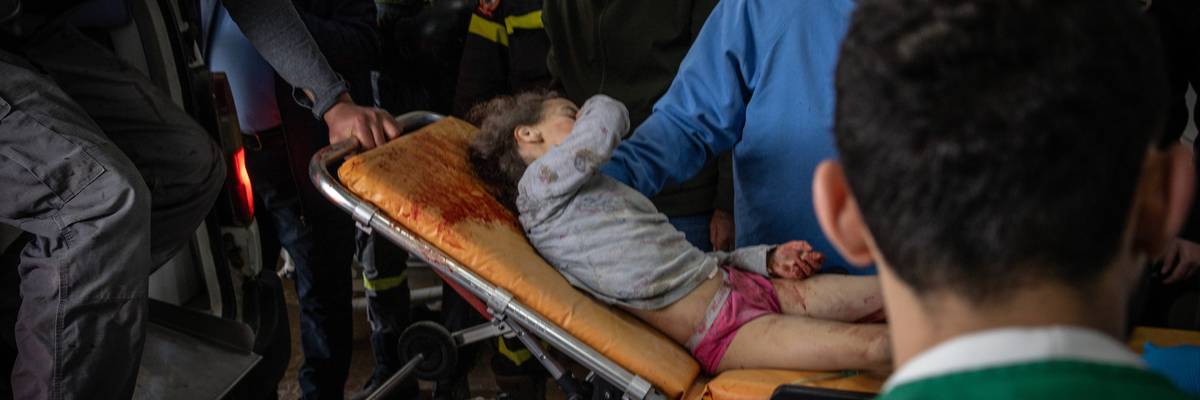
A child suffering serious injuries is brought to hospital after an Israeli airstrike on a building in Nabatieh, Lebanon on April 8, 2026.
Despite promised ceasefires, ongoing Israeli attacks "are killing and injuring children, deepening their exposure to trauma, and leaving devastating consequences that could last a lifetime."
Officials at the United Nations Children's Fund this week condemned Israel's killing, maiming, and traumatization of children in Lebanon—where there is ostensibly a ceasefire in effect—the illegally occupied West Bank of Palestine, and Gaza.
UNICEF said Wednesday that at least 59 children in Lebanon have reportedly been killed or wounded by Israeli forces over the past week, despite a nearly monthlong truce between Israel and the militant resistance group Hezbollah.
“Children are being killed and injured when they should be returning to classrooms, playing with friends, and recovering from months of fear and upheaval,” UNICEF Regional Director for the Middle East and North Africa Edouard Beigbeder said in a statement.
“Nearly a month ago, an agreement was reached to silence the weapons and stop the violence," Beigbeder added. "Reality is proving to be very different. Continued attacks are killing and injuring children, deepening their exposure to trauma, and leaving devastating consequences that could last a lifetime.”
According to Lebanon's Ministry of Public Health, at least 23 children have been killed and 93 wounded during the ceasefire. Since March 2—when Israel renewed attacks on its northern neighbor amid the nascent US-Israeli war on Iran—at least 200 children have been killed and over 800 others injured.
The ministry said six people—including two women and a child—were killed and 12 people wounded Wednesday evening when Israel bombed the village of Arab Salim in Nabatieh district. Separately on Wednesday, Israeli strikes on the village of Harouf killed one child, while two children were among three people killed by an Israeli strike on Roumine.
Lebanese officials say at least 2,896 people have been killed and 8,824 others wounded by Israeli attacks in Lebanon since March 2.
UNICEF spokesperson James Elder said Monday in Geneva that “children are paying an intolerable price for escalating militarized operations and settler attacks across the occupied West Bank of Palestine, including East Jerusalem," as part of Israel's accelerating ethnic cleansing and colonization of the Palestinian territory.
“We're seeing attacks become increasingly coordinated,” Elder noted. "Documented incidents include children shot, stabbed, children beaten, and children pepper-sprayed.”
Elder continued:
Between January 2025 and today, at least one Palestinian child has been killed, on average, every week. That is, 70 Palestinian children killed in this timeframe. Ninety-three percent of these were killed by Israeli forces. A further 850 children were injured. Most of those children killed or wounded were by live ammunition. All this comes amid historic levels of settler attacks. [The United Nations Office for the Coordination of Humanitarian Affairs] said last month that March 2026 saw the highest number of Palestinians injured by settler attacks in the past 20 years.
“These are not isolated incidents—they point to a sustained pattern of the worst kinds of violations of children’s rights, as well as attacks on children’s homes, on their schools, and on the water they rely on," Elder stressed. "What is unfolding is not only an escalation in violence against Palestinian children; it is the steady dismantling of the conditions children need to survive and grow."
On Wednesday, the Palestinian Ministry of Health said that Israeli occupation forces fatally shot 16-year-old Youssef Ali Youssef Kaabneh near Jaljulia, north of Ramallah, amid sweeping raids across the West Bank.
Elder said that in Gaza, at least 229 children have been killed and 260 others wounded by Israeli forces since the October 2025 ceasefire between Israel and Hamas—which led the October 7, 2023 attack—took effect. Since October 2023, more than 64,000 children and 250,000 Palestinians of all ages have been killed or wounded by Israel's Gaza onslaught, which a panel of UN experts last year called a genocide. UNICEF has called Gaza “the world’s most dangerous place to be a child."
Dr. Reinhilde Van de Weerdt, the UN World Health Organization representative for the occupied Palestinian territory, drew attention this week to the 10,000 Gazan children "with life-changing injuries." Treatment for these wounds is often difficult to impossible due to Israel's ongoing siege of the coastal strip.
"Every day that rehabilitation services in Gaza remain underresourced is a day that preventable disability risks becoming permanent," said Van de Weerdt. "Gaza does not need stopgap measures, it needs sustained investment in the health workforce, in equipment, and in the systems and environment that allow people to recover, rebuild, and return to life."
Thousands of Gazan children have lost at least one limb, tens of thousands have lost their parents, and hundreds of thousands have lost their homes due to mass forced displacement.
All that trauma and more is fueling a mental health crisis among children in Palestine and Lebanon.
“The impact of repeated exposure to conflict on children’s mental health can be profound and long-lasting,” said Beigbeder. “Children in Lebanon have endured waves of violence, displacement, and uncertainty, often with little or no time to recover. Without urgent support, the psychological scars of this compounded crisis may stay with them for years, affecting not only their well-being, but their future and the future of the country.”
Dear Common Dreams reader, It’s been nearly 30 years since I co-founded Common Dreams with my late wife, Lina Newhouser. We had the radical notion that journalism should serve the public good, not corporate profits. It was clear to us from the outset what it would take to build such a project. No paid advertisements. No corporate sponsors. No millionaire publisher telling us what to think or do. Many people said we wouldn't last a year, but we proved those doubters wrong. Together with a tremendous team of journalists and dedicated staff, we built an independent media outlet free from the constraints of profits and corporate control. Our mission has always been simple: To inform. To inspire. To ignite change for the common good. Building Common Dreams was not easy. Our survival was never guaranteed. When you take on the most powerful forces—Wall Street greed, fossil fuel industry destruction, Big Tech lobbyists, and uber-rich oligarchs who have spent billions upon billions rigging the economy and democracy in their favor—the only bulwark you have is supporters who believe in your work. But here’s the urgent message from me today. It's never been this bad out there. And it's never been this hard to keep us going. At the very moment Common Dreams is most needed, the threats we face are intensifying. We need your support now more than ever. We don't accept corporate advertising and never will. We don't have a paywall because we don't think people should be blocked from critical news based on their ability to pay. Everything we do is funded by the donations of readers like you. When everyone does the little they can afford, we are strong. But if that support retreats or dries up, so do we. Will you donate now to make sure Common Dreams not only survives but thrives? —Craig Brown, Co-founder |
Officials at the United Nations Children's Fund this week condemned Israel's killing, maiming, and traumatization of children in Lebanon—where there is ostensibly a ceasefire in effect—the illegally occupied West Bank of Palestine, and Gaza.
UNICEF said Wednesday that at least 59 children in Lebanon have reportedly been killed or wounded by Israeli forces over the past week, despite a nearly monthlong truce between Israel and the militant resistance group Hezbollah.
“Children are being killed and injured when they should be returning to classrooms, playing with friends, and recovering from months of fear and upheaval,” UNICEF Regional Director for the Middle East and North Africa Edouard Beigbeder said in a statement.
“Nearly a month ago, an agreement was reached to silence the weapons and stop the violence," Beigbeder added. "Reality is proving to be very different. Continued attacks are killing and injuring children, deepening their exposure to trauma, and leaving devastating consequences that could last a lifetime.”
According to Lebanon's Ministry of Public Health, at least 23 children have been killed and 93 wounded during the ceasefire. Since March 2—when Israel renewed attacks on its northern neighbor amid the nascent US-Israeli war on Iran—at least 200 children have been killed and over 800 others injured.
The ministry said six people—including two women and a child—were killed and 12 people wounded Wednesday evening when Israel bombed the village of Arab Salim in Nabatieh district. Separately on Wednesday, Israeli strikes on the village of Harouf killed one child, while two children were among three people killed by an Israeli strike on Roumine.
Lebanese officials say at least 2,896 people have been killed and 8,824 others wounded by Israeli attacks in Lebanon since March 2.
UNICEF spokesperson James Elder said Monday in Geneva that “children are paying an intolerable price for escalating militarized operations and settler attacks across the occupied West Bank of Palestine, including East Jerusalem," as part of Israel's accelerating ethnic cleansing and colonization of the Palestinian territory.
“We're seeing attacks become increasingly coordinated,” Elder noted. "Documented incidents include children shot, stabbed, children beaten, and children pepper-sprayed.”
Elder continued:
Between January 2025 and today, at least one Palestinian child has been killed, on average, every week. That is, 70 Palestinian children killed in this timeframe. Ninety-three percent of these were killed by Israeli forces. A further 850 children were injured. Most of those children killed or wounded were by live ammunition. All this comes amid historic levels of settler attacks. [The United Nations Office for the Coordination of Humanitarian Affairs] said last month that March 2026 saw the highest number of Palestinians injured by settler attacks in the past 20 years.
“These are not isolated incidents—they point to a sustained pattern of the worst kinds of violations of children’s rights, as well as attacks on children’s homes, on their schools, and on the water they rely on," Elder stressed. "What is unfolding is not only an escalation in violence against Palestinian children; it is the steady dismantling of the conditions children need to survive and grow."
On Wednesday, the Palestinian Ministry of Health said that Israeli occupation forces fatally shot 16-year-old Youssef Ali Youssef Kaabneh near Jaljulia, north of Ramallah, amid sweeping raids across the West Bank.
Elder said that in Gaza, at least 229 children have been killed and 260 others wounded by Israeli forces since the October 2025 ceasefire between Israel and Hamas—which led the October 7, 2023 attack—took effect. Since October 2023, more than 64,000 children and 250,000 Palestinians of all ages have been killed or wounded by Israel's Gaza onslaught, which a panel of UN experts last year called a genocide. UNICEF has called Gaza “the world’s most dangerous place to be a child."
Dr. Reinhilde Van de Weerdt, the UN World Health Organization representative for the occupied Palestinian territory, drew attention this week to the 10,000 Gazan children "with life-changing injuries." Treatment for these wounds is often difficult to impossible due to Israel's ongoing siege of the coastal strip.
"Every day that rehabilitation services in Gaza remain underresourced is a day that preventable disability risks becoming permanent," said Van de Weerdt. "Gaza does not need stopgap measures, it needs sustained investment in the health workforce, in equipment, and in the systems and environment that allow people to recover, rebuild, and return to life."
Thousands of Gazan children have lost at least one limb, tens of thousands have lost their parents, and hundreds of thousands have lost their homes due to mass forced displacement.
All that trauma and more is fueling a mental health crisis among children in Palestine and Lebanon.
“The impact of repeated exposure to conflict on children’s mental health can be profound and long-lasting,” said Beigbeder. “Children in Lebanon have endured waves of violence, displacement, and uncertainty, often with little or no time to recover. Without urgent support, the psychological scars of this compounded crisis may stay with them for years, affecting not only their well-being, but their future and the future of the country.”
Officials at the United Nations Children's Fund this week condemned Israel's killing, maiming, and traumatization of children in Lebanon—where there is ostensibly a ceasefire in effect—the illegally occupied West Bank of Palestine, and Gaza.
UNICEF said Wednesday that at least 59 children in Lebanon have reportedly been killed or wounded by Israeli forces over the past week, despite a nearly monthlong truce between Israel and the militant resistance group Hezbollah.
“Children are being killed and injured when they should be returning to classrooms, playing with friends, and recovering from months of fear and upheaval,” UNICEF Regional Director for the Middle East and North Africa Edouard Beigbeder said in a statement.
“Nearly a month ago, an agreement was reached to silence the weapons and stop the violence," Beigbeder added. "Reality is proving to be very different. Continued attacks are killing and injuring children, deepening their exposure to trauma, and leaving devastating consequences that could last a lifetime.”
According to Lebanon's Ministry of Public Health, at least 23 children have been killed and 93 wounded during the ceasefire. Since March 2—when Israel renewed attacks on its northern neighbor amid the nascent US-Israeli war on Iran—at least 200 children have been killed and over 800 others injured.
The ministry said six people—including two women and a child—were killed and 12 people wounded Wednesday evening when Israel bombed the village of Arab Salim in Nabatieh district. Separately on Wednesday, Israeli strikes on the village of Harouf killed one child, while two children were among three people killed by an Israeli strike on Roumine.
Lebanese officials say at least 2,896 people have been killed and 8,824 others wounded by Israeli attacks in Lebanon since March 2.
UNICEF spokesperson James Elder said Monday in Geneva that “children are paying an intolerable price for escalating militarized operations and settler attacks across the occupied West Bank of Palestine, including East Jerusalem," as part of Israel's accelerating ethnic cleansing and colonization of the Palestinian territory.
“We're seeing attacks become increasingly coordinated,” Elder noted. "Documented incidents include children shot, stabbed, children beaten, and children pepper-sprayed.”
Elder continued:
Between January 2025 and today, at least one Palestinian child has been killed, on average, every week. That is, 70 Palestinian children killed in this timeframe. Ninety-three percent of these were killed by Israeli forces. A further 850 children were injured. Most of those children killed or wounded were by live ammunition. All this comes amid historic levels of settler attacks. [The United Nations Office for the Coordination of Humanitarian Affairs] said last month that March 2026 saw the highest number of Palestinians injured by settler attacks in the past 20 years.
“These are not isolated incidents—they point to a sustained pattern of the worst kinds of violations of children’s rights, as well as attacks on children’s homes, on their schools, and on the water they rely on," Elder stressed. "What is unfolding is not only an escalation in violence against Palestinian children; it is the steady dismantling of the conditions children need to survive and grow."
On Wednesday, the Palestinian Ministry of Health said that Israeli occupation forces fatally shot 16-year-old Youssef Ali Youssef Kaabneh near Jaljulia, north of Ramallah, amid sweeping raids across the West Bank.
Elder said that in Gaza, at least 229 children have been killed and 260 others wounded by Israeli forces since the October 2025 ceasefire between Israel and Hamas—which led the October 7, 2023 attack—took effect. Since October 2023, more than 64,000 children and 250,000 Palestinians of all ages have been killed or wounded by Israel's Gaza onslaught, which a panel of UN experts last year called a genocide. UNICEF has called Gaza “the world’s most dangerous place to be a child."
Dr. Reinhilde Van de Weerdt, the UN World Health Organization representative for the occupied Palestinian territory, drew attention this week to the 10,000 Gazan children "with life-changing injuries." Treatment for these wounds is often difficult to impossible due to Israel's ongoing siege of the coastal strip.
"Every day that rehabilitation services in Gaza remain underresourced is a day that preventable disability risks becoming permanent," said Van de Weerdt. "Gaza does not need stopgap measures, it needs sustained investment in the health workforce, in equipment, and in the systems and environment that allow people to recover, rebuild, and return to life."
Thousands of Gazan children have lost at least one limb, tens of thousands have lost their parents, and hundreds of thousands have lost their homes due to mass forced displacement.
All that trauma and more is fueling a mental health crisis among children in Palestine and Lebanon.
“The impact of repeated exposure to conflict on children’s mental health can be profound and long-lasting,” said Beigbeder. “Children in Lebanon have endured waves of violence, displacement, and uncertainty, often with little or no time to recover. Without urgent support, the psychological scars of this compounded crisis may stay with them for years, affecting not only their well-being, but their future and the future of the country.”