SUBSCRIBE TO OUR FREE NEWSLETTER
Daily news & progressive opinion—funded by the people, not the corporations—delivered straight to your inbox.
5
#000000
#FFFFFF
To donate by check, phone, or other method, see our More Ways to Give page.
Daily news & progressive opinion—funded by the people, not the corporations—delivered straight to your inbox.
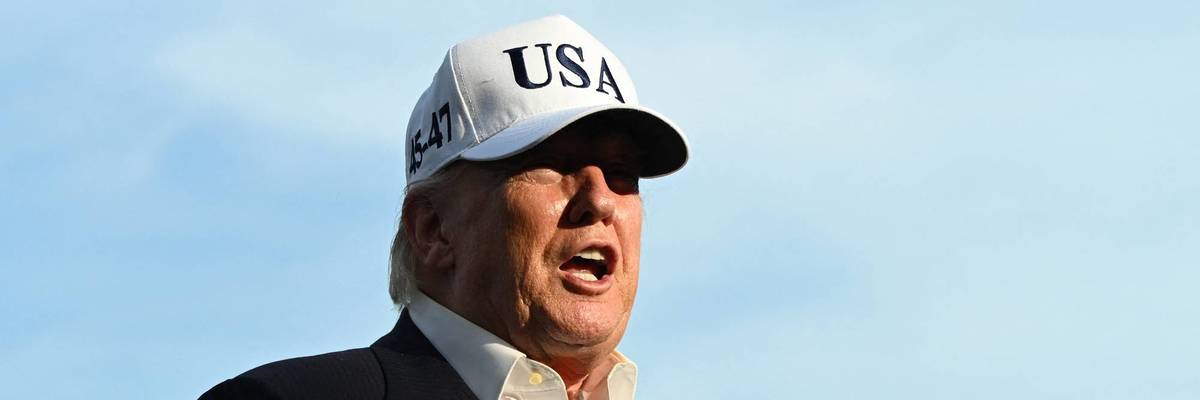
US President Donald Trump speaks to reporters after arriving on the South Lawn of the White House in Washington, DC, on May 15, 2026.
"The only realistic path to a diplomatic breakthrough would require Washington to engage more directly with the structure and substance of the Iranian proposal itself," said a national security expert.
With the economic impact of the war on Iran linked to President Donald Trump's plummeting approval rating, the president issued his latest threat to destroy the Middle Eastern country Sunday as he demanded negotiators "get moving, FAST" to end the conflict the US and Israel began by choice in February.
"For Iran, the Clock is Ticking," said the president in a Truth Social post, adding that if a peace deal is not reached soon, "there won’t be anything left of them. TIME IS OF THE ESSENCE!”
Trump rejected Iran's latest peace proposal last week; the country has reportedly offered significant concessions on its uranium enrichment, but seeks to have separate nuclear talks after achieving peace and reaching a deal to reopen the Strait of Hormuz, which the Iranians effectively closed in retaliation for the US-Israeli attacks.
Since launching the conflict, Trump has demanded the dismantling of Iran's missile arsenal as well as its nuclear program, which Iran has said is not for military purposes, and has called for the country to cut ties with its regional allies.
Iran's Mehr news agency said Sunday that Trump had offered "no tangible concessions" in his response to the Iranians' latest proposal.
"The United States," said the news outlet, "wants to obtain concessions that it failed to obtain during the war, which will lead to an impasse in the negotiations."
Trump told Fox News in Beijing over the weekend that the Iranians are "crazy, and you know what? Because of that, they cannot have a nuclear weapon," explaining why he viewed it as "unacceptable" for nuclear talks to take place separately after a peace deal is brokered.
Trump reportedly spoke to Israeli Prime Minister Benjamin Netanyahu Sunday about the possibility of renewing strikes on Iran, which would break a ceasefire that was reached more than a month ago.
Danny Citrinowicz, a senior researcher at the Institute for National Security Studies, said Sunday that "the only realistic path to a diplomatic breakthrough would require Washington to engage more directly with the structure and substance of the Iranian proposal itself."
"Iran’s priorities remain consistent: ending what it views as economic siege conditions, reopening maritime access and reducing pressure in the Gulf, negotiating an end to the broader conflict, and only afterward addressing the nuclear issue," said Citrinowicz. "At the present moment, it is difficult to see the Iranian leadership agreeing to any framework that does not meaningfully engage with those core demands."
As with Trump's earlier threats of violence, including one in April in which he declared that Iran's entire civilization would die, "never to be brought back again," Iranian officials said the president's latest comments—which followed his posting of an image of himself on a military ship accompanied by the words, "It was the calm before the storm"—would not be tolerated.
A spokesperson for Iran's armed forces, Abolfazl Shakarchi, told Mehr that "repeating any folly to compensate for America’s disgrace in the Third Imposed War against Iran will result in nothing but receiving more crushing and severe blows."
Reporting for Al Jazeera, correspondent Almigdad Alruhaid said that the "kind of language" displayed by Trump on Sunday "is not acceptable here in Tehran. They are projecting defiance rather than [giving] an immediate response to this kind of rhetoric."
“Behind all of this rhetoric, there is awareness that the diplomatic window right now is narrowing,” said Alruhid.
Meanwhile, US Sen. Lindsey Graham (R-SC) urged Trump to "hurt them more" in order to force a deal, calling on the president to go through with bombing Iran's energy infrastructure as he's threatened to in recent months.
Uber-warmonger Lindsey Graham calls on Trump to bomb Iran's energy infrastructure.
The reason why Trump didn't do this during the war - despite threatening it - was because he realized Tehran would retaliate and take out the energy infrastructure in the GCC states. This would… pic.twitter.com/rvrewkavNr
— Trita Parsi (@tparsi) May 17, 2026
"The reason why Trump didn't do this during the war—despite threatening it—was because he realized Tehran would retaliate and take out the energy infrastructure in the [Gulf Cooperation Council] states," said Trita Parsi, executive vice president at the Quincy Institute for Responsible Statecraft. "This would lead to a far worse oil crisis—one rooted in production problems, not just a bottleneck in the Persian Gulf."
"The global economy would be thrown into a deep recession. Fuel shortages would lead to food shortages worldwide. Trump's presidency would be destroyed," he said. "None of this matters to Lindsey. He'll burn the entire planet as long as he gets his war. Trump's biggest mistake has been to listen to Lindsey and his allies."
Dear Common Dreams reader, It’s been nearly 30 years since I co-founded Common Dreams with my late wife, Lina Newhouser. We had the radical notion that journalism should serve the public good, not corporate profits. It was clear to us from the outset what it would take to build such a project. No paid advertisements. No corporate sponsors. No millionaire publisher telling us what to think or do. Many people said we wouldn't last a year, but we proved those doubters wrong. Together with a tremendous team of journalists and dedicated staff, we built an independent media outlet free from the constraints of profits and corporate control. Our mission has always been simple: To inform. To inspire. To ignite change for the common good. Building Common Dreams was not easy. Our survival was never guaranteed. When you take on the most powerful forces—Wall Street greed, fossil fuel industry destruction, Big Tech lobbyists, and uber-rich oligarchs who have spent billions upon billions rigging the economy and democracy in their favor—the only bulwark you have is supporters who believe in your work. But here’s the urgent message from me today. It's never been this bad out there. And it's never been this hard to keep us going. At the very moment Common Dreams is most needed, the threats we face are intensifying. We need your support now more than ever. We don't accept corporate advertising and never will. We don't have a paywall because we don't think people should be blocked from critical news based on their ability to pay. Everything we do is funded by the donations of readers like you. When everyone does the little they can afford, we are strong. But if that support retreats or dries up, so do we. Will you donate now to make sure Common Dreams not only survives but thrives? —Craig Brown, Co-founder |
With the economic impact of the war on Iran linked to President Donald Trump's plummeting approval rating, the president issued his latest threat to destroy the Middle Eastern country Sunday as he demanded negotiators "get moving, FAST" to end the conflict the US and Israel began by choice in February.
"For Iran, the Clock is Ticking," said the president in a Truth Social post, adding that if a peace deal is not reached soon, "there won’t be anything left of them. TIME IS OF THE ESSENCE!”
Trump rejected Iran's latest peace proposal last week; the country has reportedly offered significant concessions on its uranium enrichment, but seeks to have separate nuclear talks after achieving peace and reaching a deal to reopen the Strait of Hormuz, which the Iranians effectively closed in retaliation for the US-Israeli attacks.
Since launching the conflict, Trump has demanded the dismantling of Iran's missile arsenal as well as its nuclear program, which Iran has said is not for military purposes, and has called for the country to cut ties with its regional allies.
Iran's Mehr news agency said Sunday that Trump had offered "no tangible concessions" in his response to the Iranians' latest proposal.
"The United States," said the news outlet, "wants to obtain concessions that it failed to obtain during the war, which will lead to an impasse in the negotiations."
Trump told Fox News in Beijing over the weekend that the Iranians are "crazy, and you know what? Because of that, they cannot have a nuclear weapon," explaining why he viewed it as "unacceptable" for nuclear talks to take place separately after a peace deal is brokered.
Trump reportedly spoke to Israeli Prime Minister Benjamin Netanyahu Sunday about the possibility of renewing strikes on Iran, which would break a ceasefire that was reached more than a month ago.
Danny Citrinowicz, a senior researcher at the Institute for National Security Studies, said Sunday that "the only realistic path to a diplomatic breakthrough would require Washington to engage more directly with the structure and substance of the Iranian proposal itself."
"Iran’s priorities remain consistent: ending what it views as economic siege conditions, reopening maritime access and reducing pressure in the Gulf, negotiating an end to the broader conflict, and only afterward addressing the nuclear issue," said Citrinowicz. "At the present moment, it is difficult to see the Iranian leadership agreeing to any framework that does not meaningfully engage with those core demands."
As with Trump's earlier threats of violence, including one in April in which he declared that Iran's entire civilization would die, "never to be brought back again," Iranian officials said the president's latest comments—which followed his posting of an image of himself on a military ship accompanied by the words, "It was the calm before the storm"—would not be tolerated.
A spokesperson for Iran's armed forces, Abolfazl Shakarchi, told Mehr that "repeating any folly to compensate for America’s disgrace in the Third Imposed War against Iran will result in nothing but receiving more crushing and severe blows."
Reporting for Al Jazeera, correspondent Almigdad Alruhaid said that the "kind of language" displayed by Trump on Sunday "is not acceptable here in Tehran. They are projecting defiance rather than [giving] an immediate response to this kind of rhetoric."
“Behind all of this rhetoric, there is awareness that the diplomatic window right now is narrowing,” said Alruhid.
Meanwhile, US Sen. Lindsey Graham (R-SC) urged Trump to "hurt them more" in order to force a deal, calling on the president to go through with bombing Iran's energy infrastructure as he's threatened to in recent months.
Uber-warmonger Lindsey Graham calls on Trump to bomb Iran's energy infrastructure.
The reason why Trump didn't do this during the war - despite threatening it - was because he realized Tehran would retaliate and take out the energy infrastructure in the GCC states. This would… pic.twitter.com/rvrewkavNr
— Trita Parsi (@tparsi) May 17, 2026
"The reason why Trump didn't do this during the war—despite threatening it—was because he realized Tehran would retaliate and take out the energy infrastructure in the [Gulf Cooperation Council] states," said Trita Parsi, executive vice president at the Quincy Institute for Responsible Statecraft. "This would lead to a far worse oil crisis—one rooted in production problems, not just a bottleneck in the Persian Gulf."
"The global economy would be thrown into a deep recession. Fuel shortages would lead to food shortages worldwide. Trump's presidency would be destroyed," he said. "None of this matters to Lindsey. He'll burn the entire planet as long as he gets his war. Trump's biggest mistake has been to listen to Lindsey and his allies."
With the economic impact of the war on Iran linked to President Donald Trump's plummeting approval rating, the president issued his latest threat to destroy the Middle Eastern country Sunday as he demanded negotiators "get moving, FAST" to end the conflict the US and Israel began by choice in February.
"For Iran, the Clock is Ticking," said the president in a Truth Social post, adding that if a peace deal is not reached soon, "there won’t be anything left of them. TIME IS OF THE ESSENCE!”
Trump rejected Iran's latest peace proposal last week; the country has reportedly offered significant concessions on its uranium enrichment, but seeks to have separate nuclear talks after achieving peace and reaching a deal to reopen the Strait of Hormuz, which the Iranians effectively closed in retaliation for the US-Israeli attacks.
Since launching the conflict, Trump has demanded the dismantling of Iran's missile arsenal as well as its nuclear program, which Iran has said is not for military purposes, and has called for the country to cut ties with its regional allies.
Iran's Mehr news agency said Sunday that Trump had offered "no tangible concessions" in his response to the Iranians' latest proposal.
"The United States," said the news outlet, "wants to obtain concessions that it failed to obtain during the war, which will lead to an impasse in the negotiations."
Trump told Fox News in Beijing over the weekend that the Iranians are "crazy, and you know what? Because of that, they cannot have a nuclear weapon," explaining why he viewed it as "unacceptable" for nuclear talks to take place separately after a peace deal is brokered.
Trump reportedly spoke to Israeli Prime Minister Benjamin Netanyahu Sunday about the possibility of renewing strikes on Iran, which would break a ceasefire that was reached more than a month ago.
Danny Citrinowicz, a senior researcher at the Institute for National Security Studies, said Sunday that "the only realistic path to a diplomatic breakthrough would require Washington to engage more directly with the structure and substance of the Iranian proposal itself."
"Iran’s priorities remain consistent: ending what it views as economic siege conditions, reopening maritime access and reducing pressure in the Gulf, negotiating an end to the broader conflict, and only afterward addressing the nuclear issue," said Citrinowicz. "At the present moment, it is difficult to see the Iranian leadership agreeing to any framework that does not meaningfully engage with those core demands."
As with Trump's earlier threats of violence, including one in April in which he declared that Iran's entire civilization would die, "never to be brought back again," Iranian officials said the president's latest comments—which followed his posting of an image of himself on a military ship accompanied by the words, "It was the calm before the storm"—would not be tolerated.
A spokesperson for Iran's armed forces, Abolfazl Shakarchi, told Mehr that "repeating any folly to compensate for America’s disgrace in the Third Imposed War against Iran will result in nothing but receiving more crushing and severe blows."
Reporting for Al Jazeera, correspondent Almigdad Alruhaid said that the "kind of language" displayed by Trump on Sunday "is not acceptable here in Tehran. They are projecting defiance rather than [giving] an immediate response to this kind of rhetoric."
“Behind all of this rhetoric, there is awareness that the diplomatic window right now is narrowing,” said Alruhid.
Meanwhile, US Sen. Lindsey Graham (R-SC) urged Trump to "hurt them more" in order to force a deal, calling on the president to go through with bombing Iran's energy infrastructure as he's threatened to in recent months.
Uber-warmonger Lindsey Graham calls on Trump to bomb Iran's energy infrastructure.
The reason why Trump didn't do this during the war - despite threatening it - was because he realized Tehran would retaliate and take out the energy infrastructure in the GCC states. This would… pic.twitter.com/rvrewkavNr
— Trita Parsi (@tparsi) May 17, 2026
"The reason why Trump didn't do this during the war—despite threatening it—was because he realized Tehran would retaliate and take out the energy infrastructure in the [Gulf Cooperation Council] states," said Trita Parsi, executive vice president at the Quincy Institute for Responsible Statecraft. "This would lead to a far worse oil crisis—one rooted in production problems, not just a bottleneck in the Persian Gulf."
"The global economy would be thrown into a deep recession. Fuel shortages would lead to food shortages worldwide. Trump's presidency would be destroyed," he said. "None of this matters to Lindsey. He'll burn the entire planet as long as he gets his war. Trump's biggest mistake has been to listen to Lindsey and his allies."