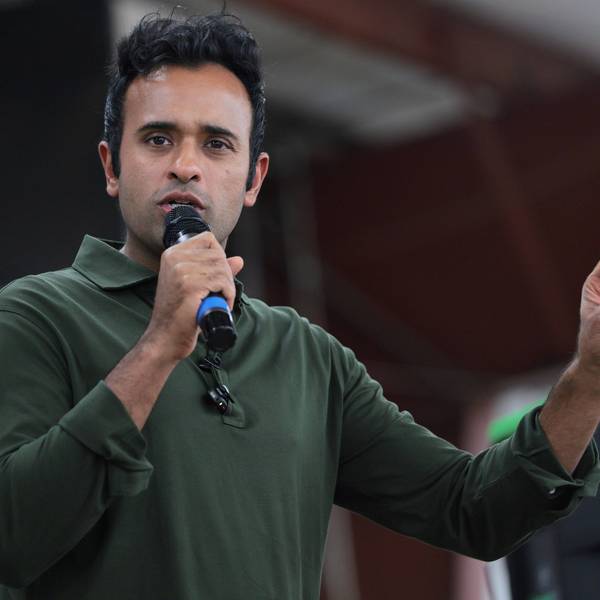


Rep. Tom Suozzi (D-NY) attends an event in Emancipation Hall at the US Capitol on September 3, 2025.
Progressives Warn Democrats: Vote for Iran War Powers Resolution or Face Primary Challenge
"Today every House member will go on record and answer: Do they truly oppose endless wars and stand for the Constitution, or were those just empty campaign slogans?" said one group.
As the US House prepared to vote Thursday on a war powers resolution aimed at ending President Donald Trump's assault on Iran and Democratic leaders whip votes in support of the measure, progressive organizers ramped up pressure on lawmakers to side with the vast majority of the party's voters and support the resolution—or face consequences in upcoming elections.
Usamah Andrabi, a spokesperson for Justice Democrats, told Axios Wednesday after Senate Republicans—and Democratic Sen. John Fetterman of Pennsylvania—voted down a companion resolution, that "any Democrat that votes against war powers is supporting Trump's war on Iran and deserves to be primaried because all voters across the political spectrum are wholeheartedly against it."
A poll released by Reuters/Ipsos this week found that just 25% of voters support Trump's decision to join Israel in launching airstrikes across Iran, which have so far killed more than 1,000 Iranian civilians. At least six US service members have also died or been killed since the unprovoked assault began over the weekend.
Only 7% of Democratic voters support "Operation Epic Fury," as the administration is calling the attacks, while 74% oppose it. A small majority of Republicans, 55%, said they approved of the White House's war on Iran, which the administration has justified with conflicting reasons—none of them convincing experts who say the attacks are a clear violation of international law.
After warning that "the American people will remember who voted to keep our service members in danger by supporting this dangerous, unnecessary, unpopular war" following the Senate vote on Wednesday, the advocacy group Demand Progress urged Americans to call their representatives in Congress and demand they support the war powers resolution introduced in the House by Reps. Ro Khanna (D-Calif.) and Thomas Massie (R-Ky.).
The measure is expected to fail due to the GOP majority; Republicans hold 218 seats in the House while Democrats control 214; Massie and one other Republican, Rep. Warren Davidson (R-Ohio), have indicated support.
Groups are "organizing calls into their districts to make sure that every Democrat votes for" the bipartisan resolution, one House progressive told the outlet.
Organizers are directing particular ire at House Democrats who have a history of staunchly backing Israel and have unveiled a resolution that would allow Trump to continue striking Iran for 30 days.
That resolution was introduced by Reps. Josh Gottheimer (NJ), Jim Costa (Calif.), Henry Cuellar (Texas), Jared Golden (Maine), Greg Landsman (Ohio), and Jimmy Panetta (Calif.) and would authorize the attacks for roughly the same length of time the president has said he believes they'll last, although Defense Secretary Pete Hegseth said Wednesday that the war could take twice as long and that, ultimately, there would be no timeline placed on the war.
Cavan Kharrazian, a senior policy adviser for Demand Progress, told The Intercept Wednesday that for "any representative that is actually against the war," the resolution introduced by Khanna and Massie is "the vehicle they should be voting for now, and not attempting to give Trump a blank check for 30 days."
“We have already seen in the past four days the death and destruction and escalation with this war. I can’t even imagine what things look like in 30 days," said Kharrazian.
Golden is not seeking reelection this year; the other five co-sponsors of the alternative war powers resolution are up for reelection and facing primaries in the coming months.
Axios asked other lawmakers including Reps. Tom Suozzi (D-NY) and Jared Moskowitz (D-Fla.) how they plan to vote on Khanna and Massie's resolution, but did not receive clear answers, with Suozzi saying only that he was "going to do the right thing."
Moskowitz told The Hill that he has "decided" how he'll vote but is "not ready to say what my vote is."
Oliver Larkin, a democratic socialist running against Moskowitz in the primary, seized on the congressman's comment.
Britt Jacovich, a spokesperson for the grassroots advocacy group MoveOn, told Axios that the organization's members "have no plans to throw their support behind members of Congress who refused to do their job and stop Trump from expanding his war. All options are on the table to make sure that our members' voices are heard loud and clear."
MoveOn also said Wednesday that any lawmaker who supports a $50 billion supplemental funding package "should expect to hear from our members."
"MoveOn members consider a vote for the supplemental a vote in favor of Donald Trump's war," said the group.
In a private Democratic caucus meeting on Wednesday, Rep. Gregory Meeks (D-NY), the House Foreign Affairs Committee ranking member, and Rep. Jim Himes (D-Conn.), made an "emphatic" case for Khanna and Massie's resolution, and House Minority Whip Katherine Clark (D-Mass.) has been leading efforts to whip votes.
One anonymous progressive House Democrat told Axios that a vote against the resolution would be "politically perilous" for any Democrat.
Advocacy groups are "already preparing" to organize primary challenges against Democrats who break ranks or vote to allow Trump to attack Iran for a 30-day window, said the lawmaker.
"If the filing deadline has passed, they'll do it in '28," they told Axios. "It's basically inviting a primary challenge."
Paco Fabian, a spokesperson for Our Revolution, told Axios that "when elected officials... fail to stand with working people demanding peace and accountability, they risk losing the trust of the voters who put them in office."
"And when that trust is broken," he said, "voters often begin looking for leaders who will fight for them."
We are at a crossroads
This country and this world are at a monumental crossroads. In a few short weeks, US voters will have an opportunity to beat back the forces of fascism and confront the billionaires who are rigging the economy, our media system, and our democracy, making it increasingly impossible for ordinary people to get by. We’re not just talking about the election. We’re talking about what must be done once these fascist elements are vanquished from power. We need a bolder set of solutions than what either major party has so far been willing to offer and a working-class movement ready to fight like hell for it. Trump didn't emerge from nowhere. The conditions that fueled MAGA authoritarianism were created by decades of radical neoliberal economic policies and a corrupt political system dominated by corporate interests. They slashed taxes on the super-rich, promising that the benefits would trickle down. They said giveaways to the corporate titans would make life more affordable for the rest of us. It was all bullshit. And when a bitter, betrayed populace searches for someone to blame, right-wing demagogues have little trouble finding scapegoats. People know when they're being lied to, but you won't hear any of this from the corporate media. Only independent journalism—powered and funded by people who believe in building a better world—can deliver truly trustworthy daily news. Our Fall Campaign is underway, and we need your help. To power our newsroom through the rest of the year, we need to raise $125,000 by midnight on October 31. So if you share our vision, please contribute whatever you can to sustain our work. |
As the US House prepared to vote Thursday on a war powers resolution aimed at ending President Donald Trump's assault on Iran and Democratic leaders whip votes in support of the measure, progressive organizers ramped up pressure on lawmakers to side with the vast majority of the party's voters and support the resolution—or face consequences in upcoming elections.
Usamah Andrabi, a spokesperson for Justice Democrats, told Axios Wednesday after Senate Republicans—and Democratic Sen. John Fetterman of Pennsylvania—voted down a companion resolution, that "any Democrat that votes against war powers is supporting Trump's war on Iran and deserves to be primaried because all voters across the political spectrum are wholeheartedly against it."
A poll released by Reuters/Ipsos this week found that just 25% of voters support Trump's decision to join Israel in launching airstrikes across Iran, which have so far killed more than 1,000 Iranian civilians. At least six US service members have also died or been killed since the unprovoked assault began over the weekend.
Only 7% of Democratic voters support "Operation Epic Fury," as the administration is calling the attacks, while 74% oppose it. A small majority of Republicans, 55%, said they approved of the White House's war on Iran, which the administration has justified with conflicting reasons—none of them convincing experts who say the attacks are a clear violation of international law.
After warning that "the American people will remember who voted to keep our service members in danger by supporting this dangerous, unnecessary, unpopular war" following the Senate vote on Wednesday, the advocacy group Demand Progress urged Americans to call their representatives in Congress and demand they support the war powers resolution introduced in the House by Reps. Ro Khanna (D-Calif.) and Thomas Massie (R-Ky.).
The measure is expected to fail due to the GOP majority; Republicans hold 218 seats in the House while Democrats control 214; Massie and one other Republican, Rep. Warren Davidson (R-Ohio), have indicated support.
Groups are "organizing calls into their districts to make sure that every Democrat votes for" the bipartisan resolution, one House progressive told the outlet.
Organizers are directing particular ire at House Democrats who have a history of staunchly backing Israel and have unveiled a resolution that would allow Trump to continue striking Iran for 30 days.
That resolution was introduced by Reps. Josh Gottheimer (NJ), Jim Costa (Calif.), Henry Cuellar (Texas), Jared Golden (Maine), Greg Landsman (Ohio), and Jimmy Panetta (Calif.) and would authorize the attacks for roughly the same length of time the president has said he believes they'll last, although Defense Secretary Pete Hegseth said Wednesday that the war could take twice as long and that, ultimately, there would be no timeline placed on the war.
Cavan Kharrazian, a senior policy adviser for Demand Progress, told The Intercept Wednesday that for "any representative that is actually against the war," the resolution introduced by Khanna and Massie is "the vehicle they should be voting for now, and not attempting to give Trump a blank check for 30 days."
“We have already seen in the past four days the death and destruction and escalation with this war. I can’t even imagine what things look like in 30 days," said Kharrazian.
Golden is not seeking reelection this year; the other five co-sponsors of the alternative war powers resolution are up for reelection and facing primaries in the coming months.
Axios asked other lawmakers including Reps. Tom Suozzi (D-NY) and Jared Moskowitz (D-Fla.) how they plan to vote on Khanna and Massie's resolution, but did not receive clear answers, with Suozzi saying only that he was "going to do the right thing."
Moskowitz told The Hill that he has "decided" how he'll vote but is "not ready to say what my vote is."
Oliver Larkin, a democratic socialist running against Moskowitz in the primary, seized on the congressman's comment.
Britt Jacovich, a spokesperson for the grassroots advocacy group MoveOn, told Axios that the organization's members "have no plans to throw their support behind members of Congress who refused to do their job and stop Trump from expanding his war. All options are on the table to make sure that our members' voices are heard loud and clear."
MoveOn also said Wednesday that any lawmaker who supports a $50 billion supplemental funding package "should expect to hear from our members."
"MoveOn members consider a vote for the supplemental a vote in favor of Donald Trump's war," said the group.
In a private Democratic caucus meeting on Wednesday, Rep. Gregory Meeks (D-NY), the House Foreign Affairs Committee ranking member, and Rep. Jim Himes (D-Conn.), made an "emphatic" case for Khanna and Massie's resolution, and House Minority Whip Katherine Clark (D-Mass.) has been leading efforts to whip votes.
One anonymous progressive House Democrat told Axios that a vote against the resolution would be "politically perilous" for any Democrat.
Advocacy groups are "already preparing" to organize primary challenges against Democrats who break ranks or vote to allow Trump to attack Iran for a 30-day window, said the lawmaker.
"If the filing deadline has passed, they'll do it in '28," they told Axios. "It's basically inviting a primary challenge."
Paco Fabian, a spokesperson for Our Revolution, told Axios that "when elected officials... fail to stand with working people demanding peace and accountability, they risk losing the trust of the voters who put them in office."
"And when that trust is broken," he said, "voters often begin looking for leaders who will fight for them."
- David Hogg Says Any Democrat Who Supports War With Iran 'Should Be Primaried' ›
- Competing Dem War Powers Resolution Would Give Trump a Monthlong Free Pass in Iran ›
- Fury Grows Over Democratic Complacency in Face of Looming War of Choice in Iran ›
- Opinion | Urgent Message to Democrats: Stop Dragging Your Feet and End Trump's Iran War | Common Dreams ›
As the US House prepared to vote Thursday on a war powers resolution aimed at ending President Donald Trump's assault on Iran and Democratic leaders whip votes in support of the measure, progressive organizers ramped up pressure on lawmakers to side with the vast majority of the party's voters and support the resolution—or face consequences in upcoming elections.
Usamah Andrabi, a spokesperson for Justice Democrats, told Axios Wednesday after Senate Republicans—and Democratic Sen. John Fetterman of Pennsylvania—voted down a companion resolution, that "any Democrat that votes against war powers is supporting Trump's war on Iran and deserves to be primaried because all voters across the political spectrum are wholeheartedly against it."
A poll released by Reuters/Ipsos this week found that just 25% of voters support Trump's decision to join Israel in launching airstrikes across Iran, which have so far killed more than 1,000 Iranian civilians. At least six US service members have also died or been killed since the unprovoked assault began over the weekend.
Only 7% of Democratic voters support "Operation Epic Fury," as the administration is calling the attacks, while 74% oppose it. A small majority of Republicans, 55%, said they approved of the White House's war on Iran, which the administration has justified with conflicting reasons—none of them convincing experts who say the attacks are a clear violation of international law.
After warning that "the American people will remember who voted to keep our service members in danger by supporting this dangerous, unnecessary, unpopular war" following the Senate vote on Wednesday, the advocacy group Demand Progress urged Americans to call their representatives in Congress and demand they support the war powers resolution introduced in the House by Reps. Ro Khanna (D-Calif.) and Thomas Massie (R-Ky.).
The measure is expected to fail due to the GOP majority; Republicans hold 218 seats in the House while Democrats control 214; Massie and one other Republican, Rep. Warren Davidson (R-Ohio), have indicated support.
Groups are "organizing calls into their districts to make sure that every Democrat votes for" the bipartisan resolution, one House progressive told the outlet.
Organizers are directing particular ire at House Democrats who have a history of staunchly backing Israel and have unveiled a resolution that would allow Trump to continue striking Iran for 30 days.
That resolution was introduced by Reps. Josh Gottheimer (NJ), Jim Costa (Calif.), Henry Cuellar (Texas), Jared Golden (Maine), Greg Landsman (Ohio), and Jimmy Panetta (Calif.) and would authorize the attacks for roughly the same length of time the president has said he believes they'll last, although Defense Secretary Pete Hegseth said Wednesday that the war could take twice as long and that, ultimately, there would be no timeline placed on the war.
Cavan Kharrazian, a senior policy adviser for Demand Progress, told The Intercept Wednesday that for "any representative that is actually against the war," the resolution introduced by Khanna and Massie is "the vehicle they should be voting for now, and not attempting to give Trump a blank check for 30 days."
“We have already seen in the past four days the death and destruction and escalation with this war. I can’t even imagine what things look like in 30 days," said Kharrazian.
Golden is not seeking reelection this year; the other five co-sponsors of the alternative war powers resolution are up for reelection and facing primaries in the coming months.
Axios asked other lawmakers including Reps. Tom Suozzi (D-NY) and Jared Moskowitz (D-Fla.) how they plan to vote on Khanna and Massie's resolution, but did not receive clear answers, with Suozzi saying only that he was "going to do the right thing."
Moskowitz told The Hill that he has "decided" how he'll vote but is "not ready to say what my vote is."
Oliver Larkin, a democratic socialist running against Moskowitz in the primary, seized on the congressman's comment.
Britt Jacovich, a spokesperson for the grassroots advocacy group MoveOn, told Axios that the organization's members "have no plans to throw their support behind members of Congress who refused to do their job and stop Trump from expanding his war. All options are on the table to make sure that our members' voices are heard loud and clear."
MoveOn also said Wednesday that any lawmaker who supports a $50 billion supplemental funding package "should expect to hear from our members."
"MoveOn members consider a vote for the supplemental a vote in favor of Donald Trump's war," said the group.
In a private Democratic caucus meeting on Wednesday, Rep. Gregory Meeks (D-NY), the House Foreign Affairs Committee ranking member, and Rep. Jim Himes (D-Conn.), made an "emphatic" case for Khanna and Massie's resolution, and House Minority Whip Katherine Clark (D-Mass.) has been leading efforts to whip votes.
One anonymous progressive House Democrat told Axios that a vote against the resolution would be "politically perilous" for any Democrat.
Advocacy groups are "already preparing" to organize primary challenges against Democrats who break ranks or vote to allow Trump to attack Iran for a 30-day window, said the lawmaker.
"If the filing deadline has passed, they'll do it in '28," they told Axios. "It's basically inviting a primary challenge."
Paco Fabian, a spokesperson for Our Revolution, told Axios that "when elected officials... fail to stand with working people demanding peace and accountability, they risk losing the trust of the voters who put them in office."
"And when that trust is broken," he said, "voters often begin looking for leaders who will fight for them."
- David Hogg Says Any Democrat Who Supports War With Iran 'Should Be Primaried' ›
- Competing Dem War Powers Resolution Would Give Trump a Monthlong Free Pass in Iran ›
- Fury Grows Over Democratic Complacency in Face of Looming War of Choice in Iran ›
- Opinion | Urgent Message to Democrats: Stop Dragging Your Feet and End Trump's Iran War | Common Dreams ›