SUBSCRIBE TO OUR FREE NEWSLETTER
Daily news & progressive opinion—funded by the people, not the corporations—delivered straight to your inbox.
5
#000000
#FFFFFF
To donate by check, phone, or other method, see our More Ways to Give page.
Daily news & progressive opinion—funded by the people, not the corporations—delivered straight to your inbox.
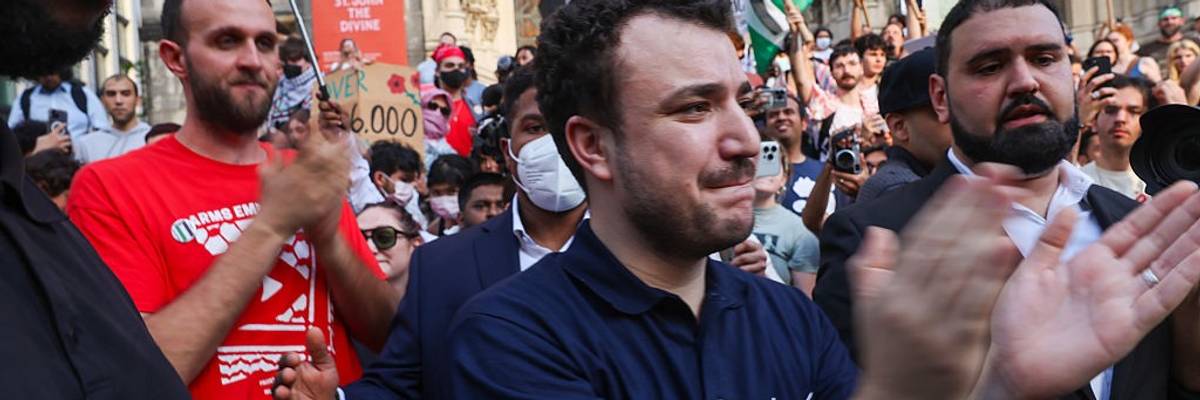
Palestinian activist Mahmoud Khalil marches with supporters after he was released from ICE detention during a rally outside of the Cathedral of St. John the Divine in Manhattan on June 22, 2025 in New York City.
They put me through a sham immigration process while guaranteeing the outcome in advance," Mahmoud Khalil said.
An immigration court decision that could hasten the deportation of Palestinian rights activist Mahmoud Khalil was marked by irregularities, including unusual speed and the recusals of several judges, The New York Times reported Friday.
The Board of Immigration Appeals (BIA), which is housed in the Department of Justice (DOJ) but is legally enjoined to make independent decisions, ruled on April 9 that Khalil could be deported from the US. However, documents obtained by the Times show that the case was fast-tracked in a manner that experts say is unusual.
"This is the due process the administration is offering me, corrupt and unprecedented," Khalil posted on social media Friday in response to the Times' reporting.
Khalil, a student leader of Columbia University protests against the Gaza genocide, was an early target of the Trump administration's crackdown on pro-Palestinian speech when he was abducted by Department of Homeland Security agents while returning to his New York home in March 2025. Despite being a permanent resident married to a US citizen, Khalil was detained in Louisiana for over three months, where he missed the birth of his son.
“In all my decades as an immigration lawyer, I have never seen such a baseless and politically motivated decision."
Despite the BIA's ruling, Khalil cannot be deported while his separate habeas corpus case proceeds through federal courts. However, the Times' reporting raises questions about how fairly he is being treated by the Trump administration and how quickly he could face removal if the federal case falls through.
"This story proves that the Trump administration's treatment of my case has always been corrupt and retaliatory. They put me through a sham immigration process while guaranteeing the outcome in advance," Khalil wrote.
According to the Times:
The case was considered high priority even before the board officially received it. A note from an internal case-tracking file from June said that, even though Mr. Khalil had been released several days earlier, the case was to be handled as if he were still in detention, which would speed it along.
"Please process as quickly as possible,” said another note, from October. Another document shows that the court’s chair—its highest ranking member—oversaw the case from early on.
The decision was made nine days after all the paperwork was submitted, a timeline that Biden BIA appointee Homero López called "unprecedented," as the board often takes years to decide similar cases.
“It’s an insane turnaround, particularly for such a high-profile case on a novel legal issue,” López, who was fired under President Donald Trump, told the Times.
At the same time, people familiar with the situation told the Times that at least three judges had recused themselves from the case, one before it was decided and the others once it became clear it would be published, meaning it would be considered precedent setting.
Former board judge Andrea Sáenz, also fired by Trump, told the Times that judges often recuse themselves because they have somehow been involved with the case before it is appealed.
“How many people touched this case when the immigration judge was handling it the first time?” Sáenz asked.
Former DOJ official David McConnell, who has experience with the immigration appeals process, said that both the quick processing and the recusals were "very unusual." However, he added this did not mean the board necessarily did anything wrong.
However, the BIA's decision was heavily criticized by Khalil's legal team in April, as it upholds Secretary of State Marco Rubio's determination that Khalil could be deported because his activism posed a threat to US foreign policy, which a federal judge in New Jersey said was "likely" unconstitutional and could not be the basis for his detention or deportation. It also justified removal on the grounds that Khalil omitted certain details on green card paperwork, but the government only added those charges after Rubio's foreign policy gambit was challenged.
“In all my decades as an immigration lawyer, I have never seen such a baseless and politically motivated decision. The BIA's decision has absolutely no support in the record, violates a federal court order, and we’ll be fighting it until the end,” Khalil's lead lawyer Marc Van Der Hout said in a statement when the decision was first issued. “Federal courts have already agreed that Mahmoud was targeted for his speech, and there is likely much more evidence of the government’s unlawful retaliation that has yet to come to light. This is a clear continuation of the administration’s retaliation against Mahmoud for exercising his First Amendment rights.”
Responding to the new reporting on Friday, Van Der Hout told the Times that the case's handling suggests it “has been controlled from Day 1 by higher-ups in the administration.”
Dear Common Dreams reader, It’s been nearly 30 years since I co-founded Common Dreams with my late wife, Lina Newhouser. We had the radical notion that journalism should serve the public good, not corporate profits. It was clear to us from the outset what it would take to build such a project. No paid advertisements. No corporate sponsors. No millionaire publisher telling us what to think or do. Many people said we wouldn't last a year, but we proved those doubters wrong. Together with a tremendous team of journalists and dedicated staff, we built an independent media outlet free from the constraints of profits and corporate control. Our mission has always been simple: To inform. To inspire. To ignite change for the common good. Building Common Dreams was not easy. Our survival was never guaranteed. When you take on the most powerful forces—Wall Street greed, fossil fuel industry destruction, Big Tech lobbyists, and uber-rich oligarchs who have spent billions upon billions rigging the economy and democracy in their favor—the only bulwark you have is supporters who believe in your work. But here’s the urgent message from me today. It's never been this bad out there. And it's never been this hard to keep us going. At the very moment Common Dreams is most needed, the threats we face are intensifying. We need your support now more than ever. We don't accept corporate advertising and never will. We don't have a paywall because we don't think people should be blocked from critical news based on their ability to pay. Everything we do is funded by the donations of readers like you. When everyone does the little they can afford, we are strong. But if that support retreats or dries up, so do we. Will you donate now to make sure Common Dreams not only survives but thrives? —Craig Brown, Co-founder |
An immigration court decision that could hasten the deportation of Palestinian rights activist Mahmoud Khalil was marked by irregularities, including unusual speed and the recusals of several judges, The New York Times reported Friday.
The Board of Immigration Appeals (BIA), which is housed in the Department of Justice (DOJ) but is legally enjoined to make independent decisions, ruled on April 9 that Khalil could be deported from the US. However, documents obtained by the Times show that the case was fast-tracked in a manner that experts say is unusual.
"This is the due process the administration is offering me, corrupt and unprecedented," Khalil posted on social media Friday in response to the Times' reporting.
Khalil, a student leader of Columbia University protests against the Gaza genocide, was an early target of the Trump administration's crackdown on pro-Palestinian speech when he was abducted by Department of Homeland Security agents while returning to his New York home in March 2025. Despite being a permanent resident married to a US citizen, Khalil was detained in Louisiana for over three months, where he missed the birth of his son.
“In all my decades as an immigration lawyer, I have never seen such a baseless and politically motivated decision."
Despite the BIA's ruling, Khalil cannot be deported while his separate habeas corpus case proceeds through federal courts. However, the Times' reporting raises questions about how fairly he is being treated by the Trump administration and how quickly he could face removal if the federal case falls through.
"This story proves that the Trump administration's treatment of my case has always been corrupt and retaliatory. They put me through a sham immigration process while guaranteeing the outcome in advance," Khalil wrote.
According to the Times:
The case was considered high priority even before the board officially received it. A note from an internal case-tracking file from June said that, even though Mr. Khalil had been released several days earlier, the case was to be handled as if he were still in detention, which would speed it along.
"Please process as quickly as possible,” said another note, from October. Another document shows that the court’s chair—its highest ranking member—oversaw the case from early on.
The decision was made nine days after all the paperwork was submitted, a timeline that Biden BIA appointee Homero López called "unprecedented," as the board often takes years to decide similar cases.
“It’s an insane turnaround, particularly for such a high-profile case on a novel legal issue,” López, who was fired under President Donald Trump, told the Times.
At the same time, people familiar with the situation told the Times that at least three judges had recused themselves from the case, one before it was decided and the others once it became clear it would be published, meaning it would be considered precedent setting.
Former board judge Andrea Sáenz, also fired by Trump, told the Times that judges often recuse themselves because they have somehow been involved with the case before it is appealed.
“How many people touched this case when the immigration judge was handling it the first time?” Sáenz asked.
Former DOJ official David McConnell, who has experience with the immigration appeals process, said that both the quick processing and the recusals were "very unusual." However, he added this did not mean the board necessarily did anything wrong.
However, the BIA's decision was heavily criticized by Khalil's legal team in April, as it upholds Secretary of State Marco Rubio's determination that Khalil could be deported because his activism posed a threat to US foreign policy, which a federal judge in New Jersey said was "likely" unconstitutional and could not be the basis for his detention or deportation. It also justified removal on the grounds that Khalil omitted certain details on green card paperwork, but the government only added those charges after Rubio's foreign policy gambit was challenged.
“In all my decades as an immigration lawyer, I have never seen such a baseless and politically motivated decision. The BIA's decision has absolutely no support in the record, violates a federal court order, and we’ll be fighting it until the end,” Khalil's lead lawyer Marc Van Der Hout said in a statement when the decision was first issued. “Federal courts have already agreed that Mahmoud was targeted for his speech, and there is likely much more evidence of the government’s unlawful retaliation that has yet to come to light. This is a clear continuation of the administration’s retaliation against Mahmoud for exercising his First Amendment rights.”
Responding to the new reporting on Friday, Van Der Hout told the Times that the case's handling suggests it “has been controlled from Day 1 by higher-ups in the administration.”
An immigration court decision that could hasten the deportation of Palestinian rights activist Mahmoud Khalil was marked by irregularities, including unusual speed and the recusals of several judges, The New York Times reported Friday.
The Board of Immigration Appeals (BIA), which is housed in the Department of Justice (DOJ) but is legally enjoined to make independent decisions, ruled on April 9 that Khalil could be deported from the US. However, documents obtained by the Times show that the case was fast-tracked in a manner that experts say is unusual.
"This is the due process the administration is offering me, corrupt and unprecedented," Khalil posted on social media Friday in response to the Times' reporting.
Khalil, a student leader of Columbia University protests against the Gaza genocide, was an early target of the Trump administration's crackdown on pro-Palestinian speech when he was abducted by Department of Homeland Security agents while returning to his New York home in March 2025. Despite being a permanent resident married to a US citizen, Khalil was detained in Louisiana for over three months, where he missed the birth of his son.
“In all my decades as an immigration lawyer, I have never seen such a baseless and politically motivated decision."
Despite the BIA's ruling, Khalil cannot be deported while his separate habeas corpus case proceeds through federal courts. However, the Times' reporting raises questions about how fairly he is being treated by the Trump administration and how quickly he could face removal if the federal case falls through.
"This story proves that the Trump administration's treatment of my case has always been corrupt and retaliatory. They put me through a sham immigration process while guaranteeing the outcome in advance," Khalil wrote.
According to the Times:
The case was considered high priority even before the board officially received it. A note from an internal case-tracking file from June said that, even though Mr. Khalil had been released several days earlier, the case was to be handled as if he were still in detention, which would speed it along.
"Please process as quickly as possible,” said another note, from October. Another document shows that the court’s chair—its highest ranking member—oversaw the case from early on.
The decision was made nine days after all the paperwork was submitted, a timeline that Biden BIA appointee Homero López called "unprecedented," as the board often takes years to decide similar cases.
“It’s an insane turnaround, particularly for such a high-profile case on a novel legal issue,” López, who was fired under President Donald Trump, told the Times.
At the same time, people familiar with the situation told the Times that at least three judges had recused themselves from the case, one before it was decided and the others once it became clear it would be published, meaning it would be considered precedent setting.
Former board judge Andrea Sáenz, also fired by Trump, told the Times that judges often recuse themselves because they have somehow been involved with the case before it is appealed.
“How many people touched this case when the immigration judge was handling it the first time?” Sáenz asked.
Former DOJ official David McConnell, who has experience with the immigration appeals process, said that both the quick processing and the recusals were "very unusual." However, he added this did not mean the board necessarily did anything wrong.
However, the BIA's decision was heavily criticized by Khalil's legal team in April, as it upholds Secretary of State Marco Rubio's determination that Khalil could be deported because his activism posed a threat to US foreign policy, which a federal judge in New Jersey said was "likely" unconstitutional and could not be the basis for his detention or deportation. It also justified removal on the grounds that Khalil omitted certain details on green card paperwork, but the government only added those charges after Rubio's foreign policy gambit was challenged.
“In all my decades as an immigration lawyer, I have never seen such a baseless and politically motivated decision. The BIA's decision has absolutely no support in the record, violates a federal court order, and we’ll be fighting it until the end,” Khalil's lead lawyer Marc Van Der Hout said in a statement when the decision was first issued. “Federal courts have already agreed that Mahmoud was targeted for his speech, and there is likely much more evidence of the government’s unlawful retaliation that has yet to come to light. This is a clear continuation of the administration’s retaliation against Mahmoud for exercising his First Amendment rights.”
Responding to the new reporting on Friday, Van Der Hout told the Times that the case's handling suggests it “has been controlled from Day 1 by higher-ups in the administration.”