5
#000000
#FFFFFF
To donate by check, phone, or other method, see our More Ways to Give page.
Daily news & progressive opinion—funded by the people, not the corporations—delivered straight to your inbox.
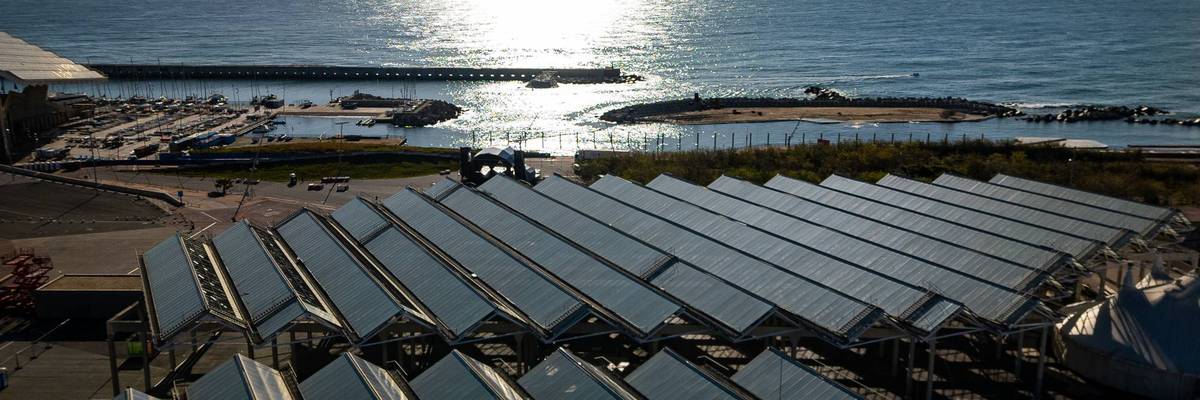
Solar panels are seen in the city port in Barcelona, Spain on March 27, 2026.
"The only real energy independence from the Middle East is renewables," said one policy expert.
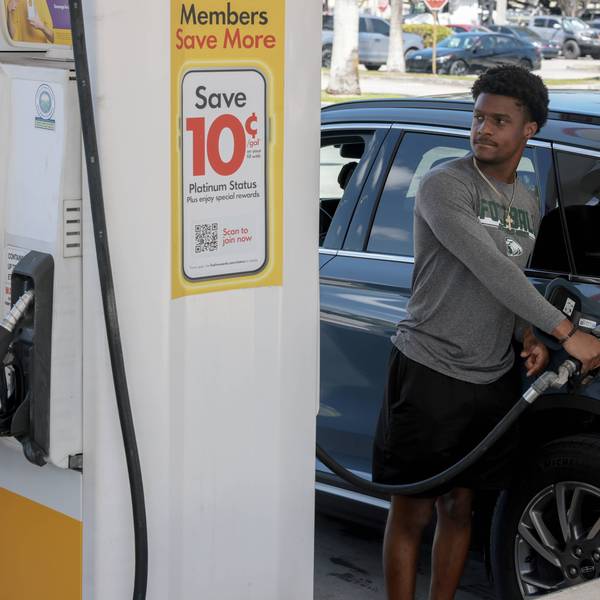
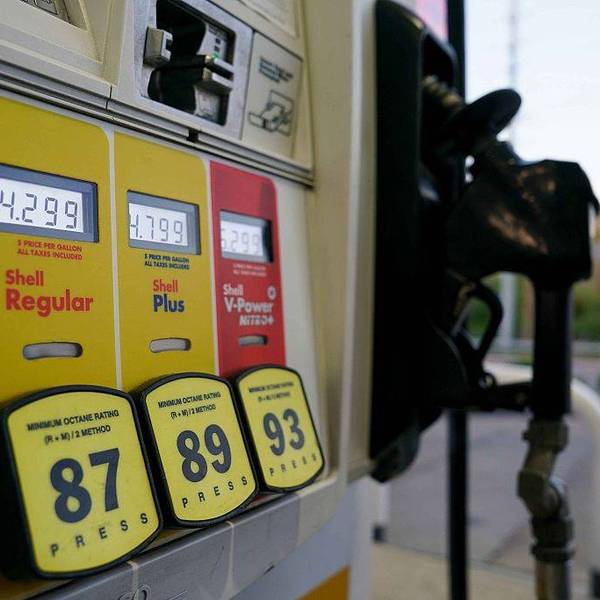
Average gas prices in the United States are quickly climbing toward $5 per gallon this week as US President Donald Trump's war with Iran shows little sign of resolution.
Where average prices were about $2.98 the day before the war's launch, they had shot up to $4.48 as of Tuesday, according to AAA's gas price tracker, as Iran's restriction of ships traveling through the Strait of Hormuz has squeezed global oil shipping and the shipping of other fuel sources like liquefied natural gas (LNG), causing global price hikes.
And while Trump has touted America’s supposed “energy independence” as an ace in the hole, achieved by ratcheting up fossil fuel production while canceling solar and wind power projects, data shows that the US has been hit harder by the price shocks than any other major economy in the world, with those that have embraced renewable energy being especially resilient.
Although the US leads the world in oil production by a large margin, data from JP Morgan Commodities research, analyzed Friday by MarketWatch, showed that between February 23 and April 27, the US experienced about a 42% increase in gas prices, the fifth-highest in the world.
"The spike in US gasoline prices over the past two months has outpaced everywhere except Southeast Asia, the region most dependent on oil from the Persian Gulf," explained Yahoo Finance geopolitics reporter Jake Conley.
Rebecca Babin, senior energy trader and managing director at CIBC Private Wealth, explained to MarketWatch last week that while increased fuel production gives the US a "buffer," oil is a global market and "it doesn’t operate in a vacuum." She said, "Global tightness and domestic bottlenecks still show up in gasoline prices."
Meanwhile, some of the countries that have best survived the price hikes include France and Spain, which derive large shares of their power from nuclear energy and renewables, respectively.
Craig Hanson and Jessica Isaacs, a pair of researchers at the World Resources Institute, explained last month that while a mix of factors is at play, countries less reliant on fossil fuels generally "find themselves in a better position to withstand the current crisis."
"Every country has homegrown access to at least two clean energy resources—the sun shines, and the wind blows just about everywhere at some point," they said. "The same cannot be said of oil and gas, where production is concentrated in a small number of countries and exposed to geopolitical disruption."
"Renewable resources like wind, solar, and geothermal have zero fuel costs, and the fuel cost of nuclear power is quite low. Again, the same cannot be said of fossil fuels, which have costs set by volatile global markets," they added. "These two advantages are why some of the world’s clean energy frontrunners are faring better than other countries amidst the Iranian energy crisis."
As Reuters reported in late April, the contrast between Europe's biggest gas guzzlers and green energy adopters is particularly stark.
While Albania has kept energy prices in check and even lowered them compared to last year by using its large system of hydroelectric dams, which supply much of its power, countries like Germany and Italy, which still rely heavily on gas, have seen electricity prices spike.
Hanson and Isaacs noted that while clean energy investments have helped soften the blow of global price shocks, the effects are not the same across the board. While price hikes for the electricity used to power factories, homes, and cars have been blunted by the availability of alternative energy sources, others, like heat—which are more reliant on natural gas—have still been affected.
Still, though, they said the crisis has shown that in addition to environmental sustainability, "clean energy systems’ greatest benefits today might actually be price stability and domestic energy resilience."
While Trump has continued his efforts to choke off any federal investment in renewable energy and double down on oil and gas production, other nations have taken the war’s price hikes as a sign to further accelerate their transition away from fossil fuels.
Germany and several other European Union members, for example, have announced expedited timelines to expand offshore wind and solar investments, explicitly citing the volatility in oil markets caused by the war.
Stephen Wertheim, a senior fellow in the American Statecraft Program at the Carnegie Endowment for International Peace, said the energy price shocks showed that "the only real energy independence from the Middle East is renewables."
Dear Common Dreams reader, It’s been nearly 30 years since I co-founded Common Dreams with my late wife, Lina Newhouser. We had the radical notion that journalism should serve the public good, not corporate profits. It was clear to us from the outset what it would take to build such a project. No paid advertisements. No corporate sponsors. No millionaire publisher telling us what to think or do. Many people said we wouldn't last a year, but we proved those doubters wrong. Together with a tremendous team of journalists and dedicated staff, we built an independent media outlet free from the constraints of profits and corporate control. Our mission has always been simple: To inform. To inspire. To ignite change for the common good. Building Common Dreams was not easy. Our survival was never guaranteed. When you take on the most powerful forces—Wall Street greed, fossil fuel industry destruction, Big Tech lobbyists, and uber-rich oligarchs who have spent billions upon billions rigging the economy and democracy in their favor—the only bulwark you have is supporters who believe in your work. But here’s the urgent message from me today. It's never been this bad out there. And it's never been this hard to keep us going. At the very moment Common Dreams is most needed, the threats we face are intensifying. We need your support now more than ever. We don't accept corporate advertising and never will. We don't have a paywall because we don't think people should be blocked from critical news based on their ability to pay. Everything we do is funded by the donations of readers like you. When everyone does the little they can afford, we are strong. But if that support retreats or dries up, so do we. Will you donate now to make sure Common Dreams not only survives but thrives? —Craig Brown, Co-founder |
Average gas prices in the United States are quickly climbing toward $5 per gallon this week as US President Donald Trump's war with Iran shows little sign of resolution.
Where average prices were about $2.98 the day before the war's launch, they had shot up to $4.48 as of Tuesday, according to AAA's gas price tracker, as Iran's restriction of ships traveling through the Strait of Hormuz has squeezed global oil shipping and the shipping of other fuel sources like liquefied natural gas (LNG), causing global price hikes.
And while Trump has touted America’s supposed “energy independence” as an ace in the hole, achieved by ratcheting up fossil fuel production while canceling solar and wind power projects, data shows that the US has been hit harder by the price shocks than any other major economy in the world, with those that have embraced renewable energy being especially resilient.
Although the US leads the world in oil production by a large margin, data from JP Morgan Commodities research, analyzed Friday by MarketWatch, showed that between February 23 and April 27, the US experienced about a 42% increase in gas prices, the fifth-highest in the world.
"The spike in US gasoline prices over the past two months has outpaced everywhere except Southeast Asia, the region most dependent on oil from the Persian Gulf," explained Yahoo Finance geopolitics reporter Jake Conley.
Rebecca Babin, senior energy trader and managing director at CIBC Private Wealth, explained to MarketWatch last week that while increased fuel production gives the US a "buffer," oil is a global market and "it doesn’t operate in a vacuum." She said, "Global tightness and domestic bottlenecks still show up in gasoline prices."
Meanwhile, some of the countries that have best survived the price hikes include France and Spain, which derive large shares of their power from nuclear energy and renewables, respectively.
Craig Hanson and Jessica Isaacs, a pair of researchers at the World Resources Institute, explained last month that while a mix of factors is at play, countries less reliant on fossil fuels generally "find themselves in a better position to withstand the current crisis."
"Every country has homegrown access to at least two clean energy resources—the sun shines, and the wind blows just about everywhere at some point," they said. "The same cannot be said of oil and gas, where production is concentrated in a small number of countries and exposed to geopolitical disruption."
"Renewable resources like wind, solar, and geothermal have zero fuel costs, and the fuel cost of nuclear power is quite low. Again, the same cannot be said of fossil fuels, which have costs set by volatile global markets," they added. "These two advantages are why some of the world’s clean energy frontrunners are faring better than other countries amidst the Iranian energy crisis."
As Reuters reported in late April, the contrast between Europe's biggest gas guzzlers and green energy adopters is particularly stark.
While Albania has kept energy prices in check and even lowered them compared to last year by using its large system of hydroelectric dams, which supply much of its power, countries like Germany and Italy, which still rely heavily on gas, have seen electricity prices spike.
Hanson and Isaacs noted that while clean energy investments have helped soften the blow of global price shocks, the effects are not the same across the board. While price hikes for the electricity used to power factories, homes, and cars have been blunted by the availability of alternative energy sources, others, like heat—which are more reliant on natural gas—have still been affected.
Still, though, they said the crisis has shown that in addition to environmental sustainability, "clean energy systems’ greatest benefits today might actually be price stability and domestic energy resilience."
While Trump has continued his efforts to choke off any federal investment in renewable energy and double down on oil and gas production, other nations have taken the war’s price hikes as a sign to further accelerate their transition away from fossil fuels.
Germany and several other European Union members, for example, have announced expedited timelines to expand offshore wind and solar investments, explicitly citing the volatility in oil markets caused by the war.
Stephen Wertheim, a senior fellow in the American Statecraft Program at the Carnegie Endowment for International Peace, said the energy price shocks showed that "the only real energy independence from the Middle East is renewables."
Average gas prices in the United States are quickly climbing toward $5 per gallon this week as US President Donald Trump's war with Iran shows little sign of resolution.
Where average prices were about $2.98 the day before the war's launch, they had shot up to $4.48 as of Tuesday, according to AAA's gas price tracker, as Iran's restriction of ships traveling through the Strait of Hormuz has squeezed global oil shipping and the shipping of other fuel sources like liquefied natural gas (LNG), causing global price hikes.
And while Trump has touted America’s supposed “energy independence” as an ace in the hole, achieved by ratcheting up fossil fuel production while canceling solar and wind power projects, data shows that the US has been hit harder by the price shocks than any other major economy in the world, with those that have embraced renewable energy being especially resilient.
Although the US leads the world in oil production by a large margin, data from JP Morgan Commodities research, analyzed Friday by MarketWatch, showed that between February 23 and April 27, the US experienced about a 42% increase in gas prices, the fifth-highest in the world.
"The spike in US gasoline prices over the past two months has outpaced everywhere except Southeast Asia, the region most dependent on oil from the Persian Gulf," explained Yahoo Finance geopolitics reporter Jake Conley.
Rebecca Babin, senior energy trader and managing director at CIBC Private Wealth, explained to MarketWatch last week that while increased fuel production gives the US a "buffer," oil is a global market and "it doesn’t operate in a vacuum." She said, "Global tightness and domestic bottlenecks still show up in gasoline prices."
Meanwhile, some of the countries that have best survived the price hikes include France and Spain, which derive large shares of their power from nuclear energy and renewables, respectively.
Craig Hanson and Jessica Isaacs, a pair of researchers at the World Resources Institute, explained last month that while a mix of factors is at play, countries less reliant on fossil fuels generally "find themselves in a better position to withstand the current crisis."
"Every country has homegrown access to at least two clean energy resources—the sun shines, and the wind blows just about everywhere at some point," they said. "The same cannot be said of oil and gas, where production is concentrated in a small number of countries and exposed to geopolitical disruption."
"Renewable resources like wind, solar, and geothermal have zero fuel costs, and the fuel cost of nuclear power is quite low. Again, the same cannot be said of fossil fuels, which have costs set by volatile global markets," they added. "These two advantages are why some of the world’s clean energy frontrunners are faring better than other countries amidst the Iranian energy crisis."
As Reuters reported in late April, the contrast between Europe's biggest gas guzzlers and green energy adopters is particularly stark.
While Albania has kept energy prices in check and even lowered them compared to last year by using its large system of hydroelectric dams, which supply much of its power, countries like Germany and Italy, which still rely heavily on gas, have seen electricity prices spike.
Hanson and Isaacs noted that while clean energy investments have helped soften the blow of global price shocks, the effects are not the same across the board. While price hikes for the electricity used to power factories, homes, and cars have been blunted by the availability of alternative energy sources, others, like heat—which are more reliant on natural gas—have still been affected.
Still, though, they said the crisis has shown that in addition to environmental sustainability, "clean energy systems’ greatest benefits today might actually be price stability and domestic energy resilience."
While Trump has continued his efforts to choke off any federal investment in renewable energy and double down on oil and gas production, other nations have taken the war’s price hikes as a sign to further accelerate their transition away from fossil fuels.
Germany and several other European Union members, for example, have announced expedited timelines to expand offshore wind and solar investments, explicitly citing the volatility in oil markets caused by the war.
Stephen Wertheim, a senior fellow in the American Statecraft Program at the Carnegie Endowment for International Peace, said the energy price shocks showed that "the only real energy independence from the Middle East is renewables."