SUBSCRIBE TO OUR FREE NEWSLETTER
Daily news & progressive opinion—funded by the people, not the corporations—delivered straight to your inbox.
5
#000000
#FFFFFF
To donate by check, phone, or other method, see our More Ways to Give page.
Daily news & progressive opinion—funded by the people, not the corporations—delivered straight to your inbox.
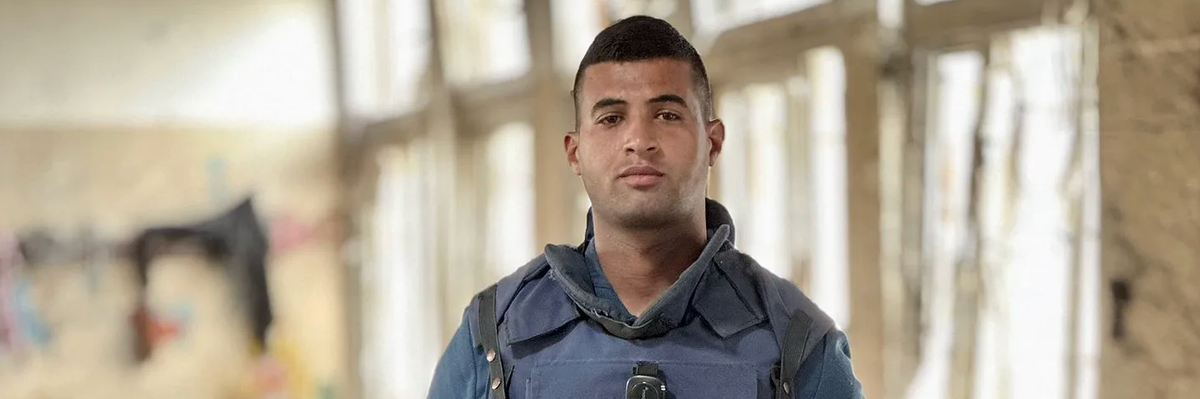
Hossam Shabat is seen reporting from northern Gaza. He was killed in an alleged targeted strike by Israel on March 24, 2025.
"His ability to cover one of the most brutal military campaigns in recent history was almost beyond comprehension," said a colleague of Hossam Shabat.
Colleagues of Al Jazeera journalist Hossam Shabat on Monday posted the Palestinian reporter's own words on social media after he was killed in what was reportedly a targeted attack by U.S.-backed Israeli forces in northern Gaza.
"If you're reading this, it means I have been killed—most likely targeted—by the Israeli occupation forces," said Shabat in the statement before his death. "When this all began, I was only 21 years old—a college student with dreams like anyone else. For past 18 months, I have dedicated every moment of my life to my people. I documented the horrors in northern Gaza minute by minute, determined to show the world the truth they tried to bury."
Shabat had been reporting for Al Jazeera Mubasher on the Israeli assault on Gaza that began in October 2023 in retaliation for a Hamas-led attack, documenting the destruction of northern Gaza and the impact of Israel's blockade and attacks on the people there.
Witnesses told Al Jazeera that Shabat's car had been targeted in Beit Lahiya, and his colleague at the network, Tareq Abu Azzoum, reported the Israeli forces carried out the strike without "any prior warning."
Also on Monday, an Israeli airstrike killed Palestine Today journalist Mohammad Mansour, as well as his wife and son. They were killed in their home in Khan Younis, Abu Azzoum reported.
Mansour and Shabat's deaths bring the number of journalists who have been killed by Israeli forces in Gaza to 208, according to Middle East Eye.
British journalist Owen Jones said Shabat's work "was instrumental in understanding the depravity of Israel's genocide. That's why Israel killed him."
The Committee to Protect Journalists called for an independent investigation into whether Shabat and Mansour were deliberately targeted.
"The deliberate and targeted killing of a journalist, of a civilian, is a war crime," Jodie Ginsberg, the group's chief executive, told Al Jazeera.
Drop Site News, where Shabat was a contributing reporter on the bombardment of Gaza, said it "holds Israel and the U.S. responsible for killing Hossam."
In October 2024, the Israel Defense Forces included Shabat and five other Palestinian reporters on a hit list, according to Drop Site.
"Hossam regularly received death threats by call and text," said the outlet. "What we have witnessed for nearly a year and a half is the Israeli military engaging in a systematic campaign to kill Palestinian journalists, as well as members of their families."
Shabat had filed a story for Drop Site just hours before he was killed about "Israel's resumption of its scorched-earth bombing of Gaza last week that killed over 400 people, including nearly 200 children in a matter of hours."
As Drop Site published Shabat's final dispatch, journalist and editor Sharif Abdel Kouddous wrote that he "was one of a handful of reporters who remained in northern Gaza through Israel's genocidal war."
"His ability to cover one of the most brutal military campaigns in recent history was almost beyond comprehension," wrote Kouddous. "He bore witness to untold death and suffering on an almost daily basis for 17 months. He was displaced over 20 times. He was often hungry. He buried many of his journalist colleagues. In November, he was wounded in an Israeli airstrike. I still can't believe I am referring to him in the past tense. Israel obliterates the present."
In his final article, Shabat wrote about the attacks on numerous families in northern Gaza as Israel resumed its assault, abandoning a cease-fire that took effect in January:
Screams filled the air while everyone stood helpless. My tears didn't stop. The scenes were more than any human being could bear. The ambulances were filled with corpses, their bodies and limbs piled on top and intertwined with one another. We could no longer distinguish between children and men, between the injured and the dead.
At Al-Andalus Hospital the scene was even more painful. The hospital was filled with martyrs. Mothers bid silent farewells to their children. Medical staff worked in horrific conditions, trying to treat the injured with only the most basic means available. It was an impossible situation with massive numbers of dead and wounded being brought in at a terrifying rate.
Israel's aggression continues. Massacre after massacre, leaving only the screams of mothers in its wake and the dreams of children that have turned to ash. There is no justification for this. Everything is being crushed: the lives of innocent people, their dignity, and their hopes for a better future.
Jeremy Scahill, co-founder of Drop Site, posted on social media a video of Shabat talking with a Palestinian girl about her goal of becoming a journalist.
Shabat concluded his final message to readers by saying he continued covering the assault on northern Gaza "because I believe in the Palestinian cause."
"I ask you now: Do not stop speaking about Gaza," wrote Shabat. "Do not let the world look away. Keep fighting, keep telling our stories—until Palestine is free."
Dear Common Dreams reader, It’s been nearly 30 years since I co-founded Common Dreams with my late wife, Lina Newhouser. We had the radical notion that journalism should serve the public good, not corporate profits. It was clear to us from the outset what it would take to build such a project. No paid advertisements. No corporate sponsors. No millionaire publisher telling us what to think or do. Many people said we wouldn't last a year, but we proved those doubters wrong. Together with a tremendous team of journalists and dedicated staff, we built an independent media outlet free from the constraints of profits and corporate control. Our mission has always been simple: To inform. To inspire. To ignite change for the common good. Building Common Dreams was not easy. Our survival was never guaranteed. When you take on the most powerful forces—Wall Street greed, fossil fuel industry destruction, Big Tech lobbyists, and uber-rich oligarchs who have spent billions upon billions rigging the economy and democracy in their favor—the only bulwark you have is supporters who believe in your work. But here’s the urgent message from me today. It's never been this bad out there. And it's never been this hard to keep us going. At the very moment Common Dreams is most needed, the threats we face are intensifying. We need your support now more than ever. We don't accept corporate advertising and never will. We don't have a paywall because we don't think people should be blocked from critical news based on their ability to pay. Everything we do is funded by the donations of readers like you. When everyone does the little they can afford, we are strong. But if that support retreats or dries up, so do we. Will you donate now to make sure Common Dreams not only survives but thrives? —Craig Brown, Co-founder |
Colleagues of Al Jazeera journalist Hossam Shabat on Monday posted the Palestinian reporter's own words on social media after he was killed in what was reportedly a targeted attack by U.S.-backed Israeli forces in northern Gaza.
"If you're reading this, it means I have been killed—most likely targeted—by the Israeli occupation forces," said Shabat in the statement before his death. "When this all began, I was only 21 years old—a college student with dreams like anyone else. For past 18 months, I have dedicated every moment of my life to my people. I documented the horrors in northern Gaza minute by minute, determined to show the world the truth they tried to bury."
Shabat had been reporting for Al Jazeera Mubasher on the Israeli assault on Gaza that began in October 2023 in retaliation for a Hamas-led attack, documenting the destruction of northern Gaza and the impact of Israel's blockade and attacks on the people there.
Witnesses told Al Jazeera that Shabat's car had been targeted in Beit Lahiya, and his colleague at the network, Tareq Abu Azzoum, reported the Israeli forces carried out the strike without "any prior warning."
Also on Monday, an Israeli airstrike killed Palestine Today journalist Mohammad Mansour, as well as his wife and son. They were killed in their home in Khan Younis, Abu Azzoum reported.
Mansour and Shabat's deaths bring the number of journalists who have been killed by Israeli forces in Gaza to 208, according to Middle East Eye.
British journalist Owen Jones said Shabat's work "was instrumental in understanding the depravity of Israel's genocide. That's why Israel killed him."
The Committee to Protect Journalists called for an independent investigation into whether Shabat and Mansour were deliberately targeted.
"The deliberate and targeted killing of a journalist, of a civilian, is a war crime," Jodie Ginsberg, the group's chief executive, told Al Jazeera.
Drop Site News, where Shabat was a contributing reporter on the bombardment of Gaza, said it "holds Israel and the U.S. responsible for killing Hossam."
In October 2024, the Israel Defense Forces included Shabat and five other Palestinian reporters on a hit list, according to Drop Site.
"Hossam regularly received death threats by call and text," said the outlet. "What we have witnessed for nearly a year and a half is the Israeli military engaging in a systematic campaign to kill Palestinian journalists, as well as members of their families."
Shabat had filed a story for Drop Site just hours before he was killed about "Israel's resumption of its scorched-earth bombing of Gaza last week that killed over 400 people, including nearly 200 children in a matter of hours."
As Drop Site published Shabat's final dispatch, journalist and editor Sharif Abdel Kouddous wrote that he "was one of a handful of reporters who remained in northern Gaza through Israel's genocidal war."
"His ability to cover one of the most brutal military campaigns in recent history was almost beyond comprehension," wrote Kouddous. "He bore witness to untold death and suffering on an almost daily basis for 17 months. He was displaced over 20 times. He was often hungry. He buried many of his journalist colleagues. In November, he was wounded in an Israeli airstrike. I still can't believe I am referring to him in the past tense. Israel obliterates the present."
In his final article, Shabat wrote about the attacks on numerous families in northern Gaza as Israel resumed its assault, abandoning a cease-fire that took effect in January:
Screams filled the air while everyone stood helpless. My tears didn't stop. The scenes were more than any human being could bear. The ambulances were filled with corpses, their bodies and limbs piled on top and intertwined with one another. We could no longer distinguish between children and men, between the injured and the dead.
At Al-Andalus Hospital the scene was even more painful. The hospital was filled with martyrs. Mothers bid silent farewells to their children. Medical staff worked in horrific conditions, trying to treat the injured with only the most basic means available. It was an impossible situation with massive numbers of dead and wounded being brought in at a terrifying rate.
Israel's aggression continues. Massacre after massacre, leaving only the screams of mothers in its wake and the dreams of children that have turned to ash. There is no justification for this. Everything is being crushed: the lives of innocent people, their dignity, and their hopes for a better future.
Jeremy Scahill, co-founder of Drop Site, posted on social media a video of Shabat talking with a Palestinian girl about her goal of becoming a journalist.
Shabat concluded his final message to readers by saying he continued covering the assault on northern Gaza "because I believe in the Palestinian cause."
"I ask you now: Do not stop speaking about Gaza," wrote Shabat. "Do not let the world look away. Keep fighting, keep telling our stories—until Palestine is free."
Colleagues of Al Jazeera journalist Hossam Shabat on Monday posted the Palestinian reporter's own words on social media after he was killed in what was reportedly a targeted attack by U.S.-backed Israeli forces in northern Gaza.
"If you're reading this, it means I have been killed—most likely targeted—by the Israeli occupation forces," said Shabat in the statement before his death. "When this all began, I was only 21 years old—a college student with dreams like anyone else. For past 18 months, I have dedicated every moment of my life to my people. I documented the horrors in northern Gaza minute by minute, determined to show the world the truth they tried to bury."
Shabat had been reporting for Al Jazeera Mubasher on the Israeli assault on Gaza that began in October 2023 in retaliation for a Hamas-led attack, documenting the destruction of northern Gaza and the impact of Israel's blockade and attacks on the people there.
Witnesses told Al Jazeera that Shabat's car had been targeted in Beit Lahiya, and his colleague at the network, Tareq Abu Azzoum, reported the Israeli forces carried out the strike without "any prior warning."
Also on Monday, an Israeli airstrike killed Palestine Today journalist Mohammad Mansour, as well as his wife and son. They were killed in their home in Khan Younis, Abu Azzoum reported.
Mansour and Shabat's deaths bring the number of journalists who have been killed by Israeli forces in Gaza to 208, according to Middle East Eye.
British journalist Owen Jones said Shabat's work "was instrumental in understanding the depravity of Israel's genocide. That's why Israel killed him."
The Committee to Protect Journalists called for an independent investigation into whether Shabat and Mansour were deliberately targeted.
"The deliberate and targeted killing of a journalist, of a civilian, is a war crime," Jodie Ginsberg, the group's chief executive, told Al Jazeera.
Drop Site News, where Shabat was a contributing reporter on the bombardment of Gaza, said it "holds Israel and the U.S. responsible for killing Hossam."
In October 2024, the Israel Defense Forces included Shabat and five other Palestinian reporters on a hit list, according to Drop Site.
"Hossam regularly received death threats by call and text," said the outlet. "What we have witnessed for nearly a year and a half is the Israeli military engaging in a systematic campaign to kill Palestinian journalists, as well as members of their families."
Shabat had filed a story for Drop Site just hours before he was killed about "Israel's resumption of its scorched-earth bombing of Gaza last week that killed over 400 people, including nearly 200 children in a matter of hours."
As Drop Site published Shabat's final dispatch, journalist and editor Sharif Abdel Kouddous wrote that he "was one of a handful of reporters who remained in northern Gaza through Israel's genocidal war."
"His ability to cover one of the most brutal military campaigns in recent history was almost beyond comprehension," wrote Kouddous. "He bore witness to untold death and suffering on an almost daily basis for 17 months. He was displaced over 20 times. He was often hungry. He buried many of his journalist colleagues. In November, he was wounded in an Israeli airstrike. I still can't believe I am referring to him in the past tense. Israel obliterates the present."
In his final article, Shabat wrote about the attacks on numerous families in northern Gaza as Israel resumed its assault, abandoning a cease-fire that took effect in January:
Screams filled the air while everyone stood helpless. My tears didn't stop. The scenes were more than any human being could bear. The ambulances were filled with corpses, their bodies and limbs piled on top and intertwined with one another. We could no longer distinguish between children and men, between the injured and the dead.
At Al-Andalus Hospital the scene was even more painful. The hospital was filled with martyrs. Mothers bid silent farewells to their children. Medical staff worked in horrific conditions, trying to treat the injured with only the most basic means available. It was an impossible situation with massive numbers of dead and wounded being brought in at a terrifying rate.
Israel's aggression continues. Massacre after massacre, leaving only the screams of mothers in its wake and the dreams of children that have turned to ash. There is no justification for this. Everything is being crushed: the lives of innocent people, their dignity, and their hopes for a better future.
Jeremy Scahill, co-founder of Drop Site, posted on social media a video of Shabat talking with a Palestinian girl about her goal of becoming a journalist.
Shabat concluded his final message to readers by saying he continued covering the assault on northern Gaza "because I believe in the Palestinian cause."
"I ask you now: Do not stop speaking about Gaza," wrote Shabat. "Do not let the world look away. Keep fighting, keep telling our stories—until Palestine is free."