SUBSCRIBE TO OUR FREE NEWSLETTER
Daily news & progressive opinion—funded by the people, not the corporations—delivered straight to your inbox.
5
#000000
#FFFFFF
To donate by check, phone, or other method, see our More Ways to Give page.
Daily news & progressive opinion—funded by the people, not the corporations—delivered straight to your inbox.
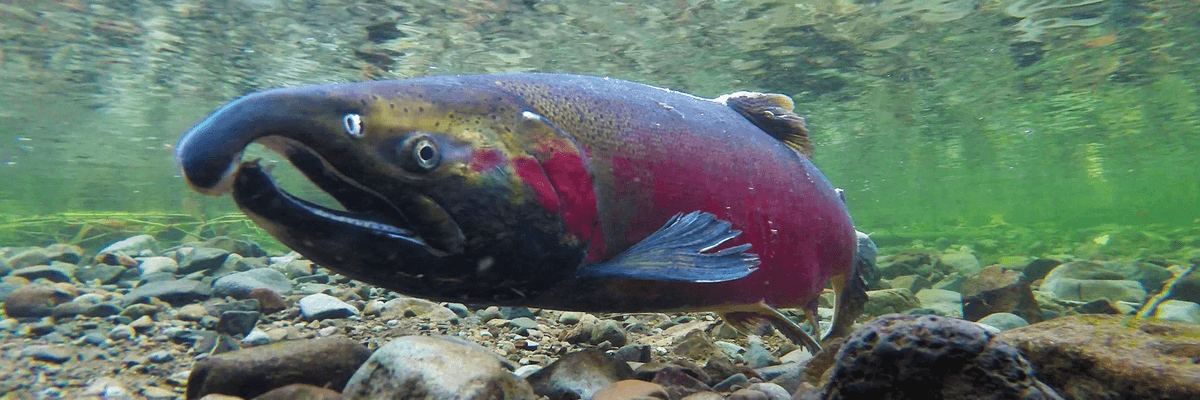
A Coho salmon is seen spawning in the Salmon River in Oregon.
“Rivers don't recognize borders—and neither do the fish that depend on them," said one researcher. "The crisis unfolding beneath our waterways is far more severe than most people realize, and we are running out of time."
More than 300 species of migratory freshwater fish are in dire need of "urgent coordinated cross-border collaboration" amid a crisis of rapid collapse, according to a report released Tuesday at a key United Nations conservation conference in Brazil.
"Some of the longest, most important migrations of species on Earth are happening beneath the surface of the world’s rivers and many are rapidly collapsing," the United Nations Convention on the Conservation of Migratory Species of Wild Animals' (CMS) annual "Global Assessment of Migratory Freshwater Fishes" report states.
Released at CMS' 15th Meeting of the Conference of the Parties (COP15) in Campo Grande, Brazil the report details how freshwater fish—which are vital for the health of riparian ecosystems and provide food for hundreds of millions of people around the world—"are among the most imperiled wildlife on the planet."
"Many migratory species now face declines driven by loss of connectivity, flow alteration, habitat degradation, exploitation, pollution, and interacting pressures across borders," the report notes. "Recognizing these trends and their transboundary nature, [CMS] has sought stronger coordinated action for inland fishes that move across national jurisdictions."
📣 MAJOR ANNOUNCEMENT 🚨 Out now at #CMSCOP15: the Global Assessment of Migratory Freshwater Fishes, the most comprehensive overview yet on the conservation needs of migratory freshwater fish. 🌍🐟Download the #CMSFreshwaterFishes in English, Spanish and French: www.cms.int/news/un-vita...
[image or embed]
— Convention on Migratory Species (CMS) (@cms.int) March 24, 2026 at 5:28 AM
The report's authors—Zeb Hogan, Zach Bess, Michele Thieme, and Twan Stoffers—identified 325 species of freshwater fish as candidates for international conservation efforts. River basins the report says should be prioritized include the Amazon and La Plata–Paraná in South America, the Danube in Europe, the Mekong and Ganges-Brahmaputra in Asia, and the Nile in Africa.
According to the report:
Many migratory fish rely on long, uninterrupted river corridors connecting spawning grounds, feeding areas, and floodplain nurseries, often across multiple countries. When dams, altered flows, or habitat degradation interrupt those pathways, populations can decline rapidly...
Migratory freshwater fish populations worldwide have declined by roughly 81% since 1970 and nearly all (97%) of the 58 CMS-listed migratory fish species (including fresh and salt-water species) are threatened with extinction.
CMS recommends governments take steps to safeguard migratory fish and their habitats, including protecting migration corridors, devising basin-scale action plans and transboundary monitoring, and international coordination of seasonal fisheries.
“Many of the world’s great wildlife migrations take place underwater," Hogan, the report's lead author, said in a statement. "This assessment shows that migratory freshwater fish are in serious trouble, and that protecting them will require countries to work together to keep rivers connected, productive, and full of life.”
Thieme, who is vice president of World Wildlife Fund-US, said that “rivers don't recognize borders—and neither do the fish that depend on them."
"The crisis unfolding beneath our waterways is far more severe than most people realize, and we are running out of time," she added. "Rivers need to be managed as connected systems, with coordination across borders, and investments in basin-wide solutions now before these migrations are lost forever."
The CMS report follows last month's publication of a study by researchers in Spain who examined how ocean warming driven by human burning of fossil fuels is causing a "staggering and deeply concerning loss of marine life.”
Dear Common Dreams reader, It’s been nearly 30 years since I co-founded Common Dreams with my late wife, Lina Newhouser. We had the radical notion that journalism should serve the public good, not corporate profits. It was clear to us from the outset what it would take to build such a project. No paid advertisements. No corporate sponsors. No millionaire publisher telling us what to think or do. Many people said we wouldn't last a year, but we proved those doubters wrong. Together with a tremendous team of journalists and dedicated staff, we built an independent media outlet free from the constraints of profits and corporate control. Our mission has always been simple: To inform. To inspire. To ignite change for the common good. Building Common Dreams was not easy. Our survival was never guaranteed. When you take on the most powerful forces—Wall Street greed, fossil fuel industry destruction, Big Tech lobbyists, and uber-rich oligarchs who have spent billions upon billions rigging the economy and democracy in their favor—the only bulwark you have is supporters who believe in your work. But here’s the urgent message from me today. It's never been this bad out there. And it's never been this hard to keep us going. At the very moment Common Dreams is most needed, the threats we face are intensifying. We need your support now more than ever. We don't accept corporate advertising and never will. We don't have a paywall because we don't think people should be blocked from critical news based on their ability to pay. Everything we do is funded by the donations of readers like you. When everyone does the little they can afford, we are strong. But if that support retreats or dries up, so do we. Will you donate now to make sure Common Dreams not only survives but thrives? —Craig Brown, Co-founder |
More than 300 species of migratory freshwater fish are in dire need of "urgent coordinated cross-border collaboration" amid a crisis of rapid collapse, according to a report released Tuesday at a key United Nations conservation conference in Brazil.
"Some of the longest, most important migrations of species on Earth are happening beneath the surface of the world’s rivers and many are rapidly collapsing," the United Nations Convention on the Conservation of Migratory Species of Wild Animals' (CMS) annual "Global Assessment of Migratory Freshwater Fishes" report states.
Released at CMS' 15th Meeting of the Conference of the Parties (COP15) in Campo Grande, Brazil the report details how freshwater fish—which are vital for the health of riparian ecosystems and provide food for hundreds of millions of people around the world—"are among the most imperiled wildlife on the planet."
"Many migratory species now face declines driven by loss of connectivity, flow alteration, habitat degradation, exploitation, pollution, and interacting pressures across borders," the report notes. "Recognizing these trends and their transboundary nature, [CMS] has sought stronger coordinated action for inland fishes that move across national jurisdictions."
📣 MAJOR ANNOUNCEMENT 🚨 Out now at #CMSCOP15: the Global Assessment of Migratory Freshwater Fishes, the most comprehensive overview yet on the conservation needs of migratory freshwater fish. 🌍🐟Download the #CMSFreshwaterFishes in English, Spanish and French: www.cms.int/news/un-vita...
[image or embed]
— Convention on Migratory Species (CMS) (@cms.int) March 24, 2026 at 5:28 AM
The report's authors—Zeb Hogan, Zach Bess, Michele Thieme, and Twan Stoffers—identified 325 species of freshwater fish as candidates for international conservation efforts. River basins the report says should be prioritized include the Amazon and La Plata–Paraná in South America, the Danube in Europe, the Mekong and Ganges-Brahmaputra in Asia, and the Nile in Africa.
According to the report:
Many migratory fish rely on long, uninterrupted river corridors connecting spawning grounds, feeding areas, and floodplain nurseries, often across multiple countries. When dams, altered flows, or habitat degradation interrupt those pathways, populations can decline rapidly...
Migratory freshwater fish populations worldwide have declined by roughly 81% since 1970 and nearly all (97%) of the 58 CMS-listed migratory fish species (including fresh and salt-water species) are threatened with extinction.
CMS recommends governments take steps to safeguard migratory fish and their habitats, including protecting migration corridors, devising basin-scale action plans and transboundary monitoring, and international coordination of seasonal fisheries.
“Many of the world’s great wildlife migrations take place underwater," Hogan, the report's lead author, said in a statement. "This assessment shows that migratory freshwater fish are in serious trouble, and that protecting them will require countries to work together to keep rivers connected, productive, and full of life.”
Thieme, who is vice president of World Wildlife Fund-US, said that “rivers don't recognize borders—and neither do the fish that depend on them."
"The crisis unfolding beneath our waterways is far more severe than most people realize, and we are running out of time," she added. "Rivers need to be managed as connected systems, with coordination across borders, and investments in basin-wide solutions now before these migrations are lost forever."
The CMS report follows last month's publication of a study by researchers in Spain who examined how ocean warming driven by human burning of fossil fuels is causing a "staggering and deeply concerning loss of marine life.”
More than 300 species of migratory freshwater fish are in dire need of "urgent coordinated cross-border collaboration" amid a crisis of rapid collapse, according to a report released Tuesday at a key United Nations conservation conference in Brazil.
"Some of the longest, most important migrations of species on Earth are happening beneath the surface of the world’s rivers and many are rapidly collapsing," the United Nations Convention on the Conservation of Migratory Species of Wild Animals' (CMS) annual "Global Assessment of Migratory Freshwater Fishes" report states.
Released at CMS' 15th Meeting of the Conference of the Parties (COP15) in Campo Grande, Brazil the report details how freshwater fish—which are vital for the health of riparian ecosystems and provide food for hundreds of millions of people around the world—"are among the most imperiled wildlife on the planet."
"Many migratory species now face declines driven by loss of connectivity, flow alteration, habitat degradation, exploitation, pollution, and interacting pressures across borders," the report notes. "Recognizing these trends and their transboundary nature, [CMS] has sought stronger coordinated action for inland fishes that move across national jurisdictions."
📣 MAJOR ANNOUNCEMENT 🚨 Out now at #CMSCOP15: the Global Assessment of Migratory Freshwater Fishes, the most comprehensive overview yet on the conservation needs of migratory freshwater fish. 🌍🐟Download the #CMSFreshwaterFishes in English, Spanish and French: www.cms.int/news/un-vita...
[image or embed]
— Convention on Migratory Species (CMS) (@cms.int) March 24, 2026 at 5:28 AM
The report's authors—Zeb Hogan, Zach Bess, Michele Thieme, and Twan Stoffers—identified 325 species of freshwater fish as candidates for international conservation efforts. River basins the report says should be prioritized include the Amazon and La Plata–Paraná in South America, the Danube in Europe, the Mekong and Ganges-Brahmaputra in Asia, and the Nile in Africa.
According to the report:
Many migratory fish rely on long, uninterrupted river corridors connecting spawning grounds, feeding areas, and floodplain nurseries, often across multiple countries. When dams, altered flows, or habitat degradation interrupt those pathways, populations can decline rapidly...
Migratory freshwater fish populations worldwide have declined by roughly 81% since 1970 and nearly all (97%) of the 58 CMS-listed migratory fish species (including fresh and salt-water species) are threatened with extinction.
CMS recommends governments take steps to safeguard migratory fish and their habitats, including protecting migration corridors, devising basin-scale action plans and transboundary monitoring, and international coordination of seasonal fisheries.
“Many of the world’s great wildlife migrations take place underwater," Hogan, the report's lead author, said in a statement. "This assessment shows that migratory freshwater fish are in serious trouble, and that protecting them will require countries to work together to keep rivers connected, productive, and full of life.”
Thieme, who is vice president of World Wildlife Fund-US, said that “rivers don't recognize borders—and neither do the fish that depend on them."
"The crisis unfolding beneath our waterways is far more severe than most people realize, and we are running out of time," she added. "Rivers need to be managed as connected systems, with coordination across borders, and investments in basin-wide solutions now before these migrations are lost forever."
The CMS report follows last month's publication of a study by researchers in Spain who examined how ocean warming driven by human burning of fossil fuels is causing a "staggering and deeply concerning loss of marine life.”