SUBSCRIBE TO OUR FREE NEWSLETTER
Daily news & progressive opinion—funded by the people, not the corporations—delivered straight to your inbox.
5
#000000
#FFFFFF
To donate by check, phone, or other method, see our More Ways to Give page.
Daily news & progressive opinion—funded by the people, not the corporations—delivered straight to your inbox.
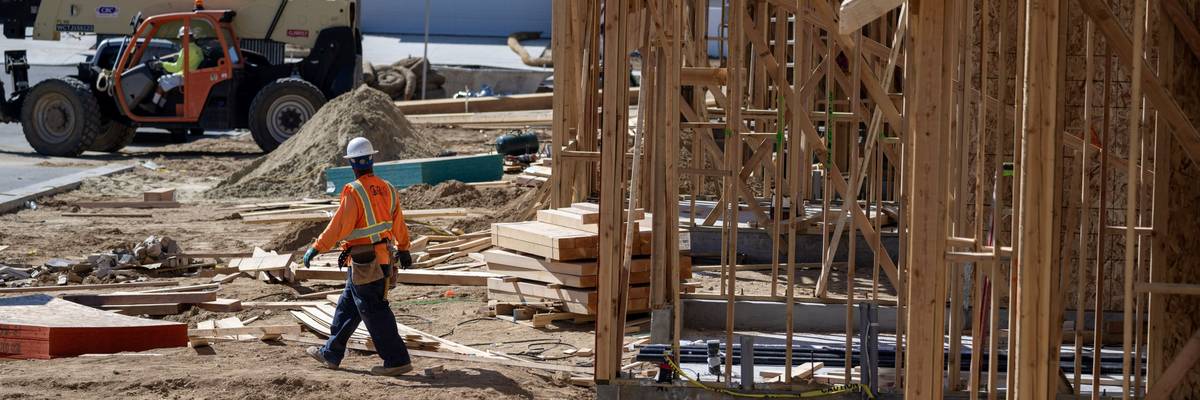
Construction in Santa Clarita, California, on March 21, 2025. The National Association of Home Builders expects tariffs will raise the cost of imported construction materials by more than $3 billion.
"With the average home sales price having already risen by 31%—or over $120,000—since 2020, this tariff-induced change could put homeownership further out of reach for millions of Americans," warns a new report.
After campaigning last year on reducing the cost of living and as he attempts to claim progressive Democrats' push for affordability as his own, President Donald Trump's policies have been directly linked to making life more expensive for people across the US—and along with electricity, healthcare, and groceries, housing costs are set to rise, according to a new analysis out Tuesday, which examines the impact of Trump's tariffs.
The Center for American Progress (CAP) found that the impact on home construction materials by Trump's tariffs could force builders to scale back significantly over the next five years, reducing new home construction by 450,000 homes through 2030.
According to the analysis, the average cost of building a home in the coming years will increase by $17,500 if current home building rates continue.
"With the average home sales price having already risen by 31%—or over $120,000—since 2020, this tariff-induced change could put homeownership further out of reach for millions of Americans," said CAP.
Trump's tariffs are as high as 50% for some countries, and some of the highest levies have been imposed on key building materials, including lumber, copper, aluminum, and steel products. Imports of upholstered products and kitchen cabinets are set to face tariffs that could increase by up to 50%.
The tariffs were unveiled amid a growing housing affordability crisis, with the number of available homes falling short by 2 million units or more, according to some estimates.
Following the Great Recession, home construction has not returned to pre-2008 levels and the country requires "sustained, above-average construction rates to correct" the persistent underbuilding, according to CAP.
"Yet the Trump administration’s tariff policies are pushing home building in the opposite direction by raising construction costs, which will slow new construction activity, raise costs, and worsen housing affordability," reads the report by Cory Husak, Natalie Baker, and Mimla Wardak.
The analysis found that while Trump has insisted that the tariffs will target the countries that import goods to the US, but as with groceries—which have gone up in price by up to 40% at some stores—the levies on home building materials are projected to ultimately impact American families who are already struggling to afford healthcare and other essentials.
The tariffs are expected to add $27 billion to the annual cost of constructing new homes by 2027, effectively raising the cost of building a new home by about 3.3%.
🚨Hot off the presses 🚨 New tariffs are going to kill 450,000 homes over the next 5 yearsTariffs on lumber, steel, cabinets, vanities, copper add an average $17,500 to the cost of building a new home. Yearly home losses will soon total 100k per year-www.americanprogress.org/article/trum...
[image or embed]
— Corey Husak (@chusak.bsky.social) December 16, 2025 at 1:08 PM
From 2030 onward, the number of new homes being built is expected to be down by 100,000 yearly.
"This would be equivalent to eliminating 6 percent of the homes constructed in the five years from 2020 to 2024," said CAP.
If home building falls as CAP projects, the cost of construction will rise to $18,500 per home in 2028, CAP projected.
“Families are already struggling to afford a place to live, and the administration is adding fuel to the housing costs fire,” said Husak, director of tax policy at CAP. “These tariffs are a tax on builders and aspiring homeowners, raising construction costs, slowing the pace of new building, and pushing homeownership even further out of reach for millions of Americans.”
The group urged the federal government to act to stop the tariffs from continuously "driving up construction costs, slowing homebuilding, and worsening the nation’s already severe housing shortage."
"Building new housing supply is crucial to solving the housing shortage," said CAP, "and canceling tariffs on homebuilding materials is a necessary step to bring more housing online and improve housing affordability."
Dear Common Dreams reader, It’s been nearly 30 years since I co-founded Common Dreams with my late wife, Lina Newhouser. We had the radical notion that journalism should serve the public good, not corporate profits. It was clear to us from the outset what it would take to build such a project. No paid advertisements. No corporate sponsors. No millionaire publisher telling us what to think or do. Many people said we wouldn't last a year, but we proved those doubters wrong. Together with a tremendous team of journalists and dedicated staff, we built an independent media outlet free from the constraints of profits and corporate control. Our mission has always been simple: To inform. To inspire. To ignite change for the common good. Building Common Dreams was not easy. Our survival was never guaranteed. When you take on the most powerful forces—Wall Street greed, fossil fuel industry destruction, Big Tech lobbyists, and uber-rich oligarchs who have spent billions upon billions rigging the economy and democracy in their favor—the only bulwark you have is supporters who believe in your work. But here’s the urgent message from me today. It's never been this bad out there. And it's never been this hard to keep us going. At the very moment Common Dreams is most needed, the threats we face are intensifying. We need your support now more than ever. We don't accept corporate advertising and never will. We don't have a paywall because we don't think people should be blocked from critical news based on their ability to pay. Everything we do is funded by the donations of readers like you. When everyone does the little they can afford, we are strong. But if that support retreats or dries up, so do we. Will you donate now to make sure Common Dreams not only survives but thrives? —Craig Brown, Co-founder |
After campaigning last year on reducing the cost of living and as he attempts to claim progressive Democrats' push for affordability as his own, President Donald Trump's policies have been directly linked to making life more expensive for people across the US—and along with electricity, healthcare, and groceries, housing costs are set to rise, according to a new analysis out Tuesday, which examines the impact of Trump's tariffs.
The Center for American Progress (CAP) found that the impact on home construction materials by Trump's tariffs could force builders to scale back significantly over the next five years, reducing new home construction by 450,000 homes through 2030.
According to the analysis, the average cost of building a home in the coming years will increase by $17,500 if current home building rates continue.
"With the average home sales price having already risen by 31%—or over $120,000—since 2020, this tariff-induced change could put homeownership further out of reach for millions of Americans," said CAP.
Trump's tariffs are as high as 50% for some countries, and some of the highest levies have been imposed on key building materials, including lumber, copper, aluminum, and steel products. Imports of upholstered products and kitchen cabinets are set to face tariffs that could increase by up to 50%.
The tariffs were unveiled amid a growing housing affordability crisis, with the number of available homes falling short by 2 million units or more, according to some estimates.
Following the Great Recession, home construction has not returned to pre-2008 levels and the country requires "sustained, above-average construction rates to correct" the persistent underbuilding, according to CAP.
"Yet the Trump administration’s tariff policies are pushing home building in the opposite direction by raising construction costs, which will slow new construction activity, raise costs, and worsen housing affordability," reads the report by Cory Husak, Natalie Baker, and Mimla Wardak.
The analysis found that while Trump has insisted that the tariffs will target the countries that import goods to the US, but as with groceries—which have gone up in price by up to 40% at some stores—the levies on home building materials are projected to ultimately impact American families who are already struggling to afford healthcare and other essentials.
The tariffs are expected to add $27 billion to the annual cost of constructing new homes by 2027, effectively raising the cost of building a new home by about 3.3%.
🚨Hot off the presses 🚨 New tariffs are going to kill 450,000 homes over the next 5 yearsTariffs on lumber, steel, cabinets, vanities, copper add an average $17,500 to the cost of building a new home. Yearly home losses will soon total 100k per year-www.americanprogress.org/article/trum...
[image or embed]
— Corey Husak (@chusak.bsky.social) December 16, 2025 at 1:08 PM
From 2030 onward, the number of new homes being built is expected to be down by 100,000 yearly.
"This would be equivalent to eliminating 6 percent of the homes constructed in the five years from 2020 to 2024," said CAP.
If home building falls as CAP projects, the cost of construction will rise to $18,500 per home in 2028, CAP projected.
“Families are already struggling to afford a place to live, and the administration is adding fuel to the housing costs fire,” said Husak, director of tax policy at CAP. “These tariffs are a tax on builders and aspiring homeowners, raising construction costs, slowing the pace of new building, and pushing homeownership even further out of reach for millions of Americans.”
The group urged the federal government to act to stop the tariffs from continuously "driving up construction costs, slowing homebuilding, and worsening the nation’s already severe housing shortage."
"Building new housing supply is crucial to solving the housing shortage," said CAP, "and canceling tariffs on homebuilding materials is a necessary step to bring more housing online and improve housing affordability."
After campaigning last year on reducing the cost of living and as he attempts to claim progressive Democrats' push for affordability as his own, President Donald Trump's policies have been directly linked to making life more expensive for people across the US—and along with electricity, healthcare, and groceries, housing costs are set to rise, according to a new analysis out Tuesday, which examines the impact of Trump's tariffs.
The Center for American Progress (CAP) found that the impact on home construction materials by Trump's tariffs could force builders to scale back significantly over the next five years, reducing new home construction by 450,000 homes through 2030.
According to the analysis, the average cost of building a home in the coming years will increase by $17,500 if current home building rates continue.
"With the average home sales price having already risen by 31%—or over $120,000—since 2020, this tariff-induced change could put homeownership further out of reach for millions of Americans," said CAP.
Trump's tariffs are as high as 50% for some countries, and some of the highest levies have been imposed on key building materials, including lumber, copper, aluminum, and steel products. Imports of upholstered products and kitchen cabinets are set to face tariffs that could increase by up to 50%.
The tariffs were unveiled amid a growing housing affordability crisis, with the number of available homes falling short by 2 million units or more, according to some estimates.
Following the Great Recession, home construction has not returned to pre-2008 levels and the country requires "sustained, above-average construction rates to correct" the persistent underbuilding, according to CAP.
"Yet the Trump administration’s tariff policies are pushing home building in the opposite direction by raising construction costs, which will slow new construction activity, raise costs, and worsen housing affordability," reads the report by Cory Husak, Natalie Baker, and Mimla Wardak.
The analysis found that while Trump has insisted that the tariffs will target the countries that import goods to the US, but as with groceries—which have gone up in price by up to 40% at some stores—the levies on home building materials are projected to ultimately impact American families who are already struggling to afford healthcare and other essentials.
The tariffs are expected to add $27 billion to the annual cost of constructing new homes by 2027, effectively raising the cost of building a new home by about 3.3%.
🚨Hot off the presses 🚨 New tariffs are going to kill 450,000 homes over the next 5 yearsTariffs on lumber, steel, cabinets, vanities, copper add an average $17,500 to the cost of building a new home. Yearly home losses will soon total 100k per year-www.americanprogress.org/article/trum...
[image or embed]
— Corey Husak (@chusak.bsky.social) December 16, 2025 at 1:08 PM
From 2030 onward, the number of new homes being built is expected to be down by 100,000 yearly.
"This would be equivalent to eliminating 6 percent of the homes constructed in the five years from 2020 to 2024," said CAP.
If home building falls as CAP projects, the cost of construction will rise to $18,500 per home in 2028, CAP projected.
“Families are already struggling to afford a place to live, and the administration is adding fuel to the housing costs fire,” said Husak, director of tax policy at CAP. “These tariffs are a tax on builders and aspiring homeowners, raising construction costs, slowing the pace of new building, and pushing homeownership even further out of reach for millions of Americans.”
The group urged the federal government to act to stop the tariffs from continuously "driving up construction costs, slowing homebuilding, and worsening the nation’s already severe housing shortage."
"Building new housing supply is crucial to solving the housing shortage," said CAP, "and canceling tariffs on homebuilding materials is a necessary step to bring more housing online and improve housing affordability."