SUBSCRIBE TO OUR FREE NEWSLETTER
Daily news & progressive opinion—funded by the people, not the corporations—delivered straight to your inbox.
5
#000000
#FFFFFF
To donate by check, phone, or other method, see our More Ways to Give page.
Daily news & progressive opinion—funded by the people, not the corporations—delivered straight to your inbox.
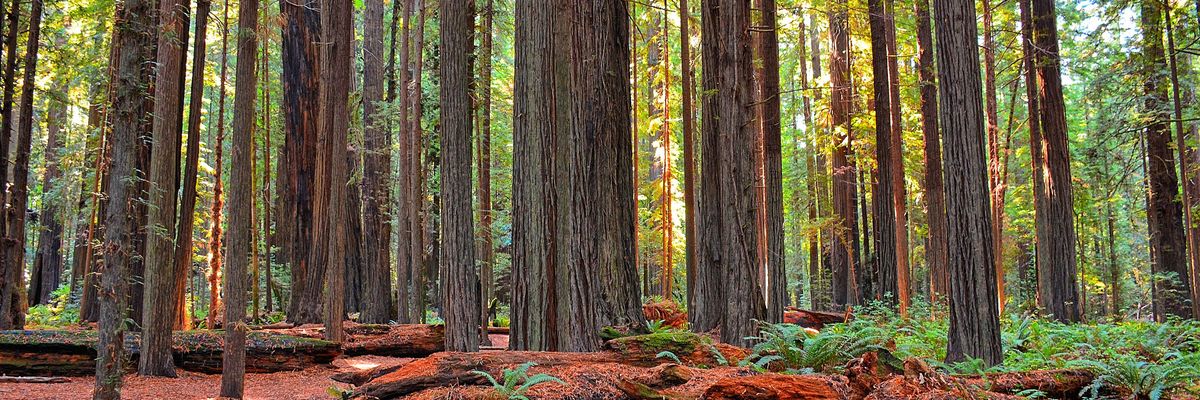
The Avenue of the Giants is surrounded by Humboldt Redwoods State Park--which has the largest remaining stand of old-growth redwoods in the world--in Humboldt County, California. (Photo: Kirt Edblom/flickr/cc)
A coalition of environmental groups on Tuesday delivered more than 122,000 public comments calling on the Biden administration to protect old-growth forests on public lands from logging as a key component of U.S. climate policy.
"There is no question that mature and old-growth trees are vital to the current health and livable future of our planet."
"Logging is the greatest immediate threat to the beautiful old trees and forests on our public lands," Randi Spivak, director of the Center for Biological Diversity's public lands program, said in a statement.
"Tens of thousands of people have told the Biden administration that they want these carbon-storing giants protected," she added. "By letting old-growth and mature trees grow, we'll be safeguarding carbon, clean water and air, and biodiversity. Our climate and future generations depend on it."
Blaine Miller-McFeeley, senior legislative representative at the advocacy group Earthjustice, said that "there is no question that mature and old-growth trees are vital to the current health and livable future of our planet. In the face of the worsening climate crisis, a federal rule must be established to protect these trees for future generations."
The deluge of public comments came in response to an executive order signed by President Joe Biden in April aimed at conserving and restoring the nation's forests, a directive that the climate advocacy group Food & Water Watch called "grossly inadequate" because it did not address fossil fuel extraction. The order required the government to "define, identify, and complete an inventory of old-growth and mature forests on federal lands."
"As thousands have clearly expressed during this comment period, creating a simple definition is a key first step, and the administration should now move forward swiftly to protect these giants from logging and all threats, before they are gone," Miller-McFeeley asserted.
The public messages call on the U.S. Department of Agriculture and U.S. Interior Department to define such mature and old-growth trees as at least 80 years old--by which time they have stored decades worth of planet-heating carbon--and declare them off-limits to logging, with limited exceptions for non-commercial use, from activities by Indigenous groups to fire prevention.
"The solution is simple and needs to be implemented as quickly as possible. We must protect our mature trees from logging and let them grow in our federal forestland," said Ellen Montgomery, director of the public lands campaign at Environment America.
"We urge the federal agencies to move quickly to create a durable rule that will enhance our forests' capacity to store carbon and conserve biodiversity," she added. "Our forests do it all. They filter our air and water, provide habitat for hundreds of species, and help us fight climate change. Our older forests are the real champs, performing all of these functions better than their younger counterparts. If we leave our 80-year-old trees and forests standing, they'll become more valuable every decade."
Dear Common Dreams reader, It’s been nearly 30 years since I co-founded Common Dreams with my late wife, Lina Newhouser. We had the radical notion that journalism should serve the public good, not corporate profits. It was clear to us from the outset what it would take to build such a project. No paid advertisements. No corporate sponsors. No millionaire publisher telling us what to think or do. Many people said we wouldn't last a year, but we proved those doubters wrong. Together with a tremendous team of journalists and dedicated staff, we built an independent media outlet free from the constraints of profits and corporate control. Our mission has always been simple: To inform. To inspire. To ignite change for the common good. Building Common Dreams was not easy. Our survival was never guaranteed. When you take on the most powerful forces—Wall Street greed, fossil fuel industry destruction, Big Tech lobbyists, and uber-rich oligarchs who have spent billions upon billions rigging the economy and democracy in their favor—the only bulwark you have is supporters who believe in your work. But here’s the urgent message from me today. It's never been this bad out there. And it's never been this hard to keep us going. At the very moment Common Dreams is most needed, the threats we face are intensifying. We need your support now more than ever. We don't accept corporate advertising and never will. We don't have a paywall because we don't think people should be blocked from critical news based on their ability to pay. Everything we do is funded by the donations of readers like you. When everyone does the little they can afford, we are strong. But if that support retreats or dries up, so do we. Will you donate now to make sure Common Dreams not only survives but thrives? —Craig Brown, Co-founder |
A coalition of environmental groups on Tuesday delivered more than 122,000 public comments calling on the Biden administration to protect old-growth forests on public lands from logging as a key component of U.S. climate policy.
"There is no question that mature and old-growth trees are vital to the current health and livable future of our planet."
"Logging is the greatest immediate threat to the beautiful old trees and forests on our public lands," Randi Spivak, director of the Center for Biological Diversity's public lands program, said in a statement.
"Tens of thousands of people have told the Biden administration that they want these carbon-storing giants protected," she added. "By letting old-growth and mature trees grow, we'll be safeguarding carbon, clean water and air, and biodiversity. Our climate and future generations depend on it."
Blaine Miller-McFeeley, senior legislative representative at the advocacy group Earthjustice, said that "there is no question that mature and old-growth trees are vital to the current health and livable future of our planet. In the face of the worsening climate crisis, a federal rule must be established to protect these trees for future generations."
The deluge of public comments came in response to an executive order signed by President Joe Biden in April aimed at conserving and restoring the nation's forests, a directive that the climate advocacy group Food & Water Watch called "grossly inadequate" because it did not address fossil fuel extraction. The order required the government to "define, identify, and complete an inventory of old-growth and mature forests on federal lands."
"As thousands have clearly expressed during this comment period, creating a simple definition is a key first step, and the administration should now move forward swiftly to protect these giants from logging and all threats, before they are gone," Miller-McFeeley asserted.
The public messages call on the U.S. Department of Agriculture and U.S. Interior Department to define such mature and old-growth trees as at least 80 years old--by which time they have stored decades worth of planet-heating carbon--and declare them off-limits to logging, with limited exceptions for non-commercial use, from activities by Indigenous groups to fire prevention.
"The solution is simple and needs to be implemented as quickly as possible. We must protect our mature trees from logging and let them grow in our federal forestland," said Ellen Montgomery, director of the public lands campaign at Environment America.
"We urge the federal agencies to move quickly to create a durable rule that will enhance our forests' capacity to store carbon and conserve biodiversity," she added. "Our forests do it all. They filter our air and water, provide habitat for hundreds of species, and help us fight climate change. Our older forests are the real champs, performing all of these functions better than their younger counterparts. If we leave our 80-year-old trees and forests standing, they'll become more valuable every decade."
A coalition of environmental groups on Tuesday delivered more than 122,000 public comments calling on the Biden administration to protect old-growth forests on public lands from logging as a key component of U.S. climate policy.
"There is no question that mature and old-growth trees are vital to the current health and livable future of our planet."
"Logging is the greatest immediate threat to the beautiful old trees and forests on our public lands," Randi Spivak, director of the Center for Biological Diversity's public lands program, said in a statement.
"Tens of thousands of people have told the Biden administration that they want these carbon-storing giants protected," she added. "By letting old-growth and mature trees grow, we'll be safeguarding carbon, clean water and air, and biodiversity. Our climate and future generations depend on it."
Blaine Miller-McFeeley, senior legislative representative at the advocacy group Earthjustice, said that "there is no question that mature and old-growth trees are vital to the current health and livable future of our planet. In the face of the worsening climate crisis, a federal rule must be established to protect these trees for future generations."
The deluge of public comments came in response to an executive order signed by President Joe Biden in April aimed at conserving and restoring the nation's forests, a directive that the climate advocacy group Food & Water Watch called "grossly inadequate" because it did not address fossil fuel extraction. The order required the government to "define, identify, and complete an inventory of old-growth and mature forests on federal lands."
"As thousands have clearly expressed during this comment period, creating a simple definition is a key first step, and the administration should now move forward swiftly to protect these giants from logging and all threats, before they are gone," Miller-McFeeley asserted.
The public messages call on the U.S. Department of Agriculture and U.S. Interior Department to define such mature and old-growth trees as at least 80 years old--by which time they have stored decades worth of planet-heating carbon--and declare them off-limits to logging, with limited exceptions for non-commercial use, from activities by Indigenous groups to fire prevention.
"The solution is simple and needs to be implemented as quickly as possible. We must protect our mature trees from logging and let them grow in our federal forestland," said Ellen Montgomery, director of the public lands campaign at Environment America.
"We urge the federal agencies to move quickly to create a durable rule that will enhance our forests' capacity to store carbon and conserve biodiversity," she added. "Our forests do it all. They filter our air and water, provide habitat for hundreds of species, and help us fight climate change. Our older forests are the real champs, performing all of these functions better than their younger counterparts. If we leave our 80-year-old trees and forests standing, they'll become more valuable every decade."