SUBSCRIBE TO OUR FREE NEWSLETTER
Daily news & progressive opinion—funded by the people, not the corporations—delivered straight to your inbox.
5
#000000
#FFFFFF
To donate by check, phone, or other method, see our More Ways to Give page.
President Donald Trump and Interior Secretary Doug Burgum sparked outrage Monday evening after announcing the US government would take a 10 percent stake in a for-profit foreign mining corporation set to profit handsomely from an executive order that would "bring ruin to a national park and an incomparable wilderness landscape" with an industrial project in Alaska opposed by communities, Indigenous communities, and conservationists near and far.
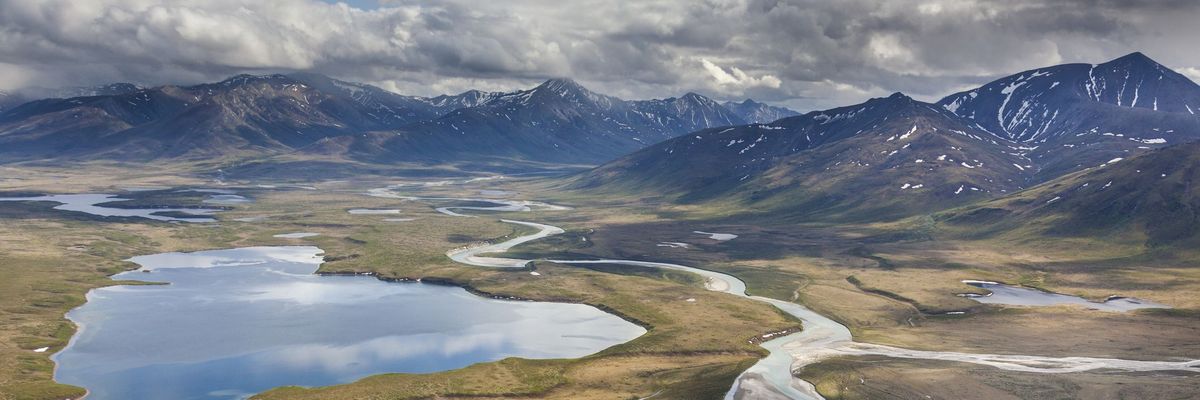
Green groups warn that Trump's order to begin the controversial 211-mile Ambler Road Project, which was approved by the Republican president during his first term but subsequently blocked under former President Joe Biden, will irreparably harm the Gates of the Arctic National Park, destroy 1,400 acres of fragile wetlands and spawning regions for inland fish, and bisect the state's largest wild caribou herd.
Conservationists and local tribes that oppose the project argue that it's misleading to view it as a road-building project.
"This is no ordinary road," said Athan Manuel, director of the Sierra Club's Lands Protection Program. "It’s an industrial corridor through intact forests and Alaskan landscapes long enough to connect Washington, DC, to Philadelphia. Moreover, it would divide the migration route of the Western Arctic Caribou Herd, causing irreversible damage.”
Alongside the order to restart the project, which Trump and Burgum said would begin in 2026 with federal support, the president announced taking the 10 percent stake in the Canada-based mining giant, Trilogy Metals, which has long sought to exploit the project to expand its mining operations.
Shares of the mining company, according to CNBC, soared by over 250% in premarket trading on Tuesday following Trump's announcement.
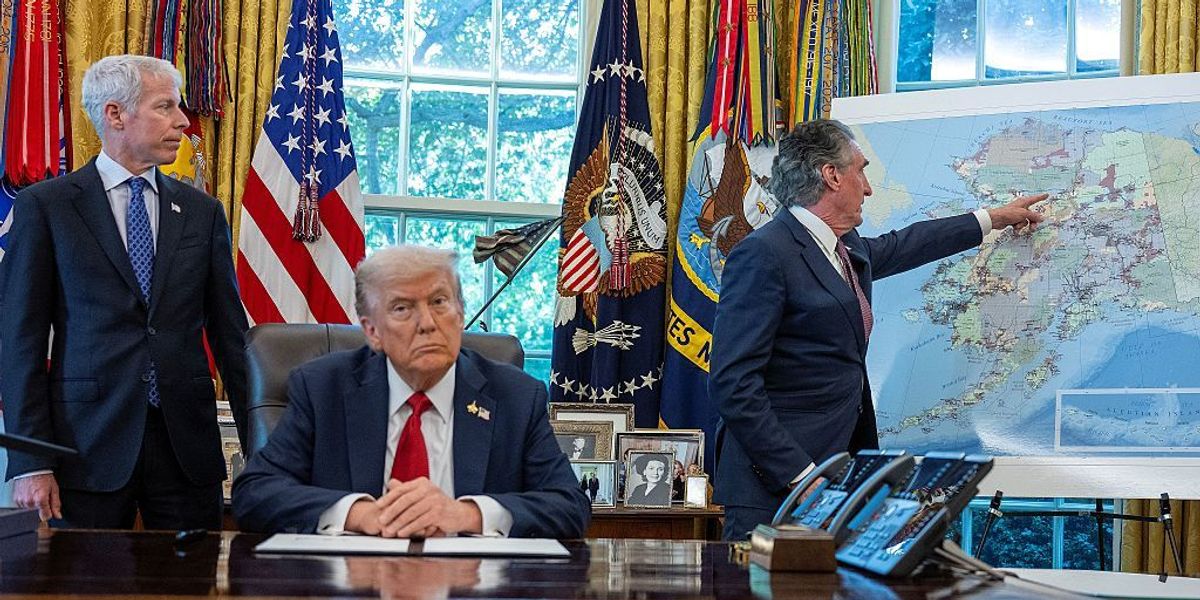 US President Donald Trump listens as Interior Secretary Doug Burgum (R) points at a map of Alaska and Energy Secretary Chris Wright (L) looks on after Trump signed an executive order to authorize the Ambler Road mining project in Alaska in the Oval Office at the White House in Washington, DC, on October 6, 2025. Photo by Jim Watson/ AFPvia Getty Images)
While the company stated in a press release that Trump’s order “reflects a renewed federal commitment to responsible resource development in Alaska and highlights the Ambler Road as critical infrastructure under federal policy," critics argue that the venture appears to be tainted by corruption and is an affront to the people and natural landscapes of Alaska.
“Why is the federal government rushing to destroy public lands to benefit a foreign company instead of focusing on ending a government shutdown?” asked Maddie Halloran, state director for the Alaska Wilderness League, in a Monday night statement.
“This is anything but putting America first," Halloran said. "In addition to pushing for the Ambler Road, the US government is making a direct investment in Trilogy Metals, a Canadian-owned company looking to mine the Ambler district, taking minerals and profits out of the country. After widespread opposition from Alaskans during the SEIS process, it’s adding insult to injury to have this project pushed through to benefit a foreign company. This isn’t economic growth, it’s a giveaway that puts corporate profit ahead of Alaska’s communities and our environment."
Bobby McEnaney, director of land conservation with the Natural Resources Defense Council (NRDC), called the president's action "extraordinary"—a move that "would bring ruin to a national park and an incomparable wilderness landscape."
"There is a reason the previous administration put an end to this project, given that it was roundly opposed by scores of communities along the proposed route—industrializing the landscape for speculative mining in this part of Alaska is not worth the economic, quality of life, or environmental costs it would impose," warned McEnany. "Make no mistake: when a road like this is built, the impacts are irreversible."
President Donald Trump and Interior Secretary Doug Burgum sparked outrage Monday evening after announcing the US government would take a 10 percent stake in a for-profit foreign mining corporation set to profit handsomely from an executive order that would "bring ruin to a national park and an incomparable wilderness landscape" with an industrial project in Alaska opposed by communities, Indigenous communities, and conservationists near and far.
Green groups warn that Trump's order to begin the controversial 211-mile Ambler Road Project, which was approved by the Republican president during his first term but subsequently blocked under former President Joe Biden, will irreparably harm the Gates of the Arctic National Park, destroy 1,400 acres of fragile wetlands and spawning regions for inland fish, and bisect the state's largest wild caribou herd.
Conservationists and local tribes that oppose the project argue that it's misleading to view it as a road-building project.
"This is no ordinary road," said Athan Manuel, director of the Sierra Club's Lands Protection Program. "It’s an industrial corridor through intact forests and Alaskan landscapes long enough to connect Washington, DC, to Philadelphia. Moreover, it would divide the migration route of the Western Arctic Caribou Herd, causing irreversible damage.”
Alongside the order to restart the project, which Trump and Burgum said would begin in 2026 with federal support, the president announced taking the 10 percent stake in the Canada-based mining giant, Trilogy Metals, which has long sought to exploit the project to expand its mining operations.
Shares of the mining company, according to CNBC, soared by over 250% in premarket trading on Tuesday following Trump's announcement.
US President Donald Trump listens as Interior Secretary Doug Burgum (R) points at a map of Alaska and Energy Secretary Chris Wright (L) looks on after Trump signed an executive order to authorize the Ambler Road mining project in Alaska in the Oval Office at the White House in Washington, DC, on October 6, 2025. Photo by Jim Watson/ AFPvia Getty Images)
While the company stated in a press release that Trump’s order “reflects a renewed federal commitment to responsible resource development in Alaska and highlights the Ambler Road as critical infrastructure under federal policy," critics argue that the venture appears to be tainted by corruption and is an affront to the people and natural landscapes of Alaska.
“Why is the federal government rushing to destroy public lands to benefit a foreign company instead of focusing on ending a government shutdown?” asked Maddie Halloran, state director for the Alaska Wilderness League, in a Monday night statement.
“This is anything but putting America first," Halloran said. "In addition to pushing for the Ambler Road, the US government is making a direct investment in Trilogy Metals, a Canadian-owned company looking to mine the Ambler district, taking minerals and profits out of the country. After widespread opposition from Alaskans during the SEIS process, it’s adding insult to injury to have this project pushed through to benefit a foreign company. This isn’t economic growth, it’s a giveaway that puts corporate profit ahead of Alaska’s communities and our environment."
Bobby McEnaney, director of land conservation with the Natural Resources Defense Council (NRDC), called the president's action "extraordinary"—a move that "would bring ruin to a national park and an incomparable wilderness landscape."
"There is a reason the previous administration put an end to this project, given that it was roundly opposed by scores of communities along the proposed route—industrializing the landscape for speculative mining in this part of Alaska is not worth the economic, quality of life, or environmental costs it would impose," warned McEnany. "Make no mistake: when a road like this is built, the impacts are irreversible."
President Donald Trump and Interior Secretary Doug Burgum sparked outrage Monday evening after announcing the US government would take a 10 percent stake in a for-profit foreign mining corporation set to profit handsomely from an executive order that would "bring ruin to a national park and an incomparable wilderness landscape" with an industrial project in Alaska opposed by communities, Indigenous communities, and conservationists near and far.
Green groups warn that Trump's order to begin the controversial 211-mile Ambler Road Project, which was approved by the Republican president during his first term but subsequently blocked under former President Joe Biden, will irreparably harm the Gates of the Arctic National Park, destroy 1,400 acres of fragile wetlands and spawning regions for inland fish, and bisect the state's largest wild caribou herd.
Conservationists and local tribes that oppose the project argue that it's misleading to view it as a road-building project.
"This is no ordinary road," said Athan Manuel, director of the Sierra Club's Lands Protection Program. "It’s an industrial corridor through intact forests and Alaskan landscapes long enough to connect Washington, DC, to Philadelphia. Moreover, it would divide the migration route of the Western Arctic Caribou Herd, causing irreversible damage.”
Alongside the order to restart the project, which Trump and Burgum said would begin in 2026 with federal support, the president announced taking the 10 percent stake in the Canada-based mining giant, Trilogy Metals, which has long sought to exploit the project to expand its mining operations.
Shares of the mining company, according to CNBC, soared by over 250% in premarket trading on Tuesday following Trump's announcement.
US President Donald Trump listens as Interior Secretary Doug Burgum (R) points at a map of Alaska and Energy Secretary Chris Wright (L) looks on after Trump signed an executive order to authorize the Ambler Road mining project in Alaska in the Oval Office at the White House in Washington, DC, on October 6, 2025. Photo by Jim Watson/ AFPvia Getty Images)
While the company stated in a press release that Trump’s order “reflects a renewed federal commitment to responsible resource development in Alaska and highlights the Ambler Road as critical infrastructure under federal policy," critics argue that the venture appears to be tainted by corruption and is an affront to the people and natural landscapes of Alaska.
“Why is the federal government rushing to destroy public lands to benefit a foreign company instead of focusing on ending a government shutdown?” asked Maddie Halloran, state director for the Alaska Wilderness League, in a Monday night statement.
“This is anything but putting America first," Halloran said. "In addition to pushing for the Ambler Road, the US government is making a direct investment in Trilogy Metals, a Canadian-owned company looking to mine the Ambler district, taking minerals and profits out of the country. After widespread opposition from Alaskans during the SEIS process, it’s adding insult to injury to have this project pushed through to benefit a foreign company. This isn’t economic growth, it’s a giveaway that puts corporate profit ahead of Alaska’s communities and our environment."
Bobby McEnaney, director of land conservation with the Natural Resources Defense Council (NRDC), called the president's action "extraordinary"—a move that "would bring ruin to a national park and an incomparable wilderness landscape."
"There is a reason the previous administration put an end to this project, given that it was roundly opposed by scores of communities along the proposed route—industrializing the landscape for speculative mining in this part of Alaska is not worth the economic, quality of life, or environmental costs it would impose," warned McEnany. "Make no mistake: when a road like this is built, the impacts are irreversible."