

SUBSCRIBE TO OUR FREE NEWSLETTER
Daily news & progressive opinion—funded by the people, not the corporations—delivered straight to your inbox.
5
#000000
#FFFFFF
To donate by check, phone, or other method, see our More Ways to Give page.
Daily news & progressive opinion—funded by the people, not the corporations—delivered straight to your inbox.

"The gridlock and partisanship we see in Washington, DC can be dispiriting. But history shows that states can build momentum that eventually leads to change at the federal level."
Even as President Donald Trump and his administration have been ripping up environmental and consumer protection regulations, a number of state laws are set to take effect next year that could at least mitigate some of the damage.
A Monday statement from Environment America and the Public Interest Network highlighted a number of new laws aimed at curbing corporate polluters and enhancing consumer welfare.
First, the groups highlighted "Right to Repair" laws set to take effect in Washington, Nevada, Oregon, and Colorado, which give people the right to repair their own appliances and electronics without burdensome costs or barriers.
The groups lavished particular praise on Colorado's "Right to Repair" laws that they said provide "the broadest repair protections in the country," with new regulations that will give businesses in the state "access to what they and independent repair providers need to fix their electronics themselves."
Illinois, meanwhile, will fully phase out the sale of fluorescent lightbulbs, which will be replaced by energy-efficient LED bulbs. The groups estimate that eliminating the fluorescent bulbs will collectively save Illinois households more than $1.5 billion on their utility bills by 2050, while also reducing energy waste and mercury pollution.
Illinois also drew praise for enacting a ban on polystyrene foam foodware that will take effect on January 1.
The groups also highlighted the work being done in Oregon to protect consumers with legislation mandating price transparency to eliminate surprise junk fees on purchases; prohibiting ambulance companies from socking out-of-network patients with massive fees for rides to nearby hospitals; and placing new restrictions on the ability of medical debt to negatively impact a person's credit score.
California also got a mention in the groups' release for closing a loophole that allowed supermarkets to continue using plastic bags and for creating a new privacy tool for consumers allowing them to request that online data brokers delete all of the personal information they have gathered on them over the years.
Emily Rusch, vice president and senior director of state offices for the Public Interest Network, contrasted the action being taken in the states to protect consumers and the environment with a lack of action being done at the federal level.
"The gridlock and partisanship we see in Washington, DC can be dispiriting," said Rusch. "But history shows that states can build momentum that eventually leads to change at the federal level. As we build on this progress in 2026, we look forward to working with anyone—Republican, Democrat, or independent—with whom we can find common ground."

"In the blind sprint to win on AI, Meta and the other tech giants have lost their way," said a leader at Environment America.
Environmental advocates this week responded with concern to Meta looking for nuclear power developers to help the tech giant add 1-4 gigawatts of generation capacity in the United States starting in the early 2030s.
Meta—the parent company of Instagram, Facebook, WhatsApp, and more—released a request for proposals to identify developers, citing its artificial intelligence (AI) innovation and sustainability objectives. It is "seeking developers with strong community engagement, development, ...permitting, and execution expertise that have development opportunities for new nuclear energy resources—either small modular reactors (SMR) or larger nuclear reactors."
The company isn't alone. As TechCrunch reported: "Microsoft is hoping to restart a reactor at Three Mile Island by 2028. Google is betting that SMR technology can help it deliver on its AI and sustainability goals, signing a deal with startup Kairos Power for 500 megawatts of electricity. Amazon has thrown its weight behind SMR startup X-Energy, investing in the company and inking two development agreements for around 300 megawatts of generating capacity."
In response to Meta's announcement, Johanna Neumann, Environment America Research & Policy Center's senior director of the Campaign for 100% Renewable Energy, said: "The long history of overhyped nuclear promises reveals that nuclear energy is expensive and slow to build all while still being inherently dangerous. America already has 90,000 metric tons of nuclear waste that we don’t have a storage solution for."
"Do we really want to create more radioactive waste to power the often dubious and questionable uses of AI?" Neumann asked. "In the blind sprint to win on AI, Meta and the other tech giants have lost their way. Big Tech should recommit to solutions that not only work but pose less risk to our environment and health."
"Data centers should be as energy and water efficient as possible and powered solely with new renewable energy," she added. "Without those guardrails, the tech industry's insatiable thirst for energy risks derailing America's efforts to get off polluting forms of power, including nuclear."
In a May study, the Electric Power Research Institute found that "data centers could consume up to 9% of U.S. electricity generation by 2030—more than double the amount currently used." The group noted that "AI queries require approximately 10 times the electricity of traditional internet searches and the generation of original music, photos, and videos requires much more."
Meta is aiming to get the process started quickly: The intake form is due by January 3 and initial proposals are due February 7. It comes after a rare bee species thwarted Meta's plans to build a data center powered by an existing nuclear plant.
Following the nuclear announcement, Meta and renewable energy firm Invenergy on Thursday announced a deal for 760 megawatts of solar power capacity. Operations for that four-state project are expected to begin no later than 2027.

"The Forest Service should listen to the public and finalize policies that truly safeguard our oldest forests," a coalition of environmental organizations advised.
Green groups on Friday pointed to the more than 1 million public comments urging the U.S. Forest Service to protect old-growth forests from logging in urging the Biden administration to increase what critics say are inadequate protections for mature trees in a proposed federal amendment.
The Forest Service (USFS)—a branch of the U.S. Department of Agriculture—received massive input during four rounds of public comment on the National Old-Growth Amendment Draft Environmental Impact Statement.
The USFS' proposed national old-growth amendment follows a 2022 executive order by President Joe Biden that directed the agency to draft policies to protect mature trees in national forests, which are imperiled by but also play a critical role in fighting fossil fuel-driven climate change.
"The national old-growth amendment should be a transformative policy that positions the United States as an international leader in harnessing nature to confront the climate emergency and the biodiversity crisis."
Climate campaigners panned Biden's order as "grossly inadequate." Since the executive order, the Biden administration has allocated $50 million for old-growth forest conservation under the Inflation Reduction Act, which the president signed in August 2022.
In June, USFS announced a draft environmental impact statement for a proposed amendment to Biden's directive. Environmentalists called the draft a "step forward" while urging the administration to do more to protect mature forests.
"Since 2022, hundreds of thousands of people have called for an end to logging old-growth and urged that our mature forests also be protected. The Forest Service should listen to the public and finalize policies that truly safeguard our oldest forests," a coalition of green groups including the Center for Biological Diversity (CBD), Earthjustice, Environment America Research and Policy Center, National Resources Defense Council, Sierra Club, and WildEarth Guardians said in a joint statement.
"As the Forest Service reads the comments it has received over the last 90 days, it will find a common theme. The old-growth policy proposed in June fails to meet the central mission of the executive order—it does not protect old-growth trees from logging and allows projects that would log old-growth forests out of existence through numerous loopholes. The policy also does nothing to protect mature forests, which are needed to increase the abundance and distribution of old-growth trees and forests."
As CBD explained:
Mature and old-growth forests are carbon storage powerhouses. With thicker protective bark and higher canopies than younger trees, mature and old-growth trees are more resilient to wildfire. They also provide critical wildlife habitat, filter clean drinking water for communities, provide countless outdoor recreation opportunities, and capture the imaginations of Americans young and old.
Federal forest management prioritizes timber production and routinely sidesteps science to turn big, old trees into lumber and wood chips. Logging releases a significant amount of stored carbon, which can take centuries to be recaptured. It also eliminates older trees' ability to sequester additional carbon and damages the other ecosystem services and biodiversity values these forests provide. Many older stands and trees have no enduring protection, and hundreds of thousands of acres in national forests are at risk of being logged.
"The national old-growth amendment should be a transformative policy that positions the United States as an international leader in harnessing nature to confront the climate emergency and the biodiversity crisis," the groups' statement asserted. "We hope to see the nationwide old-growth amendment strengthened so it can become a centerpiece of our nation's climate and conservation legacies."
In a separate statement, Environment America public lands campaign director Ellen Montgomery said that "the Forest Service should listen to the more than a million people who have commented over the last two years, urging it to end logging of old-growth trees."
"The response from the public to our on-the-ground efforts to build support for a strong national old-growth amendment has shown that people want to see older trees protected," she continued. "These trees and forests are home to wildlife that we love from birds to bears. They are our allies to fight back against climate change, and all we have to do is make sure they stay upright."
"We hope the Forest Service recognizes the truth that the public knows: old-growth trees are worth more standing," Montgomery added.
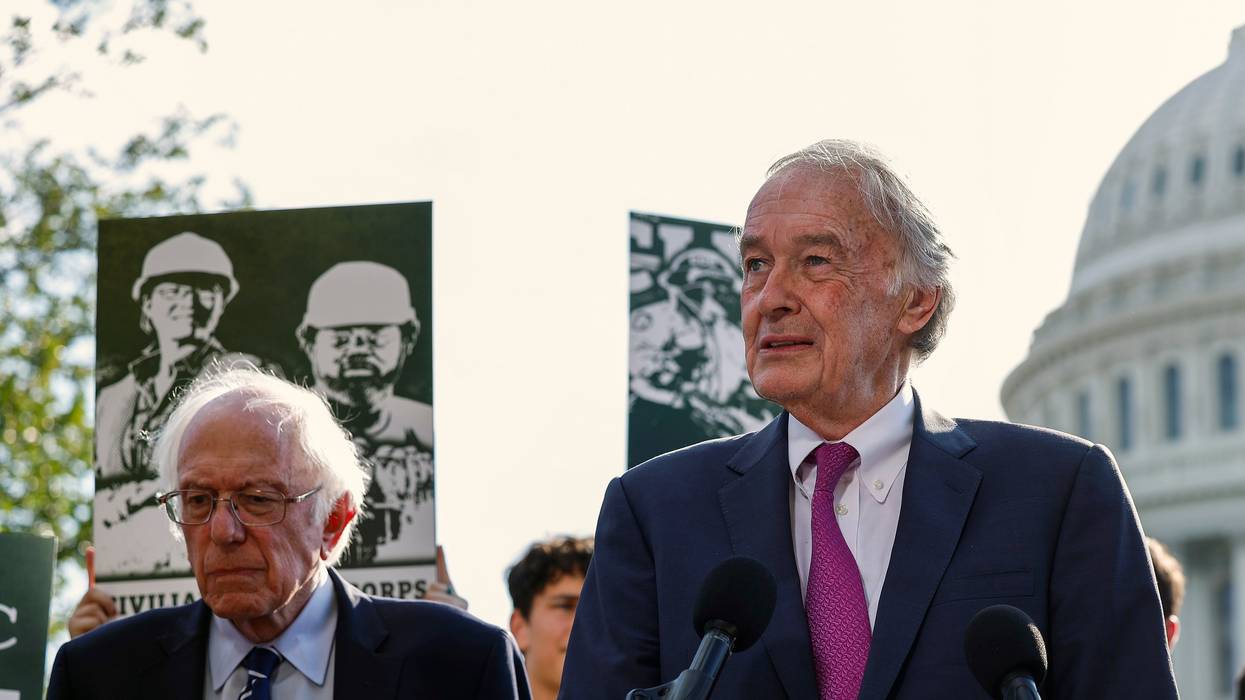
Calling the vote "disappointing," one campaigner warned: "Nuclear is, at best, a waste of resources. At worst, it's a meltdown."
Just U.S. Sens. Ed Markey and Bernie Sanders on Tuesday voted against legislation that one scientist warned this week "will only increase the danger to people already living downwind" of nuclear power facilities.
The Fire Grants and Safety Act—which now includes provisions from the Accelerating Deployment of Versatile, Advanced Nuclear for Clean Energy (ADVANCE) Act—passed 88-2, with six Republicans, three Democrats, and one Independent not voting.
Speaking on the upper chamber's floor Tuesday, Markey (D-Mass.)—who chairs the Senate Environment and Public Works Subcommittee on Clean Air, Climate, and Nuclear Safety—stressed his support for the United States Fire Administration and firefighter assistance grant programs, and those working to keep U.S. communities safe.
"Unfortunately, the vote today is not just for the lifesaving programs that I am staunchly on record as supporting," he explained. "On the coattails of this noncontroversial bill to protect our heroes, our colleagues in the House tacked on a dangerous additional 90-page package of provisions that merged the Senate's ADVANCE Act and the House's Atomic Energy Advancement Act."
The legislation—now on its way to President Joe Biden's desk—puts "corporate profits over community cleanup," the senator said. "Notably, the provisions from the Senate bill that would have provided a much-needed $225 million for communities affected by nuclear closures and $100 million to clean up contaminated tribal communities are not in the legislation anymore, as it came back from the House of Representatives—but the provisions to prop up the nuclear industry, they remain."
Highlighting that the bill would, among other things, require the Nuclear Regulatory Commission to rewrite its mission statement to say that its regulation and oversight should "not unnecessarily limit... civilian use of radioactive materials and deployment of nuclear energy," Markey declared that the NRC "shouldn't be the Nuclear Retail Commission."
"We have a duty to set the strongest possible standards for domestic and international nuclear activities, as an example to the rest of the world," he said of the United States. "We also have to clean up our existing messes, particularly in tribal and environmental justice communities, before investing in anything that might make those messes worse. As a result, despite my strong and continued support for the fire safety grants and my respect for my colleagues working on this issue, I must vote no."
"It's disappointing that the Senate chose to promote nuclear power when America is flush with energy options that are better for people and the planet."
Praising Markey and Sanders (I-Vt.), Beyond Nuclear on Wednesday urged the bill's critics to call their offices "to thank them for their courageous, wise, and good NO votes, despite it all," adding that "they spoke truth to power, and have kept some glimmer of hope alive, despite this very dark moment in the cause of anti-nuclear, environmental, and environmental justice activism."
The Senate's approval of the legislation was celebrated by the nuclear industry and its advocates. Environment America noted that in addition to the NRC mission statement rewrite, the bill "promotes nuclear power, including small modular reactors (SMRs) and highly concentrated nuclear fuel, and the export of nuclear materials and technology."
Johanna Neumann, senior director of the group's Campaign for 100% Renewable Energy, said after the vote, "It's disappointing that the Senate chose to promote nuclear power when America is flush with energy options that are better for people and the planet."
"Nuclear is, at best, a waste of resources. At worst, it's a meltdown," she continued. "Why are we choosing to split atoms when it's cheaper, faster, and better for the environment to cut energy waste and power our lives with wind and solar?"
"Government officials should embrace energy efficiency and renewables as the best solutions to America's challenges," she added.
Isaac Bowers, federal legislative director of Public Interest Research Group, similarly said that "American consumers have better energy options than nuclear power. It makes no sense to perpetuate this expensive, risky industry when America has an abundance of cleaner, safer, and more affordable renewable energy sources."
Critics also spoke out ahead of the vote. Union of Concerned Scientists director of nuclear power safety Edwin Lyman warned Monday that the aim of this bill is "weakening safety and security oversight across the board, a long-standing industry goal," and "a compromised NRC could lead to a catastrophic reactor meltdown impacting an entire region for a generation."
Food & Water Watch executive director Wenonah Hauter said last week that "every dollar wasted on unproven, enormously expensive nuclear energy schemes is a dollar not invested in truly clean, safe, and increasingly efficient wind and solar power. The Senate and President Biden must quickly come to their senses and reject the dangerous and unaffordable false promises of toxic nuclear energy."
While most senators made their positions on the bill clear on Tuesday, Beyond Nuclear is encouraging voters who still oppose the legislation "to express your displeasure and disagreement" to senators who supported it or didn't bother to vote.
Beyond Nuclear is also urging the bill's opponents to contact the White House, to pressure Biden to block it. "In the unlikely event" that he does so, the group acknowledged, "we would have a very tall mountain to climb to prevent Congress from overriding the presidential veto."

A Greenpeace campaigner argued that fossil fuel giants' drilling and production must be "rapidly phased out—and their billions in profits must pay for the damage they've caused."
"This is what climate change looks like."
That's how University of Michigan climate scientist Jonathan Overpeck responded Thursday to reporting on the Smokehouse Creek Fire—the biggest blaze ever recorded in Texas and the second-largest in U.S. history.
The fire has swiftly spread across 1.1 million acres in the Texas Panhandle, where "lampposts are now melted, power line posts are split in half, and homes and properties have been reduced to charred remains," according to CBS News.
The New York Times reported that for this fire "to grow so big so quickly, three weather conditions had to align: high temperatures, low relative humidity, and strong winds, said John Nielsen-Gammon, the Texas state climatologist and a professor of atmospheric science at Texas A&M University."
As the newspaper detailed:
Temperatures in Texas have risen by 0.61°F per decade since 1975, according to a 2021 report by the state climatologist's office. The relative humidity in this region has been decreasing as well, Dr. Nielsen-Gammon said. It's less clear whether the winds have changed significantly.
Climate change is likely making fire season start earlier and last longer, he said, by increasing the number of days in a year with hot and dry weather conditions that enable wildfires.
While firefighters continue to battle the Smokehouse Creek Fire and others blazes, climate campaigners and experts are taking aim at the fossil fuel industry for helping create the current crisis in Texas, the nation's leading producer of planet-heating oil and gas.
"Our thoughts are with everyone affected by the massive fires near Amarillo, Texas. We will continue to fight against the fossil fuel emissions that cause these climate disasters," the group Food & Water Watch said on social media.
Ian Duff, head of Greenpeace's Stop, Drilling Start Paying campaign, similarly said that "these fires are an unfolding tragedy. Our hearts go out to those who are experiencing loss across the state."
"The blazes we're seeing in Texas are not just fueled by high winds and exceptionally dry weather," he stressed. "As emissions from burning more oil and gas [make] the climate crisis worse, we can only expect to see more of these out-of-control disasters."
Noting United Nations projections that the number of global wildfires will soar by 50% by the end of this century and "climate change is expected to make these fires more frequent and intense," Duff said that "as the largest oil driller and producer in the United States, oil companies in Texas are literally fueling the flames on their doorstep."
"The corporations threatening our planet and its people—including Chevron, Exxon, Equinor, Eni, BP, Shell, and TotalEnergies—have just announced mindboggling annual profits," he added. "They must stop drilling and start paying. Oil and gas drilling and production from ExxonMobil and other fossil fuel giants [need] to be rapidly phased out—and their billions in profits must pay for the damage they've caused."
Environment Texas executive director Luke Metzger also emphasized that "we have to stop feeding the fire by burning fossil fuels."
"We shouldn't have to worry about wildfires in Texas in February, but climate change has upended any reasonable expectations of when or where these devastating fires might happen," he said. "From the deep freeze of Winter Storm Uri in February 2021 to the spate of fires traversing North Texas this February, the abnormal is the new normal. At best, these climate change-fueled extreme events are major inconveniences. At worst, they're death-causing or life-changing events."
As of Thursday evening, the Smokehouse Creek Fire has killed at least two people and also spread to parts of Oklahoma, according to The Texas Tribune. The two reported victims are Cindy Owen, a truck driver from Amarillo who was traveling through Hemphill County, and Joyce Blankenship, and 83-year-old from Hutchinson County.
"It's time for Texas to take climate change seriously—and take steps to mitigate its worst effects," Metzger argued. "Foremost, that means weaning ourselves off fossil fuels, transitioning to renewable sources for electric power, and cutting way back on the air pollution that warms the atmosphere and makes Texans sick."
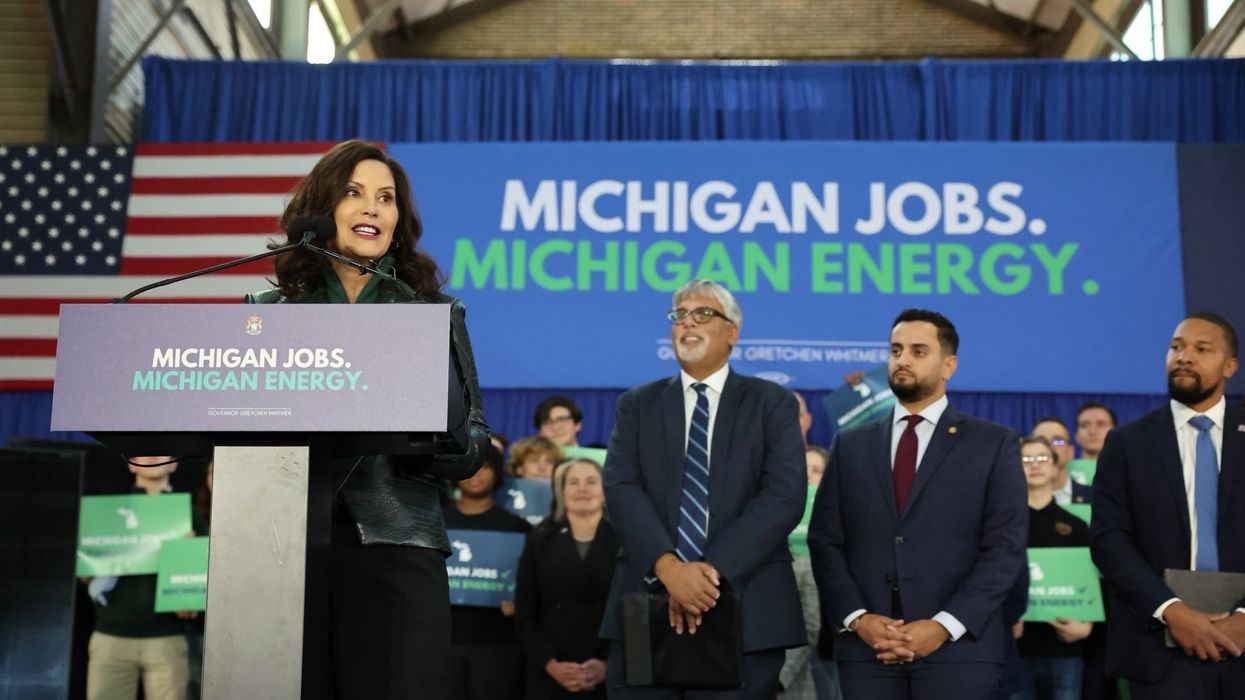
"This is a HUGE climate win that will create a safer, sustainable future AND good-paying, clean energy jobs!"
As scientists worldwide continue to sound the alarm about the need to swiftly ditch planet-heating fossil fuels, Democratic Michigan Gov. Gretchen Whitmer won praise from green groups on Tuesday for signing what she called "game-changing" legislation that "will help us become a national leader in clean energy."
"These bills translate into better air, water, and health for everyone," said Derrell Slaughter, Michigan clean energy advocate at the Natural Resources Defense Council. "The pathbreaking standards for the Midwest industrial heartland will see the state move to 100% clean energy by 2040 and put more resources toward energy efficiency."
"Michigan has seized the opportunity to demonstrate our commitment to combating climate change and ensure a sustainable, just, and prosperous future for our state," he added.
Senate Bill 271 is the part of the "Clean Energy Future" package that features the 100% clean energy standard. S.B. 273 increases Michigan's energy waste reduction standards, and S.B. 277 lets farmers rent out their land for solar power generation.
Additionally, S.B. Bill 502 directs the Michigan Public Service Commission to consider affordability, equity, environmental justice, and public health in reviews of power company plans; S.B. 519 establishes a Community and Worker Economic Transition Office at the the state Department of Labor and Economic Opportunity; and House Bill 5120 empowers the MPSC to greenlight large renewable energy projects.
Johanna Neumann, senior director of Environment America's Campaign for 100% Renewable Energy, said Tuesday that "since the 1800s, Michigan has been at the forefront of leveraging new technologies to improve American lives. By committing to a future powered entirely by clean, renewable energy, Michigan is building on its legacy of innovation."
"Gov. Whitmer and the state Legislature are creating a situation ripe for Michigan to realize its vast renewable energy potential," she continued. "The state has enough wind resources to power the state 3.5 times over and enough sunshine to meet 55 times the state's 2020 electricity demand."
Neumann noted that Michigan joins other states also "leading the way" with clean or renewable energy mandates for the coming decades: California, Connecticut, Hawaii, Illinois, Maine, Minnesota, Nevada, New Mexico, New York, Oregon, Rhode Island, Virginia, and Washington.
"In 2018, when Environment America launched its 100% Renewable Campaign, only Hawaii had any statewide 100% clean or renewable energy goal," she said. "It's great to see more states ensure that powering our lives with clean and renewable energy will lead to a healthier and safer future. We'll keep driving more states to get on the 'road to 100%'"
While climate campaigners welcomed the package, there are some notable critiques. As Michigan Advance explained:
The Michigan Environmental Justice Coalition has expressed opposition to a key part of the package, S.B. 271, which requires energy companies to generate 60% of their energy from renewable sources by 2035 including biomass, landfill gas made from solid waste, gas from methane digesters using municipal sewage waste, food waste and animal manure, and energy-generating incinerators in operation before January 1.
The group says that the carveout for landfill gas, biomass, gas from a methane digester, and its inclusion of incinerators and natural gas using carbon capture technology will disproportionately impact lower-income communities.
"Gov. Whitmer and her allies will try to spin the passage of S.B. 271 as a victory for climate and environmental justice," said Juan Jhong-Chung, Michigan Environmental Justice Coalition co-executive director. "In reality, it is a disaster for everyone but DTE and Consumers Energy. There can be no climate win without environmental justice, and environmental justice communities who will bear the brunt of this dirty law were systematically excluded, dismissed, and ignored during its drafting."
The Detroit News reported Tuesday that "DTE Energy, one of Michigan's two dominant electric utilities, gets about 15% of its electricity generation from renewable sources, according to its website. And Consumers Energy, the other dominant electric utility, already plans to get 40% of its energy from renewable sources by 2040."
Whitmer, who celebrated signing the bills with an event at Detroit's Eastern Market, declared on social media that "today is a huge win for Michigan. We'll protect our air, water, and land while facing climate change head-on and lowering costs."
As The Detroit News detailed: "Whitmer said the measures will lower household energy costs by an average of $145 a year, but Republicans have argued rates will increase as utilities pass the costs of renewable projects along to customers. The study the governor appeared to get the $145 projection from examined additional changes on top of the new laws' move to clean energy."
Whitmer also declared that the legislation will bring nearly $8 billion in federal funding to the state for clean energy projects and create 160,000 "good-paying" jobs, according to Michigan Advance.
"With today's bills, we define the future," Whitmer said. "As Michiganders, we know we have a responsibility to face climate change head-on, not only to make lives better today, but to make sure life goes on centuries from now. Let's keep fighting for future generations."
The governor is widely seen as a rising star in the Democratic Party and is expected to potentially seek national office someday. For 2024, Whitmer has made clear that she supports President Joe Biden, who is seeking reelection.
Biden—who ran on ambitious climate pledges in 2020 but has let campaigners down with decisions on the Mountain Valley Pipeline, Willow oil project, and leases for extracting fossil fuels from public lands and waters—plans to skip the United Arab Emirates-hosted U.N. climate summit, COP28, set to begin Thursday in Dubai.

"The time for governments to plan a transition to electric vehicles is now," the report's co-author asserted.
Replacing the roughly 900,000 gas-guzzling light-duty automobiles in state and local government fleets with electric vehicles over the next decade could save U.S. taxpayers nearly $11 billion in lifetime expenses while reducing pollution and planet-heating emissions, according to a report published Tuesday.
The report—entitled Electric Vehicles Save Money for Government Fleets—was published by U.S. PIRG Education Fund, Environment America Research & Policy Center, and Frontier Group and contains a state-by-state breakdown of how much money could be saved on fuel, maintenance, insurance, and depreciation costs by purchasing electric vehicles to replace retired gasoline-powered fleets.
According to the report, the biggest savings—more than $8.5 billion—would be on fuel costs, followed by nearly $6.9 billion saved on maintenance, over $3.5 billion in depreciation costs, and $1.1 billion on insurance.
"Buying, fueling, and maintaining gas- and diesel-fueled fleet vehicles is a big expense for governments—especially when gas prices are high," Diane Brown, executive director of the Arizona PIRG Education Fund and a co-author of the report, said in a statement. "Shifting to electric vehicles can save money for taxpayers by significantly reducing fuel and maintenance costs, while also improving air quality."
Greenhouse gas emissions would plummet by nearly 26 billion tons, a 63% drop compared with a scenario in which state and local governments purchase fossil-fueled vehicles to replace their old ones.
Fleet electrification would also reduce emissions of volatile organic compounds and nitrogen oxides, which when combined form ground-level ozone—better known as smog.
"For more than a century, pollution from cars and trucks has made our air unhealthy to breathe," said Doug O'Malley, director of Environment New Jersey Research and Policy Center and a co-author of the report. "It's long past time to change that and local and state governments can lead by example in electrifying our vehicles."
"Electric vehicles are no longer some distant dream. They are here today and ready to save taxpayers money and help clear our air."
While the report acknowledges that replacing retiring fossil-fueled fleets would require "significant upfront investment," federal assistance including the Commercial Clean Vehicle Incentive—under which qualifying organizations can get up to $7,500 per light-duty vehicle when they buy electric—could soften the initial financial blow.
At the federal level, the Biden administration in 2021 announced its intent to electrify the government's fleet, while last December the U.S. Postal Service said it would buy at least 66,000 electric vehicles to replace its aging gasoline-powered fleet after sustained pressure from climate campaigners.
"Electric vehicles are no longer some distant dream. They are here today and ready to save taxpayers money and help clear our air," said Frontier Group associate director and senior policy analyst and report co-author Tony Dutzik. "Every year, new models and types of EVs come on the market that can do more of the jobs state and local governments require. The time for governments to plan a transition to electric vehicles is now."

"If we want to create a clean energy future, we should look first to the already-built environment that could host the tools we need," said one expert. "Warehouse rooftops provide a perfect opportunity."
Installing solar panels on the roofs of warehouses and distribution centers around the United States could generate enough clean electricity to power every household in every state's most populous city, according to a report published Thursday by Environment America Research & Policy Center and Frontier Group.
"What the world needs now is rooftop solar, which produces inexpensive clean energy, averts harmful pollution, and preserves open space," Susan Rakov, chair of Environment America Research & Policy Center's clean energy program and managing director of Frontier Group, said in a statement.
"If we want to create a clean energy future, we should look first to the already-built environment that could host the tools we need," Rakov continued. "Warehouse rooftops provide a perfect opportunity—they're big, they're flat, and they're begging to be put to this crucial use."
"What the world needs now is rooftop solar, which produces inexpensive clean energy, averts harmful pollution, and preserves open space."
The U.S. is home to more than 450,000 warehouses and distribution centers, and more are under construction. Collectively, these buildings provide almost 16.4 billion square feet of rooftop space—roughly twice the area of Memphis, Tennessee, one of the nation's 30 largest cities.
Covering that rooftop space with solar panels could generate 185.6 terawatt-hours of clean electricity annually, enough to power nearly 19.4 million households for an entire year.
Fully tapping into the nation's warehouse rooftop solar potential would slash planet-heating emissions by 112.7 million metric tons of carbon dioxide equivalent annually. That's comparable to taking 24 million gasoline-powered cars off the road for a year or shutting down 30 coal-fired power plants.
"The big, flat, and sun-kissed rooftops of America's warehouses are perfect places to put solar panels," said report co-author Johanna Neumann, senior director of Environment America Research & Policy Center's Campaign for 100% Renewable Energy. "It's time to eliminate the barriers that prevent us from maximizing the benefits of rooftop solar for businesses, electricity customers, the grid, and the environment."
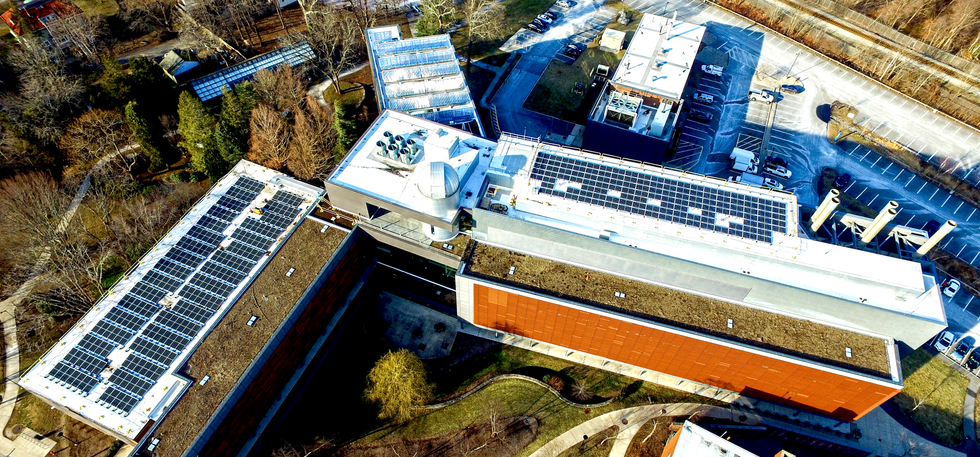 (Photo: Solect)
Last year, the same groups published a similar investigation into the unrealized solar potential of the country's "big box" superstores. According to that analysis, there are more than 100,000 superstores in the U.S., and putting solar panels on the combined 7.2 billion square feet of rooftop space could generate enough clean electricity to power almost 8 million homes.
As the new report on warehouse rooftop solar points out: "Producing electricity on rooftops, close to where the electricity will be used, reduces energy losses that happen during electricity transmission and distribution—losses that made up 5.2% of gross electricity generation in 2020. It also reduces the need for new utility-scale generation and transmission infrastructure and the damage to fragile ecosystems those can cause. Solar power also makes the grid more resilient to outages and disruptions."
The research comes less than a month after the International Renewable Energy Agency (IRENA) said the ongoing clean energy transition must accelerate if the world is to meet the Paris agreement's goal of limiting global warming to 1.5°C—beyond which the deadly effects of climate change will intensify, especially for people in poor nations who have done the least to cause the crisis.
According to IRENA, global investment in clean energy technologies reached a record-high of $1.3 trillion in 2022, enabling worldwide renewable capacity to grow by 9.6%. But to avert the climate emergency's worst consequences, investment must increase to about $5 trillion annually and capacity must grow at three times the current rate.
To "take advantage of untapped solar energy opportunities," Environment America Research & Policy Center and Frontier Group recommend that:
"The key to realizing the solar potential of warehouse rooftops is for warehouse owners to connect with solar developers and for utility companies to quickly connect rooftop solar systems to the grid," said Alex Keally, senior vice president for Solect Energy, a Massachusetts-based company that has completed numerous solar installations on warehouse rooftops.
According to the report, California, Florida, Illinois, Texas, and Georgia are the five U.S. states with the greatest potential for warehouse solar generation.
Whether that potential is realized will depend in part on state policymakers, as recent reporting on the Texas GOP by Inside Climate News makes clear.
"For several years in a row, the Lone Star State has generated the most electricity, by far, from wind and solar, producing nearly three times as much power from renewable sources last year as California," the outlet noted last week. "But last month, Republicans introduced a package of bills to the state Legislature intended to punish renewable energy and boost fossil fuels, including a measure that would increase the amount of gas-fired electricity generated by the state by upwards of 10 gigawatts and one that would limit the development of renewable energy in the state based on how much natural gas generation is also being built."

"This is Biden's chance to take the biggest single step of any nation to confront the climate crisis, but the EPA's proposal stalls out when it comes to new gas-guzzlers," said Dan Becker of the Center for Biological Diversity.
The Biden Environmental Protection Agency garnered widespread, often effusive, praise on Wednesday for unveiling what it described as the "strongest-ever pollution standards for cars and trucks."
But the Center for Biological Diversity (CBD) argued that, in their current form, the proposed rules "fail to address carbon pollution from new gas-powered cars and trucks" because they don't require automakers to adopt technologies to reduce the amount of CO2 that such gas-guzzling vehicles will spew into the atmosphere for decades to come.
"This is Biden's chance to take the biggest single step of any nation to confront the climate crisis, but the EPA's proposal stalls out when it comes to new gas-guzzlers," Dan Becker, the director of CBD's Safe Climate Transport Campaign, said in a statement. "The draft rule fails to require any improvement in the tens of millions of new gas-guzzlers, and even the strongest option falls well short of the 75% pollution cut necessary to protect our planet."
As The Washington Post reported Wednesday, EPA officials acknowledged that the new federal emission standards "won't mandate any particular technology" to slash vehicle pollution because the agency "wants to find flexible ways for the industry to comply."
"These rules are limits on the emissions each auto company's fleet of sold vehicles will produce," the Post explained. "So while the rule changes wouldn't order or require auto companies to sell a certain number of electric vehicles, it would set emissions limits so tightly that the only way to comply would be to sell large percentages of EVs—or some other type of zero-emissions vehicle."
During a Wednesday event touting the new rules, EPA Administrator Michael Regan confirmed that the administration is not "prescribing any mandates" or "driving any particular technology out of business," referring to gas-powered vehicles.
"We're giving the markets and the automobile industry and the private sector the options to choose on how we best move forward to reach the very, very, very ambitious climate goals that we must reach if we are to protect this planet," Regan continued.
Becker said it is "unfathomable" that the EPA crafted rules that do nothing to force car companies to implement specific pollution-cutting changes to new gas-powered vehicles.
"This is auto mechanics, not rocket science," he added.
The EPA projects that under the strongest version of its proposed rules—which, if finalized, would take effect in 2027—electric vehicles could account for 67% of all new light-duty vehicle sales by model year 2032. Last year, just 6% of new vehicles sold in the U.S. were electric.
In a phone interview with Common Dreams, Becker said the 67% EV figure would represent "a lot of progress" but stressed that it's far from certain the administration will ultimately finalize the most aggressive option—meaning the best-case scenario highlighted by the EPA may be overly optimistic.
"If the auto companies continue to churn out tens of millions of new gas-guzzlers, which they will, and those have to make no improvements, then it's like squeezing a balloon," Becker argued. "You're getting improvements from the switch to EVs, but not everything's going to be an EV. So a lot of these vehicles will continue to guzzle and pollute until the middle of the century."
The International Energy Agency has said that automakers around the world must stop selling new gas-guzzling vehicles by 2035 in order to keep critical warming targets within reach.
"We're in a climate emergency," Becker said. "The president needs to act like it and strengthen this draft rule to require 67% EVs by 2030 and 3.5% annual improvement for new gas cars and trucks. Together those moves would slash auto pollution 75%."
"Automakers talk out of both sides of their tailpipes, promising electric vehicles while delivering mostly the same old gas-guzzlers and lobbying for weak, loophole-riddled rules."
CBD, which said the new rules "fail to meet" the climate emergency, emphasized in its statement Wednesday that automakers "already have cost-effective technologies to dramatically cut pollution from gas-powered cars, such as improved engines, transmissions, and aerodynamics."
"Instead of installing these technologies in new vehicles," the group said, "car companies successfully lobbied for loopholes that will allow them to keep making polluting cars, SUVs, and pickups."
As Becker put it: "Automakers talk out of both sides of their tailpipes, promising electric vehicles while delivering mostly the same old gas-guzzlers and lobbying for weak, loophole-riddled rules. A strong standard will make them keep their word."
Other climate organizations were far less critical of the proposal, with Environment America calling it "among the most significant actions on climate by the Biden administration to date" and echoing projections laid out by the EPA, which says its proposed rules would "avoid nearly 10 billion tons of CO2 emissions" through 2055.
Matt Casale, director of U.S. PIRG's environment campaigns, thanked the Biden administration for "embracing the promise of clean cars."
"These new vehicle pollution standards will pay off in cleaner air and a healthier future for all Americans," Casale said.
But some of the groups that celebrated the new rules as a vast improvement over the untenable status quo said more ambition is necessary, specifically when it comes to regulating pollution from heavy-duty vehicles such as buses and freight trucks.
"Heavy-duty trucks only make up 10% of the vehicles on the road but create 28% of the global warming emissions from transportation, as well as 45% of nitrogen oxide emissions and 57% of particulate matter emissions," said Dave Cooke, senior vehicles analyst with the Union of Concerned Scientists.
"The proposed heavy-duty rules are significant," Cooke added, "but the market for electric trucks is moving quickly and there is both an urgent need and an opportunity to go even further to facilitate the transition to electric trucks with no tailpipe pollution."

Climate and environmental campaigners on Wednesday hailed the first-ever U.S. government offshore wind power lease sale off the Pacific coast, an auction that drew over three-quarters of a billion dollars in winning bids.
"Today's lease sale is further proof that industry momentum--including for floating offshore wind development--is undeniable."
The U.S. Interior Department said Wednesday that the Bureau of Ocean Energy Management's wind energy auction on Tuesday for five leases covering 373,000 acres off the California coast drew winning bids totaling $757.1 million from five companies.
The five sites offshore lease sites--two near Eureka in Humboldt County in far northern California and three near Morro Bay off the Central Coast--could, when developed, power nearly 1.6 million homes.
The Interior Department said that "the interest and success of today's sale represents a significant milestone toward achieving President [Joe] Biden's goal of deploying 30 gigawatts of offshore wind energy capacity by 2030 and 15 gigawatts of floating offshore wind capacity by 2035."
"The Biden-Harris administration believes that to address the climate crisis head-on, we must unleash a new era of clean, reliable energy that serves every household in America," U.S. Interior Secretary Deb Haaland said in a statement. "Today's lease sale is further proof that industry momentum--including for floating offshore wind development--is undeniable."
"A sustainable, clean energy future is within our grasp and the Interior Department is doing everything we can to ensure that American communities nationwide benefit," Haaland added.
The Pacific auction follows the federal government's $4.37 billion sale earlier this year of six offshore wind leases off New York and New Jersey.
Green groups and clean energy boosters also welcomed Wednesday's announcement.
"The auction today is a major milestone in California's path towards investing in offshore wind," said Laura Deehan, state director at Environment America. "In just a few years' time, our state will have a new and important tool in our fight against climate change. We are looking forward to the day when clean electricity from our coastal winds can be put to work cutting pollution from our homes, cars, and industry."
John Rogers, a senior energy analyst at the Union of Concerned Scientists, said in a statement that "the offshore wind lease sales finalized in California today represent another hopeful moment in the state and country's transition to clean energy."
"The high level of interest and investment in these leases by offshore wind industry leaders and elected officials demonstrates a widespread, long-term commitment to doing what it takes to grow renewable energy and decarbonize the U.S. electric grid," he continued. "It's encouraging to see projects like this that will help limit the devastating and deadly impacts of climate change on communities, the environment, and the economy."
"The waters off the Pacific coast offer a massive resource for offshore wind power," Rogers said. "These new leases are a big step forward for floating offshore wind technology, which is key for harnessing the wind in deep-water areas off the West Coast, and places like the Gulf of Maine."
"A lot goes into doing these projects right--for the environment, workers, and the communities that rely on the leased areas," he added. "But if we build on today's forward momentum, the United States can dramatically reduce its global warming emissions and become a global leader in renewable energy technologies like deep-water offshore wind."