SUBSCRIBE TO OUR FREE NEWSLETTER
Daily news & progressive opinion—funded by the people, not the corporations—delivered straight to your inbox.
5
#000000
#FFFFFF
To donate by check, phone, or other method, see our More Ways to Give page.
Daily news & progressive opinion—funded by the people, not the corporations—delivered straight to your inbox.
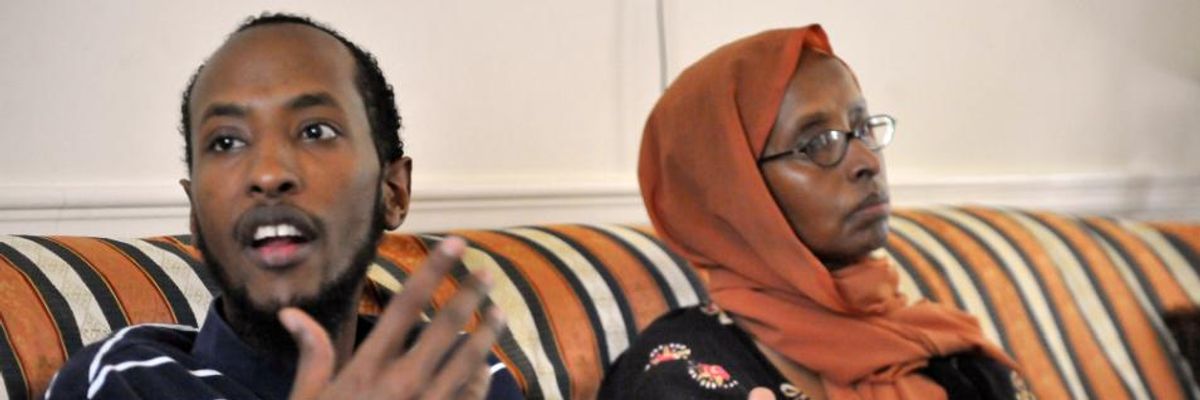
Yahya Wehelie talked about being on a no-fly list, leaving him stuck in Cairo, Egypt for almost two months on July 20, 2010 in Burke, Virginia (Photo: Mark Gail/The Washington Post via Getty Images)
In a unanimous decision Thursday, the U.S. Supreme Court ruled that Muslim individuals who accused the FBI of placing them on the no-fly list in retaliation for refusing to spy on their communities can sue federal agents for damages, upholding a lower court opinion and rejecting the Trump administration's challenge to the lawsuit.
"This is important not just for me, but for everybody. I don't want the same thing that the FBI did to me to happen to others."
--Muhammad Tanvir, Plaintiff
The case (pdf)--Tanzin v. Tanvir--began in 2013 and involves Muhammad Tanvir, Jameel Algibhah, and Naveed Shinwari, three Muslim U.S. citizens or permanent residents born abroad, who accused the FBI of trying between 2007 and 2012 to use the no-fly list to coerce them into becoming informants in violation of their religious liberty.
The 8-0 opinion, argued before Justice Amy Coney Barrett joined the court, was written by Justice Clarence Thomas. The justices ruled that the three men--who said their inclusion on the no-fly list prevented them from visiting family in Pakistan, Afghanistan, and Yemen for years and caused them reputational and employment-related harms--are allowed to seek monetary compensation from government officials under a 1993 federal law called the Religious Freedom Restoration Act, which, as Reuters reported, "was aimed at ensuring the government had compelling reasons to substantially burden any person's exercise of religion."
"It is a soaring feeling," said Tanvir, the lead plaintiff in the case, in a statement Thursday. "I made my life in this country, so this is important not just for me, but for everybody. I don't want the same thing that the FBI did to me to happen to others."
Matthew Callahan, a senior staff attorny at Muslim Advocates, a national civil rights organization that filed a brief (pdf) in support of the plaintiffs, called the Supreme Court's ruling "a rare, unequivocal victory for religious freedom that sets an important standard: government officials can be held accountable for the harm they cause."
"We now know with certainty," Callahan said Thursday, "that the Religious Freedom Restoration Act does allow people to sue the government for damages. This ruling closes a dangerous loophole that effectively gave government officials immunity for many violations of religious liberty."
Callahan added that the ruling "also clearly shows how our government has targeted and hurt Muslims."
"It is plainly outrageous," he said, "that the FBI would try and force Muslims to spy on their own community by placing them on the no-fly list."
Diala Shamas, a human rights attorney at the Center for Constitutional Rights (CCR), which represented the plaintiffs, shared a pair of videos on social media in which Tanvir describes how he was punished by the FBI and Shinwari, another plaintiff in the case, explains why he refused to collaborate in the persecution of a "dehumanized... marginalized" minority group.
"The Supreme Court today vindicated our clients' courageous stand for their religious freedom as Muslims who would not spy on their own faith community," said Ramzi Kassem, a professor of law at CUNY who argued the case before the court.
According to Kassem, "The court's unanimous decision also sends a clear message to FBI agents who should think twice now before abusing the power to put people on the no-fly list."
"The FBI cannot continue to assume they can act with impunity in surveilling, harassing, and punishing the Muslim community, and other vulnerable communities federal law enforcement entities seek to target," said CCR legal director Baher Azmy in a statement Thursday.
Callahan pointed out that "for decades now, government surveillance and anti-Muslim policies have been an unavoidable fact of life for American Muslims."
"Because of this ruling," he noted, "American Muslims now know that they can speak out and fight back in court against injustice."
Dear Common Dreams reader, It’s been nearly 30 years since I co-founded Common Dreams with my late wife, Lina Newhouser. We had the radical notion that journalism should serve the public good, not corporate profits. It was clear to us from the outset what it would take to build such a project. No paid advertisements. No corporate sponsors. No millionaire publisher telling us what to think or do. Many people said we wouldn't last a year, but we proved those doubters wrong. Together with a tremendous team of journalists and dedicated staff, we built an independent media outlet free from the constraints of profits and corporate control. Our mission has always been simple: To inform. To inspire. To ignite change for the common good. Building Common Dreams was not easy. Our survival was never guaranteed. When you take on the most powerful forces—Wall Street greed, fossil fuel industry destruction, Big Tech lobbyists, and uber-rich oligarchs who have spent billions upon billions rigging the economy and democracy in their favor—the only bulwark you have is supporters who believe in your work. But here’s the urgent message from me today. It's never been this bad out there. And it's never been this hard to keep us going. At the very moment Common Dreams is most needed, the threats we face are intensifying. We need your support now more than ever. We don't accept corporate advertising and never will. We don't have a paywall because we don't think people should be blocked from critical news based on their ability to pay. Everything we do is funded by the donations of readers like you. When everyone does the little they can afford, we are strong. But if that support retreats or dries up, so do we. Will you donate now to make sure Common Dreams not only survives but thrives? —Craig Brown, Co-founder |
In a unanimous decision Thursday, the U.S. Supreme Court ruled that Muslim individuals who accused the FBI of placing them on the no-fly list in retaliation for refusing to spy on their communities can sue federal agents for damages, upholding a lower court opinion and rejecting the Trump administration's challenge to the lawsuit.
"This is important not just for me, but for everybody. I don't want the same thing that the FBI did to me to happen to others."
--Muhammad Tanvir, Plaintiff
The case (pdf)--Tanzin v. Tanvir--began in 2013 and involves Muhammad Tanvir, Jameel Algibhah, and Naveed Shinwari, three Muslim U.S. citizens or permanent residents born abroad, who accused the FBI of trying between 2007 and 2012 to use the no-fly list to coerce them into becoming informants in violation of their religious liberty.
The 8-0 opinion, argued before Justice Amy Coney Barrett joined the court, was written by Justice Clarence Thomas. The justices ruled that the three men--who said their inclusion on the no-fly list prevented them from visiting family in Pakistan, Afghanistan, and Yemen for years and caused them reputational and employment-related harms--are allowed to seek monetary compensation from government officials under a 1993 federal law called the Religious Freedom Restoration Act, which, as Reuters reported, "was aimed at ensuring the government had compelling reasons to substantially burden any person's exercise of religion."
"It is a soaring feeling," said Tanvir, the lead plaintiff in the case, in a statement Thursday. "I made my life in this country, so this is important not just for me, but for everybody. I don't want the same thing that the FBI did to me to happen to others."
Matthew Callahan, a senior staff attorny at Muslim Advocates, a national civil rights organization that filed a brief (pdf) in support of the plaintiffs, called the Supreme Court's ruling "a rare, unequivocal victory for religious freedom that sets an important standard: government officials can be held accountable for the harm they cause."
"We now know with certainty," Callahan said Thursday, "that the Religious Freedom Restoration Act does allow people to sue the government for damages. This ruling closes a dangerous loophole that effectively gave government officials immunity for many violations of religious liberty."
Callahan added that the ruling "also clearly shows how our government has targeted and hurt Muslims."
"It is plainly outrageous," he said, "that the FBI would try and force Muslims to spy on their own community by placing them on the no-fly list."
Diala Shamas, a human rights attorney at the Center for Constitutional Rights (CCR), which represented the plaintiffs, shared a pair of videos on social media in which Tanvir describes how he was punished by the FBI and Shinwari, another plaintiff in the case, explains why he refused to collaborate in the persecution of a "dehumanized... marginalized" minority group.
"The Supreme Court today vindicated our clients' courageous stand for their religious freedom as Muslims who would not spy on their own faith community," said Ramzi Kassem, a professor of law at CUNY who argued the case before the court.
According to Kassem, "The court's unanimous decision also sends a clear message to FBI agents who should think twice now before abusing the power to put people on the no-fly list."
"The FBI cannot continue to assume they can act with impunity in surveilling, harassing, and punishing the Muslim community, and other vulnerable communities federal law enforcement entities seek to target," said CCR legal director Baher Azmy in a statement Thursday.
Callahan pointed out that "for decades now, government surveillance and anti-Muslim policies have been an unavoidable fact of life for American Muslims."
"Because of this ruling," he noted, "American Muslims now know that they can speak out and fight back in court against injustice."
In a unanimous decision Thursday, the U.S. Supreme Court ruled that Muslim individuals who accused the FBI of placing them on the no-fly list in retaliation for refusing to spy on their communities can sue federal agents for damages, upholding a lower court opinion and rejecting the Trump administration's challenge to the lawsuit.
"This is important not just for me, but for everybody. I don't want the same thing that the FBI did to me to happen to others."
--Muhammad Tanvir, Plaintiff
The case (pdf)--Tanzin v. Tanvir--began in 2013 and involves Muhammad Tanvir, Jameel Algibhah, and Naveed Shinwari, three Muslim U.S. citizens or permanent residents born abroad, who accused the FBI of trying between 2007 and 2012 to use the no-fly list to coerce them into becoming informants in violation of their religious liberty.
The 8-0 opinion, argued before Justice Amy Coney Barrett joined the court, was written by Justice Clarence Thomas. The justices ruled that the three men--who said their inclusion on the no-fly list prevented them from visiting family in Pakistan, Afghanistan, and Yemen for years and caused them reputational and employment-related harms--are allowed to seek monetary compensation from government officials under a 1993 federal law called the Religious Freedom Restoration Act, which, as Reuters reported, "was aimed at ensuring the government had compelling reasons to substantially burden any person's exercise of religion."
"It is a soaring feeling," said Tanvir, the lead plaintiff in the case, in a statement Thursday. "I made my life in this country, so this is important not just for me, but for everybody. I don't want the same thing that the FBI did to me to happen to others."
Matthew Callahan, a senior staff attorny at Muslim Advocates, a national civil rights organization that filed a brief (pdf) in support of the plaintiffs, called the Supreme Court's ruling "a rare, unequivocal victory for religious freedom that sets an important standard: government officials can be held accountable for the harm they cause."
"We now know with certainty," Callahan said Thursday, "that the Religious Freedom Restoration Act does allow people to sue the government for damages. This ruling closes a dangerous loophole that effectively gave government officials immunity for many violations of religious liberty."
Callahan added that the ruling "also clearly shows how our government has targeted and hurt Muslims."
"It is plainly outrageous," he said, "that the FBI would try and force Muslims to spy on their own community by placing them on the no-fly list."
Diala Shamas, a human rights attorney at the Center for Constitutional Rights (CCR), which represented the plaintiffs, shared a pair of videos on social media in which Tanvir describes how he was punished by the FBI and Shinwari, another plaintiff in the case, explains why he refused to collaborate in the persecution of a "dehumanized... marginalized" minority group.
"The Supreme Court today vindicated our clients' courageous stand for their religious freedom as Muslims who would not spy on their own faith community," said Ramzi Kassem, a professor of law at CUNY who argued the case before the court.
According to Kassem, "The court's unanimous decision also sends a clear message to FBI agents who should think twice now before abusing the power to put people on the no-fly list."
"The FBI cannot continue to assume they can act with impunity in surveilling, harassing, and punishing the Muslim community, and other vulnerable communities federal law enforcement entities seek to target," said CCR legal director Baher Azmy in a statement Thursday.
Callahan pointed out that "for decades now, government surveillance and anti-Muslim policies have been an unavoidable fact of life for American Muslims."
"Because of this ruling," he noted, "American Muslims now know that they can speak out and fight back in court against injustice."