SUBSCRIBE TO OUR FREE NEWSLETTER
Daily news & progressive opinion—funded by the people, not the corporations—delivered straight to your inbox.
5
#000000
#FFFFFF
To donate by check, phone, or other method, see our More Ways to Give page.
Daily news & progressive opinion—funded by the people, not the corporations—delivered straight to your inbox.
The New York Times recentlyweighed in on the scandal involving University of Florida professor Kevin Folta, a leading GMO advocate whose passionate declarations about his absolute independence from the biotech industry were revealed to be false. Documents turned up a few weeks ago showing that Folta has received tens of thousands of dollars from Monsanto, promised the company a "solid
The New York Times recentlyweighed in on the scandal involving University of Florida professor Kevin Folta, a leading GMO advocate whose passionate declarations about his absolute independence from the biotech industry were revealed to be false. Documents turned up a few weeks ago showing that Folta has received tens of thousands of dollars from Monsanto, promised the company a "solid return on the investment," and even attached his named him as the author of GMO advocacy materials largely written by the biotech industry's public-relations firm.
Folta was one of several pro-GMO academic advocates with conflicts cited in the article, which confirms a long-documented pattern of outsize influence by the biotech industry in academia. But, bizarrely, the Times added a new twist to the story, accusing the organic foods industry of also having "aggressively recruited academic researchers" to advance its own political agenda. The biotech and organic industries are "squaring off," the Times reports, to win influence.
If the organic industry is squaring off with the biotech industry, this battle amounts to a small posse of gunslingers versus the entire U.S. military. The biotech industry has spent, literally, hundreds of millions of dollars lobbying Congress, funding political candidates, sponsoring academic research, endowing professorships, funding construction of university buildings and hiring university professors as consultants. This influence campaign also reaches into the federal government, which pressures foreign governments to accept GMOs and even censors government research that goes against the wishes of the biotech industry, according to whistleblowers.
The organics industry has almost negligible influence in these arenas by comparison, especially in academia, and to suggest otherwise (as the Times does with a single, pretty weak example), distorts what's really happening, especially at our public universities. In 2012, Food & Water Watch examined thousands of research funding records at several large public universities, finding that agriculture departments depend very heavily on pro-GMO industry sponsors like Monsanto and Cargill.
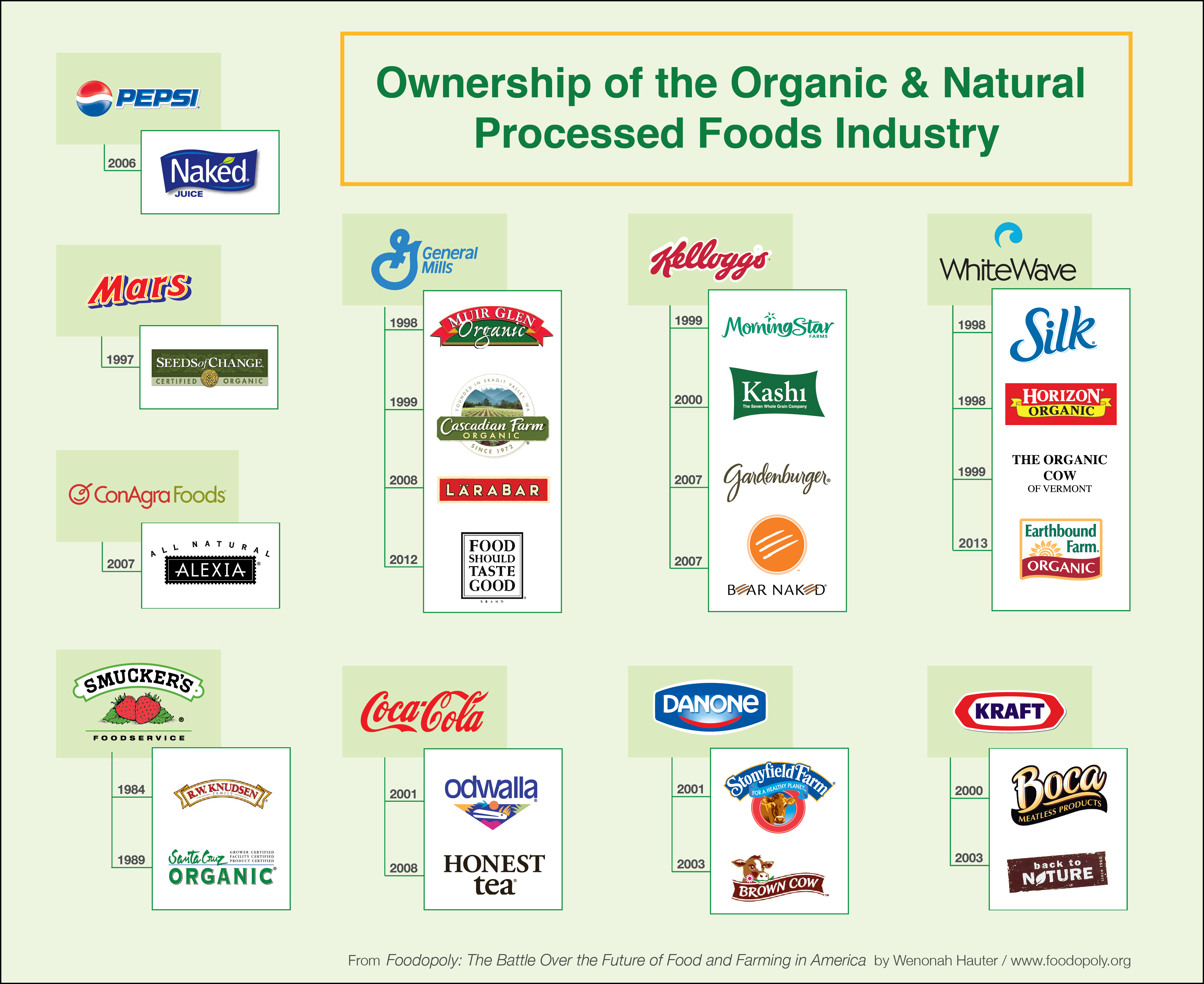
Not only is the influence of the "organic foods industry," as the Times calls it, infinitesimal by comparison, but a growing sector of organic products are actually owned by giant food processors like General Mills and J.M. Smucker, which frequently align their politics and pocketbooks with the biotech industry, for example in opposition to GMO labels.
Though probably an effort by the Times to offer balanced reporting, the awkward indictment of organics alongside the biotech industry serves to diminish the real story about the outsized--and unparalleled--role that the biotech industry plays in academia, science and public policy.
Unfortunately, this failure seems reflect a larger trend of timid--and sometimes inaccurate--media coverage of GMOs, including from high-profile papers like the Times and the Washington Post. It is difficult to ignore how often news outlets are reporting favorably on GMOs by using industry talking points or leaning heavily on "experts" like Folta, who are passionately pro-GMO (and have undisclosed conflicts of interest).
By contrast, the voices of the many highly qualified scientists critical of GMOs are often missing or marginalized in the news, as was noted at a recent whistleblower conference that featured a session on the "media blackout" of scientists critical of GMOs. And there are more than a few. Hundreds of scientists are on record noting how little independent research exists on GMOs, how many gaps there are in the scientific literature and how industry plays too large a role in science.
Though a very robust scientific debate exists on most aspects of GMOs, news outlets, oddly, are increasingly reporting the exact opposite: that there is a "scientific consensus" on GMOs and the scientific debate is over. This totally erroneous talking point comes from the biotechnology industry and has been widely disseminated by academics like Folta.
Read more about the outsize role of industry in academia here.
Dear Common Dreams reader, It’s been nearly 30 years since I co-founded Common Dreams with my late wife, Lina Newhouser. We had the radical notion that journalism should serve the public good, not corporate profits. It was clear to us from the outset what it would take to build such a project. No paid advertisements. No corporate sponsors. No millionaire publisher telling us what to think or do. Many people said we wouldn't last a year, but we proved those doubters wrong. Together with a tremendous team of journalists and dedicated staff, we built an independent media outlet free from the constraints of profits and corporate control. Our mission has always been simple: To inform. To inspire. To ignite change for the common good. Building Common Dreams was not easy. Our survival was never guaranteed. When you take on the most powerful forces—Wall Street greed, fossil fuel industry destruction, Big Tech lobbyists, and uber-rich oligarchs who have spent billions upon billions rigging the economy and democracy in their favor—the only bulwark you have is supporters who believe in your work. But here’s the urgent message from me today. It's never been this bad out there. And it's never been this hard to keep us going. At the very moment Common Dreams is most needed, the threats we face are intensifying. We need your support now more than ever. We don't accept corporate advertising and never will. We don't have a paywall because we don't think people should be blocked from critical news based on their ability to pay. Everything we do is funded by the donations of readers like you. When everyone does the little they can afford, we are strong. But if that support retreats or dries up, so do we. Will you donate now to make sure Common Dreams not only survives but thrives? —Craig Brown, Co-founder |
The New York Times recentlyweighed in on the scandal involving University of Florida professor Kevin Folta, a leading GMO advocate whose passionate declarations about his absolute independence from the biotech industry were revealed to be false. Documents turned up a few weeks ago showing that Folta has received tens of thousands of dollars from Monsanto, promised the company a "solid return on the investment," and even attached his named him as the author of GMO advocacy materials largely written by the biotech industry's public-relations firm.
Folta was one of several pro-GMO academic advocates with conflicts cited in the article, which confirms a long-documented pattern of outsize influence by the biotech industry in academia. But, bizarrely, the Times added a new twist to the story, accusing the organic foods industry of also having "aggressively recruited academic researchers" to advance its own political agenda. The biotech and organic industries are "squaring off," the Times reports, to win influence.
If the organic industry is squaring off with the biotech industry, this battle amounts to a small posse of gunslingers versus the entire U.S. military. The biotech industry has spent, literally, hundreds of millions of dollars lobbying Congress, funding political candidates, sponsoring academic research, endowing professorships, funding construction of university buildings and hiring university professors as consultants. This influence campaign also reaches into the federal government, which pressures foreign governments to accept GMOs and even censors government research that goes against the wishes of the biotech industry, according to whistleblowers.
The organics industry has almost negligible influence in these arenas by comparison, especially in academia, and to suggest otherwise (as the Times does with a single, pretty weak example), distorts what's really happening, especially at our public universities. In 2012, Food & Water Watch examined thousands of research funding records at several large public universities, finding that agriculture departments depend very heavily on pro-GMO industry sponsors like Monsanto and Cargill.
Not only is the influence of the "organic foods industry," as the Times calls it, infinitesimal by comparison, but a growing sector of organic products are actually owned by giant food processors like General Mills and J.M. Smucker, which frequently align their politics and pocketbooks with the biotech industry, for example in opposition to GMO labels.
Though probably an effort by the Times to offer balanced reporting, the awkward indictment of organics alongside the biotech industry serves to diminish the real story about the outsized--and unparalleled--role that the biotech industry plays in academia, science and public policy.
Unfortunately, this failure seems reflect a larger trend of timid--and sometimes inaccurate--media coverage of GMOs, including from high-profile papers like the Times and the Washington Post. It is difficult to ignore how often news outlets are reporting favorably on GMOs by using industry talking points or leaning heavily on "experts" like Folta, who are passionately pro-GMO (and have undisclosed conflicts of interest).
By contrast, the voices of the many highly qualified scientists critical of GMOs are often missing or marginalized in the news, as was noted at a recent whistleblower conference that featured a session on the "media blackout" of scientists critical of GMOs. And there are more than a few. Hundreds of scientists are on record noting how little independent research exists on GMOs, how many gaps there are in the scientific literature and how industry plays too large a role in science.
Though a very robust scientific debate exists on most aspects of GMOs, news outlets, oddly, are increasingly reporting the exact opposite: that there is a "scientific consensus" on GMOs and the scientific debate is over. This totally erroneous talking point comes from the biotechnology industry and has been widely disseminated by academics like Folta.
Read more about the outsize role of industry in academia here.
The New York Times recentlyweighed in on the scandal involving University of Florida professor Kevin Folta, a leading GMO advocate whose passionate declarations about his absolute independence from the biotech industry were revealed to be false. Documents turned up a few weeks ago showing that Folta has received tens of thousands of dollars from Monsanto, promised the company a "solid return on the investment," and even attached his named him as the author of GMO advocacy materials largely written by the biotech industry's public-relations firm.
Folta was one of several pro-GMO academic advocates with conflicts cited in the article, which confirms a long-documented pattern of outsize influence by the biotech industry in academia. But, bizarrely, the Times added a new twist to the story, accusing the organic foods industry of also having "aggressively recruited academic researchers" to advance its own political agenda. The biotech and organic industries are "squaring off," the Times reports, to win influence.
If the organic industry is squaring off with the biotech industry, this battle amounts to a small posse of gunslingers versus the entire U.S. military. The biotech industry has spent, literally, hundreds of millions of dollars lobbying Congress, funding political candidates, sponsoring academic research, endowing professorships, funding construction of university buildings and hiring university professors as consultants. This influence campaign also reaches into the federal government, which pressures foreign governments to accept GMOs and even censors government research that goes against the wishes of the biotech industry, according to whistleblowers.
The organics industry has almost negligible influence in these arenas by comparison, especially in academia, and to suggest otherwise (as the Times does with a single, pretty weak example), distorts what's really happening, especially at our public universities. In 2012, Food & Water Watch examined thousands of research funding records at several large public universities, finding that agriculture departments depend very heavily on pro-GMO industry sponsors like Monsanto and Cargill.
Not only is the influence of the "organic foods industry," as the Times calls it, infinitesimal by comparison, but a growing sector of organic products are actually owned by giant food processors like General Mills and J.M. Smucker, which frequently align their politics and pocketbooks with the biotech industry, for example in opposition to GMO labels.
Though probably an effort by the Times to offer balanced reporting, the awkward indictment of organics alongside the biotech industry serves to diminish the real story about the outsized--and unparalleled--role that the biotech industry plays in academia, science and public policy.
Unfortunately, this failure seems reflect a larger trend of timid--and sometimes inaccurate--media coverage of GMOs, including from high-profile papers like the Times and the Washington Post. It is difficult to ignore how often news outlets are reporting favorably on GMOs by using industry talking points or leaning heavily on "experts" like Folta, who are passionately pro-GMO (and have undisclosed conflicts of interest).
By contrast, the voices of the many highly qualified scientists critical of GMOs are often missing or marginalized in the news, as was noted at a recent whistleblower conference that featured a session on the "media blackout" of scientists critical of GMOs. And there are more than a few. Hundreds of scientists are on record noting how little independent research exists on GMOs, how many gaps there are in the scientific literature and how industry plays too large a role in science.
Though a very robust scientific debate exists on most aspects of GMOs, news outlets, oddly, are increasingly reporting the exact opposite: that there is a "scientific consensus" on GMOs and the scientific debate is over. This totally erroneous talking point comes from the biotechnology industry and has been widely disseminated by academics like Folta.
Read more about the outsize role of industry in academia here.