
SUBSCRIBE TO OUR FREE NEWSLETTER
Daily news & progressive opinion—funded by the people, not the corporations—delivered straight to your inbox.
5
#000000
#FFFFFF
To donate by check, phone, or other method, see our More Ways to Give page.


Daily news & progressive opinion—funded by the people, not the corporations—delivered straight to your inbox.
One scientist said the new research "provides rare causal evidence" and "not just a correlation" of the dangers posed by forever chemicals to infants.
Infants born to mothers who drank water from wells downstream of sites contaminated by so-called "forever chemicals" in New Hampshire suffered nearly three times the baseline death rate, more premature births, and lower birth weights, a study published Monday revealed.
Researchers at the University of Arizona tracked 11,539 births occurring within 3.1 miles of sites in the New England state known to be contaminated with per- and polyfluoroalkyl substances (PFAS)—commonly called forever chemicals because they do not biodegrade and accumulate in the human body. They found a 191% increase in first-year deaths among infants born to "mothers receiving water that had flowed beneath a PFAS-contaminated site, as opposed to comparable mothers receiving water that had flowed toward a PFAS-contaminated site."
Mothers in the study zone also experienced a 20% increase in preterm births and a 43% higher incidence of low birth weight. Out of every 100,000 births, this equates to 611 additional deaths by age 1, as well as 2,639 extra underweight births and 1,475 additional preterm births.
Extrapolating to the 48 contiguous US states and the District of Columbia, the study's authors also found that "PFAS contamination imposes annual social costs of approximately $8 billion."
"These health costs are substantially larger than current outside estimates of the cost of removing PFAS from the public water supply," the publication states.
As study authors Derek Lemoine, Ashley Langer, and Bo Guo noted:
PFAS from contaminated sites slowly migrate down through soil into groundwater, where they move downstream with the groundwater’s flow. This created a simple but powerful contrast: Pregnant women whose homes received water from wells that were downstream, in groundwater terms, from the PFAS source were likely to have been exposed to PFAS from the contaminated site, but those who received water from wells that were upstream of those sites should not have been exposed.
Previous research has shown the link between PFAS exposure and reduced birth weight, as well as changes in fetal and newborn metabolism.
Forever chemicals are used in a broad range of products, from nonstick cookware to waterproof clothing and firefighting foam. Bills to limit PFAS have died in Congress under intense lobbying from the chemical industry, which has long known—and tried to conceal—the health and environmental dangers of forever chemicals.
More than 95% of people in the United States have PFAS in their blood, according to the US Centers for Disease Control and Prevention. Around 172 million Americans are believed to consume PFAS in their drinking water.
Forever chemicals have been linked to cancers of the kidneys and testicles, low infant weight, suppressed immune function, and other adverse health effects.
Responding to the new research, Duke University associate research professor in environmental sciences Kate Hoffman told the Washington Post that the study "provides rare causal evidence" and "not just a correlation" of the dangers posed by forever chemicals to infants.
While experts say the study demonstrates the importance of more robust federal regulation of PFAS, the Trump administration's Environmental Protection Agency (EPA) is seeking to lift current limits that protect drinking water from four types of forever chemicals.
“This is a betrayal of public health at the highest level," Environmental Working Group president Ken Cook said earlier this year in response to the Trump administration's efforts to roll back PFAS protections. "The EPA is caving to chemical industry lobbyists and pressure by the water utilities, and in doing so, it’s sentencing millions of Americans to drink contaminated water for years to come.”

When we limit conversations about our complex past, we not only lose historical accuracy but also our capacity for growth and the honest reckoning that could finally help us fulfill our founding promises.
In 1796, 22-year-old Ona Marie Judge became one of America's most wanted fugitives. Born into slavery and held by President George Washington, Judge escaped from Philadelphia and fled north to New Hampshire. Washington immediately began hunting her, placing newspaper advertisements offering rewards for her return. For over 50 years, she would live as a fugitive, knowing that bounty hunters could appear at any moment to drag her back into bondage. Her story of survival reveals tensions that we're still grappling with today.
Judge's escape revealed the America we rarely acknowledge in our founding stories. As efforts to silence discussions of race and history spread nationwide—from federal agencies barring recognition of Black History Month to more than 44 states, including my home state of New Hampshire, limiting how schools can discuss racism—her story demands our attention.
Judge's escape laid bare the America we rarely acknowledge in our founding mythology.
The paradoxes Judge witnessed still define us. Washington was not the infallible moral leader of our imagination, but a flesh-and-blood man who owned other human beings and spent years trying to recapture the woman who dared seek freedom. New Hampshire was not removed from slavery's horrors—Portsmouth had been a major slave trading port since the 1600s.
Judge's escape laid bare the America we rarely acknowledge in our founding mythology. These tensions were the defining forces that shaped America's first century and continue to do so today. Judge's story illuminates how deeply slavery was woven into the fabric of the entire nation, connecting Black and white lives in ways our history books have long worked to hide. Understanding her experience becomes essential to understanding ourselves, especially as movements to obscure these complexities grow stronger.
This current backlash against Black history education shouldn't surprise us—it follows a persistent American pattern. Every period of racial progress has triggered fierce resistance designed to roll back gains and rewrite the past. After Reconstruction brought Black political participation and civil rights, the country allowed Jim Crow laws to flourish and KKK terror to reign while Confederate monuments were erected across the South to rewrite the Civil War as a noble struggle rather than a fight to preserve slavery. The rise of the war on drugs and mass incarceration of Black Americans followed the 1960s civil rights laws. The election of the first Black president, Barack Obama, triggered the Tea Party movement and birtherism campaigns designed to delegitimize his presidency.
Today's attacks on how we discuss race and history represent the latest iteration of this cycle. When we limit conversations about our complex past, we not only lose historical accuracy but also our capacity for growth and the honest reckoning that could finally help us fulfill our founding promises.
This ongoing struggle is why the work happening in New Hampshire—a politically purple state where Black residents make up just 2% of the population—offers constructive lessons for the rest of the nation. If honest conversations about Black history can flourish here, they can do so anywhere; however, success requires understanding what we like to use as a guideline: the rule of thirds. One third will support, one third will be persuaded, and one third will oppose. The progress is determined by the persuadable middle. We've seen how we can make real change by reaching that crucial middle group in New Hampshire.
Look no further than our annual July 4 readings of Frederick Douglass' "What to the Slave Is Your Fouth of July" speech, which has grown from one participating town to 22, with communities reading simultaneously across the state. From synagogues to rural town halls, people gather simply to hear Douglass' words—no discussion required, no positions demanded. This creates space for reflection and connection without the political battles that often shut down conversation before it begins.
Judge's legacy calls us to specific action: Resist erasure wherever we encounter it—in our children's schools, local libraries, state legislatures, and national debates.
Building unexpected alliances has proven equally powerful. Working with the Daughters of the American Revolution to install historical markers honoring Black Revolutionary War heroes demonstrates that historical truth enriches rather than threatens our understanding of patriotism. We've now placed nearly 40 markers throughout the state, each one making visible stories that were always there but rarely acknowledged.
This success stems from focusing on education and storytelling rather than confrontation, allowing facts and local narratives to speak for themselves. New Hampshire residents hunger for authentic stories about their own communities, even when those stories complicate their narratives about the past.
The power of personal narrative will be on full display this Juneteenth, as Portsmouth hosts an unprecedented gathering where direct descendants of America's founding fathers and the people they enslaved come together to explore our intertwined histories. Shannon LaNier, the ninth-generation descendant of Thomas Jefferson and Sally Hemings, will join Laurel Guild Yancey, descendant of Portsmouth's Prince Whipple, a Black man who fought in the Revolutionary War while enslaved by Declaration of Independence signer William Whipple. In a profound twist of history, the Whipple family would later become the very people who provided sanctuary to Ona Judge when she sought refuge in Portsmouth—the same family line that had owned Prince Whipple would become her protectors, demonstrating how the arc of justice sometimes bends through the most unexpected transformations.
When descendants sit together sharing these narratives, they reveal how the stories of America's founding fathers and the people they enslaved have been inseparably linked across generations. These family histories, passed down through centuries, offer living proof that our nation's racial past isn't separate and distinct, but intimately woven together from the very beginning. Their gathering in Judge's adopted hometown creates a bridge across time, connecting her story of resistance to our current moment of choice.
After all, her choice to flee slavery, knowing the dangers ahead, required extraordinary courage. She lived in poverty, often depending on charity, and had outlived her three children and husband when she died in 1848. Yet she chose uncertainty over oppression, a fugitive's life over bondage, never abandoning her claim to freedom despite facing consequences far more severe than anything we encounter today.
The free Black families in Portsmouth who risked everything to shelter her further demonstrate that resistance has always been collective work, requiring people to see their own freedom as incomplete while others remained in chains. Their courage offers a template for our current moment, when we need that same spirit of collective action.
Judge's legacy calls us to specific action: Resist erasure wherever we encounter it—in our children's schools, local libraries, state legislatures, and national debates. Speak up when school boards attempt to ban books that tell the full story of American history. Engage with the persuadable middle in our communities, attend town halls, and vote for leaders who understand that historical truth strengthens, rather than weakens, our democracy. Most importantly, discover the complete stories of all who have lived in your community—Indigenous peoples, Black families, immigrants, and others whose experiences have been overlooked—and support those working to bring these histories to light.
This Juneteenth, as conversations unfold in the place where Judge found refuge, her story asks us to choose: Will we allow fear to silence these essential truths, or will we find the courage to engage in the honest reckoning needed to fulfill the promises of equality our founding documents made to all Americans?
If we redirected just a fraction of the money we are wasting on ICE to transition our energy grid to clean energy, we could save billions of dollars in healthcare and disaster recovery costs every year.
The New Hampshire state and U.S. federal budgets are disasters for families, working people, and, frankly, anyone who isn’t independently wealthy.
President Donald Trump’s bill cuts Medicaid, the Supplemental Nutrition Assistance Program, and funding for infrastructure, public schools, and renewable energy—just to name a few. In New Hampshire, our state budget bills (HB1 and HB2) make similar cuts to healthcare, public schools, renewable energy, and housing. When we zoom in on what these bills do want to fund, however, the image is devastating: abundant funding for detention centers, border patrol, and immigration enforcement.
We’ve seen the videos and reports of Immigration and Customs Enforcement (ICE) encounters all over the country: Masked ICE agents grab people off the street, only for the government to admit later in court that they grabbed the wrong person. Legal immigrants kidnapped and sent to foreign countries, without due process or evidence of threat. International students persecuted for exercising their rights to free speech and protest. In Los Angeles, the military is being deployed against peaceful protestors who were trying to protect their neighbors from ICE raids.
Refusing refugees and detaining immigrants while fueling the climate crisis is a disgrace.
Our neighbors are disappearing around us, and our tax dollars are paying for their inhumane treatment. The Federal budget bill adds $160 billion to immigration enforcement operations. The current New Hampshire state budget for 2024-2025 allocated $1.4 million for the Northern Border Alliance to monitor the 58-mile border between New Hampshire and Canada, despite the fact that in October 2022 through December 2023, there were only 21 apprehensions by Border Patrol.
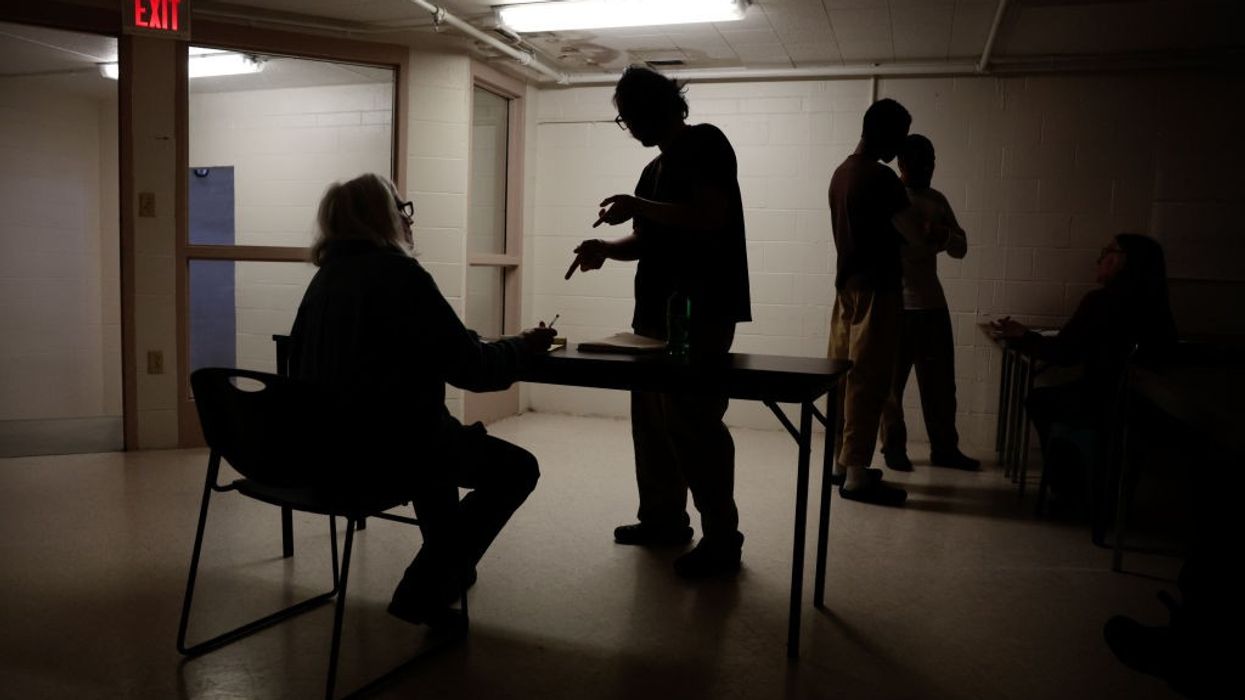
We’re seeing the devastating impacts of bloated budgets for ICE here and now. In recent months New Hampshire residents have had to watch their town’s police sign up one by one to partner with ICE to kidnap and terrorize their neighbors—including immigrants and refugees who are here legally, contributing to our communities after fleeing war zones or domestic violence. In New Hampshire, ICE operates in the Strafford County jail, where some of our neighbors are being held without due process. Government funding from ICE operations is set to expand the prison in Berlin, New Hampshire, where conditions are notoriously inhumane and immigrants are unlikely to be treated with dignity. Merrimack County and Hillsborough County have both requested to detain immigrants for ICE. My friends and I do not want this to be what our taxes pay for.
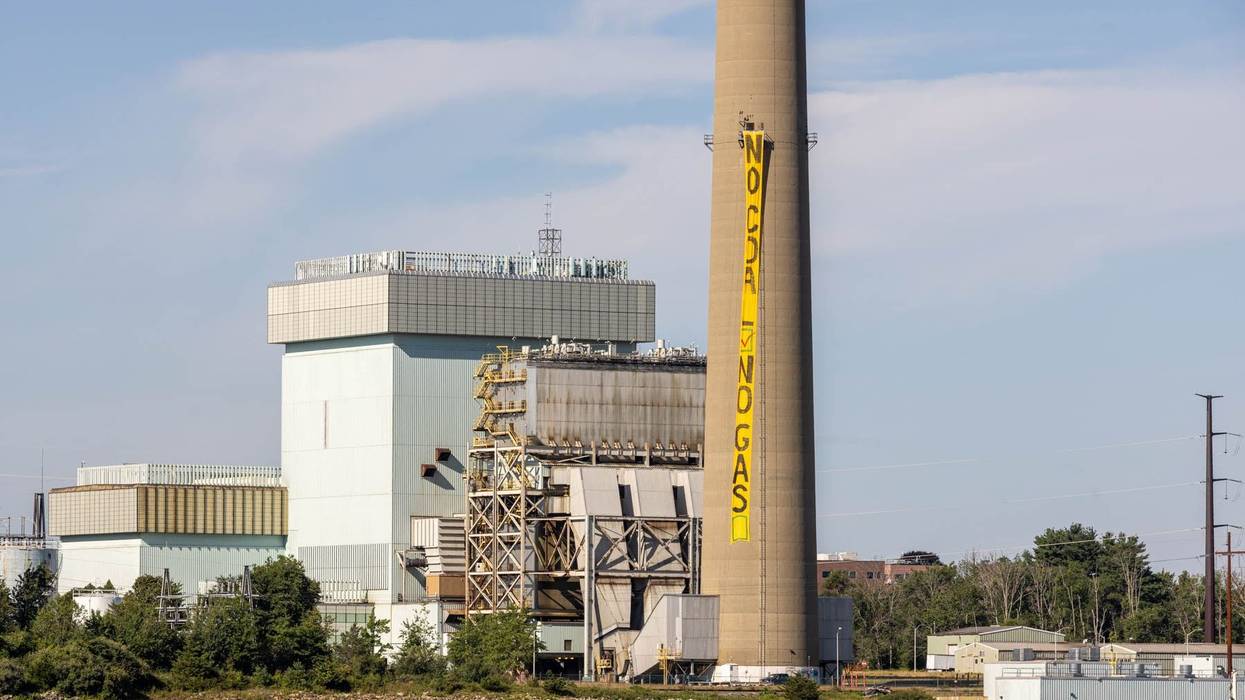
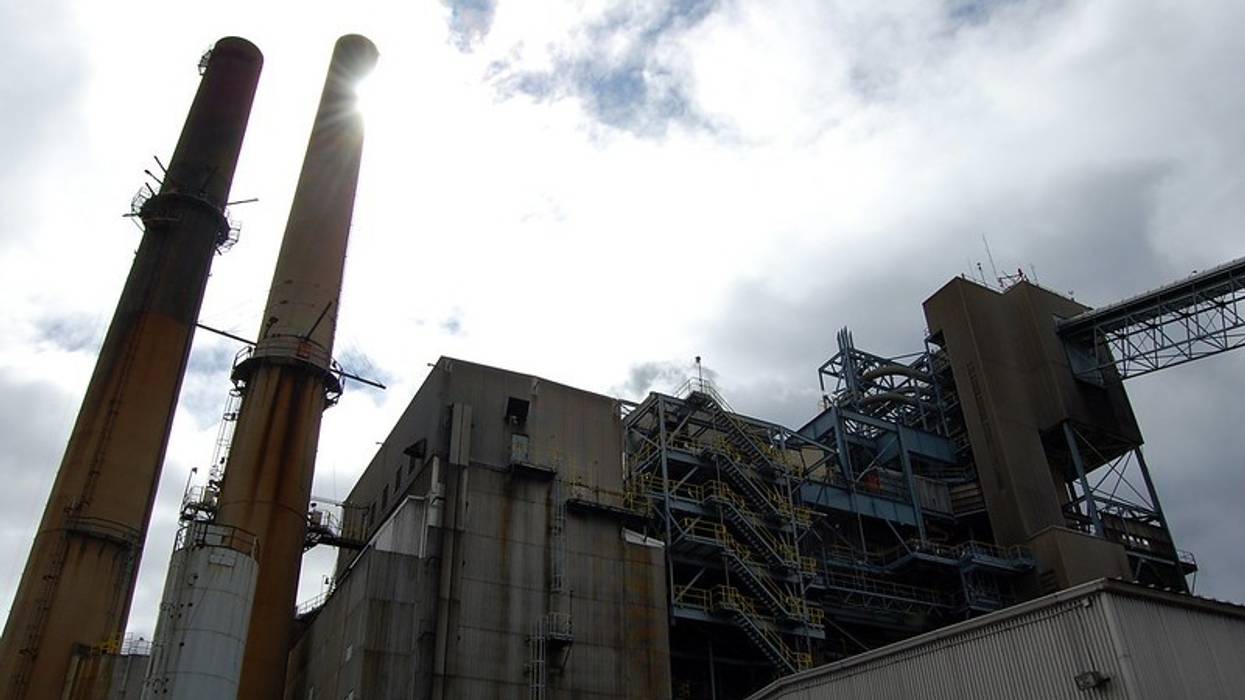
Instead, I’d rather have my tax money going to fund climate action: clean energy, resilient green housing, healthcare to care for people impacted by pollution and climate disasters like heatwaves. If we redirected just a fraction of the money we are wasting on ICE to transition our energy grid to clean energy, we could save billions of dollars in healthcare and disaster recovery costs every year. If we stopped spending money to imprison our immigrant neighbors, we could cover the costs of cleaning up the pollution at every fossil fuel facility in the country. If we stopped giving government handouts to billionaire fossil fuel CEOs, we could transition all the dirty fossil fuel facilities to clean energy and battery storage.
The United States contributes approximately 12% of the world’s greenhouse gas emissions despite being only 4.2% of the world’s population. Those greenhouse gasses are fueling climate disasters around the world—creating climate refugees. People living along the coasts of countries around the world are being forced inland. People living in places more susceptible to drought or other climate fueled crises are making hard decisions to uproot their family and move someplace more resilient.
Refusing refugees and detaining immigrants while fueling the climate crisis is a disgrace. The United States is actively contributing to climate change by increasing our use of dirty fossil fuels, ignoring climate scientists, and eliminating environmental justice programs. By ignoring this issue we are costing our communities billions of dollars from storm cleanup and pollution impacts. The health costs of pollution and climate change alone cost more than $800 billion per year in medical bills and other downstream health costs—and that doesn’t include the billions of dollars it takes to clean up in a community after a hurricane or tornado. Yet when advocates for climate justice ask for more investments in clean, renewable energy, we are asked where that money will come from.
Our federal and state budgets have their priorities backwards. If we redirected our focus and tax dollars, we could solve an actual crisis that is hurting our economy and our health: climate change. It would be a much more useful avenue for our tax dollars than vilifying our neighbors who, by the way, also contribute taxes to the government.