

SUBSCRIBE TO OUR FREE NEWSLETTER
Daily news & progressive opinion—funded by the people, not the corporations—delivered straight to your inbox.
5
#000000
#FFFFFF
To donate by check, phone, or other method, see our More Ways to Give page.
Daily news & progressive opinion—funded by the people, not the corporations—delivered straight to your inbox.
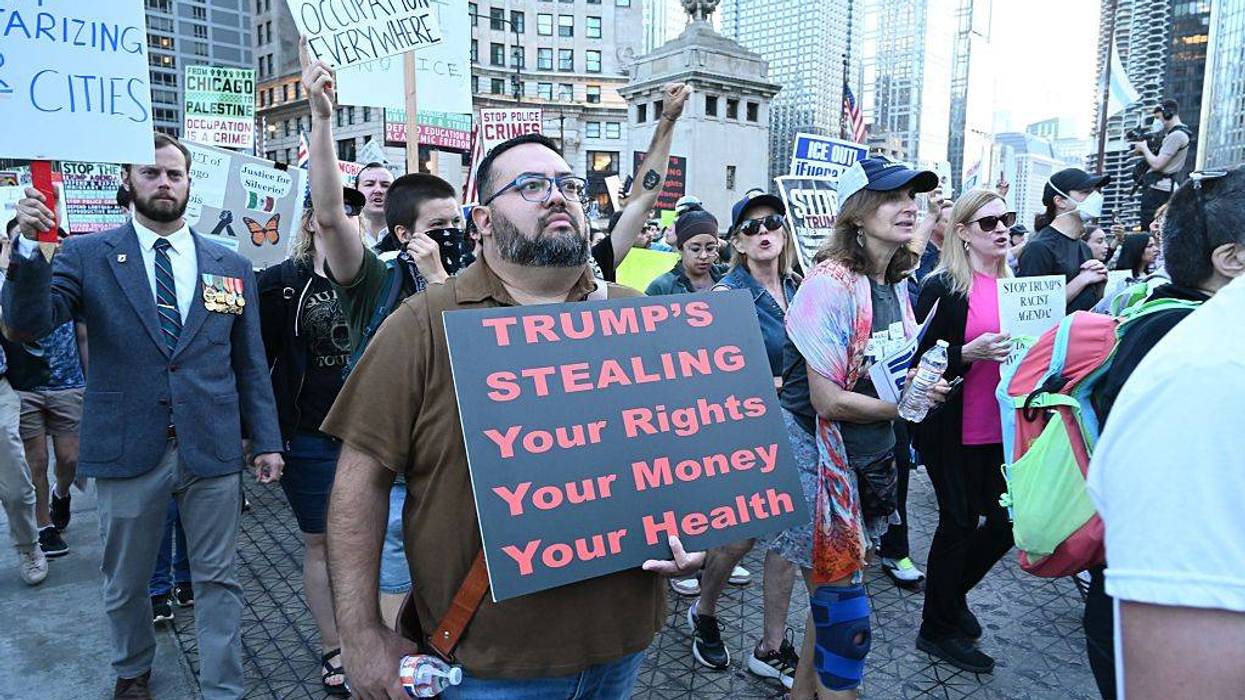
"The actions of the Trump administration, especially those of Stephen Miller, have made it clear they aim to use the counterterrorism bureaucracy to destroy their domestic political opponents."
On the first anniversary of President Donald Trump's signing of one critical national security memo, every member of Congress on Friday received a report on how his administration's "blatant use of the counterterrorism framework against left-wing domestic speech" has allowed the FBI to "spy on the First Amendment," attacking one of the bedrock principles of the US Constitution in order to crack down on "speech disfavored by Trump."
The 19-page report, titled "7Can the FBI Spy on the First Amendment?," was sent to every congressional office by the advocacy group Defending Rights and Dissent (DRAD), exactly a year after the president signed National Security Presidential Memorandum 7 (NSPM-7) in the wake of the assassination of right-wing activist Charlie Kirk.
Trump and other top White House officials immediately blamed the killing of 31-year-old Turning Point USA co-founder on the "radical left," and claimed left-wing extremists were behind "the terrorism that we’re seeing in our country today." Days earlier, the US Department of Justice had removed from its website a report showing that political violence perpetrated by far-right extremists in the US far outpaced that of people on the left.
The memo outlined how the Trump administration planned to crack down on left-wing groups by directing law enforcement agencies to treat political speech "as a precursor to terrorism," if it came from organizations that demonstrated particular viewpoints—including those critical of capitalism or the US government. Groups that displayed so-called "extremism on migration, race, and gender; and hostility towards those who hold traditional American views on family, religion, and morality" were also named as potential targets.
NSPM-7 called for the FBI's 200 Joint Terrorism Task Forces (JTTF)—comprised of about 4,000 agents across the country—to investigate groups suspected of left-wing extremism under the memo, with local police officers staffing many of the task forces.
"This extremely broad language leads to individual agents interpreting what these viewpoints mean to them when determining who to target. And thanks to the existence of FBI assessments, designed with the same preventive purpose that NSPM-7 echoes, Task Force officers can investigate groups or individuals without a factual basis to suspect them of criminal wrongdoing or consider them a national security threat," wrote Chip Gibbons, policy director at DRAD. "At the assessment level, the FBI can even have an informant infiltrate their group. Informants often act as agent provocateurs in sting operations, in which the informant proposes and recruits individuals to participate in a fictitious terror plot concocted by the FBI."
Under pressure from Trump, Homeland Security Adviser Stephen Miller, and other officials to deliver prosecutions of suspected left-wing extremists, wrote Gibbons, "the agents' loose guidelines, politicized guidance, and track record of the FBI creates a recipe for disaster."
"Trump and Miller have made clear they plan to exploit the broad counterterrorism authorities of the executive branch to unleash this machinery of repression upon their domestic political opponents. Unless Congress acts now, they will get away with it."
A year after NSPM-7 was signed, the memo has already underpinned a crackdown on groups and individuals who oppose Trump's deeply unpopular deployment of federal immigration agents to carry out his violent mass deportation policy and other aspects of his far-right agenda.
US Attorney Daniel Rosen cited the memo in June when he announced the indictment of 15 organizers who led protests against US Immigration and Customs Enforcement in Minnesota, and those indictments came out of a sprawling investigation into local labor and rights groups that was opened after federal agents fatally shot anti-ICE protester Alex Pretti in Minneapolis in January. Top administration officials also accused Pretti, soon after he had been killed, of being a "domestic terrorist."
In July, Miller said NSPM-7 would allow the administration to "disrupt, identify, defund, de-bank, arrest, prosecute these political terrorists that are operating within our country," as Secretary of State Marco Rubio announced that four left-wing groups had been designated as "foreign terrorist organizations."
And in March, the memo underpinned the conviction of eight people accused of domestic terrorism for wearing all black to a protest at Prairieland Detention Facility in Alvarado, Texas, where one demonstrator shot and wounded a police officer. The protesters were later sentenced to 30-100 years in prison.
“This wouldn’t be a terrorism case if it weren’t for that memo,” a defense lawyer told one news outlet after the conviction.
Gibbons emphasized on Friday that carrying out NSPM-7's directives "requires no new laws, no new agencies, because well before Trump ever returned to power, the FBI and its enablers have amassed for itself the power to spy on pure political speech."
As hundreds of thousands of Americans expressed opposition to President George W. Bush's impending invasion of Iraq in 2003, notes the report, "the FBI issued two controversial intelligence bulletins, one on 'Tactics Used During Protests and Demonstrations,' and one on 'Potential for Criminal Activity at Free Trade Area of the Americas (FTAA) Annual Meeting.'"
"The latter bulletin was prepared in advance of mass protests against the Iraq War," reads the report. "It went so far as to list 'tactics by which protestors draw attention,' which included 'marches, banners, and forms of passive resistance such as sit-in.' It urged law enforcement to 'be alert to these possible indicators of protest activity and report any potentially illegal acts to the nearest FBI Joint Terrorism Task Force.'"
The inspector general of the Department of Justice at the time raised alarm about the bulletins' potential violation of the First Amendment, but the head of the DOJ's Office of Legal Counsel (OLC), Jack Goldsmith, dismissed the concern.
"The OLC opinion made clear that the executive branch believes it is not unconstitutional for the FBI to monitor protected speech so long as it claimed it was looking for potential unlawful activity, such as terrorist threats or 'civil disorder,'" writes Gibbons.
The FBI's international terrorism program has also pursued "homegrown violent terrorists," and the agency sought to prove in the 1960s and '70s that anti-war protests were "the product of Soviet foreign"—providing the National Security Agency with the names of US citizens to be added to a watchlist.
"While the stakes were high before, the actions of the Trump administration, especially those of Stephen Miller, have made it clear they aim to use the counterterrorism bureaucracy to destroy their domestic political opponents," reads the DRAD report.
Gibbons called on Congress to take several key actions to rein in the FBI as it seeks to carry out the directive outlined in NSPM-7, including:
"With NSPM-7, Trump and Miller have made clear they plan to exploit the broad counterterrorism authorities of the executive branch to unleash this machinery of repression upon their domestic political opponents," said Gibbons. "Unless Congress acts now, they will get away with it."

"We deserve answers about every contract and every conversation that Collins and her team facilitated on the backs of taxpayers. The jig is up."
Maine Democratic US Senate candidate Troy Jackson pounced on Tuesday after ProPublica published a damning story putting incumbent Republican Sen. Susan Collins at the center of what the publication described as a "sprawling pay-to-play operation."
In a statement released shortly after the ProPublica story dropped, Jackson accused Collins of engaging in "corruption of the highest order."
"Susan Collins delivered millions in taxpayer dollars for a corrupt donor bankrolling her campaign," said Jackson, "and then [President] Donald Trump helped her cover it up."
The ProPublica report unearthed internal records revealing an FBI investigation into defense contractor Navatek, now known as Martin Defense Group, for making campaign contributions to politicians in exchange for federal contracts.
According to ProPublica, former Navatek CEO Martin Kao told a group of FBI agents and federal prosecutors in 2022 about a 2019 meeting he'd had with the head of a pro-Collins super political action committee where he committed to cut a big check to the Maine Republican's campaign if she steered federal cash to his company.
After the meeting, ProPublica wrote, Kao "sent an initial $150,000 to the Collins super PAC using the shell company" and then told Navatek executives in an internal email two months later that "Collins committed to getting the company $32 million in naval contracts."
The alleged corruption outlined in the report went far beyond Collins, as Kao also provided FBI agents with a 50-page document that named "dozens of lobbyists, congressional staffers, and members of Congress who he said helped him trade cash for contracts."
However, the probe into Kao's alleged efforts to bribe politicians was shut down shortly after Trump returned to the White House in 2025, which Jackson said may explain why Collins "voted with him 96% of the time and has rubber-stamped his agenda to hurt Maine."
"Susan Collins doesn’t care," Jackson added, "that we’re losing our healthcare that ICE is killing people on the streets, and that we’ve been dragged into a pointless war—as long as her donors get their contracts and her coffers get filled. We deserve answers about every contract and every conversation that Collins and her team facilitated on the backs of taxpayers. The jig is up."
Annie Clark, Collins' deputy chief of staff, disputed the allegations made in the ProPublica story, and accused the publication of wrongly lending credibility to Kao, whom she said "began making outlandish charges about the Collins office, deflecting blame from himself" for his own criminal behavior.
"The seven-year-old allegations made against Sen. Collins and her staff in this piece are categorically false," said Clark. "There have never been any allegations of wrongdoing by the Collins for Senator campaign, and the campaign was never the target of the FBI investigation."
The reported change would grant "pure impunity for ICE to do horrible things," said one journalist.
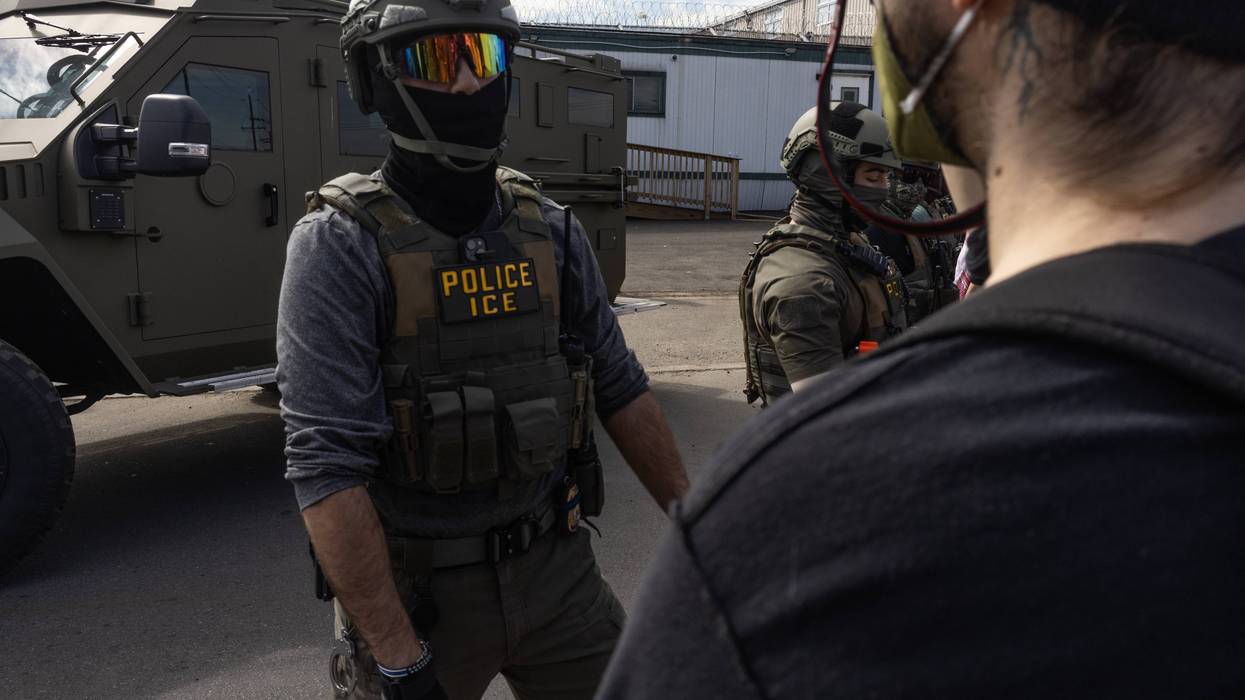
New guidance distributed to US Immigration and Customs Enforcement agents across the country in recent days said that the FBI will no longer investigate confrontations that officers have with protesters or people who are subjected to immigration enforcement—leaving the agency to investigate its own violent encounters with the public following at least two recent killings by ICE agents.
The guidance pertained to claims of assault against Department of Homeland Security (DHS) officers, but FBI investigations have gathered evidence that implicated agents themselves after they claimed to have been attacked.
According to the message sent to ICE officers, Homeland Security Investigations, which operates under ICE, would begin examining incidents in which an agent claimed they were assaulted.
HSI does not have jurisdiction to investigate allegations of civil rights allegations, so in cases in which a confrontation escalates to a use of force by an officer, the unit would be unlikely to investigate whether the agent violated the victim's rights, The New York Times reported.
"The fox is guarding the hen house," said American Immigration Council senior fellow Aaron Reichlin-Melnick of the reported change.
Despite the guidance that was circulated to agents, the US Department of Justice, which oversees the FBI, released a joint statement with DHS denying that the change would take place.
“The relationship between DHS and DOJ in investigating assault on federal officer cases has not changed, and FBI will continue to investigate in accordance with agency policy,” the statement said. “This administration has been clear, anyone who assaults law enforcement will be prosecuted to the fullest extent of the law.”
According to a New York Times investigation, the Trump administration filed charges against more than 550 people who it said assaulted federal immigration officers. More than 400 of the cases had been resolved, and in nearly half of them, charges of assault had been thrown out or withdrawn, or the defendants had been acquitted.
As it's filed such charges, the Trump administration has frequently repeated its assertion that federal agents are regularly facing violent attacks from the public—including in cases in which agents have killed US citizens and immigrants, including Renee Good, Alex Pretti, and earlier this month, Lorenzo Salgado Araujo.
The reported change was also made public less than a week after an ICE agent fatally shot Johan Sebastián Guerrero in Biddeford, Maine.
Journalist Sam Stein said the guidance that was given to federal agents could grant "pure impunity for ICE to do horrible things."
An FBI raid on the Ohio Organizing Collective is part of a strategy that aims to intimidate voters and those who would help them exercise the franchise.
The vote is the heart of democracy. Every two years, citizen organizations mobilize to register Americans and ensure they are on the rolls. That work is especially vital in poor and minority communities. The Ohio Organizing Collaborative is the leading voter registration group in the Buckeye State. In 2024, it registered 100,000 voters.
The group helped lead the fight for fair maps against an egregious gerrymander in Ohio. The Brennan Center represented it in court, where we prevailed repeatedly. When legislators simply ignored those court rulings, the activists went to Ohio voters. Together with a former chief justice of the state supreme court, Republican Maureen O’Connor, they supported a campaign to pass a state constitutional amendment to create a nonpartisan redistricting commission. They called the amendment Citizens Not Politicians. It would have benefited neither party but empowered voters. The ballot measure fell short in 2024, but it was an example of nonpartisan, cross-ideological civic activism at its best.
That’s why what happened late last week is so troubling. Indeed, so outrageous.
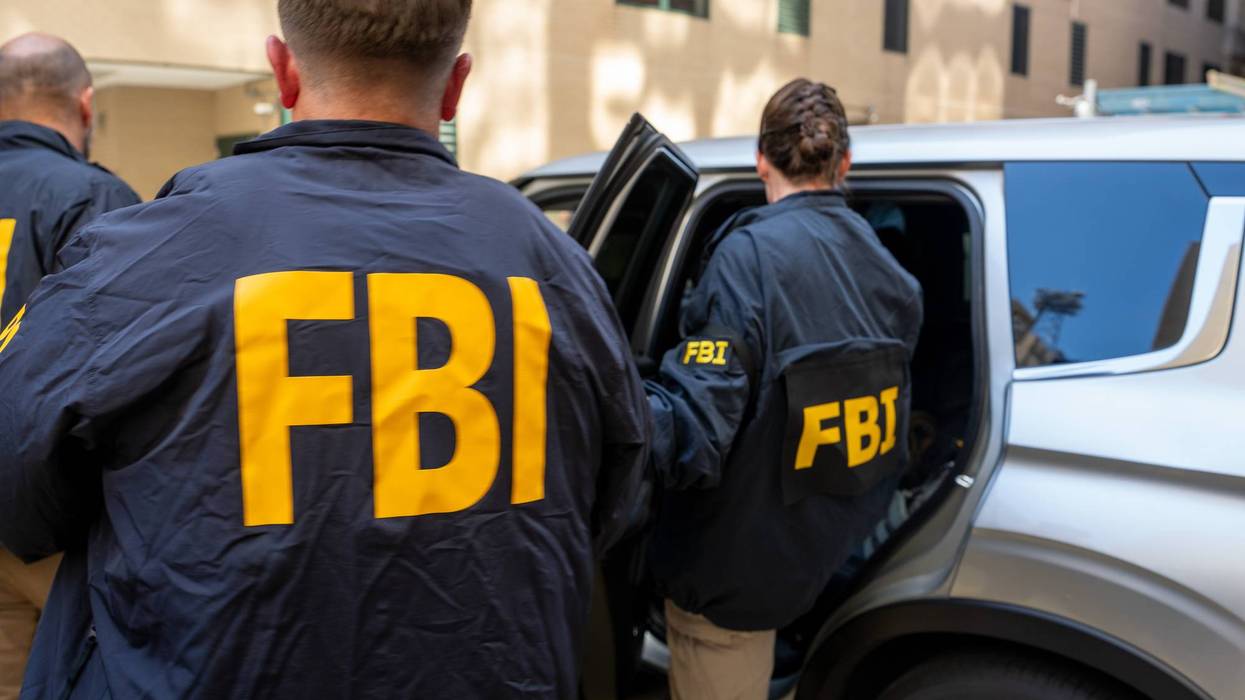
In a massive sweep, 100 FBI agents and other federal officers raided the Ohio Organizing Collaborative’s office and fanned out to the homes of volunteers, board members, and staff. Agents seized phones and computers, scooped up papers, and questioned startled citizens.
If citizens are afraid to register to vote, or to help others register, mission accomplished.
The rationale? According to a search warrant, the hunt for voter registration fraud.
This gives every indication of being an extraordinary abuse of power. It is part of a strategy that aims to intimidate voters and those who would help them exercise the franchise.
This is, after all, the same Justice Department that repeatedly has probed or prosecuted President Donald Trump’s critics, only to see those cases crumble before grand juries and judges. Combine that with an FBI led by Kash Patel, who wrote an election-denying children’s book about his fealty to the “king.”
This expanded strategy was mapped out in Project 2025, the Heritage Foundation’s blueprint for what became many Trump administration policies. Use the Justice Department, it urged, to go after state election officials and registration groups. Hunt the imaginary threat of widespread voter misconduct.
The Heritage Foundation for decades has been a principal purveyor of the myth that many voters are committing fraud. Now the entire federal government is in the grip of that conspiracy theory.
A reminder: The Brennan Center’s research shows that you are more likely to be struck by lightning than to commit voter fraud.
What will be produced by this massive display of prosecutorial force? Probably not much of anything but—its progenitors likely hope—dread. If citizens are afraid to register to vote, or to help others register, mission accomplished.
In fact, the strategy seems focused not on enforcing the law but fomenting fear.
We saw that in January when the FBI raided the election office in Fulton County, Georgia, seeking to “prove” that Joe Biden did not win the 2020 election there. When the affidavit that authorized the raid was released, it turned out to be a collection of long-debunked claims. The raid sent a message to election officials everywhere: If you oversee an election where we dislike the results, you might be met by a knock on the door.
We saw it last week when Trump declared that California’s primary election was “rigged,” because a Republican reality show star did not finish in the top two for the mayoral election in deeply Democratic Los Angeles.
We saw it last year when armed, masked federal border patrol agents showed up in force at a press event held by California Gov. Gavin Newsom to announce a redistricting ballot measure.
What can we do to protect voters?
We should stand up for those working to register and mobilize voters and ensure they have the best legal advice and follow the rules. We should redouble efforts to protect election officials who face torrents of abuse. We should encourage states to step up, by passing legislation to make doubly sure that Immigration and Customs Enforcement and other federal law enforcement agencies cannot wreak havoc at the polls. We should lift up the nonpartisan work of police, prosecutors, and sheriffs through the Committee for Safe and Secure Elections, which brings together election officials and law enforcement to train officials around the country. And we should unite against efforts to interfere in elections or intimidate voters.
The Brennan Center honored the Ohio Organizing Collaborative in 2024 at our annual Brennan Legacy Award Dinner, together with Chief Justice O’Connor. I told the crowd, “This is kind of a buddy movie that I want to watch.”
Molly Shack, the group’s dynamic leader, told attendees about how it approached its work. “We are organizing people in communities around education and criminal justice reform and democracy issues and an ability to have a government that works, that can actually be responsive to citizens in all of our interests.”
She continued: “I think the idea that democracy is a partisan issue is something that I think we’re all trying to fight against. A functioning democracy shouldn’t be about right versus left. It should be about right versus wrong.”
"ICE shows up, and nothing but chaos.”
This is a developing story… Please check back for updates…
Less than a week after Republicans in Congress passed $70 billion in new funding for President Donald Trump's mass deportation campaign, an immigration agent reportedly shot at a fleeing vehicle in New Jersey on Monday.
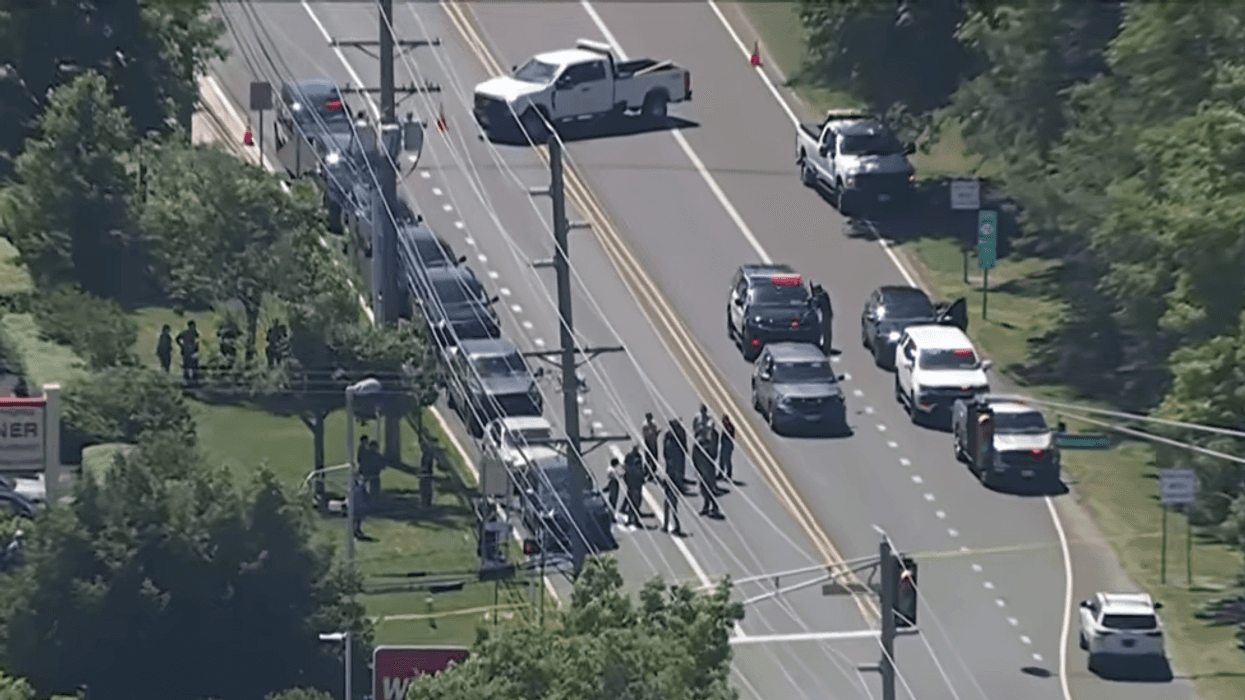
According to the police department of Stafford Township, Immigration and Customs Enforcement "was attempting to apprehend a suspect when the suspect fled from the scene in a vehicle, striking [an ICE agent]" on Monday morning around 9:30 am near a Wawa convenience store.
ICE identified the suspect as a Peruvian national, Friedrich Castillo-Ormeno, whom the agency said was given a final order of removal on January 30. Aside from describing him as an "illegal alien," ICE provided no other information about his background or any criminal history.
On June 15, 2026, ICE law enforcement officers were conducting a targeted vehicle stop in Manahawkin, New Jersey to arrest Freidrich Castillo-Ormeno, an illegal alien from Peru who was released into our country under the Biden administration. He was given a final order of removal…
— U.S. Immigration and Customs Enforcement (@ICEgov) June 15, 2026
"The agent discharged his firearm at the vehicle, reportedly striking it," the Stafford police said. "The suspect fled the scene in the vehicle and has not been located at this time." Onlookers told NBC 10 Philadelphia that bullets struck the driver's van and may have blown out the back window.
The police added that “the agent reportedly sustained unknown injuries." According to Patch, officers went to the scene and performed first aid on the agent before transporting him for further treatment. Sources told NBC 10 Philadelphia that he is expected to make a full recovery.
"It is unknown if the suspect was injured at this time," the Stafford police said, adding that although Castillo-Ormeno fled the scene, “there is no reason to believe there is any concern for the public’s safety.”
Under the Department of Homeland Security's use-of-force policy, agents are not supposed to shoot at fleeing vehicles unless the officer believes they are at imminent risk of death or serious physical injury.
ICE said Castillo-Ormeno "weaponized his vehicle and struck an officer, resulting in the officer discharging his weapon."
According to Patch, local police are not conducting an investigation into the incident, and all further updates will come from the FBI.
Under Trump, the US Department of Justice has faced criticism for locking state and local investigators out of investigations into the shootings of US citizens Renee Good and Alex Pretti in Minneapolis earlier this year and spreading false information to justify their deaths.
Minnesota became the center of a national wave of resistance to ICE that ultimately pushed federal immigration agencies to retreat on some of their most extreme tactics, though the mass deportation push against immigrants largely without criminal histories has not subsided.
New Jersey has met ICE with its own share of pushback. Last month, US Sen. Andy Kim (D-NJ) was pepper-sprayed by federal agents outside the privately run Delaney Hall detention facility in Newark. Demonstrators had shown up in solidarity with hundreds of detainees who had gone on a hunger and labor strike to protest the squalid conditions in the facility, and protests have continued for weeks.
Although Stafford Township is overwhelmingly Republican, The Daily Beast found that in the immediate aftermath of Monday's reported shooting, some residents in a local Facebook group were wary about the tumult that ICE's presence could bring.
"Immigrants have been in Stafford for decades with no problems,” one resident wrote in a local Facebook group where the incident is being discussed. “They are respectful and hardworking. ICE shows up, and nothing but chaos.”
“Who shoots at a van?" wrote another Stafford resident, who added that "[ICE] training is brutal."
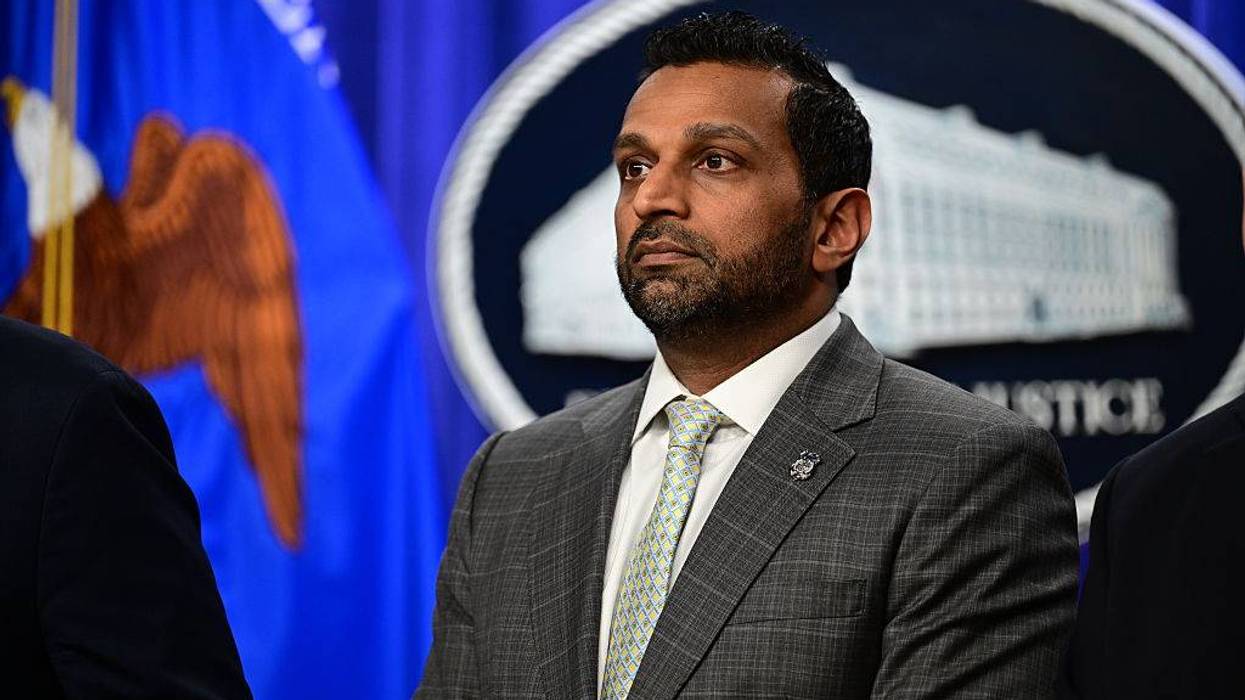
"This is an unprecedented attack on democracy," said US Rep. Shontel Brown.
A voting rights organization in Ohio is accusing the federal government of waging a large-scale intimidation campaign after the group was raided by the FBI on Thursday.
MS NOW reported on late Thursday that FBI agents searched the Cleveland offices of the Ohio Organizing Collaborative, an organization that helps register voters.
In addition to raiding the group's offices, sources tell MS NOW that "agents also fanned out across the state, showing up at the homes of the group’s leaders and staff members, carrying some subpoenas and seeking information and electronic devices."
MS NOW's sources also expressed concern that the raid was not a legitimate law enforcement operation but "part of the Trump administration’s efforts to sow doubt and distrust in voting integrity in key swing states ahead of the midterm elections."
In an interview with MS NOW, Ohio Organizing Collaborative board member Prentiss Haney accused the feds of using "straight-up intimidation tactics."
“They had agents all across the state going to civil rights leaders and community leaders’ doors intimidating them, coming and demanding that they talk about literally anything they would ask,” said Haney, who added that agents asked leaders "if they’re committing voter fraud, just on their doors, in front of their houses with their children, and just following them to work and school.”
In a separate interview with local public radio station WVXU, Haney described the FBI raid as a "full-on assault."
"This is not normal business," Haney said. "I mean there's no reason for over 100 agents to be knocking on the doors of everyday Ohioans, demanding and accusing people of voter fraud as if it was a witch hunt."
Rep. Shontel Brown (D-Ohio) said she was "alarmed and outraged" by the FBI raid, which she alleged was part of an effort by President Donald Trump and FBI Director Kash Patel to disrupt the 2026 midterm elections.
"This is an unprecedented attack on democracy: These raids must end immediately," Brown said. “Unfortunately, this appears to be part of a systematic effort by Trump and Kash Patel’s FBI to attack our elections and perpetuate more myths of voter fraud—all to undermine and challenge any election result that Trump does not agree with. It’s an attack on the people."
The Trump administration has waged a multi-faceted attack on voting rights ahead of the midterm elections.
In March, Trump signed an executive order instructing the United States Postal Service (USPS) to not deliver ballots in any states that have not given the federal government access to its voter lists, which critics have warned could lead to the "virtual elimination of mail-in voting."
A Tuesday court filing by the US Department of Justice, meanwhile, argued that states have the power to purge voter rolls at any time ahead of an election and do not have to abide by the 90-day “quiet period” established in the National Voter Registration Act (NVRA).
If adopted, this policy could result in states deeming voters ineligible without giving them sufficient time to challenge the decision.
Trump has also successfully lobbied Republicans in several states to engage in unprecedented mid-decade gerrymanders with the goal of creating more GOP seats in Congress.
One press freedom advocate said the reported FBI investigation "would be outrageous even if The Atlantic reported classified information, which it didn’t."
The Federal Bureau of Investigation on Wednesday denied that it launched a reported probe into The Atlantic, which recently published a damning account of FBI Director Kash Patel’s alleged drunkenness, though magazine leadership and press freedom advocates remain alarmed.
As reported by MS NOW on Wednesday, the FBI is conducting a criminal leak investigation into The Atlantic's Sarah Fitzpatrick, whose reporting on Patel cited two dozen anonymous sources to document concerns about the FBI director's behavior.
MS NOW noted that the investigation into Fitzpatrick's reporting is "highly unusual because it did not stem from a disclosure of classified information" on the part of government insiders.
One source told MS NOW that the FBI agents assigned to the case have expressed serious reservations about its scope and purpose.
"They know they are not supposed to do this," the source said. "But if they don’t go forward, they could lose their jobs. You’re damned if you do and damned if you don't."
FBI spokesperson Ben Williamson denied to MS NOW that the agency had launched an investigation into Fitzpatrick, saying that "every time there’s a publication of false claims by anonymous sources that gets called out, the media plays the victim via investigations that do not exist."
Jeffrey Goldberg, editor-in-chief of The Atlantic, said the magazine was working to learn more about the alleged investigation, but "if true, this would be an outrageous, illegal, and dangerous attack on the free press and the First Amendment."
"We will defend Sarah and all of our reporters who are subjected to government harassment simply for pursuing the truth," Goldberg added.
Seth Stern, chief of advocacy at the Freedom of the Press Foundation, also condemned the reported investigation, which he said "would be outrageous even if The Atlantic reported classified information, which it didn’t."
"The FBI is reportedly conducting an invasive leak investigation merely to settle a personal vendetta," added Stern. "Separately, it doesn’t make much sense for Patel’s FBI to investigate leaks from what Patel’s lawsuit over the same reporting called ‘sham sources.’ Fake sources can’t leak."
Patel last month filed a $250 million defamation suit against The Atlantic for its report on his behavior, which the magazine said included "episodes of excessive drinking and unexplained absences."
The Atlantic vowed to fight the lawsuit, saying it stood by its reporting while describing Patel's complaint as "meritless."
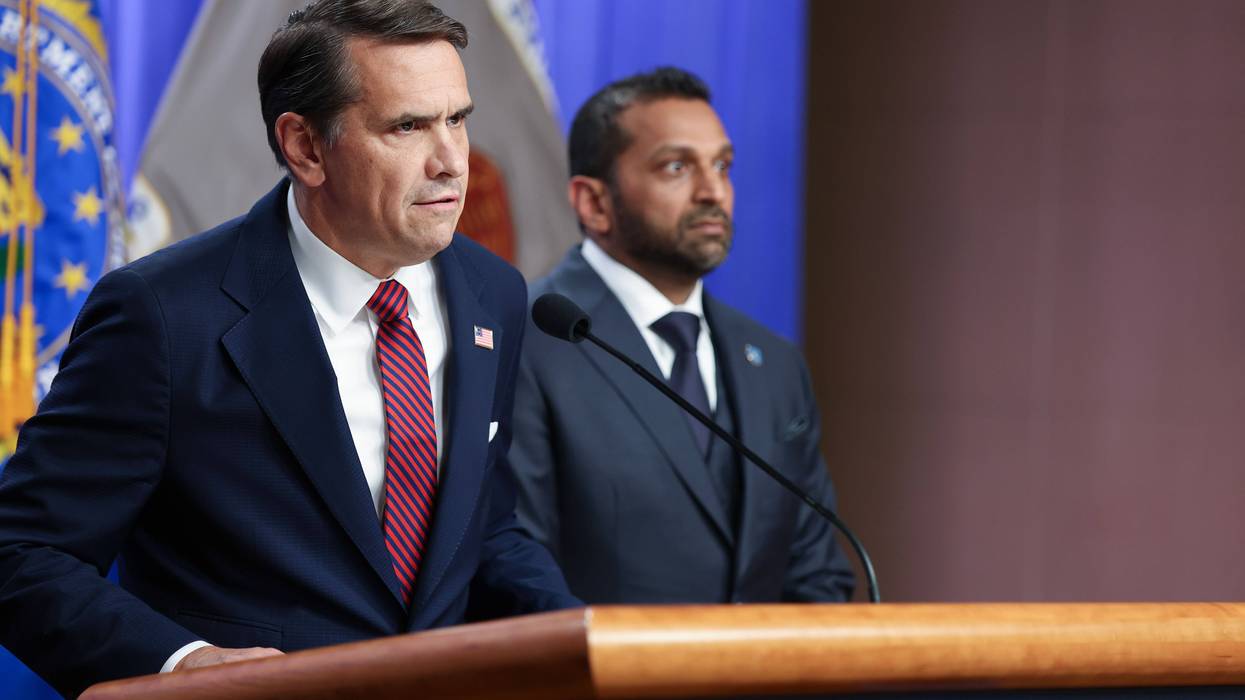
"This is embarrassing for America," said one First Amendment advocate.
As the corporate media joins the White House in a new round of accusations against critics of President Donald Trump in the wake of an attempted attack on the White House Correspondents' Association dinner last week—with acting Attorney General Todd Blanche blaming anti-Trump "rhetoric" for the violence at the event—the administration on Tuesday unveiled a new indictment of longtime Trump foe James Comey in what legal experts called a transparent attack on the First Amendment.
At a press conference held by Blanche and FBI Director Kash Patel, the officials made the case—without presenting specific evidence—that a federal grand jury in North Carolina had indicted former FBI chief Comey because he'd "knowingly and willfully [made] a threat to take the life of, and to inflict bodily harm upon" Trump in May 2025 in a photo he posted on Instagram.
The picture showed seashells grouped together in a pattern, reading, "86 47."
Trump is the 47th president of the United States, and the slang term "86" means "to get rid of," originating in the 1930s. According to Merriam-Webster, the term began being used as a verb in the 1950s when restaurants and bars used it to mean refusing service to a customer or throwing them out of an establishment. That use of the term is still the most common, according to the dictionary, which wrote: "Among the most recent senses adopted is a logical extension of the previous ones, with the meaning of 'to kill.' We do not enter this sense, due to its relative recency and sparseness of use."
Comey quickly deleted his post last May, which he said he had shared after finding the seashells in the arrangement during a walk on a beach. The former FBI director said he deleted that post after realizing "some folks associate those numbers with violence," and said he opposes violence "of any kind."
Nevertheless, the indictment handed down on Tuesday reads that the shells were “arranged in a pattern making out ‘86 47,' which a reasonable recipient who is familiar with the circumstances would interpret as a serious expression of an intent to do harm to the president of the United States.”
Comey was charged with one count of making threats against Trump and one count of transmitting a threat across state lines.
Federal officials issued a warrant for Comey's arrest, but Blanche did not say whether any court dates had been scheduled in the case.
The indictment was dismissed by several legal experts, with prosecutors within the US Department of Justice reportedly calling it "the flimsiest federal indictment in memory," according to ABC News correspondent Jonathan Karl. Building a case based solely on an image of seashells will be an uphill battle for the DOJ, particularly considering First Amendment protections on speech.
New York University law professor Ryan Goodman called the indictment "laughably ludicrous" and a "political act masquerading as an indictment," while US Sen. Chris Van Hollen (D-Md.) condemned the president for using the DOJ as his "personal attack dog, using taxpayer money to settle Trump's petty grievances."
This is the second federal indictment that's been handed down by the DOJ for Comey in seven months. Last September he was indicted on two counts of lying to Congress during a testimony he gave in 2020 regarding the FBI's handling of its investigation into Trump's 2016 presidential campaign's ties to Russia.
The DOJ indicted Comey in that case even though a Trump-appointed US attorney had concluded there was insufficient evidence to charge him; the president later forced the prosecutor out of his job. A judge ultimately threw out the indictment, ruling that the prosecutor's replacement had been unlawfully appointed to oversee the case.
Both cases have come years after Trump, during his first term, fired Comey as FBI director over the agency's investigation into his 2016 campaign.
Conservative lawyer Gregg Nunziata of the Society for the Rule of Law called the latest indictment of Comey "legally deficient" and a "scandalous marker of a president and his administration corruptly using government power to punish dissent."
American Immigration Council senior fellow Aaron Reichlin-Melnick noted that the administration has "repeatedly pursued criminal charges (or other punishments) against political opponents for their speech, at a level not seen since the most censorious days of the early 20th century," including by attempting to charge members of Congress for reminding service members they are obligated to disobey illegal orders.
"In an administration at war with the First Amendment," said Reichlin-Melnick, "this is a new low."
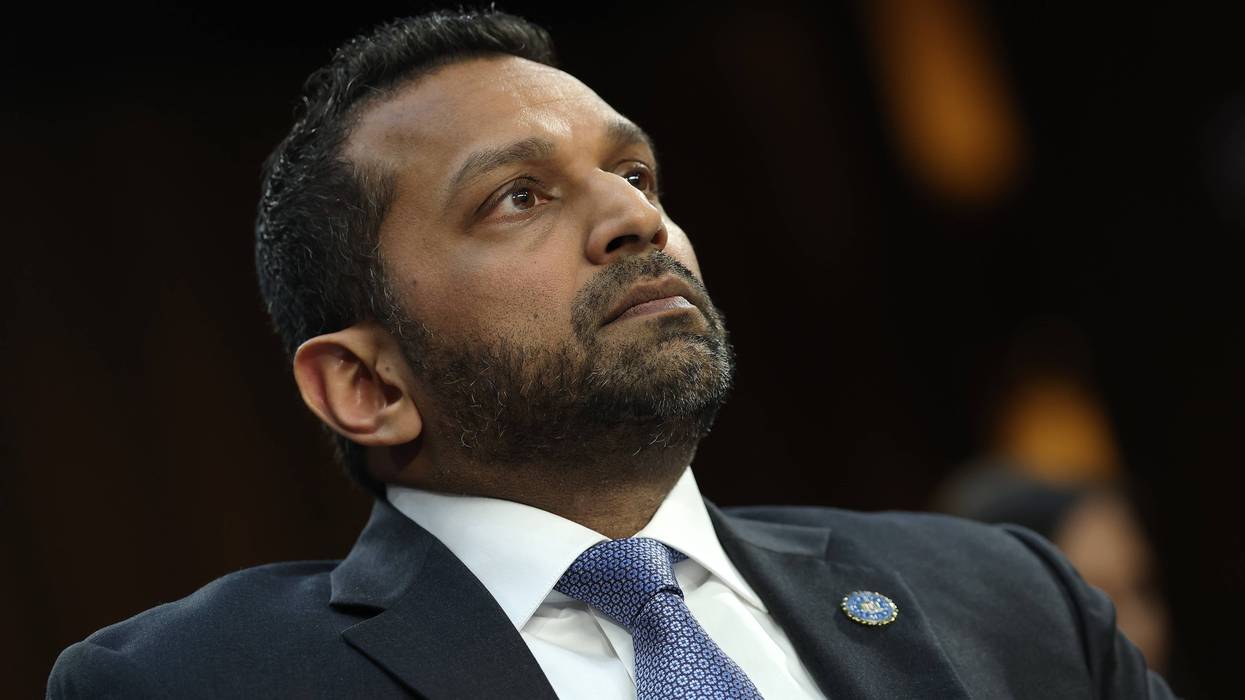
"If your political views are practically anything other than MAGA, you’re on notice, courtesy of the FBI," said journalist Ken Klippenstein.
Along with cutting environmental, housing, and health programs and proposing an increase of nearly $500 billion in military spending, President Donald Trump's new budget proposal shows how the White House "wants to use taxpayer dollars to spy on those who oppose its extremist agenda," one Democratic congresswoman said Monday evening.
Rep. Mary Gay Scanlon (D-Penn.) was referring to the budget's description of a new FBI center that is already working to root out what the White House broadly defined as "domestic terrorism" in a federal memo last year.
As independent journalist Ken Klippenstein wrote this week, buried in Trump's budget request—which includes $12.5 billion for the FBI to invest in counterterrorism efforts and other spending—is the White House's latest assertion that "domestic terrorists... pose an elevated threat to the Homeland."
"In recent years, heinous assassinations and other acts of political violence in the United States have dramatically increased," reads the budget's section on domestic terrorism. "Commonly, this violent conduct relates to views associated with anti-Americanism, anti-capitalism, and anti-Christianity; support for the overthrow of the US government; extremism on migration, race, and gender; and hostility to those who hold traditional American views on family, religion, and mortality."
The views described echo National Security Presidential Memorandum 7 (NSPM-7), the memo signed last September that directed federal agencies to develop a national strategy to "investigate and disrupt networks, entities, and organizations that foment political violence" in order to stop violent attacks before they happen.
But despite the administration's singular focus on groups and individuals who hold left-wing, anti-capitalism views and subscribe to belief systems other than Christianity, the National Institute of Justice found that since 1990, 227 attacks motivated by right-wing views killed 520 people, while far-left groups carried out 42 attacks that killed 78 people. The NIJ study was removed from the US Department of Justice website shortly after the assassination of right-wing activist Charlie Kirk—an event that Trump explicitly blamed on left-wing groups without evidence, and which came weeks before the signing of NSPM-7.
The budget proposal explains that as a result of NSPM-7, the FBI recently created the NSPM-7 Joint Mission Center (JMC), which is run by personnel from 10 federal agencies.
"The JMC is working to counter domestic terrorism and organized political violence by integrating intelligence operational support, and financial analysis to proactively identify networks and prosecute domestic terrorist and related criminal actors," reads the proposal.
Scanlon is one of a small number of elected Democrats who have spoken out about NSPM-7 in congressional hearings and media interviews.
"If anyone can be labeled a domestic terrorist for speech opposing this administration, our First Amendment rights are under grave threat," said Scanlon recently.
Klippenstein noted that the budget document describes social media platforms and encrypted communications apps as being used by "domestic terrorists" to "recruit new adherents, plan and rally support for in-person actions, and disseminate materials encouraging radicalization and mobilization to violence.”
FBI Director Kash Patel told Congress that anyone who used the Discord channels used by Tyler Robinson, who was accused of killing Kirk, would be investigated by the agency.
Klippenstein noted that the FBI's domestic terrorism watchlist, which as of last September listed about 5,000 US citizens, reportedly "is growing."
"If your political views are practically anything other than MAGA, you’re on notice, courtesy of the FBI," Klippenstein wrote.
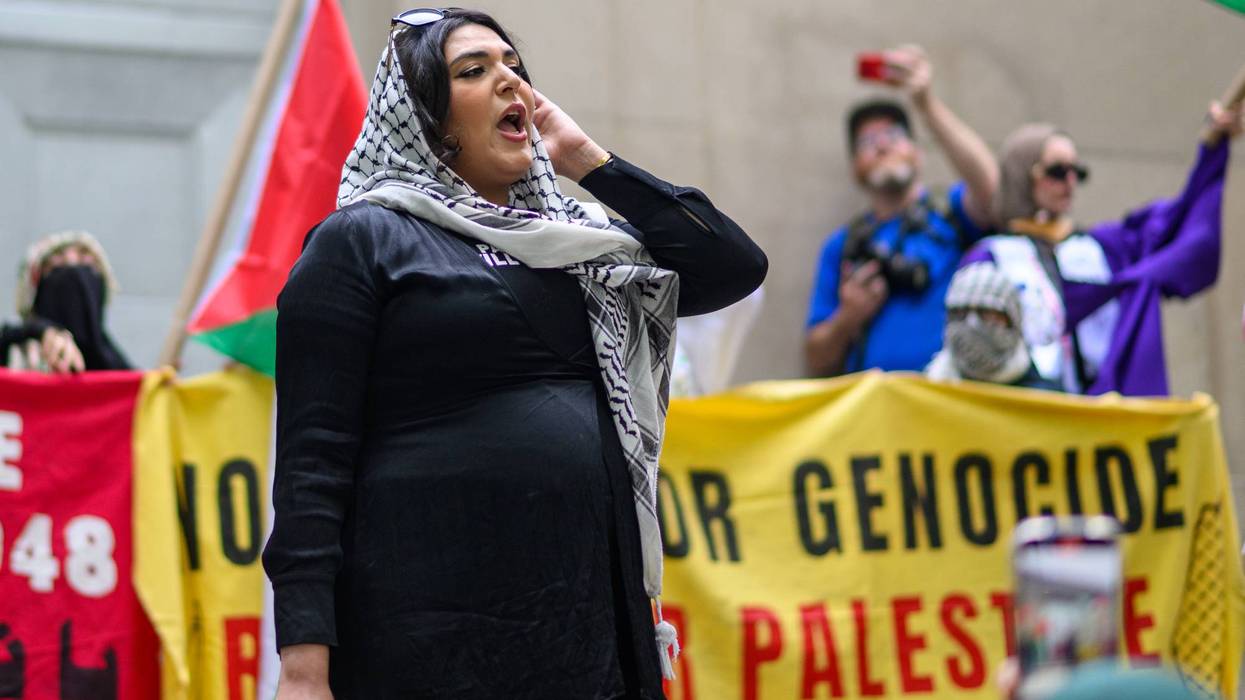
"This disturbing case underscores the growing climate of harassment, threats, and violence directed at those speaking out on Palestinian human rights and other social justice issues."
Nerdeen Kiswani, the co-founder of the Palestinian rights group Within Our Lifetime, emphasized on Friday that public threats and violent rhetoric from a sitting Republican congressman and a Zionist organization had preceded the news that there was an active plot to assassinate her.
The FBI's Joint Terrorism Task Force notified Kiswani and her legal team on Thursday night that "a plot against my life... was 'about to' take place, and that agents had conducted an operation in Hoboken [New Jersey] related to this plot."
The US attorney's office in New Jersey said Alexander Heifler, 26, had been charged with one count of unlawful possession of destructive devices and one count of making destructive devices, and was accused of plotting to attack Kiswani's residence with molotov cocktails. Another man had been charged in connection with the plot as well.
An undercover officer infiltrated a group call in which Heifler allegedly asked for assistance with "molotovs." The suspect also told the undercover officer he had an address for the "victim," the formal complaint reads. The officer was at Heifler's home on Thursday when he assembled about eight molotov cocktails on Thursday.
In a joint statement, the Council on American-Islamic Relations (CAIR) and its New York chapter urged "a full and transparent investigation, appropriate prosecution of those responsible, and continued vigilance by law enforcement to protect all communities from hate-driven violence."
Kiswani's organization has held protests in New York that have drawn hundreds of supporters, particularly since Israel began its US-backed war on Gaza in 2023 and public opposition to the Israeli government and the United States' support for it decreased substantially.
Like other Palestinian rights groups, supporters of Israel's government have accused Within Our Lifetime of antisemitism, but Kiswani and other organizers have vehemently denied those accustions.
Group members and supporters frequently chant: “Judaism, yes, Zionism no! The state of Israel has got to go!” at protests.
On Friday, Kiswani noted that the pro-Israel group Betar and US Rep. Randy Fine (R-Fla.), who has long been known for making openly Islamophobic statements, including against Muslim members of Congress, "encouraged violence against" the organizer and her family.
Last month, Kiswani filed a civil rights lawsuit against Betar, alleging it had subjected her to physical intimidation and racially motivated threats that went "far beyond protected speech."
"It has used its social media accounts to publicly offer cash rewards to anyone who would hand Ms Kiswani a beeper, a direct reference to Israel’s 2024 use of exploding pagers to kill Hezbollah operatives in Lebanon. On multiple occasions, Betar affiliates physically confronted Ms Kiswani on public sidewalks and at demonstrations, cornering her, and shouting threats," Kiswani's attorneys said.
Kiswani said the group's threats amounted to them putting "bounties" on her head.
In response to the news of the assassination plot, Betar on Friday called Kiswani a "violent terrorist."
"Not surprising if other terrorists targeted her," said the group on social media. "Palestinians have always targeted one another. Not surprising given the violent nature of these people who have globalized the intifada."
In January, New York Attorney General Letitia James announced an agreement in which Betar said it would dissolve its New York operations and stop its “widespread persecution of Muslim, Arab, Palestinian, and Jewish New Yorkers” who disagree with its stance on Israel and Palestine.
The Times reported that there was no indication that Betar was connected to the plot on Kiswani's life.
Kiswani has also been targeted by Fine, a notorious anti-Muslim bigot who responded to a satirical post by the organizer last month about dogs being "unclean" by saying, "If they force us to choose, the choice between dogs and Muslims is not a difficult one.”
CAIR and CAIR-NY said that "no one in our nation should face violence or intimidation because of their identity, advocacy, or political views."
"We welcome law enforcement’s disruption of the alleged plot to firebomb the home of Palestinian-American activist Nerdeen Kiswani," said the groups. "This disturbing case underscores the growing climate of harassment, threats, and violence directed at those speaking out on Palestinian human rights and other social justice issues. Such actions not only endanger individuals but also threaten the fundamental freedoms of speech and civic engagement."